TMJC assistance
Want TMJC to help with this vehicle?
Sourcing, consignment and valuationContinue to the main TMJC website and speak directly with the collection team.
Generation
The original Mazda MX-5 NA explained: 1989-98 history, 1.6 and 1.8 evolution, Eunos differences, late UK special editions, identification and rust checks.
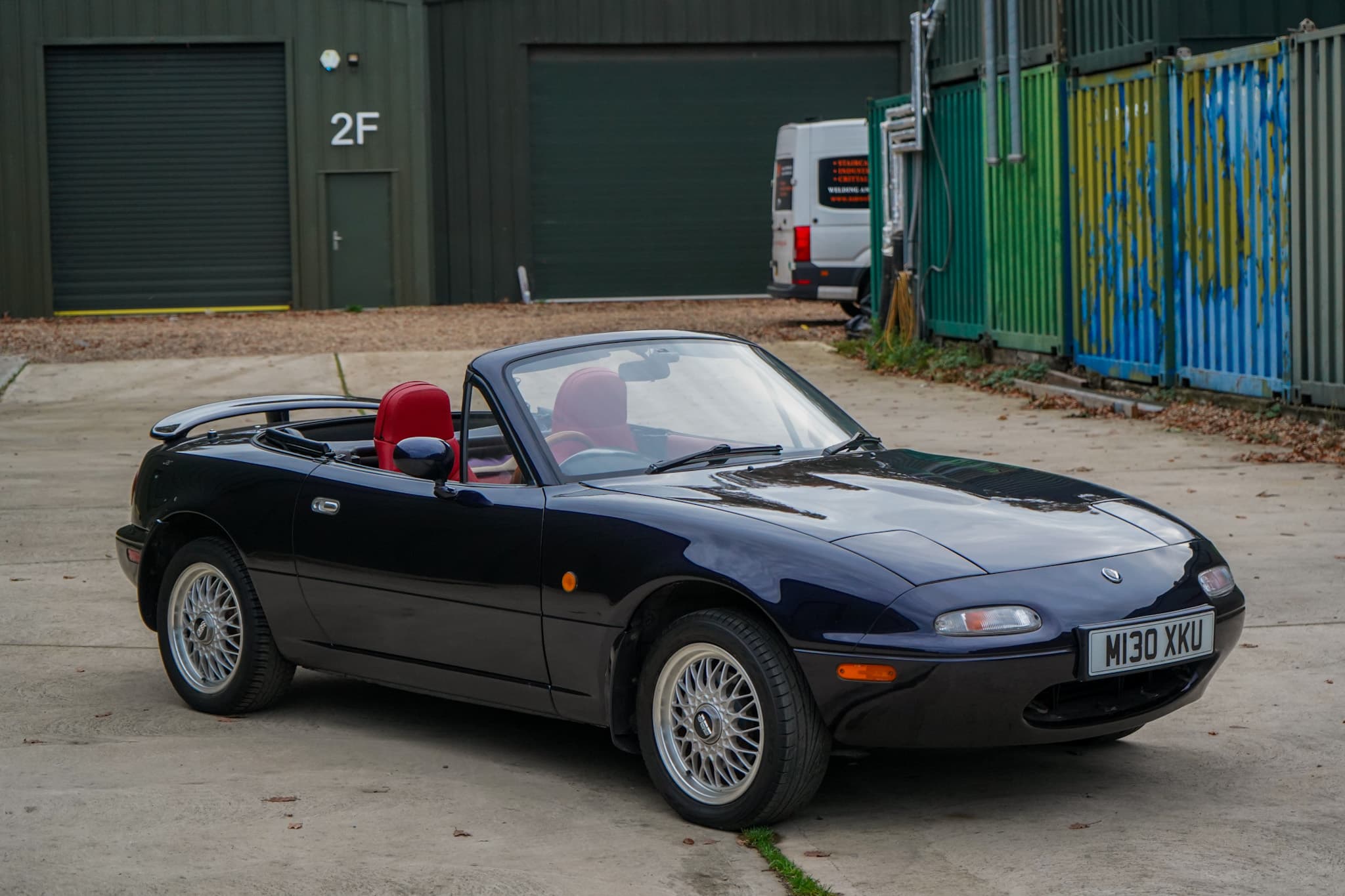
Variant directory
Choose an exact NA (Mk1) derivative for engine, gearbox, performance, dimensions, equipment and buying-context detail.
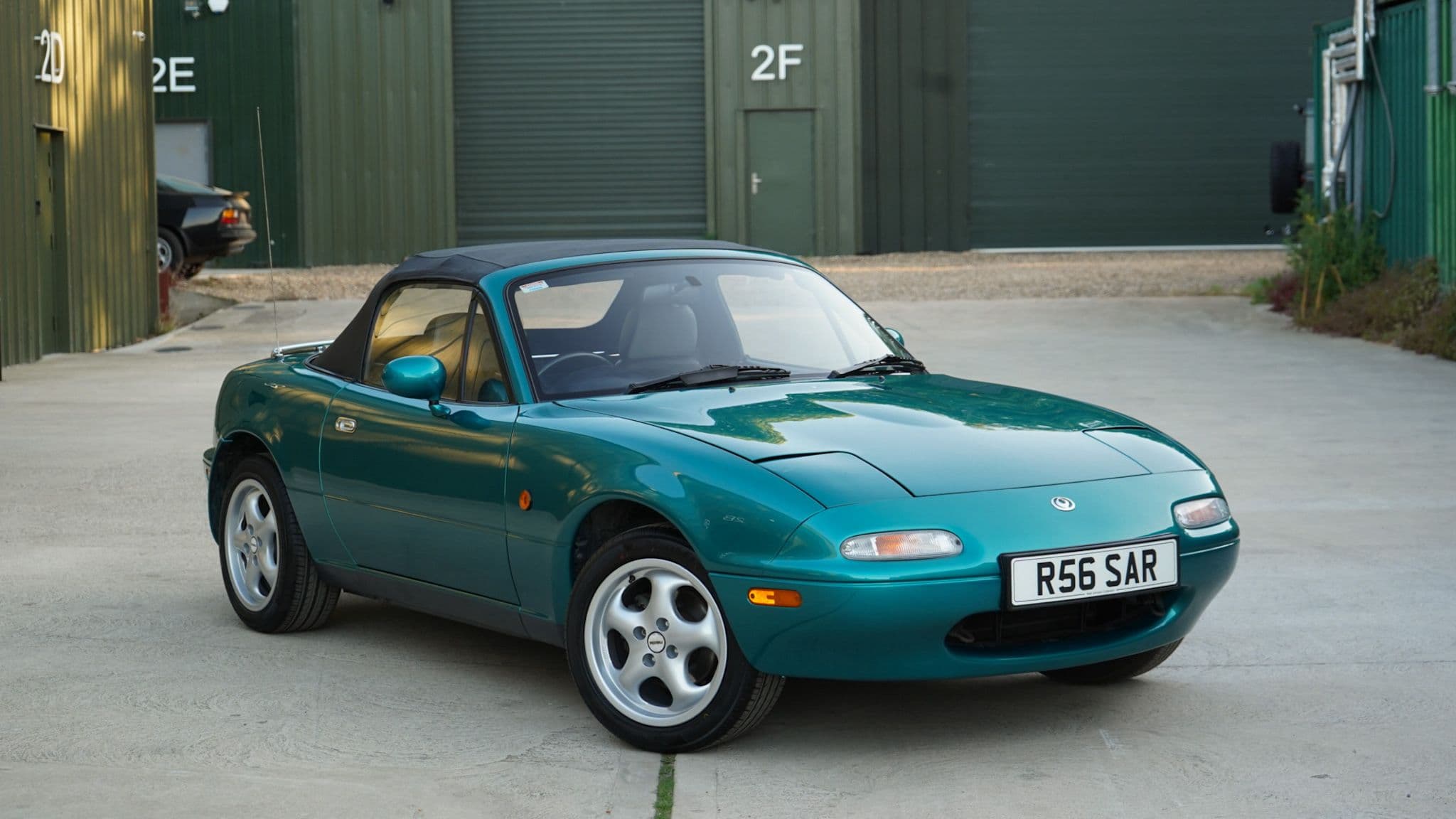 VariantBerkeley Edition (UK)Explore variant →EUVariantEunos Roadster 1.6 (Japan)Explore variant →
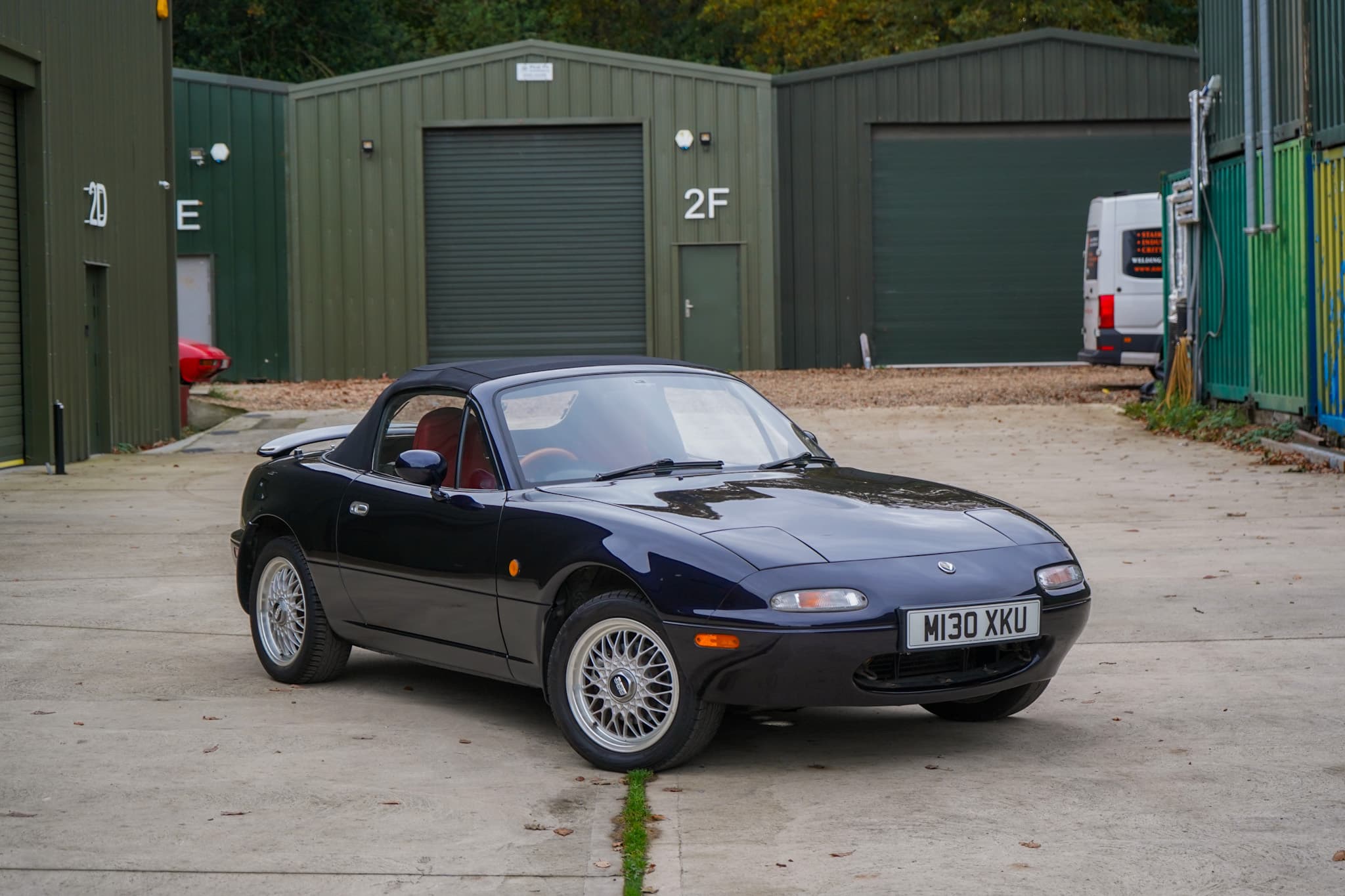 VariantEunos Roadster R-Limited (Japan)Explore variant →
 VariantEunos Roadster S-Limited (Japan)Explore variant →EUVariantEunos Roadster S-Special (Japan)Explore variant →EUVariantEunos Roadster V-Special (Japan)Explore variant →
TMJC guide
The original Mazda MX-5 NA explained: 1989-98 history, 1.6 and 1.8 evolution, Eunos differences, late UK special editions, identification and rust checks.
The Mazda MX-5 NA, better known in Britain as the Mk1 MX-5, is the original generation of Mazda's lightweight two-seat roadster. Mazda revealed it at the Chicago Auto Show in February 1989 and says mass production began at Ujina Plant No. 1 in Hiroshima in April. It reached Europe in spring 1990, with Mazda Motors UK dating the UK launch to 1990, and was replaced by the second-generation car in 1998.
Its basic idea was unusually disciplined: a front-mounted engine, rear-wheel drive, two seats, a manually operated soft top and as little unnecessary mass as Mazda could reasonably engineer into a modern road car. The pop-up headlights make the NA easy to recognise, but the more important identity is underneath: this was the car that established the MX-5 formula.
Mazda's own retrospective production history says the first-generation Roadster accounted for just over 430,000 cars during eight years of production before the second generation arrived in January 1998. Treat that as Mazda's rounded historical figure rather than mixing it with more exact totals from sources that may count different production periods.
The cleanest generation-level chronology is 1989 to 1998.
Mazda unveiled the original MX-5 at the Chicago Auto Show in February 1989 and says mass production began at Ujina Plant No. 1 in Hiroshima in April 1989. US sales followed in spring and Japanese sales in September, where the car was sold as the Eunos Roadster. Mazda's later European record places the first European MX-5 in spring 1990, while Mazda Motors UK dates the UK launch to 1990. Those are different milestones, so reveal date, production start and local market launch should not be collapsed into one date.
By March 1998 Mazda was publicly presenting an all-new MX-5 for Europe, with European sales beginning that April. That is why 1989-98 is a useful generation label even though individual registration dates can sit slightly differently around launch and replacement periods.
For the complete model-family story beyond the Mk1, see the Mazda MX-5 overview.
Rear-wheel drive was not an inevitable choice. Mazda's history records that the project considered front-wheel drive, a mid-engine layout and front-engine/rear-wheel drive.
The cheaper path would have reused more mass-production front-wheel-drive hardware. Mazda's engineers instead chose the more expensive RWD route because they believed it was necessary to reproduce the agile, linear response that defined the lightweight sports cars they wanted to revive.
That decision became part of the development idea Mazda calls Jinba Ittai — rider and horse as one. The phrase can sound like marketing when separated from the engineering, but on the first MX-5 it was tied to concrete choices about layout, weight and feedback.
Mazda's development history is unusually specific about the first-generation brief.
The original engine choice was a naturally aspirated 1.6-litre, 16-valve inline-four DOHC. Mazda deliberately resisted chasing a headline power number because smooth response and low mass mattered more to the project than outright performance.
The chassis followed the same logic. Mazda chose double-wishbone suspension at all four wheels, despite the extra complexity, and created a powerplant frame that rigidly connected the transmission and differential to improve drivetrain response and shift feel.
The body programme also spent weight carefully. Mazda chose a two-seat layout rather than 2+2 seating and a manual soft top rather than a heavier mechanism. An aluminium bonnet was another deliberate weight-saving measure.
Those features explain why the NA feels coherent even though its raw performance figures are modest by modern standards: engine, gearbox, steering, suspension and mass were developed around the same objective.
A common mistake is to treat every Mk1 as one fixed specification.
The original design began with the 1.6-litre engine, but later NA cars gained a 1.8-litre version. UK specialist histories place the 1.8's arrival in the 1993/94 period and describe accompanying changes such as a stiffer shell. A lower-output 1.6 later returned alongside the 1.8 in the UK market.
The exact power outputs, gearing and standard equipment are therefore market- and year-sensitive. A Japanese Eunos Roadster, a UK 1.6 and a UK 1.8iS can all be genuine first-generation cars without sharing one engine output or equipment list.
There is no single universal NA specification table. The more specific the car, the more important the market, build period and derivative become.
For first-generation cars, MX-5 and Eunos Roadster can describe closely related cars from different original markets.
Mazda's own history says Japanese sales began in September 1989 under the Eunos Roadster name. European cars were sold as Mazda MX-5s. North America became closely associated with the Miata name.
The names do not automatically tell you every item of hardware. Japanese domestic cars and UK cars could differ in trim, equipment, differential, steering assistance, air conditioning and special-edition content. Those differences also changed through the generation.
So if an advert says simply 1995 MX-5, that is not enough to establish its original factory specification. Check whether it was supplied new in Britain or later imported from Japan, then verify the specific edition.
The Matt Johnston Collection has handled two useful first-generation examples from the same model year that illustrate this point.
Its 1995 Mazda MX-5 1.8iS is a UK-supplied RHD manual car, registered by Christchurch Mazda in May 1995. TMJC records retained books, keys and unusually low mileage. Those details belong to that individual car, but the example shows the sort of provenance that can help verify a UK-market identity.
TMJC's 1995 Mazda MX-5 R-Limited is different: it is a Japanese-market R-Limited imported to Britain later in life. Its special-edition equipment should not be read as the normal specification of every Eunos Roadster.
The useful lesson is broader than either car: model year alone is not factory specification.
For the UK trim question specifically, see Mazda MX-5 Mk1 1.8iS: what did the S mean?.
Late first-generation MX-5s are a good example of why special edition does not always mean a mechanically separate model. The Berkeley Edition was a UK-market package based on the 1.8i, sold as the NA was reaching the end of its life.
Surviving specialist records consistently describe a run of 400 individually numbered cars. The recurring identification cues are Sparkle Green Metallic paint, Berkeley badging and a numbered centre-console plaque, 15-inch five-spoke alloy wheels, black-and-light-grey leather trim, a Momo leather steering wheel, dark burr wood-effect console trim, stainless brace and scuff plates, a boot rack and Berkeley-specific mats. T W White & Sons, a long-established Mazda dealer, records the same core package, while KGF Classic Cars has documented surviving low-mileage examples with original Berkeley sales literature.
TMJC has handled a 1998 Mazda MX-5 Berkeley Edition itself. That makes the edition relevant to the collection, but the useful lesson goes beyond one car: a genuine special-edition identity is a bundle of evidence, not one easily transferred part.
If you are trying to establish whether a Berkeley is still substantially as supplied, start with the original-market paperwork and history, then look for a coherent combination of the numbered plaque, correct colour and trim, wheels and edition-specific fittings. A plaque or badge on its own is weak evidence because trim can move between cars. The reverse is also true: one missing mat, stereo or replaceable accessory does not automatically invalidate the car if the underlying identity and documentation are sound.
Audio equipment is a useful example of why replaceable accessories make poor authentication markers. KGF has described Berkeley 355/400 with a Clarion DRX5375R and 293/400 with a Clarion single-CD unit, while its archive for 346/400 lists a Kenwood KDC-4050L. Those cars otherwise present the expected Berkeley package. That disagreement does not prove factory variation: radios can be dealer-fitted or changed later, and seller descriptions can be wrong. Archive indexes identify a January 1998 UK Berkeley sales brochure, but without the equipment page itself there is no defensible basis for declaring one head unit universal. Treat the stereo as supporting evidence, not as an authentication test.
The Berkeley therefore belongs in the NA story not because 400 cars transformed the engineering, but because it shows how late UK special editions can create genuine collector interest through a specific, documentable factory-market package. Condition, rust repair and provenance still matter more than the badge alone.
The pop-up headlights are the quickest visual clue, but originality checks should go beyond appearance.
Start with the car's original-market and build documentation. Japanese imports are common in Britain, and decades of modifications mean wheels, suspension, steering wheels, seats, differentials, engines and front/rear trim can all have changed.
A sensible identification sequence is:
For a buyer today, structural condition can matter more than colour or option count.
UK specialist guides consistently focus on corrosion around the rear sills and rear wings, where water and blocked hood drains can allow rust to develop from inside. Wheelarches, the windscreen frame and suspension/crossmember areas also deserve inspection. Damp carpets or cabin moisture can point to hood or drainage problems.
A shiny outer sill is not proof that the structure behind it is healthy. Inspect from underneath and inside accessible areas where possible, and treat fresh paint around known corrosion zones as a reason to ask for repair photographs and invoices rather than as reassurance on its own.
Mazda itself now treats the earliest MX-5s as cars worth preserving. In October 2020, Mazda Motors UK said 20,132 first-generation MX-5s had been officially imported to the UK and expanded its restoration-parts programme to 156 right-hand-drive reproduction parts. The range then included interior trim and mechanical items, plus a reproduction fabric hood and Enkei-made wheels intended to retain the look and feel of the originals.
That is useful for an originality-led restoration, but it needs two qualifications. The 156-part figure describes the programme in 2020, so current availability should be checked with Mazda rather than assumed. And a genuine-style replacement part does not prove a car was originally UK supplied: an imported Eunos Roadster can also be right-hand drive. Original-market paperwork, chassis identity and import history still matter.
The NA's reputation for durability should not become an excuse to skip inspection.
Specialist buyer guides commonly flag cam-cover and cam-angle-sensor oil leaks, hydraulic tappet noise on some 1.8 cars, clutch/slave-cylinder condition and the need to understand maintenance history. Early engines also have a known short-nose crank concern if the crank pulley/cambelt work has been handled incorrectly.
Suspension alignment matters because the chassis is adjustable and the appeal of the car depends heavily on its geometry. Corroded wishbones or crossmembers, worn bushes and oversized aftermarket wheels can all change the way an otherwise healthy car drives.
None of those points means every NA suffers every fault. They are inspection priorities, not diagnoses.
The MX-5 became one of the world's most modified affordable sports cars. That is part of its appeal, but it creates a different problem for collectors.
Turbo and supercharger conversions, suspension kits, larger wheels, different seats, steering wheels, exhausts and differential swaps are all common. Some period upgrades were dealer-supported; others were fitted decades later. Quality varies enormously.
For a driver's car, a well-executed modification may be an advantage. For an originality-led car, the same change may reduce confidence unless the original parts and documentation survive. The key is not to label all modifications good or bad; it is to describe accurately what is factory, what is period aftermarket and what is later work.
Mazda's 2004 production retrospective says the first-generation Roadster achieved just over 430,000 units during eight years of production.
That is large-scale production for a classic sports car, but survival and specification are separate questions. A common generation can still contain very scarce combinations of market, edition, colour, factory equipment and provenance.
TMJC's low-mileage UK 1.8iS and Japanese R-Limited demonstrate two different forms of collector interest: exceptional preservation on one hand and limited-edition factory specification on the other. Neither makes the whole NA generation rare.
There is no single best specification for every buyer.
Choose first on shell condition, identity and history, then on the version you actually want. An early 1.6 has the original brief; later 1.8 cars add torque and different equipment; Japanese imports broaden the choice of trims and limited editions; highly original low-mileage cars serve a different collector purpose from modified cars intended for regular use.
The strongest purchase is the one where the car's current condition and documents agree with the story being sold.
Editorial information
Research and editorial from TMJC Garage.
Research and editorialTMJC Garage
Reviewed byMatt Johnston
Last reviewed12 September 2026
Published byThe Matt Johnston Collection
Model lineage
TMJC Guides
TMJC assistance
Continue to the main TMJC website and speak directly with the collection team.
Sell, consign or source
Continue with TMJC for a discreet conversation, professional presentation and collector-focused support.
Enquire now