TMJC assistance
Want TMJC to help with this vehicle?
Sourcing, consignment and valuationContinue to the main TMJC website and speak directly with the collection team.
Variant
Period Mazda Cars UK material confirms 400 numbered Sparkle Green cars and a 1.8-litre rear-drive layout; how to identify a genuine Berkeley.
TMJC Catalog guide
Period Mazda Cars UK material confirms 400 numbered Sparkle Green cars and a 1.8-litre rear-drive layout; how to identify a genuine Berkeley.
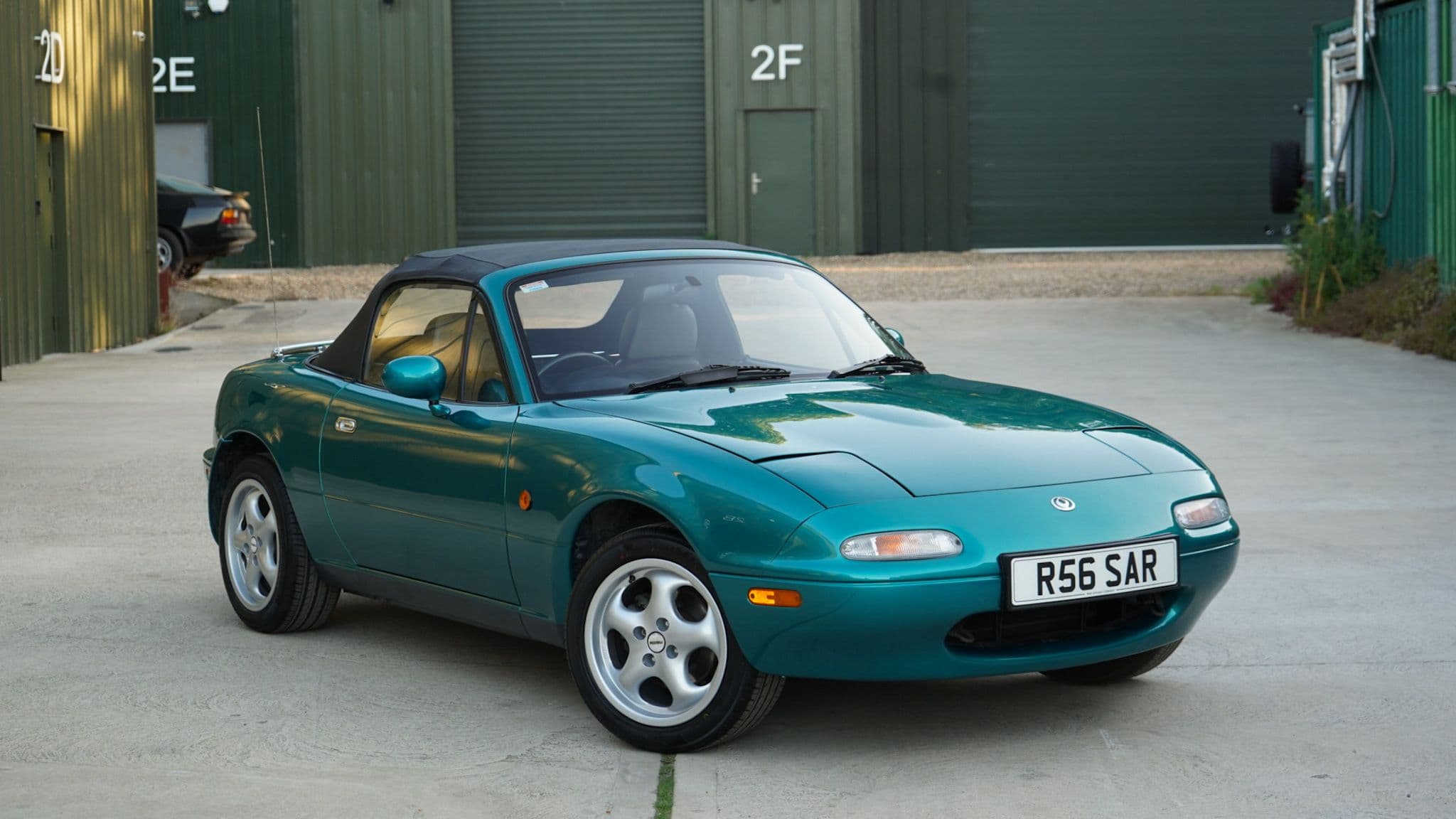
The Mazda MX-5 Berkeley was a late UK-market special edition of the first-generation MX-5. A surviving archive reproduction of Mazda Cars (UK) period campaign and press-kit material says 400 cars were to be produced, each individually numbered, in Sparkle Green Metallic at £17,600. The same reproduced period text describes a 1.8-litre fuel-injected, rear-wheel-drive MX-5. Strong UK specialist evidence identifies the Berkeley as based on the regular 1.8i, not a separate higher-output derivative.
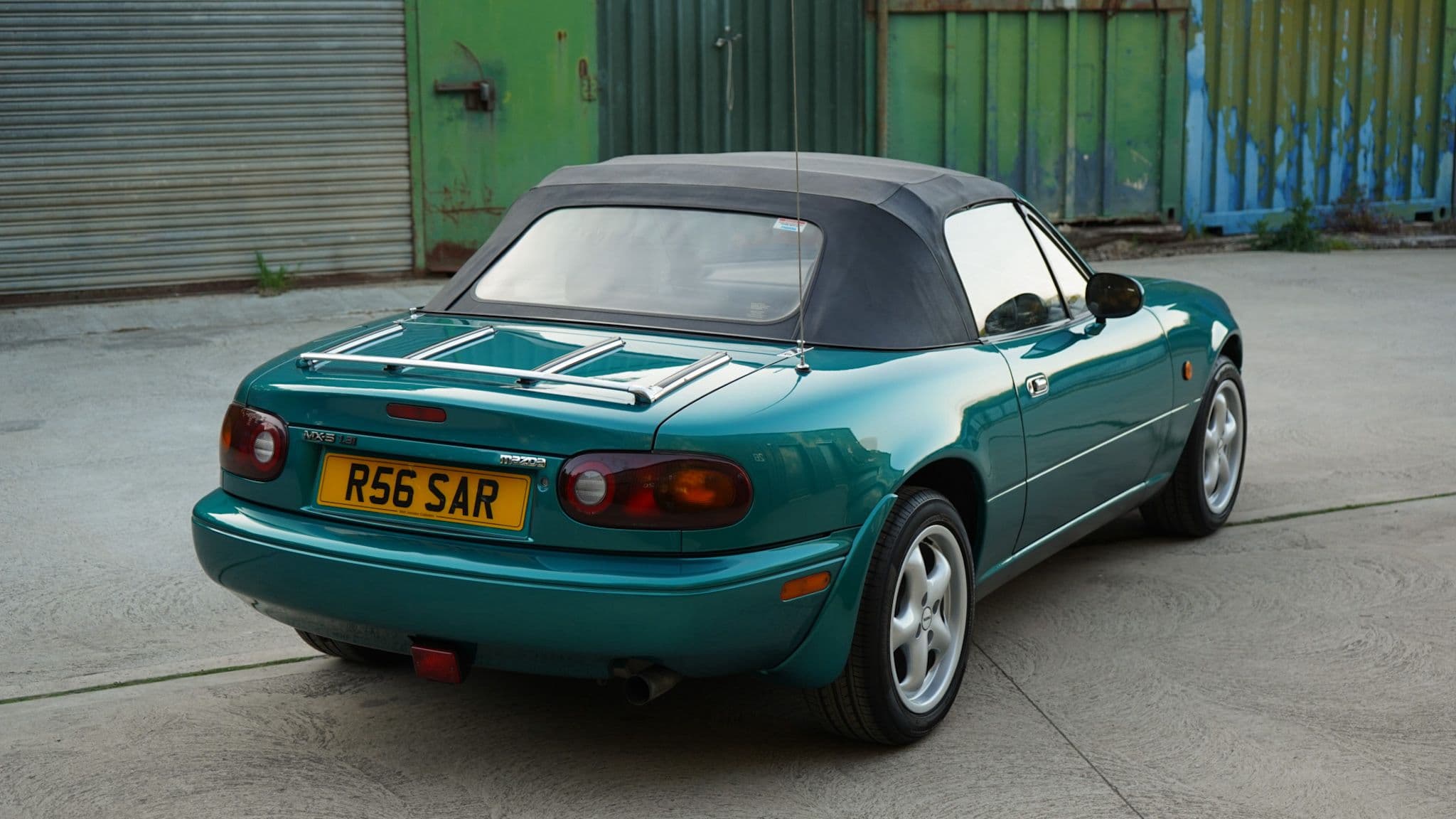
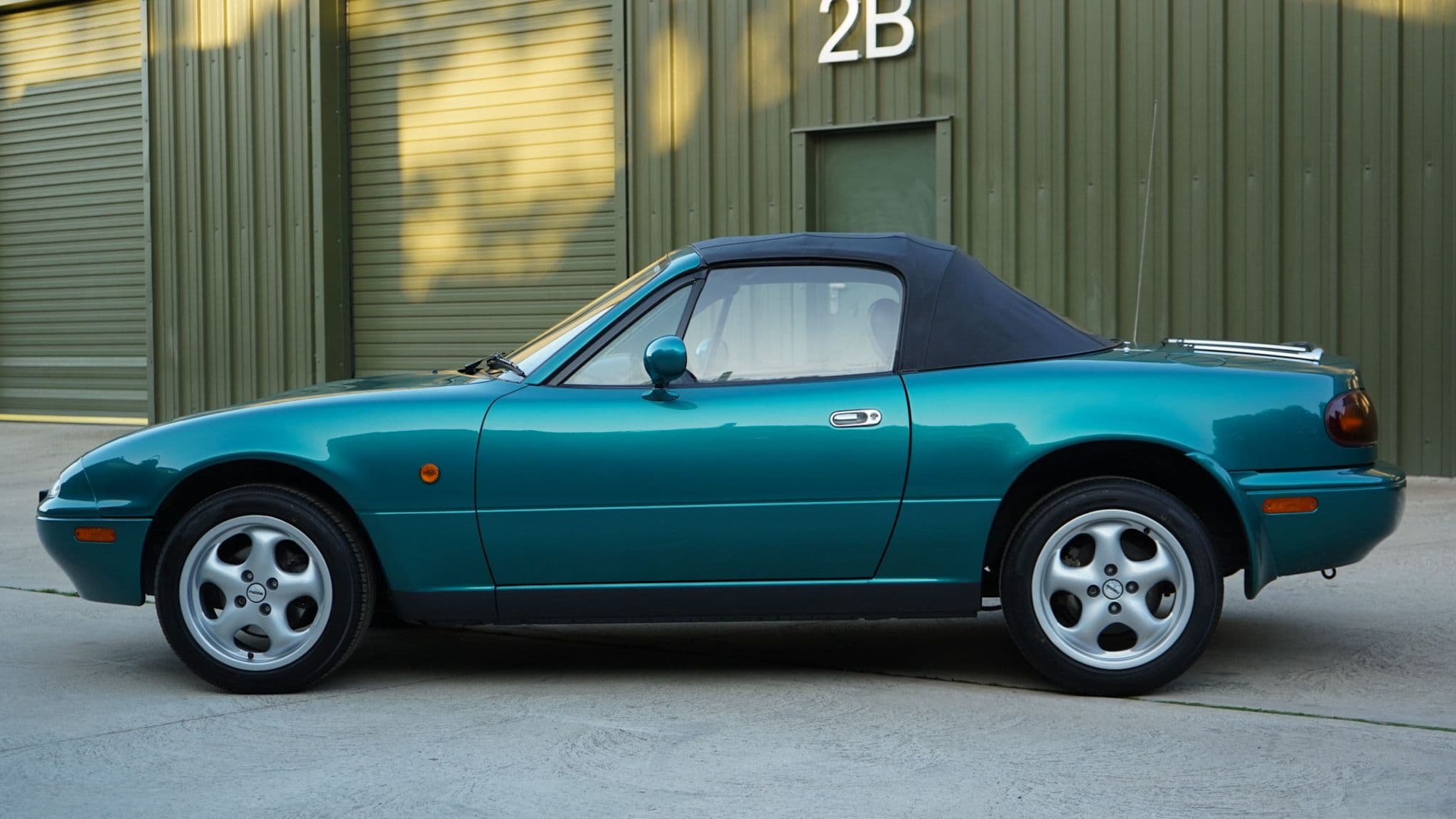
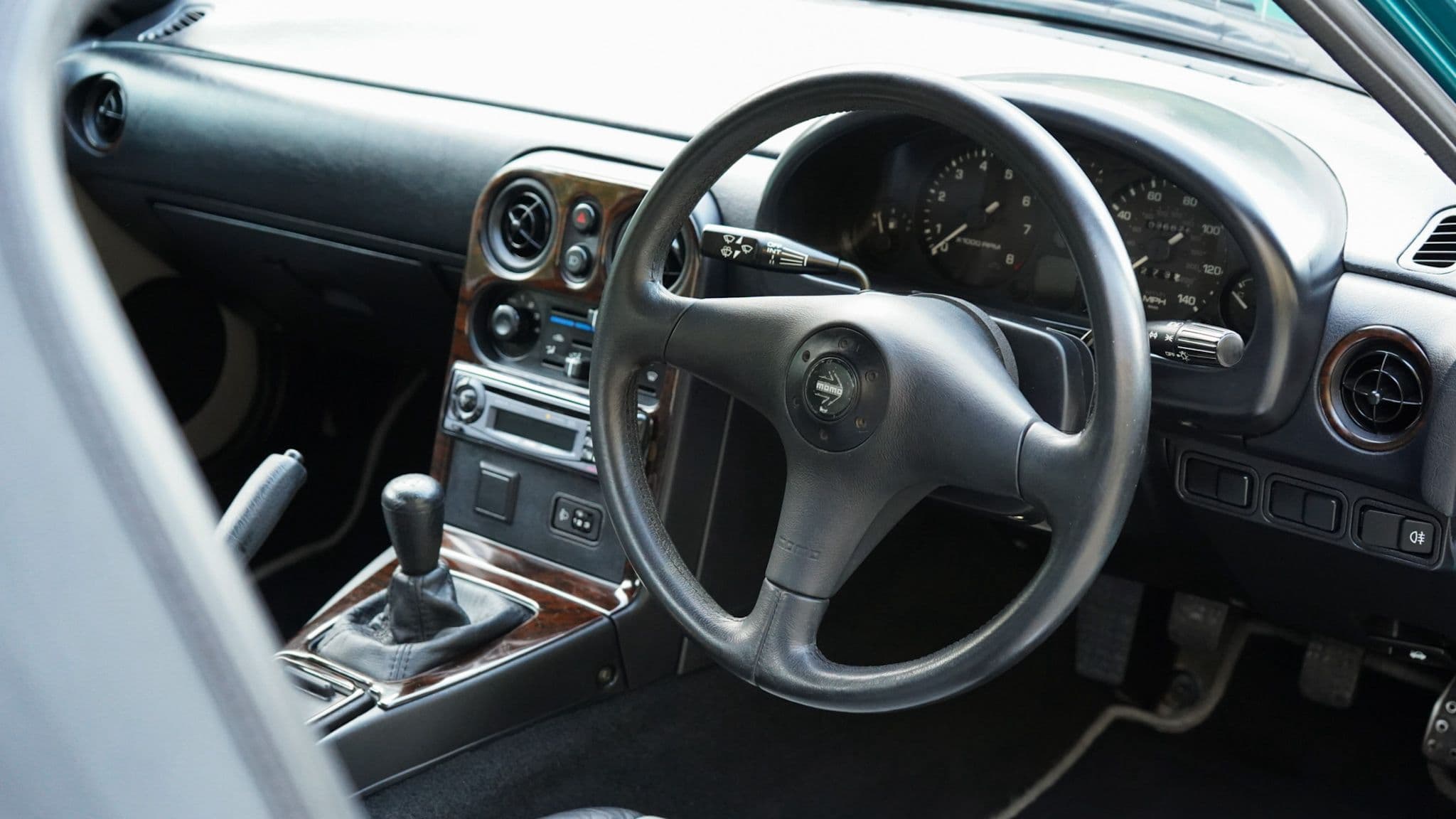
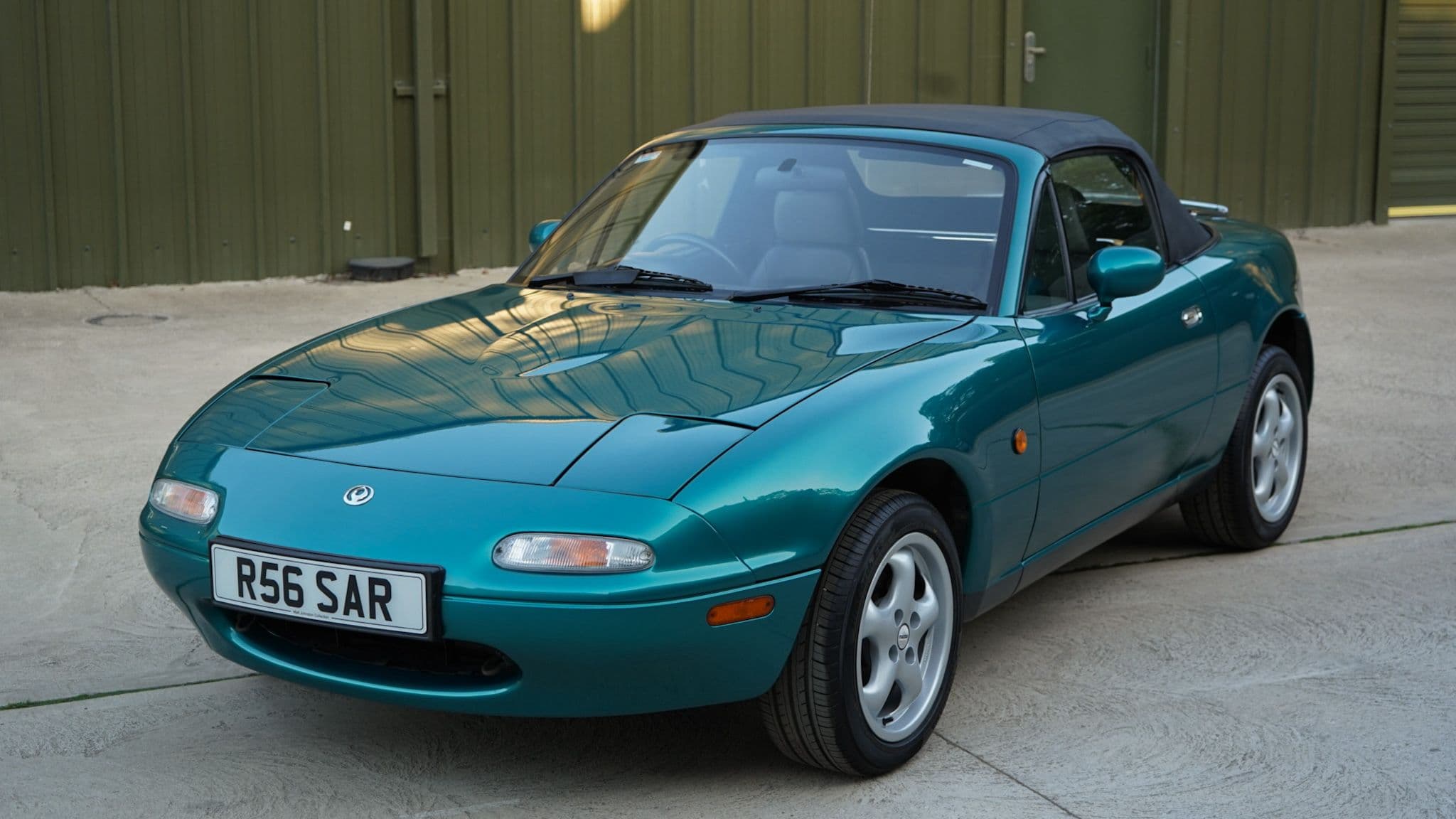
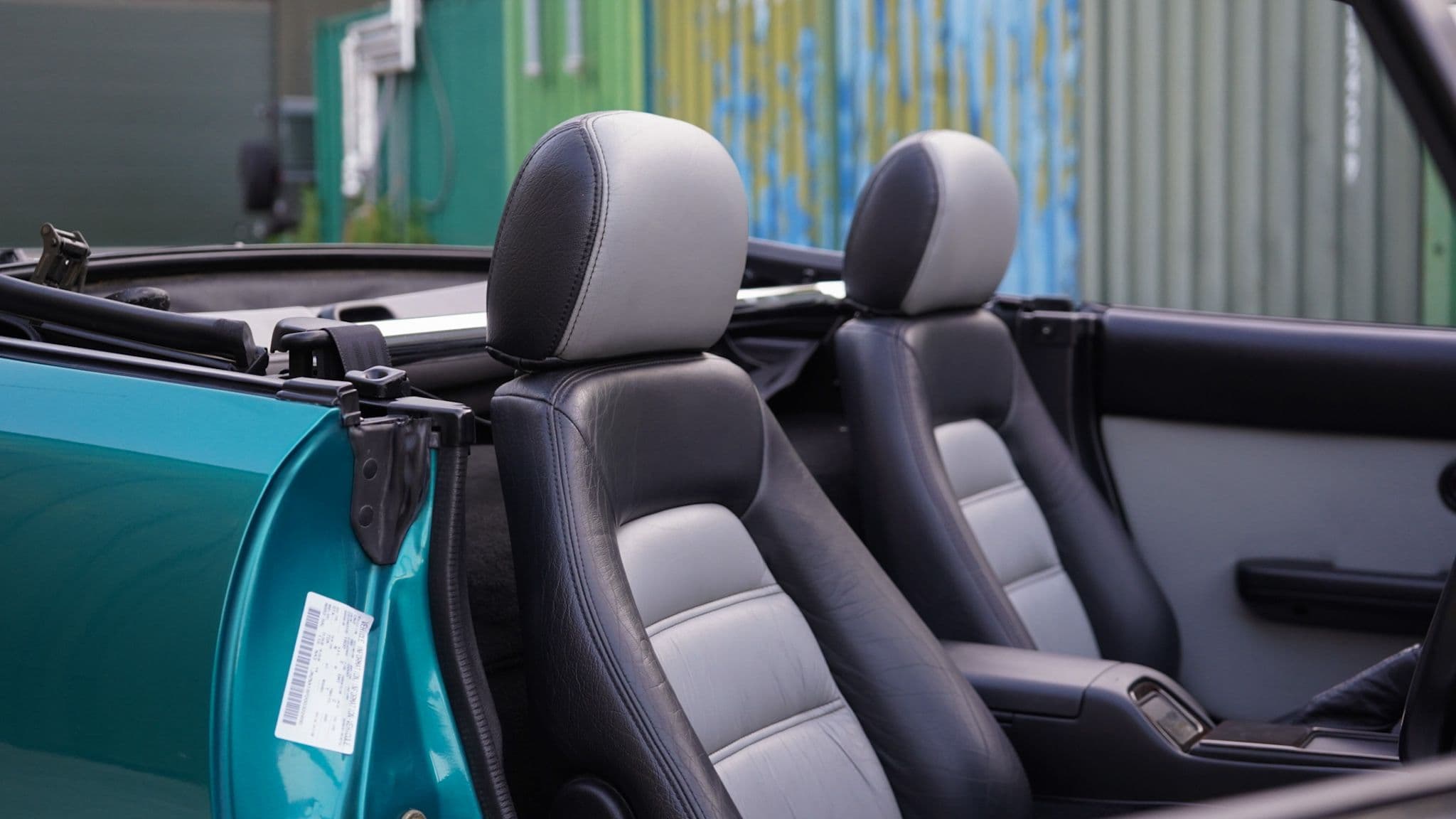
Its identity was mostly in a carefully chosen specification: Sparkle Green Metallic paint, a numbered plaque, 15-inch five-spoke alloys, black and light-grey leather trim, a Momo leather steering wheel, dark wood-effect console trim, stainless cabin details and a boot rack.
That makes the Berkeley easy to recognise. It does not make it easy to authenticate from one photograph.
| Area | Evidence supports | Why it matters |
|---|---|---|
| Market | United Kingdom | Do not apply Berkeley specification to Japanese Eunos Roadsters or other markets |
| UK launch context | January 1998 brochure; late NA / Mk1 run | Period material places the Berkeley at the UK Mk1-to-NB transition without treating one calendar year as a universal build or registration date |
| Limited run | 400 individually numbered cars | The centre-console plaque is part of the identity, but it is transferable |
| Base car | 1.8i | Berkeley should not automatically be treated as a 1.8iS |
| Broad drivetrain | Reproduced Mazda press-kit text: 1.8-litre fuel injection, rear-wheel drive | Confirms the basic mechanical layout without proving iS-specific differential or suspension hardware |
| Paint | Sparkle Green Metallic; KGF records code 11R | One of the strongest visible Berkeley fingerprints |
| Wheels | 15-inch five-spoke alloys | Correct style helps, but wheels can easily be swapped |
| Cabin | Black/light-grey leather; light-grey door panels; dark wood-effect trim | More persuasive when the whole interior remains coherent |
| Driver controls | Momo leather steering wheel; leather gear/handbrake trim | Period-correct detail, not standalone proof |
| Other Berkeley equipment | Stainless brace/scuff plates, boot rack, mats and Berkeley badging | Useful corroboration; all are replaceable parts |
The table is deliberately an identity guide, not a claim that every surviving car must still carry every original accessory. Thirty-year-old sports cars accumulate replaced stereos, wheels, roofs, trim and suspension parts. Originality is a chain of evidence, not a game of spot-the-missing-part.
A surviving Roadster archive reproduces Mazda Cars (UK) Berkeley press-kit text stating that 400 cars were to be produced and that each would carry an individual centre-console plaque. T W White & Sons' long-running Mazda history independently records 400 Berkeley cars with numbered plaques, while KGF Classic Cars documents surviving car 355/400, complete with an original Mazda Berkeley sales brochure.
That is strong evidence for the 400-car programme. It still helps to be precise about what the number means: it is the production allocation for the edition, not a statement that 400 cars survive today.
A plaque reading 123/400 is therefore useful evidence, but the plaque itself is not provenance. It can be removed from one centre console and fitted to another.
It is fair to describe the Berkeley as a very late NA special edition. The surviving brochure archive dates the UK Berkeley sales brochure to January 1998, placing the edition at the point where the first-generation car was giving way to the second-generation MX-5. That dates the UK sales material; it is not used here as proof that every individual Berkeley was built or first registered in the same calendar year.
That is more useful than treating “Final Edition” as if it were a separate factory model code. Registration dates, production timing and market launches do not all change on the same day, and the NA existed in more than one market. The Berkeley's significance is that it belongs to the end of the UK Mk1 story, not that every last first-generation MX-5 built anywhere was a Berkeley.
For the wider chronology, see the Mazda MX-5 NA / Mk1 reference.
The reproduced Mazda Cars (UK) press-kit passage describes a 1.8-litre fuel-injected engine driving the rear wheels. It does not identify a Berkeley-specific power tune, differential or suspension package. Strong UK specialist evidence further describes the Berkeley as based on the 1.8i. That distinction is important because UK Mk1 discussions often blur the Berkeley with the higher-specification regular 1.8iS.
A genuine Berkeley badge does not, by itself, prove that a car left Mazda with every feature associated with the 1.8iS. In particular, do not assume an iS-specific differential or suspension package simply because the car is a limited edition.
The Berkeley's documented story is principally one of colour, trim and equipment, not a unique engine tune. If a seller claims additional mechanical specification, check that claim separately against the car's paperwork and hardware.
The difference matters because period MX-5 parts are highly interchangeable. A Berkeley can gain later suspension. An ordinary 1.8 can acquire Berkeley wheels and a Momo steering wheel. Neither change rewrites the car's original derivative.
For the separate regular-grade question, the Mk1 1.8iS Guide explains what the S did — and did not — mean in the UK range.
The consistent edition colour is Sparkle Green Metallic. KGF records the paint as code 11R on its documented survivor, while T W White independently describes the Berkeley run in Sparkle Green Metallic.
That is a much stronger originality clue than simply calling the car “green”. Paint changes with lighting, cameras and ageing, and a repainted car can still be a genuine Berkeley. The useful question is whether the current finish agrees with the car's original colour evidence and history.
TMJC's own current inventory page for its Berkeley is a good reminder not to treat generic website fields as factory truth: the page confirms a 1998 RHD manual Berkeley associated with the collection, but some of its generic structured fields do not agree with the Berkeley-specific evidence. This reference therefore uses the specialist edition research for canonical specification and keeps the TMJC page as evidence about that individual car.
The recurring Berkeley cabin description is unusually specific: black and light-grey leather seat facings, light-grey door panels with black stitching, a Momo leather steering wheel, dark burr-wood-effect console trim, leather-trimmed gear and handbrake gaiters, stainless scuff plates and a stainless cabin brace.
KGF records trim code NA3 on car 355/400. That code is useful supporting evidence on a documented survivor, but this page does not promote it into a universal structured fact without the period Mazda specification sheet in hand.
The key point is coherence. A car with the right plaque but the wrong paint, ordinary cloth interior, unrelated wheel and no documentary history deserves more investigation than one whose colour, trim, numbered identity and period paperwork agree.
No. It is one part of the evidence.
A practical authentication order is:
That last distinction is important. “Genuine Berkeley” and “original Berkeley” are not the same question. A genuine car may have lost original parts during three decades of maintenance. Conversely, sourcing the missing special-edition parts does not create factory provenance for another NA.
A surviving Roadster archive reproduces period Mazda Cars (UK) campaign material for the Berkeley. The competition wording offered a weekend for two at The Berkeley Hotel and directed entrants to a local Mazda dealer or Mazda Cars (UK), which is much stronger period evidence for the hotel tie-in than repeating a modern advert.
The same archive labels a Berkeley passage as quoted from the press kit. That reproduced text describes 400 individually numbered cars, a centre-console plaque, Sparkle Green Metallic, a £17,600 price and a 1.8-litre fuel-injected rear-wheel-drive layout.
That closes several core identity questions, but it does not turn the archive host into Mazda itself. The original January 1998 UK Berkeley brochure is separately catalogued, yet its PDF pages were not reliably retrievable in this research pass. This page therefore distinguishes the surviving reproduction from an original Mazda-hosted document and does not use it to invent a complete equipment list.
This is one detail where the surviving evidence is not clean enough for a categorical answer.
KGF's documented car 355/400 is described with a Clarion DRX5375R CD player. Surviving dealer/archive descriptions of another exceptionally original Berkeley, number 346/400, identify a Kenwood KDC-4050L instead.
There are several plausible explanations: dealer fitment, a running specification change, a later replacement, or an error in one of the modern descriptions. Without a directly read January 1998 Mazda specification brochure settling the point, the responsible conclusion is simple:
do not authenticate a Berkeley from the stereo model.
A period-looking head unit is nice to find. It sits far below original-market history, colour, numbered identity and the broader trim package in the evidence hierarchy.
The boot rack appears consistently in Berkeley-specific equipment descriptions and is a useful visual cue. It is also one of the easiest pieces to remove, refinish or replace, so absence alone should not condemn an otherwise well-documented car.
A detachable hardtop should be treated differently. Surviving cars are sometimes sold with colour-matched hardtops, but the research reviewed here does not justify making a hardtop part of the Berkeley's defining standard specification. Verify a particular hardtop through the individual car's history rather than treating it as edition proof.
The Matt Johnston Collection has handled a 1998 Mazda MX-5 Berkeley Edition, recorded as RHD, manual and showing 36,875 miles on the current first-party inventory page.
That individual car is useful because it connects this research to something TMJC has actually handled. Its mileage and current presentation belong to that car alone. They do not tell us how many Berkeleys survive, what mileage a genuine car should have, or which replaceable components another example must still retain.
This is exactly where collection-based research is most useful: the real car raises the question, but the answer has to be built from edition-level evidence rather than copied from one advert.
Start with identity, then inspect it as an ordinary NA.
For identity, ask for the numbered plaque, original or long-running registration/history documents, old photographs, service/invoice history and any surviving Mazda sales literature. Check that the paint and interior evidence agree with the Berkeley specification. If a major special-edition feature is missing, ask when and why it changed rather than assuming either fraud or innocence.
Then move on to the normal Mk1 condition questions. The Berkeley's rarity does not protect it from age, corrosion, accident repair, neglected servicing or poorly chosen modifications. The parent NA / Mk1 reference covers the broader generation context; this page should not turn a trim-authentication question into a second generic MX-5 buying guide.
The Roadster archive is a secondary host reproducing period Mazda Cars (UK) material; the article attributes it accordingly. The brochure archive is used only to establish that a January 1998 UK Mazda Berkeley sales brochure is catalogued. Its underlying PDF pages were not reliably retrievable during this research pass, so unseen brochure details are not presented as evidence.
Editorial information
Research and editorial from TMJC Garage.
Research and editorialTMJC Garage
Reviewed byMatt Johnston
Last reviewed13 September 2026
Published byThe Matt Johnston Collection
Model lineage
TMJC media
TMJC assistance
Continue to the main TMJC website and speak directly with the collection team.
Sell, consign or editorial
Continue with TMJC for a discreet conversation, professional presentation and collector-focused support.
Enquire now