TMJC assistance
Want TMJC to help with this vehicle?
Sourcing, consignment and valuationContinue to the main TMJC website and speak directly with the collection team.
Manufacturer
Mazda grew from a Hiroshima industrial company into a distinctive carmaker shaped by rotary engines, Le Mans and the MX-5. Here is how the marque evolved.
Model directory
Choose a Mazda model family to compare its generations, engines, body styles and collector context.
TMJC guide
Mazda grew from a Hiroshima industrial company into a distinctive carmaker shaped by rotary engines, Le Mans and the MX-5. Here is how the marque evolved.
Mazda's story is unusual even before the cars become interesting. The company began in Hiroshima in 1920, did not build its first vehicle until 1931, entered the passenger-car market in 1960 and spent much of the following decades pursuing engineering ideas that larger manufacturers often abandoned.
That history explains why Mazda can mean very different things to different enthusiasts. To one generation it is the company that persisted with the rotary engine. To another it is the marque behind the RX-7 and the 1991 Le Mans-winning 787B. For many British buyers, though, Mazda is inseparable from the MX-5 and the idea that a sports car can be light, simple and enjoyable without chasing headline power.
If by “Mazda car” you mean the first Mazda-branded vehicle, it was the Mazda-Go Type-DA three-wheeled truck in 1931. If you mean the first four-wheel passenger car, it was the R360 Coupe in 1960. Mazda's own history treats those as separate milestones, so “oldest Mazda car” depends on which definition you use.
Mazda Motor Corporation gives its formal founding date as 30 January 1920. The original business was Toyo Cork Kogyo Co., Ltd, founded in Hiroshima rather than as an automobile manufacturer.
Jujiro Matsuda became president in 1921 and the company gradually moved away from cork towards machinery. In 1927 it became Toyo Kogyo Co., Ltd. Mazda's corporate origin is 1920, but calling it a carmaker from day one skips more than a decade of industrial development.
Vehicle production began in October 1931 with the Mazda-go three-wheel truck. Mazda's archive records 66 examples built in that first year. The Mazda name was already being used on products long before the legal company name changed to Mazda Motor Corporation in 1984.
Mazda's current corporate history ties the name to two related ideas. When the company's first three-wheeled trucks appeared in 1931, Toyo Kogyo says the model name was chosen in honour of president Jujiro Matsuda's family name. The spelling “Mazda” was also associated with Ahura Mazda; Mazda's Mazda-Go history describes that figure as the God of Light and says the association expressed a hope that the compact vehicle would bring light to its class.
That is more precise than saying the company simply renamed itself after Ahura Mazda. In 1931 the legal company was still Toyo Kogyo, while Mazda was the product name on the new three-wheeled truck. The corporate name Mazda Motor Corporation did not arrive until May 1984.
Chronologically, the Mazda name belongs to the marque from its first vehicle in 1931, even though the company behind it kept the Toyo Kogyo name for another half-century.
Mazda remains rooted in the same part of Japan. Its current head office is in Fuchu-cho, Aki-gun, Hiroshima, giving the marque a continuity of place that is unusually easy to trace through its corporate history.
By the later war years Toyo Kogyo was no longer operating only as a vehicle and machine maker. Mazda's current historical record says the company was forced into military production under Japanese Army and Navy orders, producing arms and related parts. Its centenary timeline gives the additional detail that arms, machine tools, rock drills, aircraft-engine parts and the automobile department were designated for munitions production in 1944.
On 6 August 1945, Hiroshima was devastated by the atomic bomb. Mazda says the Fuchu works, about five kilometres from the centre of the bombing, suffered comparatively limited physical damage. That did not mean the company escaped the human cost: Mazda's 100-year timeline records that about 200 employees working on building-removal work in Hiroshima city were killed.
The immediate story was relief and civic use as well as restarting a business. Toyo Kogyo lent part of its buildings to Hiroshima Prefecture, where government departments operated until July 1946, while the company supported recovery work. Mazda's corporate chronology records approval to return plants to civilian production in November and the resumption of Type-GA three-wheel-truck production in December 1945.
That sequence is an important bridge in Mazda's car history. Vehicle production had restarted within months of the bombing, but passenger cars were still fifteen years away. The 1960 R360 therefore belongs to a post-war industrial recovery that began with commercial vehicles rather than a sudden jump from the pre-war Mazda-go to passenger cars.
The next important date for car enthusiasts is 1960. Mazda identifies the R360 Coupe as its first passenger car, marking the point at which the business moved decisively into the mass passenger-car market.
The R360 was tiny, light and designed to make personal motoring accessible. That does not make it a direct ancestor of every later Mazda, but it introduced a theme that repeatedly returns in the company's best-known cars: useful performance through intelligent packaging and low mass rather than size for its own sake.
Through the 1960s Mazda expanded quickly with cars such as the Carol, Familia and Luce. At the same time, it was pursuing a much riskier engineering programme that would come to define the marque internationally.
Mazda did not invent the Wankel rotary engine. Its own history records a technical-cooperation agreement with NSU/Wankel in 1961. What Mazda did was persist with the concept after the development problems became obvious.
Mazda's Cosmo Sport history describes six years of work to solve durability problems in the rotor housing and apex sealing. The result reached customers on 30 May 1967 as the Cosmo Sport, which Mazda identifies as the world's first volume-production sports car powered by a two-rotor rotary engine.
That achievement matters more than simply calling the rotary "different". Mazda turned an elegant but difficult concept into a production engine, then kept developing it through road cars and competition while other manufacturers stepped away.
The rotary would go on to underpin some of Mazda's most recognisable performance cars, particularly the RX series. It also gave Mazda an engineering identity that was unusually clear for a relatively small global manufacturer: compact engines, willingness to take technical risks and a habit of developing ideas beyond the point where conventional wisdom said to stop.
Mazda's rotary programme reached its most famous competitive result at the 1991 24 Hours of Le Mans.
The orange-and-green No.55 Mazda 787B completed 362 laps and won overall. Mazda records it as the first Japanese car to win Le Mans outright. The 787B used the four-rotor R26B and represented the culmination of a long Mazda rotary-racing programme rather than a one-off publicity exercise.
For collectors, the significance is not that every rotary Mazda should be treated like a 787B. It is that the road-car engineering philosophy had a genuine competition lineage behind it. The same manufacturer that put two-rotor engines into production in the 1960s carried the concept to an overall Le Mans victory more than two decades later.
No. The rule change that pushed Mazda's rotary Group C programme out of the new 3.5-litre World Sportscar formula was already in motion before the 787B won Le Mans in 1991.
Mazda's own 2011 retrospective says that, because of a change in race regulations, 1991 was expected to be the final year in which a rotary-engined car could participate at Le Mans. Contemporary reporting shows why. Motor Sport reported in 1988 that FISA had announced a new 3.5-litre sports-car formula intended to replace the existing Group C rules, and in 1989 it reported that Mazda had already been told the future World Championship formula would have no class for its rotary engine.
The transition itself was untidy. Older Group C cars were admitted alongside the new 3.5-litre prototypes in 1991, and Le Mans made further allowances for older Group C machinery in 1992 when the entry was thin. Motor Sport's June 1992 preview describes older Jaguars, Porsches and turbocharged Toyotas sharing the event with the new 3.5-litre cars, while Mazda had moved to the V10-powered MXR-01. So the shorthand that rotaries were simply banned from Le Mans immediately after Mazda won is too neat for the way the rules actually changed.
The careful version is: the 787B's victory did not cause the rotary exclusion; the replacement World Sportscar formula had already been designed around a different engine rule, and 1991 proved to be Mazda's last rotary Le Mans start. This is a Le Mans and World Sportscar rule-history point, not a claim that rotary engines were prohibited from every form of motorsport.
The MX-5 is just as important to Mazda's identity, but for almost the opposite reason. It is not a rotary-powered technical showcase. Its strength is that the engineering is deliberately restrained.
Mazda's own history says the roadster project began at Mazda North America before responsibility moved to Japan in 1986. The finished car went on sale in the United States in spring 1989, followed by Japan in September, where it was sold as the Eunos Roadster.
Mazda describes the development idea through Jinba Ittai — rider and horse as one. In practical terms, the team prioritised low mass, predictable responses and direct driver connection instead of continually adding power or equipment. That approach helped revive the lightweight open sports-car market at the end of the 1980s and became one of Mazda's most durable brand ideas.
This is why it is misleading to reduce Mazda to "the rotary company". The rotary programme and the MX-5 represent two different forms of the same broader habit: being willing to build a car around a clear engineering idea even when that idea is not the easiest route to a marketing headline.
The company legally became Mazda Motor Corporation in May 1984. By then, the Mazda product name had been established for decades and the range was far broader than the rotary cars alone.
The period that followed is particularly important for today's collector market. The second- and third-generation RX-7s developed the rotary sports-car line in very different directions, the MX-5 created a new global reference point for affordable roadsters, and the 787B put Mazda at the top of Le Mans.
Those cars also explain why Mazda's enthusiast following crosses several groups that do not necessarily shop for the same vehicle. An RX-7 buyer may be interested in rotary engineering and turbocharging; an MX-5 buyer may care more about originality, chassis feel and low weight. Both are recognisably Mazda stories without needing to be the same story.
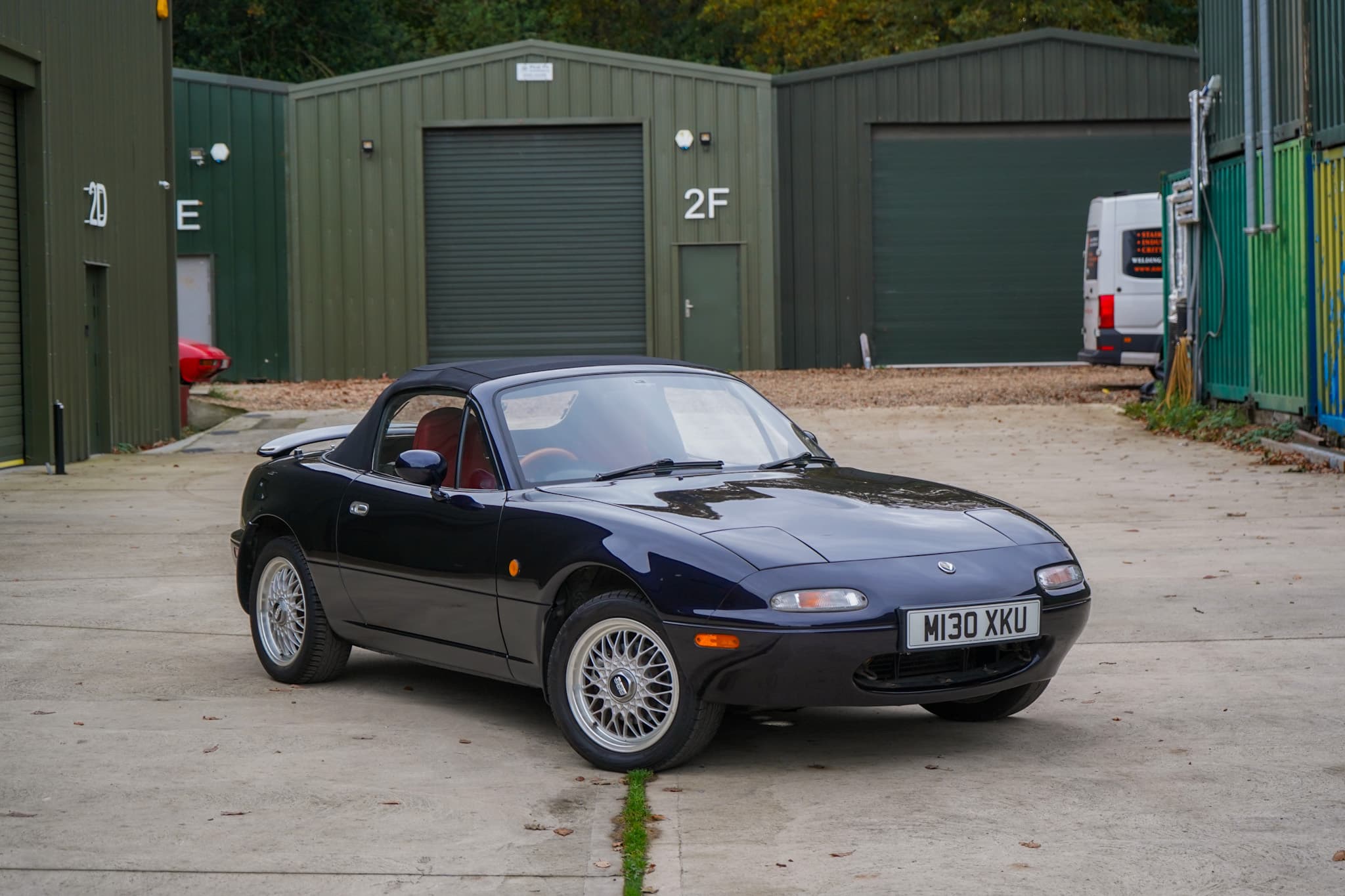
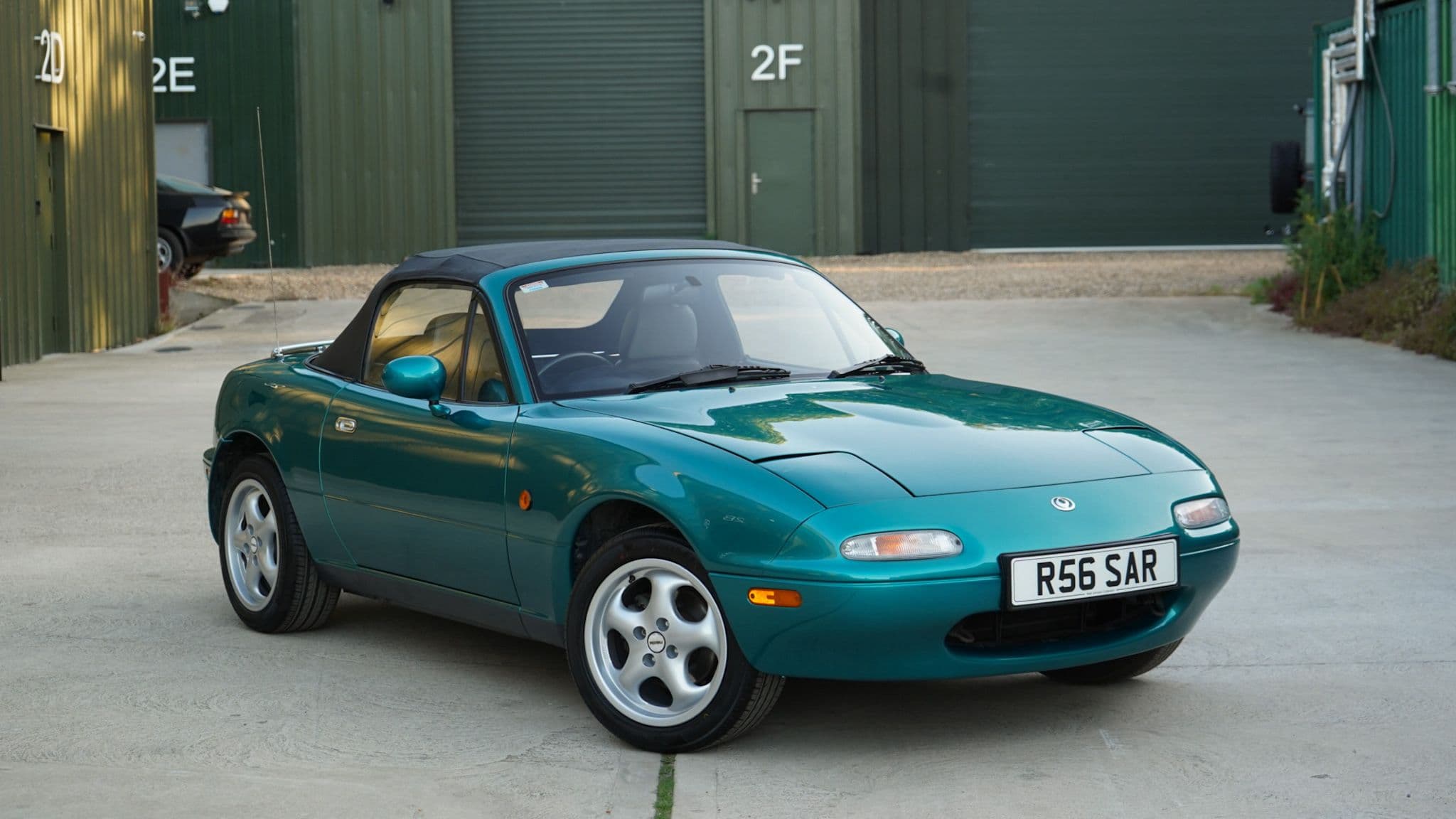
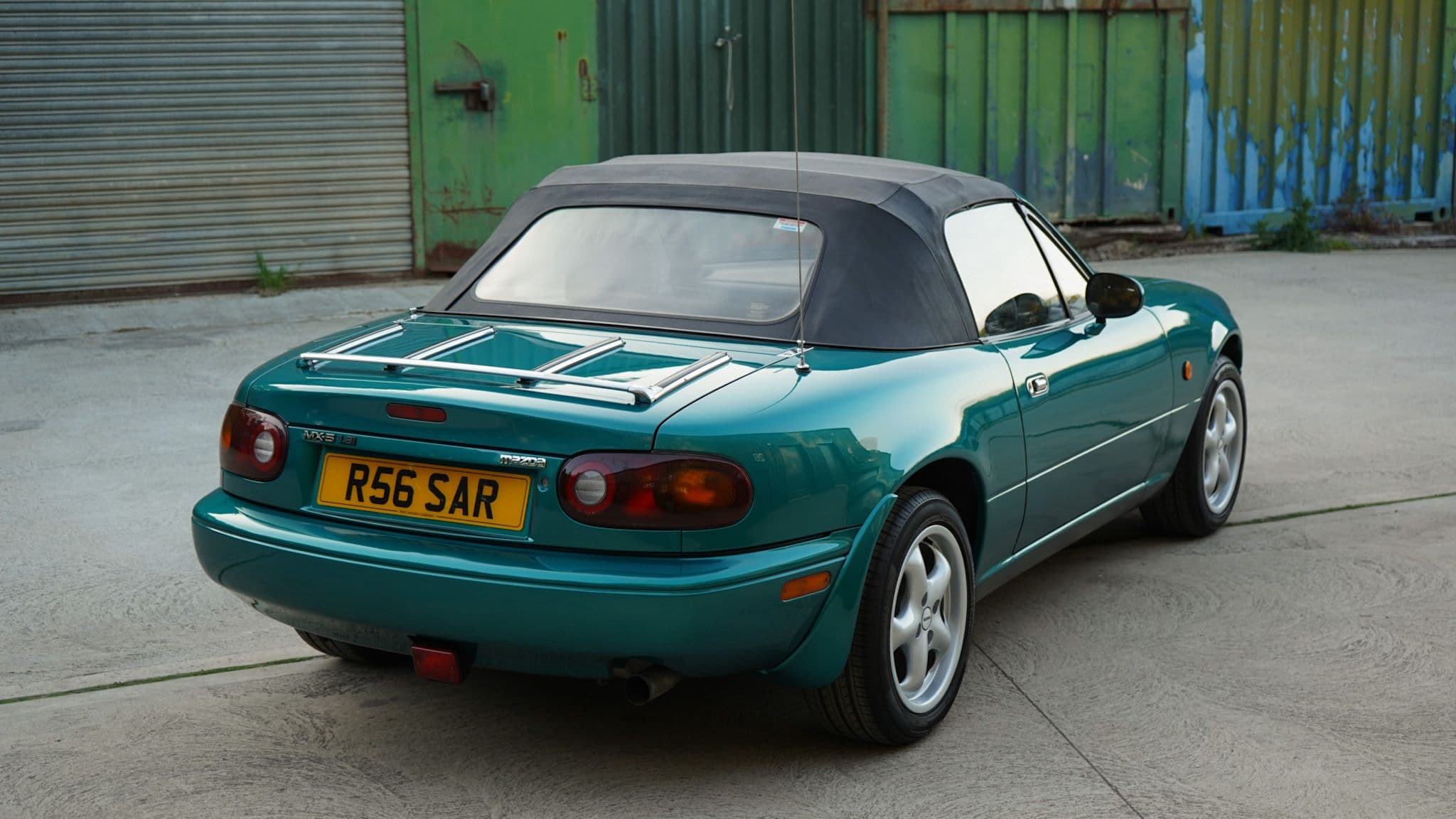
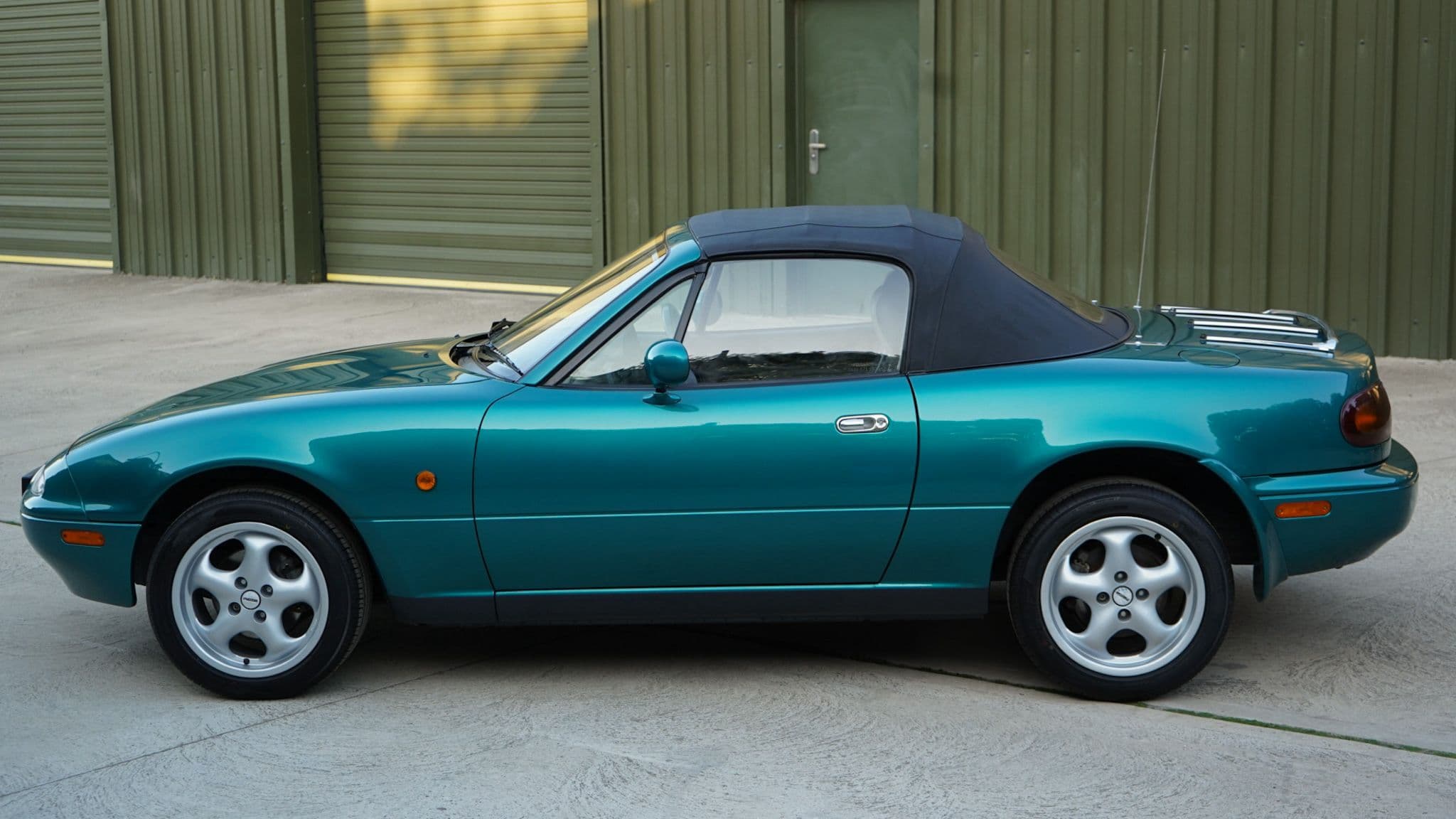
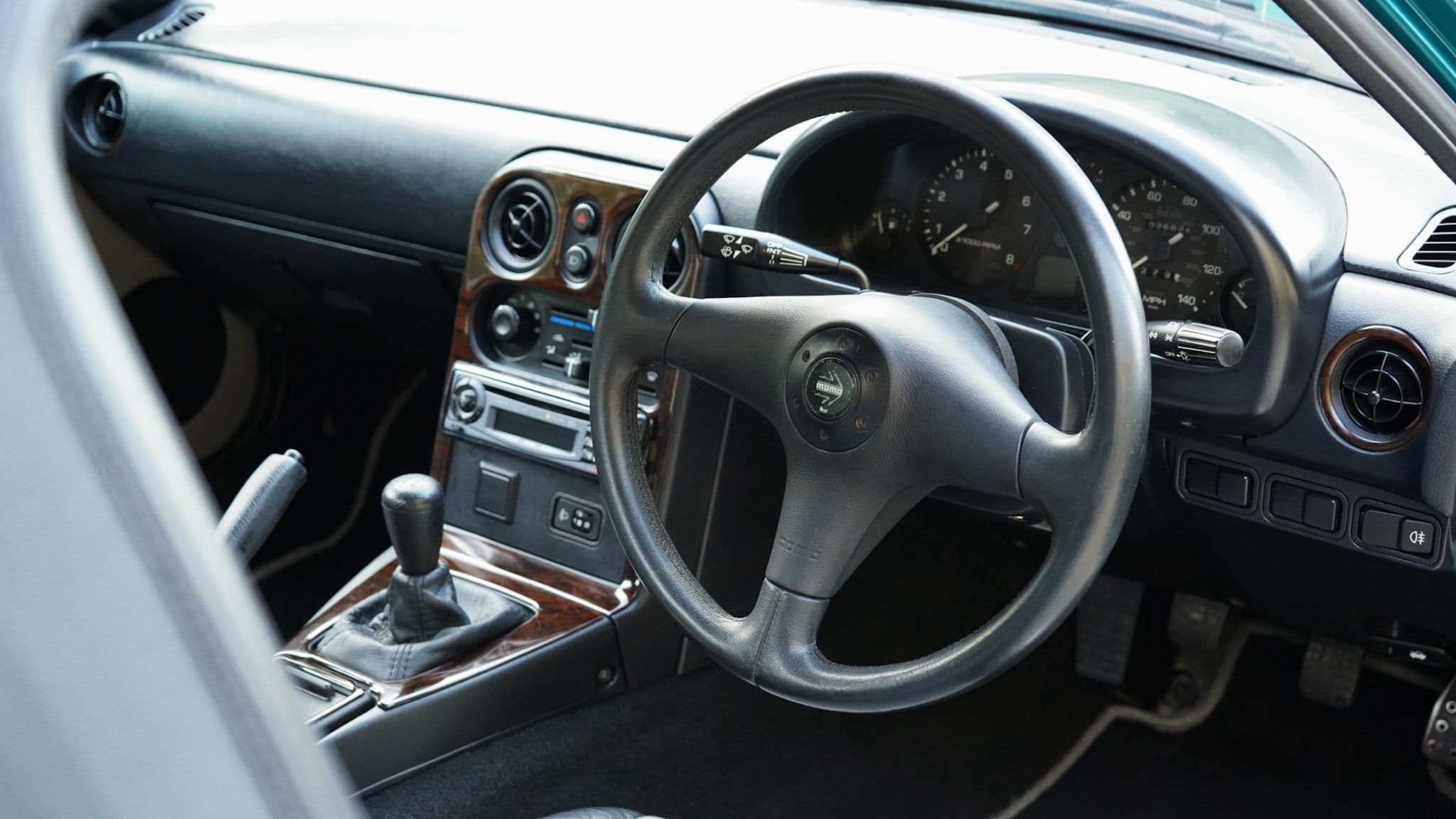
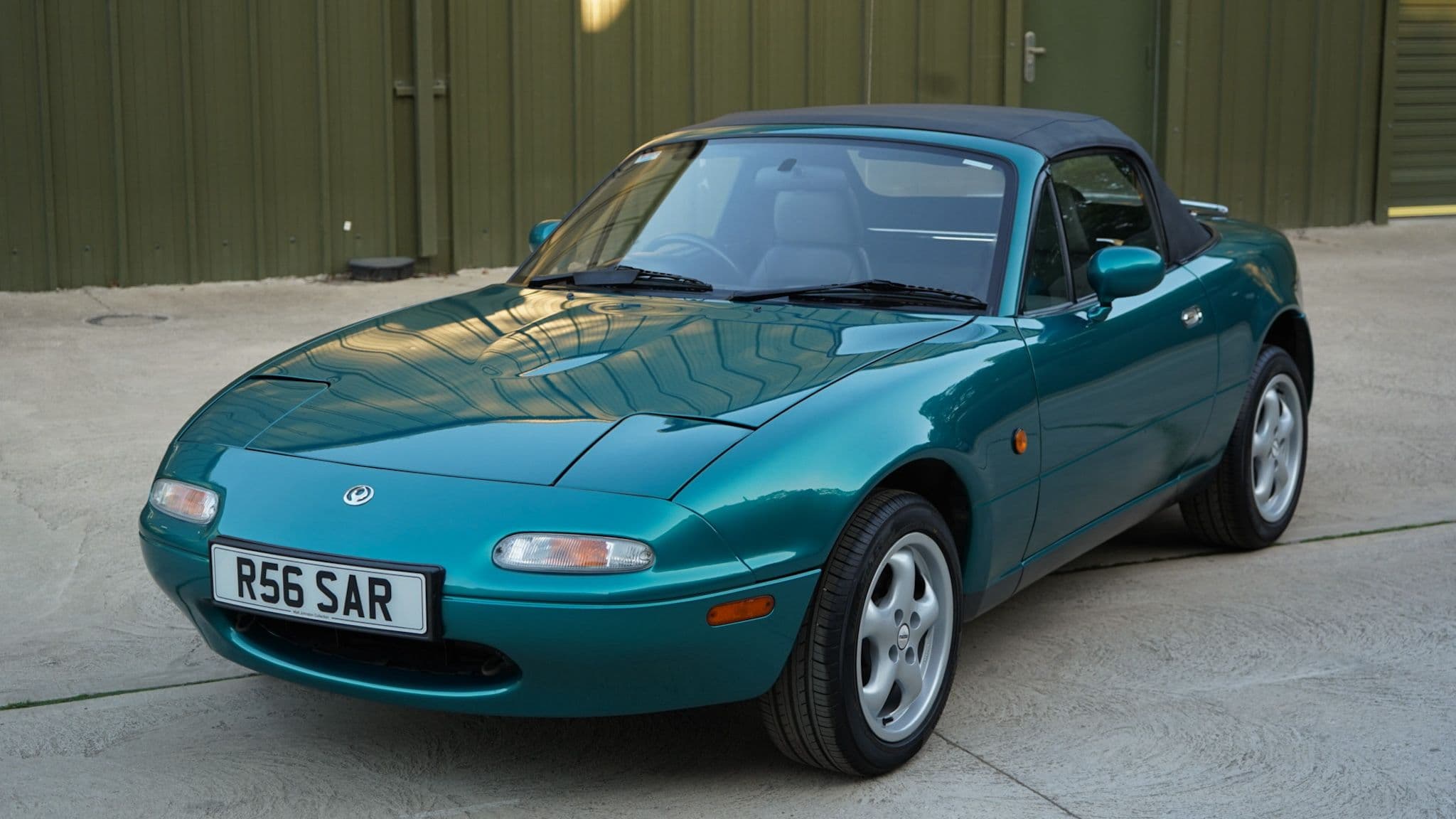
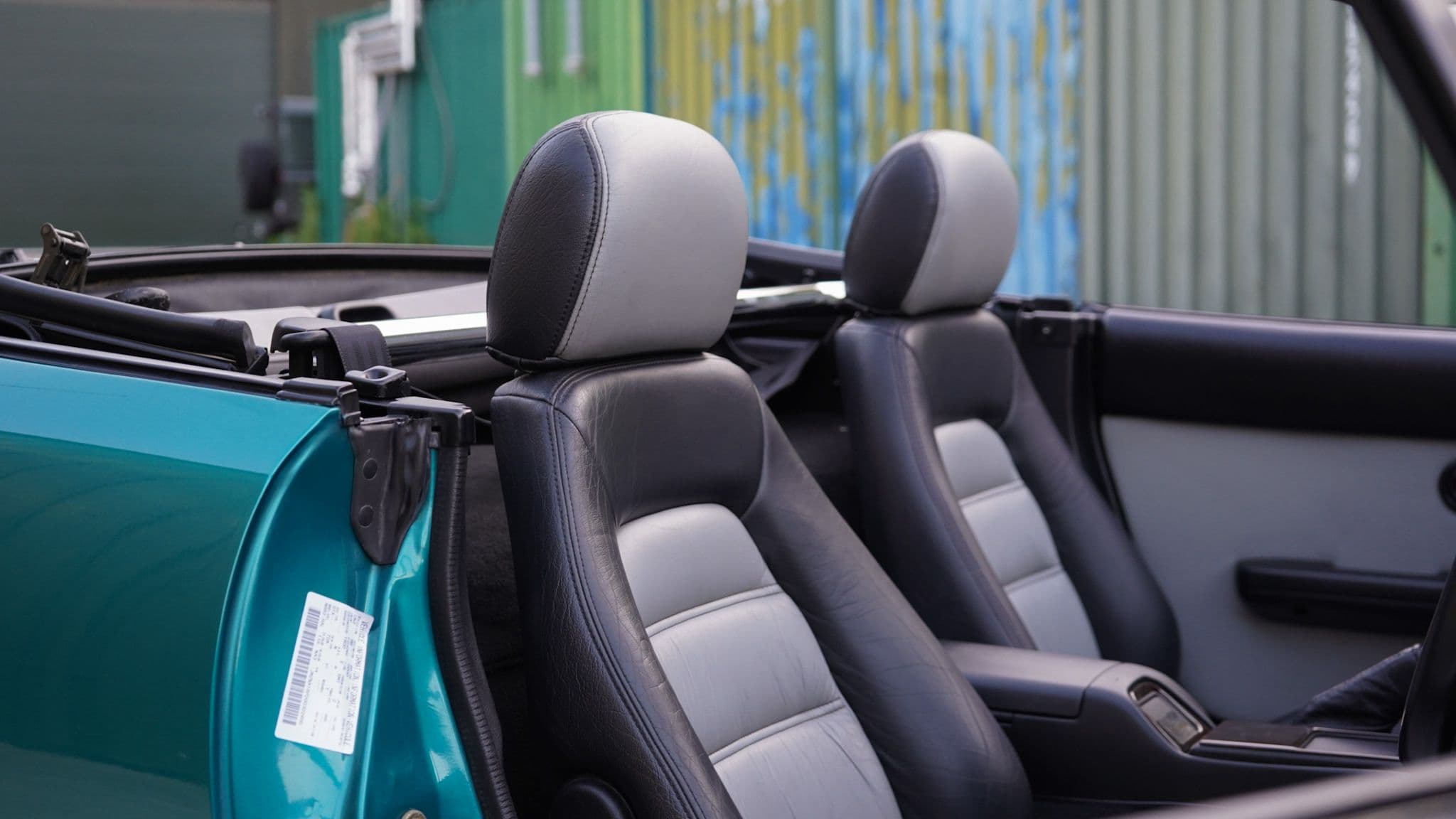
TMJC has handled two first-generation MX-5 examples that illustrate this better than a generic specification table.
The first is a UK-supplied 1995 MX-5 1.8iS, registered by Christchurch Mazda on 22 May 1995. Its retained manuals, booklets and keys, exceptionally low mileage and UK-market specification make it a strong example of the value of documentary continuity on a collector-grade Mk1.
The second is a 1995 Japanese-market R-Limited, imported to Britain in 2010. It carries Eunos Roadster identity and a special-edition specification that differs materially from the UK car.
Those two cars are both first-generation Mazda roadsters, but they should not be flattened into one specification because they happen to share a year and basic platform. Market, edition and factory equipment matter.
For the exact UK-car questions, see the Mazda MX-5 Mk1 1.8iS specification and identification guide. The Eunos R-Limited vs UK MX-5 guide goes further into the Japanese-versus-UK distinction.
Mazda's history is broad enough that there is no single checklist for "a collectible Mazda". The evidence that matters depends heavily on the car.
For a rotary model, engine condition, specialist maintenance and evidence of correct rebuild work can be central to the buying decision. For a first-generation MX-5, corrosion, shell integrity, market identity and retention of hard-to-find original specification often matter more than an impressive list of modifications. For limited editions, the documentary link between the chassis and the claimed factory edition is more useful than recreating the appearance later.
The common thread is specificity. Mazda produced cars for different markets, used different names for closely related models and frequently created special editions. A good buying description should therefore answer what the car actually is before it tries to tell you how desirable it is.
| Date | Milestone | Why it matters |
|---|---|---|
| 30 January 1920 | Toyo Cork Kogyo founded in Hiroshima | Corporate origin of today's Mazda |
| October 1931 | Mazda-go three-wheel truck production begins | Start of Mazda vehicle production |
| August-December 1945 | Hiroshima is bombed; Toyo Kogyo supports relief and prefectural operations before Type-GA truck production resumes in December | Connects wartime disruption to Mazda's post-war vehicle-production restart |
| 1960 | R360 Coupe introduced | Mazda's first passenger car |
| 1961 | Technical cooperation with NSU/Wankel begins | Start of Mazda's rotary development programme |
| 30 May 1967 | Cosmo Sport launched | Production two-rotor rotary reaches customers |
| May 1984 | Company renamed Mazda Motor Corporation | Legal company name aligns with the Mazda marque |
| 1989 | MX-5 launches | Lightweight roadster becomes a defining Mazda line |
| 1991 | Mazda 787B wins Le Mans overall | First Japanese car to take the overall victory |
The timeline makes one point especially clear: Mazda's enthusiast reputation was not created by one model. It came from repeatedly choosing a distinct engineering direction and then staying with it long enough to make the idea work.
Editorial information
Research and editorial from TMJC Garage.
Research and editorialTMJC Garage
Reviewed byMatt Johnston
Last reviewed26 October 2026
Published byThe Matt Johnston Collection
TMJC photography
TMJC Guides
TMJC assistance
Continue to the main TMJC website and speak directly with the collection team.
Sell, consign or source
Continue with TMJC for a discreet conversation, professional presentation and collector-focused support.
Enquire now