TMJC assistance
Want TMJC to help with this vehicle?
Sourcing, consignment and valuationContinue to the main TMJC website and speak directly with the collection team.
Variant
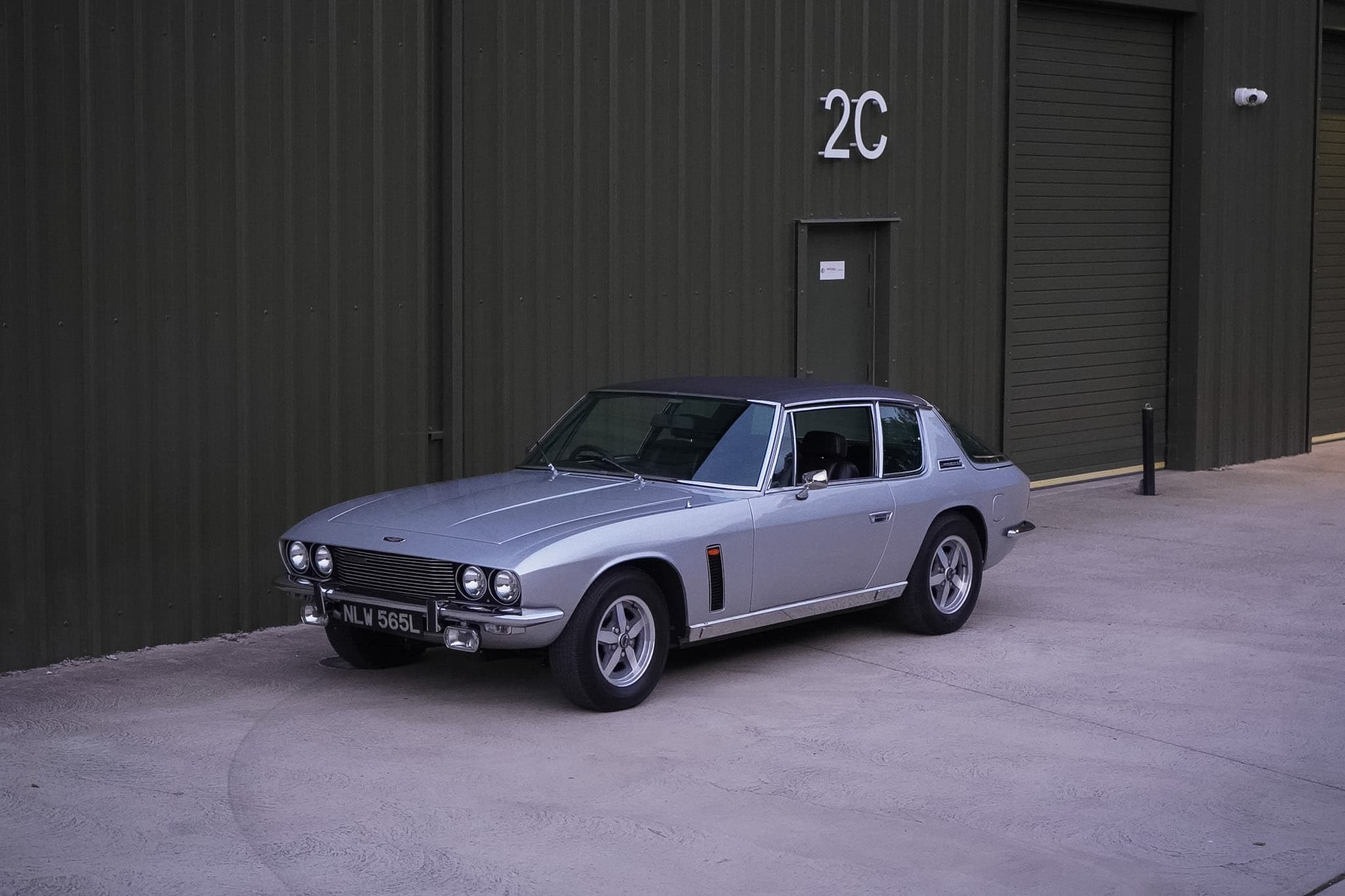
The Jensen SP was a 232-car Six Pack flagship derived from the Mk III. Here is what made it distinct from a standard 7.2-litre Interceptor.
TMJC guide
The Jensen SP was a 232-car Six Pack flagship derived from the Mk III. Here is what made it distinct from a standard 7.2-litre Interceptor.
The Jensen SP was the short-lived high-performance flagship Jensen introduced in 1971 as the FF was being phased out. It used the Interceptor Mk III architecture, but Jensen treated the SP as a separate product and gave it a much more aggressive version of Chrysler's 440-cubic-inch V8: three twin-barrel carburettors, the famous Six Pack from which the SP took its name.
That distinction matters today because the ordinary Interceptor Mk III later adopted a 7.2-litre 440 as well. A car having a 440 under the bonnet does not make it an SP. Nor does a louvred bonnet or a Six-Pack induction system fitted later in life. Factory identity starts with the chassis and build record; period hardware then helps establish how original a surviving car remains.
The SP existed because Jensen needed a new halo car quickly.
The technically ambitious FF was reaching the end of its life, while Jensen's hoped-for replacement project was still some way from production. Jensen Museum research based on former employees places the key discussion in 1970: the company wanted an Interceptor-based flagship that could be developed without the time and cost of an entirely new car.
Chrysler had a convenient answer. Its 440-cubic-inch Six-Pack engine used three two-barrel carburettors and offered the kind of headline performance Jensen wanted. An Interceptor II was used for development work before the production SP appeared in 1971.
The result was not simply an ordinary Mk III with a badge package. Period Jensen literature presented Interceptor III and SP separately. The standard Interceptor III initially retained the 6,276 cc engine, while the SP received the 7,212 cc 440 with Six-Pack induction and a 10.3:1 compression ratio.
The figures below are anchored to Jensen's period Interceptor III/SP literature and later Jensen archive research. Period power ratings need context: 1970s gross/net conventions and market specifications make a quoted historic horsepower figure a poor direct comparison with a modern dyno or homologation number.
| Specification | Jensen SP | Evidence / scope |
|---|---|---|
| Engine | Chrysler 440 V8 | Period Jensen SP specification |
| Displacement | 7,212 cc / 440 cu in | Period Jensen brochure |
| Induction | Three twin-barrel carburettors | The “Six Pack” defining factory system |
| Transmission | TorqueFlite three-speed automatic | Jensen period/archival evidence |
| Drive | Rear-wheel drive | Propeller shaft to limited-slip rear axle |
| Production | 232 cars | Jensen Museum production figures |
| Production period | 1971-1973 | Jensen Museum; historian Richard Calver adds a final special-order car in October 1973 |
| Period quoted power | 385 bhp | Jensen Owners' Club period-history figure; treat as a historic rating, not a modern equivalent |
Jensen's own brochure explains the name directly: SP meant Six Pack, the American shorthand for the three twin-barrel carburettors. This is the central mechanical difference readers usually associate with the car, but it is not the only thing worth checking on a survivor.
The most important distinction is simple: both can have a 7.2-litre Chrysler 440, but only one was built by Jensen as an SP.
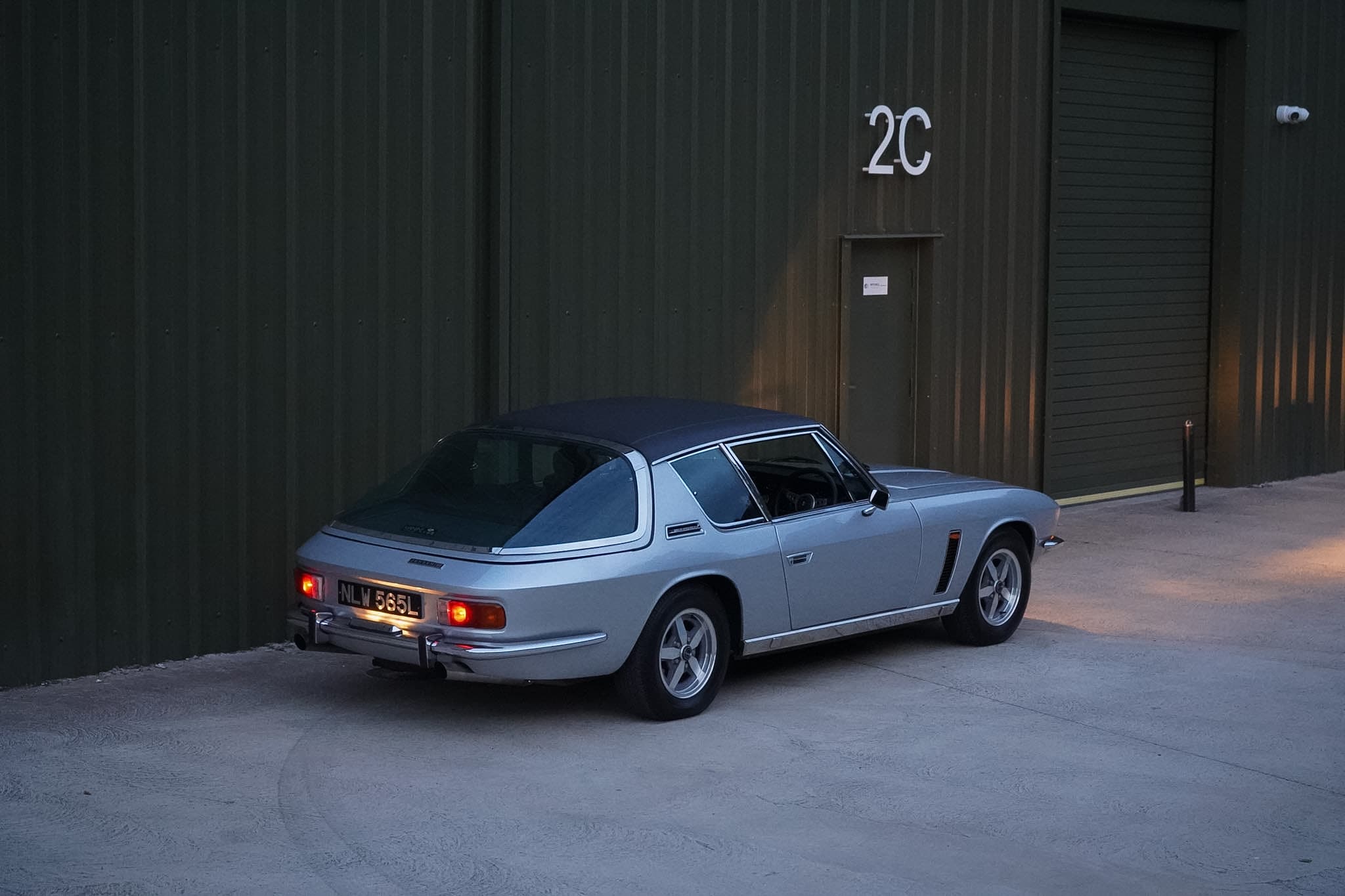
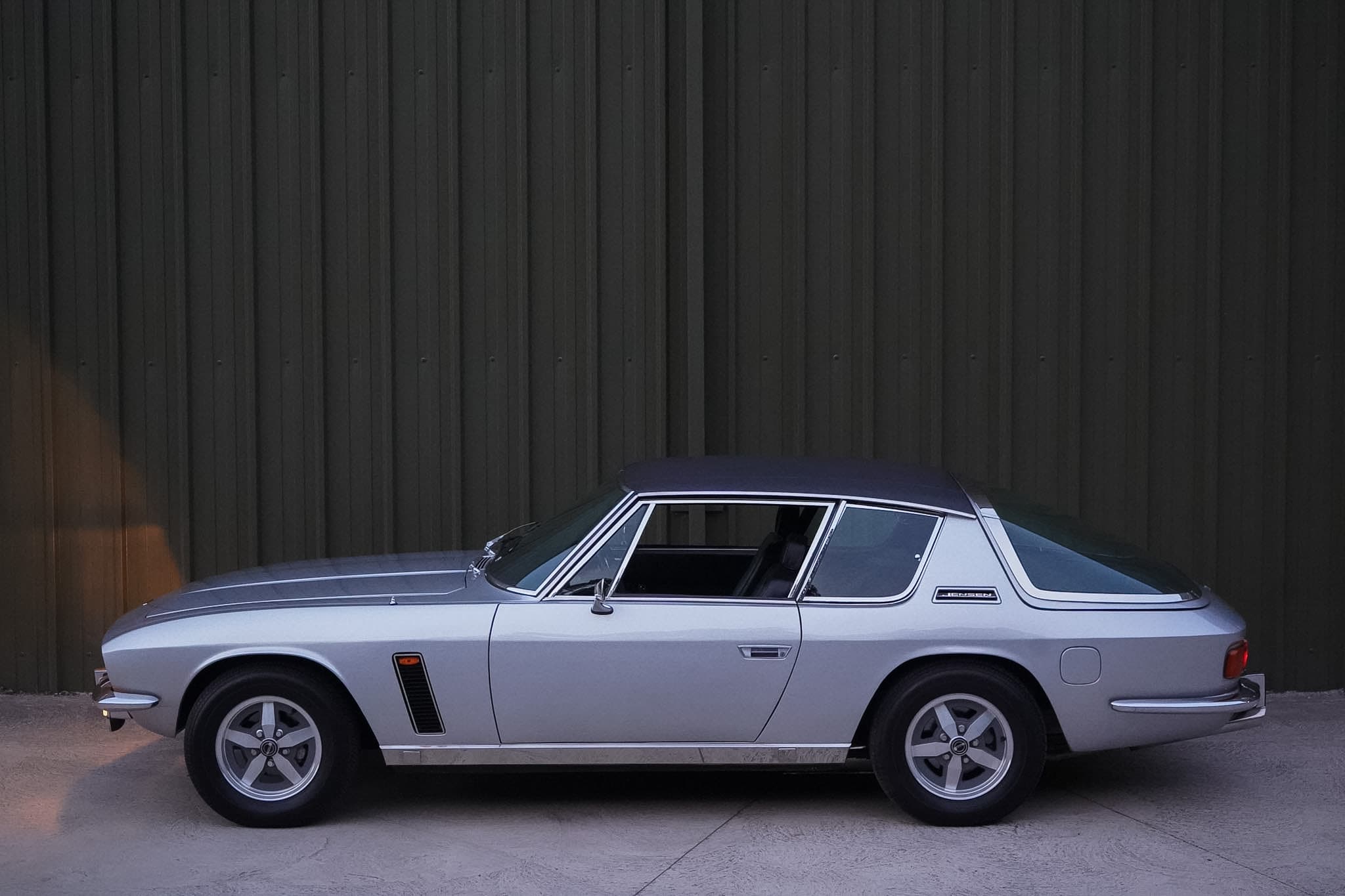
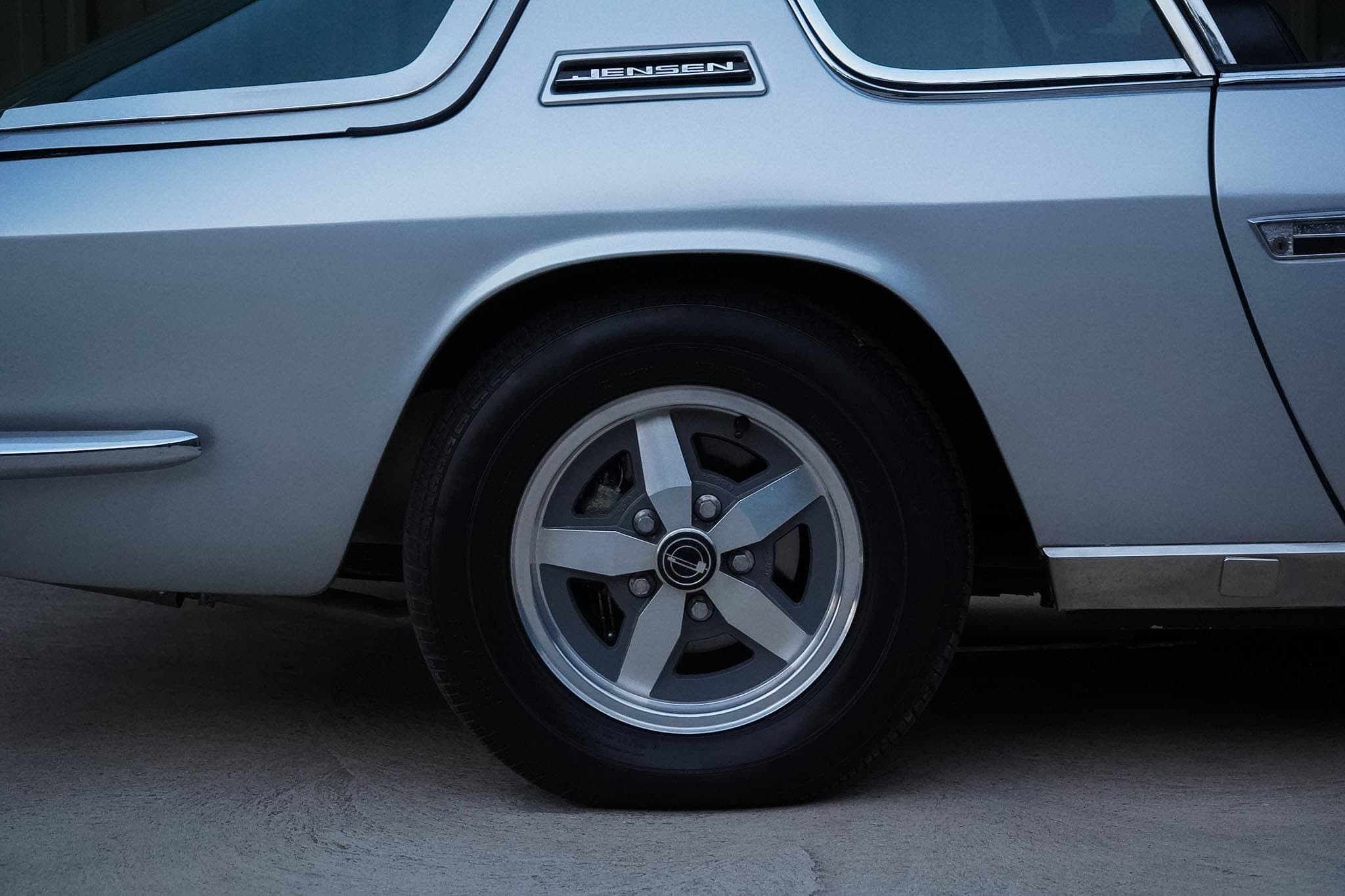
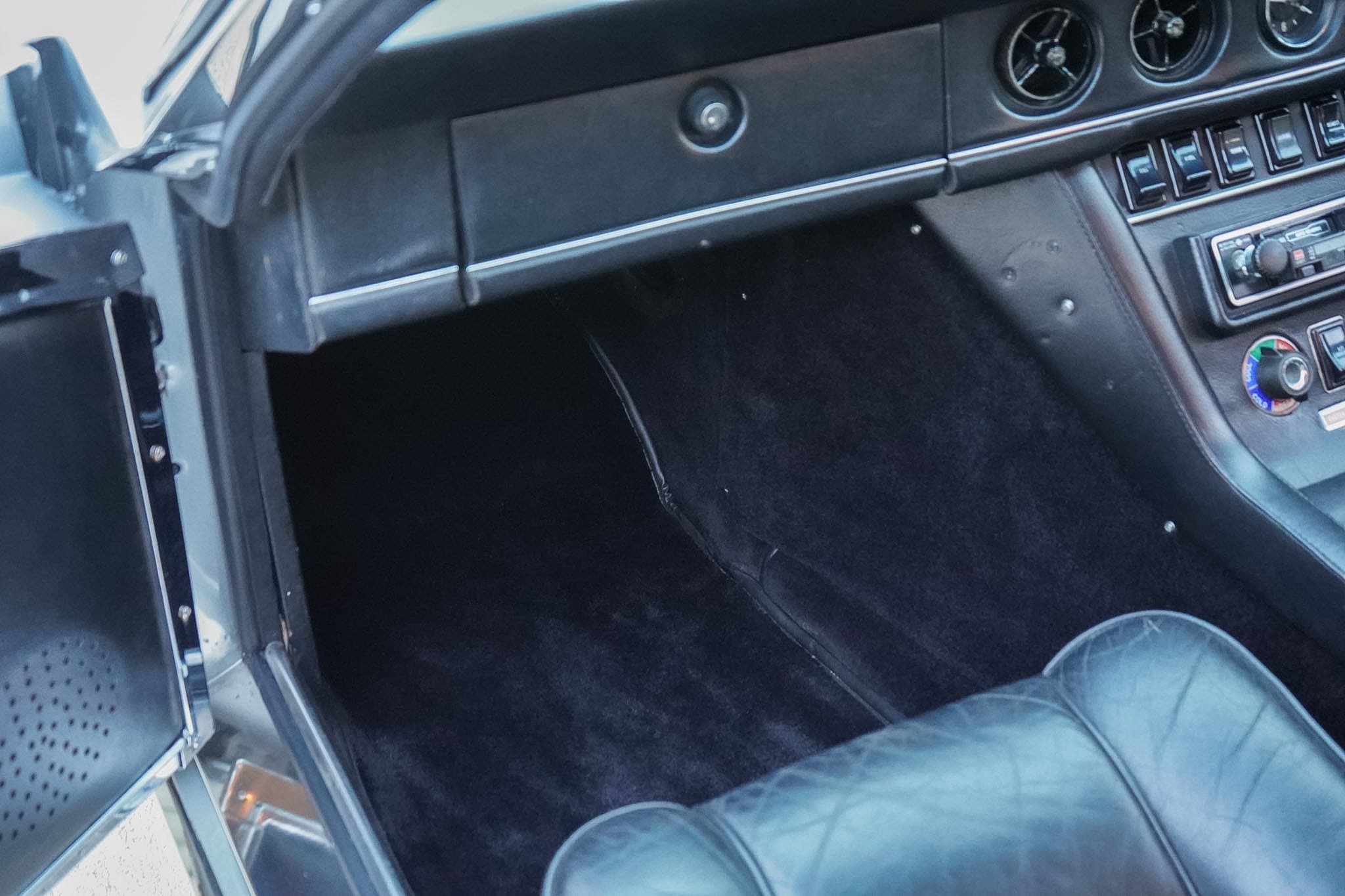
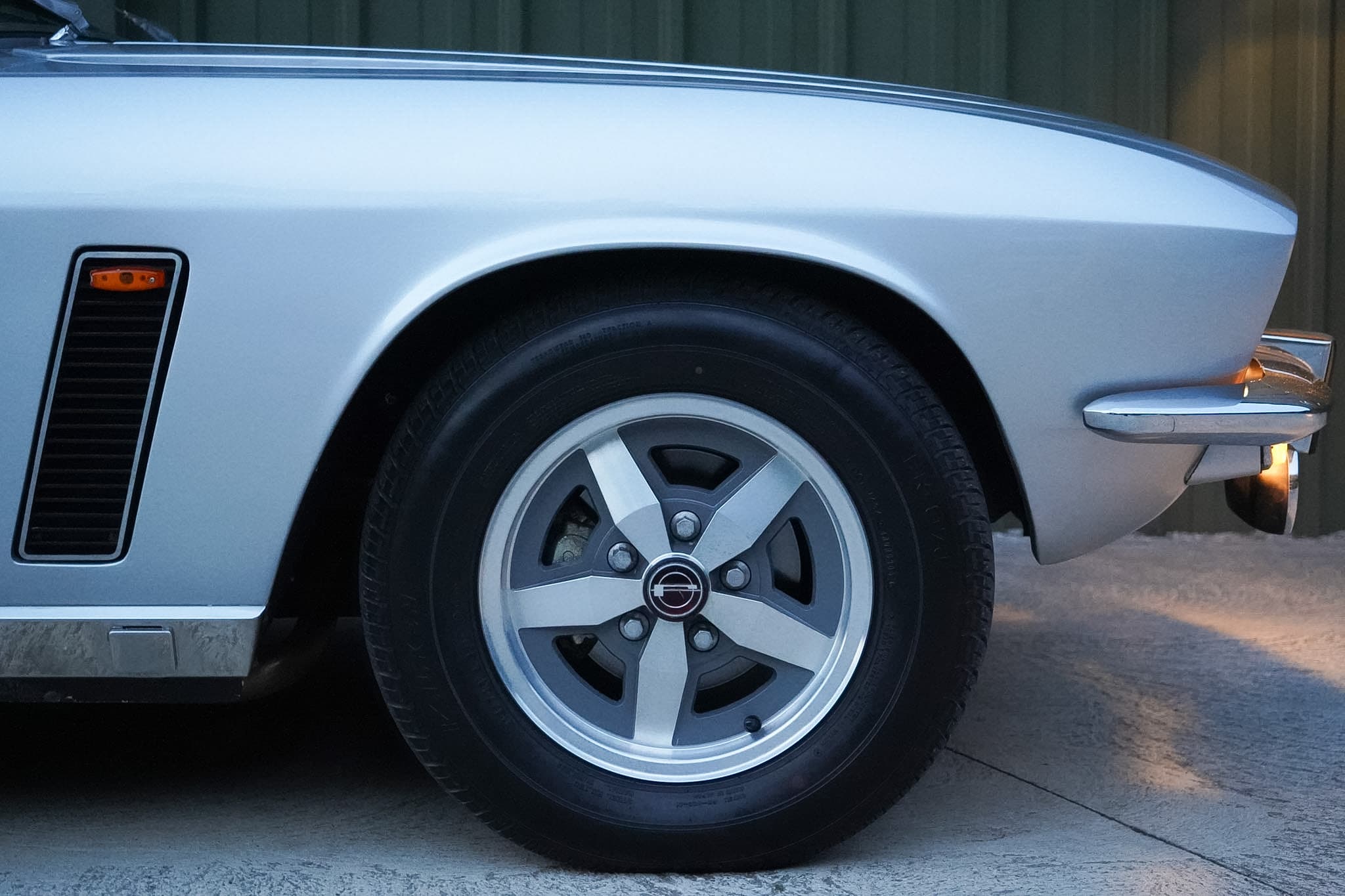
The later standard Mk III uses a single four-barrel carburettor in its normal 440 form. The SP left the factory with the triple-carburettor Six Pack and was sold as Jensen's flagship. Period descriptions also identify SP-specific visual and equipment details including long bonnet louvres, blue badging, GKN alloy wheels, extensive standard equipment and commonly a vinyl roof.
Those features are useful clues, not an authentication shortcut. Bonnet panels, badges, carburettors, air cleaners and roofs can all be replaced. More unusually, genuine SPs can also lose the very hardware most people use to identify them.
For a step-by-step authentication method, see the Jensen SP vs 7.2 Mk III identification guide. The standard Mk III 7.2 V8 page covers the single-four-barrel 440 car separately.
The SP's headline specification was not only a brochure claim. Jensen Museum's archive ties the first production car, 131/4254, to contemporary press testing and records that Autocar used it for a Continental road test published on 7 October 1971. The Museum reports an Autocar maximum of 143 mph, while Motor also took an SP beyond 140 mph in its later test.
Those figures are best treated as results from particular period test cars, not as a guaranteed top speed for every SP. More useful than the number alone is what the testers said about the way the performance arrived. The Six Pack gave the car formidable full-throttle pace, but contemporary testing also criticised its response at more moderate throttle openings and the transition as the additional carburettor chokes came into play.
That fits the service history described by former Jensen staff. The same induction system that made the SP so fast when correctly set up was also the source of the running and tuning problems that later led some genuine cars to be converted to a single carburettor. For a collector, period performance and period drivability problems are therefore two sides of the same original specification.
This is the part of the SP story that makes modern identification more interesting.
Jensen Museum's detailed history, drawing on former Jensen employees, describes significant carburation problems after the SP reached customers. The engine bay was much tighter and hotter than the American applications for which the Six-Pack arrangement had been developed. Keeping the outer carburettors behaving correctly could be difficult, and poor running became a real service problem.
Jensen's technical staff therefore worked on a remedy using a single Carter Thermoquad carburettor. The Museum records genuine SPs being converted away from their original Six-Pack induction by Jensen or distributors during the cars' working lives.
That creates two important collector rules:
The first question is factory identity. The second is how much of the original SP specification survives today. Those are related, but they are not the same thing.
Once the chassis identity is established, period-correct hardware becomes valuable evidence of originality.
The Jensen Museum's SP engine-bay study highlights the distinctive Six-Pack carburettor and manifold assembly with its specific air-can and filter arrangement. It also records less obvious details such as ribbed exhaust manifolds and differences in component placement. The Museum notes that the SP engine and TorqueFlite transmission also contained strengthened internal parts even though the units can look similar externally to other 440 installations.
This is why restoration photographs and old invoices are useful. A car may have been returned to factory-style Six-Pack appearance after decades on a single carburettor, or it may retain a period Jensen conversion that is historically interesting in its own right. “Original” needs to describe a specific component and a specific point in the car's history.
The Jensen Museum's study of original SP engine bays gives a more useful originality check than simply counting carburettors. On the Museum's original right-hand-drive reference cars, the ignition coil sits behind the driver's-side inlet manifold, while the Six-Pack assembly uses its distinctive air-can and the Museum specifies a Fram CA332V period air filter. It also identifies the SP's triple-ribbed exhaust manifolds as Chrysler part 3614295.
Carburettor list numbers need more caution. The Museum's preserved Jensen set carries 4365 rear, 6404 centre and 6406 front, but it explicitly warns that other numbers may exist and that decades of servicing can leave mixed replacement carburettors. Those numbers are therefore useful supporting evidence when assessing originality, not a chassis-authentication rule.
The same restraint applies to service parts. The Museum records the orange Fram PH2821A screw-on oil filter as the original fitment, but an oil filter is a consumable. A modern replacement says nothing about whether the chassis left Jensen as an SP; it only tells you that one replaceable period detail is no longer present.
The Jensen Museum lists 232 SPs built from 1971 to 1973.
Jensen historian Richard Calver adds useful detail. His chassis research gives the normal model life as September 1971 to July 1973, with one further special-order car completed in October 1973. His breakdown totals the same 232 cars:
| Chassis schedule | Configuration | Number built |
|---|---|---|
| 131 | RHD, G/H-series | 130 |
| 132 | LHD, European specification | 12 |
| 134 | LHD, US specification | 1 |
| 138 | RHD, H-series | 89 |
| Total | 232 |
The unusual 134 entry is a useful warning against decoding a chassis prefix too casually. Calver records that the single car was built to US specification even though the SP engine was not US-legal, and that the car was ultimately sold in Britain. A factory schedule can describe specification without proving final retail destination.
For a high-value SP, the complete chassis number and chassis-linked factory record are stronger than a shorthand prefix table on its own.
The name can be misleading on a later SP. Jensen enthusiasts often use “J-series” for the 1973-era Interceptor update, and the associated body and trim changes also reached the later SPs. That does not mean those SPs left West Bromwich with Chrysler J-series Six-Pack engines.
Richard Calver’s chassis research records the early 131- and 132-series SPs with G- or H-series 440s, and the later 138-series right-hand-drive SP with an H-series engine. His explanation is important: Chrysler had stopped producing the high-compression SP engine after the H-series model year, so the cars commonly described as “J-series SPs” retained H-series engines even though the contemporary standard Interceptor moved on to J-series 440s.
A reproduced Interceptor III & SP parts-catalogue identification table supports the same distinction. It lists 138 as a right-hand-drive SP with a 440 H-series engine, while the later standard Interceptor schedules 136, 137 and 140 use J-series 440s. The table also warns that engine-series-to-year shorthand is only approximate and directs owners to the identification pad on the engine itself.
For authentication, that means an H-series engine in a 1973-era SP is not automatically evidence of an incorrect replacement. Read the chassis schedule, the engine stamping and the documentary history together. A J-series 440, meanwhile, is entirely normal on the corresponding later standard Interceptor schedules and is not evidence of SP identity.
The first production SP is unusually helpful when thinking about originality.
Jensen Museum identifies 131/4254 as SP Number One, completed in September 1971 in time for the October Motor Show. The Museum's history says the original G-series engine failed during testing and Jensen replaced it with an H-series engine before the car entered private ownership.
That is a factory-period engine replacement on the first production example. It does not make the car less genuinely an SP. It does show why a simple rule such as “wrong engine number means fake car” can be too crude without the documentary history around it.
The same principle applies to carburation. A period Jensen conversion and a modern owner modification may produce a similar-looking single-carburettor engine bay, but their provenance is very different.
Start with the same structural concerns as any Interceptor. Rust and previous body repair can matter more financially than the headline engine specification. Inspect the sills, floor, wheelarches, screen and tailgate areas, and look for evidence of how previous restoration work was carried out.
For SP-specific authenticity, concentrate on evidence rather than theatre:
The collector-car provenance checklist gives a broader framework for separating a seller claim from a chassis-linked record. The Jensen Interceptor Mk III restoration guide covers the body, cooling and restoration questions in more depth.
The Matt Johnston Collection's 1972 Interceptor Mk III is useful here because it demonstrates the opposite case: a documented standard 7.2-litre Mk III.
It shares the broad Chrysler 440 architecture associated with the SP, but that common displacement does not collapse the two factory identities into one. Its individual history is relevant to TMJC's standard 7.2 page; it is not evidence that every 1972 440-powered Jensen is an SP.
That is the broader lesson. On a rare derivative, the most interesting question is often not “what parts are fitted now?” but “what did the factory build this chassis as, and what happened to it afterwards?”
The SP sits inside the wider Jensen Interceptor story and is mechanically close to the Interceptor Mk III, but it earned a distinct identity because Jensen used it as the company's flagship after the FF.
Its short life also explains some of its fascination. It combined a hand-built British GT with an unusually highly tuned American big-block, arrived just as emissions and fuel-quality pressures were changing the engine landscape, and exposed the practical compromises of putting a Six-Pack 440 into the Interceptor's hot engine bay.
That makes the SP more interesting than a simple “most powerful Interceptor” label. It is a car where factory ambition, period emissions changes, service fixes and modern originality questions all meet in the same 232 examples.
Editorial information
Research and editorial from TMJC Garage.
Research and editorialTMJC Garage
Reviewed byMatt Johnston
Last reviewed20 September 2026
Published byThe Matt Johnston Collection
Model lineage
TMJC photography
TMJC assistance
Continue to the main TMJC website and speak directly with the collection team.
Sell, consign or source
Continue with TMJC for a discreet conversation, professional presentation and collector-focused support.
Enquire now