TMJC assistance
Want TMJC to help with this vehicle?
Sourcing, consignment and valuationContinue to the main TMJC website and speak directly with the collection team.
Model
The 1966-1976 Jensen Interceptor explained: Italian design, British manufacture, V8 evolution, FF and SP differences, and buying context.
Generation directory
Choose a Interceptor generation to see its production years, body styles, engines, chassis changes and variants.
TMJC guide
The 1966-1976 Jensen Interceptor explained: Italian design, British manufacture, V8 evolution, FF and SP differences, and buying context.
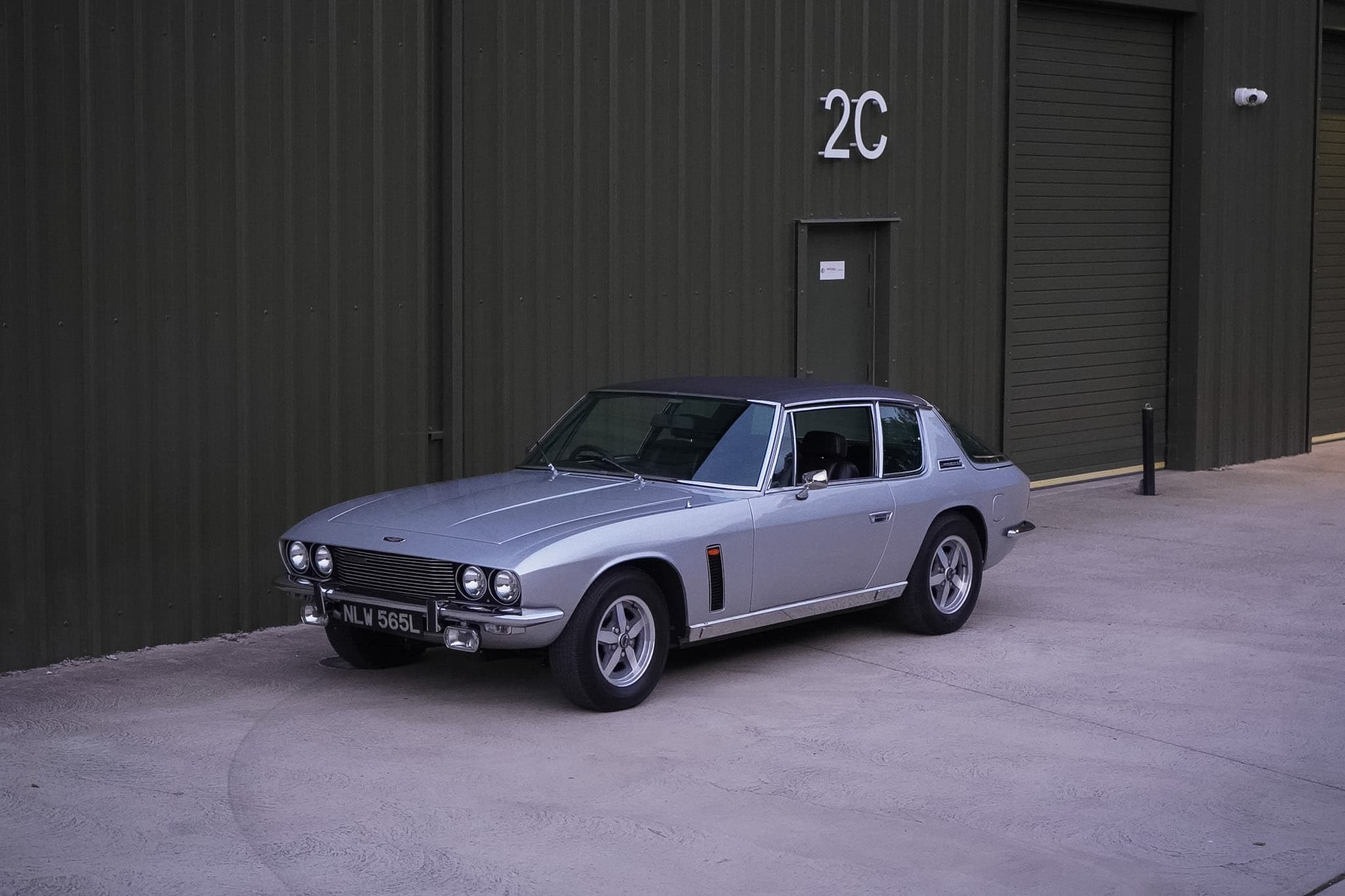
The Jensen Interceptor is a British grand tourer that brought together a Touring-designed steel body, Jensen assembly and development in West Bromwich, and Chrysler V8 power. The familiar version entered production in September 1966 and ran through three principal marks before the original programme ended in 1976.
That simple outline hides important distinctions. The 1950-1957 Interceptor was an earlier Jensen that shared the name, while the four-wheel-drive Jensen FF used related bodywork but a different, longer chassis. Later SP, convertible and coupe versions also need to be identified on their own terms.
By 1965 the C-V8 was fast but its glass-fibre body and styling belonged to an earlier phase of Jensen production. Management wanted a replacement that retained the existing chassis concept while presenting a more modern, steel-bodied grand tourer.
Jensen's archive records that Ghia, Touring and Vignale were approached in Italy. The selected form was drawn at Touring by Federico Formenti. Touring was not positioned to manufacture the car, so Vignale adapted the design for production, made tooling and built the first bodies. This is why both names belong in the story: Touring supplied the chosen design; Vignale helped turn it into a buildable steel car.
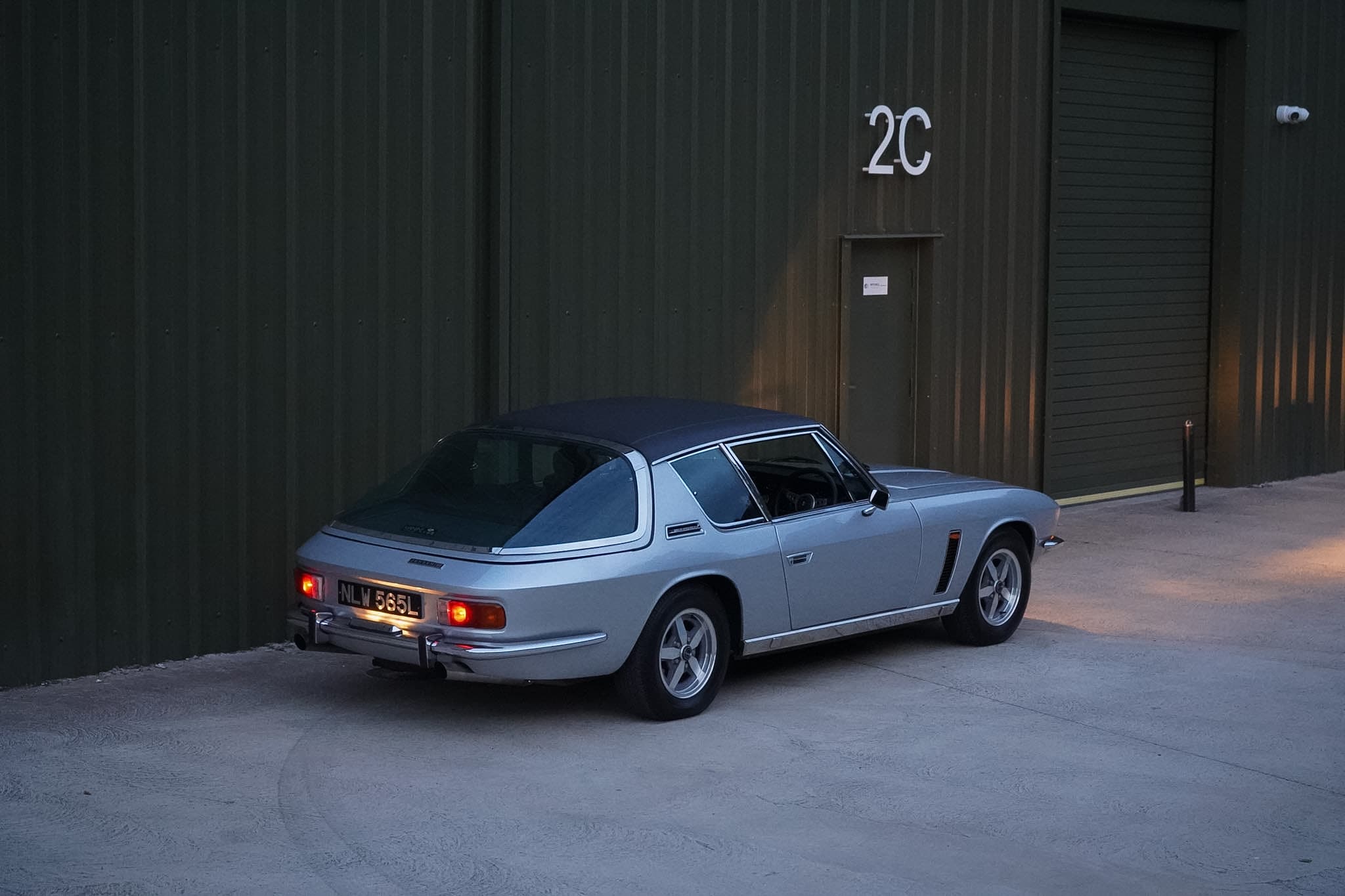
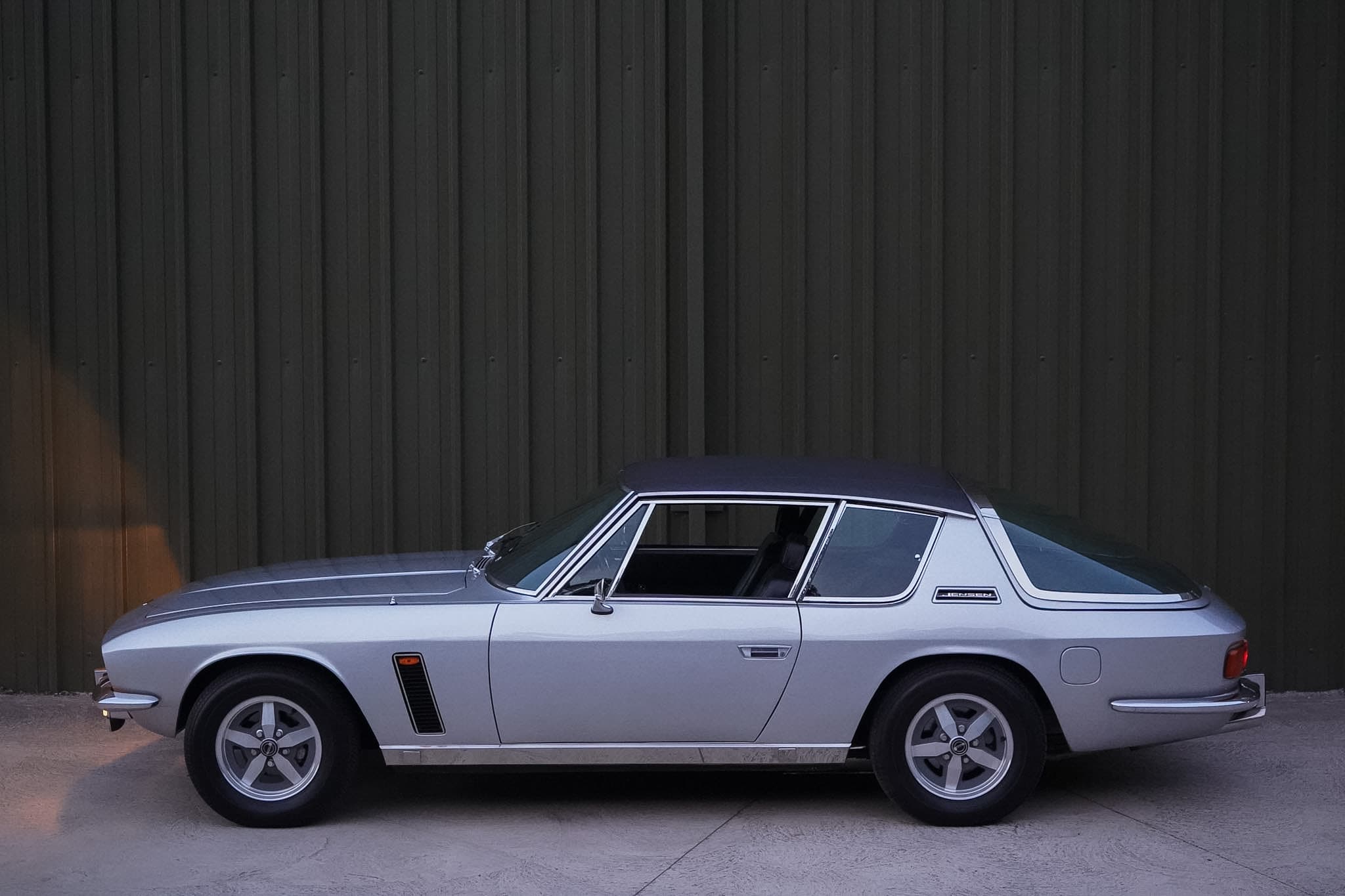
Early body production took place in Italy before Jensen brought manufacture into West Bromwich. The result retained the C-V8's Anglo-American idea but gave it the feature that still defines an Interceptor at a glance: a long fastback with an enormous curved glass tailgate.
The Jensen Museum dates the Mk I from September 1966 to September 1969, the Mk II from September 1969 to September 1971, and the Mk III from August 1971 to December 1976. The slight overlap in those archive date bands is a useful warning: calendar date, chassis series, build completion and registration do not always make a perfectly clean boundary.
The Mk I established the shape and mechanical formula. Detail changes accumulated as Jensen moved away from the earliest Vignale-built shells and refined its own production. The Mk II brought a revised front treatment, cabin changes and brake and suspension development. The Mk III updated the grille, lighting surrounds, bumpers, seats and trim, then continued through further running changes.
A chassis number and factory record are more reliable than registration year alone when identifying a transition-period car. Badges and trim can be changed during restoration, so they should support documentary evidence rather than replace it.
Mk I is the first mark of the familiar steel-bodied Interceptor, running from September 1966 to September 1969 in the Jensen Museum archive. It is not a guarantee that the body itself was built by Vignale in Italy.
Former Jensen acting managing director Richard Graves recalled that Vignale supplied the first roughly 60 Interceptor shells before the body jigs moved to West Bromwich. A January 1969 Motor Sport test then described Jensen welding and upholstering the Interceptor body while still using some panels imported from Italy. Both can be true: early Mk I production has a distinct Vignale-built phase, followed by West Bromwich production within the same Mk I mark.
That makes “Mk I” and “Vignale-built” different claims. Early dashboard layouts, switches, nose details, trim and registration dates can help place a car, but production details changed as the design was industrialised and restored cars may have acquired later parts. A claimed Vignale-built Interceptor deserves chassis-linked archive or build evidence; the mark or registration year alone is not enough.
For a restored Interceptor, "matching numbers" should describe a chain of evidence, not one badge or one loose plate. Start with the car's permanent chassis identity, record the engine and transmission identifiers that are actually present, and compare all of them with registration documents, dated history and a chassis-linked factory or archive record.
Documented 1967 Vignale/Sincar cars show why the distinction matters. The Jensen Museum records Jensen chassis 117/2582 with the Jensen number on the front chassis bar and a separate Vignale assembly number used for the Sincar contract. That assembly number records Vignale's part in building the body; it is not a replacement Jensen identity. The same Museum history records an engine exchange when the car was almost new, demonstrating that a later mismatch can have a genuine period explanation - but only when the history supports it.
A useful identity check therefore asks:
The Jensen Museum's chassis-data description says its archive can connect a chassis number with engine number, registration, colours, options, ex-factory date and country of delivery. Its certification process also checks the chassis, engine, transmission, brakes, suspension, wheels, bodywork and interior against archive information. No one certificate, plate or registration entry should be treated as proof on its own.
This is an evidence workflow, not a universal decoder. The opened physical-location examples are strongest for 1967 Vignale/Sincar cars, and numbering and plate placement can vary with build period, assembler, drive side and market. A buyer should not extrapolate the 117 example across every Mk I, Mk II and Mk III without a mark-specific handbook or archive check.
TMJC states that its 1972 Mk III has matching engine and gearbox numbers supported by factory correspondence and a Statement of Origin. The underlying Statement and physical stampings were not independently inspected for this research pass, so that remains a first-party claim about this individual car rather than model-wide specification.
The Interceptor’s final year needs a little more precision than a single date. Jensen Motors was already operating under a Receiver from 1975, and the West Bromwich company closed in May 1976. That was the end of normal Jensen Motors factory operations.
It was not quite the end of every Interceptor being completed. The Jensen Museum records that some unfinished cars were finished later in 1976 by Jensen Parts & Service Ltd, working against firm orders under the Receiver. Its production archive consequently carries the Mk III through December 1976.
For a late-1976 car, those two dates should not be treated as contradictory. May marks the factory/company closure; December is the archive’s completion end for the Mk III programme. A car claimed to be one of the very last therefore deserves chassis-linked build records, factory or receiver documentation and a clear completion history rather than an assumption based only on registration date.
The later Series 4 revival from the 1980s is a separate programme and does not extend the original 1966–1976 production run.
The Interceptor name returned in 2026, but the new Interceptor GTX belongs to a separate modern programme. Jensen International Automotive presented the GTX as an all-new, clean-sheet car rather than a continuation, replica or restomod of the 1966–1976 Interceptor. It is being used to develop a new generation of Jensen models, including planned road-going Interceptors.
That distinction matters when researching the name today. The aluminium chassis, modern supercharged V8 and track-focused hardware associated with the GTX are not later specifications for the classic Interceptor described on this page. They belong to a new programme using the historic name and design references.
Early Interceptors used Chrysler's 383 cubic-inch V8, commonly described as 6.3 litres, with a three-speed TorqueFlite automatic in the great majority of cars. A small number of early cars were built with a manual gearbox, but rarity claims vary between sources and deserve confirmation against chassis records.
During the Mk III period Jensen moved to Chrysler's 440 cubic-inch V8, usually rounded to 7.2 litres. The change should not be reduced to one universal model-year rule. Source descriptions differ, and output also changed with market requirements, engine specification and the move from gross to net rating conventions.
The SP sat above the standard car with a more highly tuned multi-carburettor 440. It replaced the FF as Jensen's headline performance offering, but it is a distinct derivative rather than evidence that every 7.2-litre Interceptor shared SP specification.
No. This is one of the easiest Mk III distinctions to blur because engine capacity and derivative identity are not the same thing.
The SP was Jensen's high-performance flagship, built around the Chrysler 440 cubic-inch V8 with the well-known Six Pack induction system: three twin-choke carburettors rather than the regular car's later single four-barrel arrangement. The ordinary Mk III subsequently adopted the same basic 440/7.2-litre capacity without thereby becoming an SP.
| Question | Regular later Mk III 7.2 | Jensen SP |
|---|---|---|
| Basic capacity | 440 cu in / about 7.2 litres | 440 cu in / about 7.2 litres |
| Induction in the specialist sources used here | Single four-barrel carburettor | Six Pack triple twin-choke carburettors |
| Identity | Regular Interceptor Mk III derivative | Separate high-performance SP derivative |
| What proves it? | Chassis/build record and specification evidence | Chassis/build record and SP-specific specification evidence |
That makes “it has a 7.2” weak evidence for an SP claim. Engine size can narrow the mechanical era, but it cannot establish the derivative on its own. Badges, bonnet details and the carburettors fitted today are useful clues, yet restoration and modification can change visible hardware. A chassis-linked build record is the stronger starting point.
TMJC's 1972 Mk III is a useful reminder of the rule. Its 7.2-litre V8 is documented for that individual car, but capacity alone should not be used to infer an SP specification. The same discipline applies to any car where a rarer derivative carries a premium: establish what Jensen built first, then check whether the hardware in front of you still matches that history.
The FF is a separate model, not simply an Interceptor fitted with four-wheel drive. FF stands for Ferguson Formula. A 1969 Motor Sport visit to Jensen's West Bromwich factory described the FF chassis side-members as sitting farther out to make room for the wider Ferguson transmission, with larger tubular members than the Interceptor, and noted that FFs ran down their own assembly line. The familiar body shape disguises a materially different drivetrain package underneath.
The other defining change is braking. The FF paired Ferguson four-wheel drive with Dunlop Maxaret anti-lock braking. The Jensen Museum's technical archive explains that the Maxaret unit is driven from the four-wheel-drive transmission's centre differential and uses a flywheel-and-switch mechanism to reduce vacuum-servo assistance when a skid is developing. It is an early mechanical anti-lock system, not the wheel-by-wheel electronic ABS familiar from modern cars.
For identity and originality, the important evidence is therefore more than trim or badges. Chassis and build records should agree with the Ferguson transmission, Maxaret hardware and FF-specific running gear. The Jensen Museum's own FF certification process checks the chassis, engine, transmission/four-wheel-drive unit, brake system, suspension, bodywork and its archive information for the individual chassis number.
The standard Interceptor remained rear-wheel drive. The SP paired that layout with the high-output 440 engine. A factory convertible joined the range in 1974, using a powered hood and a reworked rear body with extra structural detail. A very small number of late fixed-head coupes then used the convertible-style rear body beneath a different roofline.
Published production totals do not always agree because sources group standard fastbacks, SPs, convertibles, coupes, export cars and unfinished or late-completed cars differently. A total without its classification is therefore less useful than a car's precise type and chassis history.
The low-volume Series 4 built in the 1980s is another separate chapter. It revived the Interceptor after the original company era and should not be used to stretch 1966-1976 specifications across later cars.
The Chrysler engine and TorqueFlite can be durable, but the body determines whether an Interceptor is a viable purchase. Concealed structural corrosion is expensive and may sit beneath attractive paint and stainless sill covers.
Important areas include:
A restored car still needs this inspection. The valuable questions are what was repaired, who did it, which invoices and photographs survive, and how the car behaved after the work.
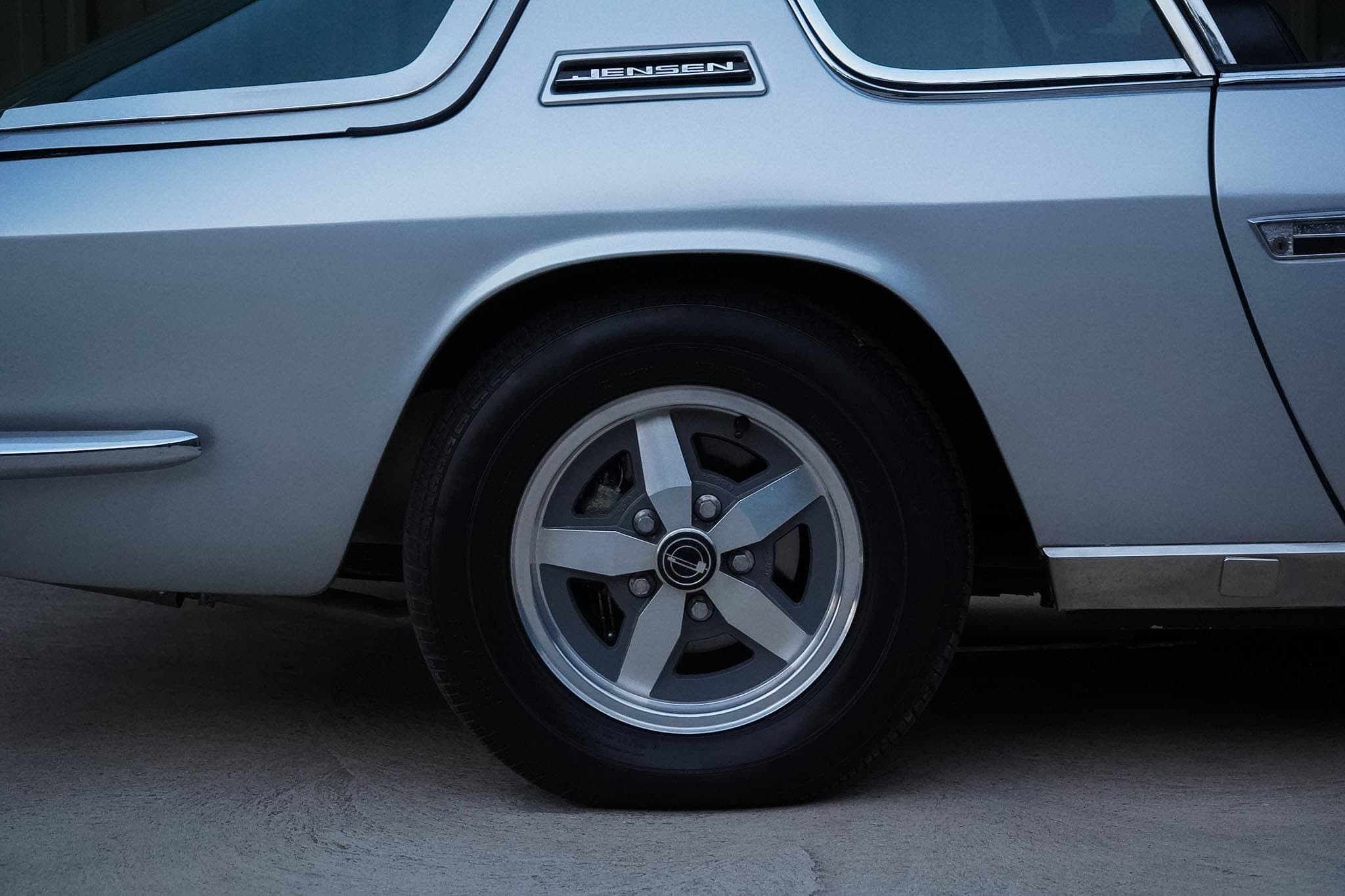
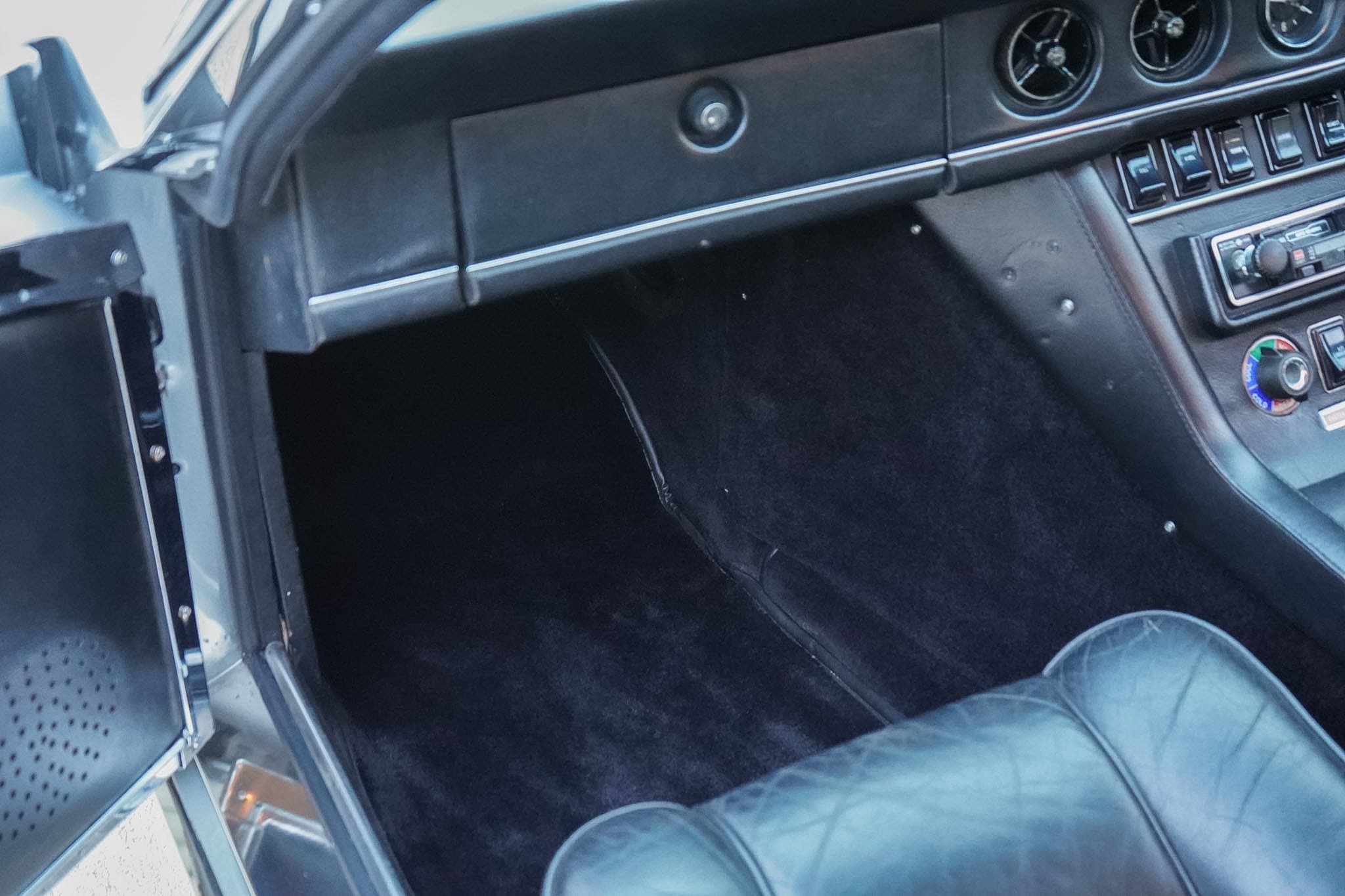
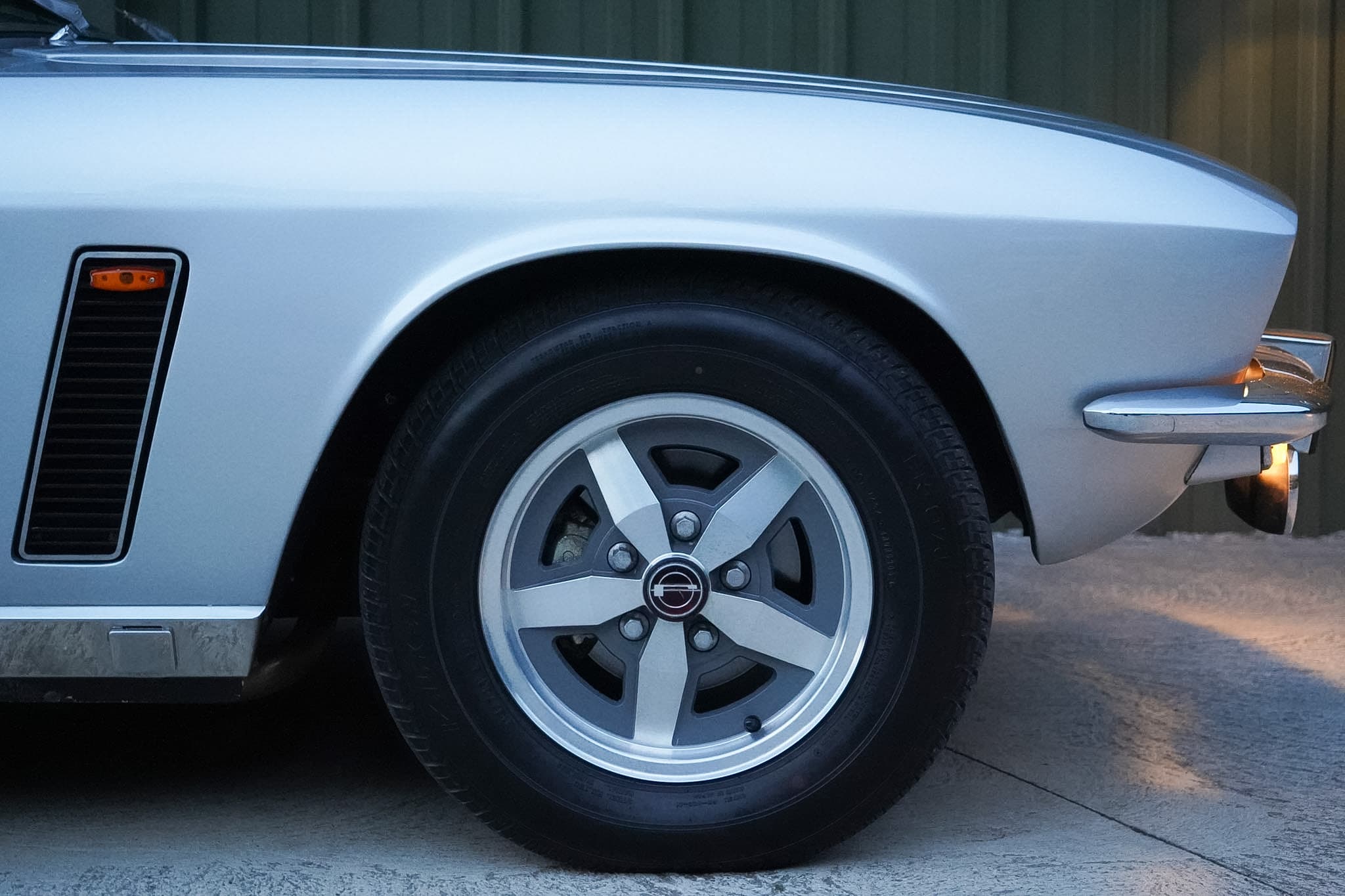
TMJC's current Interceptor is a 1972 right-hand-drive automatic Mk III with a 7.2-litre V8. Its history separates a bare-metal body restoration from much later mechanical work, and includes factory correspondence and a Statement of Origin used to support its identity.
Those details belong to that car, not every Interceptor. They are useful because they show the standard of evidence a buyer can ask for: a traceable chassis and powertrain identity, dated restoration invoices, subsequent recommissioning, mileage evidence and a physical inspection that agrees with the file.
For a practical framework, see the Jensen Interceptor Mk III restoration and provenance guide.
Editorial information
Research and editorial from TMJC Garage.
Research and editorialTMJC Garage
Reviewed byMatt Johnston
Last reviewed20 September 2026
Published byThe Matt Johnston Collection
Model lineage
TMJC photography
TMJC Guides
TMJC assistance
Continue to the main TMJC website and speak directly with the collection team.
Sell, consign or source
Continue with TMJC for a discreet conversation, professional presentation and collector-focused support.
Enquire now