TMJC assistance
Want TMJC to help with this vehicle?
Sourcing, consignment and valuationContinue to the main TMJC website and speak directly with the collection team.
Generation
Jensen Interceptor Mk III naming, years, 383-to-440 transition, chassis identity, SP differences and buying checks.
Variant directory
Choose an exact Mk III derivative for engine, gearbox, performance, dimensions, equipment and buying-context detail.
TMJC guide
Jensen Interceptor Mk III naming, years, 383-to-440 transition, chassis identity, SP differences and buying checks.
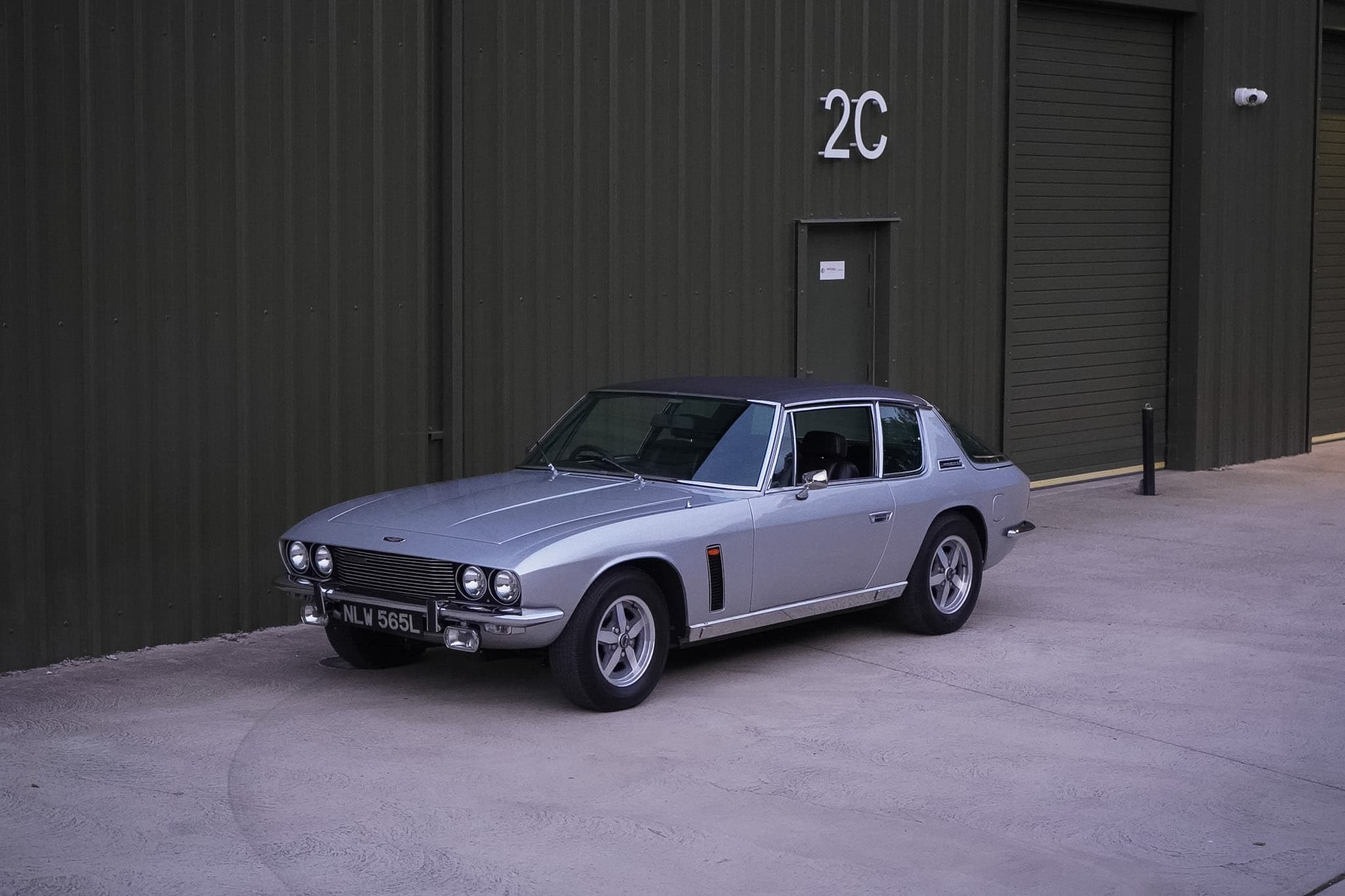
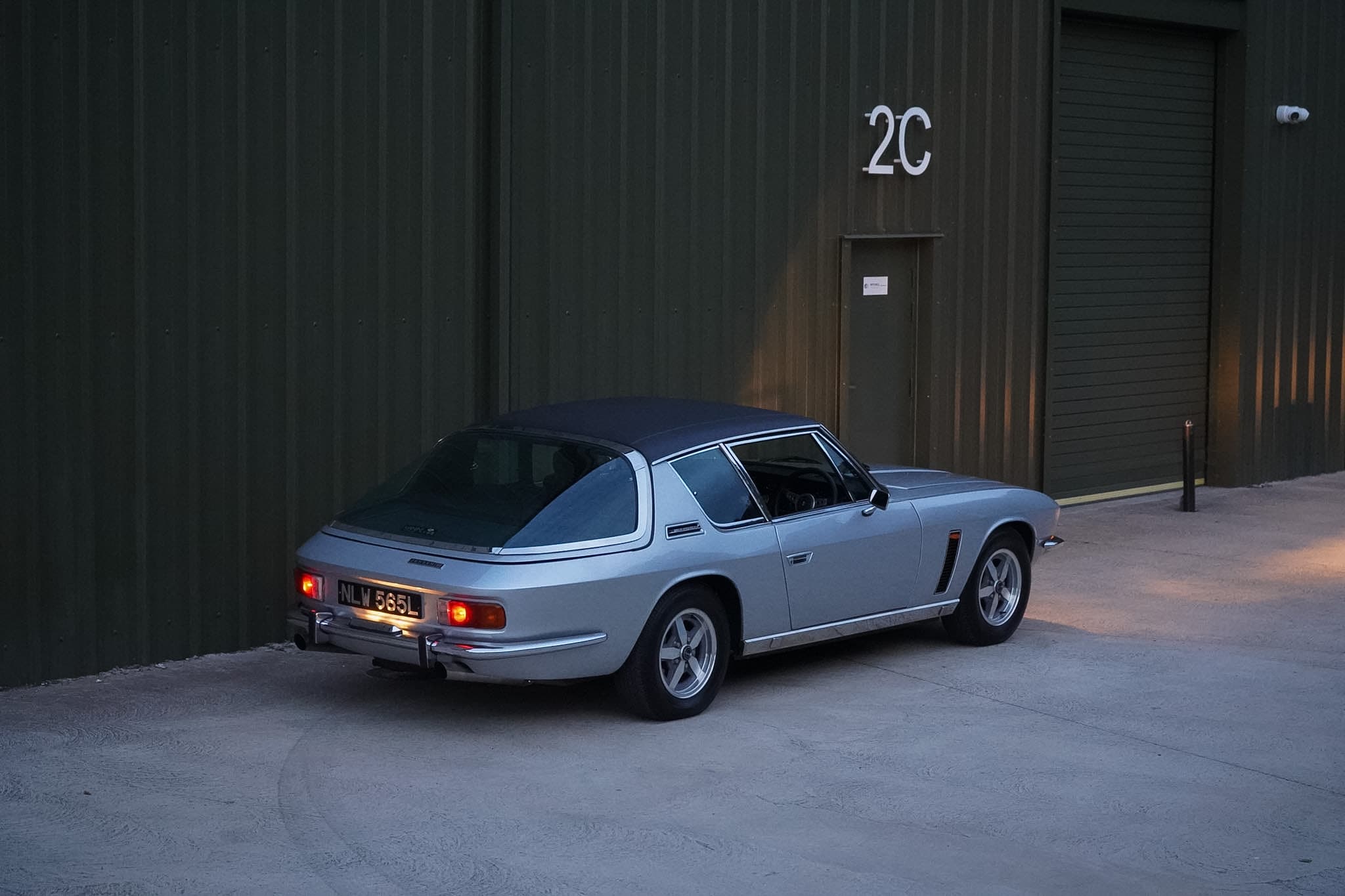
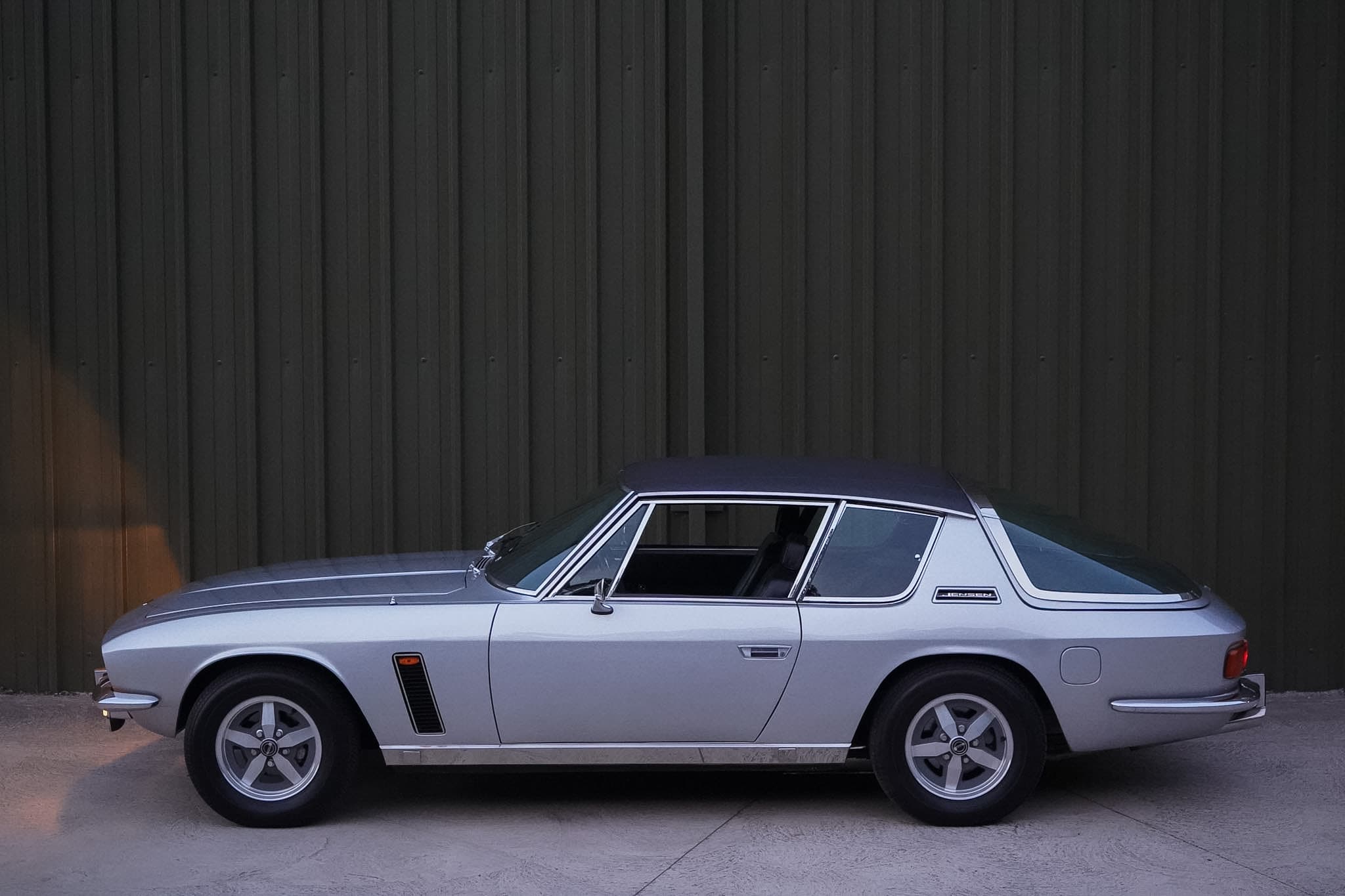
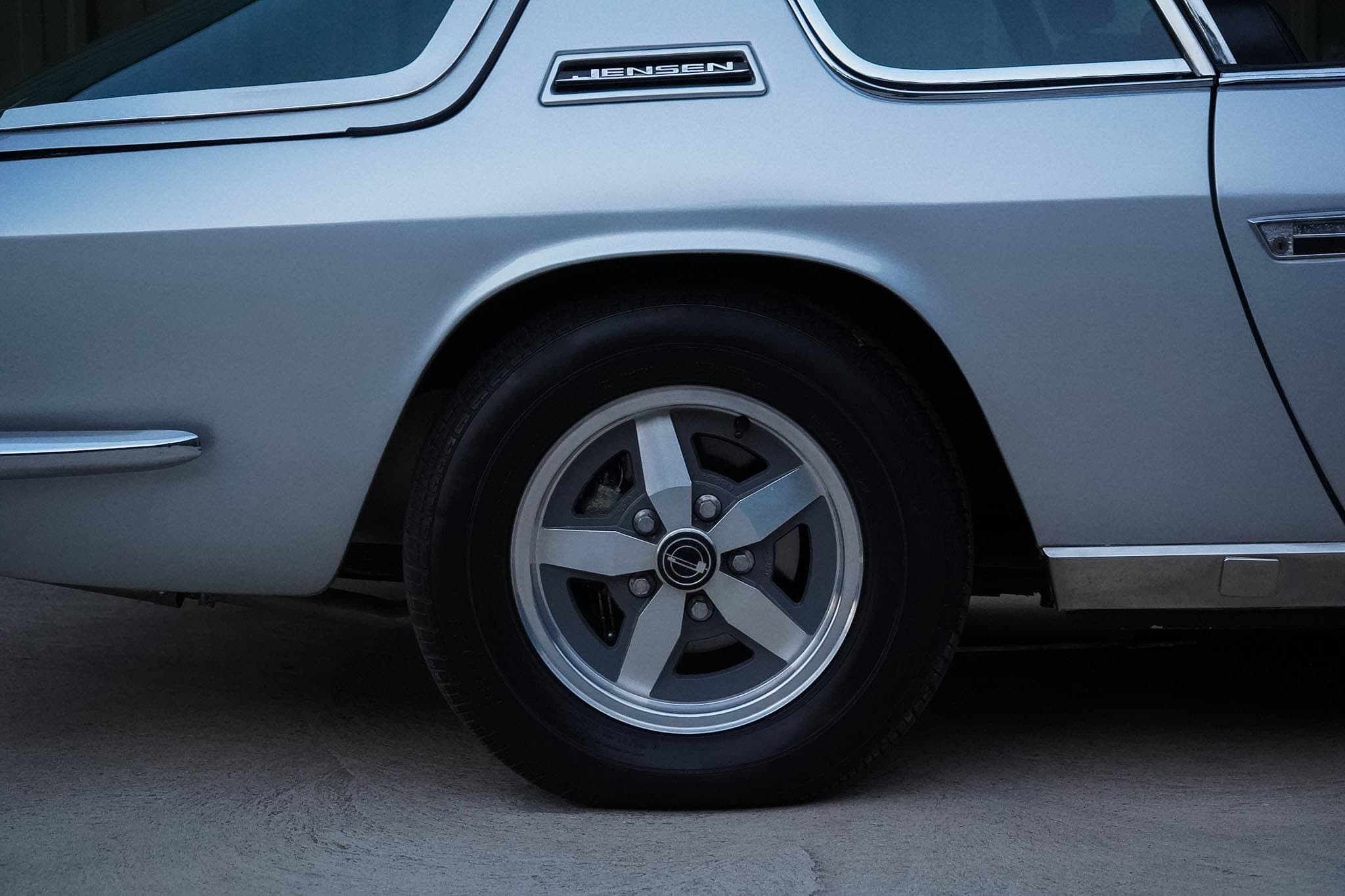
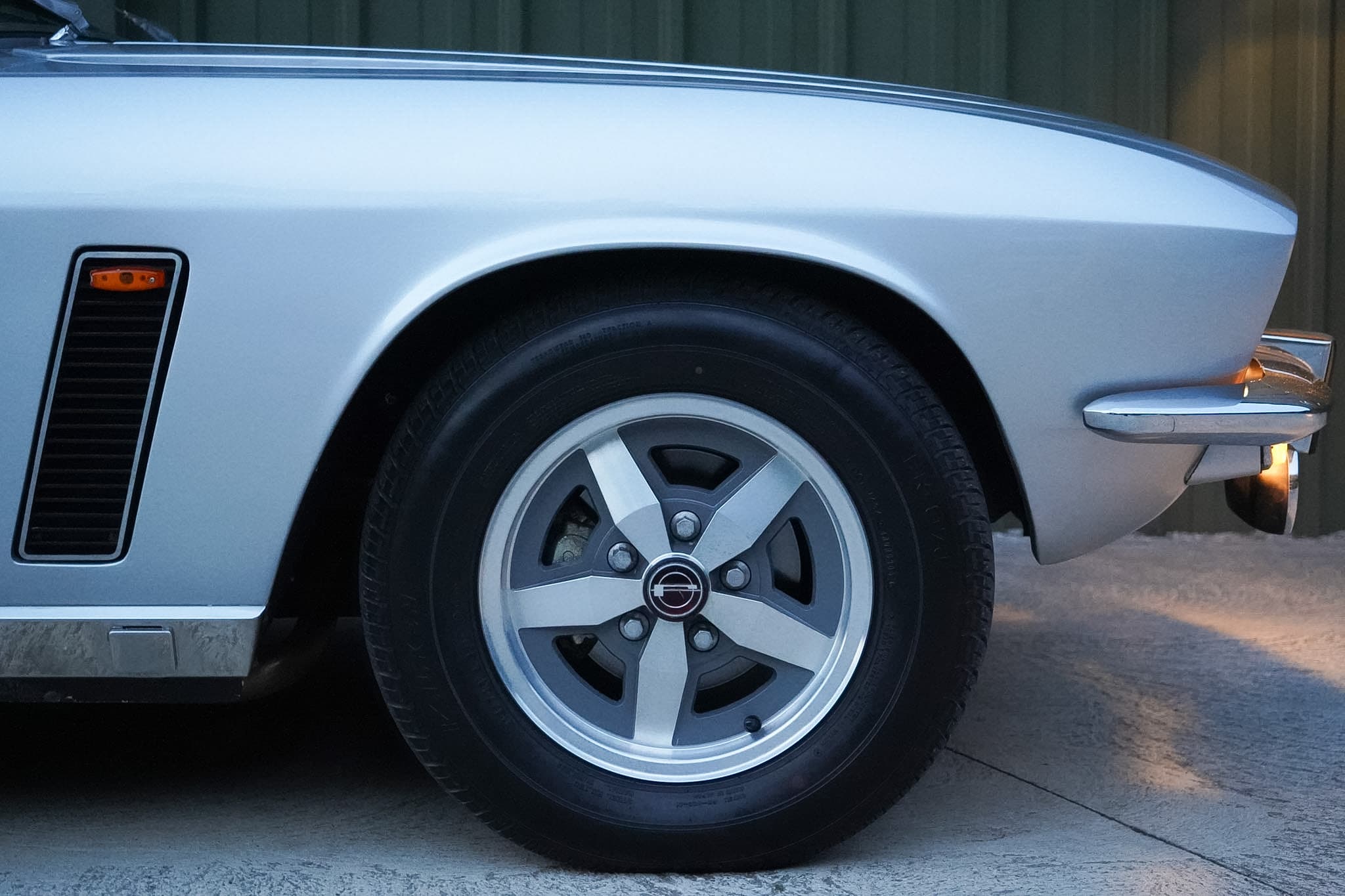
The Jensen Interceptor Mk III entered production in August 1971 and remained the main Interceptor generation until 1976. It kept the familiar glass-tailgate grand-tourer shape, but revised the grille, headlamp finishers, bumpers, seating and cabin details. Five-spoke GKN alloy wheels became one of its most recognisable period cues.
A Mk III is not automatically a 7.2-litre car. The factory launch brochure still specified Chrysler's 6,276 cc V8, while later cars used the 7,212 cc 440. The change did not happen on one neat worldwide model-year boundary, so a car's chassis and factory record matter more than a simplified year label.
Yes. Mk3, Mark 3, Mk III, MK III and Jensen's own Interceptor III wording all identify the same third Interceptor iteration. Jensen's launch brochure calls the car the Interceptor III, TMJC's current 1972 example is listed as an Interceptor MK III, and marque-club references use both Interceptor III and Mk III. The change in numeral style does not create a separate model.
The Roman numeral III is three capital I characters, not the number 111. More importantly, Interceptor III is not a catch-all for every Jensen launched at the same time. Jensen's factory brochure introduced the rear-wheel-drive Interceptor III alongside the four-wheel-drive FF III and the higher-performance SP. A 7.2-litre Mk III is therefore not automatically an SP, and badges or engine capacity should not replace chassis-linked factory evidence. The SP versus 7.2 Mk III identification guide explains that distinction in detail.
The Jensen Museum records Mk III production from August 1971 to December 1976. At year level, 1971-1976 is the useful shorthand; the exact endpoint still needs qualification. Jensen's launch brochure says the Interceptor III, FF III and SP were introduced in October 1971. Those statements describe different events: production could begin before the public range introduction.
The ending needs two dates rather than one. Jensen Motors traded until May 1976. The Jensen Museum's production table nevertheless carries the Interceptor Mk III through December 1976, and its separate Convertible history documents that a few Interceptors were completed later in the year by Jensen Parts & Service against firm orders secured by the Receiver. That establishes that completion activity within the Interceptor family continued after the main company closed, but it does not prove that every Mk III body style was still being completed in December. For a late-1976 car, chassis-linked build records are stronger evidence than registration date alone.
Published totals are even more sensitive to definition. Sources variously separate or combine the standard fastback, SP, Convertible, Coupe and late-completed cars. A quoted number without its inclusion rules can create false precision, so no single total is used here.
At launch, the standard Interceptor III used Chrysler's 383 cubic-inch V8, stated by Jensen as 6,276 cc. Factory specification paired it with a three-speed automatic transmission driving the rear axle.
The 440 cubic-inch engine, stated in later factory material as 7,212 cc, followed during Mk III production. The transition is often reduced to a single year, but the surviving identification data is more useful than that shorthand. The Interceptor III parts-catalogue table shows early standard-car chassis prefixes spanning both the 383 G-series and 440 H-series engines, so registration year — and sometimes even the prefix family on its own — is not enough to establish original displacement.
Output figures also need care. Period claims use different markets, compression ratios, emissions specifications and gross or net rating conventions. Comparing two headline horsepower figures without those qualifications is unlikely to compare like with like.
For a transition-era car, start with the numbers and factory record rather than the registration document. An Interceptor III/SP parts-catalogue identification table gives a useful map:
| Chassis prefix | Market / drive | Engine-series scope shown in the catalogue |
|---|---|---|
| 128 | RHD Interceptor III | 383 G-series or 440 H-series |
| 129 | LHD Europe Interceptor III | 383 G-series or 440 H-series |
| 133 | LHD USA Interceptor III | 383 G-series or 440 H-series |
| 136 | RHD Interceptor III | 440 J-series |
| 137 | LHD Europe Interceptor III | 440 J-series |
| 140 | LHD USA Interceptor III | 440 J-series |
That table explains why “it's a 1972 car” is not a reliable engine-identification method. A 128-prefix right-hand-drive Mk III, for example, is listed for both 383 G-series and 440 H-series applications. The catalogue loosely associates H-series with 1972 and J-series with 1973, but warns that these year associations cannot be relied upon and directs technicians to the engine identification pad near the distributor.
The SP has its own prefix families even though it also uses the 440. That is another reason not to work backwards from engine size: a 7.2-litre engine does not establish SP identity, and an SP badge or Six Pack-style hardware fitted later cannot replace chassis and factory evidence.
From 1974 Jensen moved to four-digit prefixes that encode model type, body style, drive side and market area. The catalogue specifically notes that those prefixes do not encode a model year. Registration date therefore remains contextual evidence, not a substitute for the build identity.
TMJC's 1972 right-hand-drive 7.2-litre car illustrates the stronger route because its listing refers to an official Statement of Origin as well as matching-number engine and gearbox confirmation. Those documents belong to that individual car, but the method generalises: factory record first, complete chassis and engine identity second, current hardware third, registration year last.
The SP arrived as the high-performance derivative. Its 440 used three two-barrel carburettors and it carried distinctive bonnet treatment and equipment. A normal 440 Interceptor used a single four-barrel carburettor. An SP specification should therefore never be projected across every 7.2-litre Mk III.
The Convertible reached customers in 1974 after separate development of its structure and powered hood. It replaced the fastback's glass-hatch rear form with a booted open body. A rare fixed-head Coupe followed in 1975, using the Convertible-derived rear body beneath a permanent roof.
The Jensen FF III is different again. It shared much of the Interceptor's appearance, but its Ferguson four-wheel-drive system and associated chassis distinguish it from the rear-wheel-drive Interceptor. Badge, vent and trim clues are useful, but a factory record and chassis identity are stronger evidence than replaceable panels.
By the Mk III period, Interceptor production was at Jensen Motors' Kelvin Way factory in West Bromwich. The Jensen Museum's factory history places the Interceptor/FF assembly line in Bays 1–7 behind the main offices, with body assembly and trim followed by the motorising section at the end of Bay 1, where suspension, transmission and engine were fitted before road test and final inspection.
This is useful context because the Interceptor's Italian design and early Vignale history can blur design origin with production location. Jensen had taken Interceptor production in-house at West Bromwich before the Mk III arrived in 1971, so Kelvin Way — not Turin — is the relevant factory context for the generation.
Factory material describes a conventional but substantial grand-tourer layout: independent front suspension with coil springs and wishbones, a live rear axle on semi-elliptic leaf springs with a Panhard rod, telescopic dampers, power-assisted rack-and-pinion steering and ventilated disc brakes.
That consistency matters more than an isolated performance number. A sound Mk III should feel controlled rather than loose, stop squarely and maintain temperature and oil pressure in real traffic. Sagging rear springs, worn steering and tired dampers can make a structurally sound car feel much older than it should.
Dimensions sometimes appear to disagree only because sources convert and round imperial figures differently. The factory's 105-inch wheelbase, for example, is published elsewhere as both 2,667 mm and 2,675 mm. For identification and restoration, the original unit and document context are more useful than choosing one converted number.
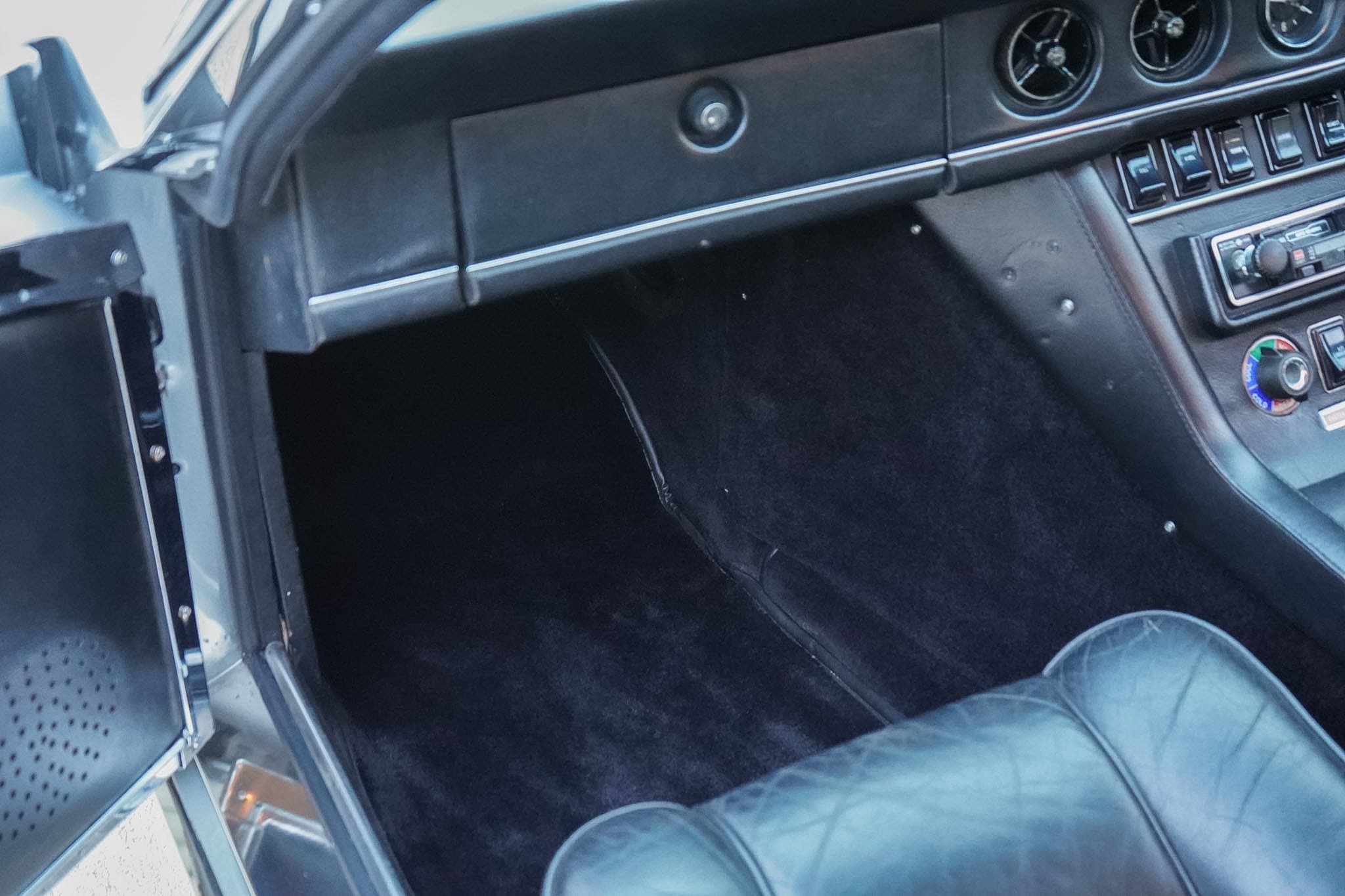
Compared with the Mk II, the Mk III brought another revision of the grille, headlamp surrounds and bumpers, along with updated seats and interior details. An Interceptor III grille badge and five-spoke GKN alloys are useful visual indicators.
Later cars developed further cabin changes, including greater use of wood trim. Market requirements also affected bumpers, lighting, emissions equipment and instrumentation. Wheels, badges, bonnets and dashboards can all be exchanged during a long life, so visual clues should be checked against chassis records and surviving factory documentation.
For a prospective purchase, establish four things separately:
The Chrysler V8 and TorqueFlite automatic have a reputation for durability, but body condition usually determines the financial risk. The Mk III's steel structure can hide expensive corrosion beneath paint, stainless trim and previous repairs.
Inspection should include:
A glossy restoration is not a substitute for seeing photographs, invoices and the finished underside. Repair quality, drainage and corrosion protection matter as much as the list of panels replaced.
Large V8 heat loads make the cooling system and engine-bay condition important. Check hot running in traffic, oil pressure once fully warm, hot starting, hose condition, fan operation and evidence of careful wiring repairs. Brittle looms and improvised modifications can create faults far from the original problem.
Automatic-transmission fluid should be clean, with no burnt smell, debris or persistent leaks, and shifts should be prompt without flare or harsh engagement. Brakes, steering, rear springs and dampers deserve the same attention. Marque-specific glass, trim and handmade cabin pieces can be harder and more expensive to replace than many Chrysler mechanical parts.
TMJC's current example is a 1972 right-hand-drive automatic with the 7.2-litre V8. Its listing separates an earlier bare-metal body restoration from later engine and mechanical work, and refers to factory-origin and matching-number documentation.
Those are claims about that individual car, not the whole generation. Their broader value is methodological: verify identity first, divide body and mechanical work into dated phases, inspect the evidence behind any matching-number claim, and ask how the car has performed since completion.
For the broader model story, see the Jensen Interceptor model reference. For a practical evidence checklist, read the Jensen Interceptor Mk III restoration and provenance guide.
Editorial information
Research and editorial from TMJC Garage.
Research and editorialTMJC Garage
Reviewed byMatt Johnston
Last reviewed20 September 2026
Published byThe Matt Johnston Collection
Model lineage
TMJC photography
TMJC Guides
TMJC assistance
Continue to the main TMJC website and speak directly with the collection team.
Sell, consign or source
Continue with TMJC for a discreet conversation, professional presentation and collector-focused support.
Enquire now