TMJC assistance
Want TMJC to help with this vehicle?
Sourcing, consignment and valuationContinue to the main TMJC website and speak directly with the collection team.
Variant
Porsche Boxster 986 II 2.7 manual: MY2003-2004 M96.23/G86.01 specification, IMS context and evidence-led buying checks.
TMJC guide
Porsche Boxster 986 II 2.7 manual: MY2003-2004 M96.23/G86.01 specification, IMS context and evidence-led buying checks.
A late Porsche Boxster 986 2.7 manual is easy to misidentify because three different dates are often treated as though they mean the same thing: build date, Porsche model year and first-registration date. They do not.
For the late base car, Porsche's own parts catalogue gives a much cleaner definition. For model years 2003 and 2004, Porsche's parts catalogue maps the non-S Boxster to the M96.23 2.7-litre engine at 168 kW and the G86.01 five-speed manual gearbox. Porsche's retrospective material gives the later 2.7 output as 228 PS. That is the specification this page is about.
The important buyer lesson follows from that precision: a registration document saying 2003 is useful history, but it does not by itself prove that the car is MY2003, still has its original M96.23 engine, or retains the drivetrain it left the factory with. The VIN, engine identity and paperwork matter.
| Item | MY2003-2004 base Boxster manual |
|---|---|
| Porsche model years | 2003-2004 |
| Layout | Mid-engined, rear-wheel drive roadster |
| Engine | M96.23 naturally aspirated flat-six |
| Displacement | 2.7 litres / 2,687 cc |
| Factory output | 168 kW / 228 PS |
| Manual gearbox | G86.01 five-speed |
| Late-roof clue | Glass rear window from model year 2003 |
That combination is more useful than simply calling the car a 2.7 Boxster. Earlier 986 2.7s used the lower-output specification, while the Boxster S was a different derivative with the 3.2-litre engine and six-speed manual.
For the wider first-generation story, see the Porsche Boxster 986 reference. The Boxster model page covers the family beyond the 986.
Porsche's original-parts catalogue explicitly encodes model year within the VIN structure. That matters on cars built around a changeover because first registration can happen later than production, and an imported or delayed-registration car can make the calendar year even less useful.
So if an advert says 2003 facelift, treat that as a claim to verify rather than the end of the investigation.
A good sequence is:
That approach also avoids a common mistake with replacement engines. The registration number belongs to the car; it does not tell you when a replacement engine was manufactured or what internal specification that replacement engine uses.
Because Porsche developed the 2.7 during the 986's life.
Porsche's 25-year Boxster retrospective says the first-generation car received the 2.7-litre engine in 1999, initially at 162 kW / 220 PS and later at 168 kW / 228 PS. Porsche Classic's own 986 buying project similarly describes the later output as 228 hp.
The factory parts catalogue is the more useful source when the question is the exact late derivative: it places M96.23 at 168 kW in the MY2003 and MY2004 base Boxster and pairs those model years with the G86.01 five-speed manual.
That resolves the specification without pretending there is a universal UK registration-date breakpoint. Porsche's historical prose sometimes describes the power increase as happening from 2002 onwards; the parts catalogue is more precise about model year. If you are checking one individual car, use its VIN rather than trying to turn a broad historical sentence into a build-sheet substitute.
The late 986 is not just the earlier 2.7 with eight extra PS.
One especially useful visual clue is the hood. Porsche Classic says its June-2002 project car still had the earlier plastic rear window and specifically advises that glass rear windows were used from model year 2003 onwards. The later glass screen is heated and avoids the folding plastic panel used on earlier cars.
But even that clue needs context. A soft top is a wear item. Porsche Classic's own project involved replacing one, and the article warns against retrofitting the later glass-window arrangement to an earlier car because doing so changes the original design. A glass rear window therefore supports a late-car identification; it does not prove model year by itself.
Look at the whole car and the documents together.
The engine code is valuable because it narrows the discussion to the correct member of the M96 family.
Porsche's parts catalogue identifies M96.23 as the late 2.7-litre base-Boxster engine for MY2003-2004. Independent specialist data from LN Engineering reaches the same application: M96.23, 2.7 litres, six cylinders, 2003-2004 Boxster, 168 kW / 228 hp.
That means a generic statement about the M96 is often too broad. The family spans different displacements, model years, internal revisions and applications. A buyer should ask which engine is actually in the car before applying advice found for another Boxster or 911.
The same applies to major engine work. If an engine has been replaced rather than merely repaired, the replacement engine's production date can matter to internal hardware. The chassis model year cannot answer that question on its own.
The intermediate-shaft bearing dominates discussion of early water-cooled Porsche engines, but an advert saying `IMS done` leaves several important questions unanswered.
Specialist guidance from LN Engineering places model-year 2002-2005 Boxster and 911 engines in the single-row, serviceable IMS-bearing period. On an original-engine MY2003-2004 M96.23, that is the relevant era. LN also warns that a Porsche replacement or remanufactured engine can carry the bearing design current when that replacement engine was produced.
That second point is particularly important. If a car has had an engine replacement, do not infer the bearing solely from the car's registration year. Establish what engine is actually fitted.
When an invoice says the IMS bearing was replaced, useful follow-up questions are:
That is a much better way to assess the evidence than relying on an unsourced percentage from a forum or assuming every IMS replacement represents the same job.
A full engine rebuild can be extremely valuable evidence, but it does not make the odometer, chassis, cooling system, suspension, roof or electrical equipment new.
Read the invoice line by line. A good rebuild record should help answer:
Then build a chronology after the work. A rebuild followed by years of normal use and routine servicing tells you something different from a rebuild completed immediately before sale.
The point is not to demand that every 986 has been rebuilt. It is to interpret the evidence accurately when one has.
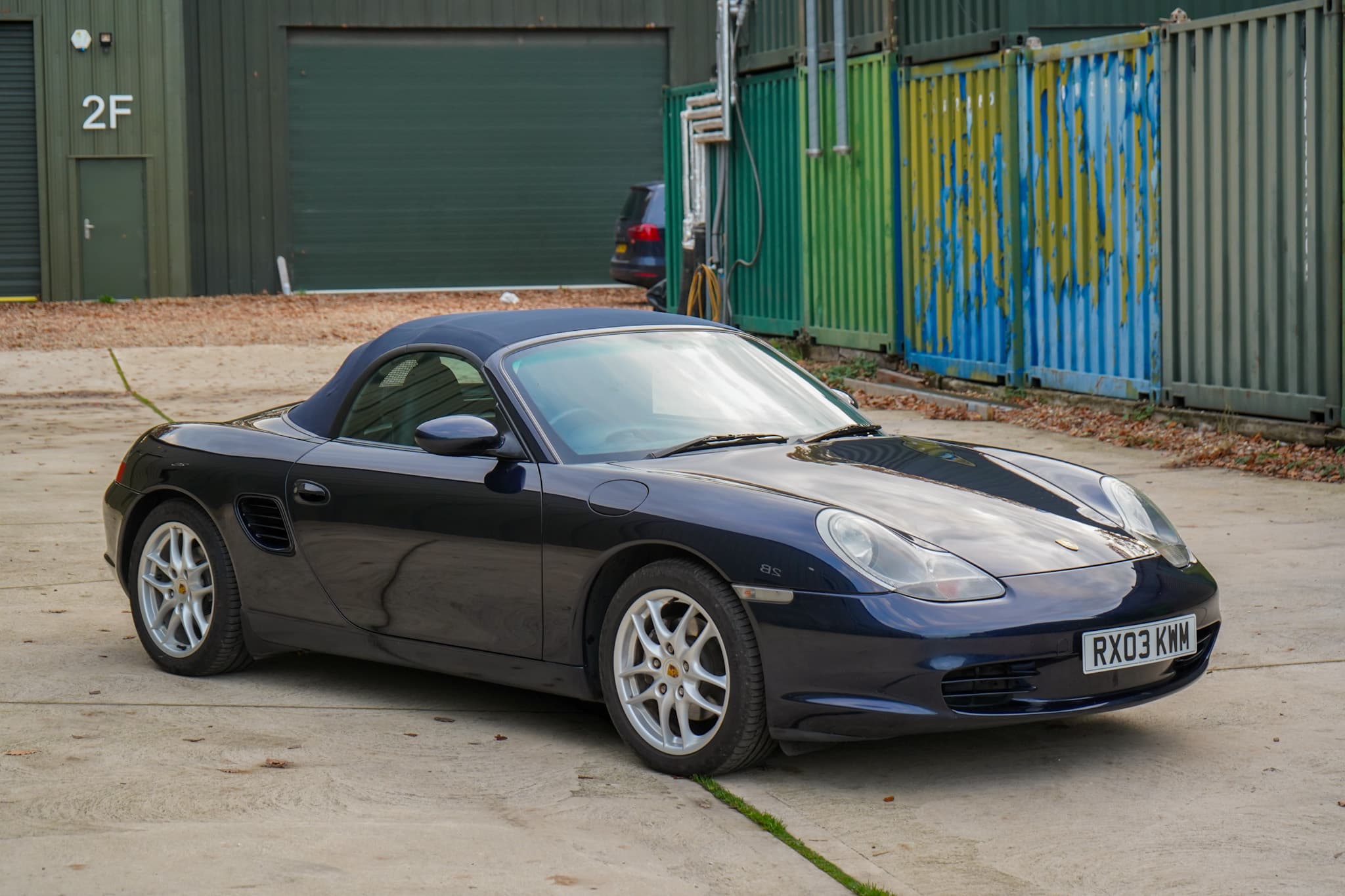
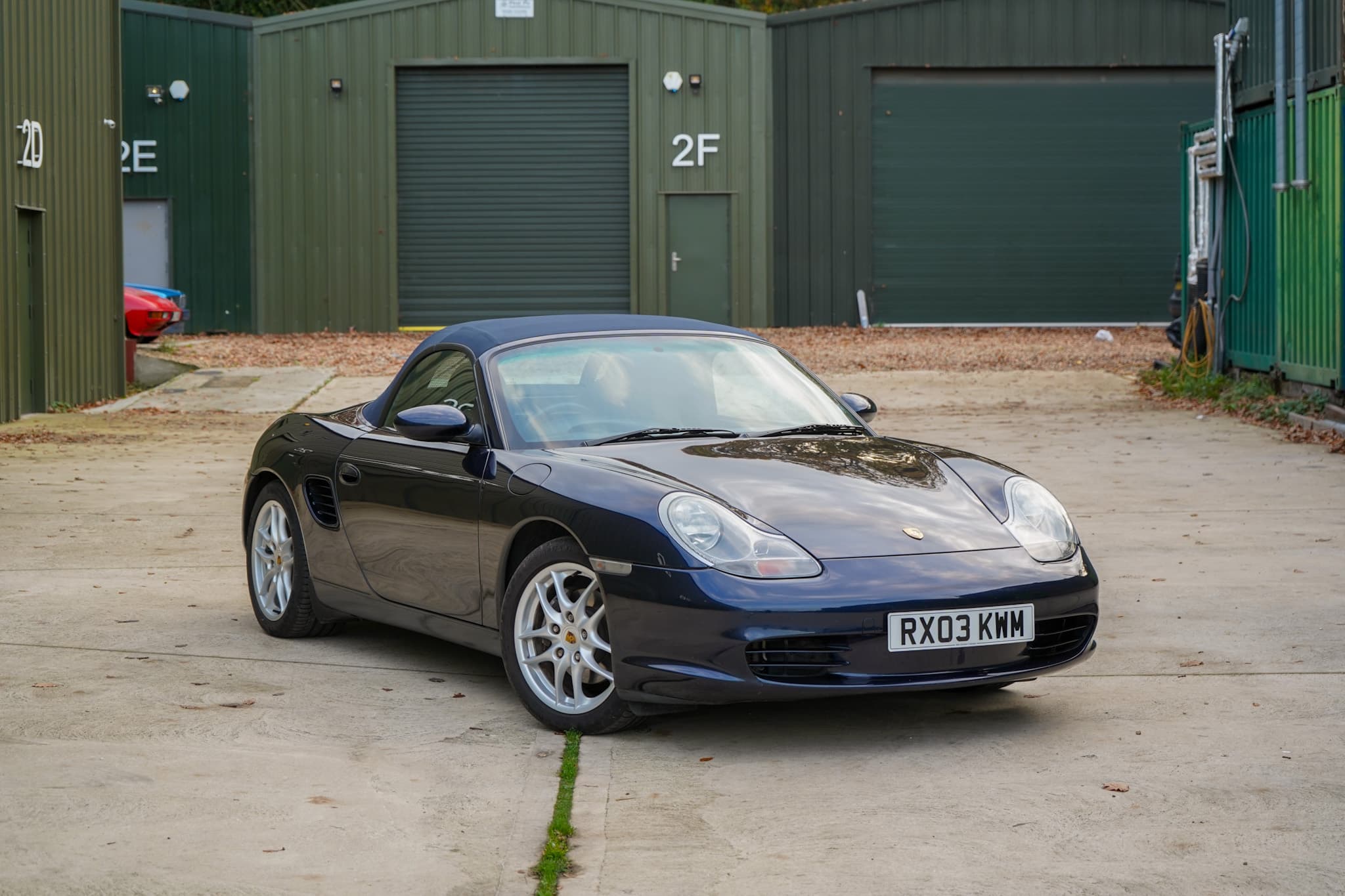
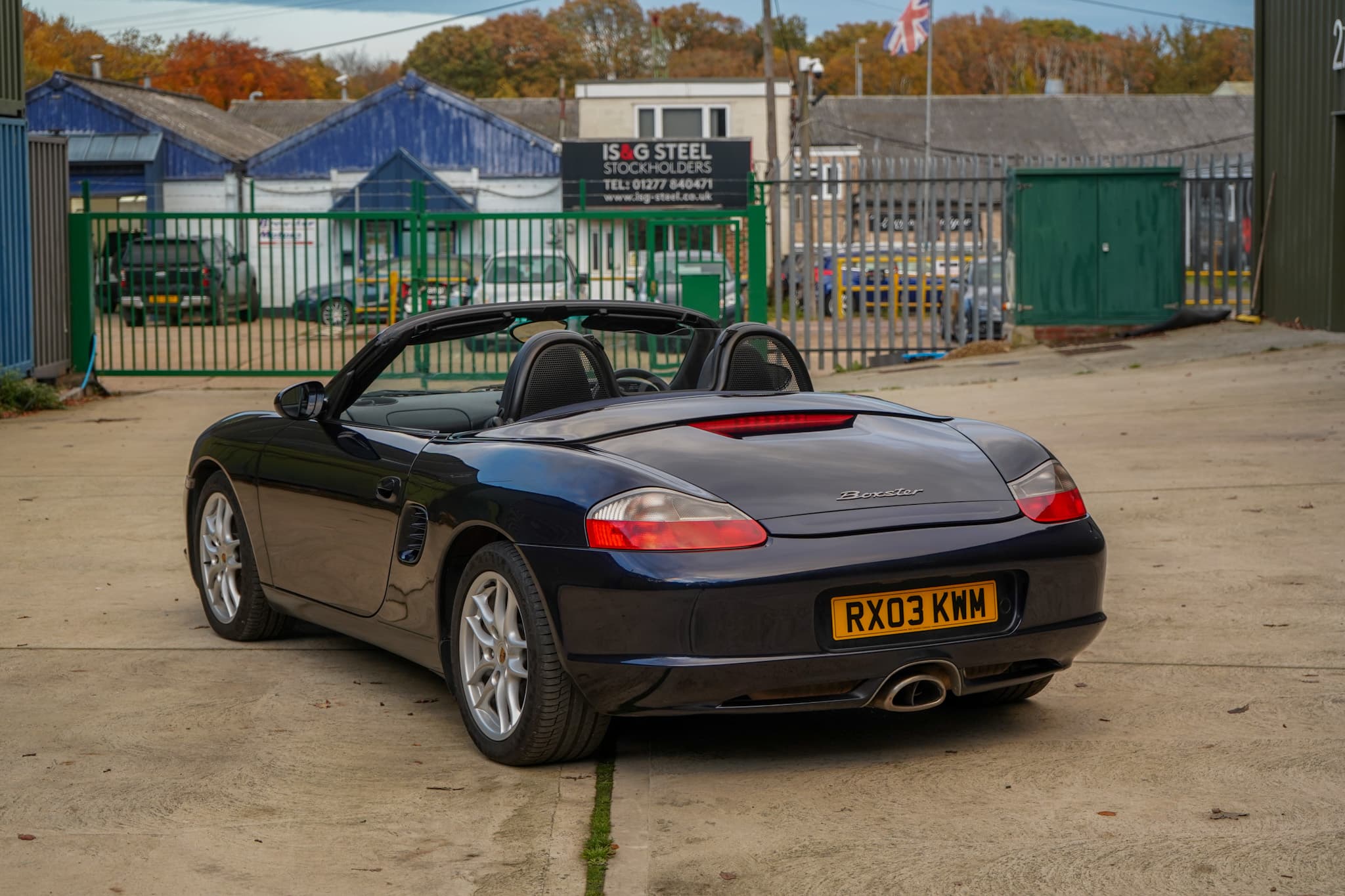
A surviving Car & Classic listing from The Matt Johnston Collection records RX03KWM as a right-hand-drive 2003 2.7-litre, five-speed-manual Boxster, initially registered by AFN Porsche Guildford in April 2003.
The useful part of that advert is its unusually detailed mechanical chronology. It records a full engine rebuild by Ramus Porsche Specialists in 2020 at 32,553 miles, including bearings, chains, gasket work, an IMS bearing, a clutch kit and an exhaust valve. The same listing records later major work at Dove House Porsche Specialists in 2025, including hydraulic tappets, a camshaft, water pump, drive belt and surrounding seals.
At the advert's stated 59,167 miles, roughly 26,600 miles had elapsed since the recorded rebuild. That is more informative than a badge saying IMS done, because it gives a workshop, date context, mileage and a wider list of work that can be checked against invoices.
There are still boundaries to what the advert proves. It does not identify the design of IMS bearing fitted in 2020, and an April-2003 first-registration date does not by itself authenticate the car as a particular Porsche model year. A buyer interested in originality should reconcile the VIN, engine number and invoices rather than fill those gaps with assumptions.
The advert also describes the car as a facelift model with a heated glass rear window. That is consistent with Porsche's model-year-2003 roof chronology, but consistency is not the same as factory proof.
Porsche Classic has published its own experience of buying and recommissioning a 986, and the emphasis is broader than the internet's usual single-issue discussion.
Its project car had a good service history, but Porsche still discusses leakage around the transmission-side crankshaft seal, age-related expenditure on wishbones, anti-roll-bar bushes, dampers, tension struts and brakes, and deterioration of the soft top. That is a useful reminder of what a 20-plus-year-old sports car actually is: a collection of systems ageing at different rates.
On a viewing, check the car cold and then properly warm. Look for evidence rather than attempting diagnosis from folklore.
Listen for persistent abnormal mechanical noise after start-up, check warning lights, inspect for oil and coolant leaks and look through the history for water-pump, cooling-system and seal work. A clean engine bay on the day of sale is less valuable than a coherent history over years.
The base MY2003-2004 manual should be the G86.01 five-speed. Use all gears from cold and warm, check clutch engagement and listen for noise on load and overrun. If the car has a six-speed manual, that deserves an explanation rather than being automatically described as a desirable factory upgrade.
Check for knocks, vague response, uneven tyre wear, old dampers and tired bushes. Porsche Classic specifically treats suspension and brake replacement as normal age-related expenditure on a 986 rather than as evidence that the model is fundamentally unsound.
Operate the roof through a complete cycle. Inspect the fabric, tension, rear-window bonding and seals. A late glass window removes the crease-prone plastic screen from the equation, but it does not make the rest of the hood mechanism immortal. Check the cabin and luggage areas for signs of water ingress rather than relying only on a dry carpet surface.
A mid-engined Boxster hides much of its powertrain from a casual glance. Check the front intake/radiator area for debris and condition, the expansion tank and coolant history, and the service record for age-related components. Specialist M96 guidance also treats the air-oil separator, vacuum system and cooling system as part of the wider diagnosis rather than focusing on one bearing alone.
The correct answer depends on what you want from the car.
The S has more power and a six-speed manual. The 2.7 does not need to be presented as a secret S-beater to justify its existence. It retains the core 986 ingredients: a naturally aspirated flat-six behind the seats, rear-wheel drive, two-seat roadster packaging and a manual gearbox.
Porsche Classic's own team deliberately searched for a 2.7 manual for its project and argued that the base engine already provided enough performance for the car's character. That is a better reason to consider one than invented rarity or exaggerated reliability claims.
At this age, the condition and evidence attached to the individual car can matter more than the hierarchy printed in an old brochure. A documented 2.7 with coherent maintenance may be a much more appealing ownership proposition than an S with gaps or unexplained major work.
Before relying on an advert's description of a 2003 facelift 2.7 manual, confirm:
That sequence answers the question that matters: what exactly is this car, and how much of its mechanical story can be proved?
Editorial information
Research and editorial from TMJC Garage.
Research and editorialTMJC Garage
Reviewed byMatt Johnston
Last reviewed13 September 2026
Published byThe Matt Johnston Collection
Model lineage
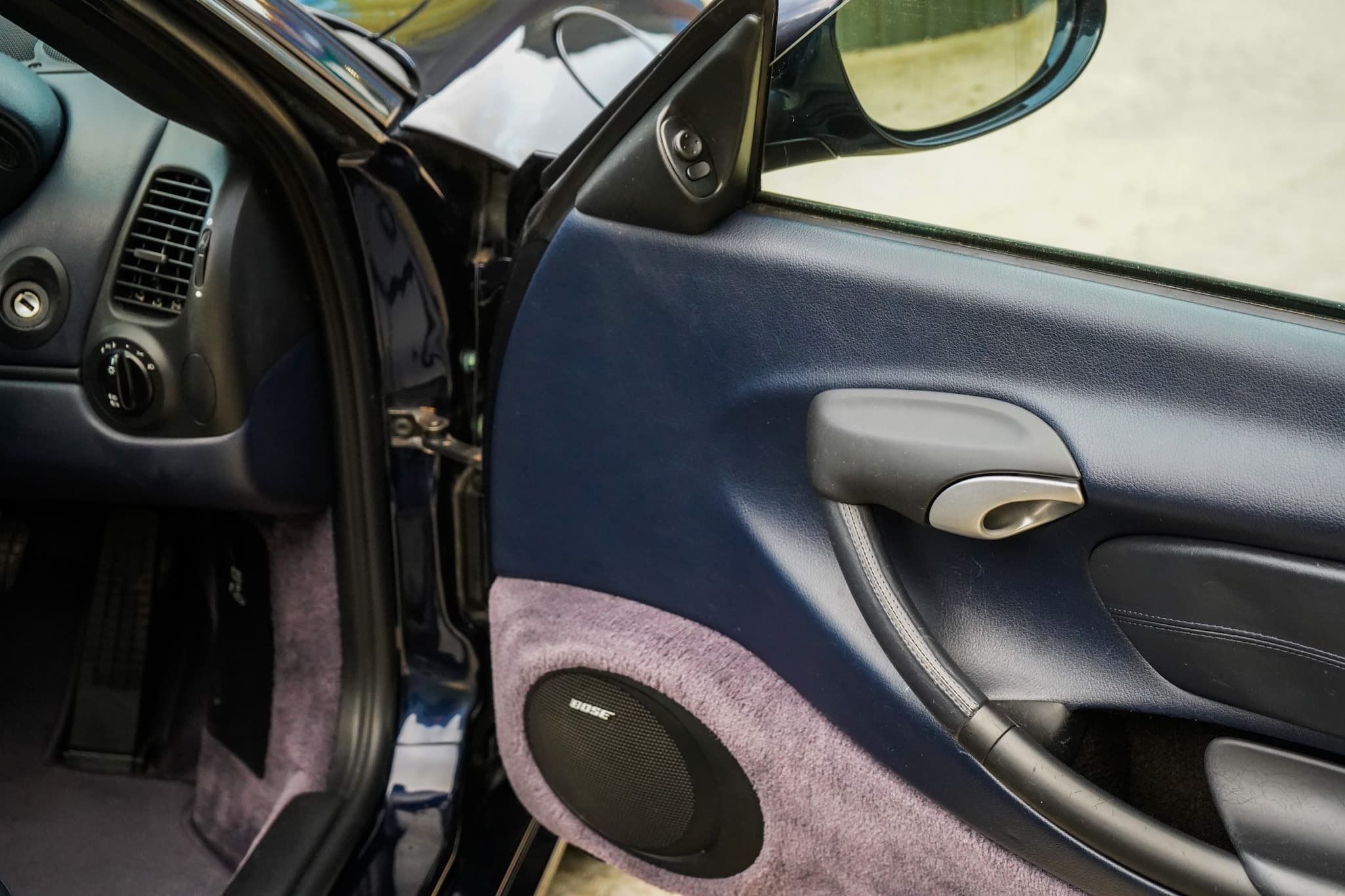
TMJC photography


TMJC Guides
TMJC assistance
Continue to the main TMJC website and speak directly with the collection team.
Sell, consign or source
Continue with TMJC for a discreet conversation, professional presentation and collector-focused support.
Enquire now