Model
Porsche Boxster
The Boxster began as Porsche’s 1990s mid-engine roadster programme and evolved through the 986, 987, 981 and 982/718 generations. This guide explains the name, the shared 996 development strategy and the changes that actually distinguish each generation.
Generation directory
Boxster generations
Choose a Boxster generation to see its production years, body styles, engines, chassis changes and variants.
TMJC Catalog guide
Porsche Boxster: 986, 987, 981 and 718 generations explained
The Boxster began as Porsche’s 1990s mid-engine roadster programme and evolved through the 986, 987, 981 and 982/718 generations. This guide explains the name, the shared 996 development strategy and the changes that actually distinguish each generation.
- Page
- Model overview
- Reviewed
- 13 Sept 2026
- Specifications
- 0 verified
The Porsche Boxster is Porsche's two-seat, mid-engined roadster family, first shown as a concept at the Detroit Motor Show in January 1993 and launched in series production in August 1996. Its name is deliberate: Porsche says Boxster combines boxer, for the horizontally opposed engine, with roadster.
Four established generations make up the model's modern lineage: 986, 987, 981 and 982. The fourth is usually known by its showroom name, 718 Boxster. Those numbers are not trim levels. They are Porsche type codes for distinct generations, and understanding them is the quickest way to make sense of engines, gearboxes and used-car adverts that otherwise look contradictory.
Why Porsche created the Boxster
The Boxster was not simply conceived as a smaller 911.
Porsche's own retrospective places the project inside the company's difficult early-1990s position. Sales had fallen, the weak US dollar hurt the business, and Porsche was carrying high manufacturing costs across four technically different product lines: the 911, 944, 968 and 928.
The proposed answer was a new, lower-priced two-seat roadster that could share substantial engineering and production thinking with the next 911. Horst Marchart, then responsible for research and development, described the plan as an additional model built around the concept and components of the future 911, with a lower target price and appeal to younger buyers.
That commonality became real. Porsche says the first Boxster 986 shared its front section, doors and many other components with the 996-generation 911, and that both cars were developed by teams working across the two programmes. Porsche credits the shared-component strategy with materially reducing production and inventory costs.
That is a more useful explanation than the familiar slogan that the Boxster somehow saved Porsche by itself. The car mattered enormously, but it was part of a wider change in product planning, manufacturing and cost control.
The related Porsche 911 (996) reference covers the rear-engined 911 side of that period. Shared development did not make the two cars the same architecture: the Boxster placed its engine ahead of the rear axle, while the 911 retained its rear-engine layout.
What does Boxster mean?
Porsche describes the name as a portmanteau of boxer and roadster. It therefore tells you two things about the original idea at once: an open two-seater and a horizontally opposed engine.
The 1993 concept was designed by Grant Larson. Porsche says its proportions and mid-engine layout deliberately drew on earlier cars such as the 550 Spyder and 718 RS 60, rather than trying to make an open 911 with two seats removed.
That historical reference became especially relevant decades later, when Porsche reused the 718 name for the fourth-generation Boxster.
Boxster generations at a glance
| Generation | Introduced | The change that matters most |
|---|---|---|
| 986 | Series production August 1996 | Established the modern mid-engine Boxster formula with a water-cooled flat-six and extensive shared development with the 996 911 |
| 987 | 2004 | Matured the design and cabin; later cars brought PDK in place of the previously offered Tiptronic S automatic |
| 981 | 2012 | A substantially new lightweight body and reworked chassis, still centred on naturally aspirated flat-six engines |
| 982 / 718 Boxster | 2016 | Adopted the 718 name and turbocharged flat-four engines for the base/S range; later upper derivatives brought naturally aspirated 4.0-litre flat-sixes back into the family |
The dates are useful orientation, not a substitute for a car's build data. Registration year, model year and production date do not always line up neatly across markets.
986: the original production Boxster
The 986 is the first production Boxster. Porsche launched it in August 1996 with a mid-mounted, water-cooled 2.5-litre flat-six producing 150 kW / 204 PS in the manufacturer's retrospective.
The important change came in 1999, when the base car moved to 2.7 litres, initially at 162 kW / 220 PS and later 168 kW / 228 PS. The Boxster S created a higher-performance branch with a 3.2-litre six-cylinder.
Porsche Classic records 164,874 examples of the 986 generation between 1996 and 2004. That is a 986-generation figure, not the production total for every Boxster built since.
The first generation is also where the relationship with the 996 matters most. Shared components helped Porsche build both model lines more efficiently, but the Boxster's mid-engine package gave it its own layout, luggage arrangement and driving identity from the outset.
987: evolution rather than a reset
The 987 followed in 2004. Porsche's own 25-year history describes more distinct styling, a redesigned interior and 17-inch wheels, while options such as PASM adaptive damping, PCCB ceramic brakes and the Sport Chrono package broadened the chassis and performance choices.
The later 987 period also marks an important gearbox change. Porsche says PDK dual-clutch transmission replaced the previously offered Tiptronic S automatic as the generation evolved.
That distinction is more useful than treating every 987 as one specification. Early and later cars differ materially, and a buyer should establish the exact phase before borrowing figures from a generic 987 Boxster table.
981: the naturally aspirated clean-sheet generation
Porsche presented the 981 in 2012 with a completely new lightweight body and fully reworked chassis. At launch the range retained naturally aspirated six-cylinder boxer engines, with a 2.7-litre base car and 3.4-litre Boxster S.
The generation later expanded through the GTS and Boxster Spyder, the latter using a 3.8-litre six-cylinder in Porsche's anniversary history.
For enthusiasts comparing generations, the 981 matters because it combines a much newer body/chassis concept with the naturally aspirated flat-six character that defined the earlier Boxsters. That is why a 981 versus 718 search is not simply a comparison between an old and a new body shape: it crosses a significant engine-strategy change as well.
982 and the 718 Boxster name
In 2016 Porsche announced that its reworked mid-engine roadsters would be called 718 Boxster and 718 Boxster S. The internal generation is commonly identified as 982.
The headline mechanical change was a new family of turbocharged four-cylinder boxer engines: Porsche launched the standard 718 Boxster with a 2.0-litre unit rated at 220 kW / 300 hp and the S with a 2.5-litre unit rated at 257 kW / 350 hp.
The 718 badge deliberately referenced Porsche's earlier four-cylinder mid-engine racing cars. It did not mean the Boxster lineage had ended and an unrelated model had replaced it. Porsche itself described the 2016 cars as the new generation of its mid-engine roadsters, 20 years after the first Boxster.
Nor is 718 Boxster = four-cylinder a complete rule. Porsche later returned naturally aspirated six-cylinder power to upper derivatives, including the 718 Spyder and 718 Boxster GTS 4.0. Generation, derivative and engine therefore all matter.
986 vs 987 vs 981 vs 718: the shortest useful comparison
If you are trying to place a car quickly, the broad differences are:
- 986 — the original, closely tied to the 996 development programme and the first water-cooled Boxster generation.
- 987 — an evolutionary second generation with a more distinct cabin/design and, in later form, the move from Tiptronic S to PDK.
- 981 — the major body/chassis reset, with naturally aspirated flat-six engines across the core range.
- 982 / 718 — the 2016-on generation in which the base and S moved to turbo flat-four power, while later performance derivatives reintroduced 4.0-litre flat-sixes.
That map is more reliable than identifying a generation from horsepower alone. Outputs, capacities and transmissions changed within generations as well as between them.
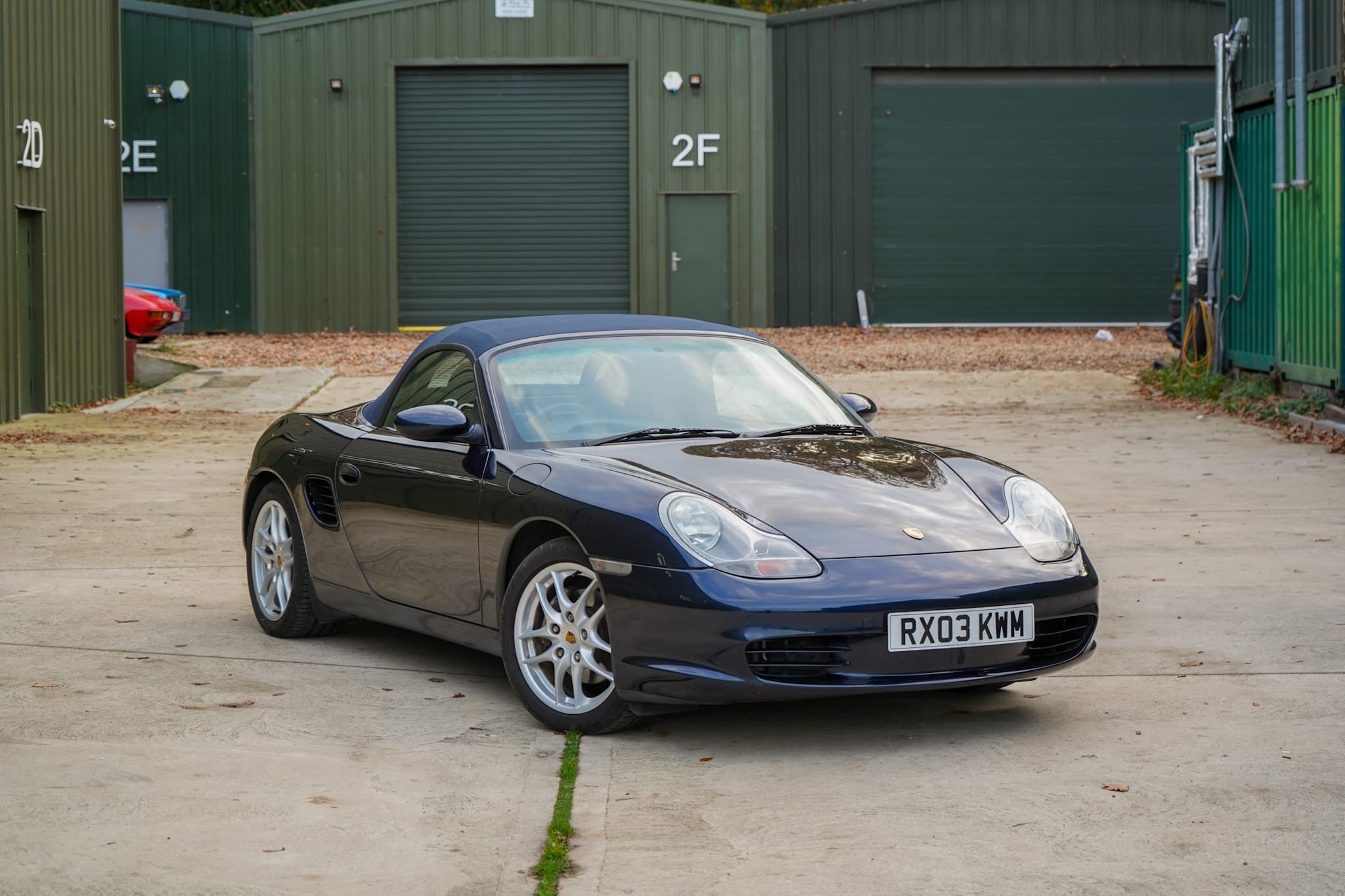
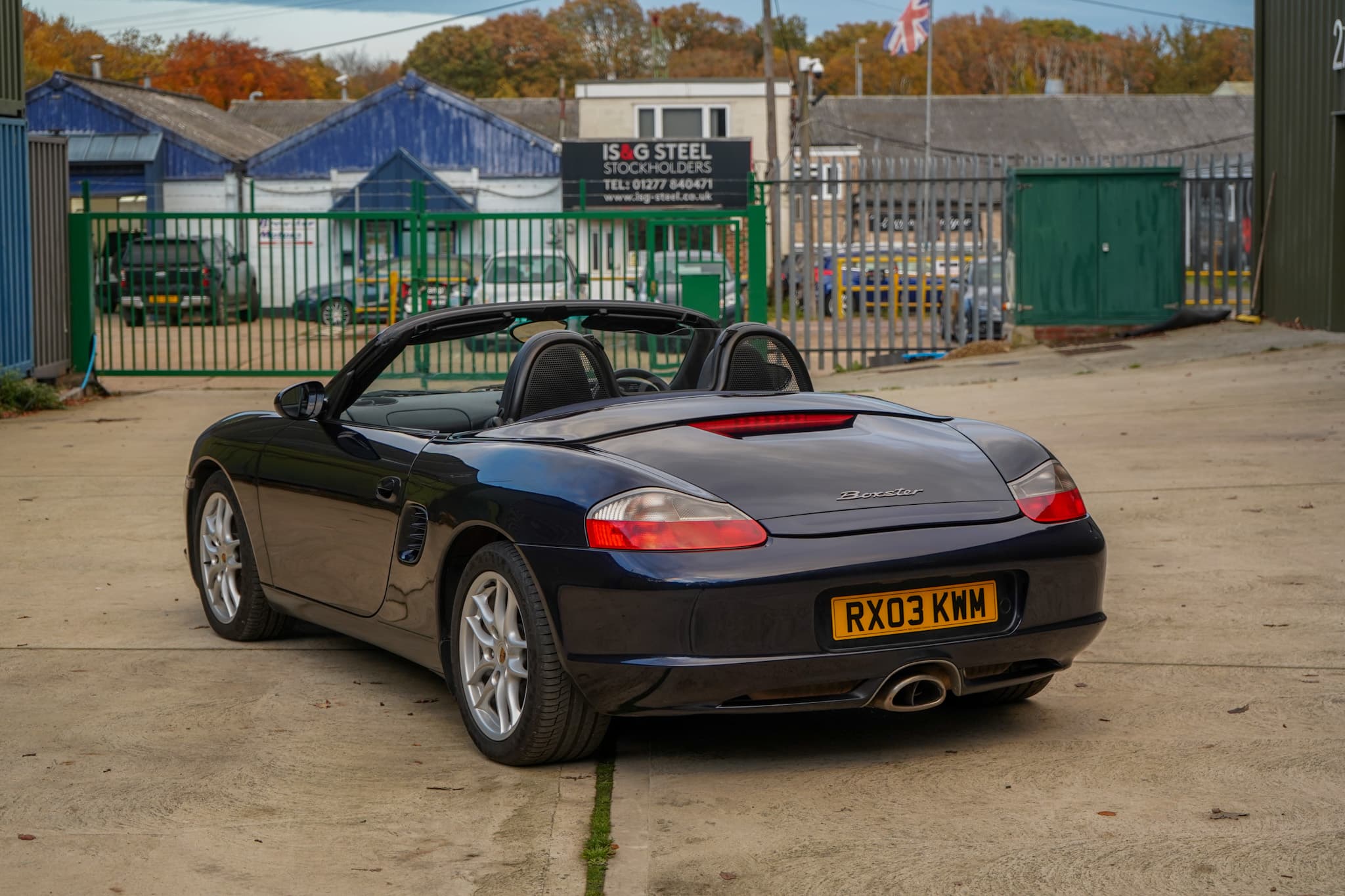
A real late-986 example from TMJC
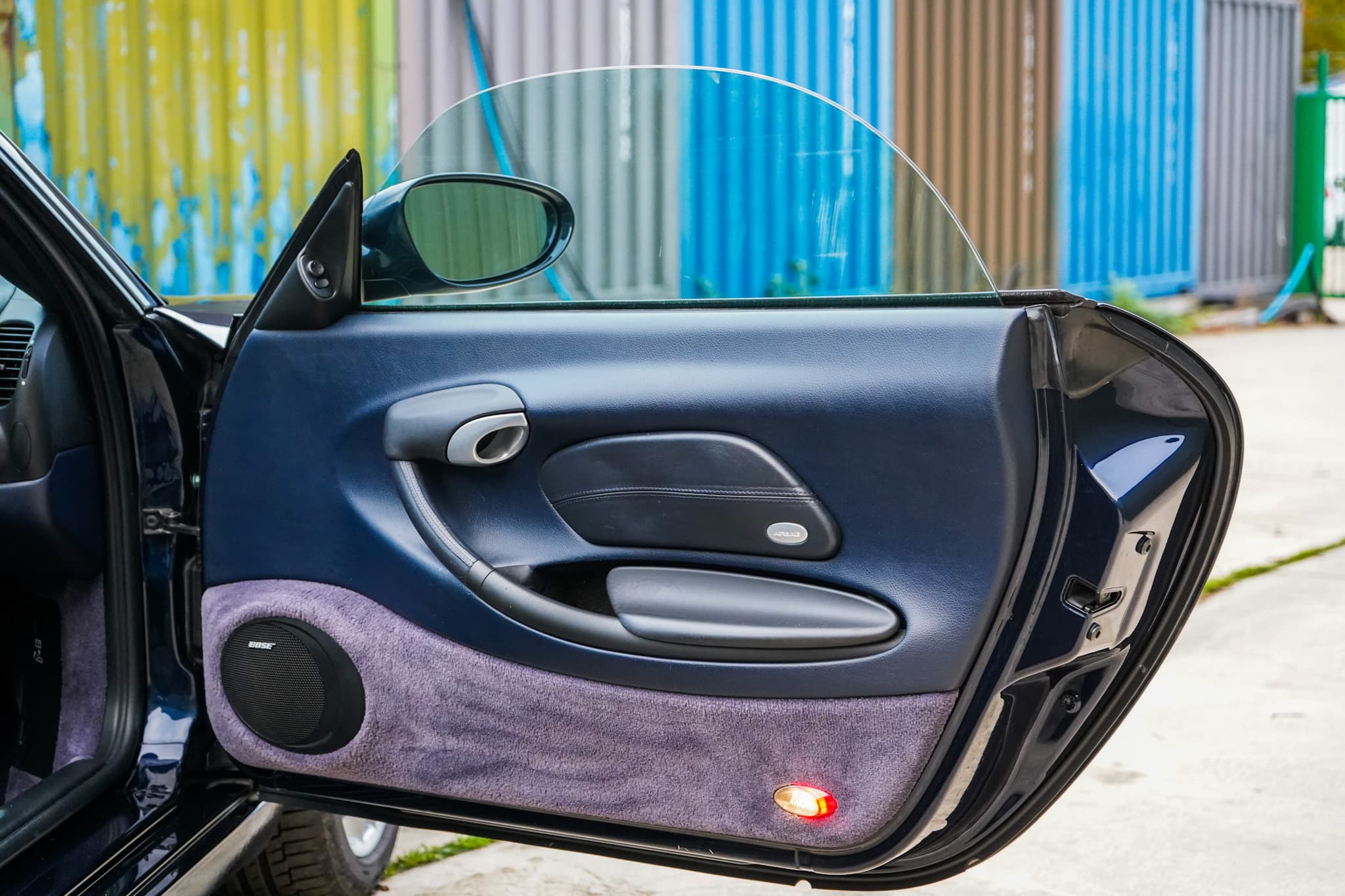
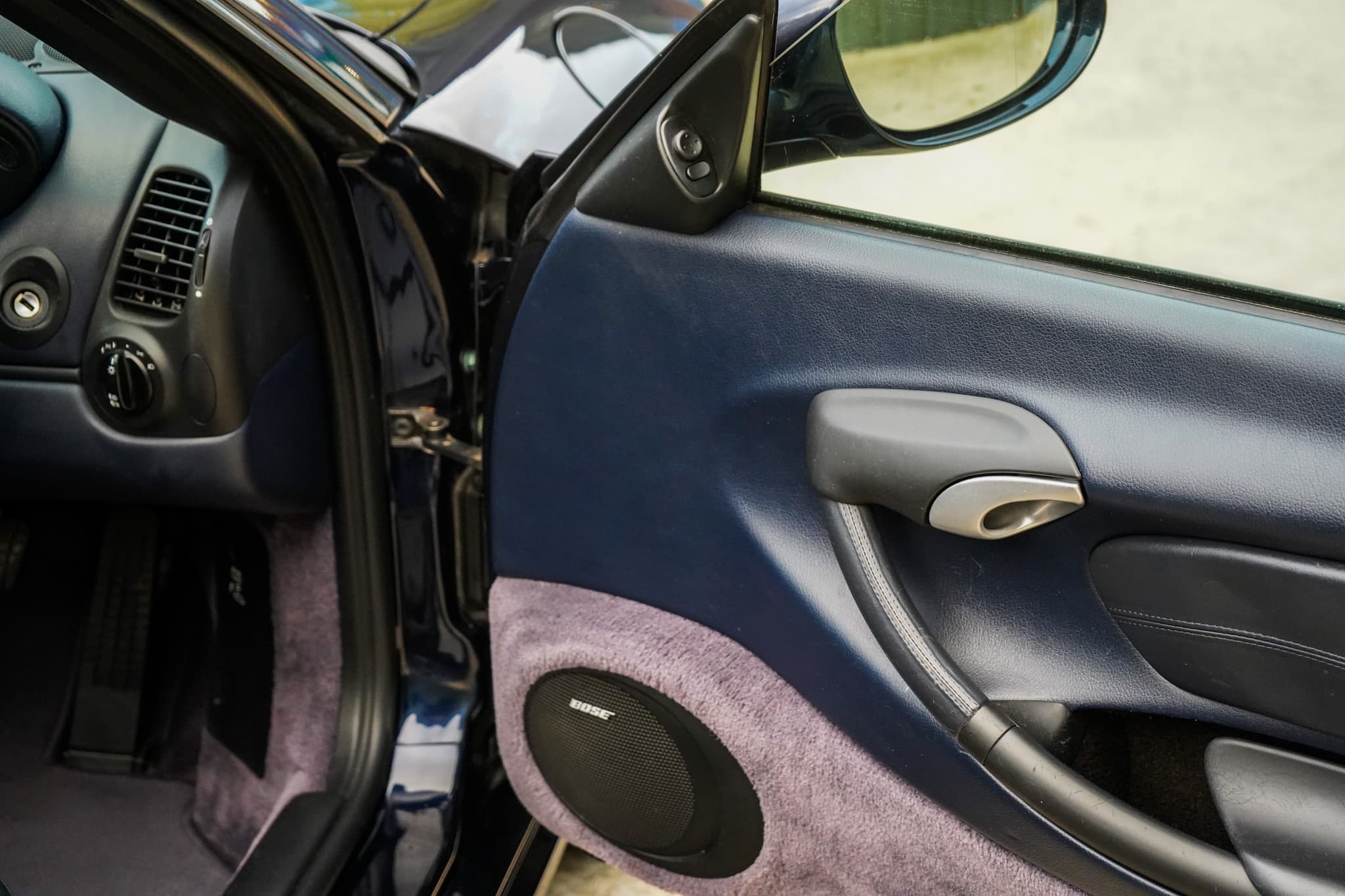
The Matt Johnston Collection has handled a 2003 right-hand-drive Boxster 2.7 with a five-speed manual gearbox. The surviving dealer record also carries detailed specialist engine-rebuild history.
It is useful here because a 2003 car sits in the late 986 period, where 2003 Boxster, 986 II, 2.7 and a quoted power figure can be mixed together casually in adverts. The correct way to establish its specification is to start with the actual car's build/model-year evidence and service history rather than assuming the registration year answers every technical question.
How to decode a Boxster advert
Before applying a specification you found online, establish five things:
- Generation: 986, 987, 981 or 982/718.
- Phase/model year: early and late cars within a generation can have different engines, transmissions and equipment.
- Derivative: base Boxster, S, GTS, Spyder or another special version.
- Transmission: manual, Tiptronic S or PDK depending on generation and derivative.
- Original market and build evidence: registration date is useful context, but not a universal substitute for model-year or build information.
The most common Boxster specification errors come from skipping one of those steps and borrowing a figure from a nearby year or different derivative.
Why the Boxster deserves its own Porsche story
The Boxster's importance is not that it is the 911's cheaper sibling. It gave Porsche a modern mid-engine roadster again, translated a deliberately historic design idea into series production, and became part of the manufacturing strategy that Porsche itself credits with reducing cost and complexity alongside the 996.
The model then kept changing in ways that matter to an owner: the 986 established the formula, the 987 matured it, the 981 rebuilt it around a new body and chassis, and the 718 era changed both the name on the boot and the character of the core engines.
That continuity is what makes Boxster the useful family name. The generation code tells you which version of the idea you are actually looking at.
Explore the broader company context on the Porsche marque page.
Sources and further reading
- Porsche Newsroom — Boxster 25 Years
- Porsche Newsroom — The Boxster sports car concept
- Porsche Newsroom — The people and ideas behind the Boxster
- Porsche Newsroom — The new Porsche 718 Boxster
- Porsche Classic — One step ahead: Porsche Boxster 986
- The Matt Johnston Collection via Car & Classic — 2003 Porsche Boxster 986 2.7
Editorial information
The Matt Johnston Collection
Research and editorial from TMJC Garage.
Research and editorialTMJC Garage
Published byThe Matt Johnston Collection
Model lineage
Where this car sits
TMJC media
Explore the car in detail


Sell, consign or editorial
Thinking of selling or consigning a special car?
Continue with TMJC for a discreet conversation, professional presentation and collector-focused support.
Enquire now