Published guide
Model year vs registration year: build date explained
Model year, build date and first registration are different. Learn which date matters and how to verify a classic car.
Overview
Model year, build date and first registration are different. Learn which date matters and how to verify a classic car.
A car can be described as a 1991 model, built in 1990 and first registered in 1991 without any of those statements necessarily being wrong. They are answering different questions.
For a collector car, the useful distinction is:
- Build or production date: when the manufacturer actually produced the car.
- Model year: the manufacturer's technical or commercial classification for that version of the car.
- First-registration date: when the car entered the registration system for the first time.
- Plate or advert year: often a convenient shorthand, but not a factory build record.
Those dates can coincide. They do not have to.
The mistake is not having more than one date attached to a car. The mistake is using one date as proof of something it does not establish.
Model year, build date and first registration are different
The distinction is visible in UK official records. DVLA's vehicle-information service lists date first registered and year of manufacture as separate details. If they were the same concept, there would be little reason to preserve both fields.
Manufacturer records add another layer: model year. That can define a technical specification even when the calendar year on the registration document looks similar.
| Term | What it usually answers | Strong evidence | What it does not prove by itself |
|---|---|---|---|
| Build / production date | When the factory produced the car | Manufacturer build record, archive certificate or production data | When the first owner took delivery |
| Model year | Which manufacturer specification period the car belongs to | Manufacturer VIN/build data and period technical literature | The exact day the car was built or registered |
| First-registration date | When the car was first registered | Registration authority / original registration documents | Factory model-year specification |
| Plate / advert year | A convenient market description | Registration record plus supporting paperwork | Exact build date, option list or mechanical specification |
This is more than paperwork pedantry. At a model-year change, an engine code, control unit, gearbox, roof mechanism, emissions equipment, trim or replacement part can change while the badge on the boot stays the same.
Can a car be registered after production ended?
Yes. A model can leave production before the last unsold examples are delivered or registered.
A car may be built, transported, held by an importer or distributor, allocated to a dealer and sold at different points in time. On an older or imported car there may be further delay before it receives its current registration identity.
There is no useful universal rule saying that a gap of a particular number of weeks or months is normal and anything longer is suspicious. Low-volume cars, export markets, dealer stock and changeover periods can all produce different timelines.
What matters is whether the chronology can be supported.
A late registration should prompt the question when was this particular chassis built? It should not automatically produce the answer the registration year must be the build year.
A TMJC example: BMW E30 325i J767KEM
The TMJC-associated BMW J767KEM is a good example of why the distinction matters.
BMW Group Classic gives the broad E30 325i production period as September 1985 to May 1991. The surviving TMJC-associated advert describes J767KEM as a 1991 E30 325i automatic and says it was supplied new in August 1991.
Those two statements are not inherently contradictory. A car produced on or before BMW's stated May 1991 endpoint could still be supplied by a dealer in August.
What the advert does not establish is that J767KEM was manufactured in August 1991. To make that claim, the stronger evidence would be vehicle-specific BMW archive or build information.
That is an important provenance habit: preserve the date that is actually evidenced.
If the file proves an August 1991 supply date, record it as an August 1991 supply date. Do not silently convert it into an August 1991 build date because that produces a tidier sentence.
For the wider generation context, see the BMW E30 3 Series reference.
Why model year can matter more than registration year
Porsche gives a particularly clear manufacturer explanation. Its UK guidance says model year matters because different model years or groups of model years can have different components, software or other variables.
That is exactly why a registration date can be a poor parts-ordering shortcut.
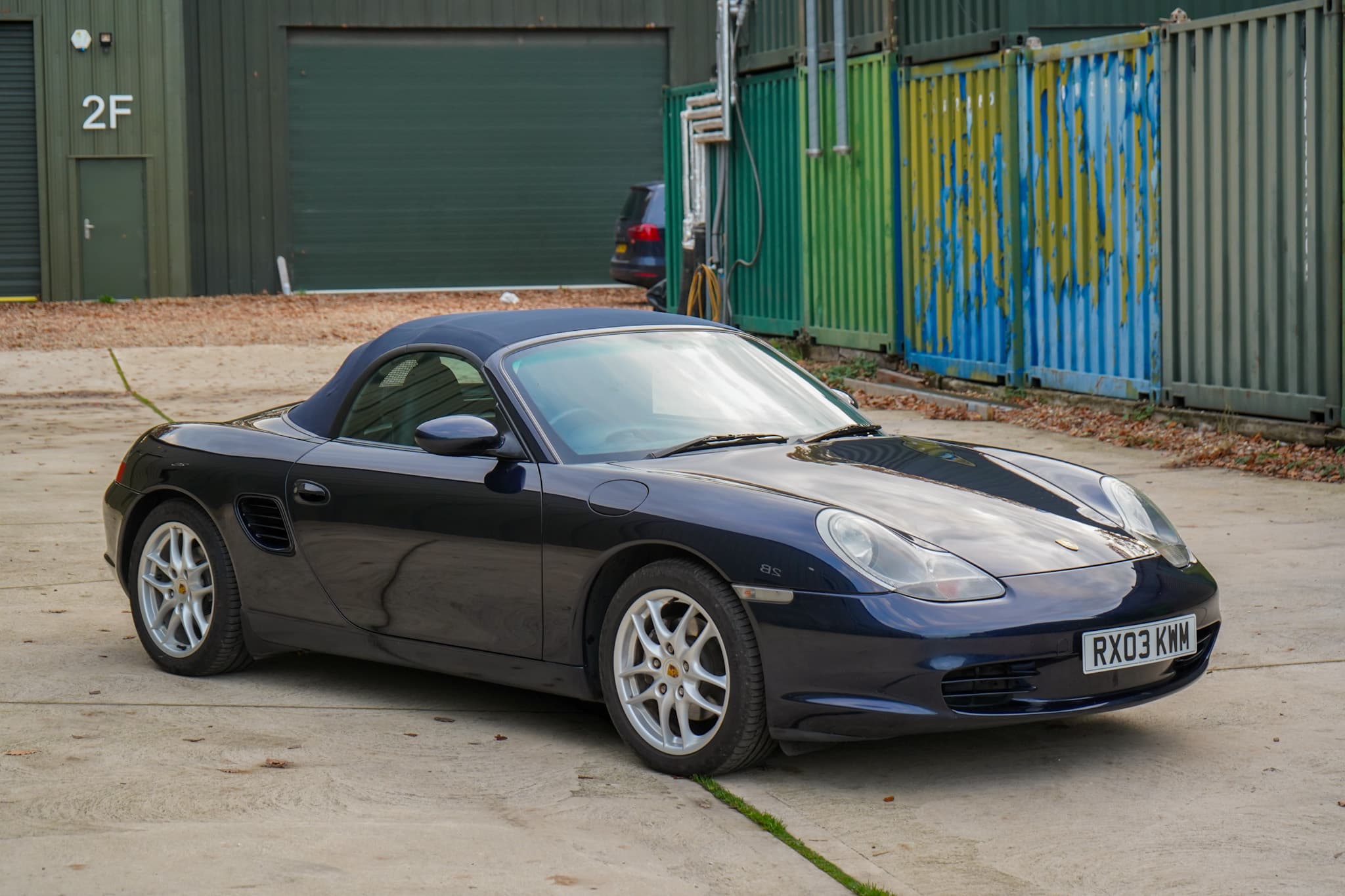
Take a car first registered in 2003. That tells you something useful about its road chronology. It does not automatically establish which Porsche model-year specification it belongs to, which engine code is fitted or whether every facelift component is original.
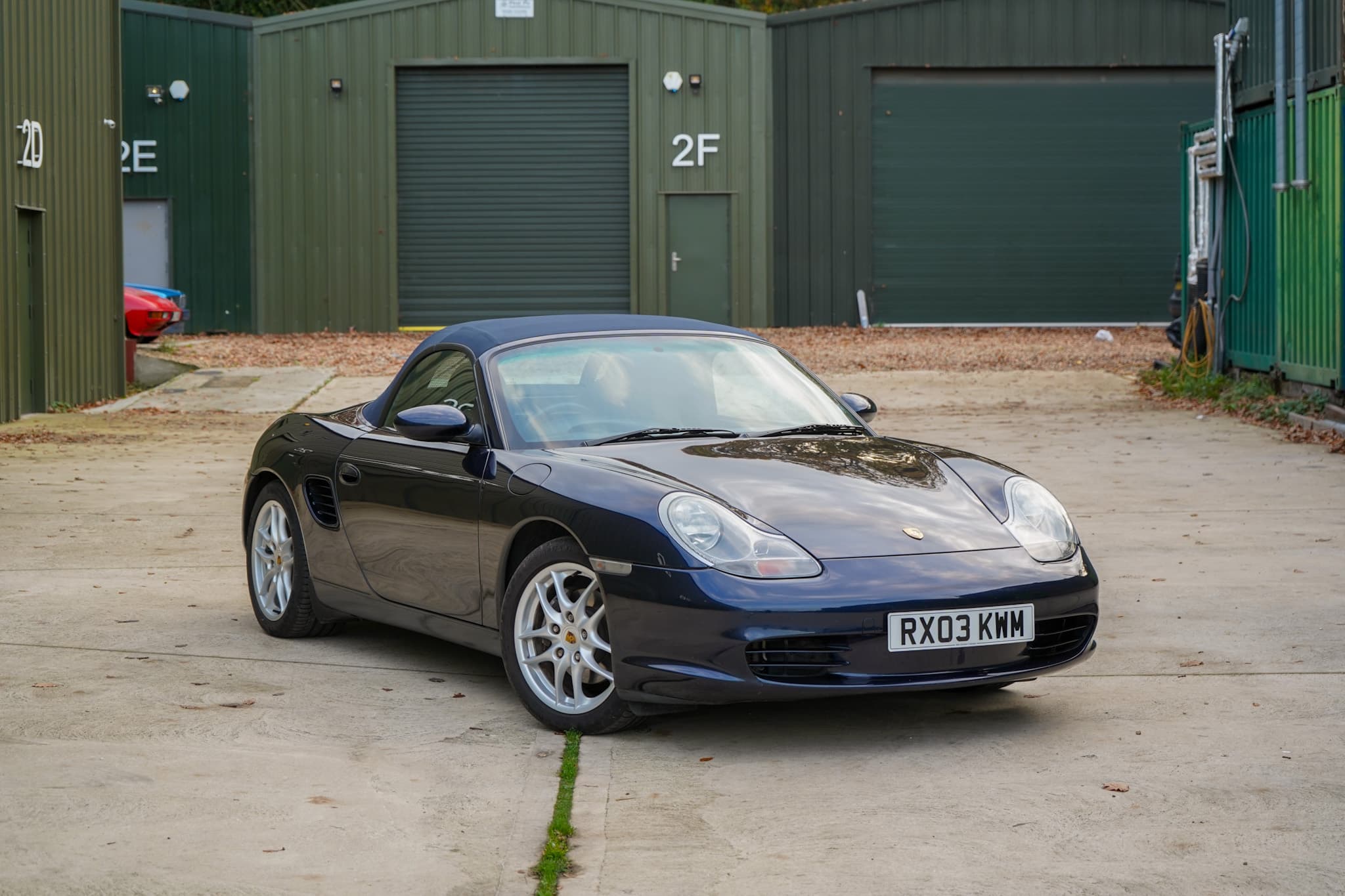
The Porsche Boxster 986 II 2.7 manual reference is a good example of a car where model-year precision matters. The late 986 has model-year-specific engine and equipment changes, so a buyer should establish the vehicle's actual model-year/build identity rather than infer it from the registration year alone.
Can you find model year from the VIN?
Sometimes, but use a manufacturer- and era-specific rule.
Porsche's current UK guidance says that, on its normal 17-character VIN, the tenth character identifies the Porsche model year. Porsche also notes that VIN structures and lengths vary by year and that cars produced before 1981 may use a different number of characters.
That is useful Porsche evidence. It is not permission to take the same rule and apply it blindly to every classic car ever made.
Older vehicles can predate modern VIN standardisation. Manufacturers can use different coding schemes, market documentation can vary, and a chassis number may not encode all the information a buyer wants to know.
The safe method is:
- identify the marque, model and approximate era;
- use manufacturer or authoritative period documentation for that VIN/chassis format;
- decode only the fields that documentation says are encoded;
- cross-check the result against the physical car and its paperwork.
A generic online VIN decoder can be a lead. It should not outrank manufacturer records when originality or value depends on the answer.
Build date and model year are not necessarily the same either
This is another common shortcut. A model year is a manufacturer classification, not necessarily the calendar year printed on the factory clock when the car was assembled.
Manufacturers can introduce a new model-year specification before 1 January, and the exact convention can vary by manufacturer, period and market. That is why statements such as "all model-year 2003 cars were built in 2003" should not be made without evidence for that particular manufacturer and programme.
For research, keep two fields if you can establish them:
- production/build date: the factory chronology;
- model year: the technical specification classification.
If only one is known, do not manufacture the other.
What should a UK buyer check?
Start with evidence that answers different parts of the question rather than asking one document to do everything.
1. Check the DVLA record
DVLA's vehicle-information service can show both the recorded year of manufacture and date first registered. Compare those details with the V5C and the vehicle you are inspecting.
A difference between the two dates is information to understand, not automatically a problem.
2. Record the VIN or chassis number accurately
Photograph or transcribe the identifier from the car itself, then compare it with the registration and history file. Do not begin model-year research from a partially remembered registration number or an advert headline if the chassis identity is available.
3. Use manufacturer/archive evidence where it exists
Manufacturer heritage departments and archives can be particularly valuable for older cars. BMW Group Classic, for example, offers a Digital Birth Certificate service with detailed vehicle information from the BMW Group Archive.
The exact fields available can depend on the vehicle and surviving records, so do not promise that every archive certificate will answer every question. If the vehicle-specific record gives a production date, delivery detail or original specification, record exactly what it says and preserve a copy.
4. Use period technical material for specification
Parts catalogues, owner's manuals, workshop documentation, order guides and brochures can establish what changed by model year, chassis range or market.
This becomes especially important at facelifts and running changes. A bumper or roof can be replaced. A factory model-year parts catalogue is harder to fake by accident.
5. Treat visible features as corroboration
Later lights, wheels, trim, roofs and badges can help identify a car, but they are also replaceable. If a visible clue disagrees with the VIN/build evidence, investigate the car rather than rewriting its identity around the newest-looking part.
The broader collector-car provenance checklist explains how to rank factory records, registration evidence, invoices and physical inspection across the rest of a history file.
Which year should you put in a classic-car advert?
Use the most precise wording the evidence supports.
If a car was built in 1990 and first registered in 1991, calling it simply a "1991 car" may be understandable in a registration-led marketplace, but it can leave a buyer with the wrong mechanical assumption. Better wording separates the facts:
Built in 1990; first registered in 1991.
If the build date is not known, say so:
First registered in August 1991; exact factory build month not yet confirmed.
If model year is known independently, add that as a third fact rather than using it as a synonym:
Model year 2003; built in late 2002; first registered in 2003.
The point is not to make every advert read like an archive catalogue. It is to avoid turning an administrative year into a technical claim.
When is a date difference actually a warning sign?
A date mismatch becomes more interesting when the independent evidence cannot be reconciled.
Examples include:
- the chassis number decoding to a different model or specification from the car being sold;
- registration records and factory records referring to incompatible identities;
- a claimed factory option or engine appearing only after the relevant production period;
- a seller presenting a registration year as an exact build date after stronger factory evidence shows otherwise;
- imported-car paperwork leaving an unexplained identity break between markets;
- a physical chassis or VIN stamping that does not agree with the documents.
By contrast, built in May and supplied in August is not, by itself, a provenance defect.
The right response to an unexplained date is not to assume the worst. It is to identify which event each date represents, find the strongest record for that event and leave anything still unresolved explicitly open.
The useful rule: ask which year you actually need
Before arguing about whether a car is a 1990, 1991 or 1992 example, ask what decision the year is supposed to support.
If you are ordering an ECU or engine part, you may need model year, chassis range or production date.
If you are reconstructing ownership chronology, you need first registration, delivery and dated records.
If you are checking originality, you need the factory specification tied to that chassis.
If you are describing the car for sale, you may need all three.
That is the real value of separating the dates. It replaces one vague year with a chronology that can actually be checked.
Sources and further reading
Related car
Cars covered in this guide
Explore the cars this guide covers, with model information, history and related TMJC guidance.
325i SE Saloon Automatic (UK)Provenance
325i SE Saloon Automatic (UK)
ResearchExplore model details, specifications, history and related guidance for BMW 3 Series E30 325i SE Saloon Automatic (UK).
 2.7 Manual (986 II)
Specification
2.7 Manual (986 II)
ResearchExplore model details, specifications, history and related guidance for Porsche Boxster 986 2.7 Manual (986 II).
Editorial information
The Matt Johnston Collection
Research and editorial from TMJC Garage.
Research and editorialTMJC Garage
Reviewed byMatt Johnston
Last reviewed13 September 2026
Published byThe Matt Johnston Collection