Identity
- Chassis code
- E30
- Body style
- Two-door saloon, Four-door saloon, Convertible, Touring, M3 derivatives
Generation
The E30 was the second-generation BMW 3 Series, produced from 1982 to 1994. Explore its body styles, engines, chassis development, notable variants and the issues buyers should understand today.
At a glance
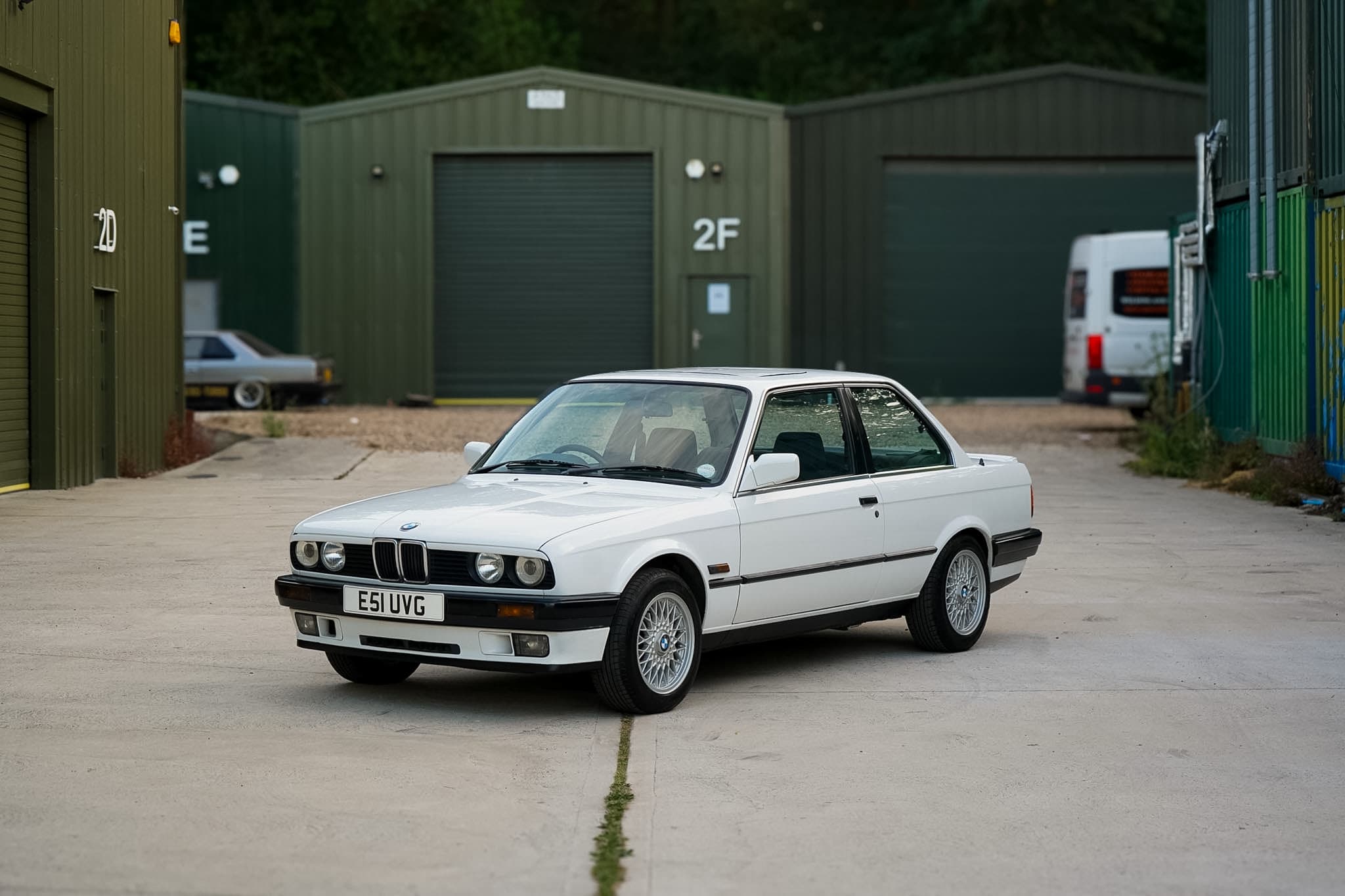
Variant directory
Choose an exact E30 derivative for engine, gearbox, performance, dimensions, equipment and buying-context detail.
TMJC Catalog guide
The E30 was the second-generation BMW 3 Series, produced from 1982 to 1994. Explore its body styles, engines, chassis development, notable variants and the issues buyers should understand today.
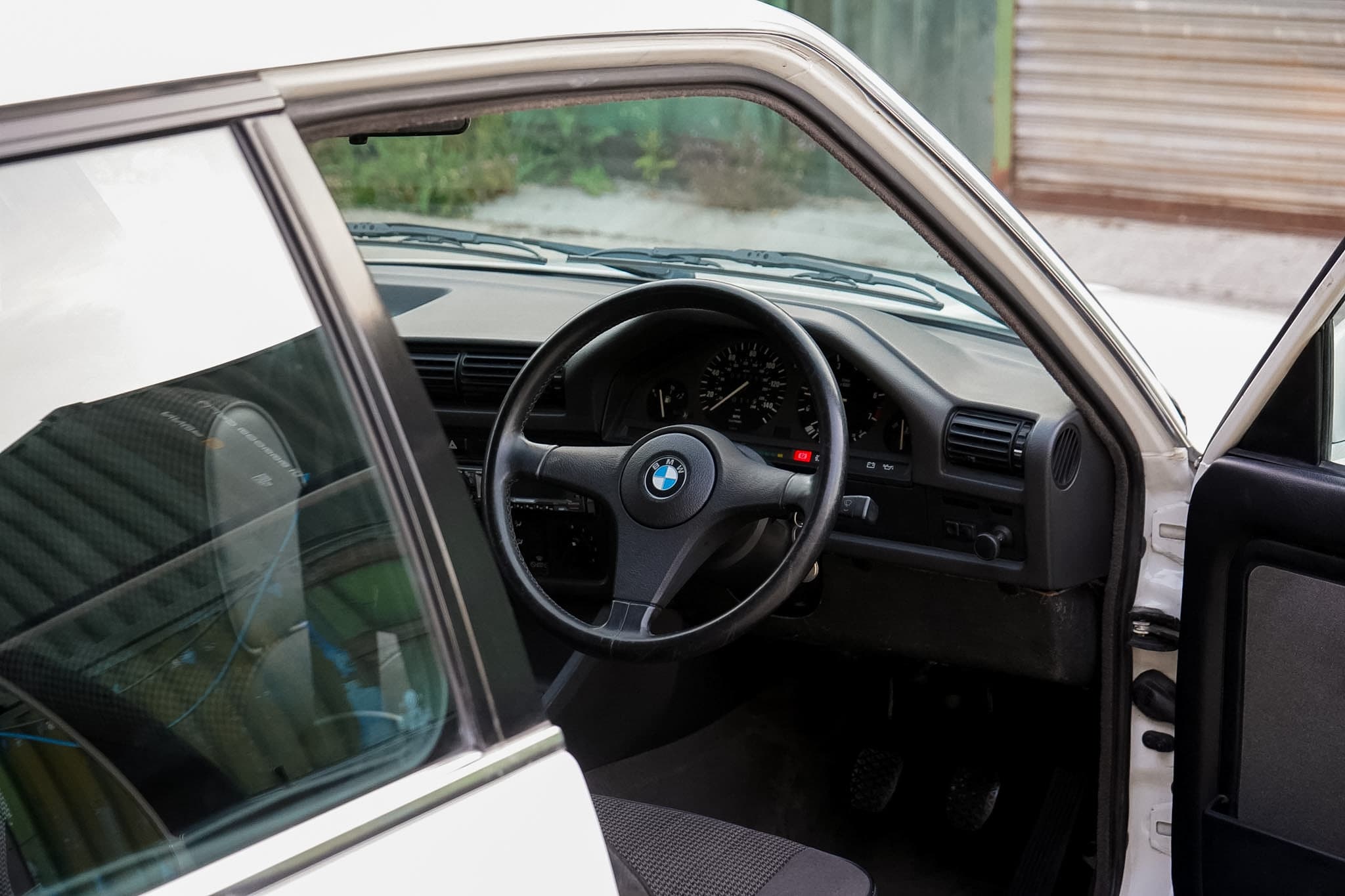
The E30 is the second generation of BMW 3 Series, introduced in 1982 and remaining in production in some body styles until 1994. It is one of the most recognisable classic BMWs because it combines compact dimensions and simple styling with a range that became far broader than the E21 it replaced.
BMW's own history records the E30 as more aerodynamic, around 30 kg lighter on average than its predecessor despite extra equipment, and 35 mm wider in track. Twin circular headlights became standard across the range.
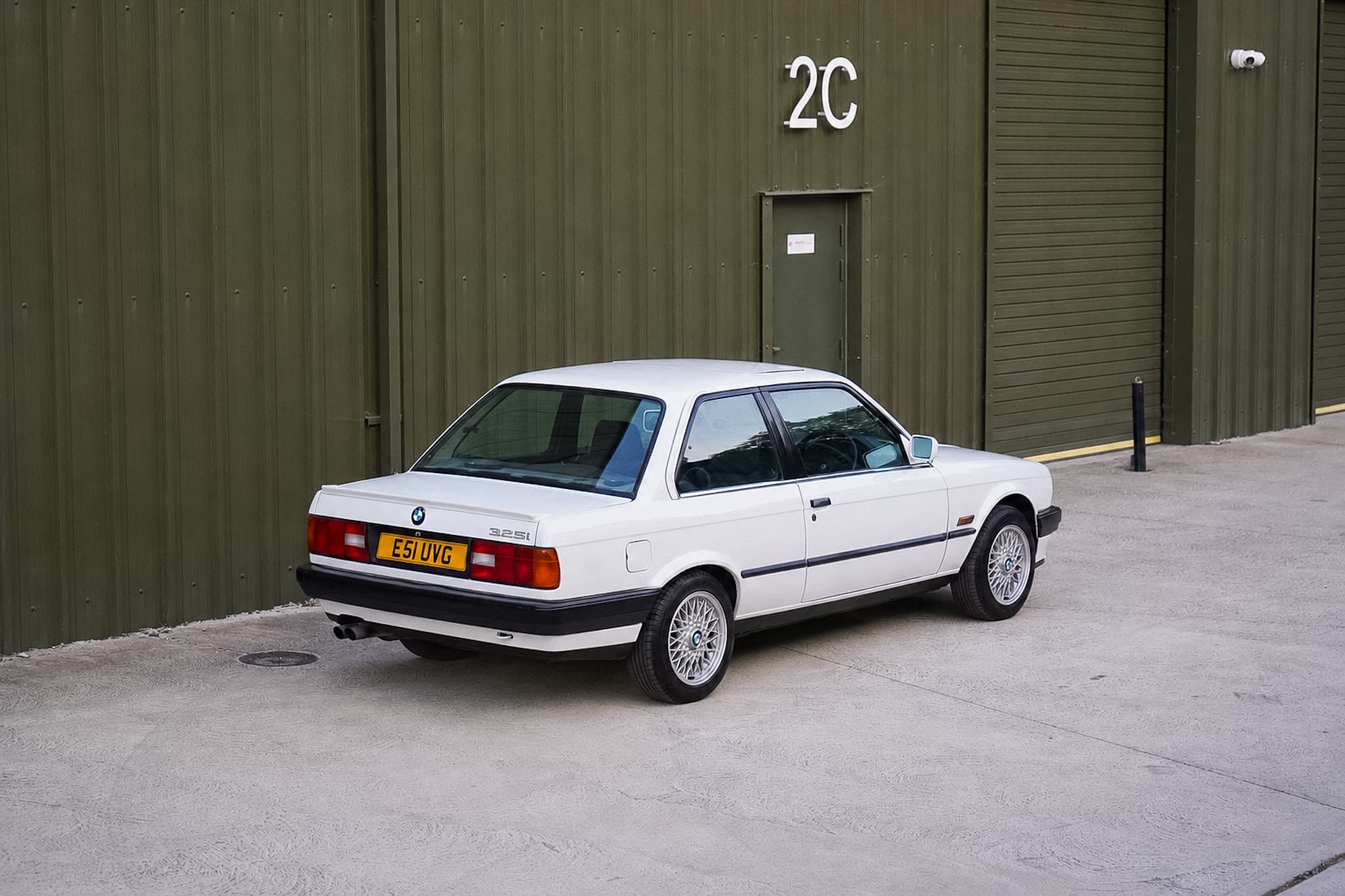
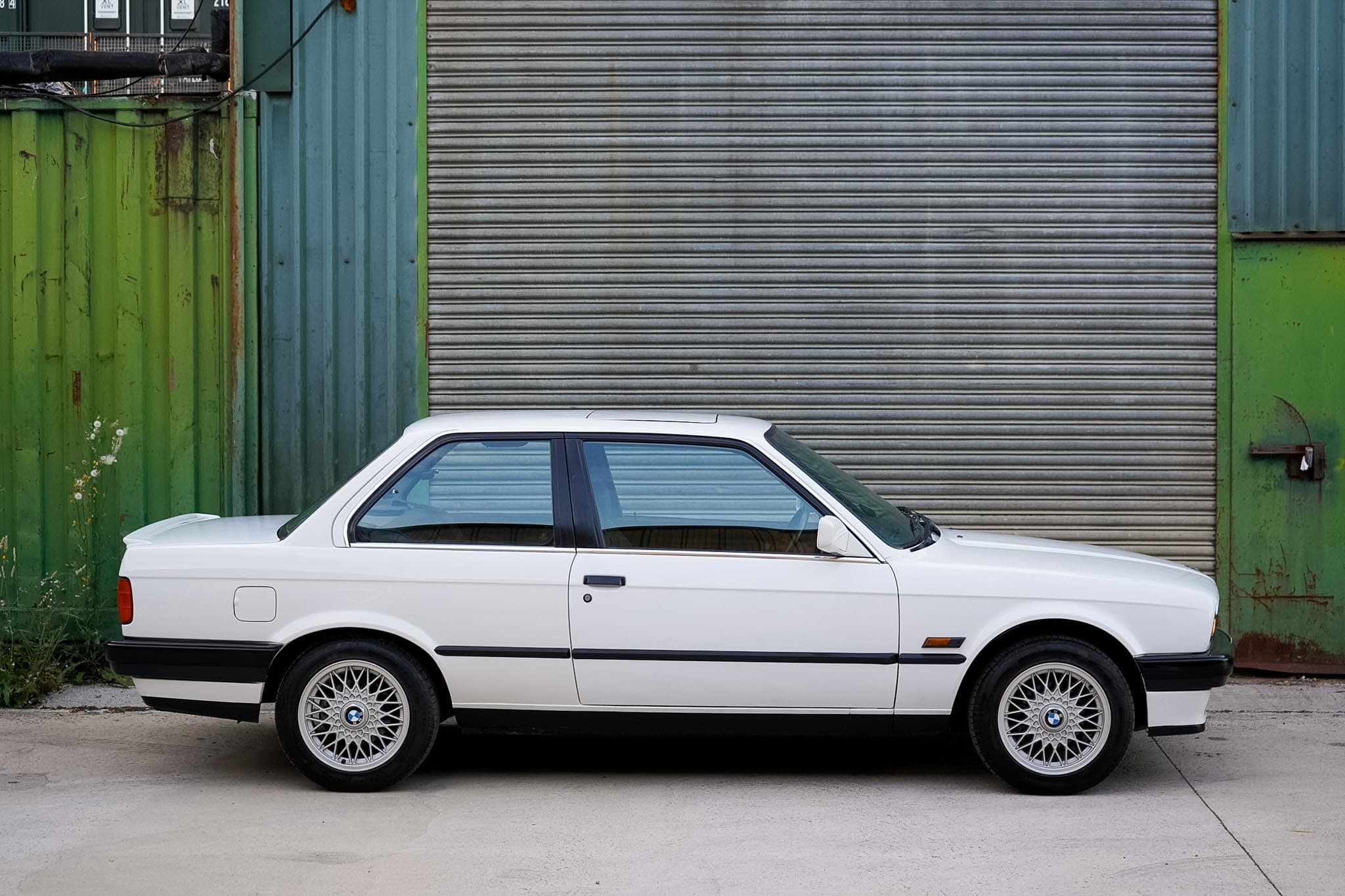
The E30 began as a two-door saloon. A four-door version followed in 1983, BMW's own full Convertible arrived in 1986 and the Touring estate followed in 1987. Production did not end for every body style at the same time, which is why an E30 can legitimately appear with a later date than the saloons most people associate with the generation.
When identifying a car, body style and build date should be checked before assuming that parts, trim or specifications are interchangeable.
The range covered four- and six-cylinder petrol engines, diesels and very different performance levels. The 316 and 318i sat at the lower end, while six-cylinder 320i, 323i, 325e and 325i derivatives moved progressively up the range. BMW also introduced the diesel 324d and turbocharged 324td.
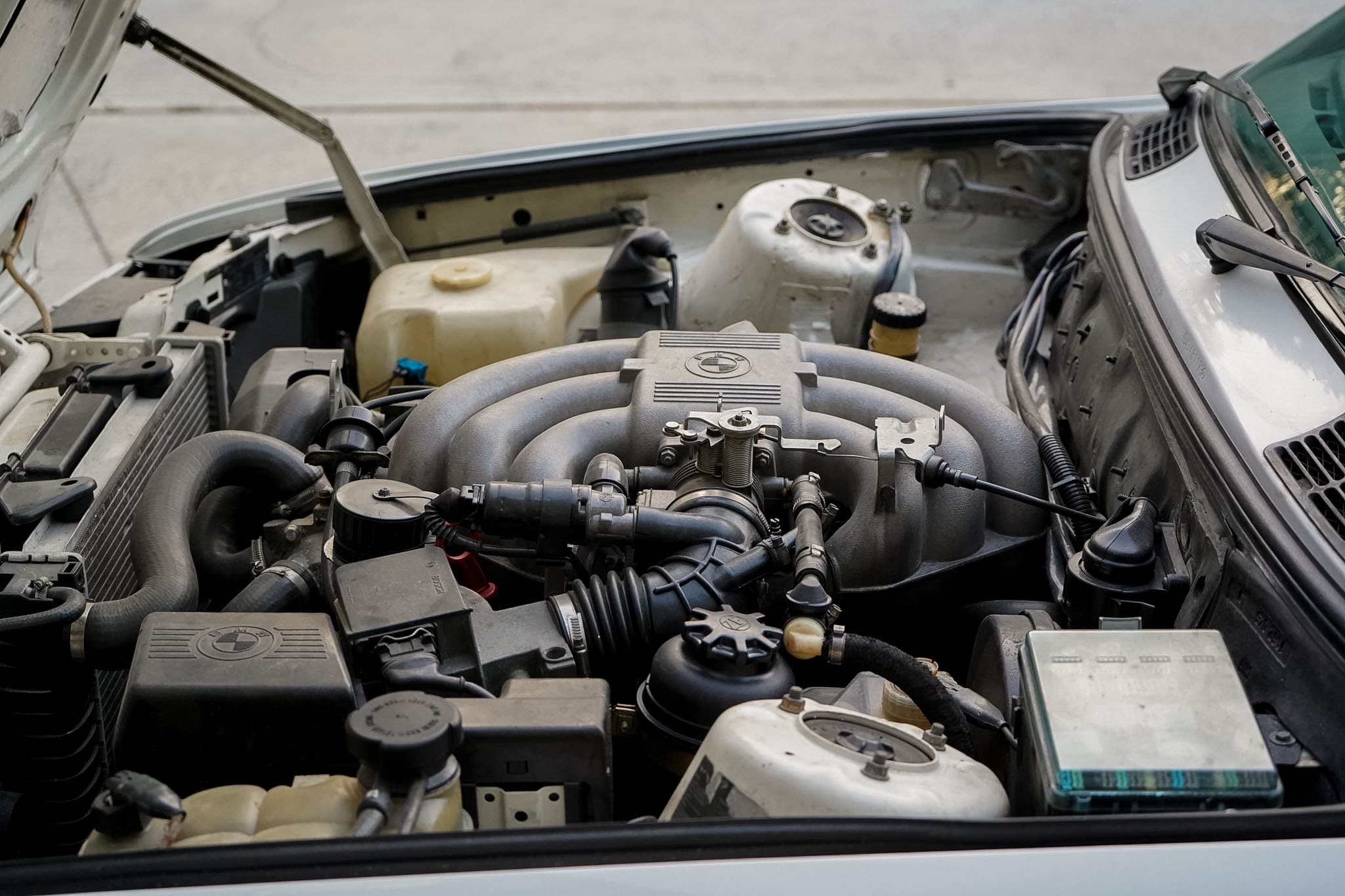
The 325i arrived in 1985 with the 2.5-litre M20B25 straight-six, while the 325iX brought all-wheel drive to the 3 Series. The E30 M3 used a completely different motorsport-developed four-cylinder drivetrain and should be treated as its own derivative rather than as a normal 325i upgrade.
BMW revised the front axle, used semi-trailing-arm rear suspension and fitted more responsive rack-and-pinion steering. ABS became increasingly important through the generation and was standard on the 325i and 325iX from their introduction in 1985.
Exact brakes, springs, dampers, steering assistance and wheel specifications vary by derivative and year, so those figures belong on the relevant variant page rather than being presented as one universal E30 specification.
Rust is the first structural concern on an E30. Buyer guides repeatedly flag sills, wheelarches, floors, jacking points, scuttle/windscreen areas, rear suspension mounting areas and the boot/battery area among the places worth inspecting carefully. Previous repairs matter as much as visible corrosion, because poor welding or cosmetic filler can hide expensive structural work.
Six-cylinder M20 cars also make timing-belt and cooling-system history important. On any E30, age-related suspension bushes, steering components, brakes, electrical items, cracked trim and evidence of deferred maintenance deserve attention. The exact checklist changes with engine and body style.
Do not stop at the badge. Check the VIN/build information, engine identity, transmission, body style, market specification and model year. Cars have had decades to acquire replacement engines, wheels, bodykits, interiors and facelift parts, so visual appearance alone is not enough to establish originality.
The variant directory above takes you into exact derivatives such as the 325i Manual Coupe, where engine code, output, gearbox, performance and other technical figures can be shown without being misapplied to the rest of the E30 range.
Model lineage
Specifications
TMJC media
Sell, consign or editorial
Continue with TMJC for a discreet conversation, professional presentation and collector-focused support.
Enquire now