Published guide
BMW E30 325i Manual Coupe: originality, rust and recommissioning
How to assess an E30 325i Manual Coupe when factory correctness matters but recent mechanical work is also part of the appeal.
Overview
How to assess an E30 325i Manual Coupe when factory correctness matters but recent mechanical work is also part of the appeal.
This guide covers 325i Manual Coupe and links directly to the relevant car record for further detail.
Why an ordinary-looking E30 can need extraordinary due diligence
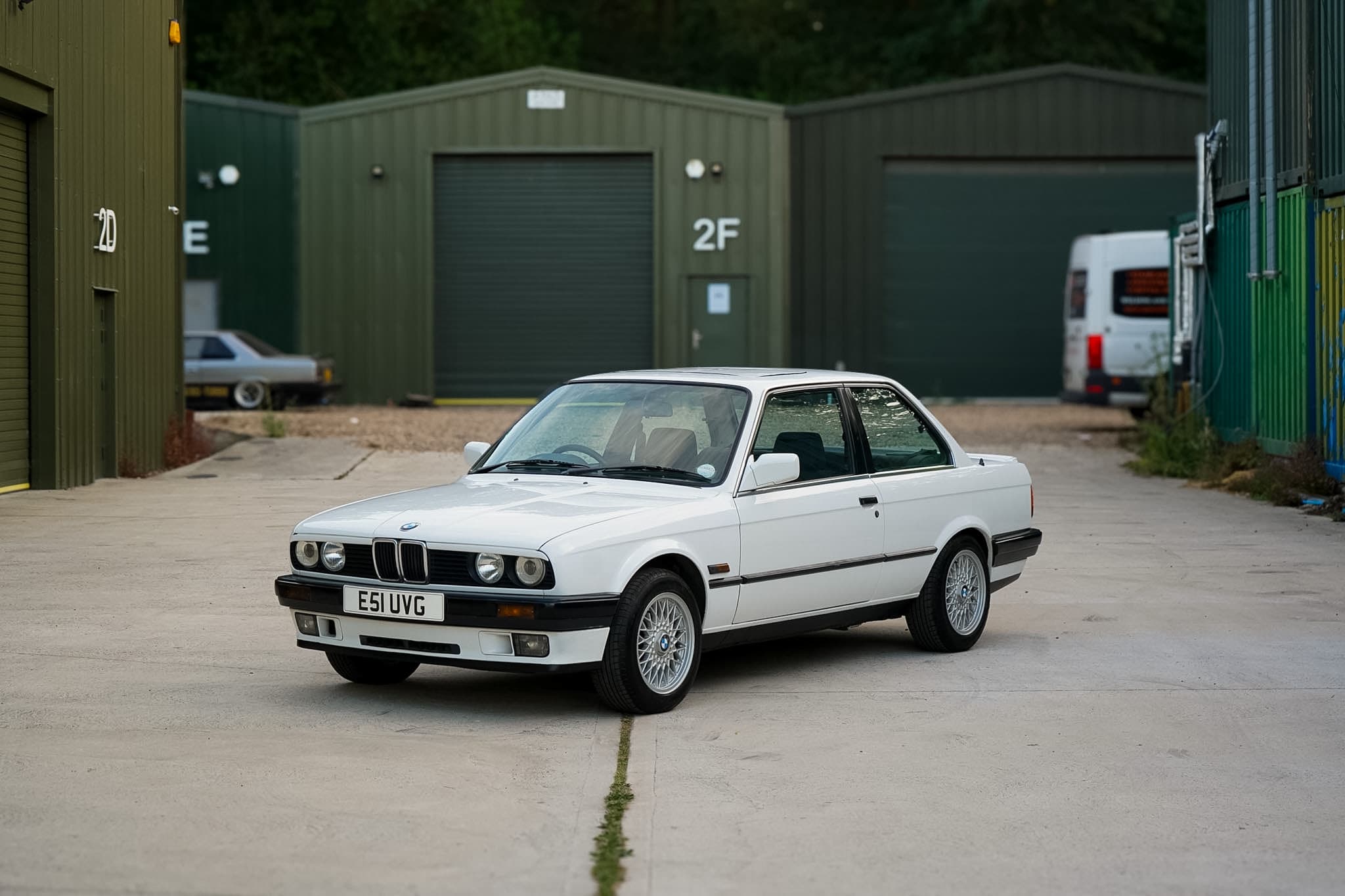
A 325i Manual Coupe sits in a part of the market where small differences in originality and history can materially change desirability. The basic specification is easy to understand: the TMJC source car is a 2.5-litre straight-six with a five-speed manual gearbox. The harder task is working out whether the shell, trim, mechanical condition and ownership history still support the car being presented.
That means the buying process should not begin with wheels, stance or cosmetic shine. It should begin with shell integrity and identity.
Rust comes before options
A beautifully detailed E30 with structural corrosion is still a poor starting point. Inspect the usual age-sensitive areas closely and, where possible, get the car on a lift.
- Check jacking points, sills and floor edges.
- Inspect wheel arches and the areas behind liners and trims.
- Look around the battery area, boot floor and rear panel.
- Check sunroof drains and the roof aperture on sunroof cars.
- Inspect suspension mounting points and any previous welding.
Fresh underseal is not automatically bad, but it should make you ask what preparation sits underneath it.
Originality is a pattern, not one part
Factory-correct cars usually show consistency across many small details: trim, lights, steering wheel, wheels, engine bay, glass, labels and interior materials. One replaced item is not a problem. A collection of unexplained changes can suggest accident repair, modification or a car assembled from mixed parts.
The TMJC case study highlights factory trim, headlights and engine-bay presentation alongside BBS wheels and other known equipment. That kind of whole-car review is more useful than focusing on one fashionable option.
Recommissioning can be a positive
Older cars that have covered little recent mileage often need more than an oil change. Cooling, steering, suspension and braking systems all contain components that age independently of mileage.
The TMJC E30 listing describes substantial recent work across the cylinder head, timing and cooling systems, power steering, front suspension and rear brakes. For a buyer, the lesson is to ask for the reason, date and invoice for each job. Good recommissioning removes future risk; undocumented parts swapping creates new questions.
Build a mileage and ownership timeline
Long ownership can be reassuring, but only if the paperwork supports the narrative. Use MOT history, invoices and service records to plot mileage over time. Look for long gaps, sudden changes in annual use and periods where the car may have been stored.
A consistent 90,000-mile car with clear history can be easier to buy than a much lower-mileage car with a decade missing from its file.
Test drive for integration, not just speed
An E30 should feel coherent. During a proper drive, pay attention to:
- Cold start, idle quality and temperature stability.
- Gear selection, clutch take-up and driveline vibration.
- Steering assistance and self-centring.
- Brake feel and straight-line stability.
- Suspension knocks over broken surfaces.
- Water leaks, wind noise and sunroof operation.
If recent work is extensive, the test drive is where you check whether those separate jobs now work together as one car.
The best question to ask
Do not ask only "what has been replaced?" Ask "what evidence explains why it was replaced, who did it and what happened afterwards?" That single change turns a parts list into due diligence.
Related car