Published guide
Matching numbers on classic cars: explained
Learn what matching numbers means on a classic car, which components can match, how to verify the claim and why it does not prove complete originality.
Overview
Learn what matching numbers means on a classic car, which components can match, how to verify the claim and why it does not prove complete originality.
This guide covers 7.2 V8 and links directly to the relevant car record for further detail.
“Matching numbers” sounds precise. It often is not.
On a collector car, the useful meaning is that one or more significant numbered components fitted to the car can be linked back to the components recorded for that chassis when it was built. The engine is the most common example; gearbox, body and axle numbers can matter too, depending on what the manufacturer recorded and what records survive.
The first question is therefore not “is it matching numbers?” It is “which numbers match, and what evidence links them to this chassis?”
That distinction matters because the phrase is routinely used as though it proves complete originality. It does not.
What can “matching numbers” refer to?
There is no single cross-marque checklist. Depending on the manufacturer and era, a claim might refer to:
- chassis or VIN identity;
- engine number;
- gearbox or transmission number;
- body number;
- differential or axle number;
- other significant numbered assemblies recorded by the factory.
Hagerty's collector-car glossary uses the term broadly for the engine, chassis, transmission and other significant components associated with the car when built. It also notes that, where exact documentation is unavailable, the market sometimes falls back on number or date ranges.
That last point deserves care. A component that is period-correct or falls inside an expected number range is not the same evidential claim as a factory record showing that exact component against that exact chassis.
Matching numbers is an evidence claim, not a visual description
A badge, casting shape or correct-looking engine bay can tell you that a component is plausible. It cannot usually prove that it is the component fitted when the car left the factory.
A stronger evidence hierarchy is:
- Chassis-linked factory or archive record showing the original component number or type.
- Number physically present on the car, inspected in its correct location and form.
- Independent specialist or marque verification comparing the physical component with the archive record.
- Contemporaneous paperwork that explains replacements, rebuilds or earlier identity checks.
- Range/date-code evidence where exact factory records genuinely do not survive.
- Seller descriptions, old adverts and verbal history as leads to investigate rather than proof.
For the broader job of organising a car's paperwork, see how to read a collector-car provenance file.
Porsche shows the difference between build records and the car today
Porsche's own documentation programme is a useful example because it deliberately separates two questions.
A Porsche Production Specification uses the VIN to provide surviving original production-card information such as equipment, colours, engine and transmission type and production date. Porsche's Classic Technical Certificate goes further by physically inspecting the car and can compare the engine and transmission numbers and types currently fitted with the original records.
That is the ideal logic for any marque:
- What did the factory record?
- What is physically fitted now?
- Do those two evidence sets agree?
One document should not silently be asked to answer all three questions.
A heritage certificate and the physical car answer different questions
Jaguar Daimler Heritage Trust makes this distinction unusually explicit. For a complete Heritage Certificate, applicants provide the car’s chassis/VIN, engine, body and gearbox numbers so the Trust can research the original factory record. But the Trust also states that it does not inspect the vehicle and that the certificate alone is not confirmation of the present car’s identity, provenance, originality or condition. It is not proof of ownership either.
That is a useful warning far beyond Jaguar. An authoritative archive document can tell you what the factory ledger records for a chassis. It cannot, by itself, prove that the numbered components in front of you are authentic, unaltered or still fitted to that same physical shell. Those questions require inspection of the car and reconciliation with its later history.
BMW Group Classic’s Digital Birth Certificate illustrates the other side of the same point: depending on model and era, archive material can contain chassis, engine and transmission numbers, production and delivery dates and equipment. The available fields therefore vary by manufacturer and period; the correct verification process starts by asking what the relevant archive actually holds.
A practical rule is to keep three layers separate: factory/archive record, physical numbers and components on the car, and later provenance explaining changes. A strong matching-numbers claim is where those layers agree without asking any one document to prove more than it can.
Sometimes the factory record cannot prove it
This is where “matching numbers” becomes genuinely marque-specific.
The MG Car Club's MGA Register points out that the surviving factory information available for many MGAs does not record the engine and body number against the chassis in the Heritage Certificate. If the archive cannot tell you which exact engine was fitted to that exact chassis, you cannot create that missing factory link simply because the current engine is of the right type or falls in a plausible number range.
That does not make the car bad. It means the evidence supports a different, narrower statement.
A careful description might say period-correct engine of the expected type rather than presenting a documentary matching-number claim that the surviving records cannot establish.
Does a rebuilt engine stop being matching numbers?
Not necessarily.
If the original numbered engine block remains with the car, rebuilding its internal wearing components does not automatically turn it into a different numbered engine. Pistons, bearings, valves, timing components and many other service parts were never expected to last forever.
This is why matching numbers and untouched originality are different concepts.
A car can retain its factory-linked engine block and gearbox while having undergone:
- a full engine rebuild;
- replacement cylinder heads or ancillaries;
- a repaint;
- retrimmed seats;
- new suspension and brakes;
- replacement carburettors, injection components or exhaust;
- extensive structural restoration.
Whether those changes improve or reduce value depends on the car, quality of work, historical significance and the buyer's priorities. The matching-number claim answers only the identity question it actually supports.
Matching numbers does not prove complete originality
A genuine matching drivetrain does not, by itself, prove:
| Claim | Does matching drivetrain identity prove it? |
|---|---|
| Original engine/gearbox numbered housings | Potentially, if the factory/archive evidence supports the exact numbers |
| Original internal engine parts | No |
| Original paint | No |
| Original trim | No |
| Original wheels or accessories | No |
| No accident or structural repair | No |
| Original mileage | No |
| Legal ownership | No |
| Good mechanical condition | No |
| High-quality restoration | No |
That is why a matching-number car can still be a poor purchase, and a non-matching car with transparent history can still be an excellent one.
A TMJC Jensen example: define the claim before valuing it
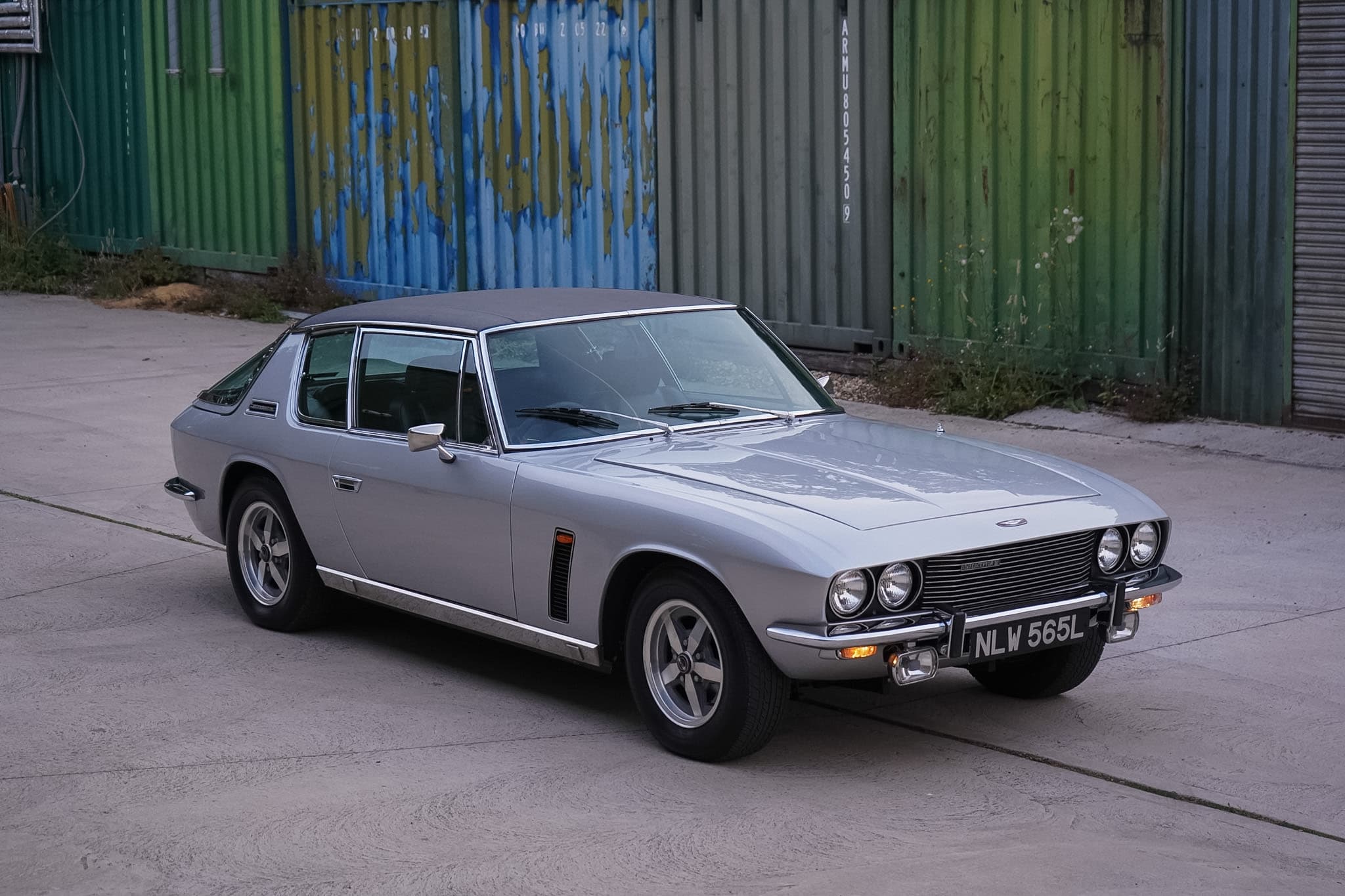
TMJC's restored Jensen Interceptor Mk III is a useful real-world example because its provenance material treats matching engine and gearbox evidence alongside a Statement of Origin and a much larger restoration history.
That is the right way to read the claim. “Matching engine and gearbox” is one layer of identity evidence. It does not certify every carburettor, hose, electrical component, body panel, trim piece or internal engine part as untouched from new.
For the exact 7.2-litre identification problem, see the Jensen Interceptor Mk III 7.2 V8 reference. For restoration evidence, the Jensen Interceptor restoration Guide goes deeper into chassis continuity, metalwork and recommissioning.
What about a replacement engine?
A replacement engine should be described as a replacement, even if it is the right type and period for the car.
There are several materially different situations:
- factory-fitted engine still present and linked by surviving records;
- manufacturer or dealer replacement documented during the car's early life;
- later replacement with a correct-type engine;
- later replacement with a different specification;
- current engine whose history is unknown.
Those are not interchangeable, but neither should they be reduced to “good” versus “bad”. A documented factory replacement can carry a very different historical meaning from an unexplained modern swap. Transparent evidence is more useful than an ambitious label.
Matching numbers and factory authenticity are not the same test
Ferrari Classiche shows why those ideas should not be collapsed into one label. Ferrari starts with chassis-specific archive material and then inspects the physical car, checking the identifiers on major assemblies such as the engine and gearbox against the original records.
Ferrari also records a more nuanced outcome than simply “original” or “not original”. Its Classiche material says documented replacement components can be recognised where Ferrari-original parts were fitted, and the certification committee can approve defined exceptions where an original part is no longer available. That does not make a replacement component “matching numbers”; it shows that a manufacturer authenticity assessment can still distinguish a correct, documented replacement from the exact component installed on day one.
For a buyer, the wording on the certificate matters. Does it confirm the original numbered component, a correct replacement, conformity to the original specification or an agreed exception? Those are different claims and should be described separately.
Be careful with “restamped” and suspicious markings
Number stampings can be damaged, obscured by corrosion, altered during repair or, in some cases, fraudulently recreated. Authenticity assessment can depend on marque-specific knowledge of stamping location, typeface, surface condition and factory practice.
If identity materially affects the value of a car and the stamping looks disturbed or does not reconcile with the paperwork, use a marque specialist or recognised archive service. Do not accept a newly clean number pad or an old advertisement as proof merely because the digits are convenient.
The purpose of the check is to establish a defensible history, not to force the car to fit the description.
How to verify a matching-numbers claim before buying
Work through the evidence in this order.
1. Ask the seller to define “matching”
Get the exact claim in writing. Engine only? Engine and gearbox? Body too? “All numbers”? A vague phrase is difficult to verify.
2. Find the best original record available for that marque
This may be a manufacturer archive, heritage certificate, build sheet, Kardex-style record, Statement of Origin, production specification or recognised marque archive.
Before paying for a certificate, check what fields the archive actually holds. The MGA example shows why this matters: some records simply cannot provide a chassis-linked engine number.
3. Compare the record with the physical car
Locate and record the relevant numbers without cleaning, grinding or altering the stamping area. Compare them with the archive evidence and with registration/provenance paperwork where appropriate.
4. Explain any difference rather than hiding it
If a gearbox was replaced under warranty in 1974, look for the paperwork. If the engine was changed in the 1990s, document when and why. An explained replacement is better evidence than an unsupported claim that everything is original.
5. Separate identity from condition
Once you know what the drivetrain is, inspect whether it is healthy. Compression, oil pressure, cooling, leaks, gearbox behaviour and restoration quality are different questions.
6. Price the remaining uncertainty
If a valuable claim cannot be proved, do not fill the gap with confidence. Decide whether the car still makes sense at a price that reflects what can actually be demonstrated.
Does matching numbers make a classic car more valuable?
It can, particularly where original drivetrain identity matters strongly to collectors and the factory record is clear. But the premium is not universal and should not be evaluated in isolation.
A tired matching-number car with poor structure can require far more money than a correctly repaired car with a documented replacement engine. A concours-focused buyer may place a different value on original numbered components than someone buying the same model to tour regularly.
Treat matching status as one attribute in the evidence set, alongside condition, specification, provenance, restoration quality, rarity and usability.
A short matching-numbers checklist
Before accepting the description, ask:
- Which exact components are claimed to be matching?
- What factory or archive record links those component numbers to the chassis?
- Does that archive actually record those fields for this model and year?
- Have the numbers on the physical car been inspected?
- Are any components range-correct rather than individually documented?
- Has the original engine or gearbox been rebuilt, and what was changed internally?
- Are there documented factory/dealer replacements?
- Does the seller wrongly use “matching numbers” to imply original paint, trim, mileage or condition?
- If the stampings are uncertain, has an appropriate marque specialist inspected them?
- Would the car still make sense if the most optimistic version of the claim could not be proved?
The best matching-numbers claim is not the one with the strongest wording. It is the one where the factory record, physical car and provenance file all support the same narrowly defined statement.
Sources and further reading
Related car