Production
- Production started
- 09/1985
- Production ended
- 05/1991
Variant
The E30 325i pairs BMW's 2,494 cc M20B25 straight-six with rear-wheel drive. This page brings together key factory figures, identification details and practical buying context for the manual two-door derivative.
At a glance
TMJC Catalog guide
The E30 325i pairs BMW's 2,494 cc M20B25 straight-six with rear-wheel drive. This page brings together key factory figures, identification details and practical buying context for the manual two-door derivative.
The E30 325i was introduced in 1985 as the replacement for the 323i at the top of the regular 3 Series range. BMW Group Classic lists the M20B25 straight-six at 2,494 cc, with 171 hp in non-catalyst form and 170 hp with a catalytic converter. BMW quoted a top speed of up to 220 km/h (137 mph), falling slightly for the later catalyst-equipped specification.
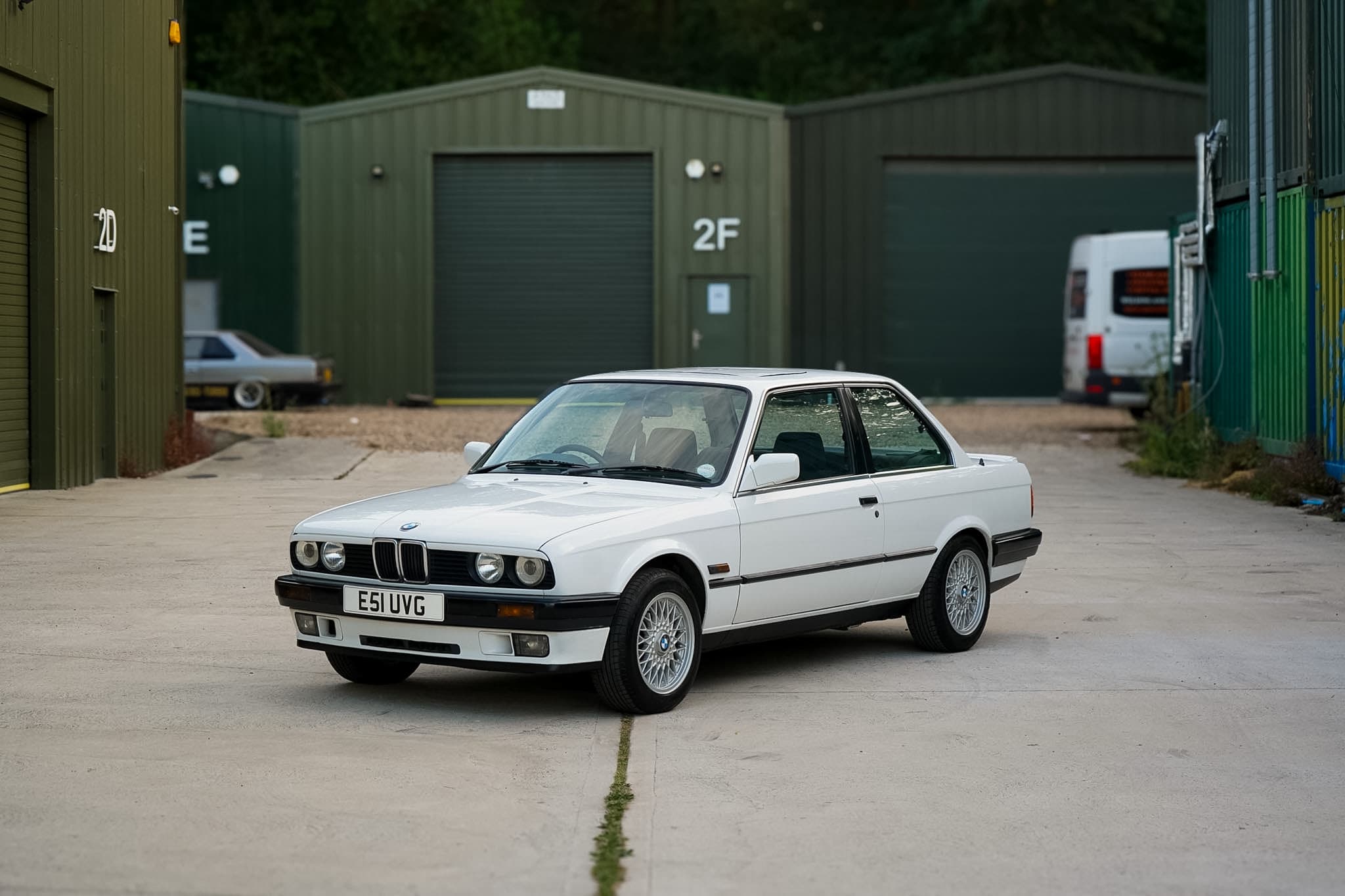
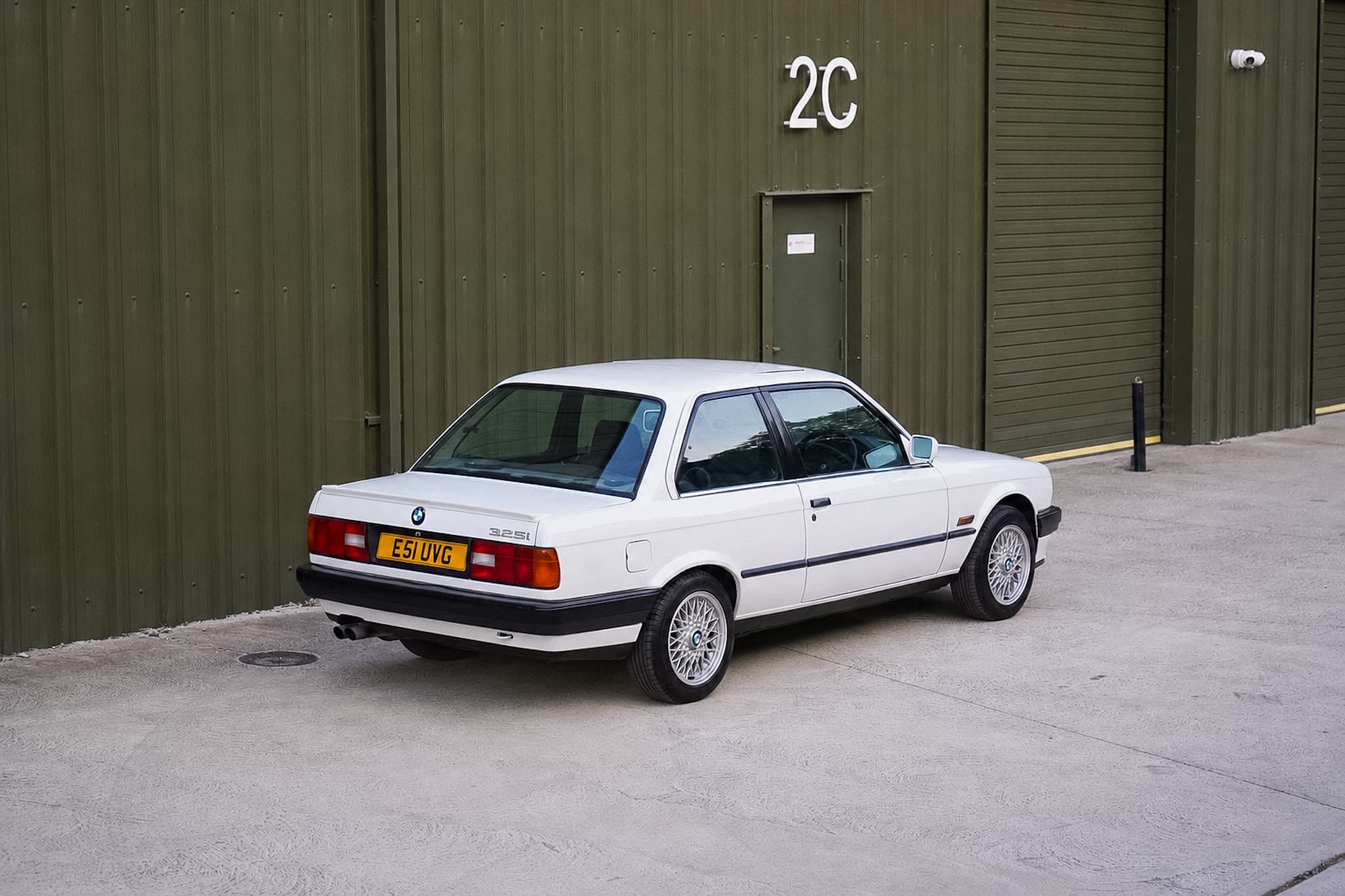
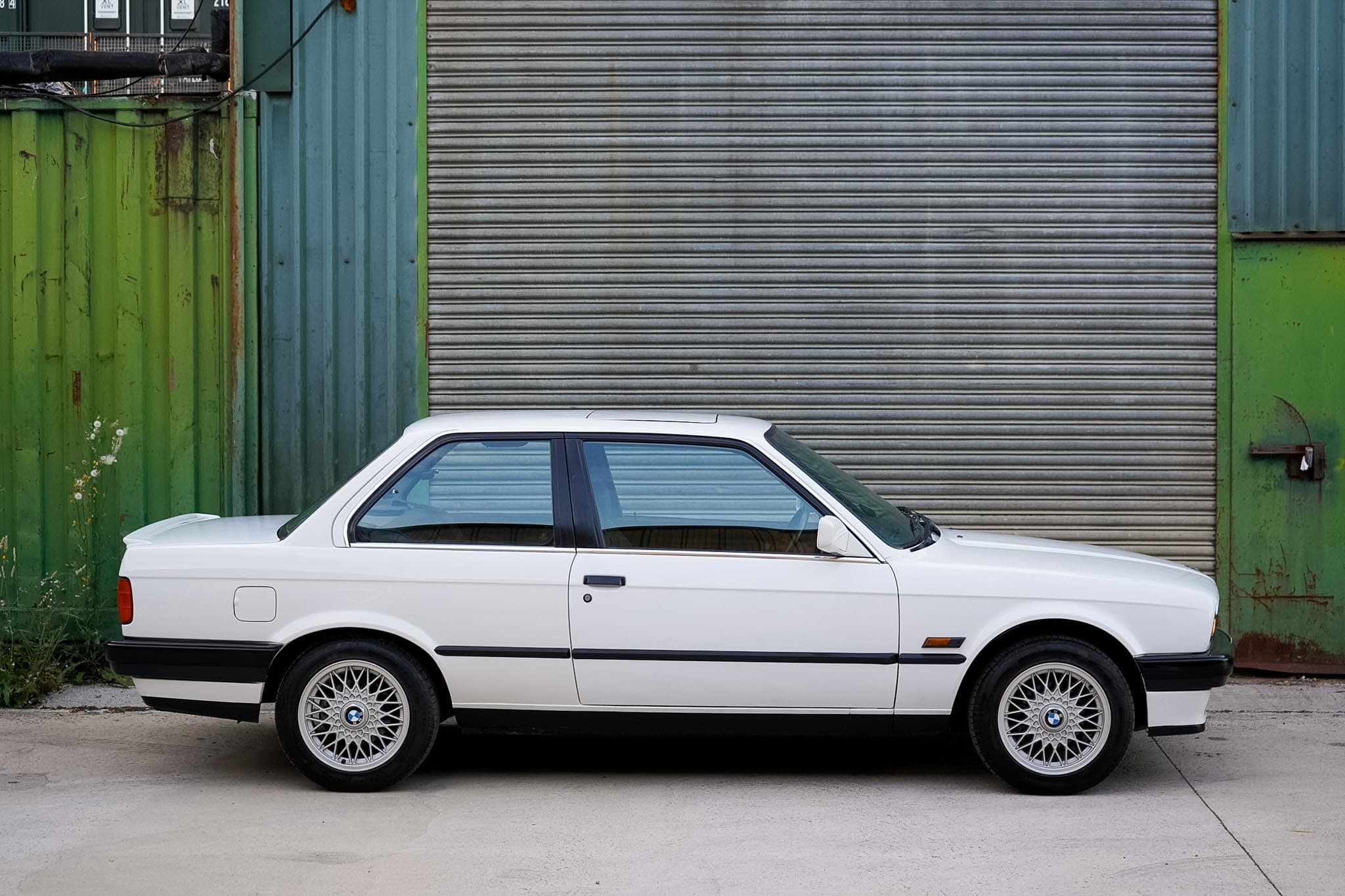
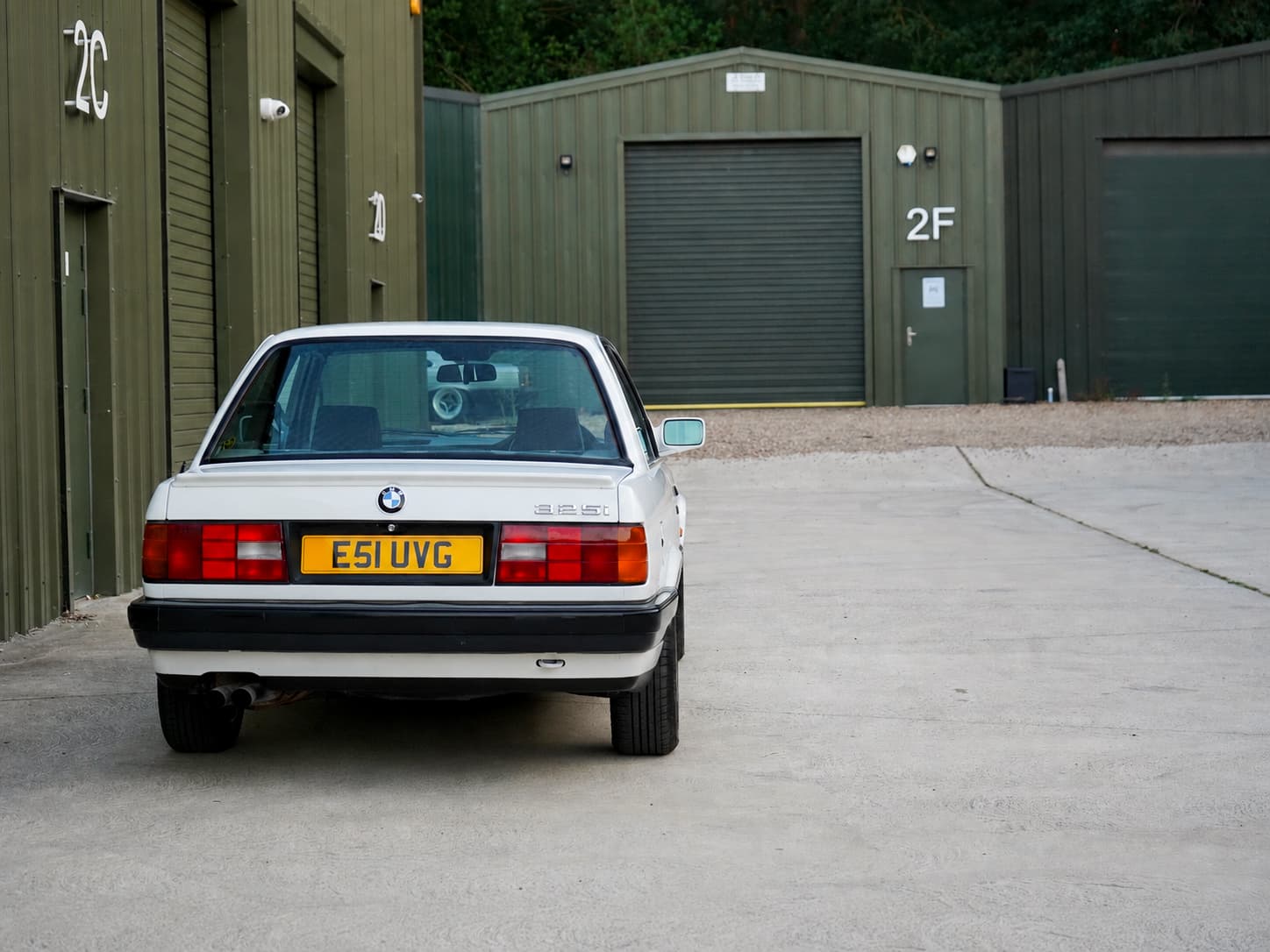
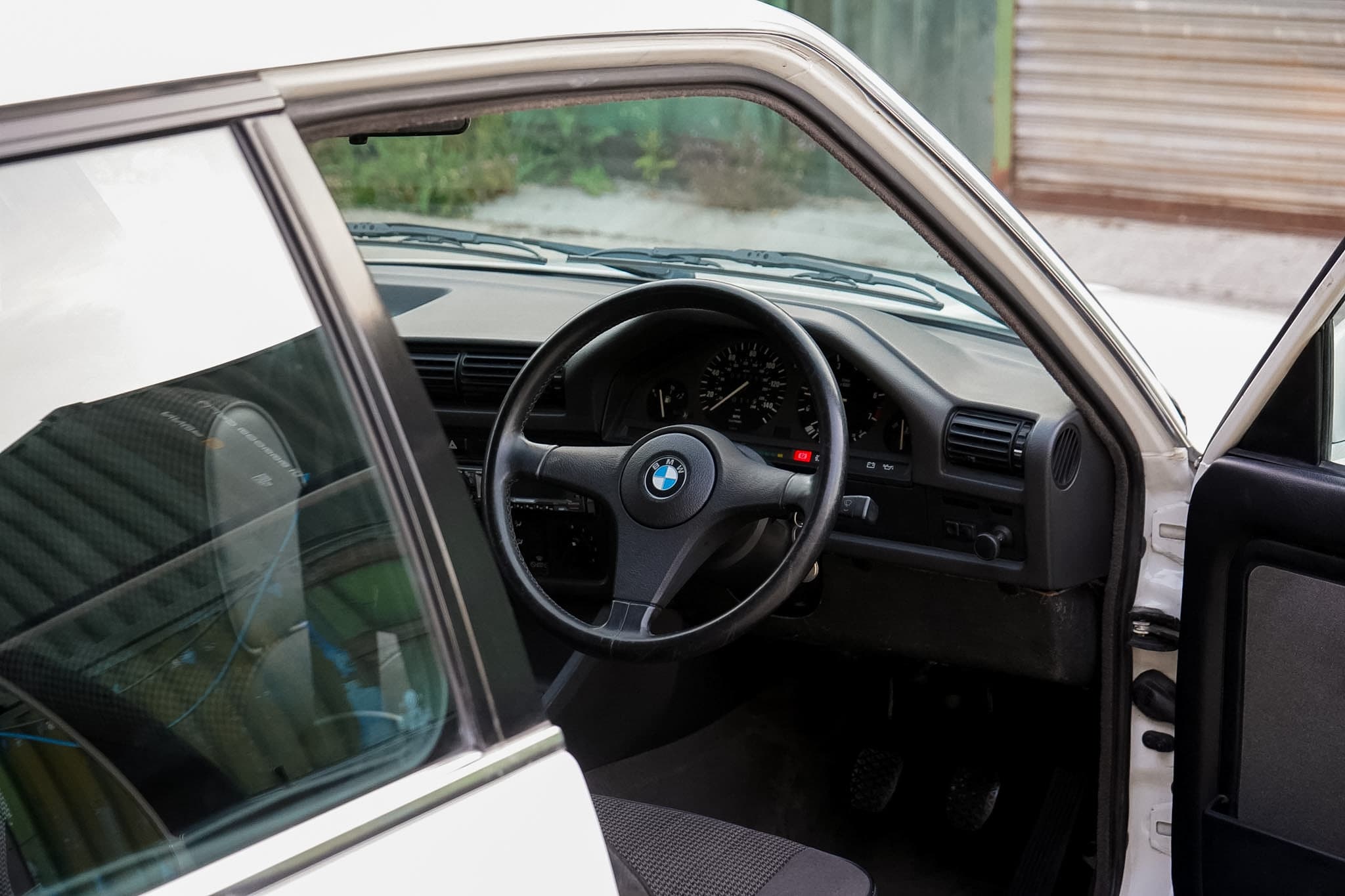
The TMJC car connected to this page is a 1988 right-hand-drive five-speed manual two-door. Its individual mileage, colour, options and maintenance history are useful first-party evidence, but they are not universal specifications for every 325i.
| Key specification | Published figure |
|---|---|
| BMW 325i production period | 09/1985-05/1991 |
| Engine | M20B25 straight-six |
| Displacement | 2,494 cc |
| Power without catalyst | 171 hp / 126 kW at 5,800 rpm |
| Power with catalyst | 170 hp / 125 kW at 5,800 rpm |
| Top speed without catalyst | 220 km/h / 137 mph |
| Top speed with catalyst from 1987 | 218 km/h |
| Transmission represented here | 5-speed manual |
| Driven wheels | Rear-wheel drive |
| ABS | Standard on the 325i from introduction |
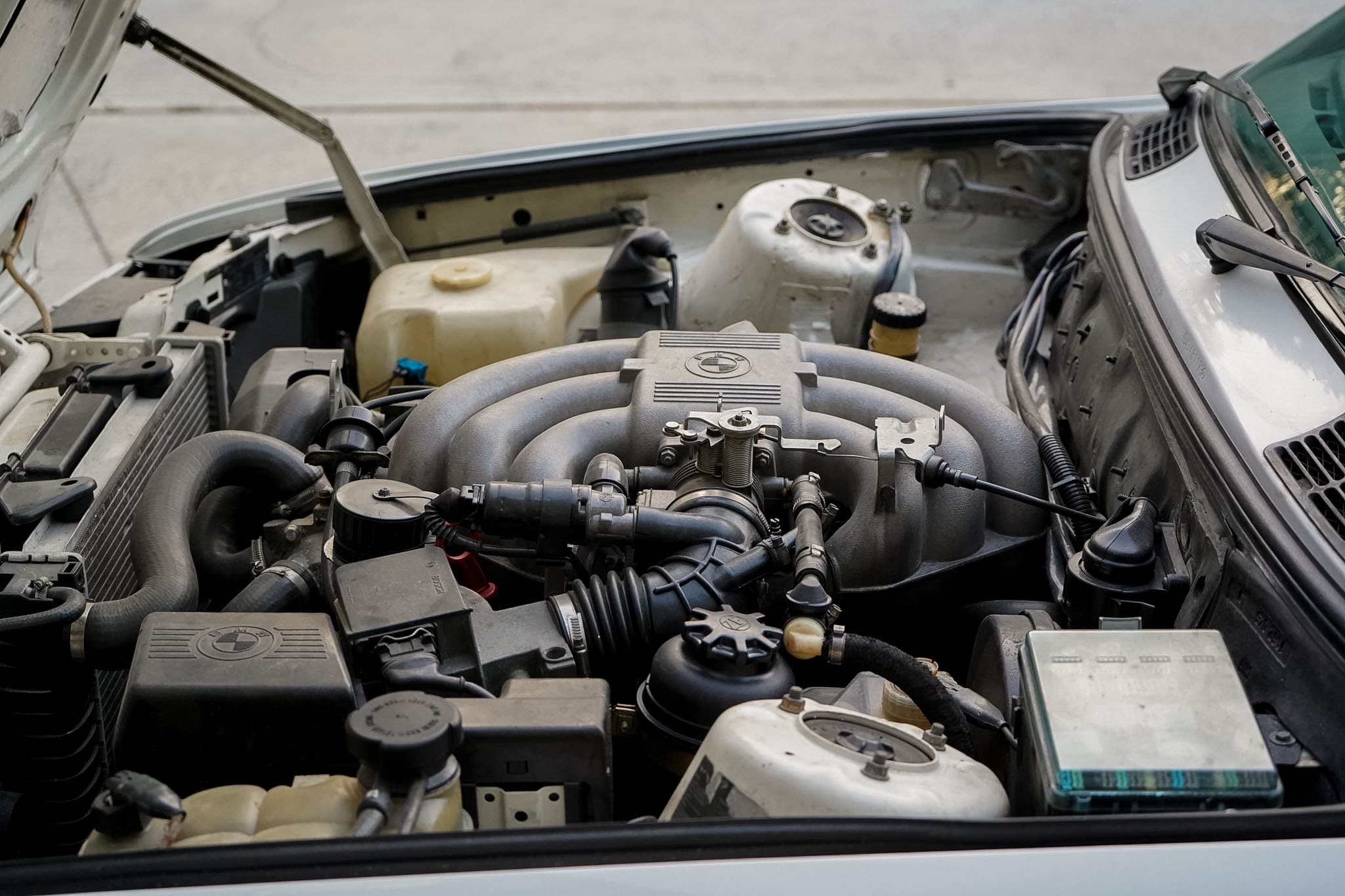
The 2.5-litre M20B25 is the defining feature of the 325i. It is a naturally aspirated inline-six and sits above the earlier 323i in BMW's regular E30 range. Engine code matters when researching these cars because capacity alone does not tell you the injection system, output, internal specification or service requirements.
For a fully populated technical record, useful fields extend well beyond “2.5-litre straight-six”: bore and stroke, compression ratio, fuel system, torque and its engine speed, cooling and oil capacities, gearbox code and ratios, final drive, kerb weight, dimensions, suspension, brake sizes and wheel/tyre specification should all be sourced for the correct market and year.
BMW's own figures show an important distinction between catalyst and non-catalyst cars. Rather than forcing one headline power figure onto every 325i, the specification should retain that qualification. The same principle applies to acceleration figures, weight, gearing and equipment: period road tests and technical databases may describe different markets or model years.
The 325iX is also a separate car for research purposes. It shares the broad 2.5-litre six-cylinder idea but uses all-wheel drive and different chassis hardware, so its figures should not be mixed into a rear-wheel-drive 325i page.
BMW Group Classic highlights lower-front-bumper ventilation for the additional oil cooler, twin exhaust outlets and a small boot-lid spoiler as visible 325i details. Those cues are helpful, but a car that is now decades old may have had panels, trim, engines or exhausts changed.
Start with VIN/build information and engine identity, then compare the gearbox, trim, wheels and equipment with the claimed year and market. Originality is strongest when the physical car and the documentary evidence agree.
On an E30, the shell deserves as much attention as the engine. Inspect known corrosion areas carefully, including sills, arches, floors, jacking points, scuttle/windscreen areas, rear suspension mounting points and the boot/battery area. Look for evidence of previous welding and body repairs rather than judging only the visible paint.
For an M20-powered 325i, timing-belt and cooling-system history are particularly important. Age can also expose worn suspension bushes, steering-rack leaks, sloppy manual-shift linkages, brake issues and tired rubber components. A pre-purchase inspection should connect those mechanical checks with the service invoices and MOT history.
The Matt Johnston Collection's current example is a 1988 Alpine White right-hand-drive manual with documented mileage and a long ownership history. TMJC records a substantial 2025-26 recommissioning programme including cylinder-head work, camshaft and rockers, timing kit and water pump, radiator and viscous fan, power-steering overhaul, front suspension work and rear brake/handbrake work.
That history is valuable because it shows the kind of evidence a buyer should want to see on an individual car. It should not be read as a list of standard 325i faults or factory equipment. The same applies to this car's sports steering wheel, manual sunroof, BBS wheels and 205/50 R15 tyres: they describe the photographed TMJC example unless separate factory evidence confirms broader applicability.
Specifications
Model lineage
TMJC media
TMJC Guides
Sell, consign or editorial
Continue with TMJC for a discreet conversation, professional presentation and collector-focused support.
Enquire now