Engine
- Engine capacity
- 3.6 L
- Engine configuration
- Turbocharged flat-six
- Turbochargers
- KKK K24
Variant
Porsche 996 Turbo X50 explained: the 331 kW / 450 PS factory power kit, market-aware availability, verification, specifications and Turbo S differences.
At a glance
TMJC guide
Porsche 996 Turbo X50 explained: the 331 kW / 450 PS factory power kit, market-aware availability, verification, specifications and Turbo S differences.
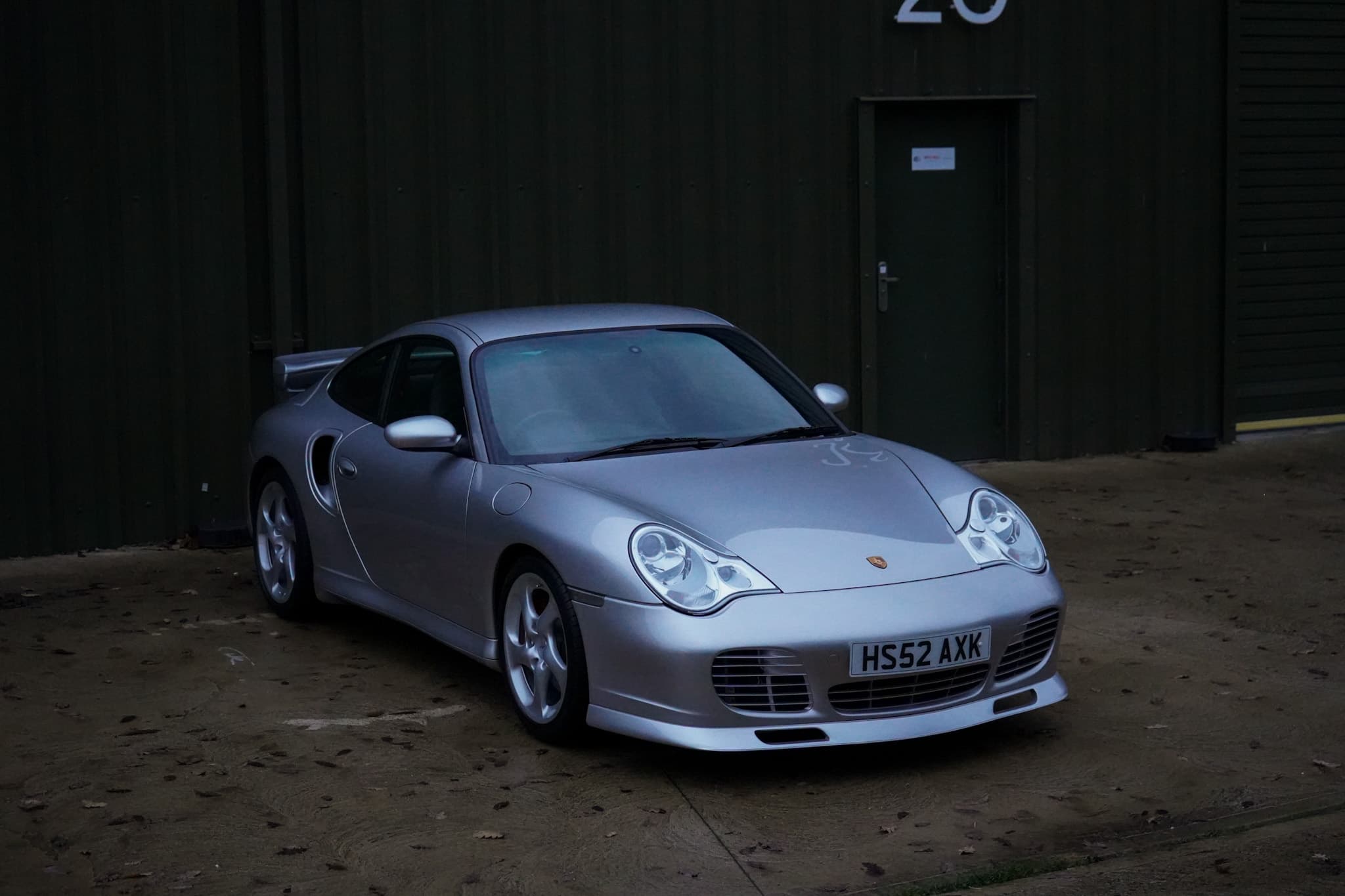
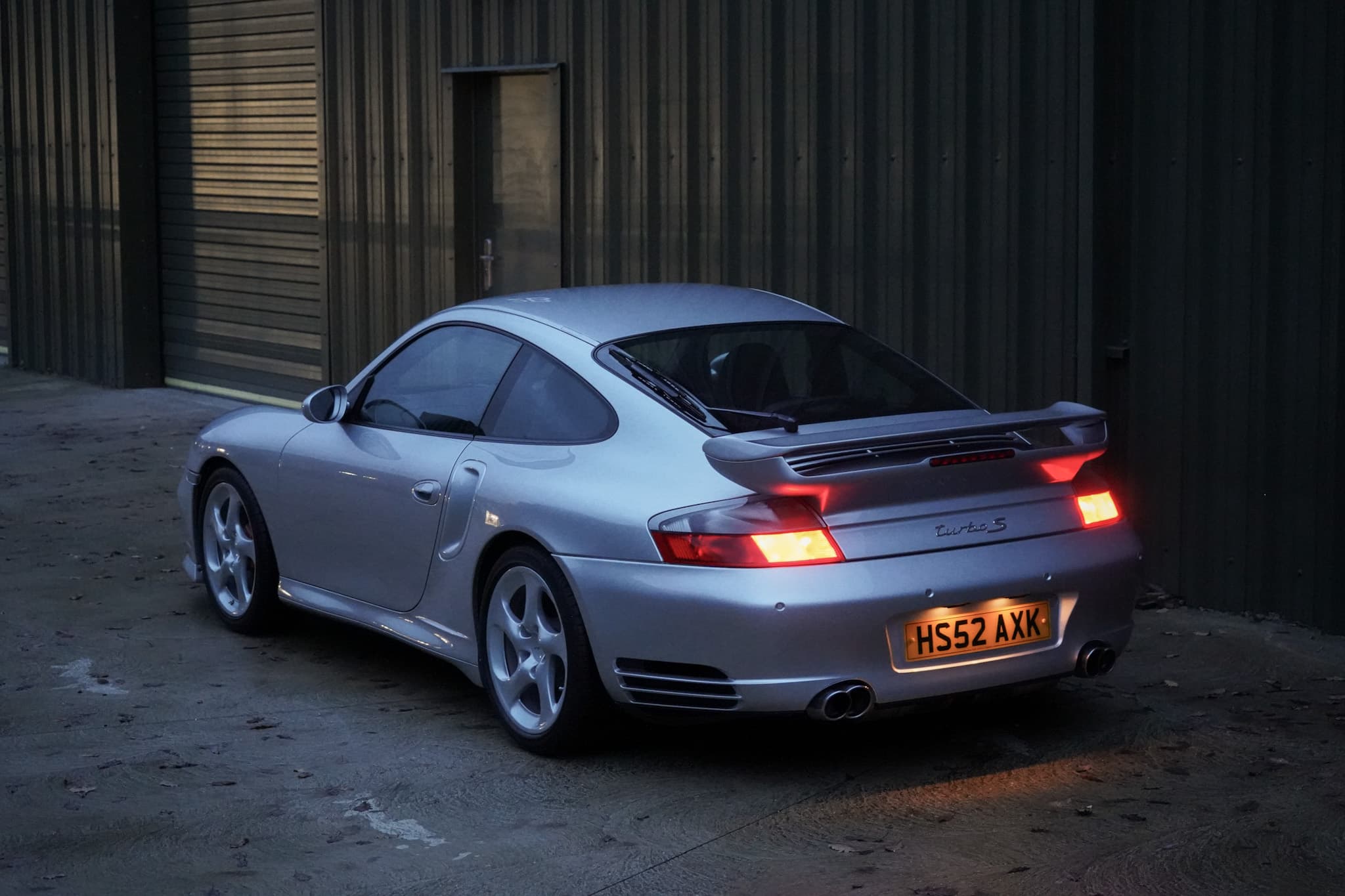
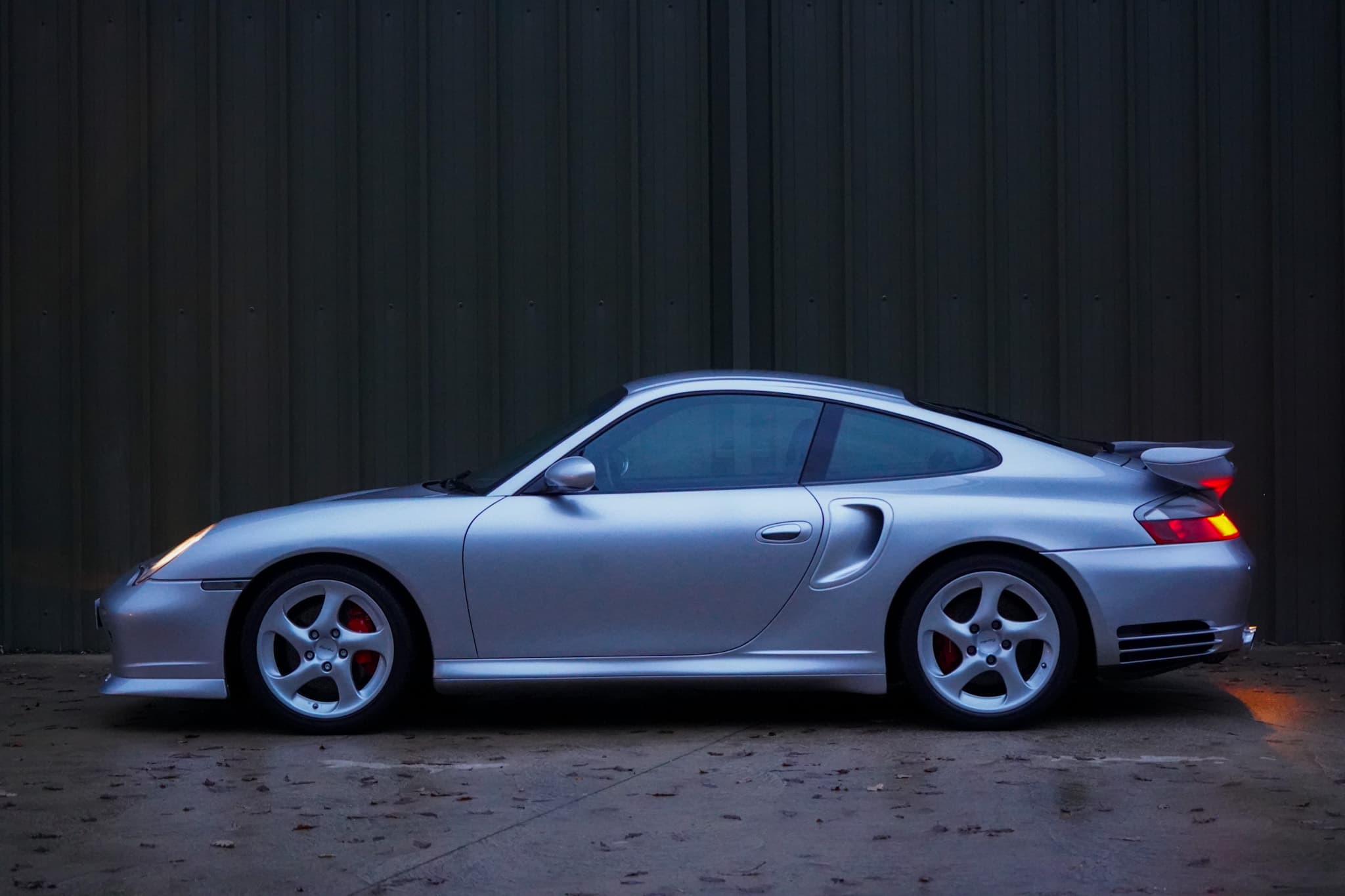
The X50 is Porsche's factory performance upgrade for the 996-generation 911 Turbo. Porsche identifies X50 as the equipment code for the factory power increase to 331 kW / 450 PS, compared with the standard 996 Turbo's 420 PS. The upgrade later became standard on the run-out 996 Turbo S.
That makes an X50 more than a normal Turbo with an aftermarket remap. The package changed the engine hardware and calibration, and a genuine factory car should be verified from its build information rather than from badges or claimed horsepower alone.
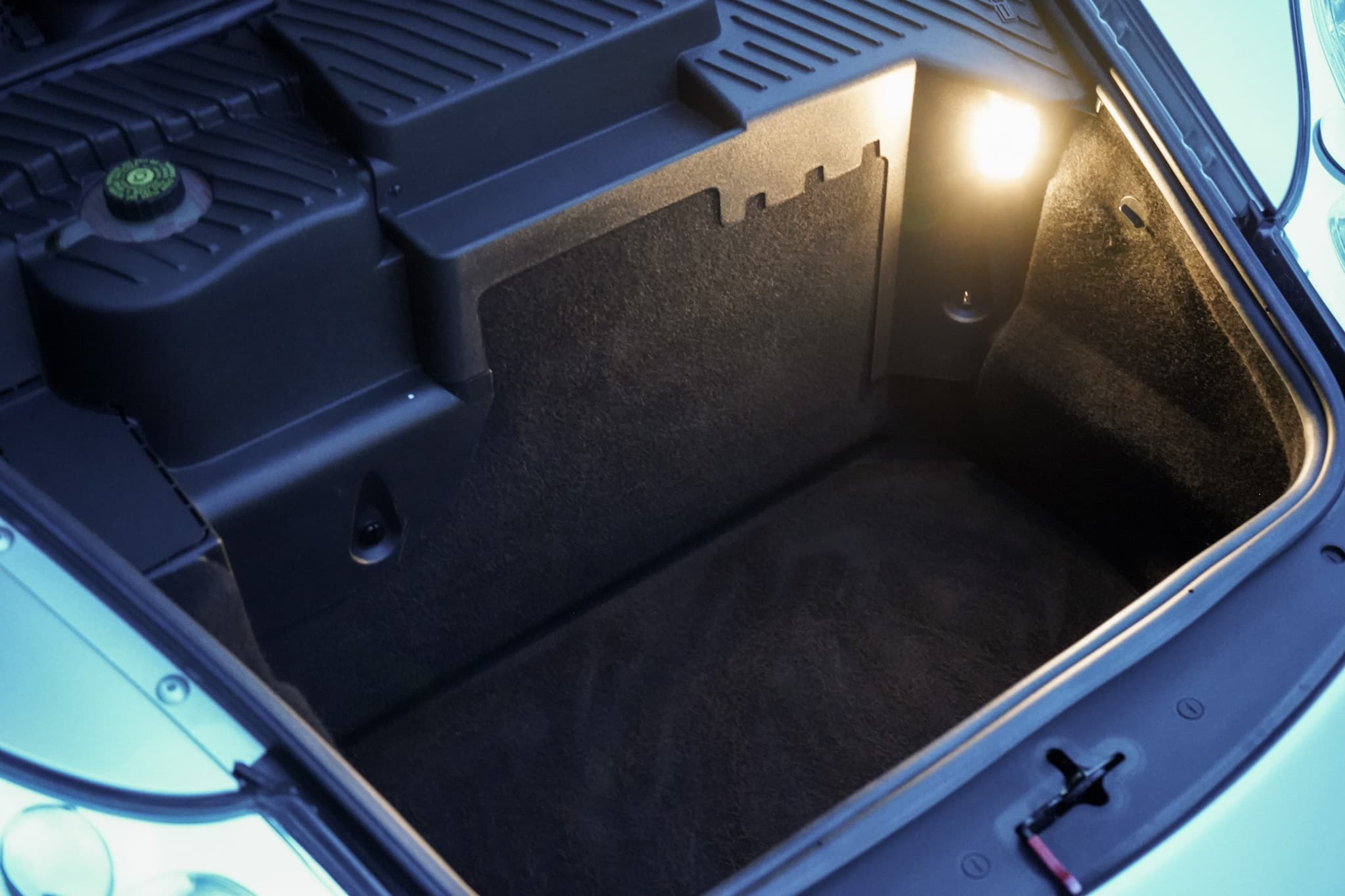
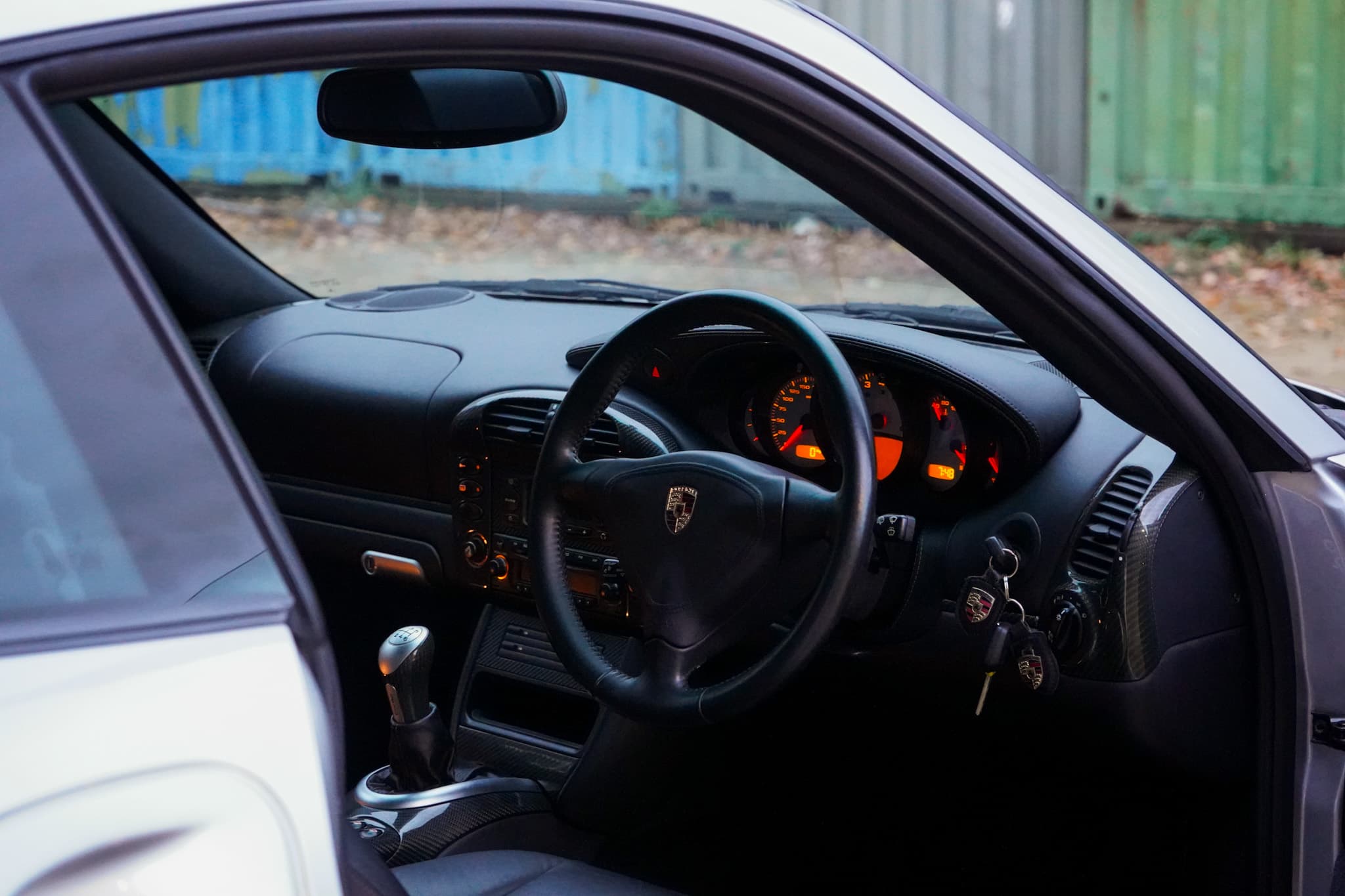
The Matt Johnston Collection's own example is a 2003 right-hand-drive Turbo X50 Cabriolet with a six-speed manual gearbox. Its Certificate of Production confirms the X50 package, making it a useful real-world example of how factory specification and documentary provenance can work together. For the wider platform history and Carrera/Turbo/GT distinctions, see the Porsche 911 Type 996 generation guide.
The standard 996 Turbo uses a 3.6-litre, twin-turbocharged flat-six and all-wheel drive. Porsche's own historical material gives the standard car 420 PS. X50 raises that factory output to 450 PS.
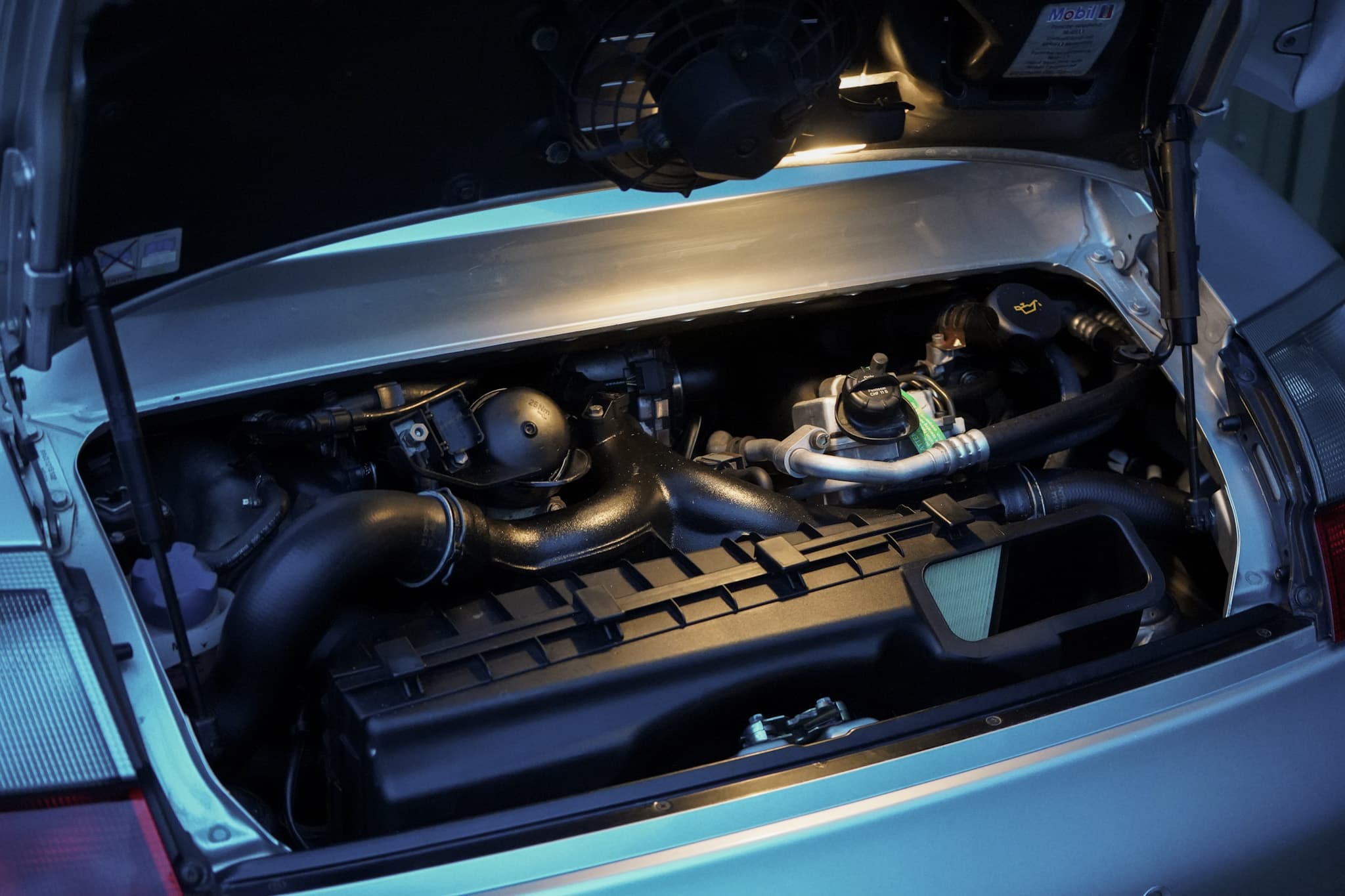
TMJC's description of its X50 car supports larger KKK K24 turbochargers, larger intercoolers and revised engine management. Porsche Fahrer separately identifies chromed stainless exhaust tips as option code X54, so tailpipe style is not reliable proof of X50 by itself. Specialist technical material also describes increased boost and supporting factory package changes.
The important distinction for a buyer is that X50 is a factory option code, not simply a power figure. A modified standard Turbo can make 450 hp or more without being a factory X50, while an original X50 may no longer have every visible component it left the factory with.
Treat a 996 Turbo's registration year as a clue, not proof of X50 availability or factory identity. A Porsche Cars North America order guide dated 10 August 2001 covers the US-market 2002 model-year Turbo Coupe, but its option list does not include X50. That is useful market-specific evidence; it is not proof that no 2002-built X50 existed elsewhere, or that Porsche did not add the package after that early guide was issued.
UK specialist 9WERKS describes X50 as a 2002 introduction. TMJC's documented UK example was delivered in October 2003, with its Certificate of Production confirming the package. Porsche's own retrospective history then confirms X50 as standard on the run-out 996 Turbo S, which it dates to 2004-2006.
The safe conclusion is that X50 belongs to the later 996 Turbo story, but a single worldwide start date is too blunt. For an individual car, use its VIN/build data, market-specific order material and Porsche factory documentation rather than assuming that every car registered in a given year could, or could not, have been ordered with X50.
The X50 specification is based around the water-cooled Type 96/70 E twin-turbo flat-six. Specialist technical data gives a displacement of 3,600 cc, a 100.0 mm bore, 76.4 mm stroke and 9.4:1 compression ratio, with 24 valves and twin turbocharging/intercooling.
| X50 engine detail | X50 specification |
|---|---|
| Engine | Type 96/70 E flat-six |
| Displacement | 3,600 cc |
| Bore x stroke | 100.0 x 76.4 mm |
| Compression ratio | 9.4:1 |
| Aspiration | Twin turbocharged and intercooled |
| Factory output | 331 kW / 450 PS |
| Peak torque | 620 Nm |
| Factory option code | X50 |
Porsche's period German Turbo/Turbo S catalogue gives the X50 specification as 331 kW / 450 PS at 5,700 rpm and 620 Nm from 3,500 to 4,500 rpm. This primary factory table resolves the 5,700-versus-6,000 rpm disagreement in favour of 5,700 rpm for this specification. Some secondary or reposted sources use 6,000 rpm or end the torque plateau at 4,400 rpm, but Porsche's period table is the stronger source for this specification.
X50 was a power package for the 996 Turbo rather than one single body/transmission combination. Technical references list both the six-speed manual and five-speed Tiptronic S with the X50-era Turbo. The range also includes Coupé and Cabriolet cars, and those differences can affect acceleration, weight and other figures.
Porsche states specifically that the later 996 Turbo S, on which X50 was standard, reached 307 km/h (191 mph). Specialist X50 references give different acceleration and maximum-speed figures depending on source and specification. Because body style and transmission affect those results, this page does not assign one universal 0-100 km/h, 0-62 mph or top-speed figure to every X50.
The often-quoted 1,124-car figure needs a market qualifier. TMJC's 2002 X50 Coupe page currently says Porsche sold 1,124 X50s without specifying a region, but current North-American market sources that repeat the same number describe it specifically as a North-American X50 count, not worldwide production.
That distinction matters because X50 was an equipment code ordered on a 996 Turbo, rather than a separate model with an obvious standalone production ledger. Porsche does publish a total for the later 996 Turbo S: 1,563 cars, and confirms that X50 was standard on that model. Porsche's published Turbo S total, however, is not a count of all ordinary Turbos previously ordered with X50.
We have not found a Porsche-published global production total for optional X50-equipped 996 Turbos. Until a primary build or option-take-rate record establishes one, 1,124 should not be presented as the worldwide X50 total. For a UK car in particular, a claim such as “one of 1,124 worldwide” needs stronger evidence than the secondary material currently available.
This does not make X50 common or unimportant. It simply separates a defensible factory identity — option code X50 and its documented specification — from a rarity number whose geography is often lost when listings repeat it.
The easiest way to think about the relationship is:
So an X50-equipped Turbo is not automatically a Turbo S. When originality or value matters, verify the actual model and factory option record rather than relying on the engine output alone.
The safest way to answer “is this really a factory X50?” is to treat the evidence in layers rather than looking for one magic visual clue. That matters because a standard 996 Turbo can be remapped, fitted with larger turbochargers or intercoolers, or given X50-style cosmetic parts long after it leaves the factory.
Look first for factory documentation that explicitly records option code X50: original build/option data, appropriate vehicle documentation or a Porsche Certificate of Production. This establishes how the car was specified rather than what hardware happens to be fitted today.
TMJC's own 2003 manual Cabriolet is a useful worked example. Its Certificate of Production is described as confirming the X50 package, so the performance option is supported independently of badges or claimed output.
The X50 package is associated with larger K24 turbochargers, larger intercoolers and different control/package hardware. Those components are useful supporting evidence, particularly when a specialist can identify part numbers and installation details. They are not conclusive by themselves: after more than two decades, a standard Turbo can have acquired X50 or aftermarket hardware, while a genuine X50 may have had components replaced.
Visible details are the weakest layer. The Porsche Fahrer option material separates X54 chromed stainless exhaust tips from X50, so a particular tailpipe style is not proof of the power kit. Badges and trim are even easier to change.
A standard Turbo modified to produce 450 PS or more is still not automatically a factory X50. The collectible distinction is the factory option record and the corresponding specification, not simply reaching the same power number.
If the original labels or records are missing, treat that as a provenance question to investigate rather than trying to infer factory identity from one component. A Porsche specialist familiar with 996 Turbos can compare the documentary record, fitted hardware, part numbers and modification history before purchase.
For a provenance-first authentication workflow, see Porsche 996 Turbo X50: what to verify before you buy.
Most of the important ownership checks are 996 Turbo-wide, not faults unique to X50. Established Porsche specialists and buyer guides repeatedly point to several areas worth inspecting carefully:
A pre-purchase inspection by a specialist familiar with 996 Turbos is particularly valuable because expensive problems can sit behind an otherwise tidy cosmetic presentation.
The Matt Johnston Collection's car is a 2003 Polar Silver Metallic Turbo X50 Cabriolet, right-hand drive with a six-speed manual gearbox and Metropole Blue interior. TMJC records 74,757 miles and describes a fully documented history, with the factory Certificate of Production confirming the X50 performance package.
Its individual options include a factory hardtop, heated sports seats, ParkAssist and Bose audio. TMJC also records a detailed service/provenance chronology and later maintenance including a starter motor, water pump, drive belt, battery, turbo vacuum actuator and ignition coils.
Those details describe this individual car; they are not a list of equipment or maintenance work that applies to every 996 Turbo X50. Their value here is as an example of the documentary depth worth looking for when buying a modern-classic 911 Turbo.
Editorial information
Research and editorial from TMJC Garage.
Research and editorialTMJC Garage
Reviewed byMatt Johnston
Last reviewed12 September 2026
Published byThe Matt Johnston Collection
Specifications
Model lineage
TMJC photography
TMJC Guides
TMJC assistance
Continue to the main TMJC website and speak directly with the collection team.
Sell, consign or source
Continue with TMJC for a discreet conversation, professional presentation and collector-focused support.
Enquire now