TMJC assistance
Want TMJC to help with this vehicle?
Sourcing, consignment and valuationContinue to the main TMJC website and speak directly with the collection team.
Generation
Porsche 911 Type 992 guide: the rolling 992.1-to-992.2 change, Carrera, GT3 and Turbo engines, manual/PDK differences and key dates.
Variant directory
Choose an exact 992 derivative for engine, gearbox, performance, dimensions, equipment and buying-context detail.
TMJC guide
Porsche 911 Type 992 guide: the rolling 992.1-to-992.2 change, Carrera, GT3 and Turbo engines, manual/PDK differences and key dates.
The Porsche 911 Type 992 is the eighth generation of the 911. Porsche presented it in November 2018 and describes the generation as being built from 2018 onward. What started with Carrera S and Carrera 4S has since grown into one of the broadest 911 families Porsche has produced, spanning ordinary Carrera models, Targa, Turbo, GT3, off-road Dakar, lightweight S/T and several different approaches to hybridisation.
That breadth creates the main trap when researching one: “992” is not a specification. Even 992.1 and 992.2 only get you part of the way. The facelift rolled through the range over time, and two cars carrying the same phase shorthand can have completely different engines, gearboxes and drivetrains.
Identify a 992 in this order:
phase → derivative → body → driven wheels → gearbox → factory build specification.
992.1 is the usual enthusiast shorthand for the first phase of the Type 992. 992.2 describes the updated phase that began with the Carrera and Carrera GTS changes announced on 28 May 2024.
The change was not a single cut-over for every derivative.
| Question | Evidence-led answer |
|---|---|
| Is 992.2 a new 911 generation? | No. It is the updated phase of the Type 992, Porsche's eighth 911 generation. |
| Did every 992 become hybrid in 2024? | No. The Carrera GTS introduced T-Hybrid; the updated base Carrera remained a non-hybrid 3.0-litre twin-turbo. |
| Are later Carrera S and 4S models hybrid? | No. Porsche launched the updated S/4S cars with a 480 PS 3.0-litre twin-turbo and PDK. |
| Is every 992.2 PDK-only? | No. Carrera T is six-speed-manual only, GT3 retains manual and PDK choices, and GT3 S/C is manual-only. |
| Did every derivative change in May 2024? | No. GT3 and Carrera T followed in October 2024, Carrera S in January 2025, 4S/Targa 4S in July 2025 and Turbo S in September 2025. |
| Does 992.2 always mean push-button starting? | No safe universal rule. Porsche's current GT3 family retains a rotary ignition switch despite the digital instrument cluster. |
For a buyer, the build date and exact derivative tell you more than simply asking whether the car is a .1 or .2.
| Date | Milestone | Why it matters |
|---|---|---|
| November 2018 | Carrera S / 4S world premiere | Type 992 debuts with 450 PS S models, eight-speed PDK, Wet mode and the new digital-heavy cockpit. |
| July 2019 | Carrera Coupé and Cabriolet | Regular Carrera joins with a 385 PS 3.0-litre twin-turbo flat-six. |
| March 2020 | Turbo S | 3,745 cc twin-turbo, 650 PS, 800 Nm, all-wheel drive and Turbo-specific eight-speed PDK. |
| May 2020 | Targa 4 / 4S | Targa becomes the generation's third core body form; the launch cars are all-wheel drive. |
| February 2021 | GT3 | Naturally aspirated 4.0-litre, 510 PS, six-speed manual or seven-speed PDK and double-wishbone front suspension. |
| June 2021 | GTS | Five 480 PS GTS derivatives arrive across Coupé, Cabriolet and Targa. |
| April 2022 | Sport Classic | 1,250-car rear-drive special combines 550 PS twin-turbo power with a seven-speed manual. |
| August 2022 | GT3 RS | 525 PS naturally aspirated GT branch adds active aerodynamic concepts including DRS. |
| October 2022 | Carrera T | 385 PS Carrera-based derivative uses a seven-speed manual as standard in this phase. |
| November 2022 | 911 Dakar | 2,500-car off-road derivative adds substantial ground clearance, all-wheel drive and 480 PS. |
| August 2023 | 911 S/T | 1,963-car special combines the GT3 RS engine with a short-ratio manual; Porsche calls it the lightest 992 at 1,380 kg DIN. |
| May 2024 | Carrera / Carrera GTS update | First clear 992.2 boundary: GTS gains 3.6-litre T-Hybrid; Carrera remains non-hybrid with a revised 3.0-litre twin-turbo. |
| October 2024 | Updated GT3 | 4.0-litre naturally aspirated GT3 continues at 510 PS, keeps manual/PDK choices and gains shorter gearing. |
| October 2024 | Updated Carrera T | Now six-speed-manual only and, for the first time, also offered as a Cabriolet. |
| January 2025 | Updated Carrera S | Non-hybrid 3.0-litre twin-turbo rises to 480 PS and launches with eight-speed PDK. |
| July 2025 | Carrera 4S / Cabriolet / Targa 4S | Updated all-wheel-drive S derivatives follow later, showing the facelift was still rolling through the range. |
| September 2025 | Updated Turbo S | T-Hybrid expands to the Turbo S with two eTurbos, 711 PS and all-wheel drive. |
| April 2026 | GT3 S/C | First open-top GT3 arrives with a 510 PS naturally aspirated 4.0-litre and six-speed manual only. |
A model year 2025 label is not a reliable dividing line. Porsche changed different branches at different times.
The Type 992 is built at Porsche's main sports-car site in Stuttgart-Zuffenhausen. Porsche's 2025 factory history says the 911 has been in series production there since 1964 and identifies Zuffenhausen as the production centre for the 911. Its 2019 report on the new 911 body shop is more generation-specific: the first Type 992 bodies were produced there from September 2018.
That does not mean every component is made in one building. Porsche describes a flexible site with separate body, engine and specialist manufacturing operations, with some lightweight body work handled off the regular line. For provenance, “built in Zuffenhausen” is a vehicle-production statement, not proof that every part was manufactured on site.
Every road-going 992 in this story uses a six-cylinder boxer engine, but almost everything beyond that depends on the derivative.
The early Carrera family used a 3.0-litre twin-turbo flat-six. The regular 2019 Carrera produced 385 PS, while the launch Carrera S and 4S produced 450 PS. The first-phase GTS pushed the same broad Carrera concept to 480 PS.
The Turbo S was a different branch again. The 2020 car used a 3,745 cc twin-turbo engine producing 650 PS and 800 Nm, tied to all-wheel drive and a Turbo-specific eight-speed PDK.
GT cars break the “turbocharged 992” shortcut completely. The first 992 GT3 used a naturally aspirated 4.0-litre flat-six producing 510 PS and revving to 9,000 rpm. The GT3 RS raised output to 525 PS and focused heavily on active aerodynamics. The 2023 S/T then put that 525 PS engine through a short-ratio manual gearbox in a 1,380 kg road-focused package.
The 2024 update introduced a fourth powertrain story: T-Hybrid.
Hybridisation remained derivative-specific.
When Porsche launched the updated Carrera and Carrera GTS in May 2024, the GTS received the new T-Hybrid system: a 3.6-litre boxer, electrically driven turbocharger, electric motor integrated into the eight-speed PDK and compact high-voltage battery. Porsche quotes 541 PS and 610 Nm system output.
The updated Carrera, launched at the same time, did not become a hybrid. It retained a 3.0-litre twin-turbo boxer, revised with hardware including the Turbo-derived intercooler, and produced 394 PS and 450 Nm.
That split continued. The updated Carrera S announced in January 2025 remained a non-hybrid 3.0-litre twin-turbo, now producing 480 PS and 530 Nm. The Carrera 4S, Carrera 4S Cabriolet and Targa 4S that followed in July used that same 480 PS engine with all-wheel drive.
Then, in September 2025, Porsche expanded T-Hybrid in a different direction. The new Turbo S uses a 3.6-litre six-cylinder with two eTurbos, rather than the GTS's one, plus the PDK-integrated electric motor. Porsche quotes 711 PS and 800 Nm.
So 992.2 hybrid still is not precise enough. A Carrera GTS and Turbo S use different T-Hybrid architectures, while a Carrera, Carrera S, Carrera T and GT3 remain combustion-only in their cited updated forms.
The eight-speed PDK is central to the 992, but the generation has never been simply PDK-only.
First-phase Carrera derivatives could be ordered with a seven-speed manual in selected combinations and markets. The original 992 Carrera T made that seven-speed manual central to its specification.
GT3 used a separate pairing: six-speed GT manual or seven-speed PDK. Porsche retained both options when it updated the GT3 in October 2024, while shortening the final drive by eight per cent compared with its predecessor.
The facelifted Carrera T went another way. It is six-speed-manual only, rear-wheel drive, and the updated version is offered as both Coupé and Cabriolet.
At the other end of the range, the updated Carrera S was launched with eight-speed PDK, the T-Hybrid Carrera GTS uses an eight-speed PDK with its electric motor integrated into the transmission, and the 711 PS Turbo S sends power through an electrified eight-speed PDK to all four wheels.
The 2026 GT3 S/C is the strongest reminder not to generalise: it is an open-top GT3 and is only available with a six-speed manual.
Porsche called the 992 Targa the generation's third body variant when it arrived in May 2020, following the Coupé and Cabriolet. That gives the Type 992 three core body forms.
The Targa retained the wide hoop, movable roof panel and wraparound rear glass. Porsche says the roof operates in around 19 seconds, and the current Targa range remains all-wheel drive.
Body form changes the checks that matter on a used car. Cabriolet and Targa roof operation, drains, seals and glass/mechanism condition deserve attention that a Coupé does not. Conversely, a Coupé with a carbon or lightweight roof should be checked against its original build specification rather than assumed to be standard.
The April 2026 GT3 S/C does not create a fourth fundamental body style, but it is historically significant: Porsche describes it as the first GT3 with a fully automatic convertible roof. It combines the current GT3 engine and chassis ideas with S/T-derived lightweight components and weighs 1,497 kg despite the powered roof.
A normal Carrera-versus-Turbo-versus-GT3 table still misses some of the most interesting 992 engineering.
The 2022 Sport Classic was limited to 1,250 examples and combined the 3.7-litre twin-turbo engine with 550 PS, rear-wheel drive and a seven-speed manual. That combination matters because it borrows Turbo-family power without adopting the normal Turbo all-wheel-drive/PDK formula.
The 2022 GT3 RS developed the naturally aspirated GT branch around aero rather than simply chasing top speed. Its 4.0-litre engine produced 525 PS, while active aerodynamic systems included a drag-reduction function and air-brake effect.
The 911 Dakar is even harder to fit into a generic 992 spec sheet. Limited to 2,500 cars, it sits 50 mm higher than a Carrera with sports suspension, and its standard lift system can add another 30 mm. Porsche paired 480 PS with all-wheel drive and eight-speed PDK, then designed cooling, tyres and chassis systems around off-road use.
The 911 S/T was limited to 1,963 examples and deliberately mixed hardware from different GT branches. It uses the 525 PS GT3 RS engine, a short-ratio manual transmission and extensive lightweight components. Porsche gives a DIN kerb weight of 1,380 kg, making it the lightest Type 992 it had produced at launch.
These cars are not side stories. They demonstrate why the exact derivative has to come before assumptions about engine, driven wheels, gearbox or weight.
The easiest way to misunderstand the facelift is to imagine Porsche changed the whole range in May 2024.
It did not.
The Carrera and Carrera GTS were first. GT3 and Carrera T followed five months later. Carrera S arrived in January 2025. The all-wheel-drive Carrera 4S and Targa 4S family did not arrive until July. Turbo S followed in September 2025. Porsche then widened the GT family again with the GT3 S/C in April 2026.
That staggered timing has practical consequences for used-car searches. Two cars first registered in the same calendar year can sit on different sides of the update depending on derivative and market. A registration year therefore should not overrule the VIN, factory specification and actual model version.
It also explains why visual shortcuts can fail. A fully digital instrument cluster is a strong clue to the updated cars, but even apparently simple details such as starting the engine are derivative-sensitive. Porsche's 2026 GT3 S/C material specifically says the current fixed-head GT3 and GT3 S/C use a rotary ignition switch to the left of the steering wheel. So “992.2 equals start button” is too broad.
Start by proving what the car is.
PistonHeads' UK Carrera buying guide describes relatively few major mechanical problems but raises sensible inspection prompts including battery condition, PADM warnings, a 2021 suspension-locknut recall and reports involving lights, spoilers and roof/window systems. Those are reasons to check the particular car, not evidence that every 992 suffers the same faults, and that guide predates the later 992.2 derivatives.
For document and history checks, TMJC's collector-car provenance checklist sets out a broader evidence method.
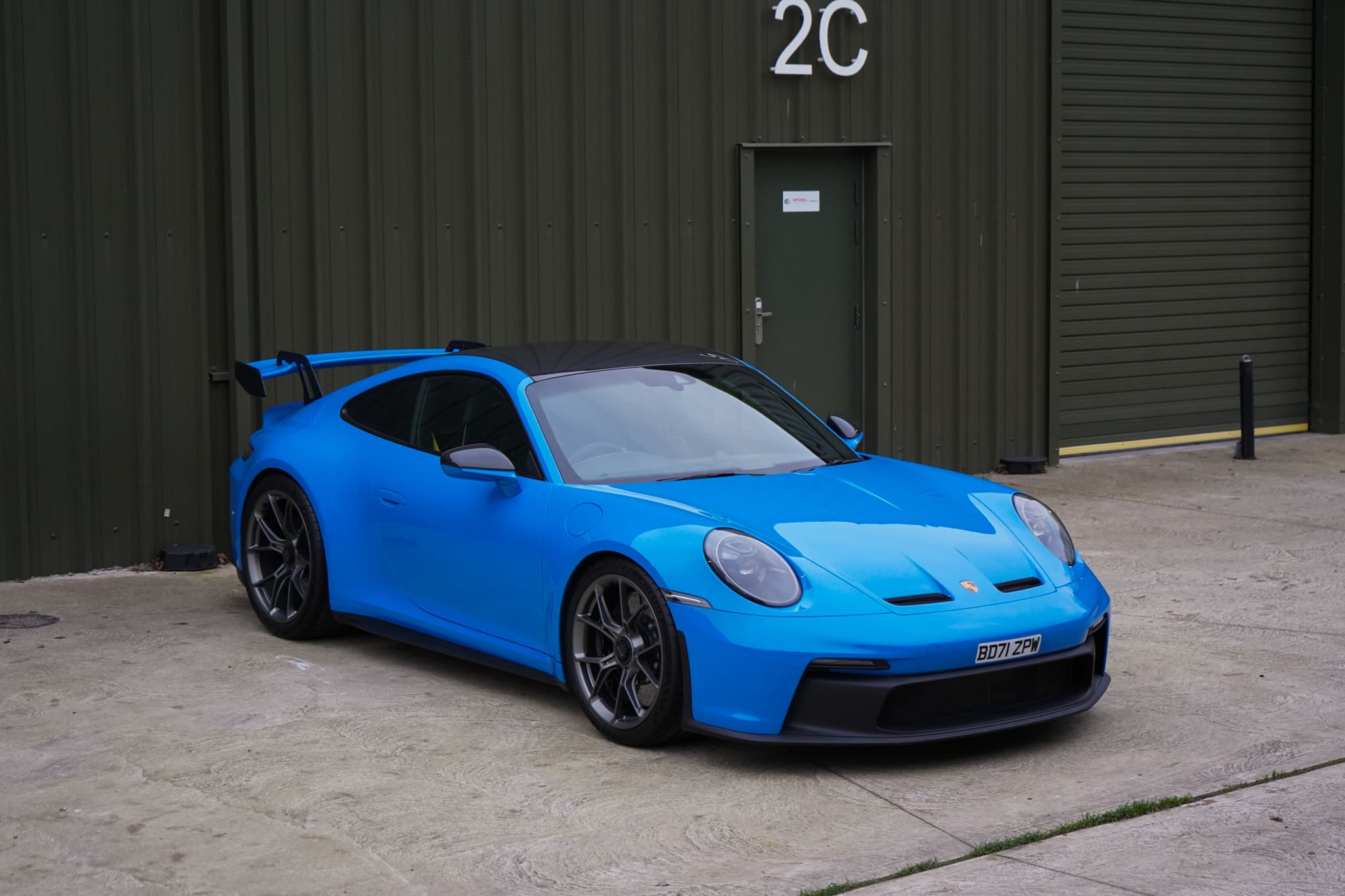
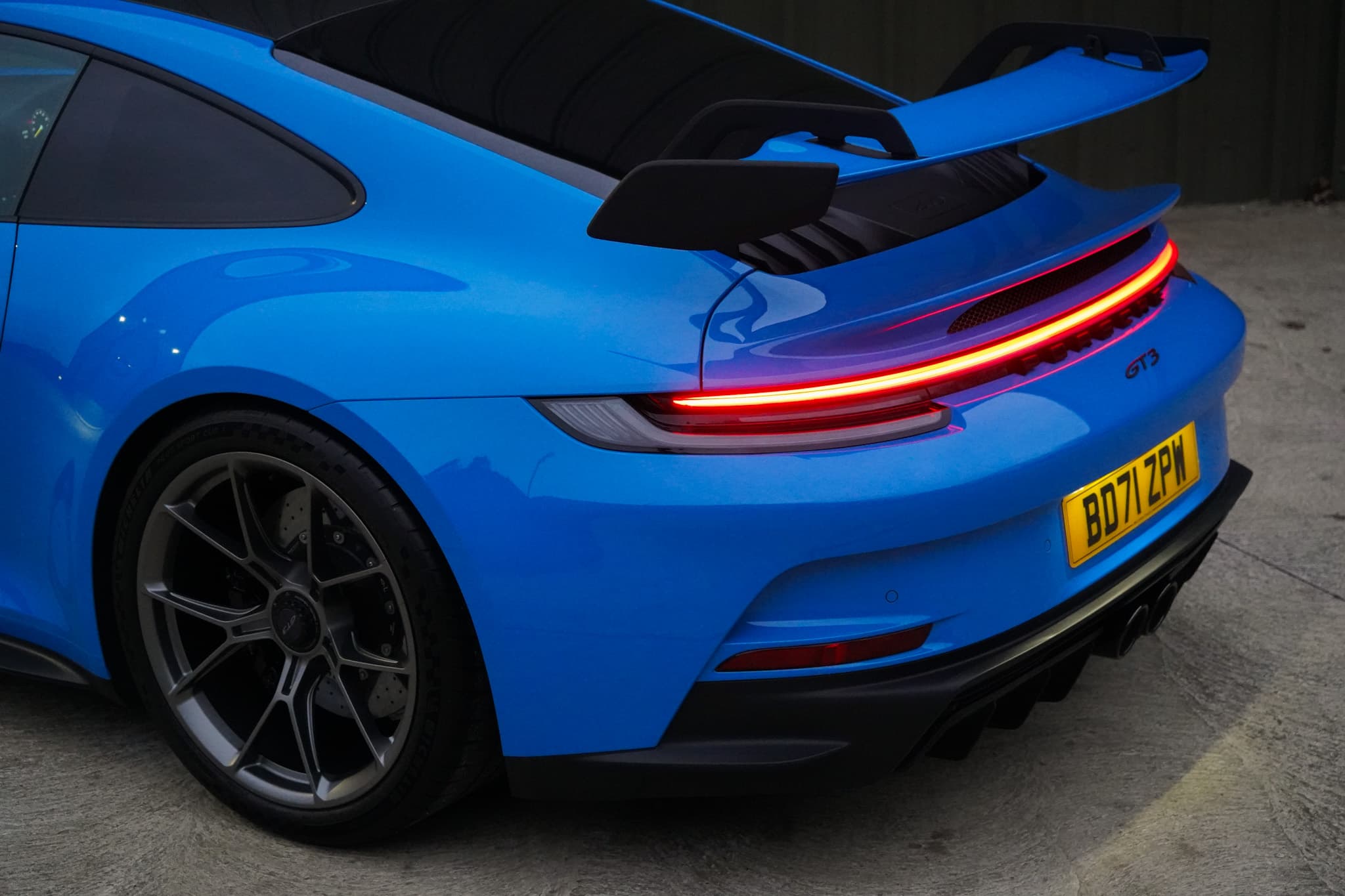
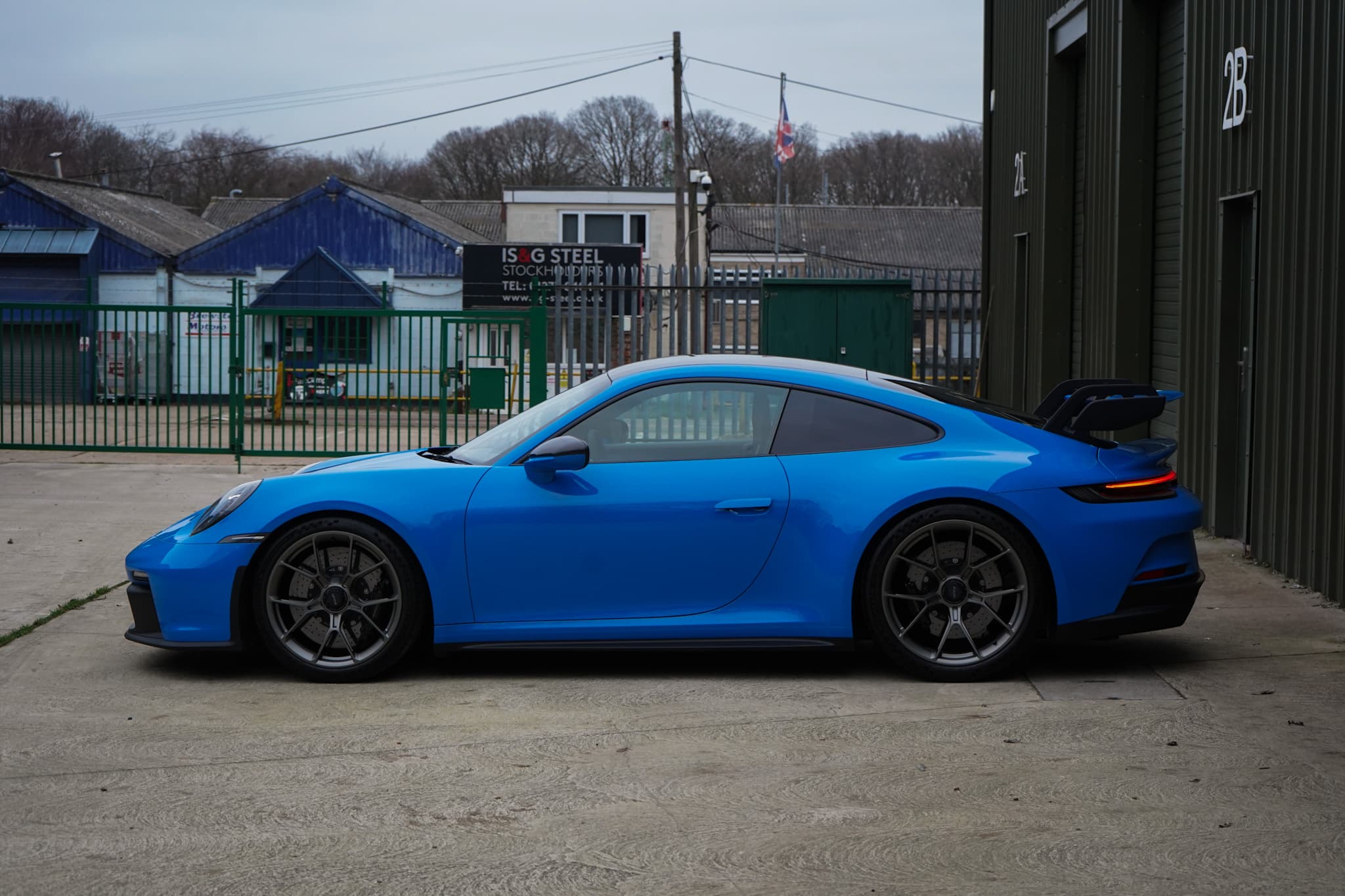
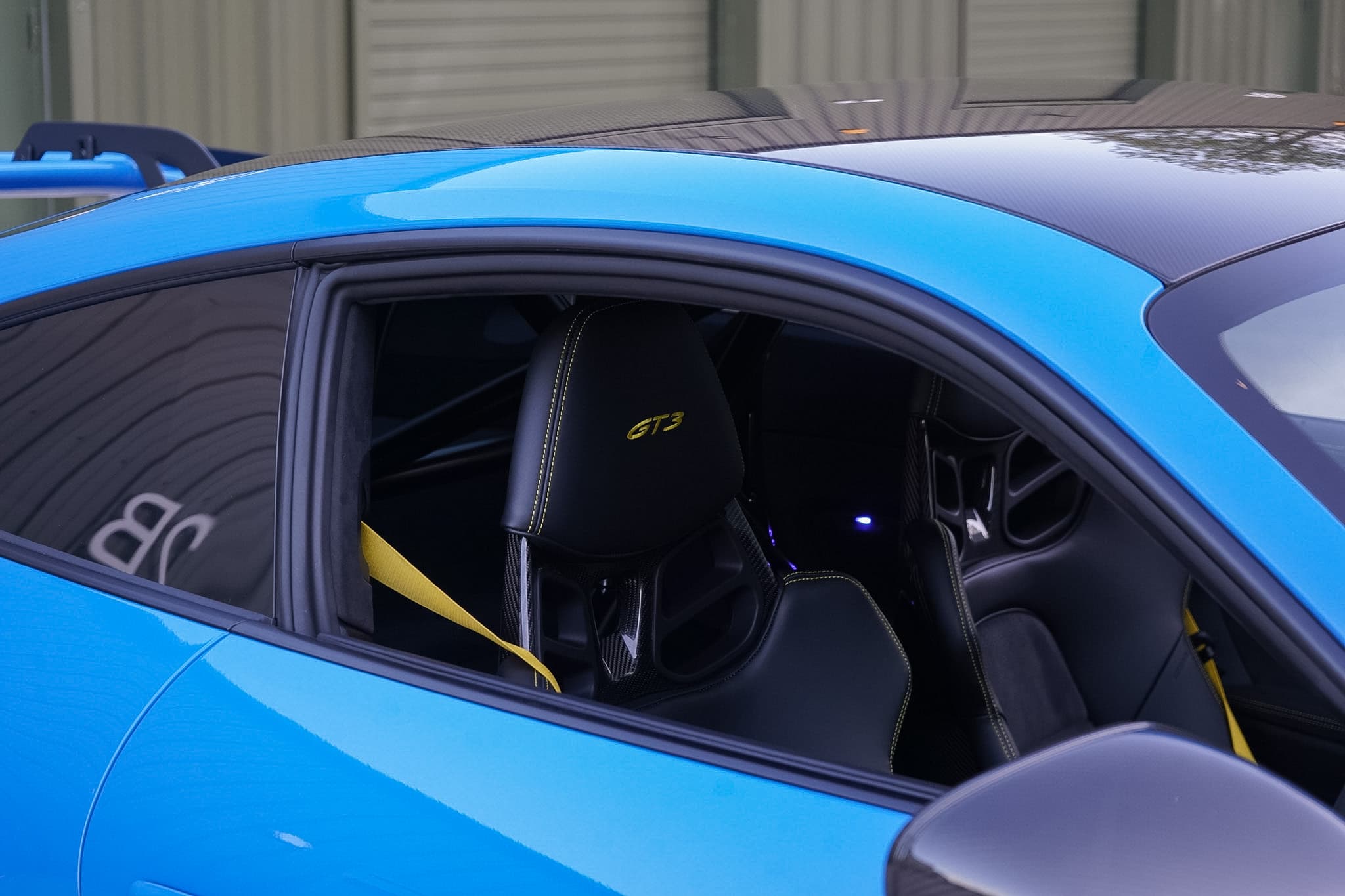
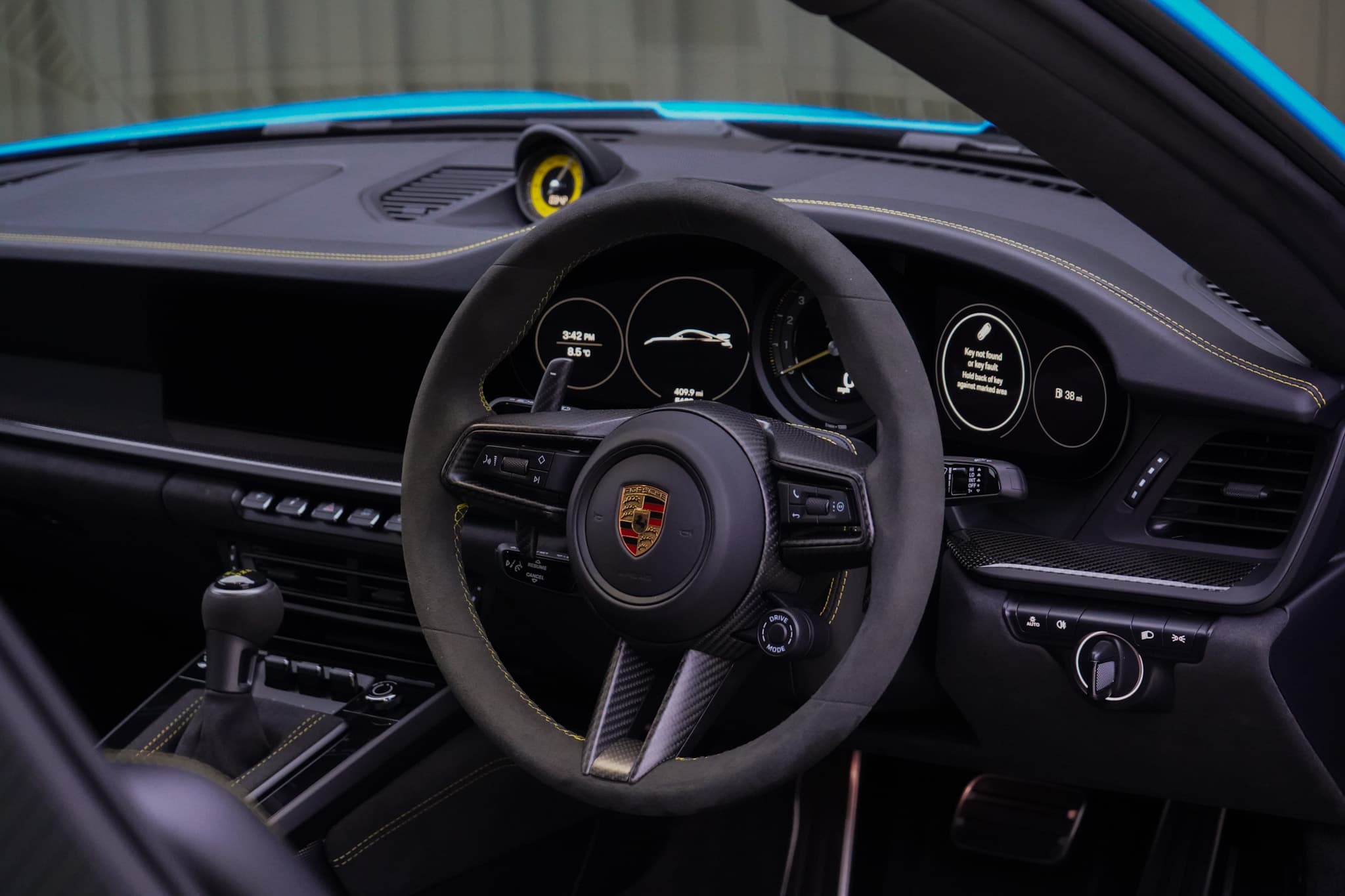
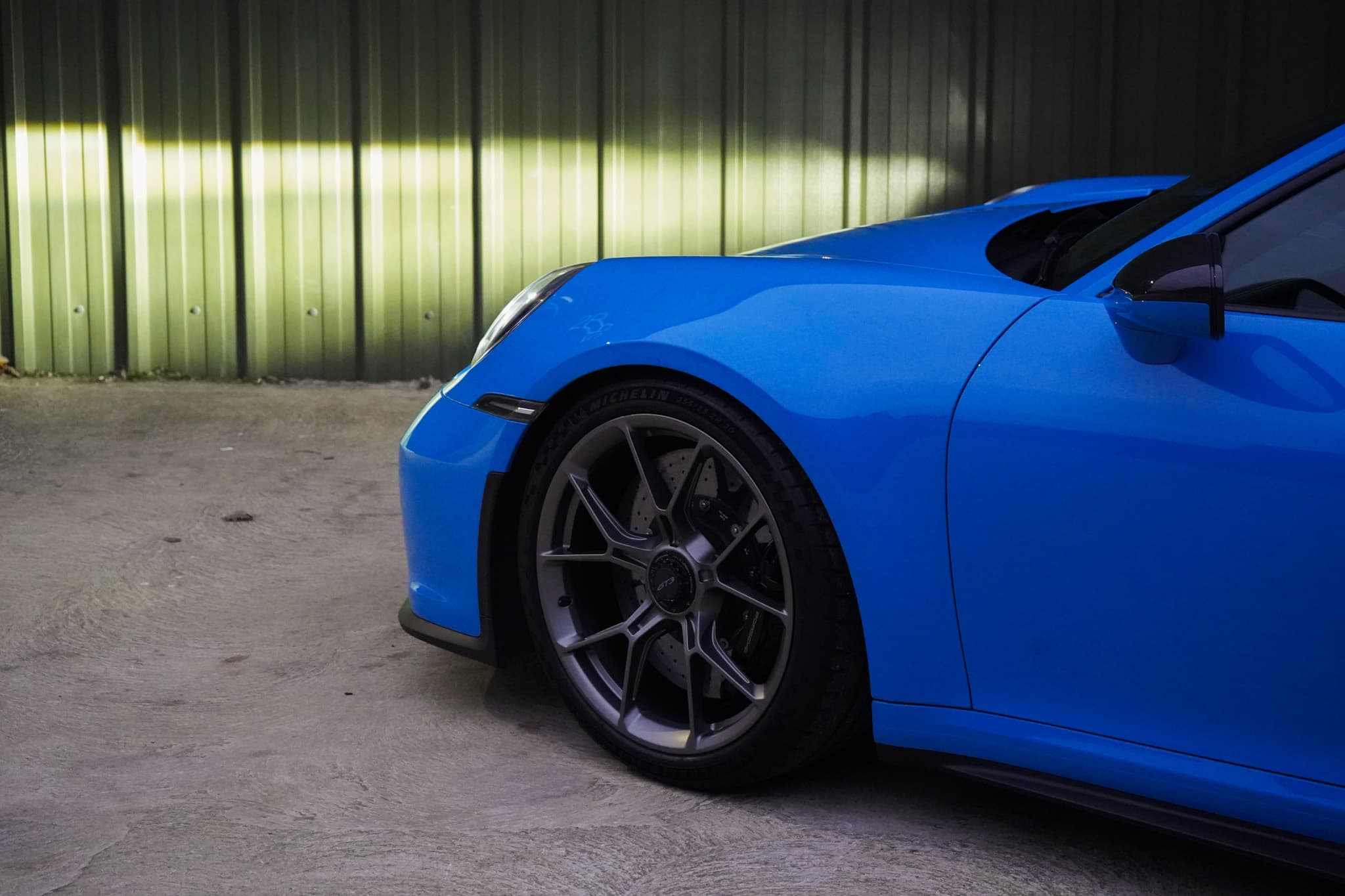
The Matt Johnston Collection's 2022 GT3 is a useful 992.1 example because the car's identity and options are unusually explicit. TMJC records it as a right-hand-drive seven-speed-PDK GT3 in Shark Blue with Full Bucket Seats, PCCB, Clubsport, front-axle lift, Chrono and carbon roof.
None of those options defines every 992 GT3. A manual car is not “wrong”; iron brakes are not automatically an inferior specification; carbon roof and front-axle lift are not universal. The value of the example is that it shows how much information is lost when an advert stops at 2022 Porsche 992.
The published 992.1 GT3 options guide goes deeper on buckets, PCCB, lift, Clubsport and other option choices without turning one TMJC car into a factory template.
For the wider family before and after Type 992, see the Porsche 911 generation guide.
Editorial information
Research and editorial from TMJC Garage.
Research and editorialTMJC Garage
Reviewed byMatt Johnston
Last reviewed26 October 2026
Published byThe Matt Johnston Collection
Model lineage
TMJC photography
TMJC Guides
TMJC assistance
Continue to the main TMJC website and speak directly with the collection team.
Sell, consign or source
Continue with TMJC for a discreet conversation, professional presentation and collector-focused support.
Enquire now