TMJC assistance
Want TMJC to help with this vehicle?
Sourcing, consignment and valuationContinue to the main TMJC website and speak directly with the collection team.
Generation
Porsche 911 991 explained: 2011-2019 years, 991.1 vs 991.2 changes, Targa engineering, key technology and practical used-car checks.
Variant directory
Choose an exact 991 derivative for engine, gearbox, performance, dimensions, equipment and buying-context detail.
TMJC guide
Porsche 911 991 explained: 2011-2019 years, 991.1 vs 991.2 changes, Targa engineering, key technology and practical used-car checks.
The Porsche 911 Type 991 is the seventh generation of the 911, produced from 2011 to 2019. It was a much bigger engineering step than the shape alone suggests: Porsche lengthened the wheelbase by 100 mm, widened the track, created a new mixed aluminium-steel body and introduced the world's first seven-speed manual transmission in a series-production passenger car.
For a buyer, 991 does not describe one fixed specification. The generation spans early naturally aspirated Carrera models, the 2015 model update commonly called 991.2, Targa 4 and 4S, GTS, Turbo, GT3, GT2 RS, 911 R, Carrera T and the final Speedster. The exact engine, drivetrain, chassis and equipment have to be matched to the derivative and phase.
Porsche's own history dates the Type 991 from 2011 to 2019 and records 233,540 cars across the generation.
That is a generation-wide total. It includes a broad range of Coupé, Cabriolet and Targa derivatives and should not be reused as the production number for a Carrera, GTS, Turbo or GT car.
The 991 replaced the 997 and was itself succeeded by the 992. Porsche describes it as one of the largest development steps in 911 history, with almost 90 per cent of components either newly designed or substantially developed.
The 991 was longer and roomier, but Porsche also pushed harder on lightweight construction. Two different weight claims are often collapsed into one.
Porsche says the complete 991 generation could be around 40 kg lighter than its direct predecessor, despite its longer wheelbase, tighter safety requirements and added equipment. The new body-in-white contributed roughly 80 kg of saving through mixed aluminium-steel construction. Those are related figures, not interchangeable ones.
The chassis and controls were also redeveloped. A seven-speed manual gearbox arrived alongside PDK on relevant derivatives. Porsche designed seventh as a long cruising ratio, with maximum speed reached in sixth on the original manual arrangement.
The 991 also changed the steering architecture. Porsche's original 2011 Carrera launch introduced electro-mechanical power steering in place of the previous hydraulic assistance. That is a genuine generation-level engineering change, but steering feel and hardware still need to be judged in the context of the derivative, wheel/tyre package and chassis options fitted.
The 991 era also introduced or expanded sophisticated chassis technology across the range, including PDCC active anti-roll control, rear-axle steering and adaptive aerodynamics. Those systems were derivative- or option-dependent; their existence in the generation does not mean every 991 has them.
991.1 and 991.2 are enthusiast labels for the two phases of the Type 991. They are not two separate 911 generations.
Porsche announced the major Carrera model update in September 2015. The headline engineering change for Carrera and later GTS models was the move from naturally aspirated engines to 3.0-litre turbocharged flat-sixes. The update also brought revised chassis settings, exterior details and a newer PCM infotainment system.
For Carrera and GTS cars, the phase split is clearest in the engine changes:
The numbers below are representative derivative specifications, not one specification for every car carrying a 991 chassis code:
| Representative car / phase | Engine | Factory output | Drivetrain context |
|---|---|---|---|
| 2011 launch Carrera | 3.4-litre naturally aspirated flat-six | 350 hp | Rear-wheel drive; seven-speed manual or optional PDK |
| 2011 launch Carrera S | 3.8-litre naturally aspirated flat-six | 400 hp | Rear-wheel drive; seven-speed manual or optional PDK |
| 2015-updated Carrera | 3.0-litre bi-turbo flat-six | 370 hp / 450 Nm | Rear-wheel-drive Carrera specification |
| 2015-updated Carrera S | 3.0-litre bi-turbo flat-six | 420 hp / 500 Nm | Rear-wheel-drive Carrera S specification |
| 2017 GTS family | 3.0-litre bi-turbo flat-six | 331 kW / 450 PS | Carrera GTS RWD; Carrera 4 GTS and Targa 4 GTS AWD |
This makes the phase change concrete without implying that Turbo and GT derivatives followed the same engine programme.
That table is deliberately Carrera/GTS-focused. The Turbo was already turbocharged, while GT3, GT3 RS and GT2 RS have their own engine and model histories. A generic claim such as “all 991.1s are naturally aspirated” or “all 991.2s use the same 3.0 turbo” is therefore wrong.
The mechanical differences matter most, but Porsche also changed several details that help identify an updated Carrera. Its 2015 launch material names headlights with four-point daytime running lights, door handles without recess covers, a rear engine lid with vertical louvres and revised rear lights with four-point brake lights.
Inside, Porsche introduced a redesigned steering wheel and a newer PCM system with a multi-touch display. Those are useful cross-checks when an advert is vague about phase.
Treat them as clues, not authentication. Turbo, GT and Targa derivatives can have different bodywork, options can alter the lighting and cabin, and parts can be replaced or retrofitted. Confirm the car against its VIN-linked build record, registration date, model-year evidence and factory specification before relying on one styling feature.
The word Turbo is confusing on a 991.2 because it can describe two different things. A car can have a turbocharged engine without being the model Porsche calls the 911 Turbo.
When Porsche updated the Carrera in 2015, it replaced the naturally aspirated Carrera engines with new 3.0-litre bi-turbo flat-sixes. Porsche's own 911 history goes further and describes the change as bringing biturbo engines to the Carrera and Targa models. That means a 991.2 Carrera, Carrera S or Targa can genuinely have two turbochargers while still belonging to the Carrera/Targa side of the range.
Porsche kept 911 Turbo and 911 Turbo S as separate model names. At the 2016 update, Porsche explicitly called them the top models of the 911 range: the Turbo used a 3.8-litre bi-turbo six-cylinder producing 397 kW / 540 hp, while the Turbo S produced 427 kW / 580 hp. Porsche also highlighted variable-turbine-geometry turbochargers as part of the Turbo model's engineering.
| 991.2 example | Engine description | What the name means |
|---|---|---|
| Carrera | 3.0-litre bi-turbo flat-six, 370 hp | A turbocharged Carrera; not the model called 911 Turbo |
| Carrera S | 3.0-litre bi-turbo flat-six, 420 hp | A higher-output turbocharged Carrera |
| Targa 4 GTS | 3.0-litre bi-turbo flat-six, 450 PS | A turbocharged all-wheel-drive Targa GTS |
| 911 Turbo | 3.8-litre bi-turbo flat-six, 540 hp | The separate Turbo model at the top of the regular 911 range |
| 911 Turbo S | 3.8-litre bi-turbo flat-six, 580 hp | The higher-output Turbo S derivative |
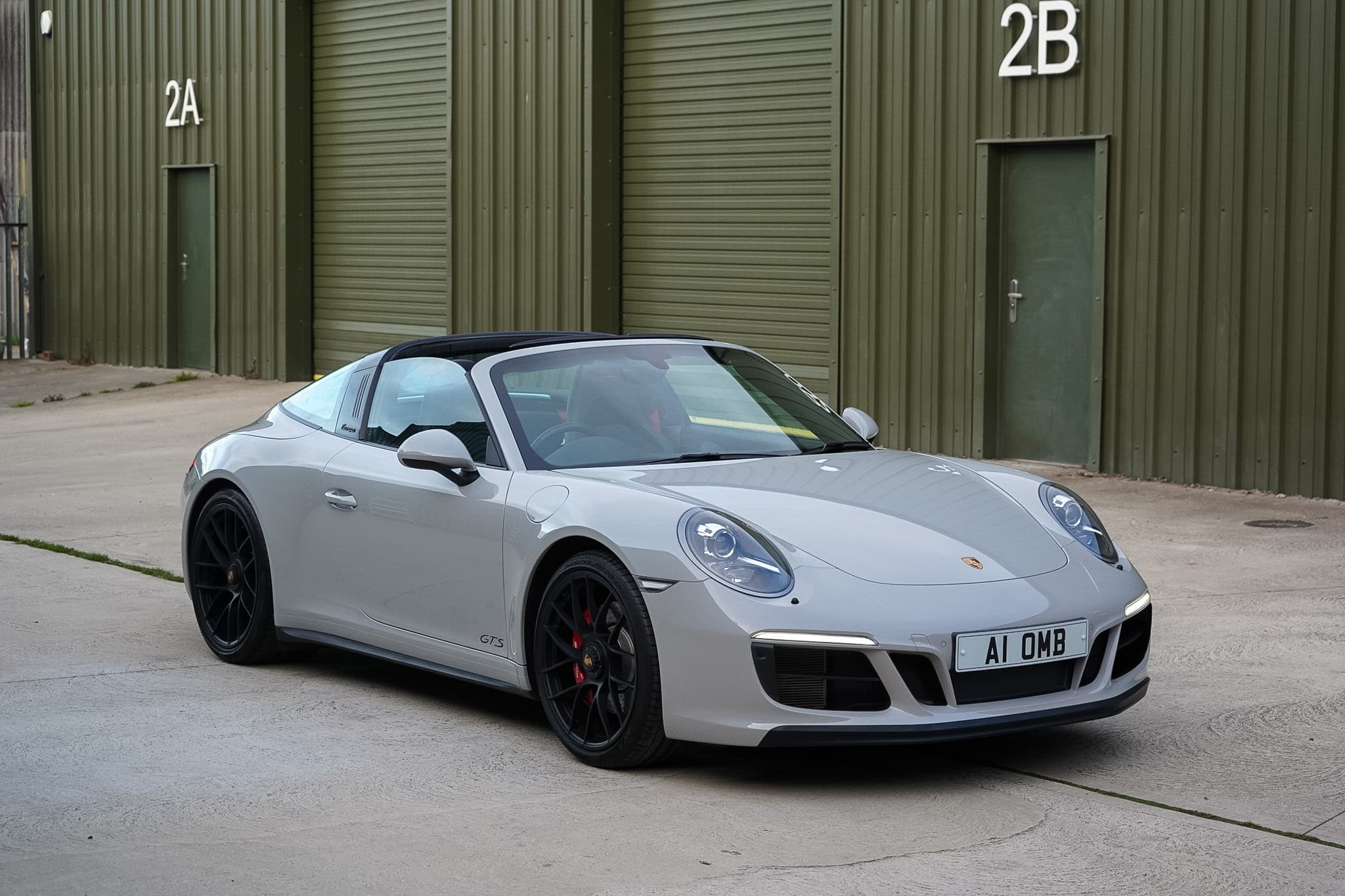
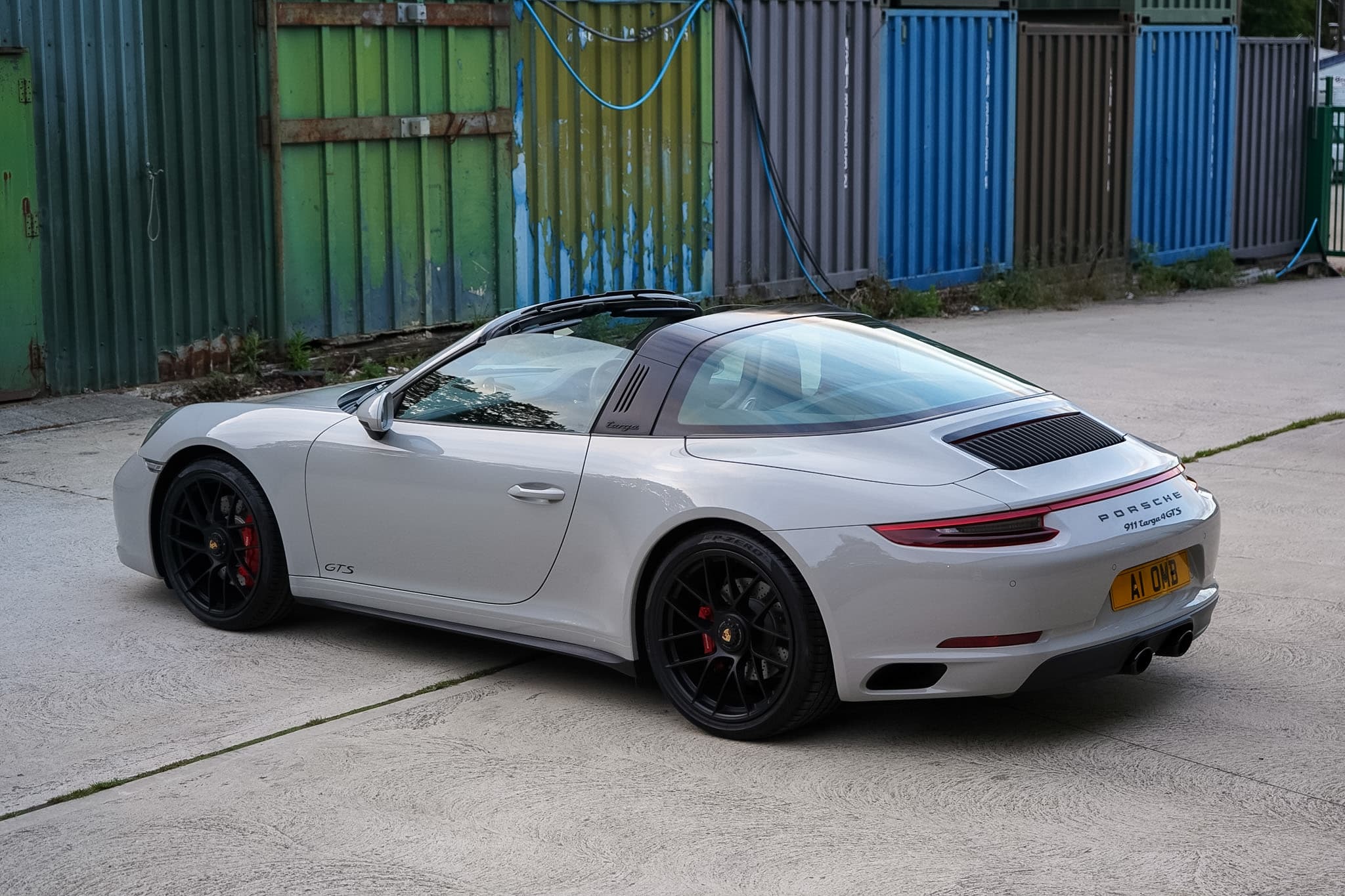
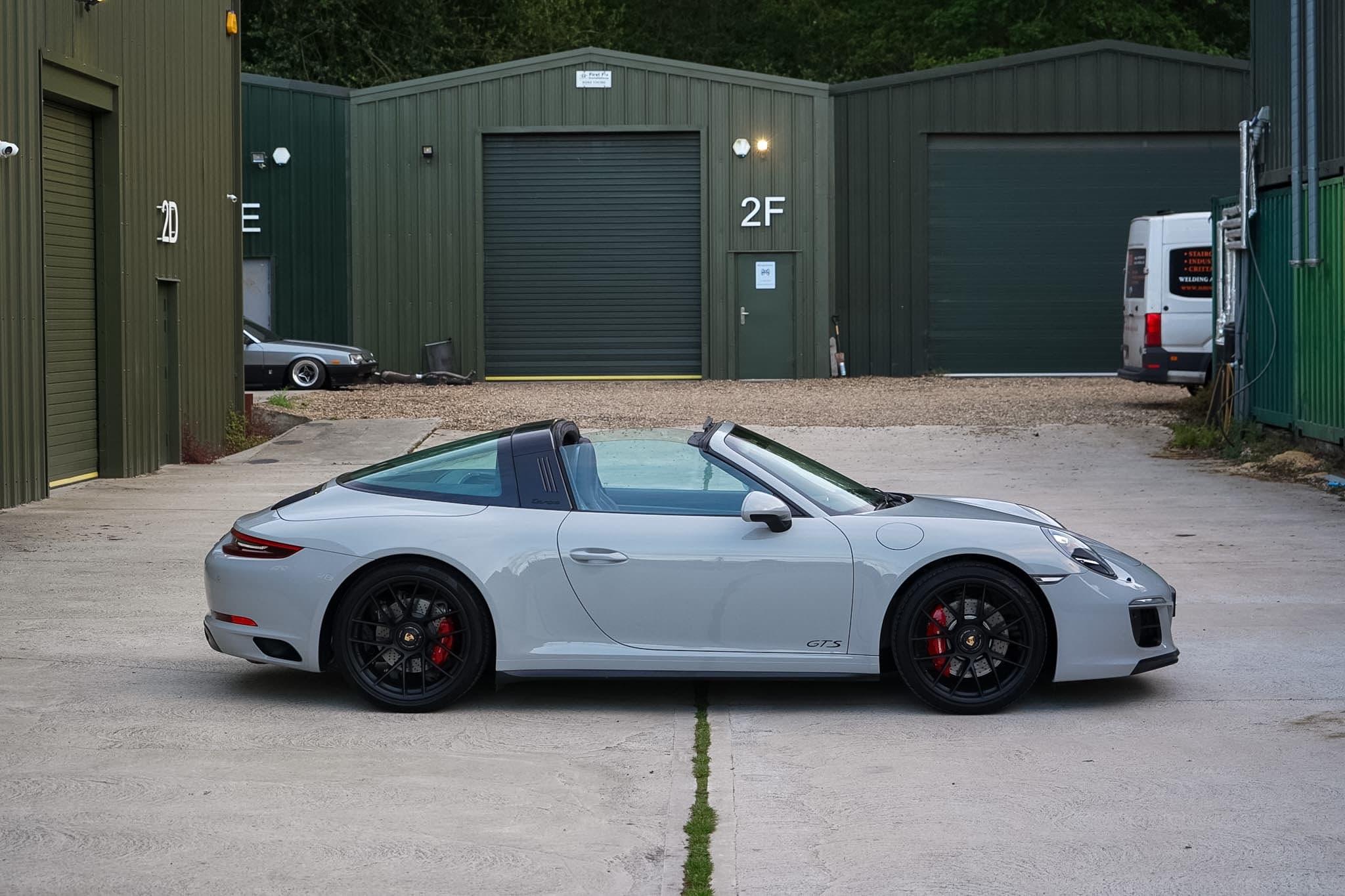
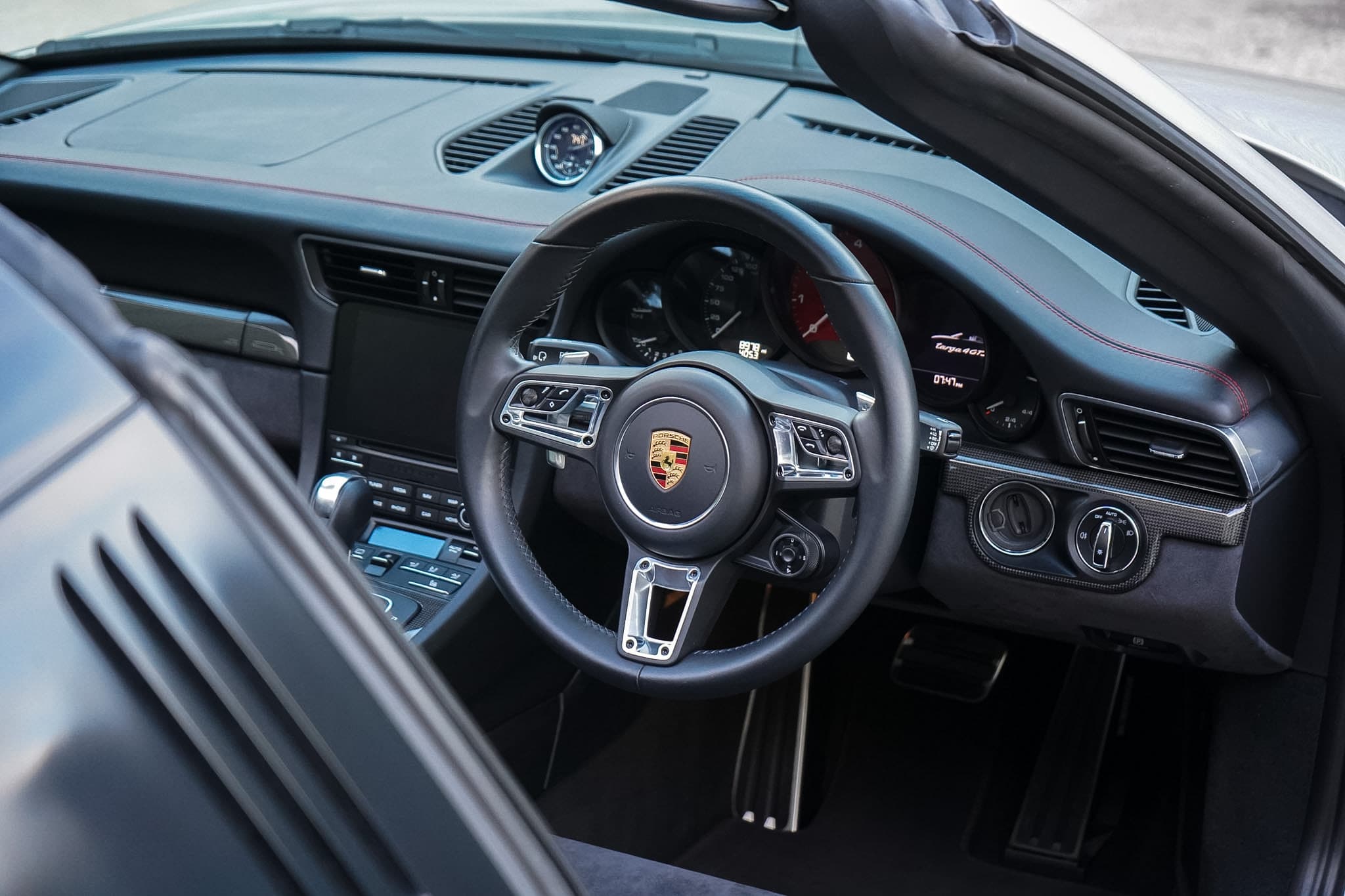
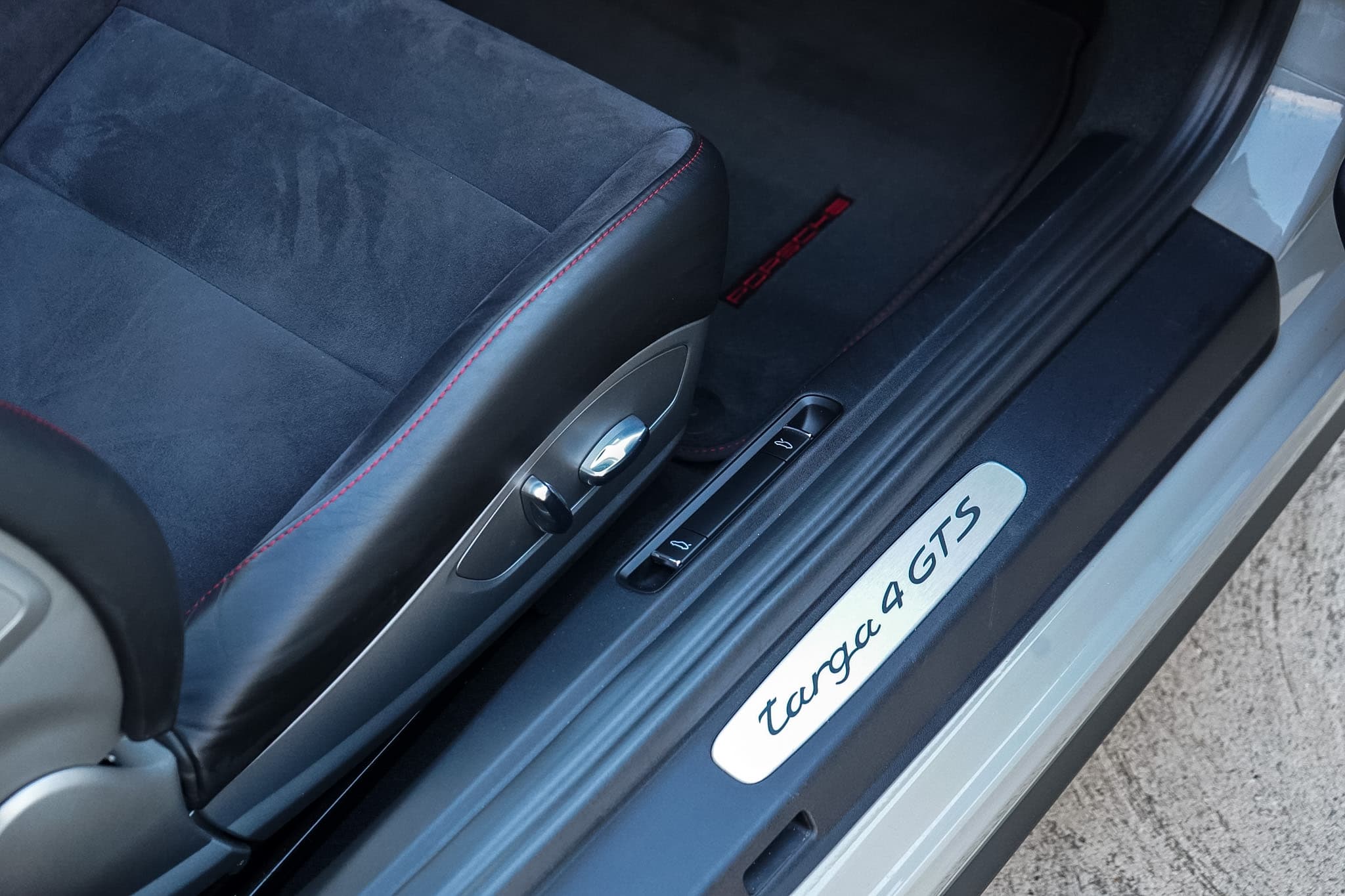
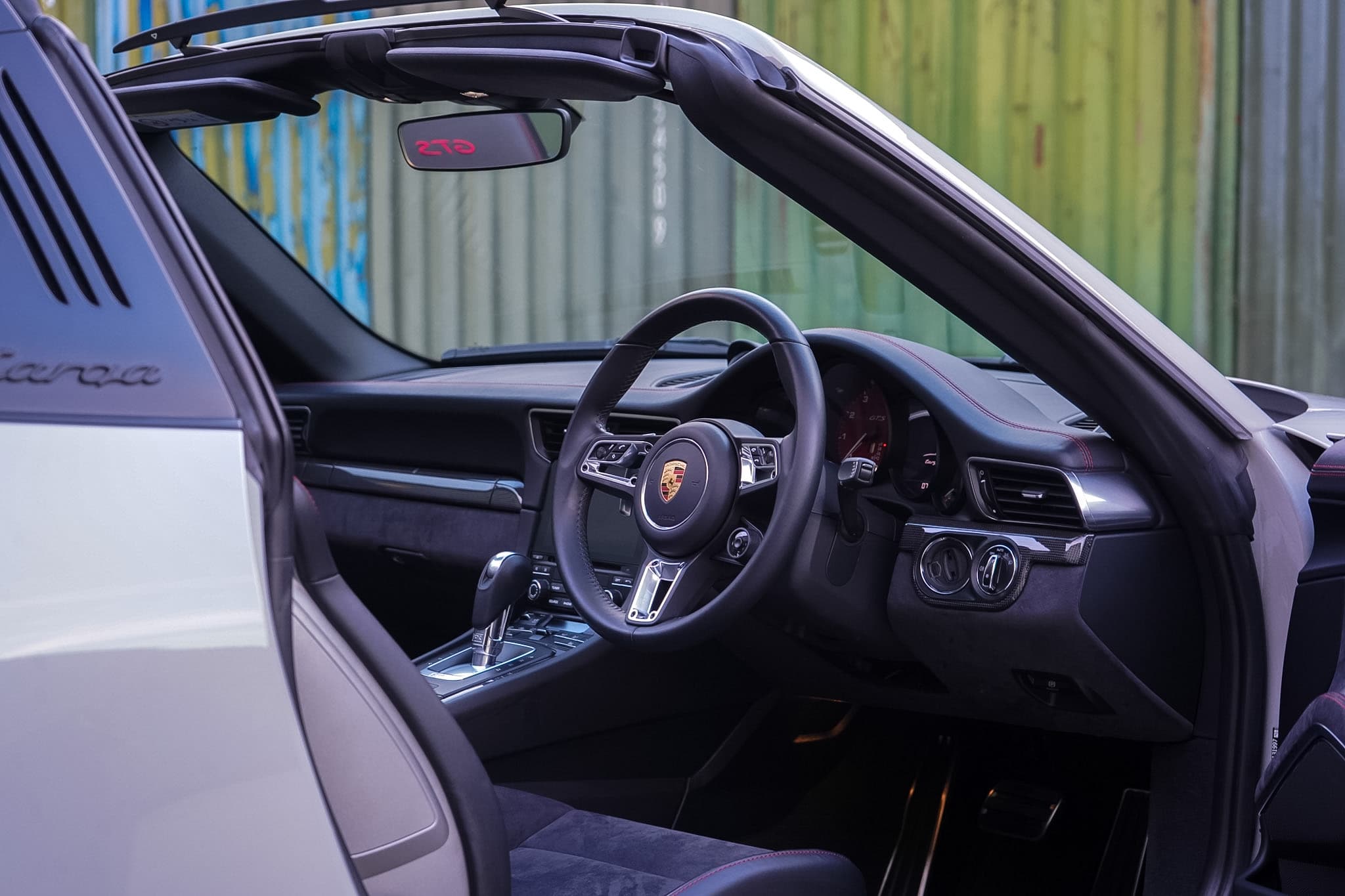
TMJC's 2018 Targa 4 GTS makes the distinction tangible. It has a 3.0-litre twin-turbo flat-six, but its identity remains Targa 4 GTS, not 911 Turbo. The turbochargers describe its engine; they do not change the model designation.
For a used car, read Turbo in the advertised model name as an identity claim that should agree with the VIN-linked build record. A power figure, a pair of turbochargers or Turbo-style trim does not by itself turn a Carrera or Targa into a factory 911 Turbo. The same caution works in reverse: 991.2 is a phase label, not one universal engine specification, so GT derivatives still need to be checked against their own factory specification.
The 991 was sold as Coupé, Cabriolet and Targa. The Targa returned in 2014 with one of the generation's most distinctive pieces of engineering.
Porsche deliberately revived the visual language of the early Targa: a wide bar in place of the B-pillars, a wraparound rear window and an open section above the front seats. But the operation was completely modern. At the press of a button, the rear glass and roof mechanism move to allow the soft roof section to be folded and stowed behind the rear seats.
The launch-era 991 Targa came as Targa 4 and Targa 4S, both with all-wheel drive. Porsche noted that below the window line the cars shared much of their body and technology with the Carrera 4 Cabriolet, but the roof mechanism makes the Targa a distinct ownership proposition.
On a used car, a Targa should be judged not only as a 911 with an attractive roofline, but as a car with a substantial powered roof system that needs to operate smoothly, align properly and remain watertight.
The 991 family grew far beyond the standard Carrera.
The GTS models sat between the mainstream Carrera range and the more extreme GT/Turbo cars, combining stronger performance with their own chassis and appearance package. The later 991.2 GTS range included five models, including the all-wheel-drive 911 Targa 4 GTS.
The Turbo and Turbo S brought their own powertrain and adaptive-aerodynamic hardware. The GT3 and GT3 RS were track-focused naturally aspirated derivatives, while the GT2 RS became the extreme turbocharged rear-wheel-drive flagship. Porsche also produced the lightweight 911 R, the back-to-basics Carrera T and the limited Speedster, which closed 991 production in 2019.
This breadth is why specifications copied between variants are so risky. Brakes, wheel sizes, steering systems, transmissions, suspension options and engine figures can all change while the chassis code still reads 991.
Start by identifying the exact car before chasing a generic “991 common problems” list. A 991.1 Carrera, 991.2 Targa GTS and 991.1 GT3 have different engines, equipment and known concerns.
Use the VIN-linked build information, original order/build sheet and service history to establish phase, body, drivetrain and major options. Equipment such as PASM, PDCC, rear-axle steering, Sport Chrono, dynamic engine mounts and the Targa roof adds capability, but it also gives you more systems to verify.
A long option list is not automatically a better car. Condition and correct operation matter more than the number of acronyms in the advert.
A strong specialist 991.1 Carrera guide notes examples of PDK actuator/control and shift faults, including cars that lose gears or enter emergency transmission modes. That is not evidence that PDK is generally unreliable, but it is a reason to test every shift mode, watch for warnings and investigate any hesitation or abnormal behaviour rather than accepting “they all do that”.
Manual cars should also be driven from cold and warm. Shift quality, clutch operation and service history matter more than the assumption that a manual is mechanically simple because it has fewer electronic controls.
On 991.1 Carrera cars, specialist reports mention coil packs, crank sensors and changeover valves among possible causes of misfires, cutting out or running faults. Those symptoms are not a Porsche 991 diagnosis by themselves. A pre-purchase inspection should identify the actual fault rather than assigning every warning light or uneven idle to one famous internet problem.
Dynamic engine mounts, PASM/PDCC hardware and other active systems should work without warning messages. The 991's chassis technology is part of its appeal, but expensive options deserve the same functional scrutiny as the engine and gearbox.
Check tyre condition and age, brake wear, alignment and suspension condition as a system. A powerful 911 on mismatched or old tyres can tell you less about the chassis than it does about deferred maintenance.
Run the mechanism through a full opening and closing cycle, ideally more than once. Watch panel alignment, listen for abnormal noises and inspect the seals and interior for signs of water ingress. The 991 Targa roof is a major engineered assembly, not just a removable panel.
TMJC's 2018 Porsche 911 991.2 Targa 4 GTS shows how much information sits behind the word 991.
The individual car is a 2018 RHD Targa 4 GTS with seven-speed PDK and a 3.0-litre flat-six. TMJC's listing also records its low mileage, ownership, service and individual option specification. Those provenance details belong to that car, but the broader identity lesson is reusable: a buyer should establish generation, phase, Targa body, all-wheel-drive GTS derivative, transmission and factory options before comparing it with another Type 991.
For the exact used-spec question, see the published Porsche 991.2 Targa 4 GTS standard-vs-optional guide.
For the full lineage before and after the 991, see the Porsche 911 model guide.
The Porsche 991 ran from 2011 to 2019, but buying one is not a matter of choosing a year and a colour.
Treating every Type 991 as one specification obscures those differences.
Editorial information
Research and editorial from TMJC Garage.
Research and editorialTMJC Garage
Reviewed byMatt Johnston
Last reviewed20 September 2026
Published byThe Matt Johnston Collection
Model lineage
TMJC photography
TMJC Guides
TMJC assistance
Continue to the main TMJC website and speak directly with the collection team.
Sell, consign or source
Continue with TMJC for a discreet conversation, professional presentation and collector-focused support.
Enquire now