Published guide
Porsche 991 Targa roof: what to check before buying
How the 991 Targa roof works, what Porsche says about a roof that will not open, and what evidence to check before buying a used car.
Overview
How the 991 Targa roof works, what Porsche says about a roof that will not open, and what evidence to check before buying a used car.
This guide covers 991 and links directly to the relevant car record for further detail.
The Porsche 991 Targa roof is complicated, but complexity is not a diagnosis.
If a used 991 Targa hesitates, stops part-way through its cycle or shows a roof warning, it is tempting to jump straight to a failed motor, sensor or hydraulic component. Porsche's own technical information is more useful than that. A 2018 bulletin for the 991 Targa 4, Targa 4S and Targa 4 GTS says a roof can trigger a movement-related fault when it operates more slowly than the control unit expects; hydraulic leakage is another possible cause. Crucially, Porsche tells technicians to adjust the top and lubricate the seals before replacing parts.
For a buyer, that changes the job. You are not trying to diagnose the roof on a driveway. You are trying to establish whether it completes its full movement smoothly and repeatedly, whether previous faults have been properly diagnosed, and whether the service file explains any adjustment or repair work.
How the 991 Targa roof actually works
Porsche revived the classic Targa-bar look on the 991 in 2014, but the roof mechanism underneath it is thoroughly modern.
Porsche describes two main moving elements: the fabric roof section and the large glass rear window. When the roof opens, the rear glass lifts and moves backwards, flaps in the Targa bar release the roof mechanism, and the fabric section folds into a Z shape behind the rear seats. The glass then returns to its normal position.
Porsche says the opening or closing process takes about 19 seconds while the car is stationary.
That sequence is useful at a viewing because it gives you something more specific to watch than whether the button appears to work. The rear glass, bar flaps and fabric panel all have to complete their movements and return to a properly seated position.
Do not turn 19 seconds into an improvised pass/fail stopwatch test. Porsche gives it as the normal operating time, not as a used-car diagnostic threshold. Smooth, repeatable movement and the absence of warnings or stalls matter more than declaring a car faulty because a casual timed cycle is slightly different.
Operate the roof properly before buying
A Targa deserves a roof check of its own, even if the rest of the car has a strong history.
With enough clear space around the rear of the car, operate the roof through a complete opening and closing cycle while the car is stationary. If the seller is happy for you to do so, repeat it rather than relying on one successful movement.
Watch for the whole sequence:
- the rear glass lifting and moving cleanly;
- the Targa-bar flaps operating without hesitation;
- the fabric panel releasing, folding and stowing evenly;
- the mechanism completing its movement without stopping or needing a manual nudge;
- the rear glass and roof panel returning to an even, fully seated position;
- no roof warning remaining after the cycle.
Listen as well as watch. A complex mechanism will never be silent, but a new grinding noise, repeated straining or a movement that becomes progressively slower deserves investigation rather than reassurance that they all do that.
Once closed, step back and look at the fit of the fabric section, glass and seals. Inside the car, inspect the headlining and surrounding trim for staining, dampness or evidence of repeated water entry. Those signs do not identify the cause by themselves, but they are reasons to ask what has been adjusted or repaired.
A roof warning does not tell you which part has failed
This is where Porsche's technical bulletin is especially useful.
In Advanced Technical Information 1803, Porsche Cars North America addresses a 991 Targa complaint where the top does not open. It explains that if the rotation-angle-sensor signal does not change within three seconds after the hydraulic pump is activated, fault code 000042 can be stored.
That is not the same as saying 000042 means the rotation sensor is broken.
Porsche's own explanation is that the roof may be moving too slowly for the control unit's expected timing. In other words, the code records a condition in the operating sequence. It still needs diagnosis.
That distinction matters when looking at a used car. If an invoice or diagnostic printout shows a roof fault code, keep it as evidence. Do not let a seller, buyer or parts catalogue turn the number into a replacement-parts list without showing how the fault was actually traced.
Porsche also tells technicians to consider hydraulic leakage
The same bulletin identifies internal or external hydraulic leakage as another possible reason the top will not open. Porsche specifically mentions the internal check valve, hydraulic lines and rams as areas where leakage can occur.
Again, the useful point is not that every slow Targa roof has a hydraulic problem. It is the opposite: one symptom can have more than one cause.
A car that hesitates could need adjustment, could have a hydraulic issue, or could require another diagnosis using Porsche's current workshop procedures. A viewing is not the place to decide which component to order.
If the roof does not complete its cycle cleanly, the sensible next step is a Porsche Centre or an independent specialist familiar with the 991 Targa, with the fault reproduced and the diagnostic record preserved.
Why adjustment and seal lubrication matter
Porsche's bulletin contains one unusually practical instruction: adjust the top and lubricate the seals before replacing any parts.
That is valuable buying context because it prevents two bad assumptions.
The first is that evidence of roof adjustment means the mechanism must have suffered a major failure. It does not. Adjustment and seal lubrication are part of Porsche's diagnostic response to this complaint.
The second is that adjustment must therefore cure every roof fault. Porsche does not say that either. The bulletin separately identifies possible hydraulic leakage and gives technicians further diagnostic paths.
There is also no basis here for inventing a universal annual lubrication interval for every 991 Targa. A separate Porsche Cars North America bulletin, ATI 1804.1, says its workshop lubricant is compatible with all roof systems and tells trained technicians to remove old grease before applying the replacement lubricant to moving contact points. It does not specify a recurring interval. That makes the distinction useful: lubrication is a Porsche-documented service action, but this evidence does not support telling every owner to do it annually or at a fixed mileage.
If a car has had roof adjustment, seal work, lubrication or a hydraulic repair, ask for the invoice and diagnosis so you know why the work was carried out and whether the complaint returned.
What roof paperwork is actually useful?
A generic service stamp tells you that the car has been maintained. It may tell you very little about a roof complaint.
For a Targa that has had roof work, useful evidence includes:
- the customer's original reported symptom;
- fault-code or diagnostic records where available;
- the workshop's diagnosis rather than only a parts invoice;
- notes showing adjustment or seal work if that was the remedy;
- invoices for hydraulic or mechanism repairs if parts were genuinely required;
- evidence that the roof was tested successfully after the work;
- later invoices that show whether the same complaint returned.
This is a good example of why a large repair bill is not automatically better provenance than a modest one. If Porsche's diagnostic path resolved a slow roof with correct adjustment and lubrication, replacing more components would not make the history more impressive.
Conversely, a repeatedly returning roof warning with no diagnosis should not be dismissed merely because the car is otherwise low-mileage or cosmetically excellent.
Check the seals, fabric and cabin as well as the mechanism
A roof can complete its powered cycle and still deserve closer inspection.
Look at the fabric panel for damage, poor tension or obvious repair work. Examine the rubber seals where they meet the glass, bar and body, and look for sections that are distorted, damaged or visibly out of position. Inside, check the headlining and trim around the roof and rear glass for staining or evidence of water having travelled through the cabin.
Do not diagnose every mark as a failed roof seal. Water can enter a car in more than one way, and this research does not establish a universal 991 Targa leak pattern. The useful rule is simply that signs of water deserve a proper explanation before purchase.
If the roof has recently been adjusted, make sure the closed panel alignment and sealing still look right. A successful powered cycle and a watertight closed roof are two parts of the same inspection.
Low mileage does not remove the roof check
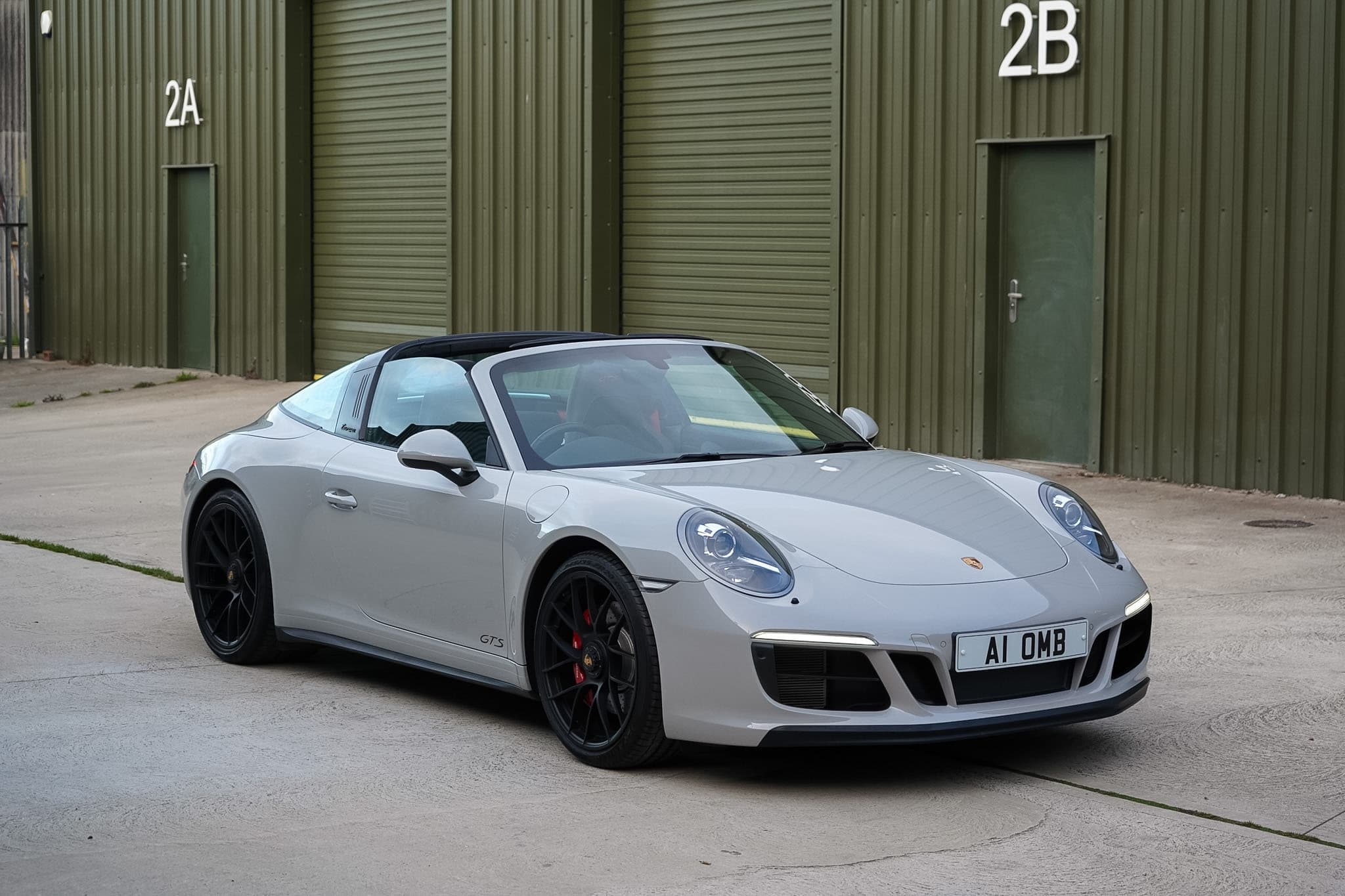
TMJC's 2018 991.2 Targa 4 GTS is a useful example of why mileage and roof condition are separate questions. The car was listed with 8,978 miles, a documented service history and the electrically operated Targa roof.
Nothing in that history suggests the TMJC car has a roof fault, and this Guide should not imply otherwise. The point is methodological: even on a low-mileage, well-presented car, the Targa mechanism is still a separate system worth operating before purchase.
Low mileage can tell you how far the car has travelled. It does not tell you how many roof cycles it has completed, whether the roof has ever needed adjustment or how the seals have aged. Those questions need their own evidence.
For the separate question of what the later GTS included as standard and what was optional, see the 991.2 Targa 4 GTS standard-versus-optional guide.
For the broader lineage, see the Porsche 911 model guide.
When should you pause a purchase?
A single previous roof repair is not automatically a reason to reject a car. A documented repair followed by years of normal operation can be better evidence than a car whose seller has never investigated an intermittent warning.
Pause and get a specialist opinion if you find a pattern such as:
- the roof stopping or hesitating repeatedly during the viewing;
- a current roof warning or stored fault with no diagnosis;
- the seller needing to push, pull or otherwise help the roof complete its cycle;
- obvious left-to-right asymmetry or poor seating when closed;
- fresh water staining with no explanation;
- repeated invoices for the same roof complaint without a clear resolution;
- recent major roof work but no invoice or diagnostic detail;
- a seller who will not allow the mechanism to be demonstrated.
The right response is not to guess the cost of the most expensive possible part. It is to make the uncertainty visible before agreeing a price.
The useful way to judge a 991 Targa roof
A good 991 Targa roof should make sense the closer you look at it.
You should be able to watch the mechanism complete its full sequence smoothly, see the roof and glass settle correctly, inspect a dry and well-kept interior, and understand any previous roof work from the service file. If there has been a fault, the diagnosis should be more specific than Targa roofs are complicated.
Porsche's own technical guidance is a useful reminder of why. A roof-not-opening complaint can involve operating speed, adjustment, seal friction or hydraulic leakage, and Porsche puts diagnosis before indiscriminate parts replacement.
That is the standard worth applying to a used car: test the roof, preserve the evidence, and diagnose the symptom before pricing the repair.
Sources and further reading
- Porsche Newsroom — The innovations of the 911
- Porsche Newsroom — 991 Targa world premiere
- Porsche Cars North America — Advanced Technical Information 1803: 911 Targa (991) Top Faults & Adjustment
- Porsche Cars North America — Advanced Technical Information 1804.1: Lubricant for Sunroof/Sliding Roof Mechanisms
- The Matt Johnston Collection — 2018 Porsche 911 991.2 Targa 4 GTS
Related car