Model
240Z
The Datsun 240Z entered manufacture in late 1969 before its 1970 North American debut. Explore its market chronology, engineering, motorsport and buying checks.
TMJC Catalog guide
Datsun 240Z: history, market differences and buying guide
The Datsun 240Z entered manufacture in late 1969 before its 1970 North American debut. Explore its market chronology, engineering, motorsport and buying checks.
- Page
- Model overview
- Reviewed
- 8 Sept 2026
- Specifications
- 0 verified
Datsun 240Z in brief
The Datsun 240Z is the 2.4-litre version of Nissan's first-generation S30 Z-car that became a landmark export sports car. An FIA/Japan Automobile Federation homologation record for the DATSUN SPORTS 240 Z H(L)S30 states that manufacture began in October 1969 and that the 500-car homologation threshold was reached in November. That production milestone is different from the dates on which customers could actually buy the car in each market.
Nissan traces the wider S30 Fairlady Z family to 1969. It says the Datsun 240Z was designed for North America and debuted there in 1970, while the 2.4-litre version joined the Japanese range in November 1971. Contemporary-market chronology differs again in Britain, where specialist records place 240Z sales from August 1971.
That distinction matters when checking an individual car. A date, badge, steering position or gearbox that is correct for one market should not automatically be treated as universal 240Z specification.
Why Nissan built the 240Z
The Z-car was shaped around a much bigger ambition than replacing an existing Japanese sports model. Nissan's own history credits Yutaka Katayama, the head of its US operation and the figure enthusiasts know as “Mr. K”, with putting together key concepts for the Z-car after helping establish Datsun in America.
Nissan later described the original 240Z as a car designed for the North American market. That helps explain the formula: sporting proportions and performance, but with the usability and price needed to reach buyers beyond the traditional European sports-car audience.
Specialist histories credit Yoshihiko Matsuo, assisted by Akio Yoshida, with the production design and caution against the old habit of attributing the finished 240Z primarily to Albrecht Goertz. For a collector, that is a useful reminder that the car's origin story is better understood through Nissan's product team and US-market strategy than through a single-designer myth.
Fairlady Z, Datsun 240Z and market differences
“240Z” does not map perfectly onto every first-generation Z sold around the world. Nissan's Japanese range began with 2.0-litre Fairlady Z models, while the 2.4-litre Datsun 240Z initially served export demand. When the 2.4-litre version reached Japan in November 1971, Nissan offered Fairlady 240Z, 240Z-L and the distinctive 240ZG.
That is why chassis suffixes, trim, emissions equipment and even familiar visual details can depend on market and build period. The safest way to assess an individual car is to identify its original market first, then compare it with documentation and specifications for that market rather than a generic internet table.
The gearbox is a simple example. Classic & Sports Car notes that UK 240Zs were five-speed manuals, while almost all US cars used a four-speed manual. Imported cars can therefore be perfectly legitimate while differing from a UK-supplied example.
The 240Z's engineering character
Road-going Nissan heritage material for the 2.4-litre 240Z family identifies the L24 inline-six as the central engine. It is the smooth, rev-friendly character most enthusiasts associate with the 240Z, but output and equipment should still be checked against market and year rather than treated as one universal number.
The first-generation Z also paired its front-mounted engine with rear-wheel drive and independent suspension, giving Nissan a sporting platform that could work on the road and in competition. Those fundamentals matter more to the model story than quoting one acceleration or top-speed figure that may have been measured on a different market specification.
Motorsport made the reputation tangible
The 240Z was not only marketed as a sports car; Nissan proved it in major international rallies. Nissan's heritage archive records overall East African Safari Rally victories in 1971 and again in 1973.
Those results are historically useful, but a rally car is not a road-car specification sheet. Competition 240Zs used different engines, fuelling, tanks, transmissions, weights and other hardware, so their technical numbers should never be copied onto a standard road-car page simply because the badge is the same.
What changed during 240Z production
The 240Z evolved through many small changes rather than remaining frozen from launch to replacement. Specialist chronology records ventilation, console, seat, bumper and market-emissions changes during the early 1970s.
Replacement timing also varied by market. Classic & Sports Car places the 260Z's takeover in the US and Japan in October 1973, with Europe following in 1974. That is another reason a universal “production end” can be misleading without stating the market convention behind it.
For a prospective buyer, these changes make build date and original market more useful than relying on registration year alone.
What to inspect before buying a 240Z
Corrosion is the first priority. Specialist buyer guides repeatedly warn that early Z-cars can rust extensively, and a glossy exterior does not prove the structure beneath it is sound.
Inspect the front panel and radiator cross-member, battery area, inner and outer wing structure, sills, floors and footwells, chassis legs, rear wheelarches, tailgate and suspension mounting areas. Previous repairs deserve the same scrutiny as visible corrosion: poor fabrication or accident repair around structural points can be more expensive to correct than obvious cosmetic rust.
Mechanical inspection should include cooling-system health, oil pressure and engine condition, gearbox bearings and synchromesh, differential or universal-joint noises, steering play and suspension bushes or dampers. On an imported car, confirm that the gearbox and other equipment make sense for its original market before labelling a difference as an incorrect modification.
Originality, imports and restomods
The 240Z's long period of comparatively accessible values means many surviving cars have been modified, restored or converted. That does not make them bad cars, but it makes documentation especially important.
Start with chassis and registration identity, original market and engine number where relevant. Then separate original specification from restoration work and later upgrades. A sympathetic modification with invoices, installation detail and a clear engineering rationale is a different proposition from an undocumented collection of swapped parts.
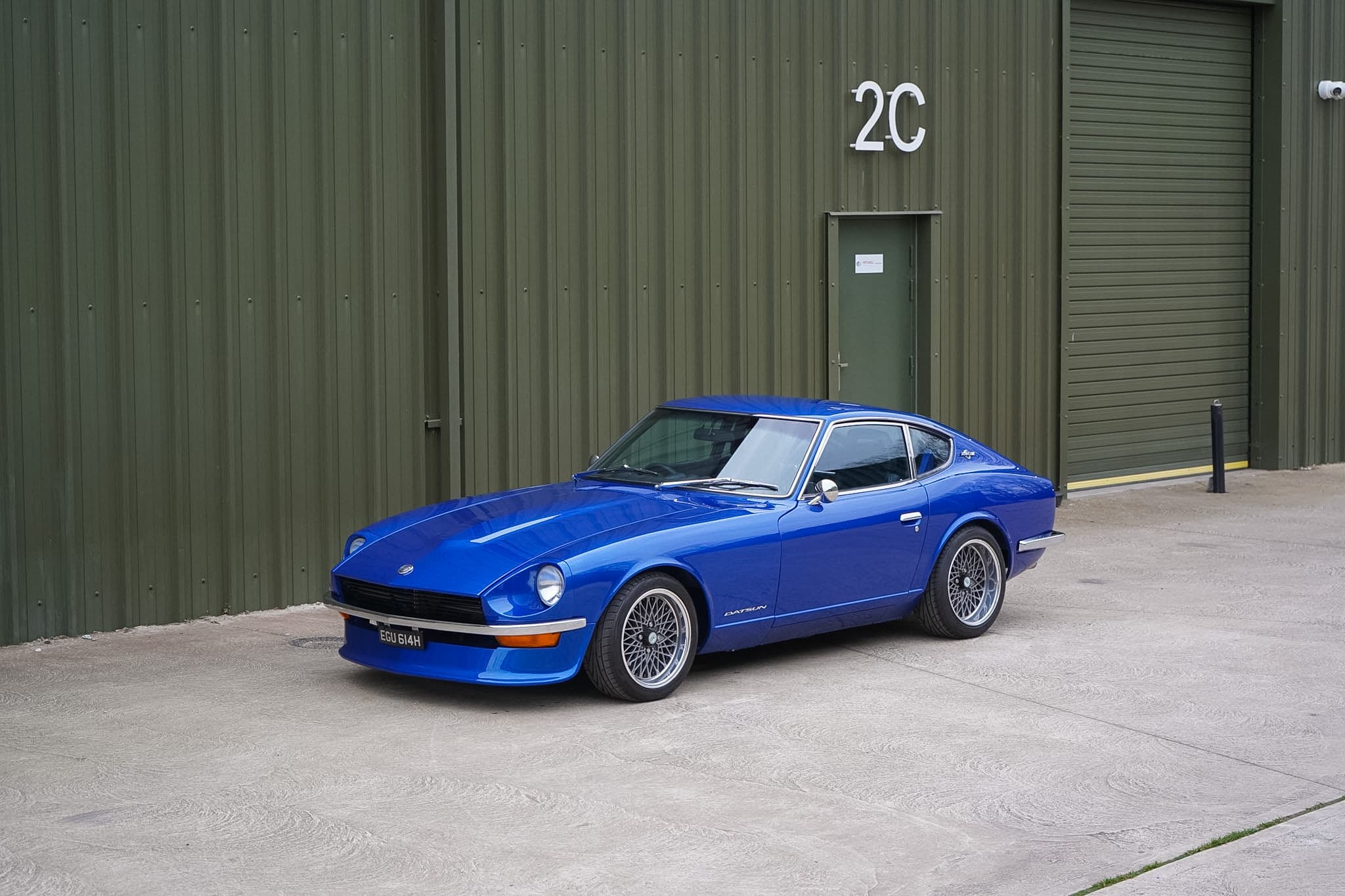
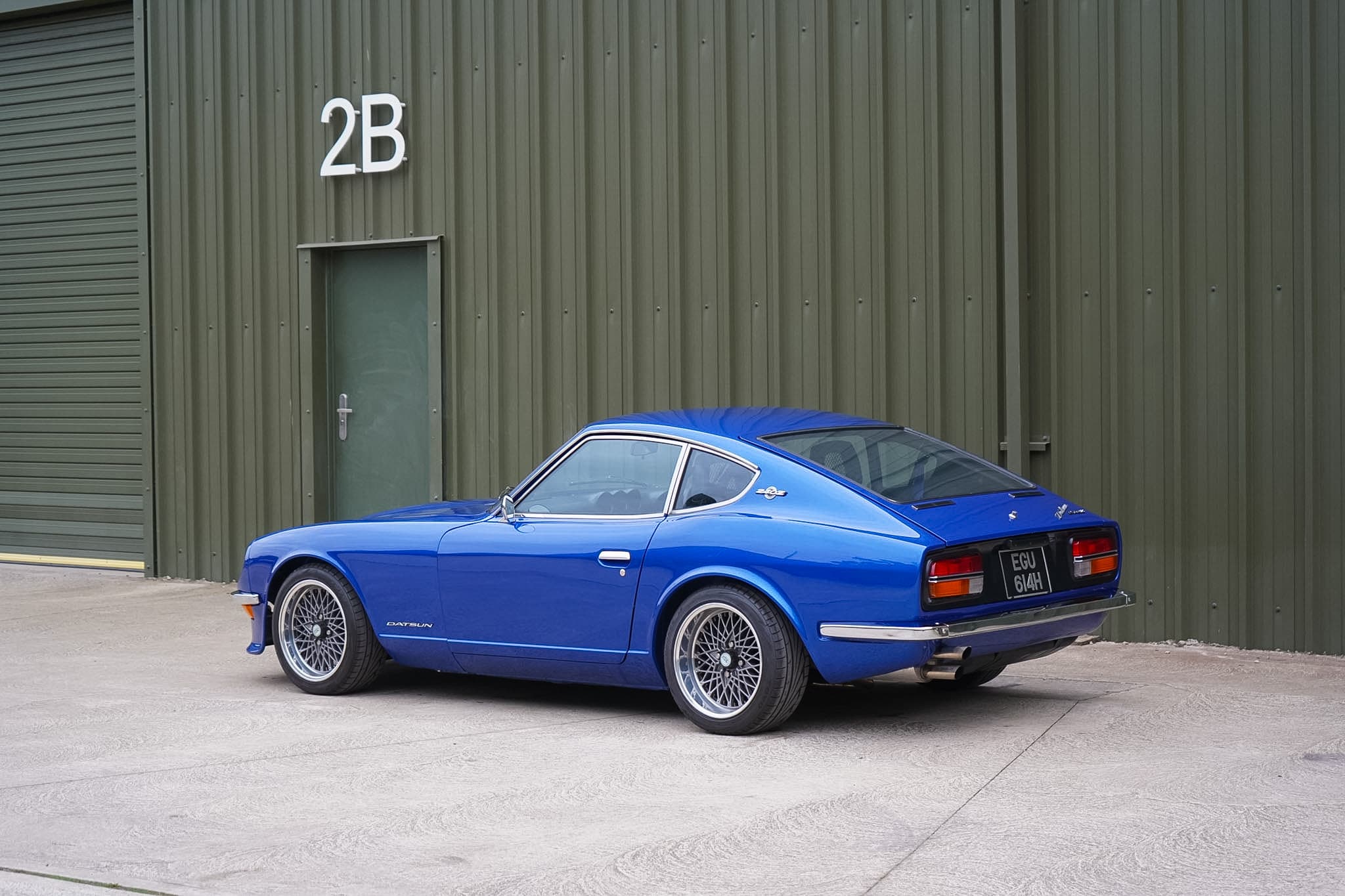
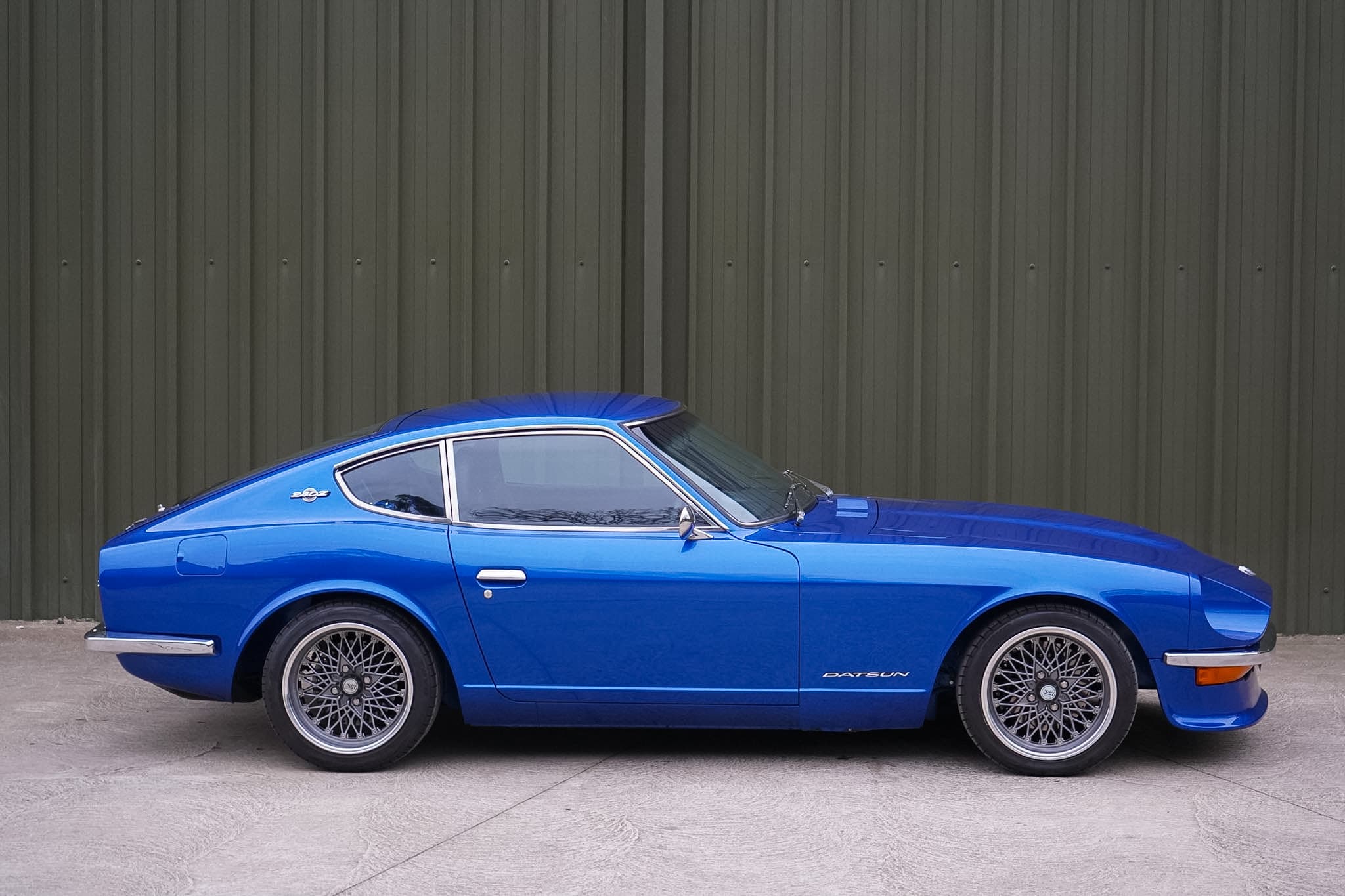
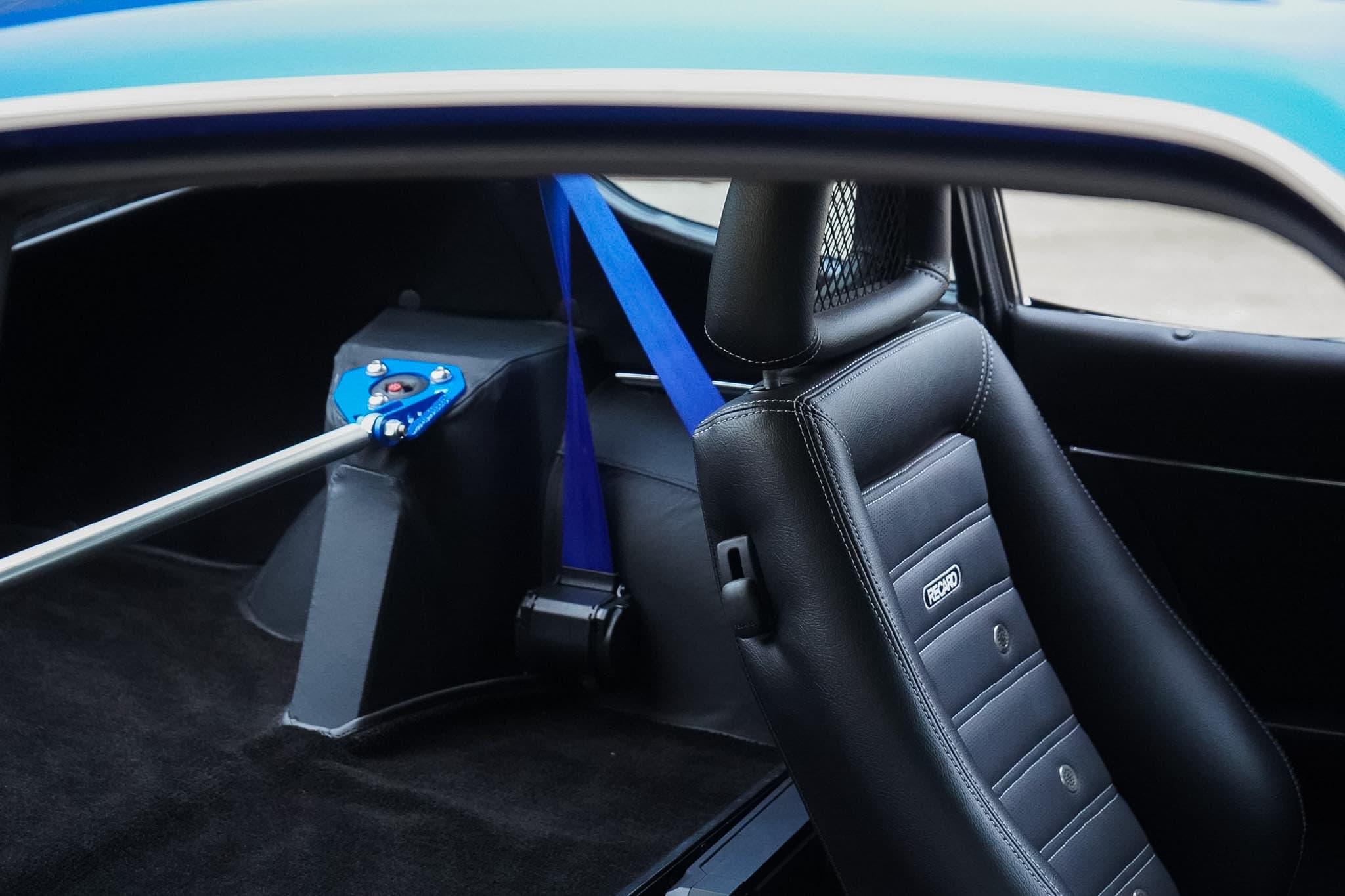
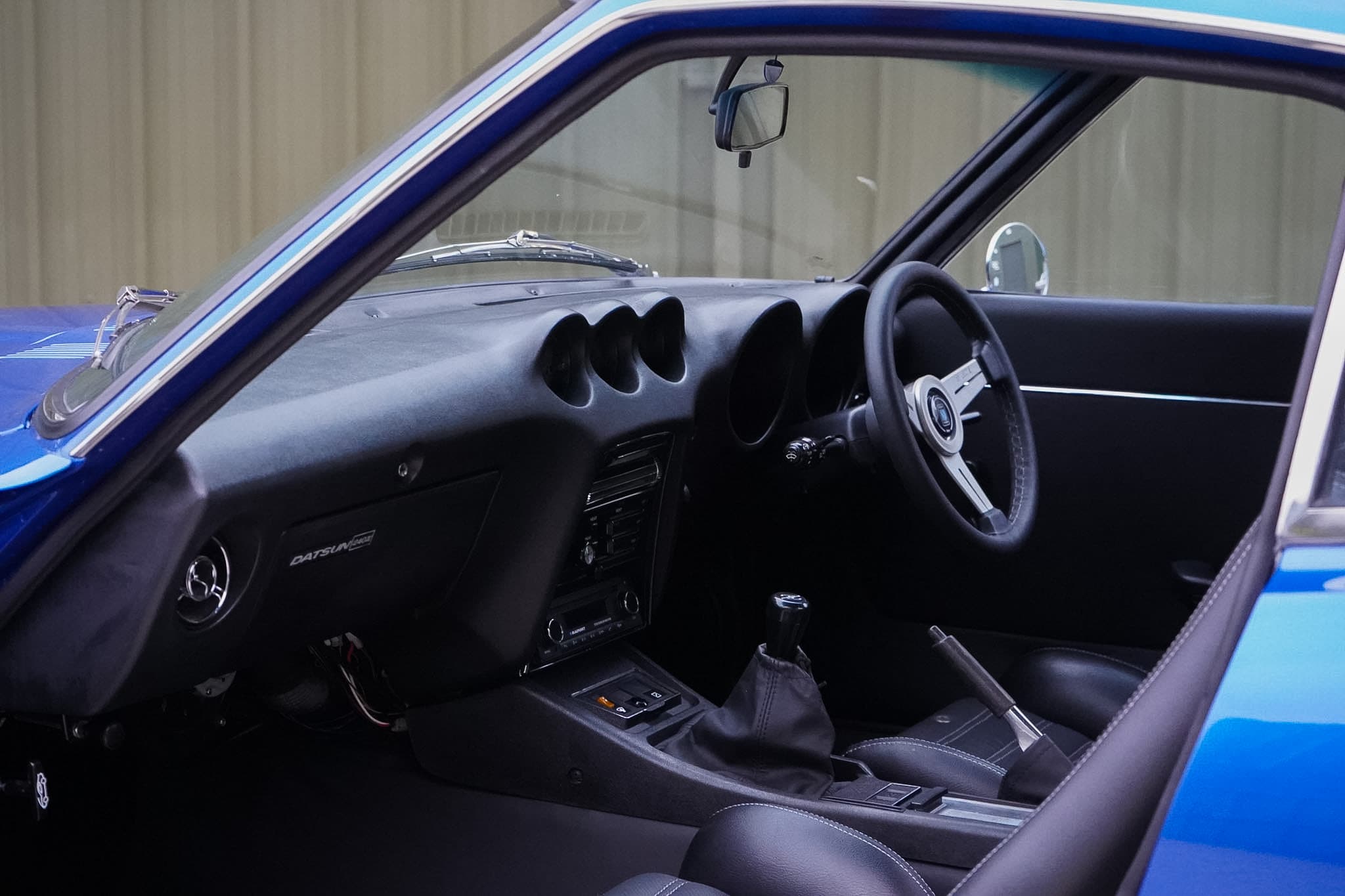
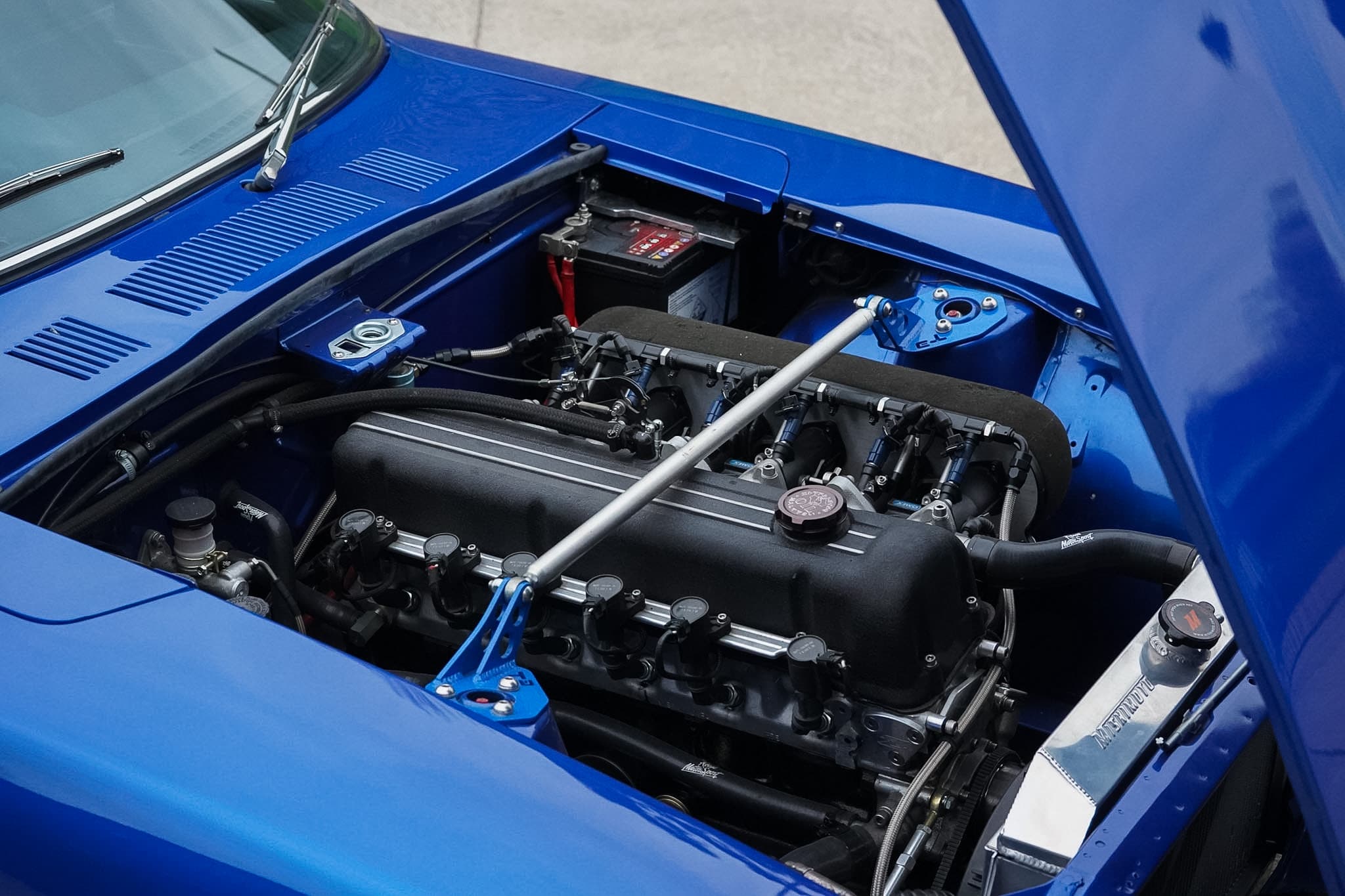
TMJC's current 240Z is a useful case study rather than a template for the model. It is represented as a 1970 car imported from the US, later converted to right-hand drive and comprehensively rebuilt. Its original L24 was rebuilt and modified, while a later Nissan five-speed transmission and numerous usability upgrades formed part of the restomod programme. The important lesson is not that other 240Zs should share those parts; it is that the build is accompanied by an unusually detailed invoice and provenance trail.
For a deeper framework, see the Datsun 240Z restomod due-diligence guide and the collector-car provenance checklist.
Sources and further reading
Model lineage
Where this car sits
TMJC media
Explore the car in detail
TMJC Guides
Related editorial guidance
Sell, consign or editorial
Thinking of selling or consigning a special car?
Continue with TMJC for a discreet conversation, professional presentation and collector-focused support.
Enquire now