
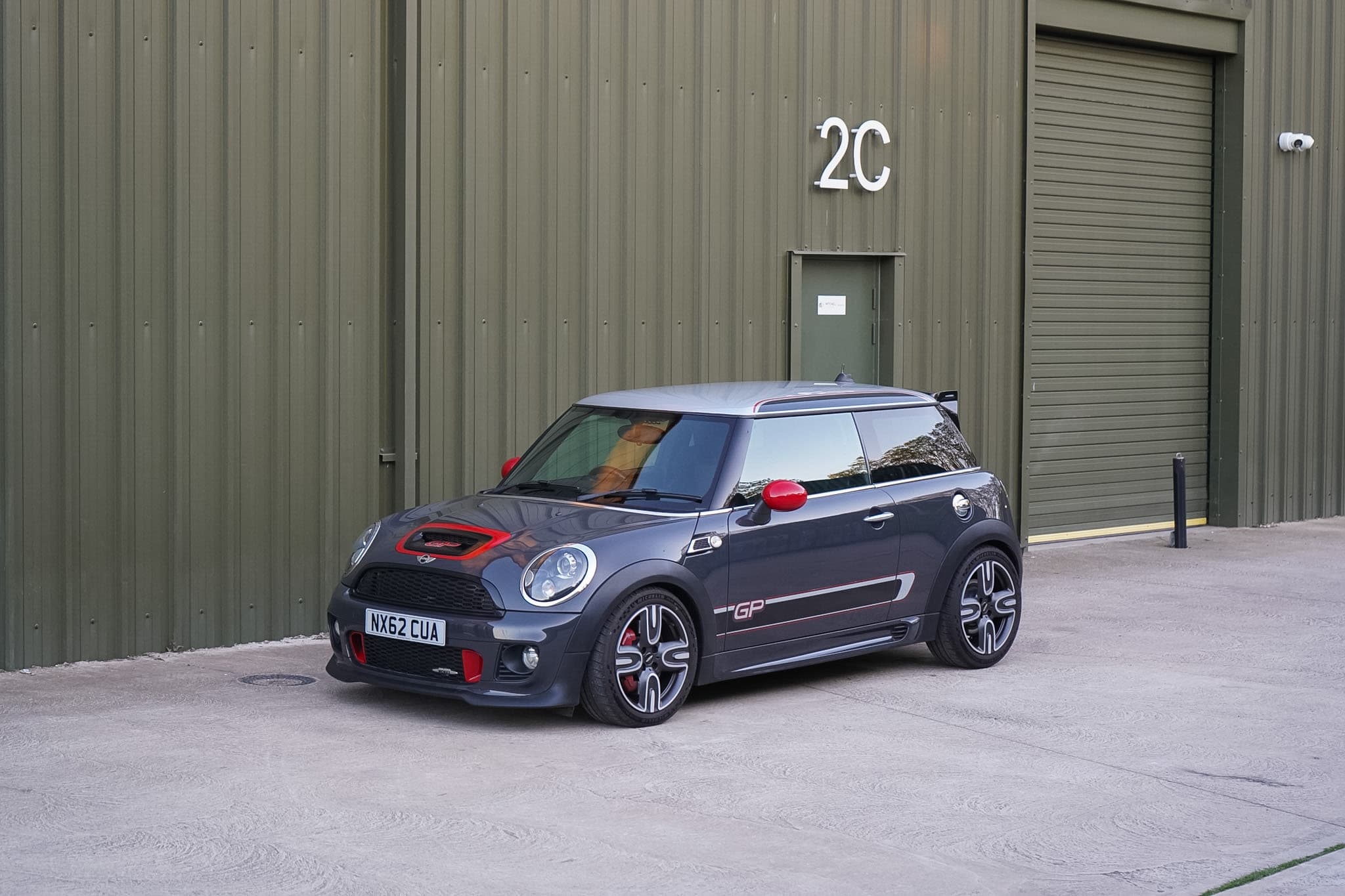
TMJC assistance
Want TMJC to help with this vehicle?
Sourcing, consignment and valuationContinue to the main TMJC website and speak directly with the collection team.
Manufacturer
A guide to Datsun models and history, from the 1914 DAT and 1932 Model 10 through Bluebird, Sunny and the Z cars to Nissan's phased rebrand.
Model directory
Choose a Datsun model family to compare its generations, engines, body styles and collector context.
TMJC guide
A guide to Datsun models and history, from the 1914 DAT and 1932 Model 10 through Bluebird, Sunny and the Z cars to Nissan's phased rebrand.
Datsun is the name through which much of Nissan's early international reputation was built. The marque itself dates most cleanly to 1932, when Nissan's heritage history says the DATSON name was changed to Datsun as the small car went on sale. Its ancestry is older: Kwaishinsha Motor Car Works began in 1911, the DAT car followed in 1914, and the company that became Nissan Motor took that corporate name in 1934.
Those dates answer different questions. For a collector, 1932 is the birth year of the Datsun name; 1911 and 1914 describe the earlier company and DAT-car lineage, while 1934 belongs to Nissan Motor's corporate history. By the post-war period, Datsun badges covered everything from compact family cars and pickups to roadsters and the Z sports-car line.
The story begins with Masujiro Hashimoto's Kwaishinsha workshop in Tokyo. Its 1914 DAT took its three-letter name from the surnames of investors Den, Aoyama and Takeuchi. When a smaller passenger car was developed in 1931 it was initially called DATSON: literally a smaller “son of DAT”.
Nissan's heritage archive explains why that spelling was short-lived. “Son” sounded like a Japanese word associated with loss, so the ending became “sun”. Nissan records the car going on sale with the Datsun name in March 1932. The manufacturer's separate 1930s timeline likewise says the name changed to Datsun in 1932.
The answer depends on what “first” is meant to describe. The 1914 DAT is the ancestor of the name, but it was not a Datsun-badged car. The smaller DATSON, identified by Nissan as prototype DAT-91, followed around 1930–31. Nissan says the Datsun name first appeared on Model 10 in 1932, making that the clearest answer to “first Datsun car”.
Nissan’s sources describe adjacent milestones rather than one settled month: its Heritage Collection says the Datsun name changed as the car went on sale in March 1932, while its corporate chronology lists Model 10 in April. Together they support 1932, but not one unqualified exact launch month.
The Model 14 is another milestone sometimes confused with the first Datsun. Nissan lists Model 14 in April 1935 and separately records the first car from its fully integrated Yokohama assembly system in the same month. The chronology does not explicitly identify those as the same car, so this is production-era context, not the birth of the badge.
| Milestone | Date | What it means |
|---|---|---|
| DAT | 1914 | Ancestor whose investors’ initials supplied the name; not a Datsun |
| DATSON / DAT-91 | 1930–31 | Smaller prototype and forerunner; sources differ on exact year wording |
| Datsun Model 10 | 1932 | First production model on which Nissan says the Datsun name appeared |
| Datsun Model 14 | 1935 | Listed in April; Nissan separately records integrated Yokohama production that month |
Nissan’s Japanese corporate chronology gives a clear early passenger-model sequence. It is useful for dating the badge’s pre-war development, but it is not a complete list of every body, truck or export-market name.
| Model | Nissan chronology |
|---|---|
| Model 10 | April 1932 |
| Model 11 | September 1932 |
| Model 12 | October 1933 |
| Model 13 | April 1934 |
| Model 14 | April 1935 |
| Model 15 | May 1936 |
| Model 16 | April 1937 |
| Model 17 | April 1938 |
That sequence should not be read as eight generations of one later model family. Nissan catalogues them as early Datsun models, while bodies and commercial branches varied.
The corporate family tree moved quickly during the early 1930s. DAT Jidosha Seizo became affiliated with Tobata Casting in 1931. Jidosha Seizo Co., Ltd. was established in Yokohama in December 1933, and Nissan's own history records the corporate name changing to Nissan Motor Co., Ltd. in 1934.
Datsun and Nissan are therefore closely linked but not interchangeable labels for every point in the story. Datsun is the historic marque name; Nissan is the parent-company identity that later became the company's worldwide vehicle badge.
Datsun's international identity was built during the 1950s. Nissan entered technical cooperation with Austin in 1952 and launched the Datsun 110 in 1955. Nissan's records agree that US passenger-car exports began in 1958 but disagree on the exact month: its corporate decade timeline places the start in June, while the Heritage Collection's Mobilgas account says September. The same heritage account records the Datsun 210 appearing at a Los Angeles import-car show in March 1958 and winning the under-1,000 cc class in the 16,000 km Mobilgas Trial in August and September. Nissan describes that competition result as helping lay the foundation for exports to America. The 1959 Bluebird then followed as a more sophisticated international product.
Datsun's export reputation was also built in competition, particularly on the East African Safari Rally. Nissan's own results archive shows the Bluebird 1600SSS winning overall in 1970, followed by the Fairlady/Datsun 240Z winning in 1971 and again in 1973. Later, the Violet extended that record with four consecutive overall Safari victories from 1979 to 1982.
For collectors, the significance is broader than a list of trophies. The winning cars span several model families and decades, so the Safari story helps explain why Datsun became associated with cars that could combine accessible road use with credible durability and competition performance in export markets. It also places the 240Z within a longer Datsun/Nissan rally lineage rather than treating it as an isolated sports-car success.
The competition cars were specialised machines, so their engine, suspension and output specifications should not be read across to ordinary Bluebirds, 240Zs or Violets. At manufacturer level, the point is the continuity of the programme and the reputation it helped build.
British Datsun history is often given a single start date, but three different milestones are involved. Specialist research around one of the surviving launch cars says six Datsuns arrived in June 1968 for advertising, press and dealer use, with the marque making its formal British debut in October 1968. That is the market-entry date, but it is not the incorporation date of Datsun U.K. Limited.
Companies House records the company now called OMC Investments Limited as incorporated on 13 October 1970 under the name DATSUN U.K. LIMITED. A later Court of Appeal judgment then records a distribution agreement dated 1 January 1971 between Nissan Motor Company and the UK business. The judgment says Datsun UK had already been distributing Datsun cars before that agreement, and that the 1971 contract appointed it sole and exclusive distributor to import, sell and distribute Nissan cars in Britain and to build the dealer network.
| Date | What happened | What the date means |
|---|---|---|
| June 1968 | Six launch/press cars are reported as arriving in Britain | Pre-launch publicity and demonstration activity |
| October 1968 | Datsun formally debuts in the British market | Formal British market debut |
| 13 October 1970 | Datsun U.K. Limited is incorporated | Formation of the UK company later called Nissan U.K. Limited |
| 1 January 1971 | The formal distribution agreement takes effect | Sole/exclusive importer-distributor relationship with Nissan Motor Company |
Those dates are therefore complementary rather than contradictory. 1968 answers when the marque made its formal British market debut; 1970 answers when Datsun U.K. Limited was incorporated; and 1971 marks the formal distribution contract recorded by the courts.
The early foothold was modest, but Datsun soon became familiar through cars such as the Sunny and Cherry. The sports cars gave the badge a different kind of credibility. Before the Z, the Datsun 1600 and 2000 roadsters had already introduced enthusiasts to the marque, and the 240Z then gave Datsun a sports car with much broader international ambition.
Datsun was used across a much wider range than the Z cars for which the badge is now best known. Model names and badges varied by market, so this is a guide to the main families that explain the marque rather than an exhaustive global model decoder.
Bluebird was one of the foundations of Datsun's export-era passenger-car range. Nissan records the Datsun 310, launched in August 1959 as the successor to the Datsun 1000, as the first car to use the Bluebird name. By 1967 the 510-generation Bluebird had moved into the 1300-1600cc class because the smaller Sunny now occupied the entry-level position. That makes Bluebird useful context for understanding Datsun as a family-car marque as well as a sports-car name.
Sunny arrived in April 1966 as an affordable car below Bluebird. It quickly grew beyond a single saloon: Nissan's heritage material records two- and four-door cars, coupes, vans and a Sunny pickup. For collectors, the family is a reminder that Datsun's growth was built on practical, high-volume cars and light commercials as much as on performance models.
Fairlady roadsters formed Datsun's sports-car line before the Z. Nissan traces the export-only SPL212/213 cars into the Fairlady 1500 SP310 of 1962, the 1600 SP311 of 1965 and the 2000 SR311 of 1967. The exact name used on a surviving car depends on market, but the sequence explains the sporting lineage that led directly into the next generation of Datsun sports cars.
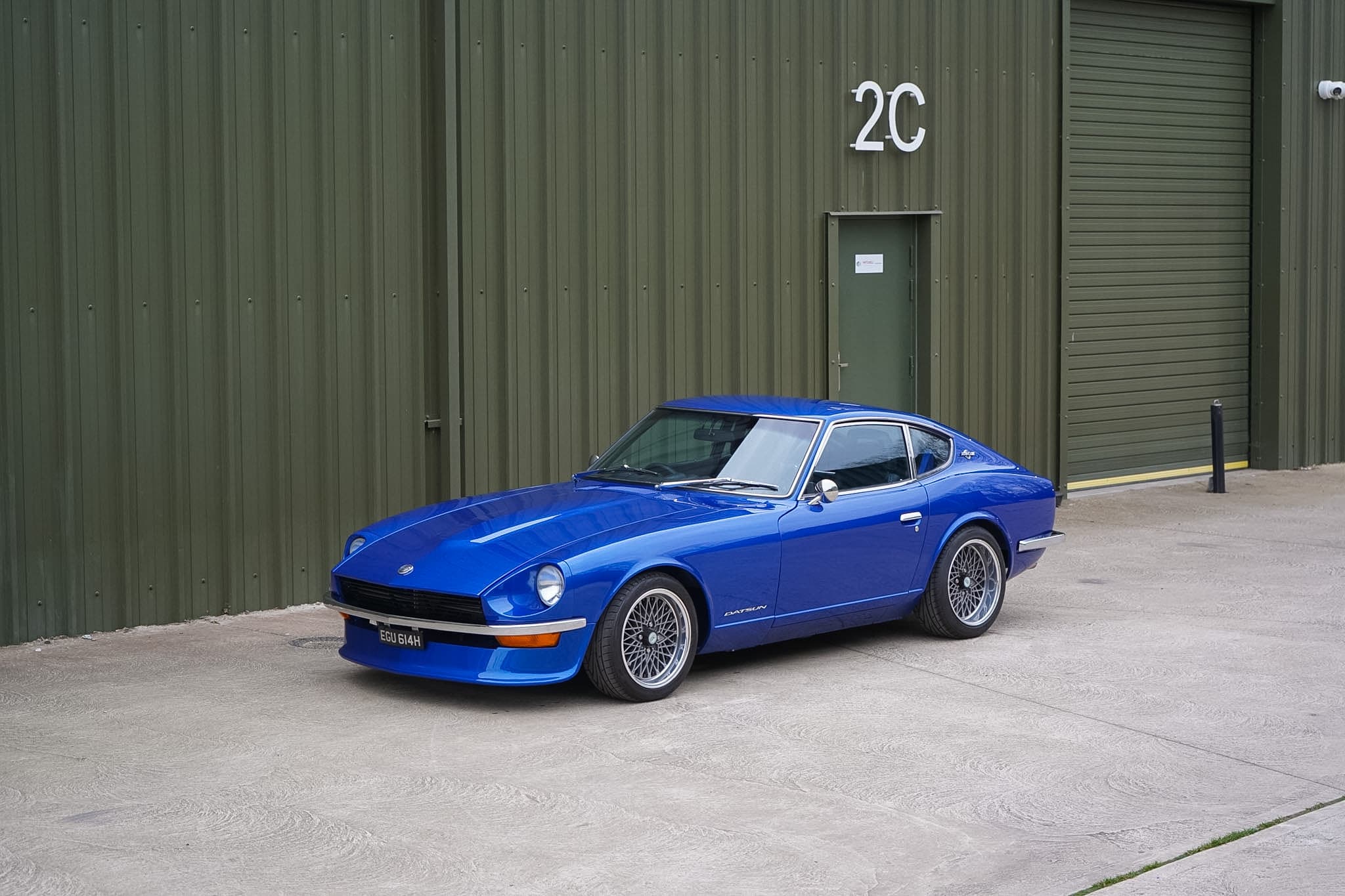
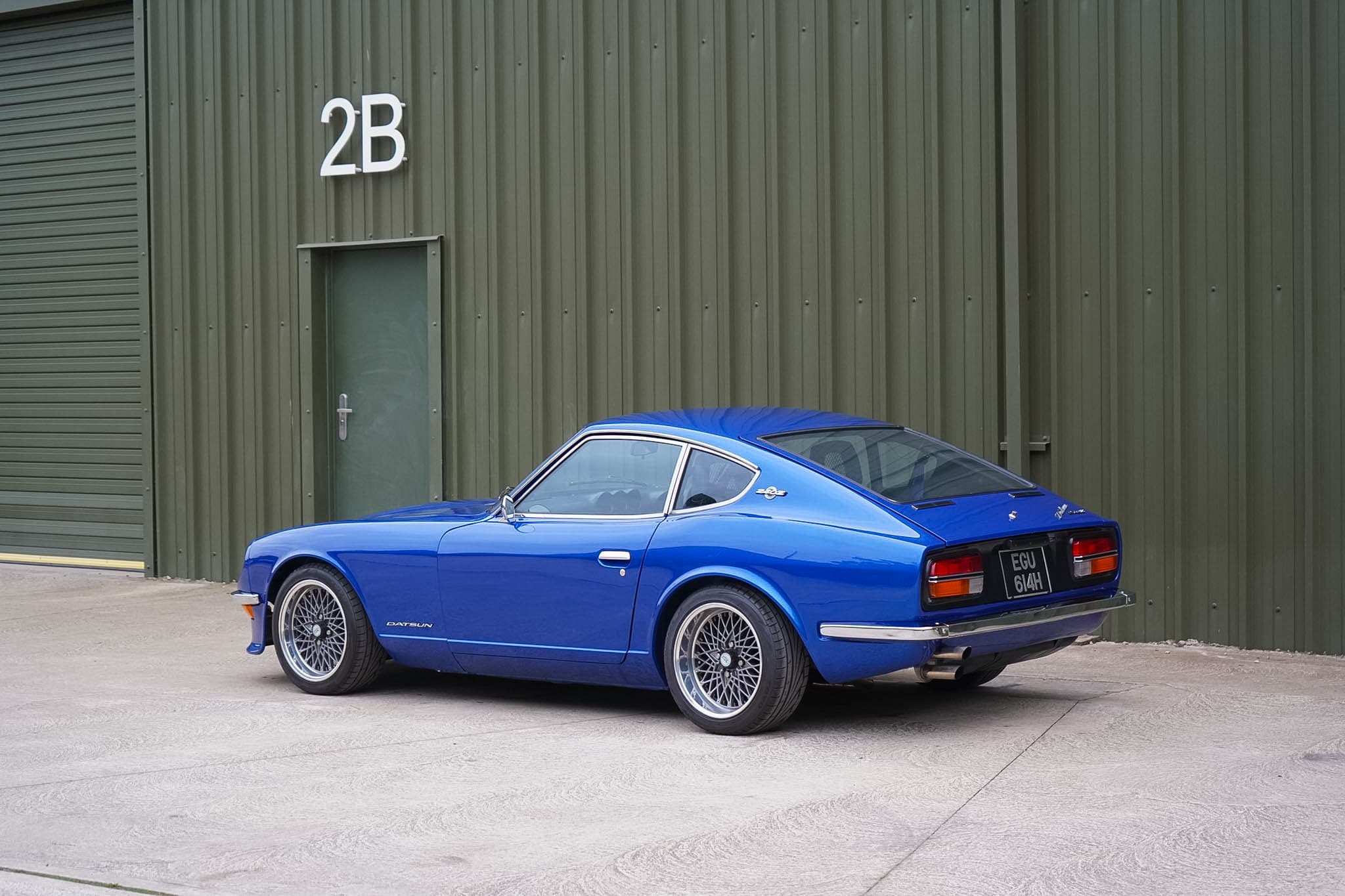
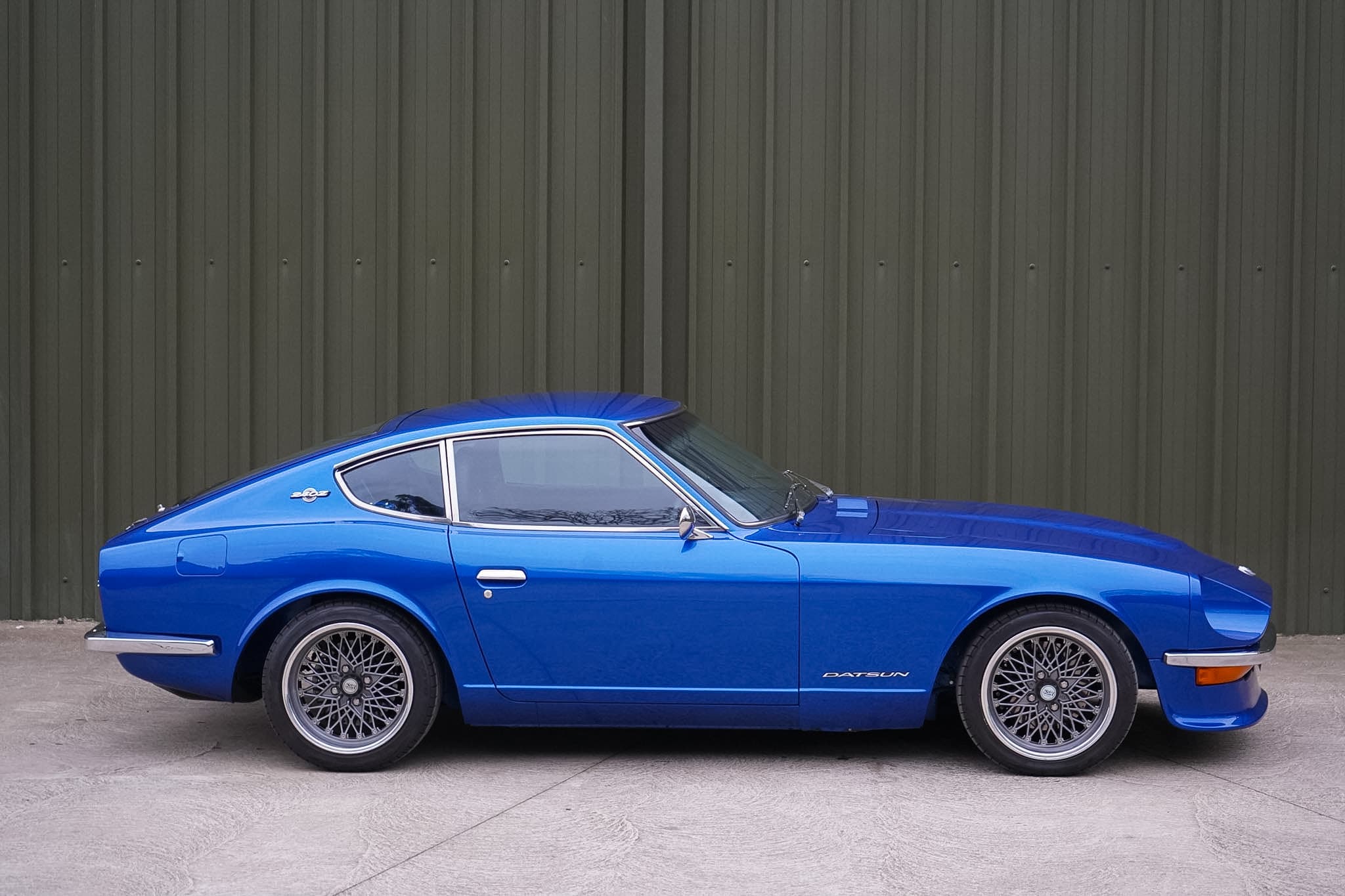
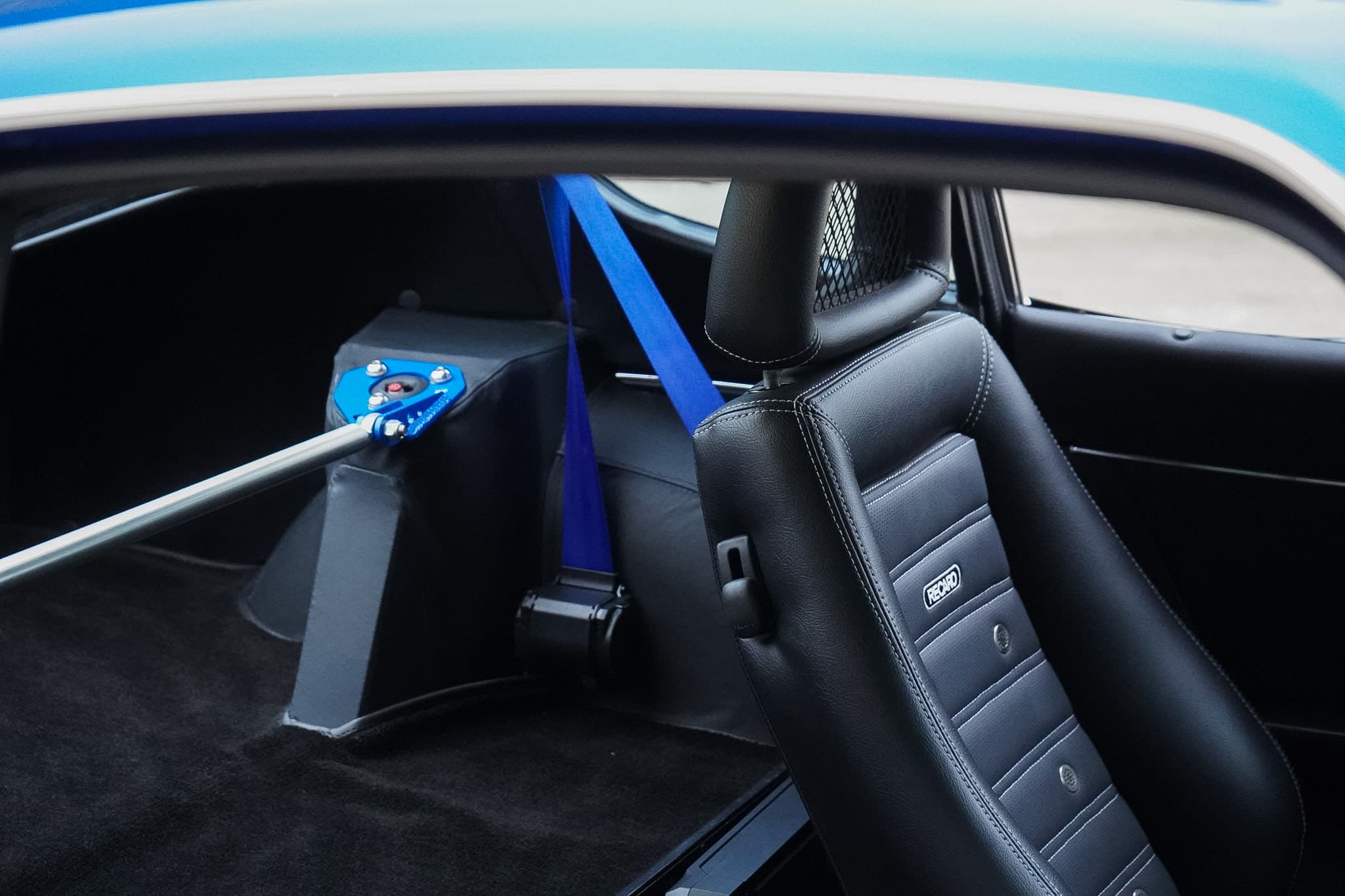
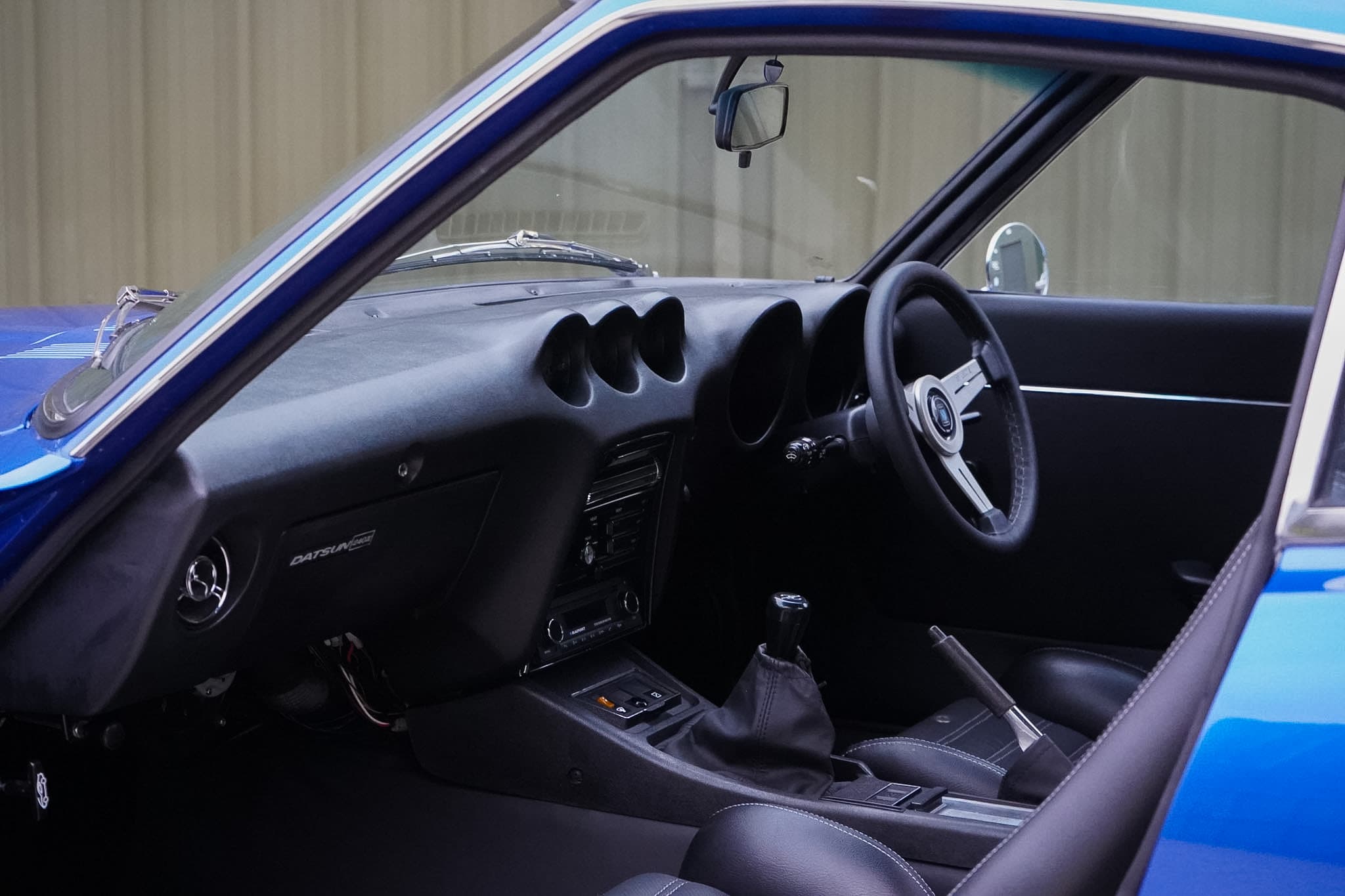
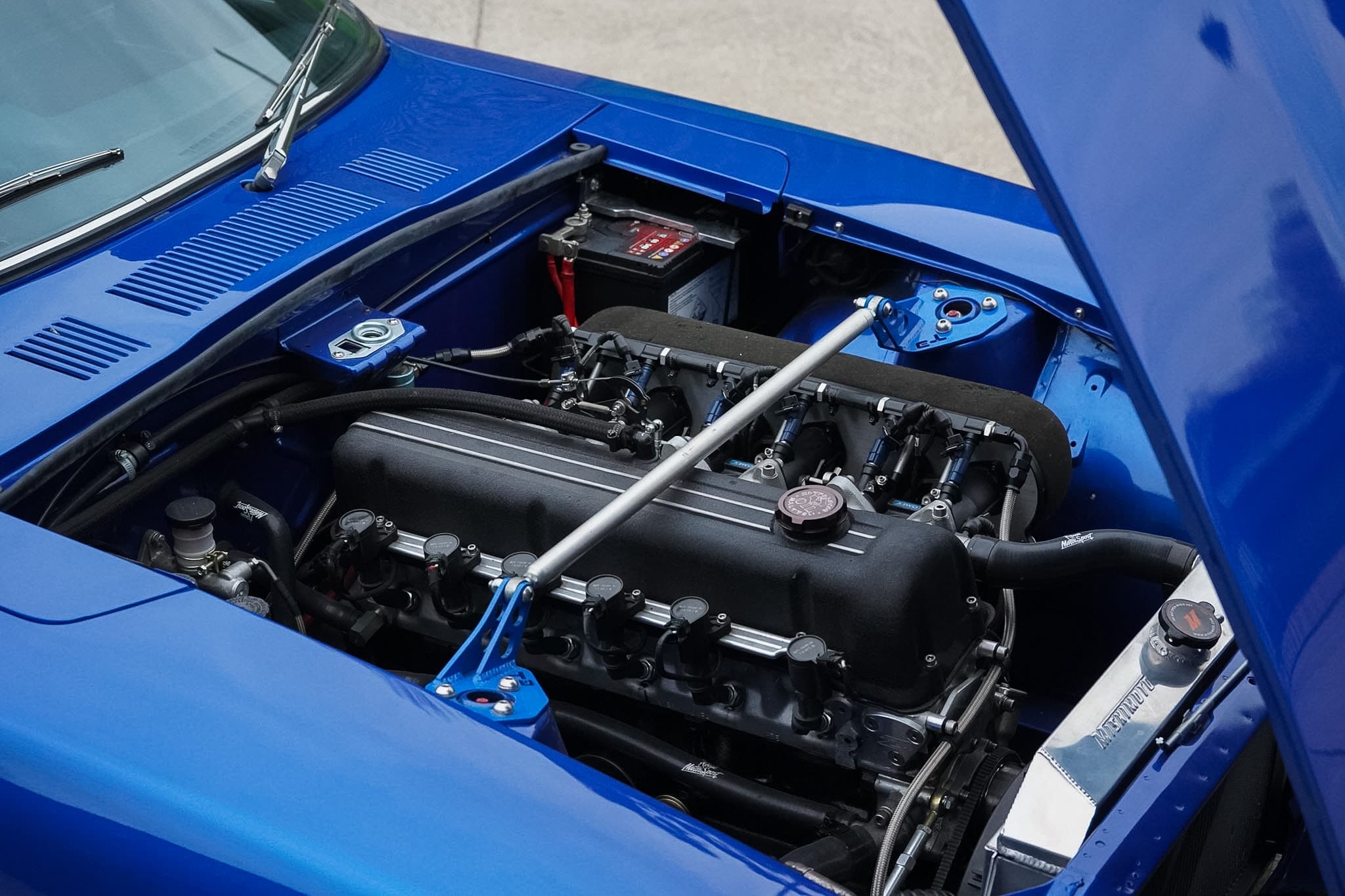
Fairlady Z / 240Z became the best-known branch internationally. Nissan says the first S30 Fairlady Z was rolled out in December 1969 and was also known as the Datsun 240Z or Z-car in export markets. The detailed Datsun 240Z reference keeps market and model-year differences separate. TMJC's 1970 example is useful real-car context, but its later right-hand-drive conversion, rebuilt L24 and five-speed conversion belong to that individual restomod rather than to every 240Z.
Cherry added a different engineering direction. The first E10 Cherry appeared in 1970 as Nissan's first front-wheel-drive car, and Nissan's archive notes that it gained particular recognition in Europe. It therefore belongs in the Datsun story as part of the move toward compact front-wheel-drive cars rather than as another version of the rear-wheel-drive Sunny or Bluebird.
Datsun also appeared on vans, pickups and trucks, sometimes within the same family names as passenger cars. The Sunny range alone included a van from launch and a pickup from 1967. When identifying a Datsun, the useful starting point is therefore the exact model family, market and year rather than treating the badge as shorthand for one type of car.
Yutaka Katayama is central to the Datsun story in North America. Nissan's heritage account records him going to Los Angeles in 1960 and later describing the Z-car concept as an accessible sports car centred on the driver's experience rather than exclusivity for its own sake.
That export-market thinking mattered. The wider Fairlady Z family appeared at the end of the 1960s, while the exact Datsun 240Z launch chronology differs by market. The detailed Datsun 240Z reference keeps those North American, British and Japanese dates separate rather than forcing them into one retail-launch number.
TMJC's current 240Z is useful as a provenance case study, not as canonical Datsun specification. It is represented as a 1970 US-origin car later converted to right-hand drive and comprehensively rebuilt, with its original L24 modified and a later Nissan five-speed installed. Those details belong to that individual restomod.
For deeper buying and originality context, see the Datsun 240Z restomod due-diligence guide and the collector-car provenance checklist.
Both dates matter, but they describe different parts of the change. Nissan records July 1981 as the start of worldwide marketing under the Nissan name as part of a new corporate-identity programme. Its 2024 Integrated Report adds the reason: Nissan wanted to strengthen the company name in overseas markets and decided that the NISSAN company logo should always appear.
That was not an overnight deletion of Datsun. Nissan's own historical timeline still calls models the Datsun Vanette Largo and Datsun AD Van in 1982, describes the first pickup built at its US plant in June 1983 as a Datsun truck, and even records a Datsun Truck Model D21 in 1985. Those entries are not evidence for the badge fitted to a particular UK car; they are useful primary evidence that the corporate programme and the disappearance of the Datsun name were not the same event.
There was overlap before the formal programme too. An archived Nissan Motor Corporation in U.S.A. full-line brochure for the 1981 model year is headed “DATSUN 1981 — BY NISSAN”; its print code dates the brochure to September 1980. That US-market document should not be used to date British badging, but it shows why even “Nissan first appeared beside Datsun in 1981” is too neat.
Surviving specialist-archived UK model literature makes that overlap more concrete. Z.ONE / Zone Datsun indexes a 1981 Datsun Cherry for the UK, a 1983 Datsun / Nissan Cherry for the UK, and a 1984 Nissan Prairie for the UK. Those model-specific examples support a staged customer-facing transition, but they are not a factory-wide changeover bulletin. They should not be turned into an exact badge cutoff for every model or build date.
Britain has its own precise corporate milestone. Companies House records the UK distributor as DATSUN U.K. LIMITED until 2 January 1984, when its name became NISSAN U.K. LIMITED. Nissan separately records the establishment of Nissan Motor Manufacturing (UK) Ltd in April 1984, with British production beginning in 1986. Neither event is a universal badge-change date for every car.
| Date | What the evidence establishes | What it does not establish |
|---|---|---|
| September 1980 / 1981 model year | US Datsun literature already used BY NISSAN co-branding | First use of Nissan branding in Britain |
| July 1981 | Nissan began its worldwide Nissan-name corporate-identity programme | Instant end of every Datsun badge or model name |
| 1982–85 | Nissan's own history still uses Datsun in selected model names | That every market used those names or badges identically |
| 1981-84 (sample UK period literature) | Archived UK model literature shows Datsun, Datsun / Nissan and Nissan naming across different models | Exact badge-change date for every model or build date |
| 2 January 1984 | Datsun U.K. Limited legally became Nissan U.K. Limited | Exact badge or showroom-name cutoff for every UK model |
| April 1984 | Nissan Motor Manufacturing (UK) Ltd was established | Start of UK Nissan production; that followed in 1986 |
For a collector, separate company branding, legal company name, model naming and the badges on the individual car. A transition-era survivor should be checked against its exact model, original market, build period and period literature rather than being declared “wrong” because it carries Datsun, Nissan or both around one supposedly universal changeover year.
The 1980s transition was not the end of the name. Nissan announced the Datsun revival on 20 March 2012. The following day, CEO Carlos Ghosn described it as a complement to Nissan and Infiniti, aimed at offering modern, affordable cars in high-growth markets. Nissan planned the new Datsun range for India, Indonesia and Russia from 2014. By Nissan's 2014 shareholder report, local production and sales of the Datsun GO had begun in India, GO+ activity had started in Indonesia, the on-DO had been unveiled in Moscow and South Africa was also part of the expansion plan.
This second Datsun was deliberately different from the classic export-era marque. Nissan positioned it around modern, high-value entry cars for growing middle-class customers in emerging markets rather than around heritage sports cars.
The revival was later wound down as Nissan narrowed its product portfolio. In February 2020 Nissan said it had decided to end Datsun sales in Indonesia. By June 2020 it said it would close the Indonesian production plant and withdraw the Datsun brand in Russia. In April 2022 Nissan India confirmed that redi-GO production had ceased at the Chennai plant; remaining cars could still be sold from stock and aftersales support would continue. That marked the end of the modern production revival, rather than rewriting the history of the original Datsun era.
Datsun's collector identity is unusually broad. Early DAT-derived cars tell the story of Japan's developing motor industry; Bluebirds, Sunnys and Cherrys chart the rise of Japanese exports; roadsters added sporting credibility; and the 240Z became the standout performance icon for a much wider audience.
The 2010s revival is historically part of the name too, but it belongs to a different commercial programme. For classic-car research, start with the exact model, market and year. A UK 240Z, a US-market Z, a Bluebird and a pickup can share the badge while differing radically in engineering, equipment and historical context.
Editorial information
Research and editorial from TMJC Garage.
Research and editorialTMJC Garage
Reviewed byMatt Johnston
Last reviewed26 October 2026
Published byThe Matt Johnston Collection
TMJC photography
TMJC Guides
TMJC assistance
Continue to the main TMJC website and speak directly with the collection team.
Sell, consign or source
Continue with TMJC for a discreet conversation, professional presentation and collector-focused support.
Enquire now