TMJC assistance
Want TMJC to help with this vehicle?
Sourcing, consignment and valuationContinue to the main TMJC website and speak directly with the collection team.
Model
ALPINA B10 history from its E28/E24 origins through E34 Bi-Turbo, Allrad and V8 variants to the E39 3.2, 3.3, V8 and V8 S.
Generation directory
Choose a B10 generation to see its production years, body styles, engines, chassis changes and variants.
TMJC Catalog guide
ALPINA B10 history from its E28/E24 origins through E34 Bi-Turbo, Allrad and V8 variants to the E39 3.2, 3.3, V8 and V8 S.
The quickest way to misunderstand an ALPINA B10 is to treat the badge as a complete specification.
It is not. B10 is a model-family name that ALPINA reused across several very different cars. Depending on the period, a B10 might have a naturally aspirated straight-six, a twin-turbo straight-six or a V8. It might be rear-wheel drive or all-wheel drive, a saloon or a Touring, manual or automatic. And there is an easily missed exception right at the beginning of the story: B10 was not confined entirely to the BMW 5 Series.
That matters when you are reading an advert. “ALPINA B10” tells you where to start; the chassis era and derivative tell you what the car actually is.
| Era | BMW basis represented in the B10 family | Important B10 derivatives | Why it matters |
|---|---|---|---|
| Mid-1980s | E28 535i, plus an E24 635 CSi-based coupé | B10 3.5, B10 3.5 Coupé | The name begins with a straight-six and immediately breaks the simple “B10 equals 5 Series” rule. |
| E34 era | 535i, 525ix and 540i-based cars | B10 3.5/1, B10 Bi-Turbo, B10 3.0 Allrad, B10 4.0, B10 4.6 | The badge expands across turbocharging, all-wheel drive, V8 power and Touring bodywork. |
| E39 era | E39 5 Series-based cars | B10 3.2, B10 3.3, B10 V8, B10 V8 S | Six-cylinder and V8 branches run alongside one another before later 5-Series ALPINA naming moves to B5. |
This is why a single “B10 specification” table is more likely to confuse than help. The useful comparison is derivative against derivative.
The specialist ALPINA-Archive lists the E28 B10 3.5 from 1985 to 1987 and gives a headline production figure of 77 cars. That car was based around the contemporary BMW 535i and is the obvious starting point for the B10 saloon story.
But the same archive also records a B10 3.5 Coupé under the E24 6 Series, with 44 produced in its model index. That is a small detail with a large consequence: it makes the common claim that every B10 was a 5-Series-based car too absolute.
It also explains why a clean B10 family tree is harder than it first appears. The name is an ALPINA model designation, not simply BMW's chassis code with another badge attached.
For older UK cars there is another wrinkle. The archive contains separately identified Sytner-produced examples alongside the Buchloe-numbered cars. That is a warning against taking one headline production count and using it to answer every question about how many B10s existed in a particular market.
If the E28 introduced the name, the E34 demonstrates why the suffix matters.
The unofficial ALPINA-Archive's current E34 index lists five distinct B10 groups: 3.5/1, BiTurbo, 3.0 Allrad, 4.0 and 4.6. Those are not cosmetic editions of one underlying specification.
The B10 3.5/1 continued the large naturally aspirated straight-six idea. The B10 Bi-Turbo went in a very different direction, using the BMW 535i as its starting point and adding two turbochargers plus extensive drivetrain, suspension and braking changes. Road & Track's later retrospective records a 1989 Geneva Motor Show debut after two years of development and says 507 were built. The car's period reputation became one of the defining chapters in ALPINA history, but it was only one branch of the E34 B10 range.
Then the family widened again.
The B10 3.0 Allrad was based around the BMW 525ix and brought all-wheel drive into the B10 story. The archive records both saloon and Touring versions. The B10 4.0 and later B10 4.6 moved to V8 power, again with saloon and Touring cars represented in the records.
So even within a single BMW generation, “B10” can describe materially different engines, drivetrains and body styles.
The current unofficial archive index gives the following produced totals:
| E34 B10 derivative | Archive-produced total |
|---|---|
| B10 3.5/1 | 572 |
| B10 BiTurbo | 507 |
| B10 3.0 Allrad | 134 |
| B10 4.0 | 49 |
| B10 4.6 | 46 |
These figures are useful for scale, but they should be read as specialist archive counts, not silently promoted into factory-certified totals. Older archive pages sometimes divide saloon and Touring production differently, and exact dates can also differ from later historical reporting.
The B10 Bi-Turbo is a good example. Its old register header and wider historical accounts do not align perfectly on the precise ending month of production. The defensible point from the sources reviewed here is simpler: it was introduced in 1989 and 507 cars are recorded. That is enough to understand its place in the B10 family without inventing precision the evidence does not support.
The E39 B10 is the part of the family most directly connected to TMJC and the deepest part of the Garage Catalog at present.
The E39 era did not begin with one definitive specification either. The unofficial archive describes the B10 V8 and B10 3.2 as separate early branches, followed by the B10 3.3 and later B10 V8 S. Its current E39 index also separates a later B10 V8/1 production group, another reason not to compress every E39 V8 into one line of data.
The six-cylinder progression is relatively easy to follow. The archive describes the B10 3.2 as a 1997 introduction and says it was replaced by the B10 3.3 in 1999. It records the 3.2 with a five-speed manual gearbox. The 3.3 kept a five-speed manual option and, according to the archive, gained optional Switch-Tronic with the facelift in 2001.
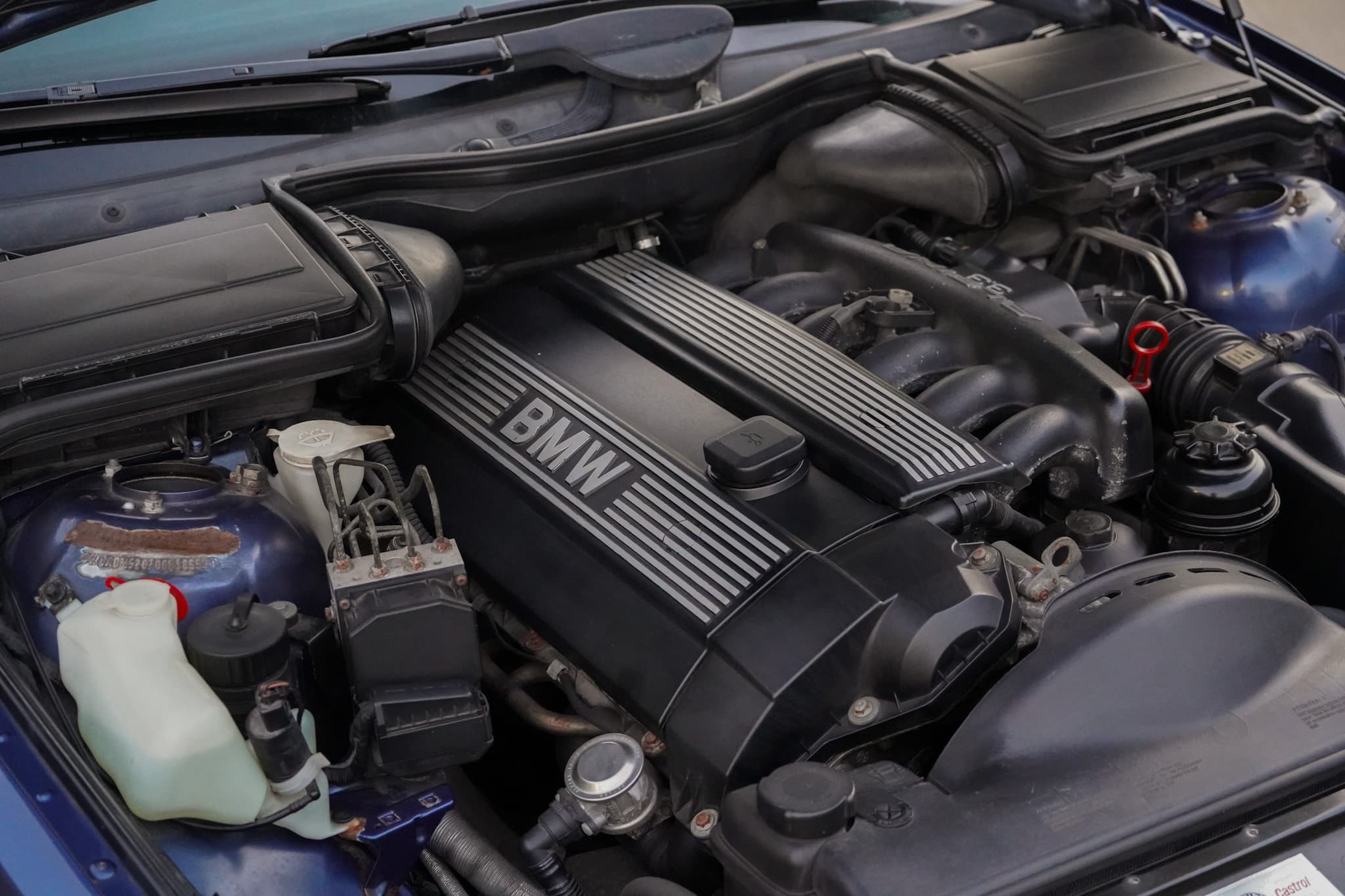
The V8 path developed in parallel. The archive describes the B10 V8 as based on the BMW 540i and documents output changes during its life before the V8 S took the idea further. This is the point at which a seller simply writing “E39 B10” becomes particularly unhelpful: a 3.2, 3.3, V8 and V8 S are not interchangeable cars.
A historical ALPINA can have several dates that answer different questions:
Those are not necessarily the same month or even the same calendar year.
That distinction shows up in the E39 evidence. The current B10 V8 model history in the specialist archive describes a March 1997 introduction, while an older production register starts an early V8 batch in December 1996. Those statements do not automatically contradict one another: one can describe public introduction while another describes production activity.
It is safer to identify the exact derivative and, where a particular car matters, work from its build documentation rather than using registration year alone to infer specification.
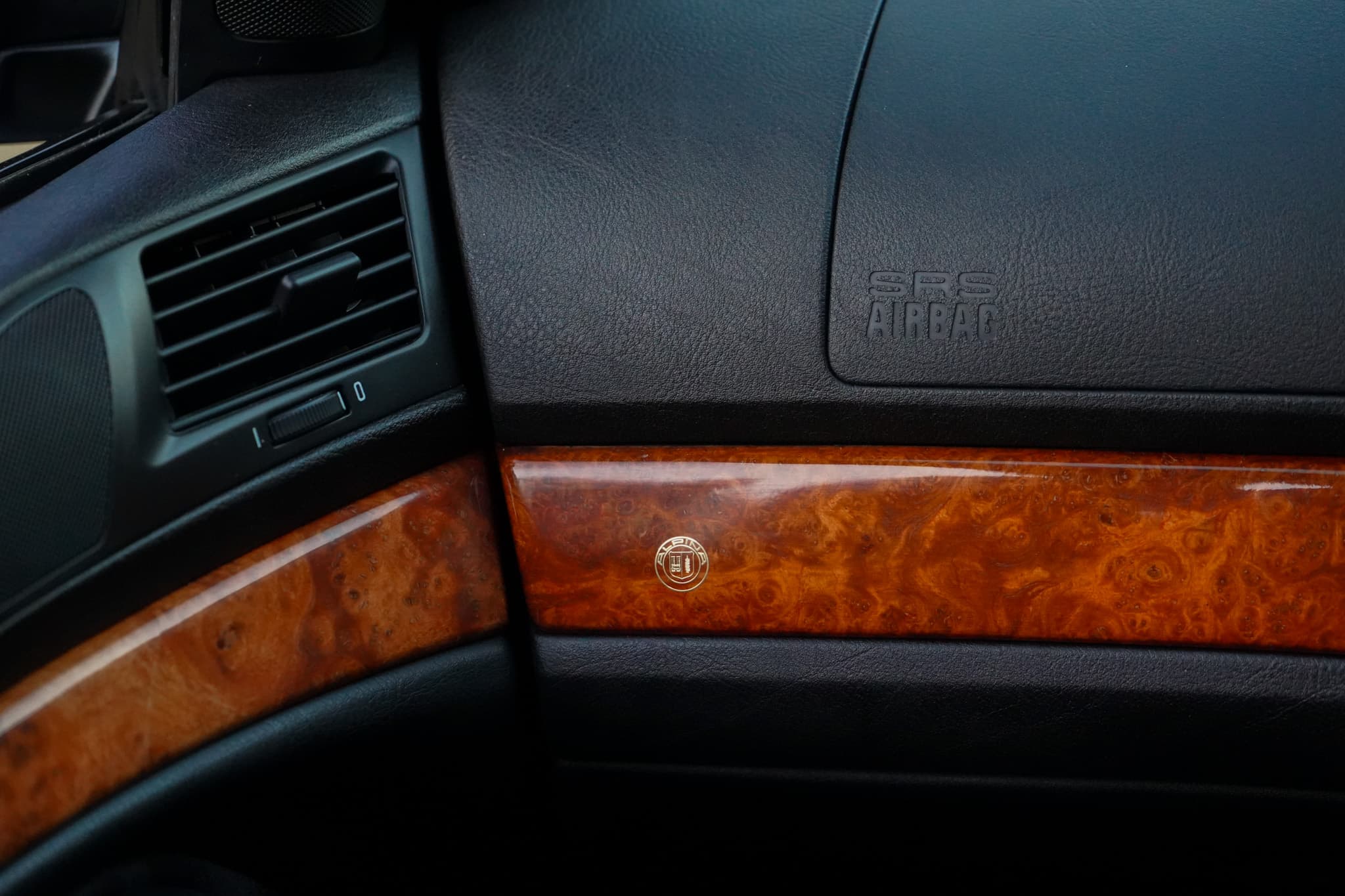
ALPINA wheels, stripes, spoilers and interior parts are desirable enough to have been fitted to many ordinary BMWs. A numbered plaque is useful evidence, but it should not be treated as the whole authentication process either.
ALPINA CLASSIC offers a Delivery Certificate for almost all BMW ALPINA cars built between 1978 and 2025. Depending on the vehicle record, it can document:
That is a much stronger starting point than deciding from wheels or badges.
There is an important qualification in ALPINA CLASSIC's own wording: the certificate records the original delivery condition. It does not certify that the car remains wholly original today, nor does it certify its present condition or value.
For a car being bought as a collector-grade B10, the useful question is therefore not just “does it have a plaque?” It is whether the identity, chassis information, engine information, production number and surviving paperwork agree — and then whether the car in front of you still corresponds to that documented identity.
That distinction matters especially with cars that have had engine changes, gearbox conversions, replacement interiors or later ALPINA parts fitted.
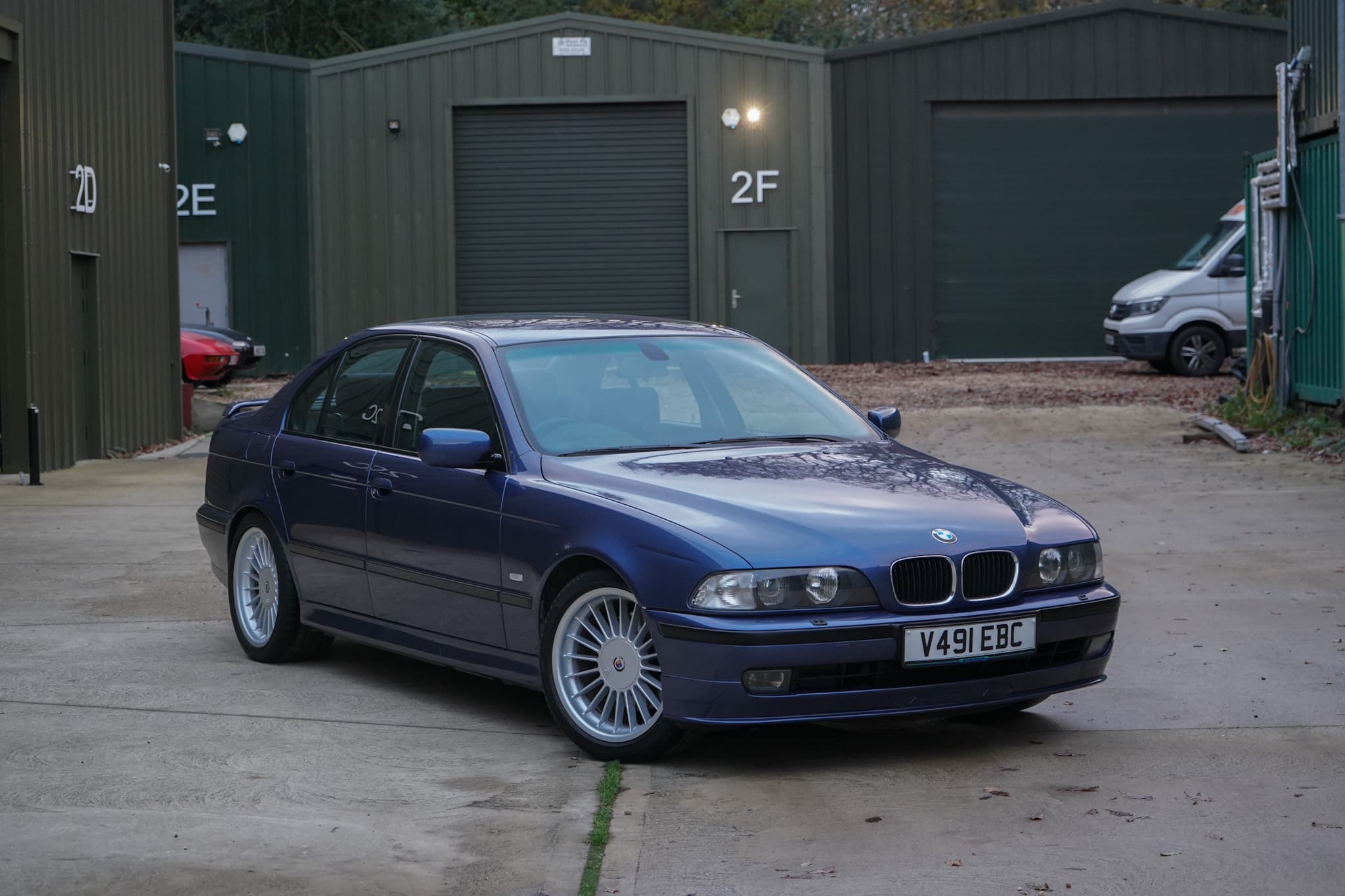
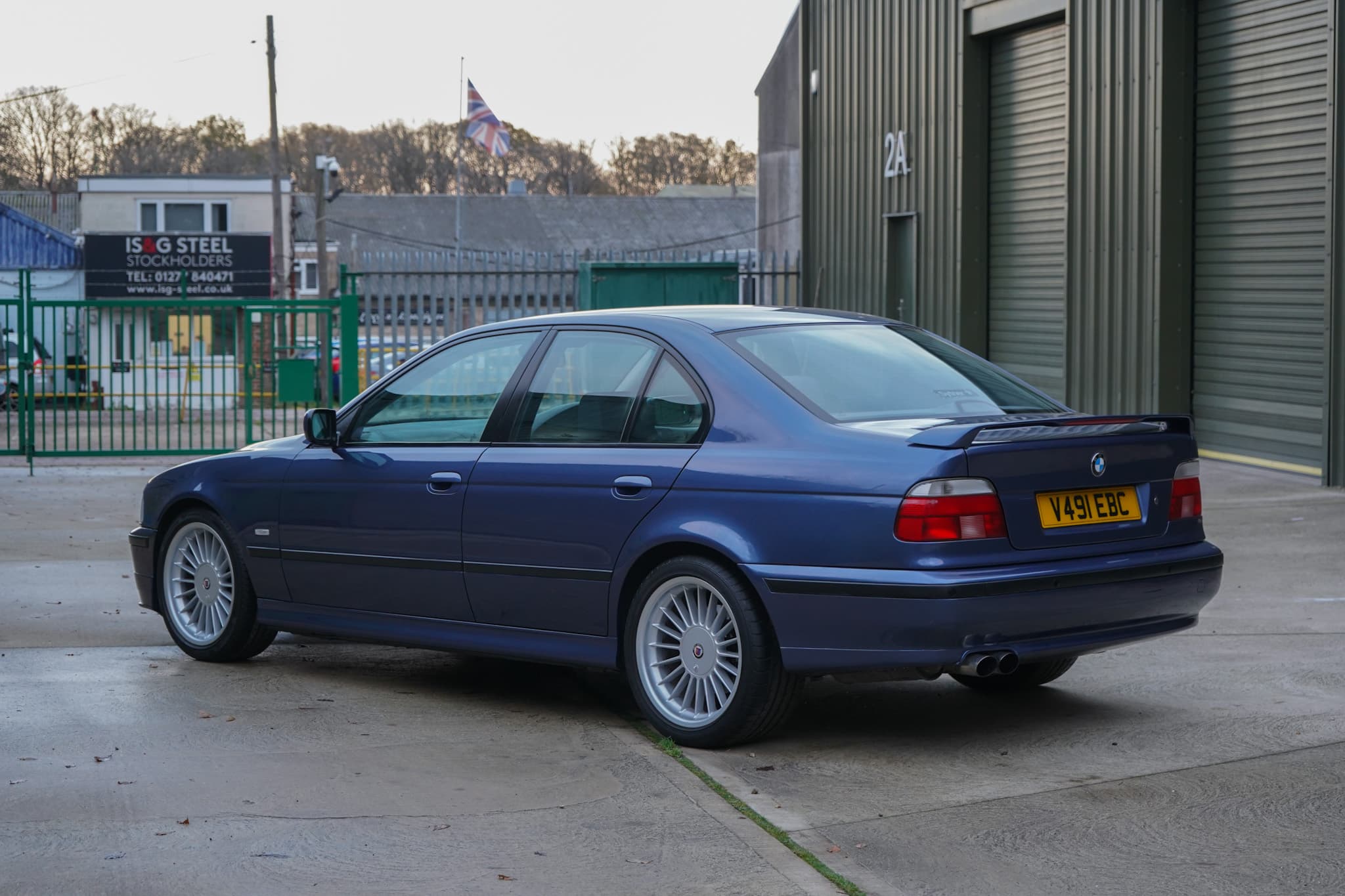
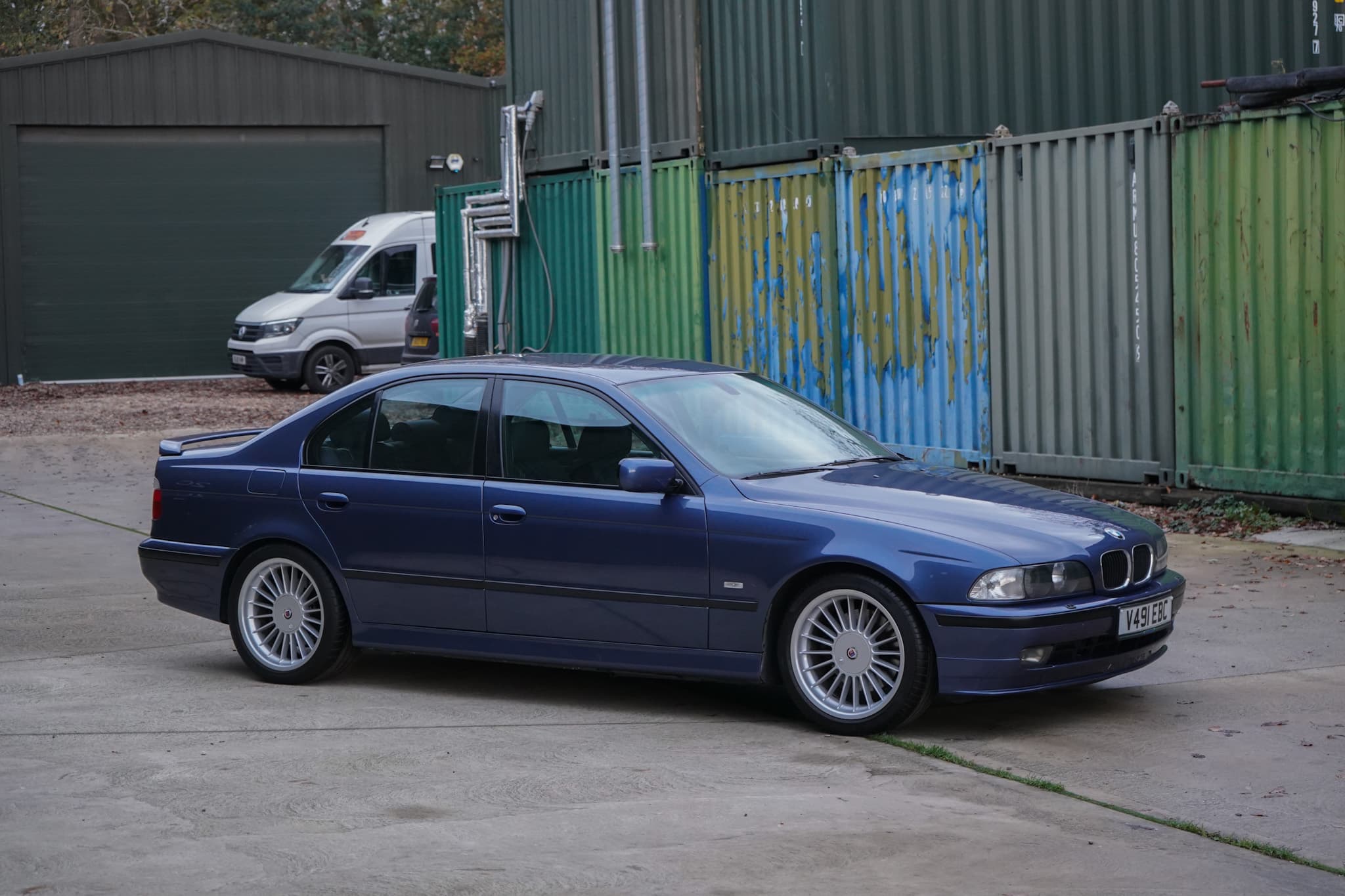
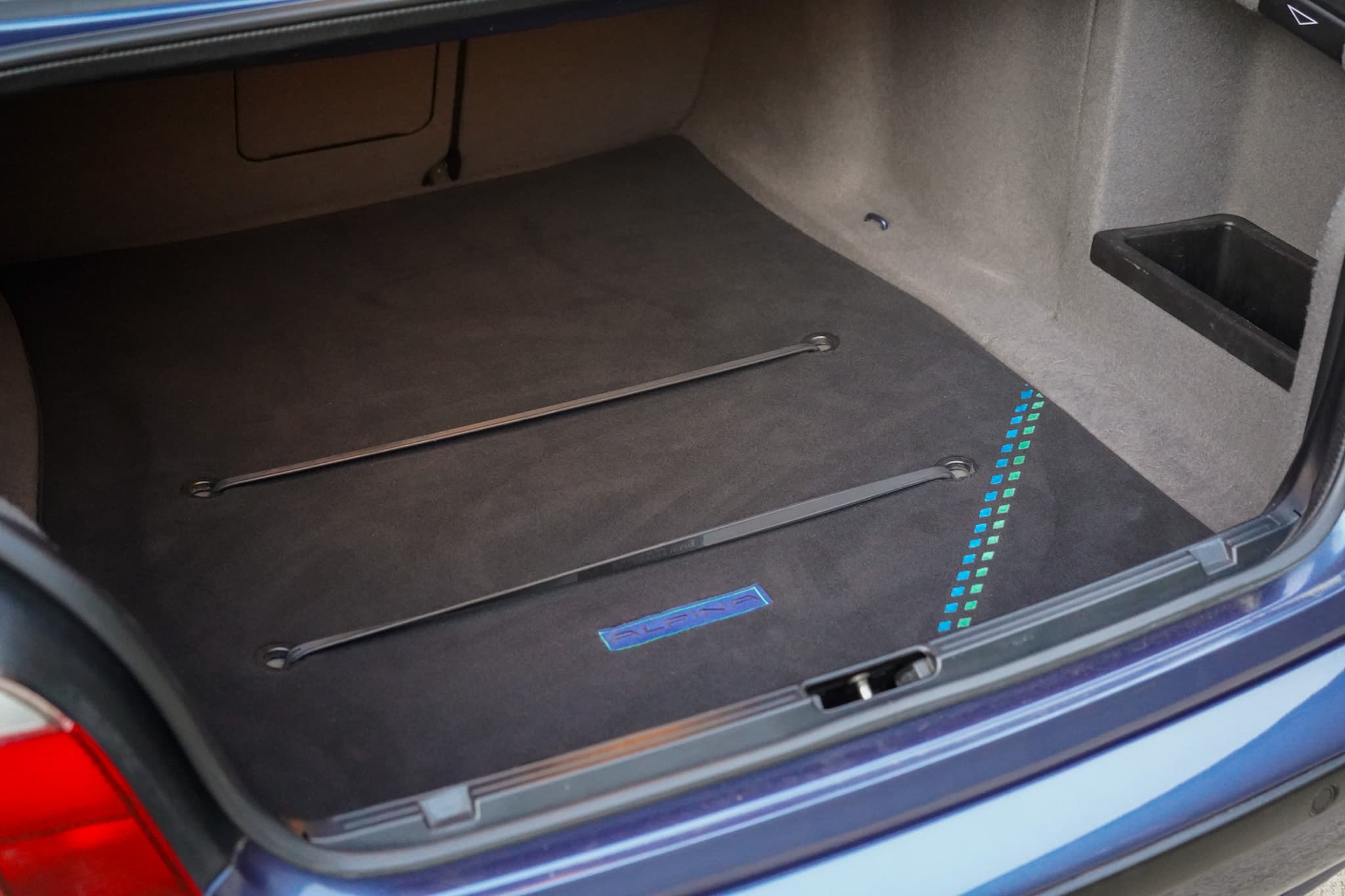
TMJC has handled a 1999 E39 B10 3.3, registration V491EBC. The surviving TMJC-syndicated advert records it as right-hand drive with a 3.3-litre petrol engine and five-speed manual gearbox.
That places it within one specific branch of the much wider B10 family. It does not mean “B10” generally means 3.3 litres or manual transmission.
An older advert for the same registration reports production plaque number 47. That is useful provenance evidence, but it is still an advert-derived claim until matched to factory documentation. ALPINA CLASSIC's Delivery Certificate service gives a route to verifying production number, chassis and engine information from the manufacturer-side vehicle file.
For the exact derivative, see the B10 3.3 Saloon Manual page.
A better sequence is:
That approach avoids several common errors at once. It prevents E39 3.3 figures being copied onto a V8, stops a Bi-Turbo being treated as representative of every E34 B10, and makes room for unusual branches such as the E34 3.0 Allrad or the early E24 B10 3.5 Coupé.
The B10 name is interesting precisely because it changed. Over its life it shows ALPINA repeatedly reworking BMW's executive-car ingredients rather than preserving one fixed engineering formula.
Editorial information
Research and editorial from TMJC Garage.
Research and editorialTMJC Garage
Reviewed byMatt Johnston
Last reviewed13 September 2026
Published byThe Matt Johnston Collection
Model lineage
TMJC media
TMJC assistance
Continue to the main TMJC website and speak directly with the collection team.
Sell, consign or editorial
Continue with TMJC for a discreet conversation, professional presentation and collector-focused support.
Enquire now