TMJC assistance
Want TMJC to help with this vehicle?
Sourcing, consignment and valuationContinue to the main TMJC website and speak directly with the collection team.
Variant
E39 ALPINA B10 3.3 manual guide: 280 PS specs, five-speed identity, production evidence, UK-count scope and authentication.
TMJC guide
E39 ALPINA B10 3.3 manual guide: 280 PS specs, five-speed identity, production evidence, UK-count scope and authentication.
A genuine E39 ALPINA B10 3.3 Saloon Manual is not authenticated by a set of ALPINA wheels or a plaque on the dashboard. Those details can support the case, but authenticity depends on whether the car, its numbers and its history reconcile with ALPINA’s own record of what was completed in Buchloe.
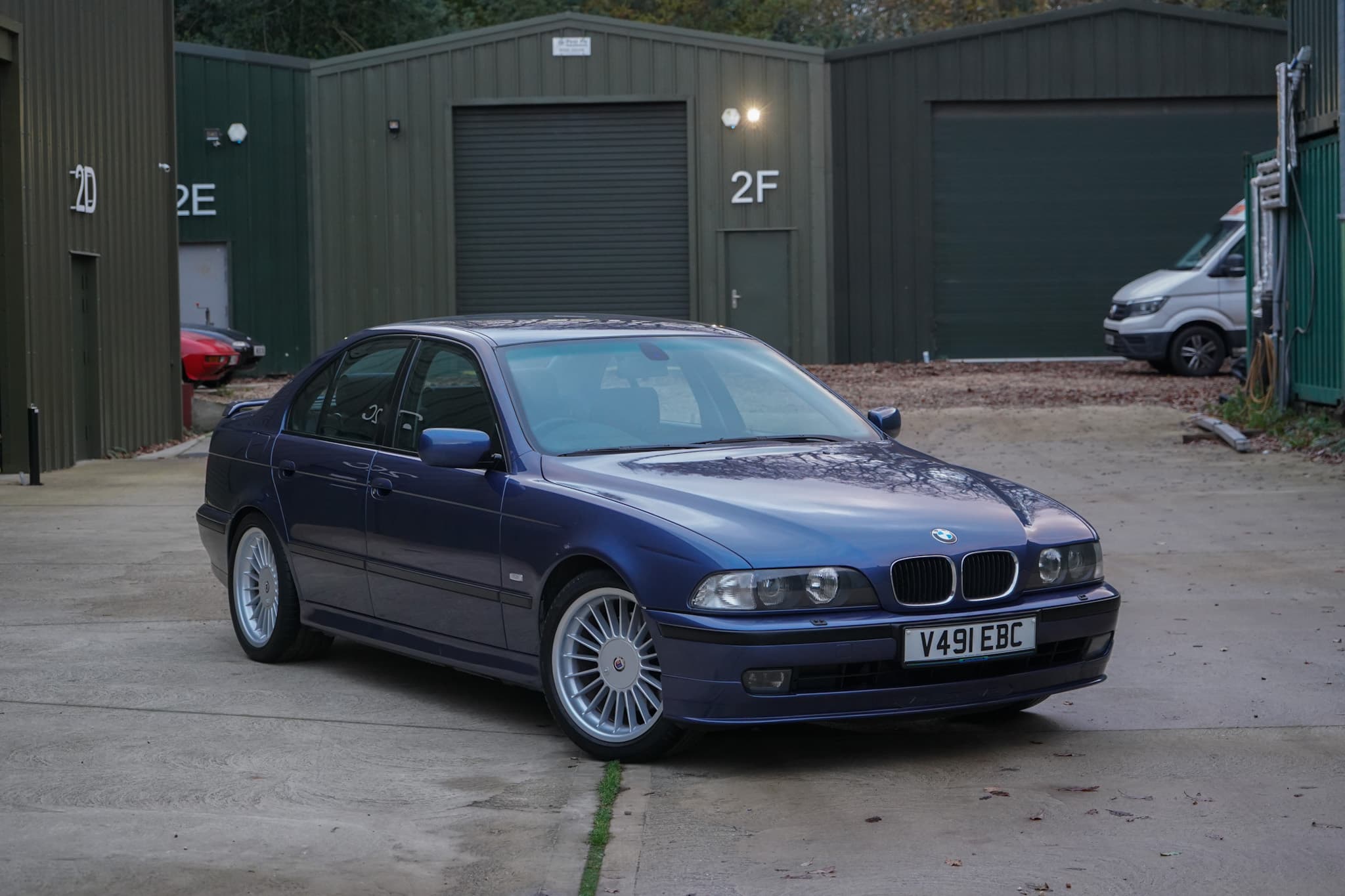
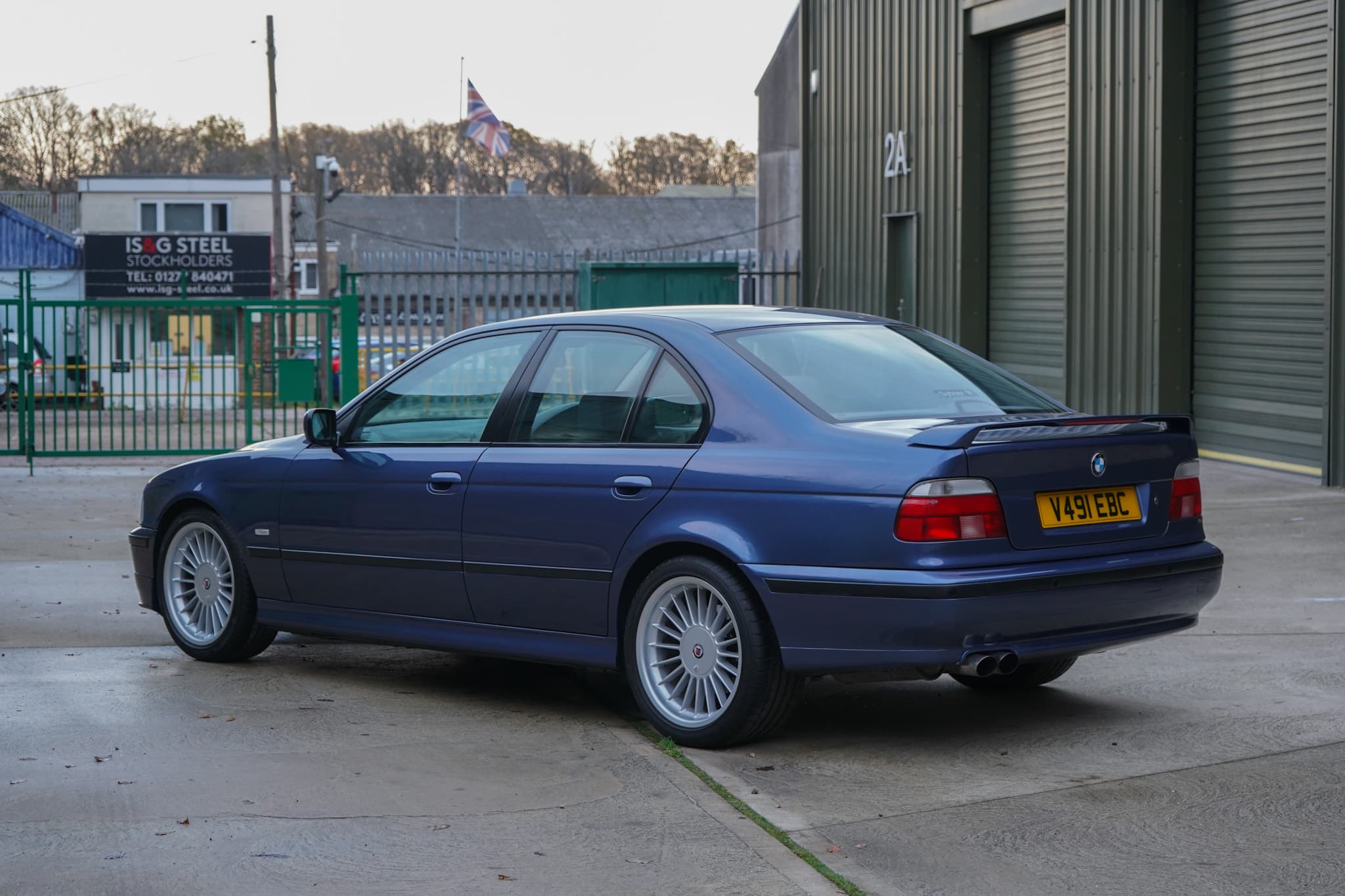
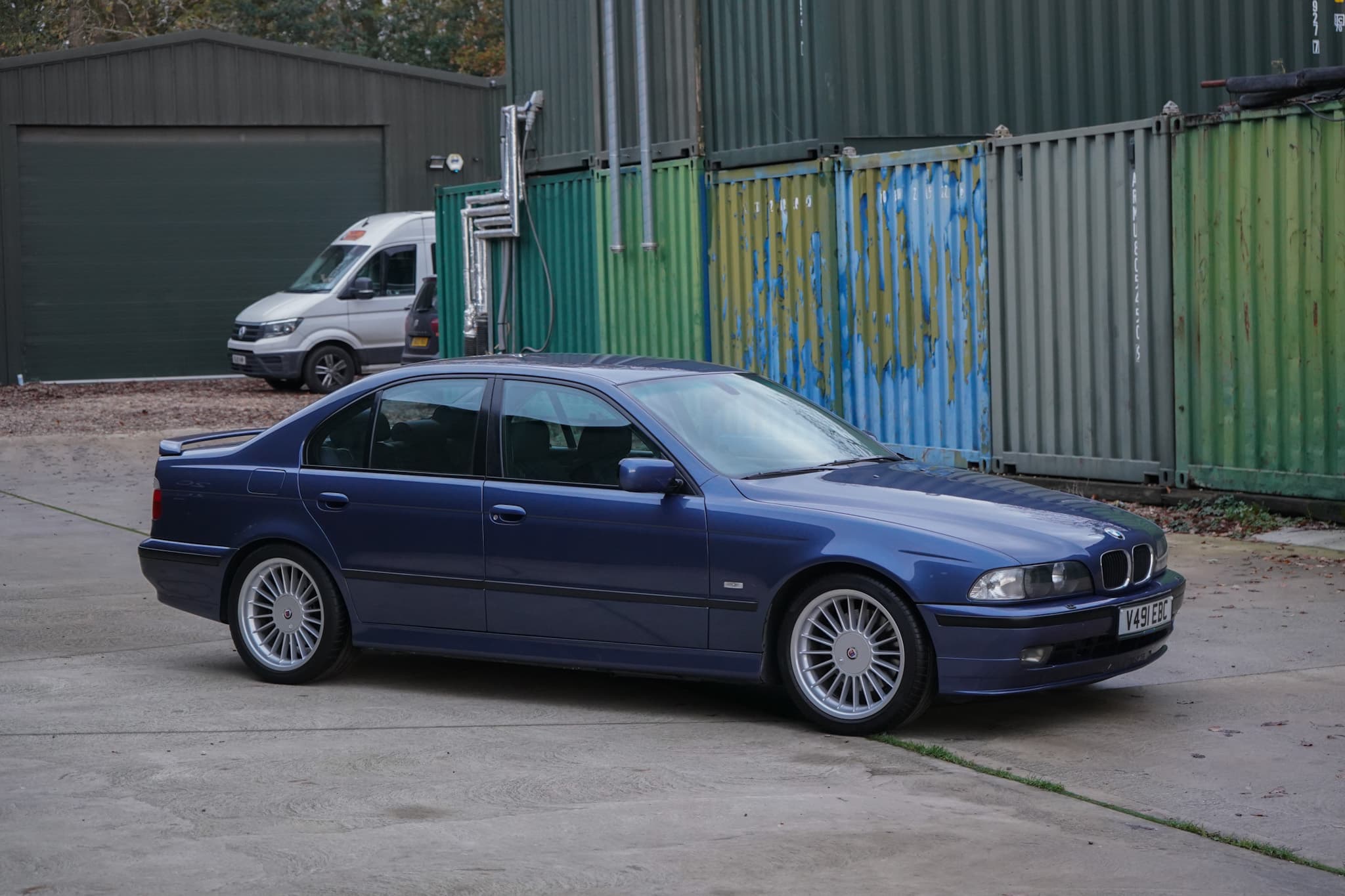
The 1999 car handled by The Matt Johnston Collection shows the point: V491EBC appears in both an older private advert and TMJC’s later dealer advert, giving a useful history trail, but neither advert replaces factory documentation.
The strongest live technical source for the exact manual saloon is Swiss type approval 1AF714. dauto.ch identifies the underlying record as official ASTRA/TARGA type-approval data and explicitly says it describes a vehicle configuration rather than one individual car.
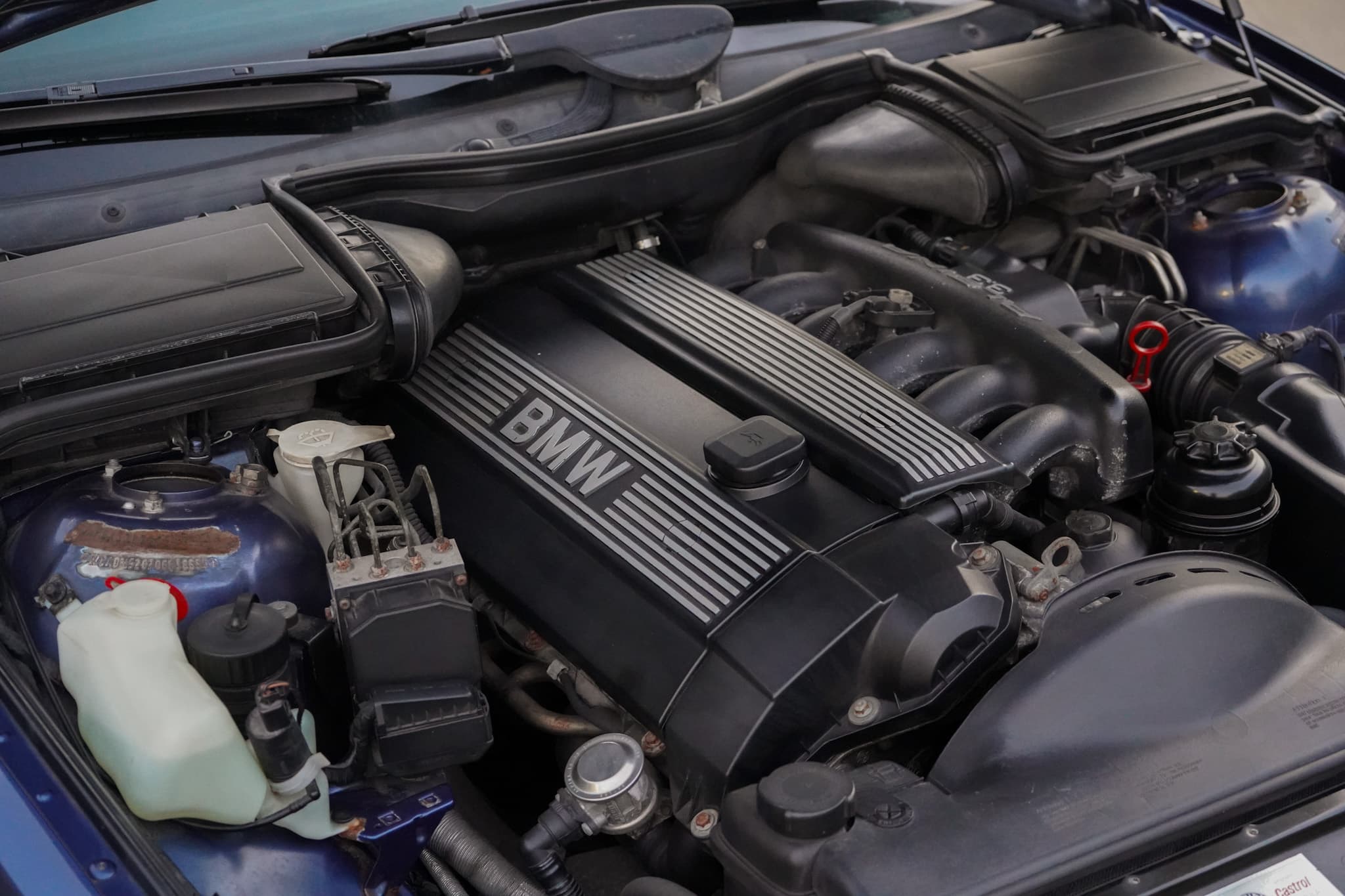
It records a B10 3.3 four-door saloon with 3,300 cc, 206 kW, six cylinders, rear-wheel drive, ALPINA engine type E4/5 / E4/7 and an m5 five-speed manual gearbox. The same approval records 6,200 rpm for rated power, 335 Nm at 4,500 rpm and a mechanical maximum speed of 262 km/h.
A period Auto.cz technical article published on 28 May 2001 independently matches the manual car at 280 PS / 206 kW, 335 Nm at 4,500 rpm, 6.3 seconds from 0–100 km/h and 262 km/h. It also records Switch-Tronic as an extra-cost alternative by that point.
| Item | B10 3.3 Saloon Manual |
|---|---|
| Engine | ALPINA E4/5 / E4/7 inline-six |
| Capacity | 3,300 cc in Swiss type approval 1AF714 |
| Output | 206 kW / 280 PS |
| Torque | 335 Nm at 4,500 rpm |
| Rated-power speed | 6,200 rpm |
| Gearbox | Five-speed manual |
| Drive | Rear-wheel drive |
| Body | Four-door saloon |
| Maximum speed | 262 km/h |
For the era of this car, yes in the legal/manufacturer sense that matters to provenance.
BMW Group says ALPINA began manufacturing passenger cars based on BMW products in 1978 and had been registered as an official automotive manufacturer with the German Federal Motor Transport Authority since 1983.
That does not erase the BMW underneath. It explains the dual identity. ALPINA CLASSIC’s own delivery certificate can list both the ALPINA model/chassis/production data and the BMW series/chassis data for the same vehicle.
So a classified title such as BMW E39 Alpina B10 3.3 is understandable, but it should not be read as standard BMW E39 with aftermarket parts.
For the manual saloon, this is no longer a question of relying only on later classified descriptions. Swiss type approval 1AF714 explicitly identifies a B10 3.3 saloon configuration with an `m5` five-speed manual gearbox, 3,300 cc, 206 kW and rear-wheel drive. That makes the five-speed manual in TMJC's 1999 V491EBC entirely coherent with an official period homologation record.
The remaining transmission question is chronology across the whole B10 3.3 run. A period Auto.cz article confirms that Switch-Tronic was available at extra cost by 28 May 2001. The explicitly unofficial ALPINA-Archive dates the optional gearbox and facelift to the March 2001 Geneva show. Those sources are consistent on availability by spring 2001, but only the specialist archive pins the exact March introduction, so that date remains specialist-sourced rather than factory-certified.
So B10 3.3 alone should not be used to infer a gearbox on every car. For an individual example, reconcile the physical transmission, chassis/production numbers and ALPINA delivery record.
The difficult part is not finding a number; it is keeping global production separate from UK allocation.
The dedicated ALPINA-Archive B10 3.3 index, which clearly labels itself unofficial, lists 240 saloons and 70 Tourings in its Produced column. Those are useful specialist global/body-style totals, not UK numbers and not factory-primary evidence.
TMJC's advert for V491EBC says 112 B10 3.3 saloons reached the UK. The advert does not reproduce a period Sytner/ALPINA UK allocation ledger to support that figure, so it is not factory-primary evidence.
The number is not confined to TMJC seller copy. A September 2023 Total BMW feature on the E39 B10 3.3 independently says that 112 B10 3.3 saloons made it to the UK, alongside 19 Tourings. That independently corroborates the UK scope, but it still does not replace a period Sytner/ALPINA allocation ledger.
A 2024 H&H Classics catalogue for B10 3.3 #044 repeats the number 112 but calls it the worldwide saloon total. That wording cannot be reconciled with the dedicated archive's 240-saloon global figure. In other words, the same number has already drifted from UK allocation into worldwide production in the market.
A surviving UK advert for B10 3.3 Touring #003 also describes unusually strong original paperwork: the new-vehicle invoice, Sytner Nottingham correspondence confirming VIN change and specification, an ALPINA build sheet and German Fahrzeugbrief. That is the sort of documentary trail needed to settle market-allocation questions. The advert itself, however, is not a complete importer ledger.
For now the defensible reading is therefore: 240 saloons / 70 Tourings is specialist evidence for overall B10 3.3 production; 112 saloons is independently repeated as a UK-supply figure by TMJC and Total BMW, with Total BMW also reporting 19 UK Tourings. Those UK numbers still lack the period importer/factory record needed to make them primary evidence and should not be repeated as worldwide production. A period Sytner or ALPINA UK production record would still be the document that closes the question.
Treat authentication as a chain of evidence.
ALPINA CLASSIC offers a delivery certificate for almost all BMW ALPINA cars built between 1978 and 2025. It can include:
It can also include an extract from the original vehicle invoice and general technical data.
For a serious purchase, this is much stronger than an internet checklist of cosmetic signs.
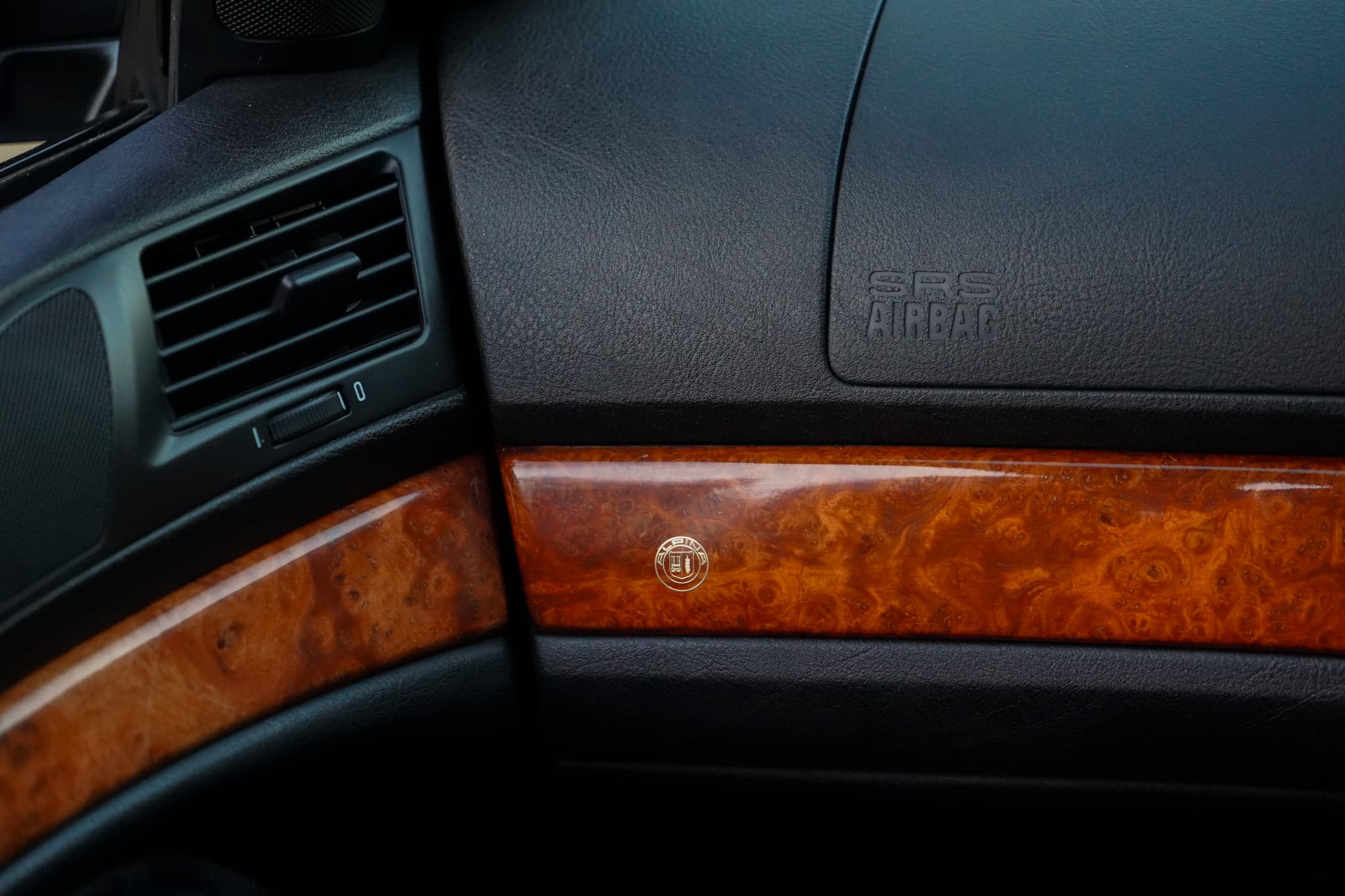
A production plaque is useful evidence because the production number can be compared with the vehicle file. It is not sufficient on its own. Trim panels and plaques can be moved.
Use the factory document to reconcile the number with the chassis and engine information, then check whether the present car is consistent with that record.
Original handbooks, specifications, invoices, service books, dealer material and historical MOT records build continuity. They are especially useful when the car has changed owners or when mileage is high enough that a single fresh cosmetic presentation tells you very little.
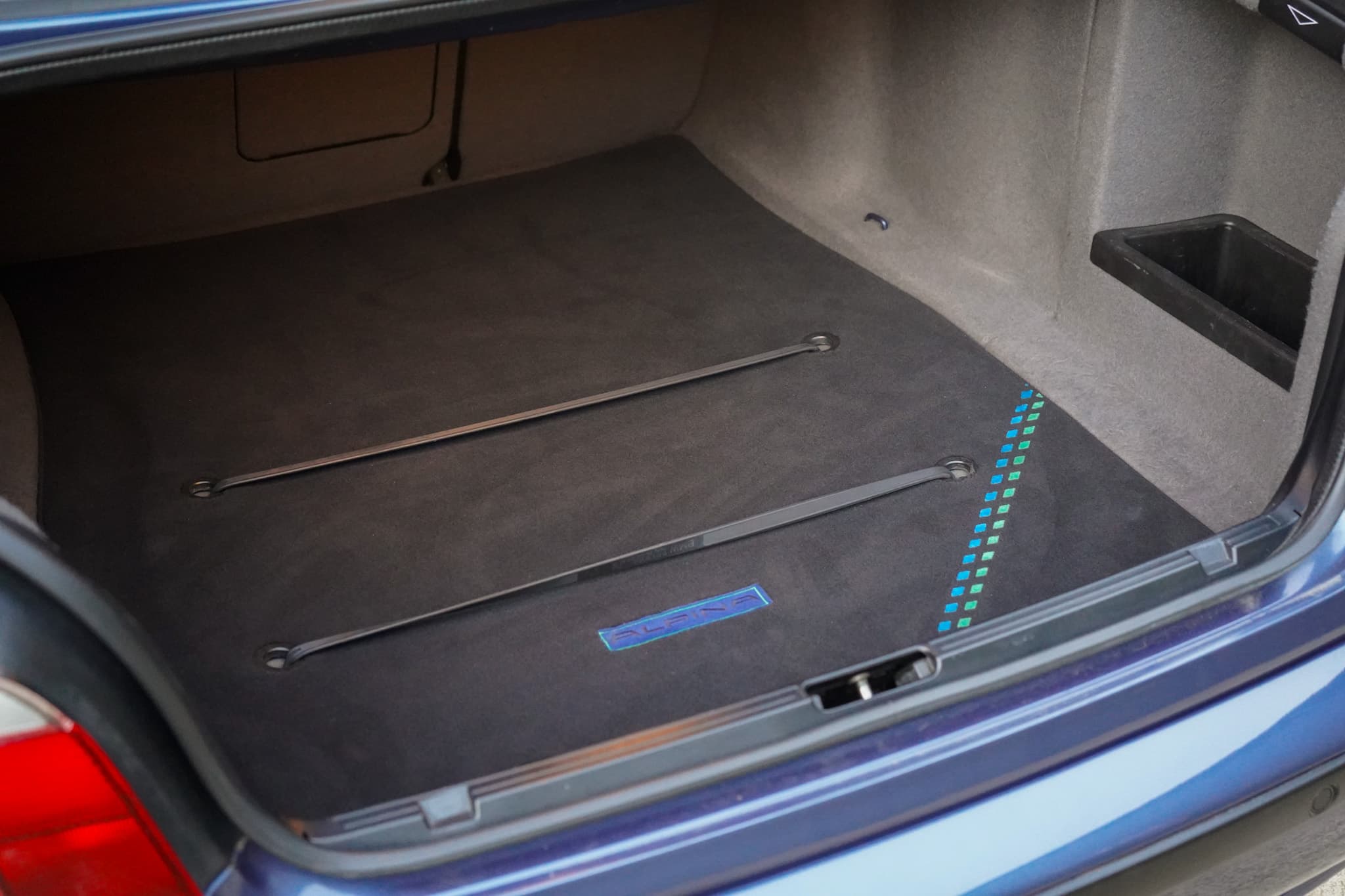
Wheels, instruments, steering wheel, upholstery, spoilers and other ALPINA details matter for originality. But their evidential value comes after you have established what the car was meant to be. A genuine part fitted later does not by itself prove the identity of the shell underneath it.
TMJC’s later dealer advert records V491EBC as a 1999 right-hand-drive B10 3.3 with 3,300 cc engine, five-speed manual, ALPINA Blau II Metallic paint and ALPINA-pattern cloth. It showed 119,206 miles when advertised and was described with extensive service paperwork and original ALPINA literature.
An older private advert for the same registration recorded 113,000 miles, September 1999 registration, five-speed manual, Alpina Blue II and ALPINA cloth. It also recorded plaque number 47.
The matching details show that the plaque number was being associated with V491EBC years before the TMJC sale description. Without a physical inspection of the plaque or an ALPINA build-file record, the defensible wording is narrower: an earlier advert for V491EBC records production plaque #47. The advert alone does not make the number factory-verified provenance.
The older advert also recorded body corrosion at the time. The later TMJC advert describes a substantially better-presented car. That is exactly why historical adverts are valuable in due diligence: they help you ask what work happened between two snapshots rather than treating the newest photographs as the entire history.
Start with the E39 itself, then layer ALPINA-specific checks on top.
The core manual-saloon specification is now substantially better supported: ALPINA's manufacturer history and Swiss official type approval independently cover the engine identity and output, while the homologation record directly supports the 3,300-cc, rear-wheel-drive, five-speed-manual configuration.
The remaining gaps are provenance and production scope, not basic mechanical specification. A period UK ALPINA/Sytner importer document could verify whether TMJC's 112 saloons reached the UK statement is an allocation figure and define original UK-market equipment. For V491EBC itself, an ALPINA delivery certificate or build-file extract tied to the reported production number 47 would turn a good classified-history trail into factory documentary provenance.
Editorial information
Research and editorial from TMJC Garage.
Research and editorialTMJC Garage
Reviewed byMatt Johnston
Last reviewed18 September 2026
Published byThe Matt Johnston Collection
Model lineage
TMJC photography
TMJC assistance
Continue to the main TMJC website and speak directly with the collection team.
Sell, consign or source
Continue with TMJC for a discreet conversation, professional presentation and collector-focused support.
Enquire now