TMJC assistance
Want TMJC to help with this vehicle?
Sourcing, consignment and valuationContinue to the main TMJC website and speak directly with the collection team.
Manufacturer
How ALPINA became a manufacturer, what changed with BMW ALPINA in 2026, and what BMW says comes next.
Model directory
Choose a ALPINA model family to compare its generations, engines, body styles and collector context.
TMJC Catalog guide
How ALPINA became a manufacturer, what changed with BMW ALPINA in 2026, and what BMW says comes next.
ALPINA's relationship with BMW was much closer than a conventional tuner working on finished cars, but it also changed over time. The company began with BMW engine development, built a formidable motorsport reputation, introduced complete road cars and, from 1983, held official German manufacturer status. Historic ALPINA cars therefore have BMW ancestry without being reduced to ordinary BMW trim levels.
A separate chapter began on 1 January 2026. BMW Group relaunched BMW ALPINA as a distinct marque in its own brand portfolio after acquiring the trademark rights. That new ownership does not rewrite the identity of cars produced during the earlier, family-owned ALPINA era.
Burkard Bovensiepen's automotive work preceded the company itself. BMW's historical account dates his development of a dual-carburettor system for the BMW 1500 to 1961 and says BMW had formally recognised ALPINA's contribution by 1964.
ALPINA Burkard Bovensiepen KG was founded on 1 January 1965. ALPINA CLASSIC places that foundation in Bovensiepen's father's typewriter factory in Kaufbeuren, Bavaria, and records the move to Buchloe in 1970. Buchloe then became inseparable from the cars, engineering and customer records of the historic marque.
That sequence matters because recent shorthand can blur place and date. The automotive idea began before 1965, the company was founded in Kaufbeuren, and Buchloe became its long-term home five years later.
Competition was not a decorative side story. It was one of the places where ALPINA established its engineering credibility and its unusually close working relationship with BMW.
BMW Group Classic records a particularly important example from 1971: BMW commissioned ALPINA to develop a lightweight version of the 3.0 CS for touring-car homologation. The resulting 3.0 CSL programme belongs to BMW's own model history, so it should not be confused with the later ALPINA production-car identity. It does, however, show that BMW was entrusting ALPINA with serious vehicle-development work well before formal manufacturer registration.
The same distinction applies to ALPINA's early labels. Calling the young company a BMW tuner describes part of the 1960s story; using that label for every later road car misses the change that followed.
There are two dates because they describe different milestones.
| Date | What changed |
|---|---|
| 1978 | ALPINA began manufacturing passenger cars based on BMW products. |
| 1983 | The German Federal Motor Transport Authority, the KBA, registered ALPINA as an official automotive manufacturer. |
This is not a source conflict. The first date marks the move into complete ALPINA road cars; the second marks formal manufacturer registration.
That status is why a genuine period ALPINA can carry several layers of identity. The BMW series matters because it supplied the underlying vehicle architecture. The ALPINA model designation, production number and factory records matter because they identify the completed car and its specification.
The exact answer depends on model, year and market. It should never be reduced to a checklist of wheels and stripes.
BMW's description of the cooperation through 2025 says base vehicles were pre-assembled on BMW production lines before extensive ALPINA work, including changes to engine and transmission, chassis, aerodynamics and interior equipment, with final assembly in Buchloe. That is strong evidence for the mature partnership, but it is not a universal build sheet for every historic car. Some eras and markets followed different routes, and each derivative needs its own documentation.
Across those differences, a consistent idea is easier to defend: performance developed for long-distance composure rather than performance at the expense of comfort. BMW's current brand material still describes the ALPINA character as a balance of high performance, ride comfort, restraint and individual detail. On a historic car, the evidence has to come from its correct period and model, not from the specification of a current BMW ALPINA.
BMW and ALPINA announced an agreement in March 2022, but "BMW bought ALPINA in 2022" is too loose to be reliable.
BMW's release says the deal concerned the ALPINA trademark rights and explicitly says no shares in the Bovensiepen family company were acquired. The existing cooperation continued until 31 December 2025. On 1 January 2026, BMW Group introduced BMW ALPINA as a new, exclusive marque within its portfolio.
The distinction produces a clear timeline:
For collectors, that means the date of a car remains decisive. A 1990s or early-2000s ALPINA belongs to the historical manufacturer era even though the name now has a different corporate home.
BMW Group's August 2026 brand overview makes the post-2025 position clearer. BMW ALPINA is now a distinct, exclusive marque within BMW Group, rather than the old Buchloe manufacturer continuing under unchanged ownership and production arrangements. BMW says future BMW ALPINA cars will be built in selected BMW Group plants prepared for the brand.
The relaunch is still at an early stage. BMW presented the Vision BMW ALPINA at the 2026 Concorso d'Eleganza Villa d'Este as a design study showing the direction of the marque. It should not be read as the specification sheet for a production car: BMW has not attached a production engine, price or final model name to that concept in the source used here.
BMW's 13 August 2026 update says the first production model of the relaunched brand is due in 2027 and will be inspired by the BMW 7 Series. That is useful current context, but it is a roadmap statement rather than a reason to retrofit modern BMW ALPINA terminology to a B10, B3 or other historic car.
The practical dividing line is therefore unusually clean. For cars completed up to the 2025 model year, ALPINA CLASSIC and the surviving Buchloe records remain the relevant historic evidence base. For the new BMW ALPINA era, use BMW Group's contemporary model information once individual production cars are actually announced.
Begin with the vehicle file rather than cosmetic clues.
ALPINA CLASSIC offers delivery certificates for almost all BMW ALPINA automobiles built from 1978 to 2025. Depending on the surviving record, the certificate can include:
The certificate records the car's original delivery condition when it was completed at the ALPINA manufactory in Buchloe. ALPINA CLASSIC is equally clear about its limit: the document does not certify the vehicle's present originality, condition or value.
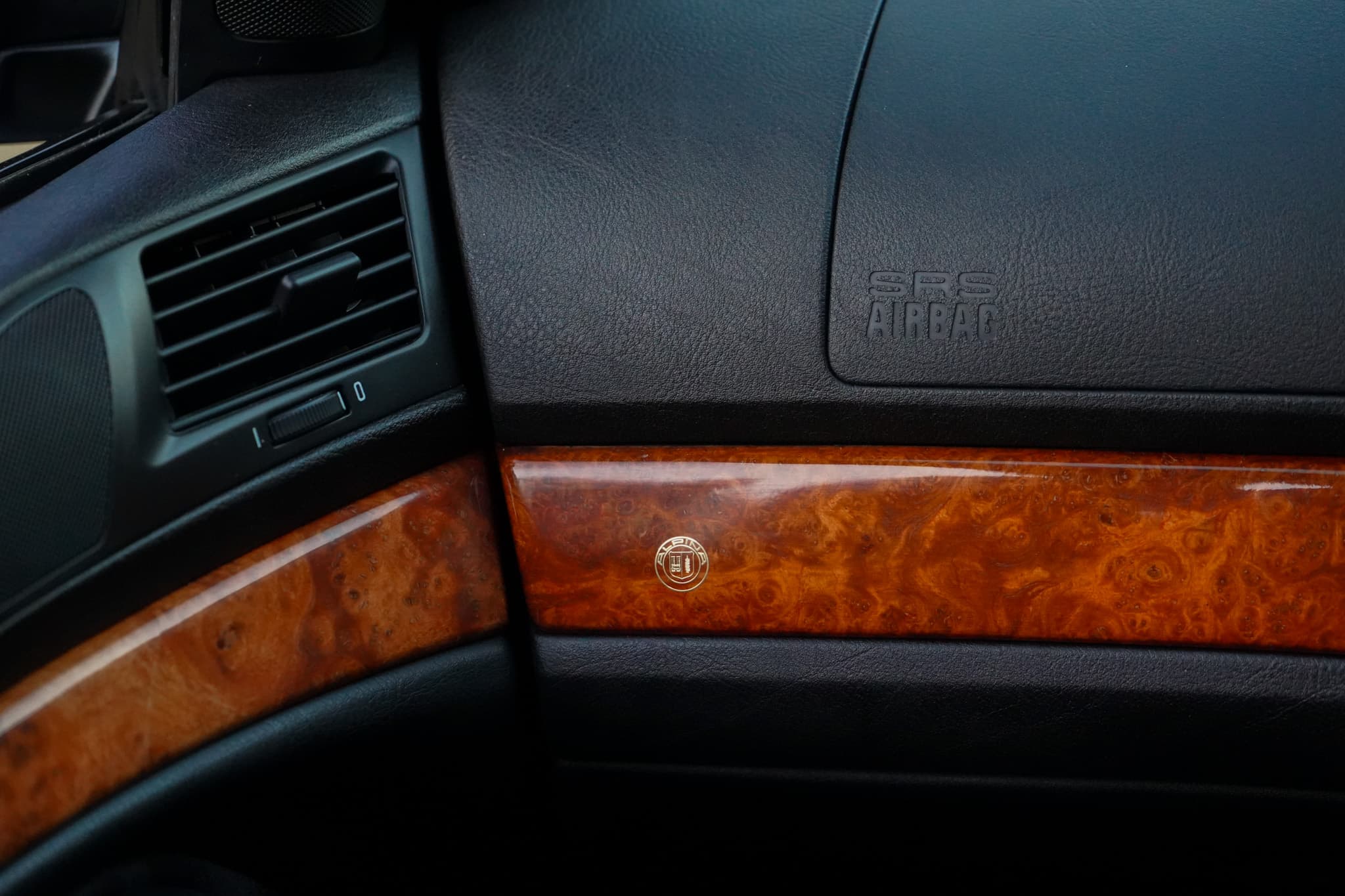
This is why one assumed VIN pattern, a dashboard plaque, wheels or exterior graphics cannot settle authenticity alone. Those details can support an inspection, but the stronger task is to reconcile the physical car, its numbers and its history with the factory record.
The current ALPINA reference begins with the B10 model family. B10 was used across more than one BMW 5 Series generation and a wide range of six-cylinder, V8, turbocharged, diesel, saloon and Touring derivatives, so the badge alone is not a complete specification.
For the later branch, the E39 B10 generation separates the chassis era from the individual derivative. That is the right level at which to compare chronology and model range before moving into exact engine, body and transmission combinations.
Editorial information
Research and editorial from TMJC Garage.
Research and editorialTMJC Garage
Reviewed byMatt Johnston
Last reviewed13 September 2026
Published byThe Matt Johnston Collection
TMJC media
TMJC assistance
Continue to the main TMJC website and speak directly with the collection team.
Sell, consign or editorial
Continue with TMJC for a discreet conversation, professional presentation and collector-focused support.
Enquire now