TMJC assistance
Want TMJC to help with this vehicle?
Sourcing, consignment and valuationContinue to the main TMJC website and speak directly with the collection team.
Variant
The 944 S2 is the 211 PS, 3.0-litre naturally aspirated late 944. Factory specs, 1988/MY1989 dating, identification, corrosion, roof and service-history checks.
TMJC guide
The 944 S2 is the 211 PS, 3.0-litre naturally aspirated late 944. Factory specs, 1988/MY1989 dating, identification, corrosion, roof and service-history checks.
The Porsche 944 S2 is the late naturally aspirated 944 built around a 2,990 cc, 16-valve four-cylinder producing 155 kW / 211 PS at 5,800 rpm and 280 Nm at 4,100 rpm. Porsche quotes 0-100 km/h in 7.1 seconds and a 240 km/h top speed.
It is also a useful example of why a classic Porsche cannot always be reduced to one year in a classified advert. Porsche's current history says the S2 appeared in 1988, Porsche Classic labels it MY 1989-91, and Porsche Finder places the late 944 generation under 944 II (1989-1991).
| Specification | Porsche figure |
|---|---|
| Engine | Water-cooled inline four, 16 valves |
| Displacement | 2,990 cc |
| Aspiration | Naturally aspirated |
| Maximum power | 155 kW / 211 PS at 5,800 rpm |
| Maximum torque | 280 Nm at 4,100 rpm |
| 0-100 km/h | 7.1 seconds |
| Top speed | 240 km/h |
| Layout | Front engine, rear transaxle, rear-wheel drive |
| Porsche model-year range | MY 1989-91 |
These figures describe the S2 rather than the whole 944 family. Earlier naturally aspirated cars, the 944 S and the Turbo use different engines and outputs.
Both dates appear in Porsche's own material, but they describe different things.
Porsche's 2026 transaxle chronology says that in 1988 the 944 S2 replaced the 944 S, bringing the 3.0-litre engine and 155 kW / 211 PS. Porsche Classic describes the derivative as MY 1989-91, while Porsche Finder groups 944 II as 1989-1991.
The sensible interpretation is therefore:
That distinction is more useful than calling one source wrong. On an individual car, the VIN, model year, build records and first-registration date should be treated as separate pieces of evidence.
For the broader 944 story, including its 924 origins and transaxle engineering, see the Porsche 944 model guide.
The S2 was the most developed naturally aspirated 944. Its 3.0-litre four-cylinder was unusually large for a production inline-four, and Porsche's own retrospective material describes it as the largest-displacement production passenger-car inline-four of its time.
That engine gave the S2 a different character from the contemporary Turbo. Porsche Klassik specifically contrasts the naturally aspirated 3.0-litre car's immediate response with the period turbocharged engine's need to build boost and revs. That does not make one derivative universally better; it explains why S2-versus-Turbo comparisons need more than peak power figures.
The basic architecture remained classic transaxle Porsche: engine in the nose, gearbox and differential at the rear, with the driveline linked through a central tube. Porsche used that layout to distribute the major masses between the axles while retaining the practicality of the 944 hatchback body.
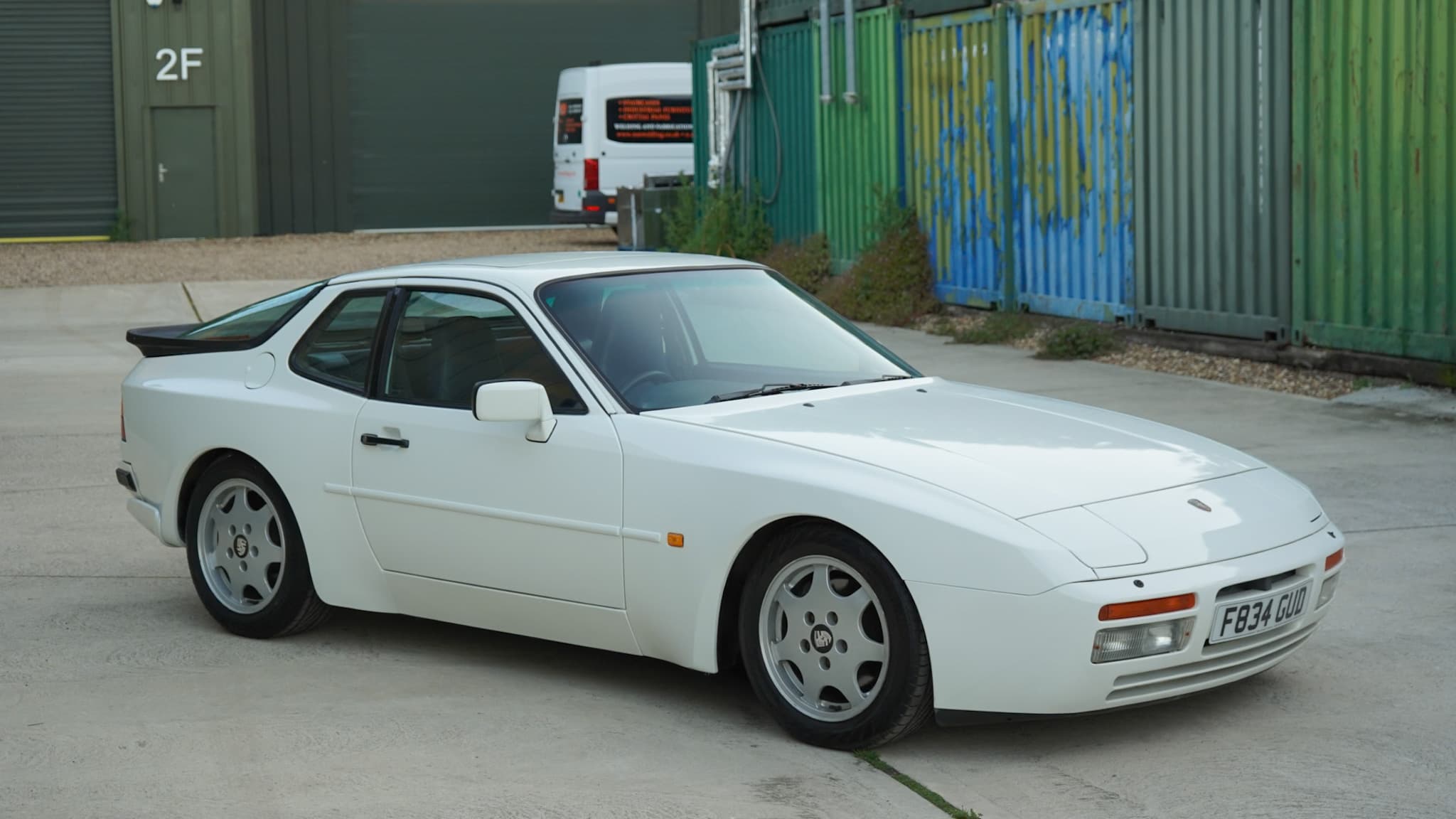
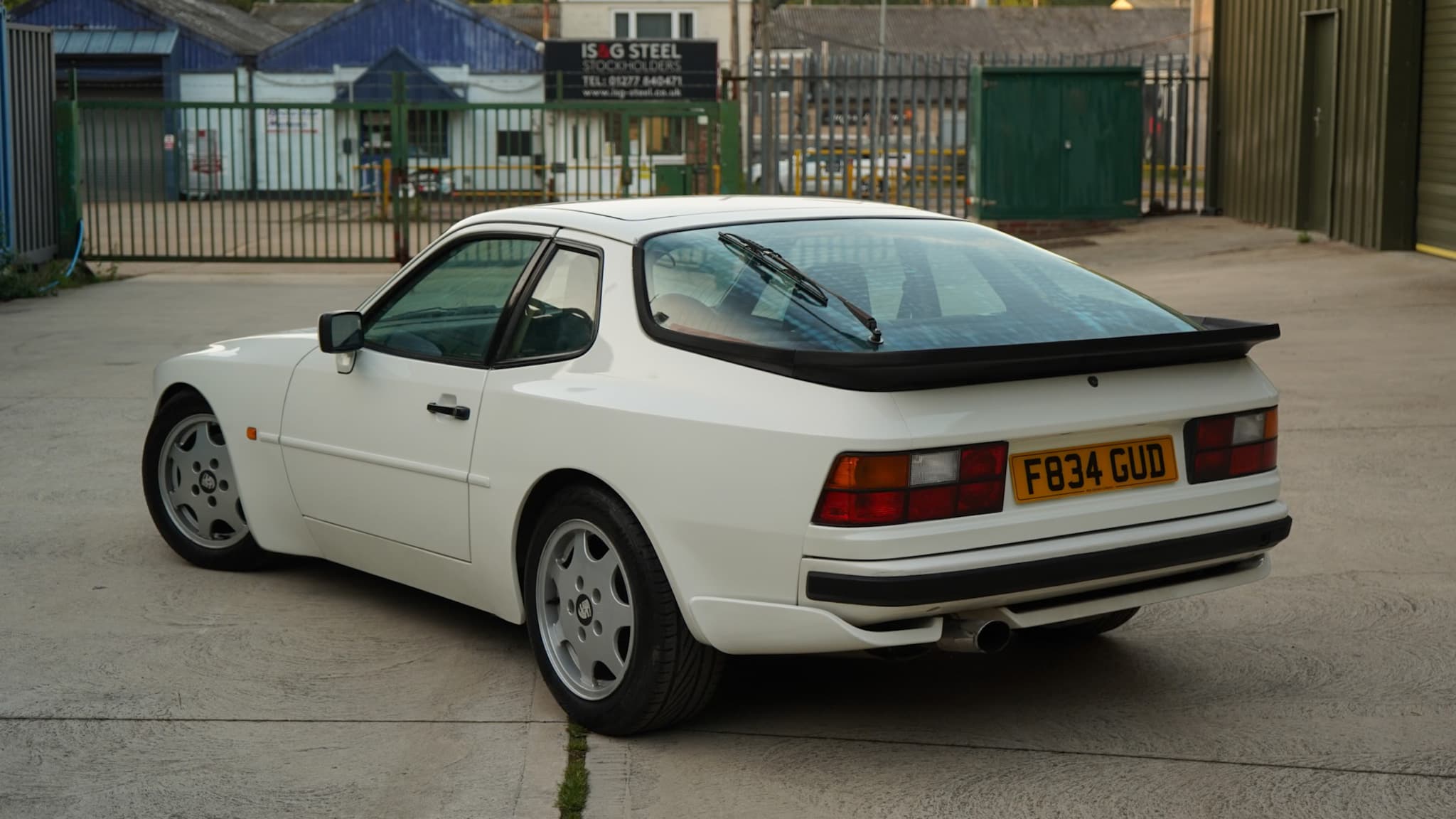
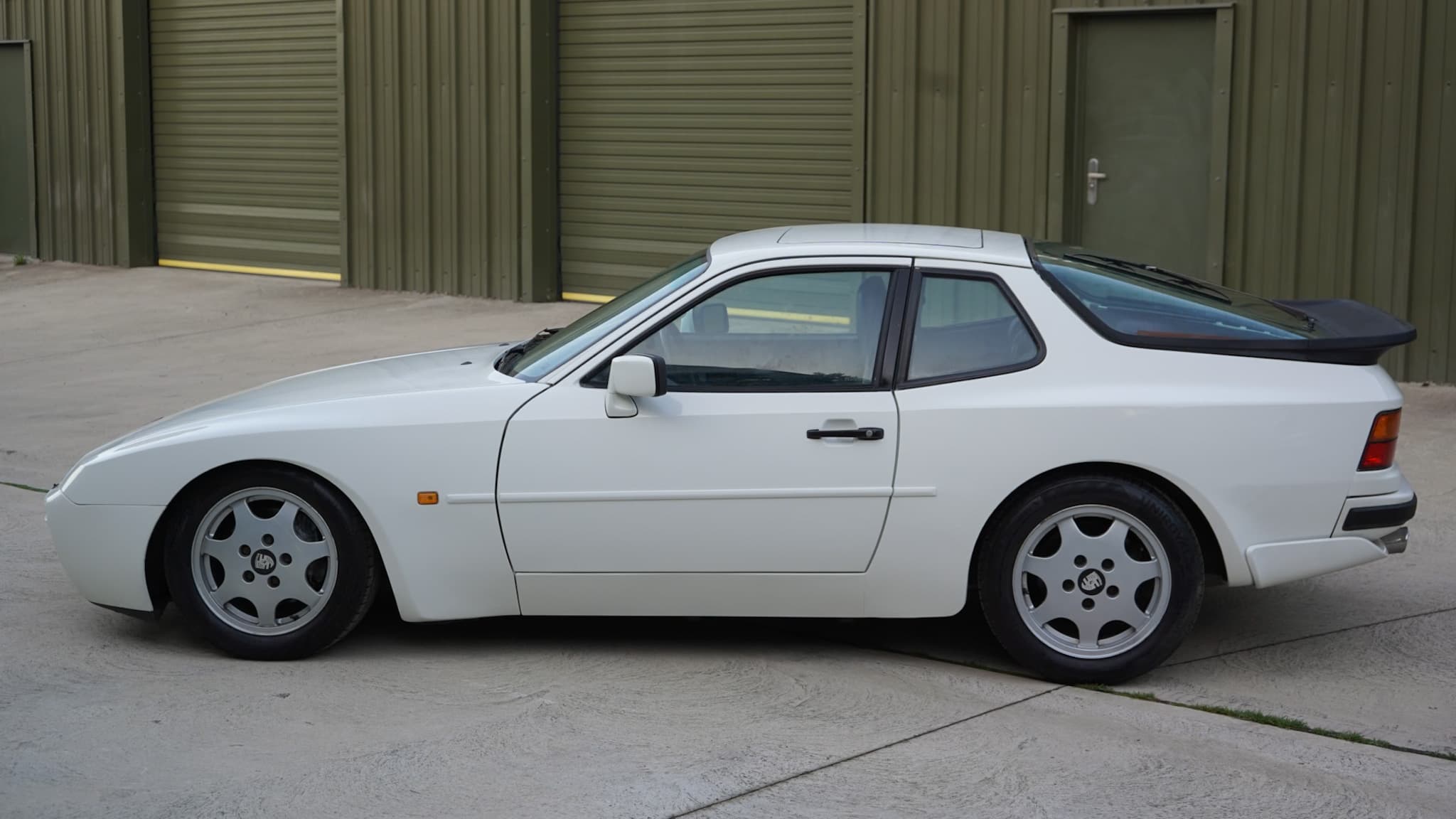
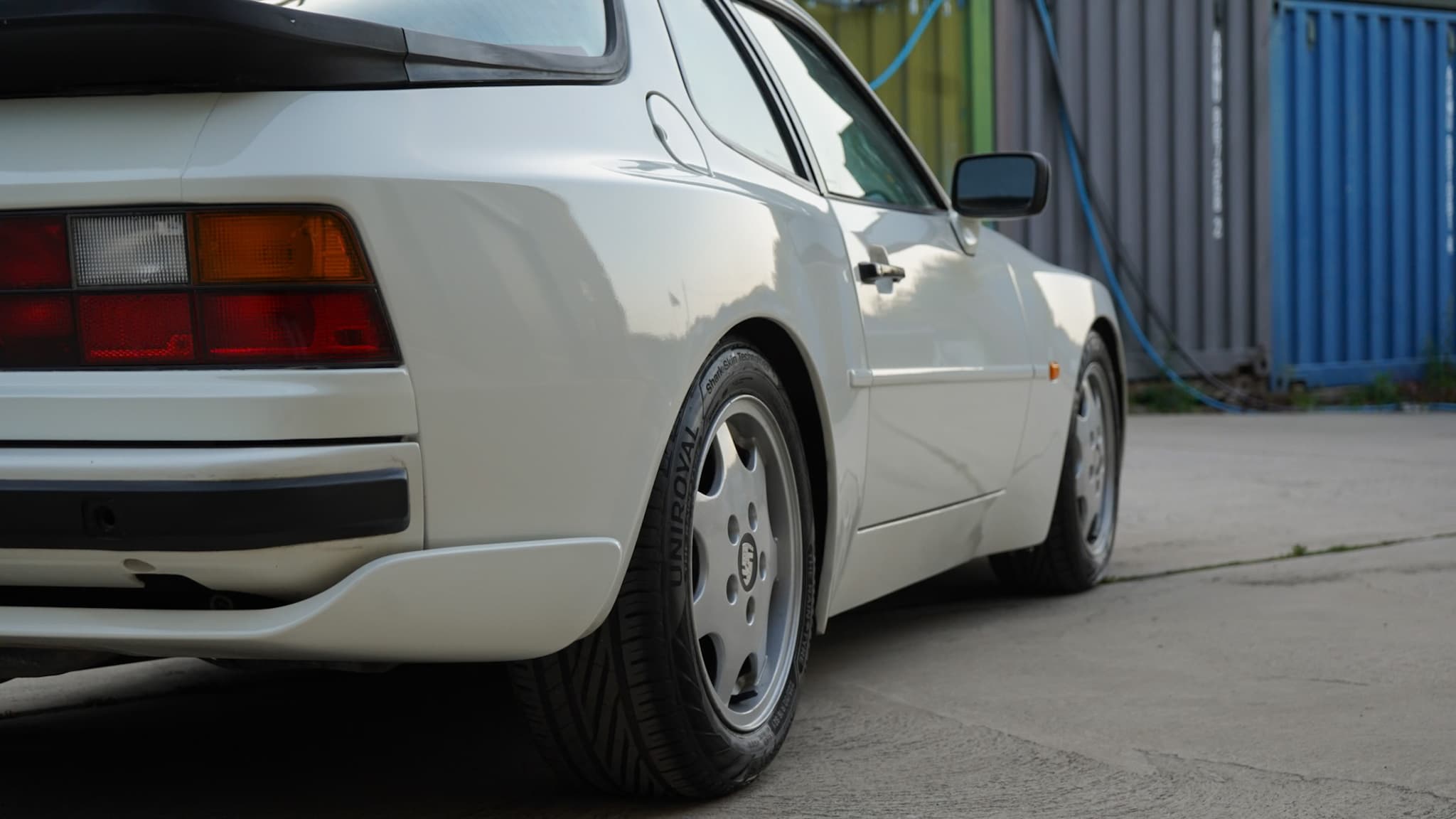
Porsche Classic gives several useful visual cues. The S2 used the Turbo bodyshell and rear diffuser, while the front treatment incorporates the main/fog lighting below the indicators and an air intake between them.
Those clues are helpful, but they are not authentication on their own. Over decades, 944s have been repaired, modified and fitted with parts from other derivatives. A Turbo-style front end, later wheels or an S2 badge cannot substitute for a consistent model-year/VIN identity and supporting history.
Porsche Finder also makes an important body distinction: it lists 944 S2 and 944 S2 Cabriolet separately. This page is about the S2 Coupé. Cabriolet-specific body, weight and equipment figures should not be silently applied to the Coupé simply because both cars share the S2 engine family.
Porsche Classic parts documentation identifies the 1989-1991 S2 3.0-litre engine as M44.41. Porsche parts documentation also identifies a camshaft timing belt applicable to the M44.41 and a separate balance-shaft belt.
The valve drive is more nuanced than the phrase timing-belt engine suggests. Porsche workshop literature for the 16-valve S/S2 also shows a chain between the two camshafts with its own spring-loaded tensioner. In other words, the S2 uses both belt-driven and chain-linked parts of the timing system.
That distinction matters when reading service history. An invoice saying only timing chain done is not evidence that the external camshaft timing belt was replaced. Equally, belts done does not tell you whether the inter-cam chain/tensioner was inspected or renewed.
Porsche Cars North America's classic maintenance sheet PNA CLA 162 F gives a clear numeric factory schedule. For the 944 S2/Turbo MY 1989-91 it specifies camshaft-drive-belt replacement every 45,000 miles / 72,000 km, alongside more frequent belt inspection/tension work and a follow-up condition/tension check after replacement.
That is useful primary evidence, but it is explicitly a Porsche Cars North America schedule. It should not be relabelled as proof that Porsche Cars Great Britain used exactly the same mileage/time rule for every UK-market S2.
For a UK car, the strongest evidence remains the correct period service literature plus dated invoices showing what was actually done. Modern specialists may recommend more conservative age-based intervals for cars now several decades old; that is current preventive practice rather than a period Porsche UK factory schedule.
Porsche Klassik says that between 1988 and 1991 fewer than 9,400 S2 Coupés and around 7,000 Cabriolets were produced worldwide.
The wording matters. Fewer than 9,400 is a rounded manufacturer statement, not an exact Coupé production ledger. It is good evidence that the S2 Coupé is relatively uncommon within the 944 family, but it should not be converted into a precise structured total.
Porsche separately gives 163,302 as the production total for the entire 944 series. That number includes far more than the S2 and should never be presented as S2 production.
A useful S2 inspection starts with identity and paperwork before moving to cosmetic detail.
Check the VIN/model year against the claimed derivative and market. Confirm that the engine identity and gearbox match the documentary history. First registration can be later than manufacture, so a registration year alone should not be used to settle a borderline model-year question.
Look for dates, mileage and parts rather than a vague timing done note. A strong history should let you tell when the camshaft belt and balance-shaft belt were serviced and what work, if any, was carried out around the cam-chain/tensioner assembly.
The Turbo-style S2 body makes accident repair and panel history worth understanding. Inspect panel fit, paint consistency, structural repair evidence and the documentation behind any restoration. Cosmetic correctness is useful, but it is not the same as documented factory identity.
Porsche made running changes during the late 944 period. One example is the airbag steering wheel: Porsche Klassik notes that it became standard on the S2 from February 1991. A detail that is correct for a late 1991 car can therefore be wrong as a blanket rule for every 1989-91 S2.
The same caution applies to spoilers, wheels, paint and trim. Porsche's own Classic material contains conflicting wording about the exact model-year point for one rear-spoiler change, so this page does not invent a precise year where the primary record is not clean.
A 944's galvanised shell is a useful advantage, not a guarantee against corrosion. Classic & Sports Car recommends inspecting sills and wings carefully, while the S2-specific Elferspot guide adds the windscreen surround, doors and the storage areas behind the rear wheels. Poor jacking can deform the sill area and break the protective coating, so jacking points and previous repairs deserve more attention than a shiny outer finish.
On a Coupé, also check the removable roof as a complete system. Ageing seals and blocked drains can allow water into the roof frame or cabin, and the lift mechanism has plastic gears and microswitches that can become troublesome with age. Damp carpets, staining or a roof that does not raise and lower cleanly should be investigated rather than accepted as normal old-car behaviour.
The late 944's aluminium front lower arms incorporate the ball joints, so play, cracking or poor geometry is more significant than a cheap replaceable joint on its own. On the road, listen for transaxle whine, feel for reluctant or vague gear selection and check for driveline vibration; specialist buyer guidance treats those as reasons for closer diagnosis, not quirks to ignore.
Brake calipers can suffer from age and lack of use, so confirm the car brakes evenly and releases cleanly. Test the pop-up headlamps, windows, mirrors, sunroof/roof mechanism, tailgate release, instruments and any fitted air-conditioning rather than assuming an electrical fault is minor.
These are inspection priorities, not claims that every S2 develops the same faults. A well-maintained higher-mileage car with specific invoices can be a stronger proposition than a low-mileage example with long gaps in use or vague service history.
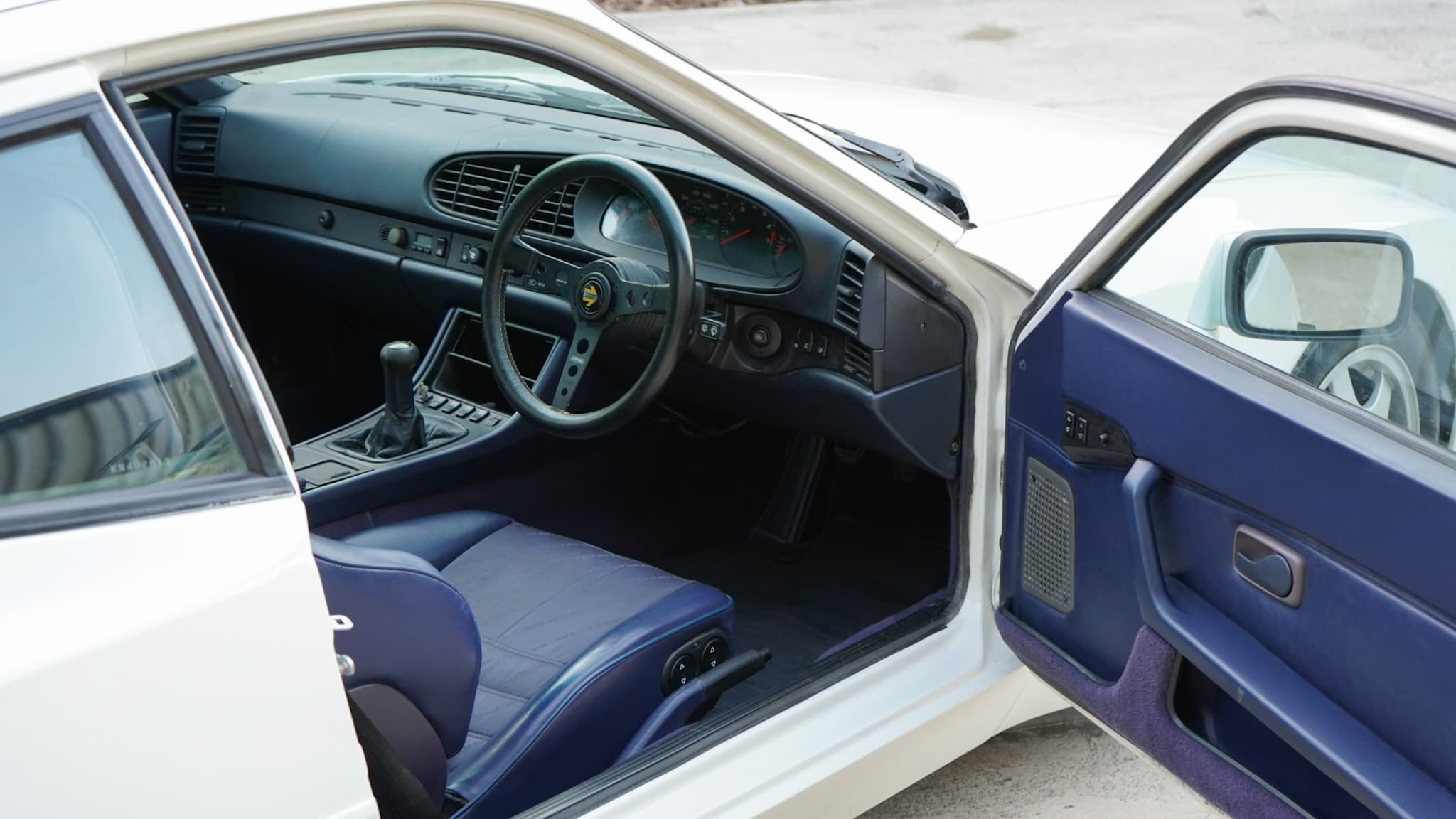
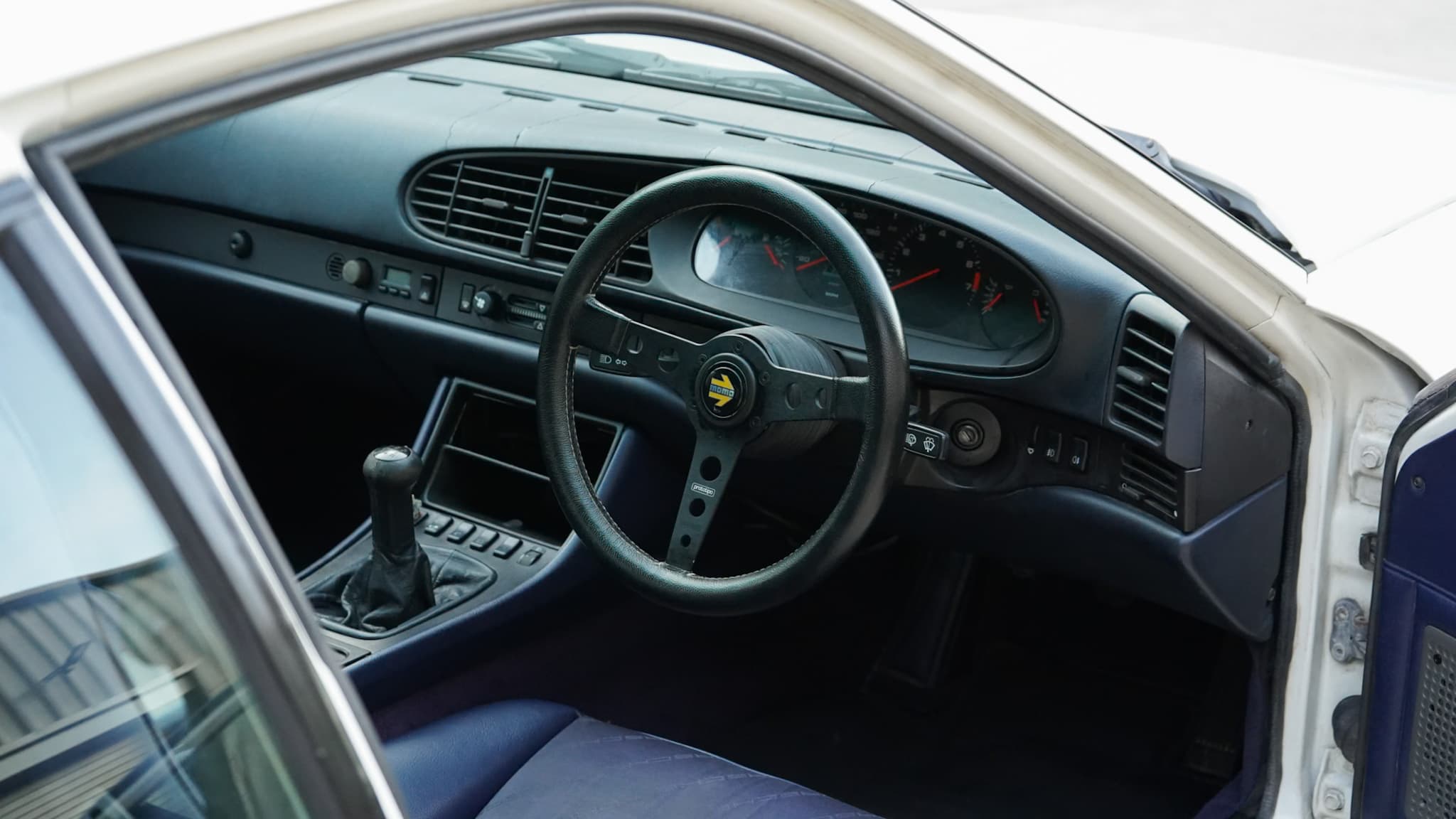
TMJC has handled a 1989 Porsche 944 S2, which gives this branch a real first-party example. The archived TMJC research records it as a right-hand-drive manual car with the 3.0-litre S2 engine.
That example is useful because it sits directly in the S2/944 II period. Its individual colour, trim, mileage and ownership or maintenance history remain facts about that one car. They are not promoted into model-wide S2 specification.
For a collector, that distinction is important: a real car can illustrate how a derivative appears in the market without becoming the source for what Porsche built universally.
The S2 and late Turbo share visual themes but answer the performance question differently. The S2 uses the large 3.0-litre naturally aspirated 16-valve four-cylinder at 211 PS; the late Turbo uses forced induction and, from 1989, Porsche's chronology gives the regular Turbo the 250 PS output associated with the preceding Turbo S.
A serious S2-versus-Turbo comparison should therefore look at power delivery, condition, service history and the exact model year rather than assuming the similar body treatment means similar mechanical specification. For a direct like-for-like comparison, see Porsche 944 S2 vs Turbo: what actually differs?.
Editorial information
Research and editorial from TMJC Garage.
Research and editorialTMJC Garage
Reviewed byMatt Johnston
Last reviewed20 September 2026
Published byThe Matt Johnston Collection
Model lineage
TMJC photography
TMJC assistance
Continue to the main TMJC website and speak directly with the collection team.
Sell, consign or source
Continue with TMJC for a discreet conversation, professional presentation and collector-focused support.
Enquire now