TMJC assistance
Want TMJC to help with this vehicle?
Sourcing, consignment and valuationContinue to the main TMJC website and speak directly with the collection team.
Generation
The R56 is the three-door second-generation MINI Hatch built from 2006 to 2013. Trace its engines, 2010 updates, variants and the checks that matter.
Variant directory
Choose an exact R56 derivative for engine, gearbox, performance, dimensions, equipment and buying-context detail.
TMJC guide
The R56 is the three-door second-generation MINI Hatch built from 2006 to 2013. Trace its engines, 2010 updates, variants and the checks that matter.
The MINI Hatch R56 is the three-door, second-generation modern MINI built at Plant Oxford from September 2006 to 28 November 2013. UK sales began with the Cooper and Cooper S on 18 November 2006. It is commonly described as a 2007-2013 car because 2007 was its first full model year, but reveal, production, sale and registration dates are not interchangeable.
R56 is a body code, not a label for every MINI from the same period. The Clubman is R55 and the Convertible is R57. The distinction affects dimensions, engines, body parts, recalls and service information.
MINI revealed the replacement Hatch in August 2006 and began series production the following month. Although the shape was deliberately evolutionary, BMW Group described a completely new body, cabin, engine family and suspension. Every body panel changed, the headlamps became fixed to the body rather than lifting with the bonnet, and the dashboard kept its large central speedometer while packaging and material quality were revised.
The regular R56 range used a three-door, four-seat Hatch body, although specialised derivatives such as the two-seat GP2 were exceptions. A March 2011 UK technical matrix gives a 2,467 mm wheelbase across the listed range, but length differs between ordinary, Cooper S/SD and John Cooper Works cars. Those differences prevent one derivative's measurements from being treated as universal.
Plant Oxford built 1,041,412 examples of this outgoing Hatch generation before the last car left the line on 28 November 2013. Production of its F56 replacement had already begun, with the new car reaching the UK in spring 2014. A late registration therefore does not by itself identify which generation a car belongs to.
The engine range changed substantially during the R56's life. At UK launch, the Cooper used a naturally aspirated 1.6-litre petrol engine rated at 120 hp, while the Cooper S used a turbocharged, direct-injection 1.6 rated at 175 hp. Both had a six-speed manual gearbox as standard and a six-speed automatic option.
The range then broadened rather than staying as one fixed specification:
| UK timing | Hatch change | Why it matters |
|---|---|---|
| November 2006 | Cooper and Cooper S on sale | Launch specifications apply only to these derivatives |
| April 2007 | One 1.4 petrol and Cooper D 1.6 diesel added | The R56 is not a petrol-only generation |
| 22 July 2008 | Factory-built John Cooper Works Hatch went on sale in the UK | Separates the production JCW model from earlier John Cooper Works tuning-kit cars |
| 2009 | First introduced as a Hatch-only entry model | Entry-level engine and equipment differ from One/Cooper |
| March 2010 | Revised petrol range; First and One moved to 1.6 litres | Engine changes arrived before the visual family refresh |
| September 2010 | Wider family refresh and new 1.6 diesel engines | Often called the 2011 facelift in model-year guides |
| March 2011 | Cooper SD 2.0 diesel joined the UK Hatch | Late diesel specification is distinct again |
Engine-code shorthand also needs care. Ordinary Cooper petrol cars are commonly divided between N12 and later N16 engines; Cooper S cars between N14 and later N18. John Cooper Works did not follow the ordinary Cooper S change at exactly the same time and retained an N14-based engine into 2012. Build date, market, derivative and VIN should therefore be checked before ordering parts or applying a buyer's guide to a particular car.
The regular Cooper S changed before the John Cooper Works models did. MINI's January 2010 UK release says the Cooper S received a revised 1.6-litre engine for sale from March 2010, adding fully variable valve control to its twin-scroll turbocharging and direct injection and raising output to 184 hp. That change belongs to the regular Cooper S range; it should not be used as a blanket date for JCW cars.
MINI did not announce the comparable new-generation John Cooper Works engine until May 2012, for introduction from July. The manufacturer described it as based on the Cooper S unit and using the same combination of twin-scroll turbocharging, direct injection and VALVETRONIC-based variable valve control. The update also made a six-speed automatic available across the JCW range for the first time.
This is why a simple “post-facelift means the later engine” rule is unsafe. Specialist parts and buyer references commonly describe the ordinary Cooper S as moving from N14 to N18 around the 2010/11 transition while JCW retained the earlier N14-family engine later. MINI's opened launch material does not use those engine-code labels, so use them as identification shorthand, not as a substitute for the car's build data.
For a buyer, verify the derivative, production date and VIN before deciding which engine-specific checks apply. A 2011 or early-2012 JCW should not automatically be treated like a same-year ordinary Cooper S simply because both cars have post-refresh styling. TMJC's 2013 GP2 sits after the July 2012 JCW powertrain change, but it remains a separate two-seat special with its own specification.
The R56 kept front-wheel drive and the short-overhang, wheel-at-each-corner layout associated with modern MINI. Launch material describes MacPherson struts at the front and a new central-arm rear axle, with electromechanical power steering replacing the earlier hydraulic assistance. The Cooper S received firmer standard tuning, while a sports suspension was optional on launch Cooper and Cooper S models.
The engineering change with the greatest character effect was the Cooper S switch from the earlier R53's supercharger to a twin-scroll turbocharger. That gave the R56 S a different torque delivery as well as improved official economy and emissions. Those launch numbers should not be projected across later Cooper S, JCW or GP2 cars, all of which received their own revisions.
There was no single UK event best described simply as a "2011 facelift." MINI introduced updated petrol engines for sale in March 2010. The Cooper rose to 122 hp and the Cooper S to 184 hp, while the First and One moved from 1.4 to 1.6 litres.
A broader refreshed MINI family followed on 18 September 2010, bringing exterior and cabin detail changes and revised diesels. Many reference works call those cars model year 2011 or LCI models. Either description can work, provided the March engine update and September family refresh are kept separate.
Identify the exact build and engine rather than relying on a facelift bumper, registration year or seller's shorthand. Mechanical changes did not reach every derivative simultaneously.
The R56 range stretched from the First and One through Cooper, Cooper S and John Cooper Works versions, with petrol and diesel choices and numerous equipment packages. Special editions can add unusual colours, trim and wheels without changing the underlying engine specification, so badges and appearance alone are not enough to authenticate a car.
For the turbocharged petrol derivative, the MINI Hatch R56 Cooper S reference keeps the 175 hp launch specification, the 184 hp spring-2010 update and derivative-specific buying checks together. Those values should not be projected onto the naturally aspirated Cooper, the diesels, factory John Cooper Works cars or the GP2.
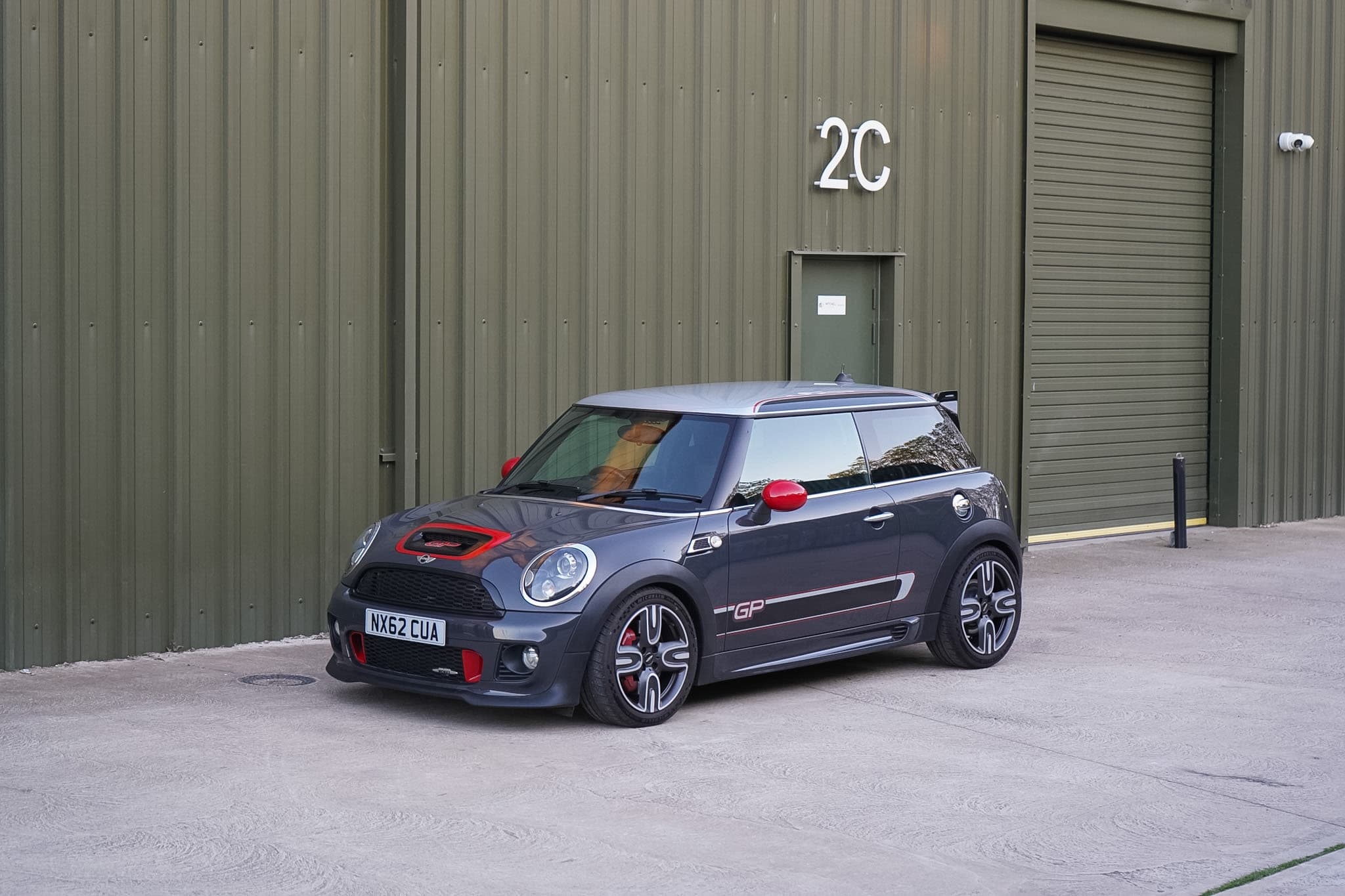
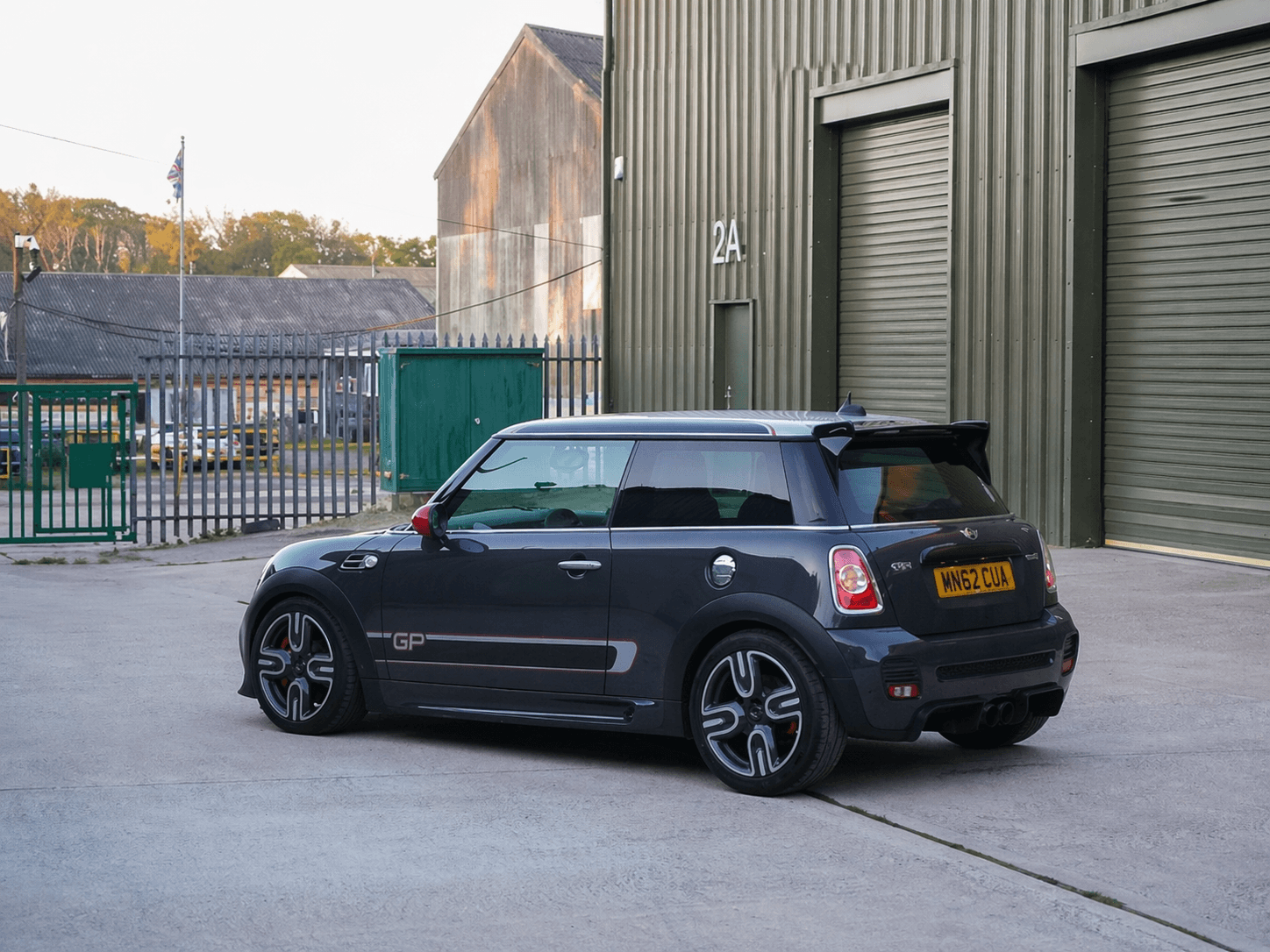
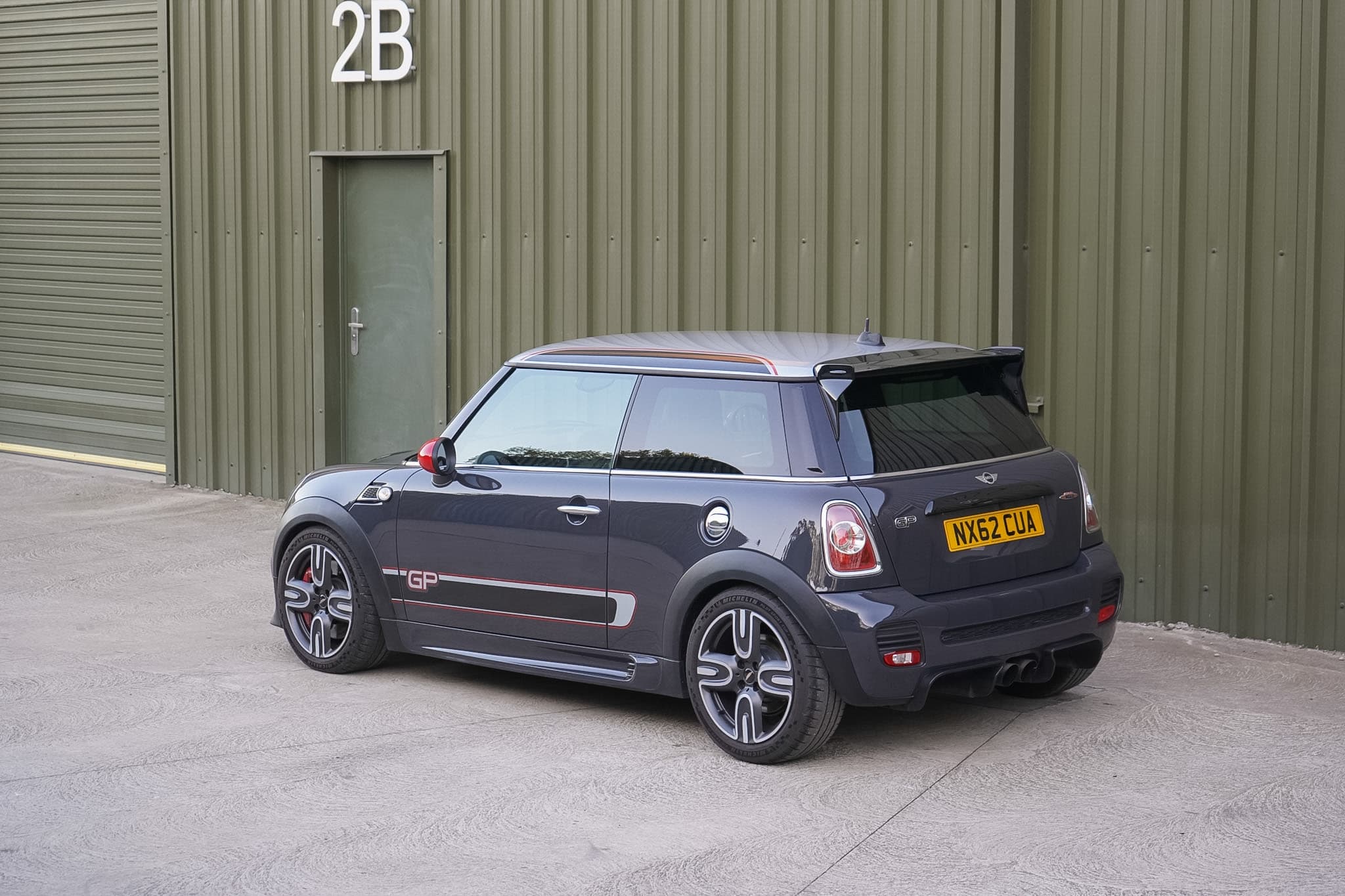
At the focused end sits the second-generation John Cooper Works GP2, officially launched as the MINI John Cooper Works GP and commonly called GP2 to distinguish it from the earlier R53 GP. MINI announced it in 2012 and said production of the limited run of up to 2,000 units would begin later that year. The GP2 is a two-seat, track-oriented derivative with its own suspension, brakes, output, weight and equipment. Those figures belong to the variant, not to the generation as a whole. For factory-correctness detail on the special, see the MINI GP2 originality guide.
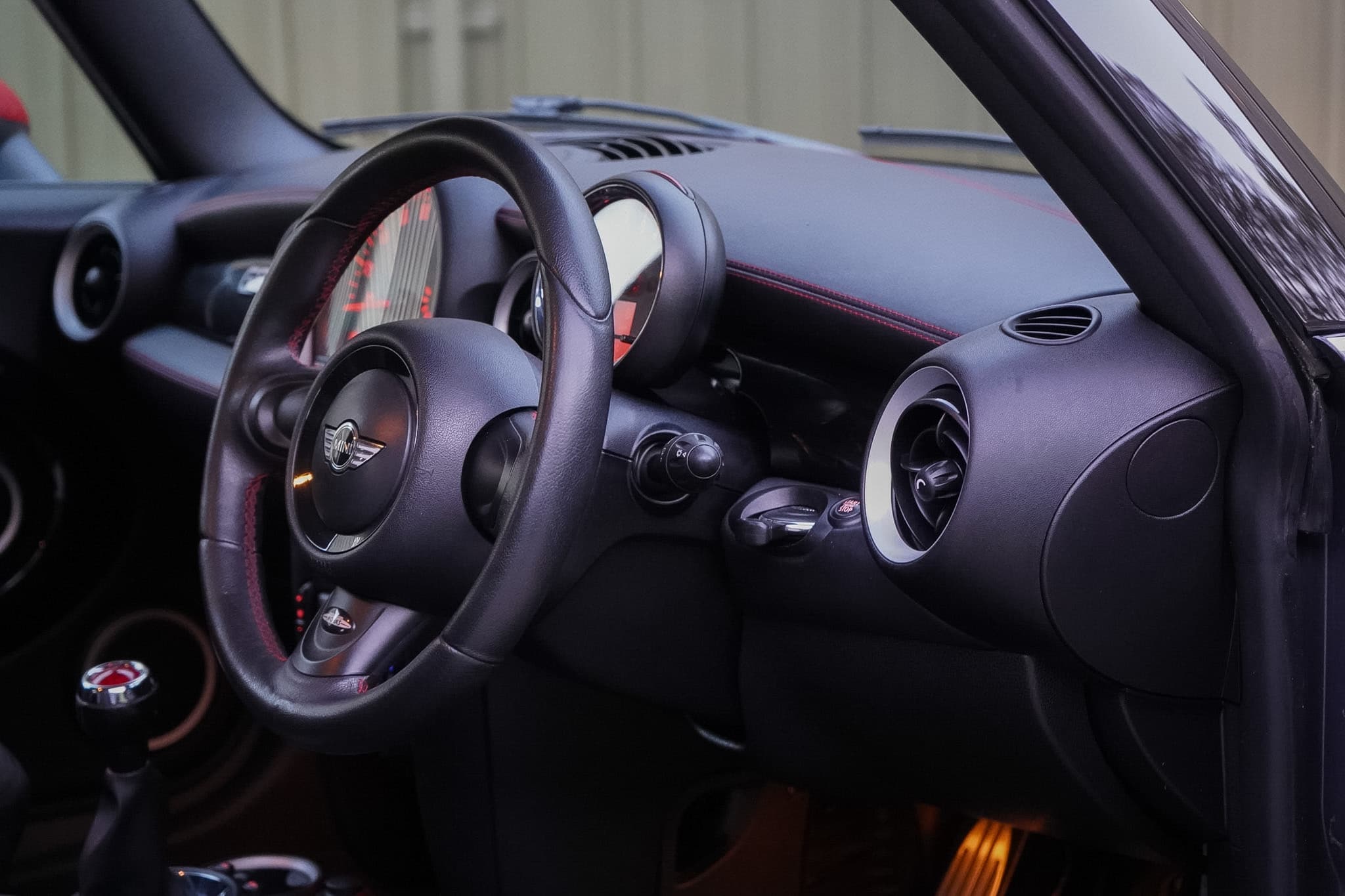
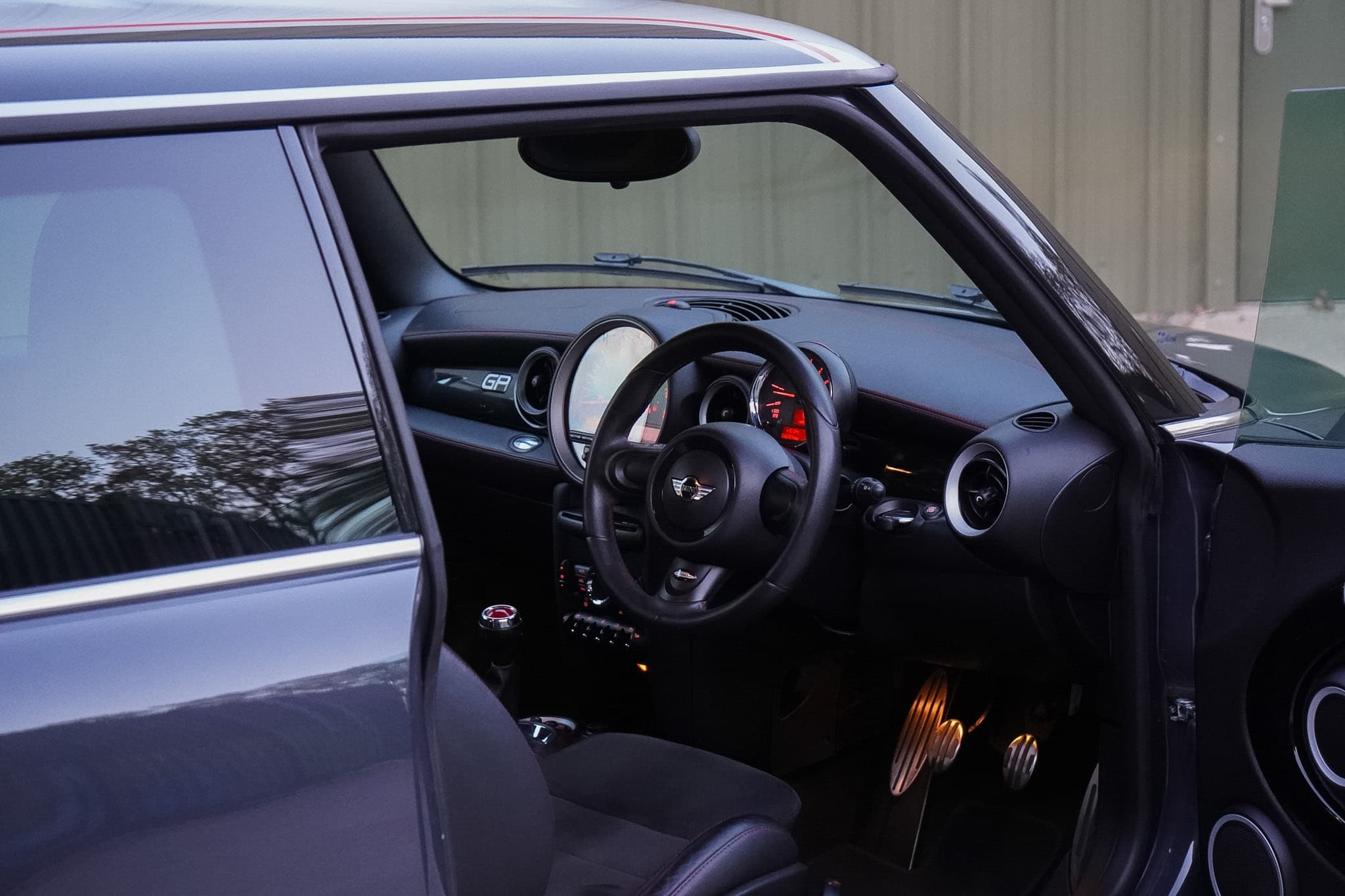
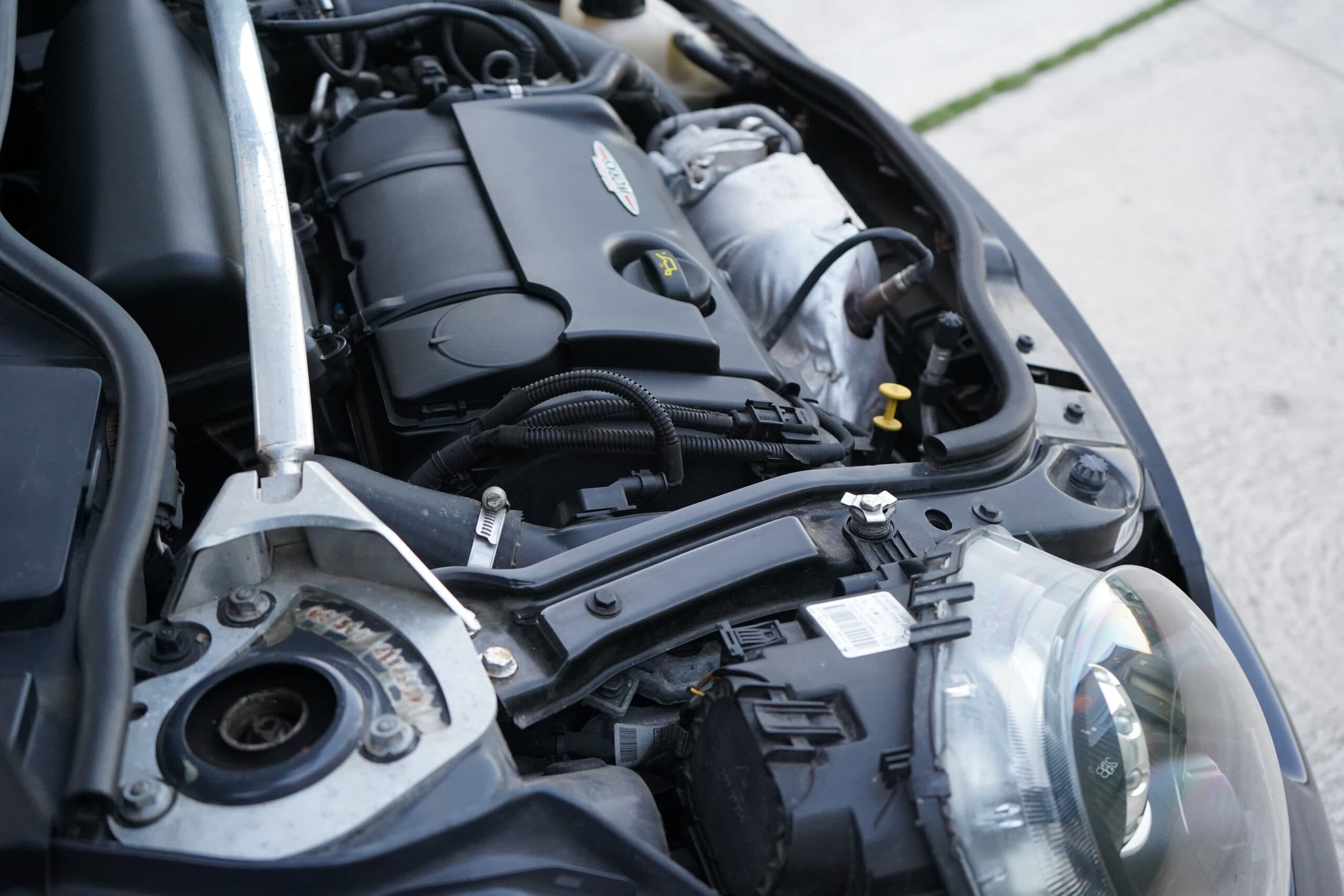
TMJC's R56 photography includes an individual Thunder Grey GP2 as real-world context. Its mileage, production number, ownership, service file, condition and preparation belong to that car rather than to every GP2 or R56.
Condition and maintenance history matter more than a blanket verdict on the generation. Start by confirming the engine code and listening to a genuinely cold start. On affected N14 turbo cars, BMW/MINI technical material and specialist guides support careful attention to timing-chain or tensioner noise. High-pressure fuel-pump trouble, carbon deposits, turbo control issues, oil leaks or consumption and cooling-system faults are also recurring inspection themes on relevant petrol derivatives.
Those risks are not evenly distributed. A naturally aspirated Cooper, a Cooper S, a diesel and a late JCW do not share the same engine or failure profile. The later N18 Cooper S is not mechanically identical to an early N14 car, while a facelift JCW can still retain the earlier engine. Ask for invoices that identify the work and parts used rather than accepting a general claim that "the common issues were done."
Beyond the engine:
A strong history on the correct engine and build can be more valuable than low mileage with long service gaps.
MINI's own US technical material gives a much narrower answer than the shorthand that “R56s have timing-chain problems”. In SI M11 04 13, MINI told dealers to check certain R55, R56 and R57 cars with the N14 engine produced from November 2006 to May 2009. The bulletin says inconsistent internal tolerances in the chain tensioner could reduce spring force and, depending on wear, produce a rattle when the engine is started cold or is idling.
That does not mean every car in the date range automatically needed a complete timing-chain kit. MINI's procedure identified the tensioner design and measured chain/tensioner condition before deciding whether the tensioner alone or the wider timing-chain and guide assembly needed replacement.
A separate 2016 MINI USA limited-warranty extension used a different eligibility window. It lists R56 Cooper S Hardtops from model years 2007-2009, produced 14 November 2006 to 2 September 2009, and 2009 R56 Cooper S JCW Hardtops produced 11 March 2008 to 1 September 2009. The same bulletin explicitly says this was not a recall or service action and that eligibility had to be checked by VIN. The differing dates are therefore not two competing answers to one cutoff; they describe different US programmes.
For a UK buyer, these documents are valuable evidence that the early N14 timing-chain/tensioner issue was real and build-specific, but they do not establish UK recall or warranty coverage. Confirm the engine and production date, look for invoices showing what was actually replaced, and check any outstanding campaign by VIN with MINI or the relevant UK authority. Do not apply the early-N14 campaign to an ordinary later R56, an N18 Cooper S or a 2013 GP2 simply because all are second-generation MINI Hatches.
Begin with the VIN and production date, then confirm that the body is the three-door R56. Check the derivative and engine code before consulting specifications. R55 Clubman and R57 Convertible data should not be substituted merely because the cars share an era and some components.
For sporting versions, verify factory identity rather than relying on JCW badges, bumpers or tuning parts. GP2 cars need an even narrower check of their numbered and model-specific equipment.
Editorial information
Research and editorial from TMJC Garage.
Research and editorialTMJC Garage
Reviewed byMatt Johnston
Last reviewed26 October 2026
Published byThe Matt Johnston Collection
Model lineage
TMJC photography
TMJC Guides
TMJC assistance
Continue to the main TMJC website and speak directly with the collection team.
Sell, consign or source
Continue with TMJC for a discreet conversation, professional presentation and collector-focused support.
Enquire now