TMJC assistance
Want TMJC to help with this vehicle?
Sourcing, consignment and valuationContinue to the main TMJC website and speak directly with the collection team.
Model
The modern MINI Hatch began production in 2001. Trace R50/R53, R56 and F55/F56 codes, why Cooper S moved from supercharger to turbocharger, and current Cooper naming.
Generation directory
Choose a Hatch generation to see its production years, body styles, engines, chassis changes and variants.
TMJC guide
The modern MINI Hatch began production in 2001. Trace R50/R53, R56 and F55/F56 codes, why Cooper S moved from supercharger to turbocharger, and current Cooper naming.
The modern MINI Hatch entered volume production at Plant Oxford on 26 April 2001 and reached UK showrooms on 7 July. It was a new BMW-era car rather than a continuation of classic Mini production, but it deliberately carried forward the compact proportions, personalisation and playful character that made the 1959-2000 original distinctive.
Across the years, the three-door core was joined by five-door hatchbacks, petrol and diesel derivatives, high-performance Cooper S and John Cooper Works versions, and electric models.
BMW Group has consistently positioned the modern MINI as a premium small car. Its 2016 Oxford history describes the 2001 car as the first small car of the premium segment, while 2014 launch material describes the third-generation car as a leading original of the premium small car segment. That is manufacturer market positioning, not a claim that every Hatch shares one size, powertrain or production site.
The names and generation counts can be confusing, so the most reliable way to compare two cars is to combine build date, body style and model code.
BMW Group Classic draws a useful line in the spelling. Classic Mini describes the original small car built from 1959 to 2000; all-capitals MINI identifies the new generation from 2001.
That distinction matters here. This page covers the modern MINI Hatch family. The classic car supplies the design and cultural context, but 1959 is not the production start of this model line.
If you compare British and American MINI material, the body name changes. BMW Group UK calls the outgoing 2006–2013 R56 the MINI Hatch. MINI USA described the same second-generation core three-door family as the MINI Cooper Hardtop, including a 2012 reference to road-going 2007–2013 Cooper Hardtops.
In this context, Hatch and Hardtop are market-facing names rather than evidence of a different R56 chassis or a removable hard roof. A U.S. Cooper S Hardtop and a UK Cooper S Hatch can therefore belong to the same broad R56 generation, while still differing in market specification, model-year detail and equipment.
For identification, use the car’s market, build/model year, derivative and R/F/J code rather than the word Hatch or Hardtop on its own.
Volume production of the MINI One and MINI Cooper began at Oxford on 26 April 2001. The UK launch followed on 7 July. Some international guides group the cars under a 2002 model year, which explains why apparently reputable timelines can look one year apart.
The first-generation code is also derivative-sensitive. R50 normally identifies the naturally aspirated One and Cooper hatchbacks, while the supercharged Cooper S hatchback is R53. R52 identifies the related Convertible, not the hatchback. Calling every early modern Hatch an R50 therefore loses a useful identification distinction.
This first car established the BMW-era formula: a compact three-door body, strong visual links to the classic Mini, extensive personalisation and a range that ran from the One to the Cooper S.
MINI revealed the second-generation replacement in August 2006, with Cooper and Cooper S versions reaching the UK market before the end of that year. Many used-car references describe it as a 2007-2013 model because 2007 was its first full model year.
The three-door Hatch is R56. Other second-generation shapes have their own codes, including R55 for the Clubman and R57 for the Convertible, so R56 should not be used as shorthand for every MINI of the period. For generation-specific engines, the 2010 updates and buying checks, see the MINI Hatch R56 reference.
Although the design was intentionally evolutionary, BMW Group described a comprehensively new body, interior, engine family and suspension. The Cooper S also moved from supercharging to turbocharging. Later in the R56 life, the range broadened across petrol and diesel versions and received a mid-cycle update, making build date and exact derivative essential when comparing equipment or mechanical specification.
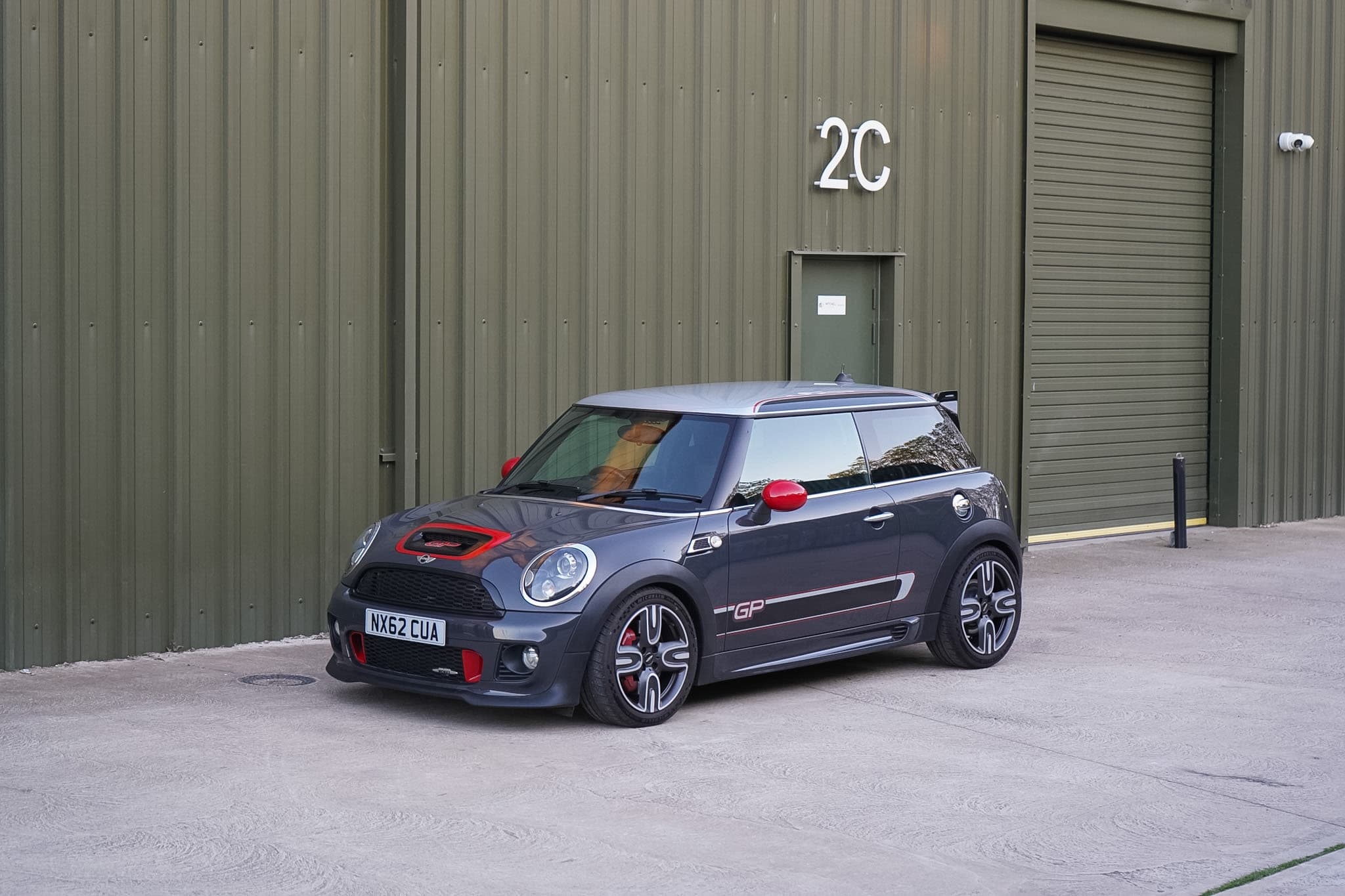
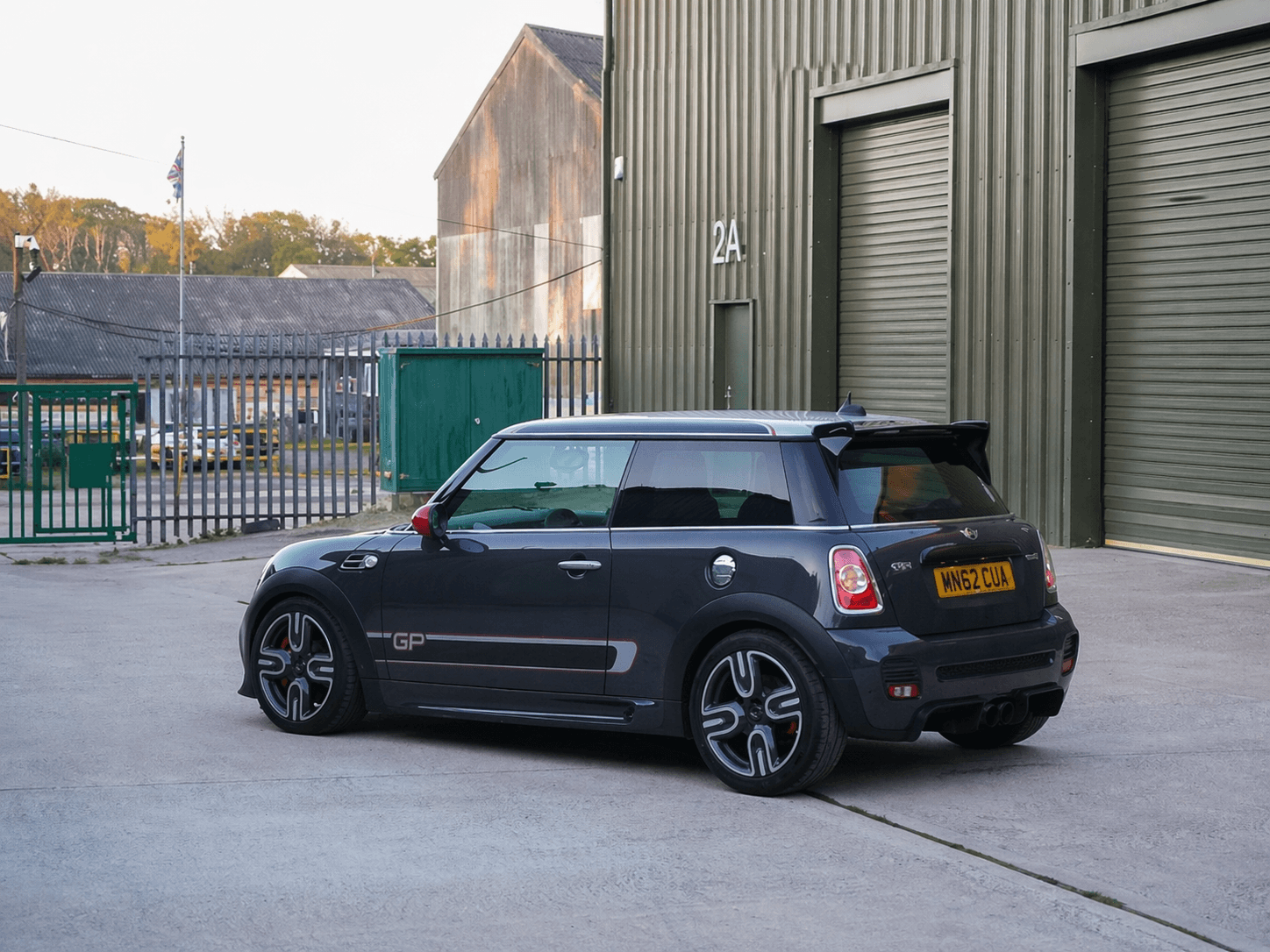
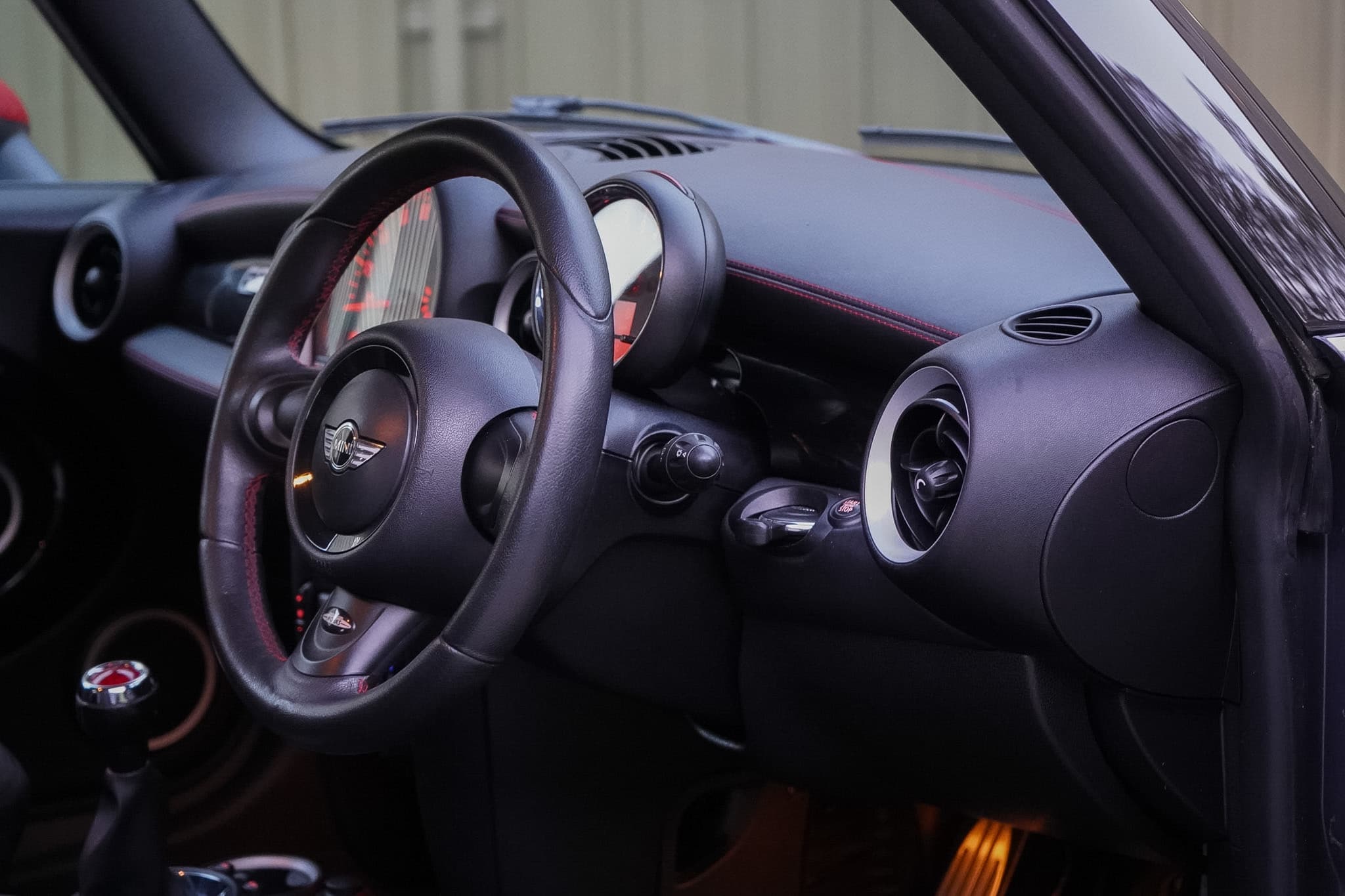
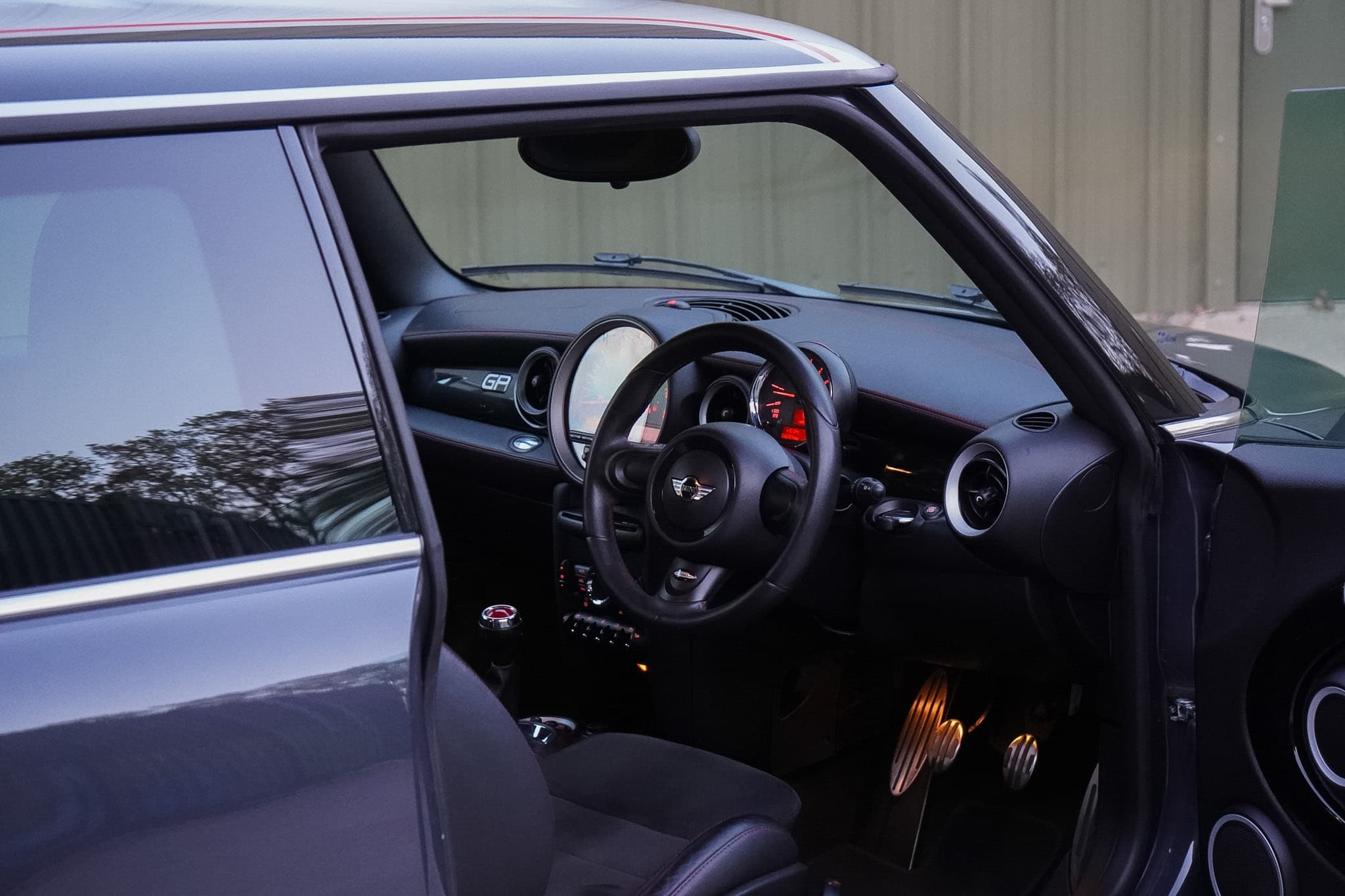
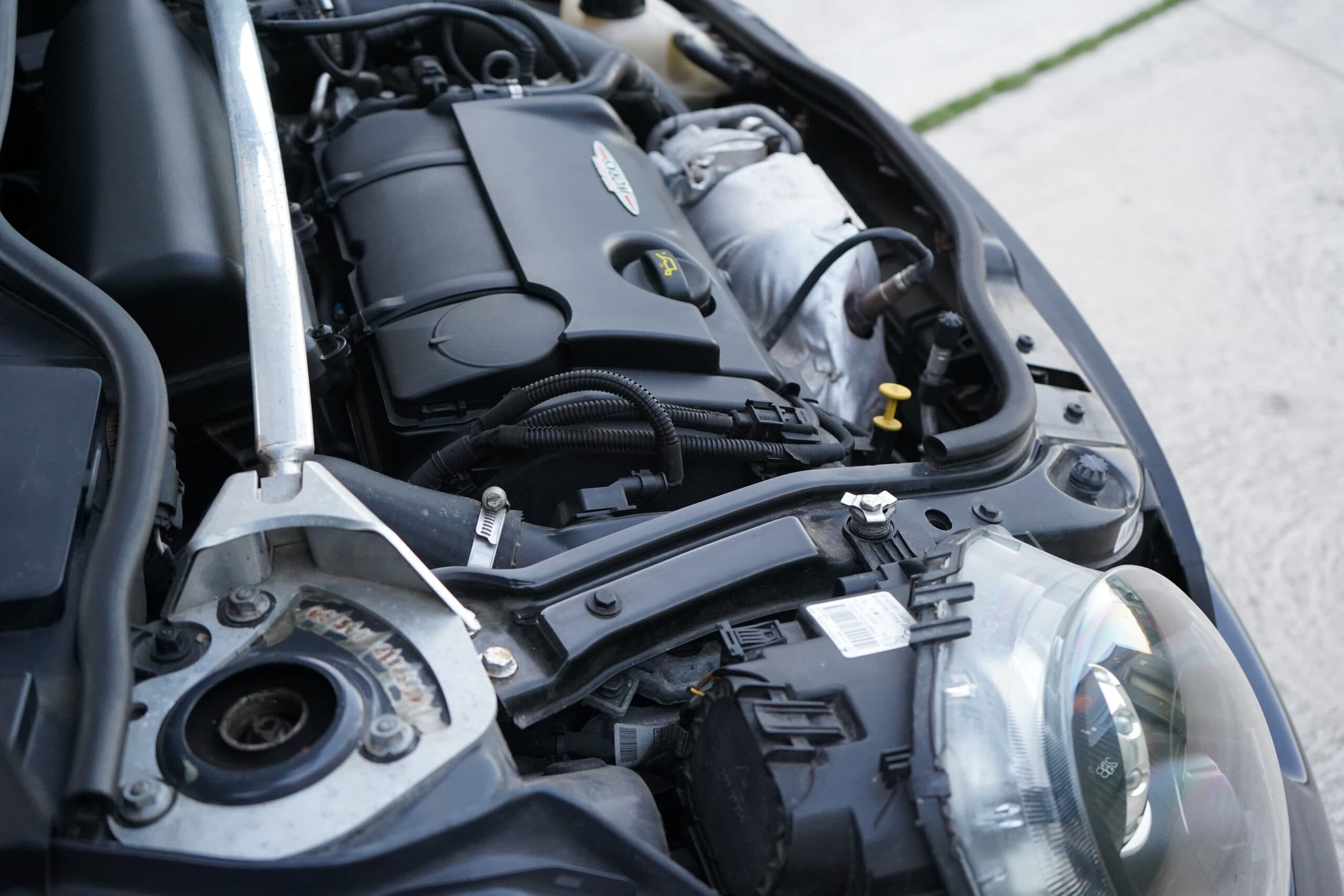
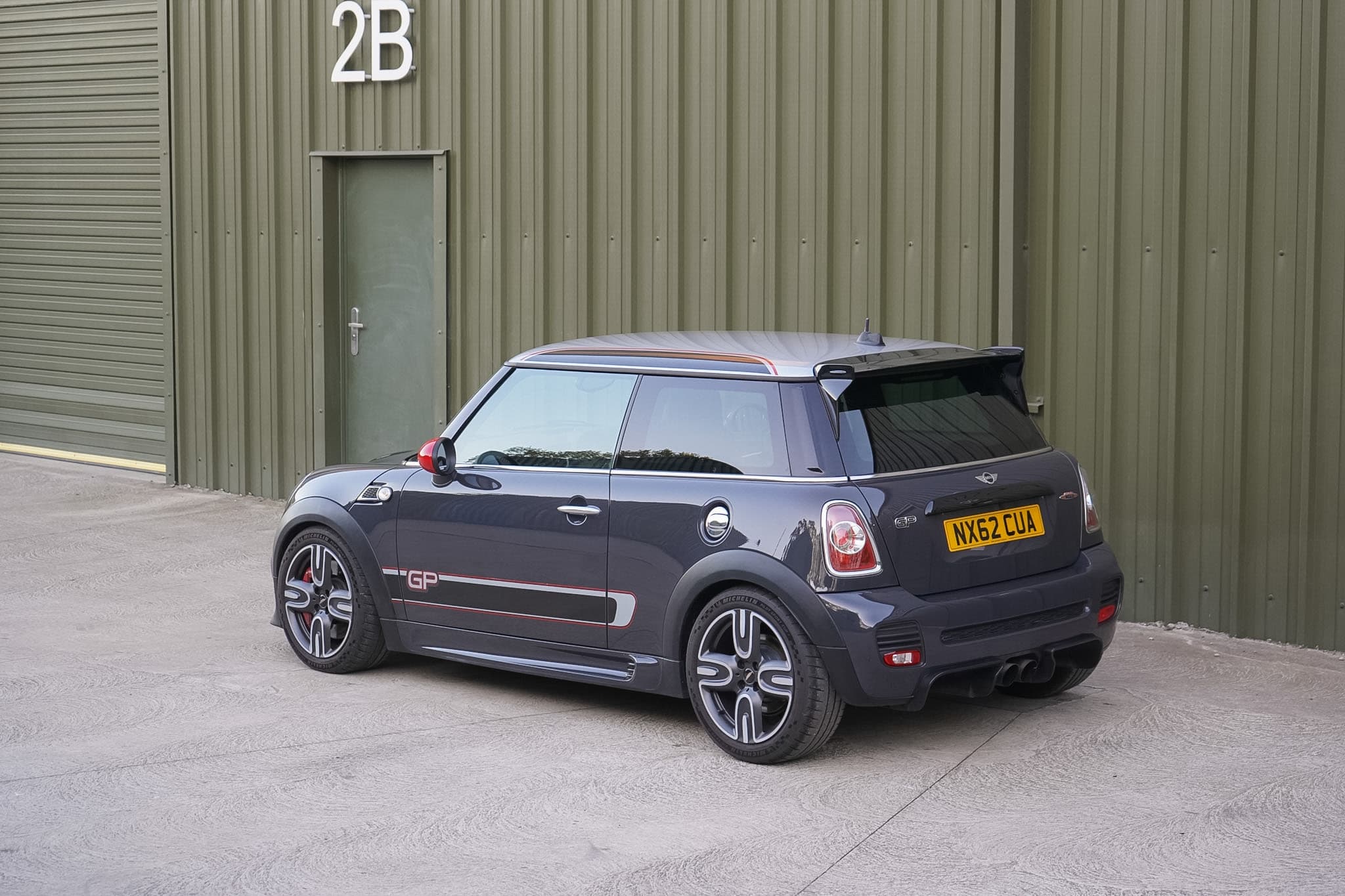
TMJC's 2013 John Cooper Works GP2 is a useful example at the performance end of the R56 range. It is a specific derivative, not a template for an ordinary Cooper or Cooper S. Its production numbers, output, weight, suspension and equipment belong on the variant record and in the MINI GP2 originality guide.
The third-generation three-door made its public debut at Oxford in November 2013 and launched in the UK in March 2014. Its code is F56.
MINI added its first five-door Hatch later in 2014. That longer-wheelbase body is F55, not simply an F56 with two extra doors. The distinction affects dimensions, body parts and practical comparisons, so buyers and parts suppliers need the full code rather than a loose reference to a third-generation MINI.
This era also widened the mechanical spread. Three- and four-cylinder petrol and diesel engines appeared across the range, while the F56 later provided the basis for the series-production MINI Electric. As before, One, Cooper, Cooper S and John Cooper Works names identify materially different specifications within the same broad family.
Current UK product naming centres on MINI Cooper rather than MINI Hatch: MINI sells the Cooper 3-Door and Cooper 5-Door as the core hatchback family. C and S identify petrol performance levels, and in July 2026 MINI also restored the One as the petrol entry point on both body styles. That differs from earlier eras, when One, Cooper and Cooper S were principally derivative names within the MINI Hatch range.
The current cars also need code-level care. BMW Group's 2026 MINI price-list material identifies the petrol five-door as F65, the petrol three-door as F66 and the all-electric three-door as J01. Those codes are not interchangeable: body style and powertrain both matter when choosing parts or technical information.
Generation numbers require care too. MINI's own material uses more than one convention. Its UK timeline calls the 2001, 2006 and 2014 Hatches the first, second and third generations, its 2026 British-production anniversary says the modern MINI has evolved across four model generations, and current Cooper material calls the latest car the fifth generation. For identification, the R50/R53, R56, F55/F56 and current F/J codes are more precise than an unqualified fourth- or fifth-generation label.
The Cooper S badge survives across MINI generations, but the engine underneath it does not. That is one reason a year and badge alone are a poor way to identify an older MINI.
At its UK launch in June 2002, BMW described the first-generation Cooper S as a 163 bhp supercharged model. That is the R53 Hatch. The ordinary R50 One and Cooper should not be folded into that description simply because they share the same broad first-generation body family.
The second-generation R56 changed the formula. BMW's 2006 launch material describes the new Cooper S as using a direct-injection 1.6-litre petrol engine with a twin-scroll turbocharger and intercooler. The ordinary Cooper launched alongside it with a naturally aspirated 1.6-litre engine using VALVETRONIC. So two cars can both be called MINI Cooper S 1.6 while belonging to fundamentally different forced-induction generations: R53 supercharger versus R56 turbocharger.
The 2014 F56 changed the engine family again. BMW UK launched the Cooper with a 1,499 cc three-cylinder turbocharged petrol engine and the Cooper S with a 1,998 cc four-cylinder turbocharged petrol engine. Both used MINI TwinPower Turbo technology. The current petrol three-door continues the broad three-cylinder Cooper C / four-cylinder Cooper S idea, while the current electric three-door is a separate architecture and should not be identified from the petrol car's engine family.
| Hatch era | Representative Cooper S concept | What not to assume |
|---|---|---|
| R53, first generation | Supercharged petrol engine | Do not call every first-generation Hatch supercharged; R50 One/Cooper are different derivatives. |
| R56, second generation | Direct-injection twin-scroll turbo petrol engine | The shared 1.6-litre capacity does not make it the same engine concept as R53. |
| F56, third generation | 2.0-litre four-cylinder TwinPower Turbo at UK launch | Do not use F56 engine data for F55/F56 derivatives without checking the exact version and build date. |
| Current petrol three-door | Cooper C three-cylinder / Cooper S four-cylinder | Current naming and specifications must not be projected back onto R50/R53/R56 cars. |
This is more than enthusiast shorthand. It affects parts, workshop information, tuning history and the questions a buyer should ask. A late-2006 registration can sit close to the R53/R56 changeover, while a Cooper S badge can describe cars with very different engine families. The useful identification sequence is model code, body, build date, derivative and powertrain.
TMJC's 2013 GP2 sits at the far end of the R56 performance branch and therefore belongs to the turbocharged second-generation story. Its exact output, chassis and originality details remain variant-specific rather than evidence for every Cooper S.
Not always. This is one of the most confusing parts of early modern MINI history because a genuine John Cooper Works conversion, a JCW kit fitted at Plant Oxford and a complete MINI John Cooper Works production model are not automatically the same thing.
In the first modern generation, John Cooper Works sold performance tuning for the MINI Cooper S. MINI's September 2004 UK material describes the 210 bhp package explicitly as a John Cooper Works tuning kit for the MINI Cooper S. It could be fitted to a Cooper S rather than defining a separate production-model identity in the way later JCWs would.
The important wrinkle arrived in 2005. BMW Group announced that the JCW tuning kit could now be ordered as optional equipment and installed at Plant Oxford before delivery on manual Cooper S models. Until then it had been a retrofit accessory; the same release says buyers could still choose the retrofit route afterwards. So a late R53 can genuinely have a JCW kit fitted at the factory without that making factory-fitted JCW kit synonymous with the later MINI John Cooper Works production model.
The distinction survived into the next generation for a time. In February 2007 BMW announced a John Cooper Works tuning kit for the new turbocharged Cooper S, due from mid-2007. BMW Group had acquired the John Cooper Garages brand rights at the beginning of that year, and retrospective MINI history says John Cooper Works became an official part of the MINI brand in 2008.
That is when the product language changes clearly. MINI's July 2008 UK press kit introduces the new MINI John Cooper Works as a car coming directly off the Plant Oxford production line, with the Hatch going on sale on 22 July. BMW says the JCW Hatch and Clubman would be integrated into the normal MINI production schedule. That is a different identity proposition from a Cooper S to which a JCW tuning kit had been added.
| What the description means | Historical example | What to verify |
|---|---|---|
| Cooper S with JCW tuning kit | R53 kit offered before factory installation | That the genuine kit and its installation are supported by period records and the actual hardware |
| Cooper S with factory-fitted JCW tuning kit | R53 option fitted at Oxford from the late-2005 programme | Build/order evidence showing the Cooper S received the kit before delivery; do not automatically relabel it as a later factory JCW model |
| Cooper S with JCW tuning kit, R56 era | Turbocharged R56 kit announced in 2007 | The underlying car remains a Cooper S unless its build identity establishes the complete JCW model |
| MINI John Cooper Works production model | R56 Hatch launched in the UK in July 2008 | VIN/build specification and model identity first, then whether the present car retains the relevant factory equipment |
Bodywork is not enough to settle the question. The same 2008 press kit that describes the new production JCW also advertises John Cooper Works styling accessories through MINI dealers. Aero parts, wheels, badges and trim can therefore be genuine MINI/JCW pieces without proving that the complete car left the production system as the JCW derivative being claimed.
For a buyer, avoid reducing this to real JCW versus fake JCW. First establish the model code, production date and original derivative. Then use build/VIN information and period invoices or order records to decide whether the car was a Cooper S with a tuning kit, a Cooper S whose kit was fitted before delivery, or a complete MINI John Cooper Works model. Only after that should the hardware and cosmetic parts be used as corroboration.
TMJC's 2013 John Cooper Works GP2, covered in our MINI GP2 originality guide, sits firmly in the later factory-model lineage: MINI launched the GP as a John Cooper Works model in its own right. It is useful as a reference point for how the name had evolved, but its identity should not be projected backwards onto an R53 Cooper S with period JCW tuning.
The changes are easier to understand as a sequence of ideas than as a single specification sheet. This is an approximate UK-era chronology: reveal, production, retail and model-year boundaries can overlap:
| Era | Core hatch codes | Useful distinction |
|---|---|---|
| 2001-2006 | R50 and R53 | R50 covers One/Cooper; R53 is the supercharged Cooper S |
| 2006-2013 | R56 | New body and engine family; 2007 is often used as the first model year |
| 2014-2024 | F56 and F55 | F56 is three-door; F55 is the longer-wheelbase five-door |
| Current | F65, F66 and J01 | Petrol five-door, petrol three-door and electric three-door use different codes |
These dates describe the main UK chronology and deliberately distinguish launch timing from model-year shorthand. Convertible, Clubman, Countryman, Coupe and Roadster derivatives have their own codes and should not be folded into the Hatch timeline.
Start with the production date and VIN, then confirm the body and derivative. On early cars, the Cooper S code differs from the One/Cooper code. On third-generation cars, door count separates F55 from F56. On current cars, specialists identify the petrol five-door as F65, petrol three-door as F66 and electric three-door as J01.
This matters beyond enthusiast terminology. Engines, gearboxes, suspension, electronic systems, body panels and service parts can change within a generation, and a registration year can overlap a model transition. A seller's use of Cooper or Hatch is not enough by itself to establish the precise car.
The earliest BMW-era cars are now modern classics in their own right. Desirability is not determined by badge alone: originality, condition, service history, sympathetic maintenance and a correctly identified specification remain more useful than broad claims about a whole generation.
Performance derivatives add another layer. A Cooper S, John Cooper Works car or limited GP should be checked against its exact factory identity rather than judged from styling parts or badges. TMJC's R56 GP2 provides a real first-party example of that approach, while its individual mileage, ownership and condition remain specific to that one vehicle.
Editorial information
Research and editorial from TMJC Garage.
Research and editorialTMJC Garage
Reviewed byMatt Johnston
Last reviewed12 September 2026
Published byThe Matt Johnston Collection
Model lineage
TMJC photography
TMJC Guides
TMJC assistance
Continue to the main TMJC website and speak directly with the collection team.
Sell, consign or source
Continue with TMJC for a discreet conversation, professional presentation and collector-focused support.
Enquire now