TMJC assistance
Want TMJC to help with this vehicle?
Sourcing, consignment and valuationContinue to the main TMJC website and speak directly with the collection team.
Variant
Mercedes-Benz 350 SL R107 specs and buying checks, with the factory three-speed automatic baseline and unresolved 195-vs-200 PS evidence.
TMJC guide
Mercedes-Benz 350 SL R107 specs and buying checks, with the factory three-speed automatic baseline and unresolved 195-vs-200 PS evidence.
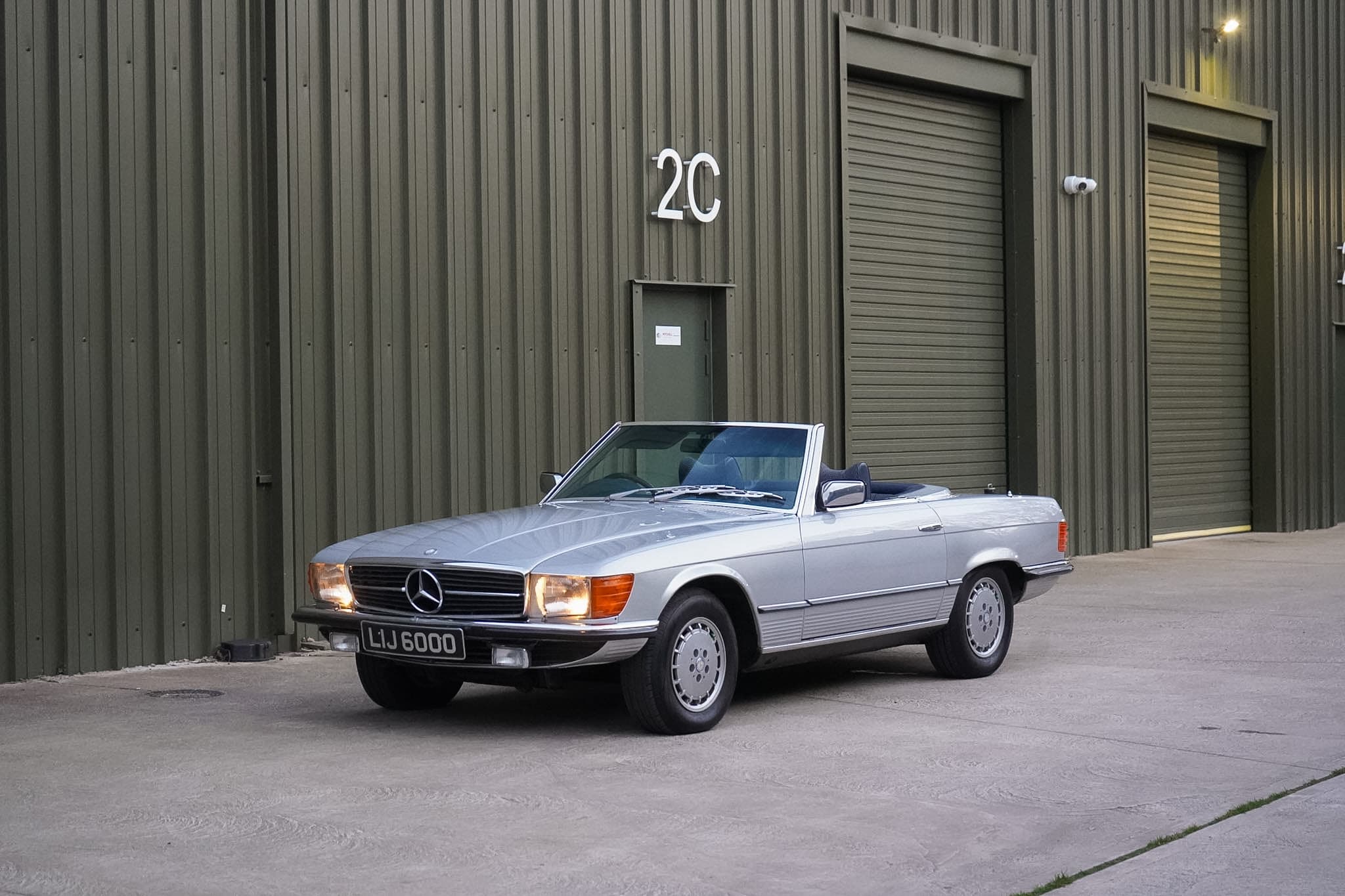
The Mercedes-Benz 350 SL was one of the cars that launched the R107 SL in 1971. Mercedes-Benz describes the R107 as the first SL generation to use V8 engines, with the 350 SL present from the beginning. Mercedes-Benz's own Public Archive identifies the model more precisely as type 107.043, design designation R 107 E 35, with a 3,499 cc V8 and production ending in March 1980.
That basic identity is more useful than it may sound. Forty-five years later, classified systems can put the right photographs and description beside the wrong generation, variant or gearbox field. On a 350 SL, those dropdown values should start a question, not finish one.
| Item | 350 SL |
|---|---|
| Mercedes type | 107.043 |
| Design designation | R 107 E 35 |
| Production | 1971-March 1980 |
| Engine | 3,499 cc naturally aspirated V8 |
| Drive | Rear-wheel drive |
| Optional automatic | Three-speed, ratios 2.31 / 1.46 / 1.00 |
| Body | Two-seat R107 roadster, removable hardtop available |
| Production total | 15,304 roadsters |
| Wheelbase | 2,460 mm |
| Length | 4,390 mm |
| Width | 1,790 mm |
Those are model-level facts. They do not mean every 350 SL built across the decade has the same injection system, engine detail, power rating or transmission. The R107 was developed continuously, and a good reference has to preserve that chronology.
Mercedes-Benz's exact Public Archive entry for the 350 SL itself is more direct: the optional automatic for type 107.043 is a three-speed planetary transmission, with ratios of 2.31 / 1.46 / 1.00. The same factory entry places the end of 350 SL production in March 1980.
Mercedes-Benz's wider 107-series history independently supplies the transition point: at the March 1980 mechanical update, the three-speed automatic was replaced by a four-speed version.
That makes the model-level factory chronology for a 1979 automatic clear. A three-speed automatic is not merely the likely period fit; it is the transmission Mercedes-Benz documents for the 350 SL. A four-speed claim on an individual 1979 car therefore needs vehicle-specific evidence.
This matters because modern classified data is not always as careful. A current Car & Classic syndication attributed to The Matt Johnston Collection describes a 1979 350SL R107, yet its structured fields currently show Automatic, 4 speed. In one locale the platform taxonomy also labels the same advert “350 SD” and “W126”, despite the title and description identifying an R107 350 SL.
There is now an unusually useful control for that metadata. An earlier Car & Classic listing for the same LIJ6000, with the same stated 49,295 miles, describes the transmission as automatic, 3-speed. The car identity and mileage align while the structured gear-count field changes between listings. That is much stronger evidence of inconsistent marketplace metadata than of a documented gearbox change.
That is not evidence that the individual car has the wrong transmission. It is evidence that marketplace metadata is not factory documentation. The car may have a data-entry error, a later mechanical change, or information that is not visible in the public advert. A buyer should establish what is physically fitted and what the history says before drawing a conclusion.
For a 1979 automatic, the useful questions are therefore:
A gear-count dropdown on its own answers none of them.
The injection system also depends on date.
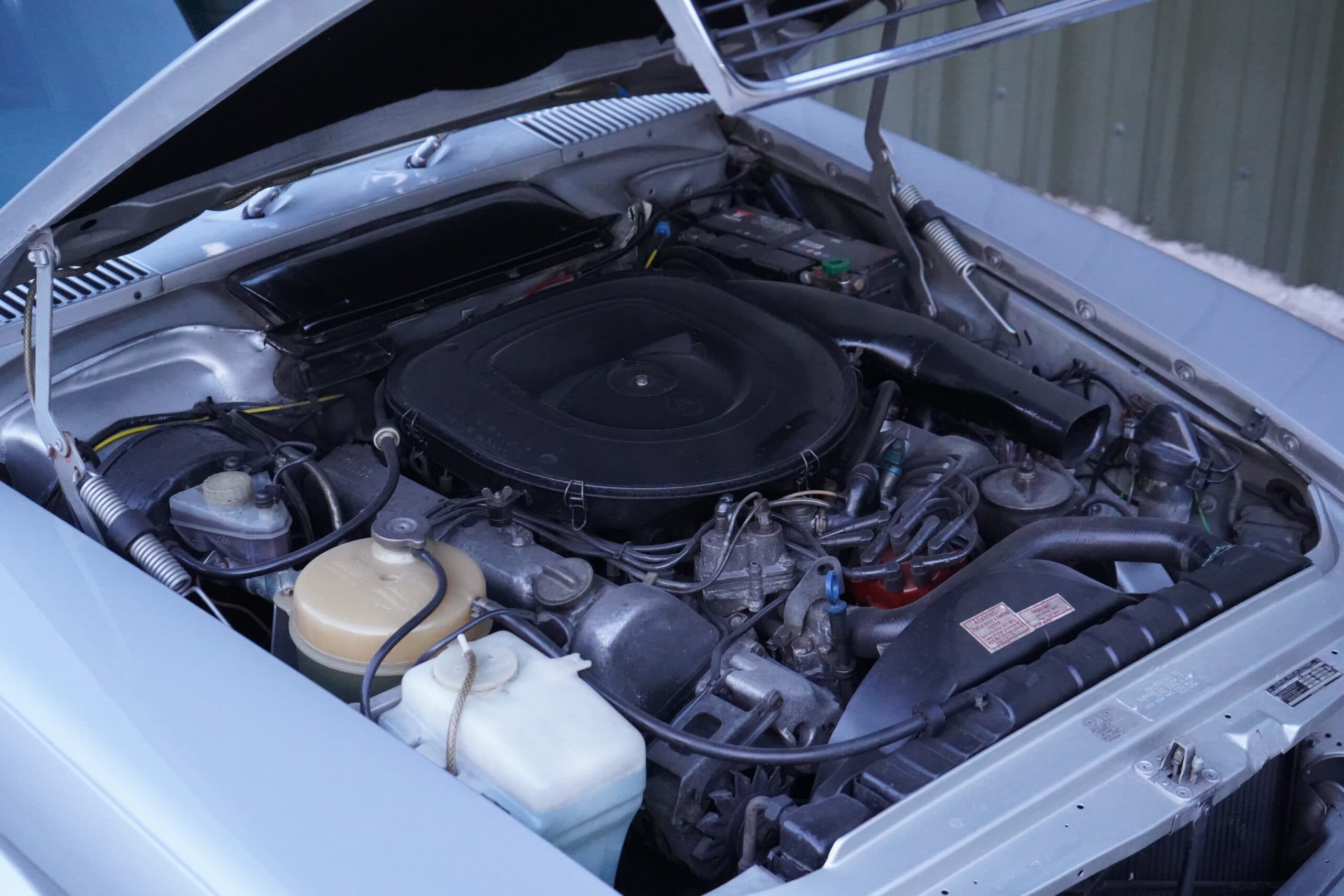
Mercedes-Benz's 107-series history records a change during 1975-76 from electronically controlled Bosch D-Jetronic to mechanically controlled K-Jetronic as emissions requirements tightened. The exact 350 SL technical data from Mercedes-Benz Markenclubs places the change at February 1976, along with the later M116.984 engine version.
A 1979 350 SL therefore belongs to the K-Jetronic phase. An early 1971-75 car should not be judged against the same engine-bay details.
That distinction is more useful than saying one system is simply better. On a prospective purchase, cold starting, hot restarting, idle quality, fuel leaks, evidence of long storage and the quality of previous diagnosis matter more than internet preference for one injection generation.
The power-rating question is more interesting than a simple bad-spec-site problem because Mercedes-Benz's own records point in different directions.
The exact Mercedes-Benz Public Archive entry records 200 hp / 147 kW for the early 3.5-litre engine and 195 hp / 143 kW from February 1976. However, preserved dated Mercedes-Benz German sales price lists quote 200 PS / 3,499 cc again in September 1977 and continue to do so in later 1978 and July 1979 material.
That means the late-1970s 200 PS figure is present in dated Mercedes-Benz sales material; it is not merely a number copied between modern specification sites. The evidence therefore narrows the chronology: the technical reference records 195 PS from February 1976, while German Mercedes sales literature was quoting 200 PS again by September 1977 and continued to do so in 1978 and 1979.
What those sources do not establish is the exact engineering change date or why the technical reference and period sales literature diverge. It also does not prove that a German-market headline output automatically applies to every UK-delivered car. So a flat late-production power figure would still overstate the evidence.
Market matters. The price list is German, while the TMJC-linked example is a UK-delivered RHD car. Until a period Mercedes-Benz UK technical sheet, data card or equally direct market-specific source closes the gap, the safest answer is to keep both figures qualified rather than disguise a source conflict with false precision.
The same price list offers the Mercedes automatic centre-shift transmission on the 350 SL but does not state its number of ratios. It therefore does not change the gearbox conclusion above: Mercedes-Benz's public archive remains the stronger evidence for the three-speed-to-four-speed change at the March 1980 update.
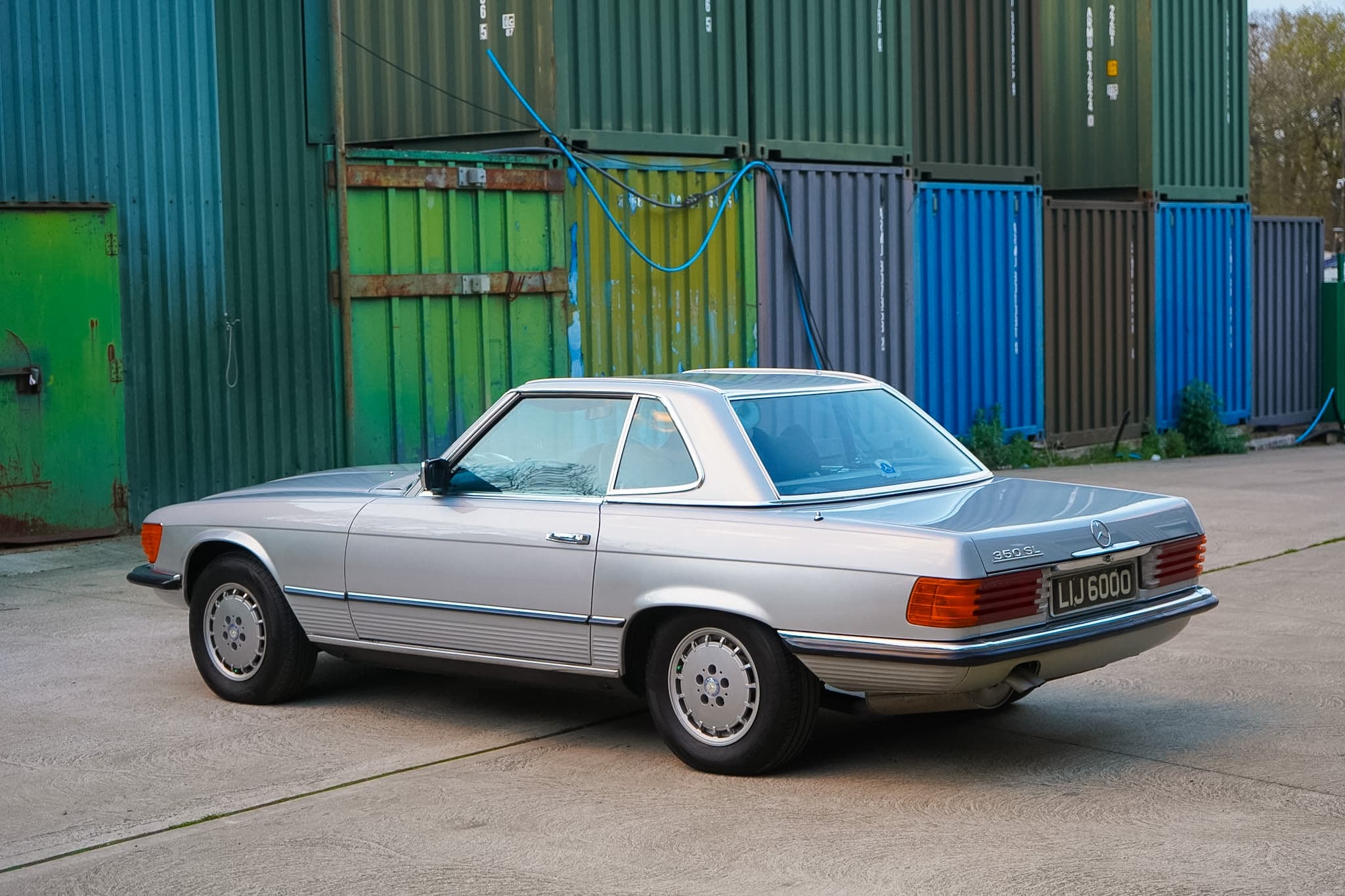
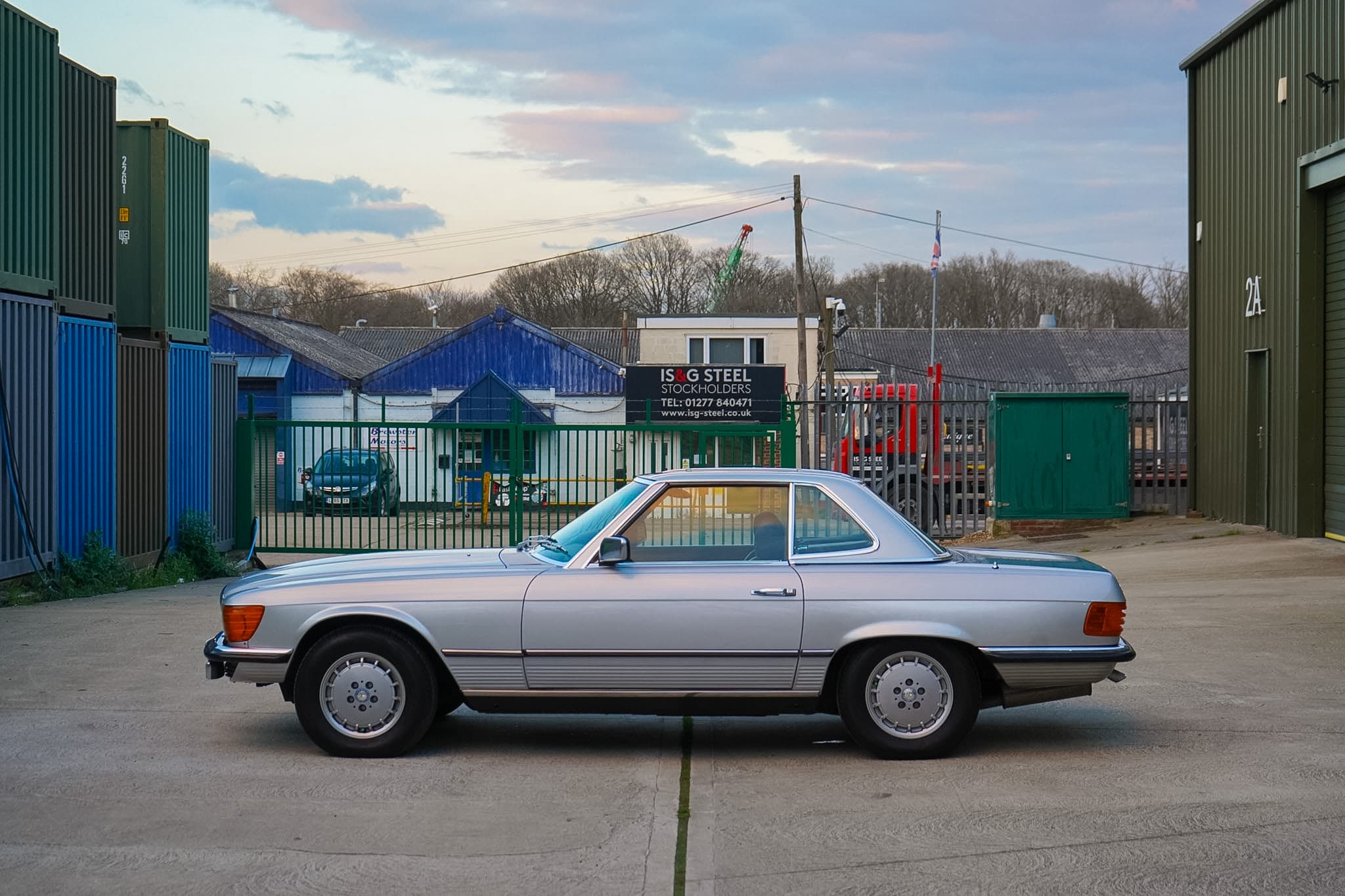
The names are close and the family resemblance is strong, but an SL with its steel hardtop fitted is still an R107 SL roadster.
Mercedes-Benz describes the C107 SLC as the 350 SL's sister model. Up to the rear edge of the doors the cars were closely related, but the SLC used a wheelbase 360 mm longer and had a different rear body with proper rear seating. It is a fixed-roof coupé, not an SL wearing its removable hardtop.
That sounds elementary until a car has lost badges, gained replacement trim or is being described by a generic marketplace taxonomy. The reliable route is chassis identity first, body hardware second and advert wording last.
On an R107, body condition can overwhelm the value of an otherwise attractive car. Hagerty's UK buying guide recommends treating corrosion as a first-order inspection issue rather than assuming a shiny exterior means a sound shell.
Start around the windscreen surround and bulkhead, then work through the sills, floors, wheelarches, doors, bonnet and boot. Look above the headlamps and behind the bumpers: the bumpers can corrode from the rear where a casual walk-round will not show it. A lift inspection is preferable to trying to infer structural condition from photographs.
If the car comes with the removable hardtop, inspect it rather than counting it as a line item. Check fit, catches, seals, trim and corrosion. Then operate the soft top and look for water ingress around the cabin and screen area. A complete-looking two-roof car can still need expensive sealing or body work.
A prospective 1979 car should be inspected as a forty-plus-year-old fuel-injected V8, not merely as a low-mileage classic.
Start it cold. Listen for persistent valvetrain noise, watch how quickly it settles and check for fuel or coolant leaks. Hagerty notes noisy tappets as a possible V8 issue and the exposed radiator as another area worth checking for damage, leakage and any sign of overheating.
Restart it hot. K-Jetronic cars can expose fuel-delivery or pressure problems when hot that a warm, pre-prepared viewing may hide.
Drive it far enough to assess the steering. Excessive play can point to steering-box wear; the steering damper and suspension bushes also age. A heavy old Mercedes is allowed to feel like a heavy old Mercedes, but it should not feel loose, vague or unsettled.
Check the automatic gearbox by evidence, not labels. On a 1979 automatic, establish its actual gear count and behaviour. Shifts should be consistent when cold and hot. If a four-speed transmission is genuinely fitted, the question becomes when and why it was installed, not whether a classified website has a four-speed field.
Read the invoices chronologically. A recent service is useful, but it does not substitute for understanding long periods of storage, cooling-system work, fuel-system repairs, brake maintenance and previous corrosion treatment.
The current Car & Classic syndication attributed to The Matt Johnston Collection is a useful real-world example because it contains both strong provenance claims and the sort of structured-data conflict this guide is designed to catch.
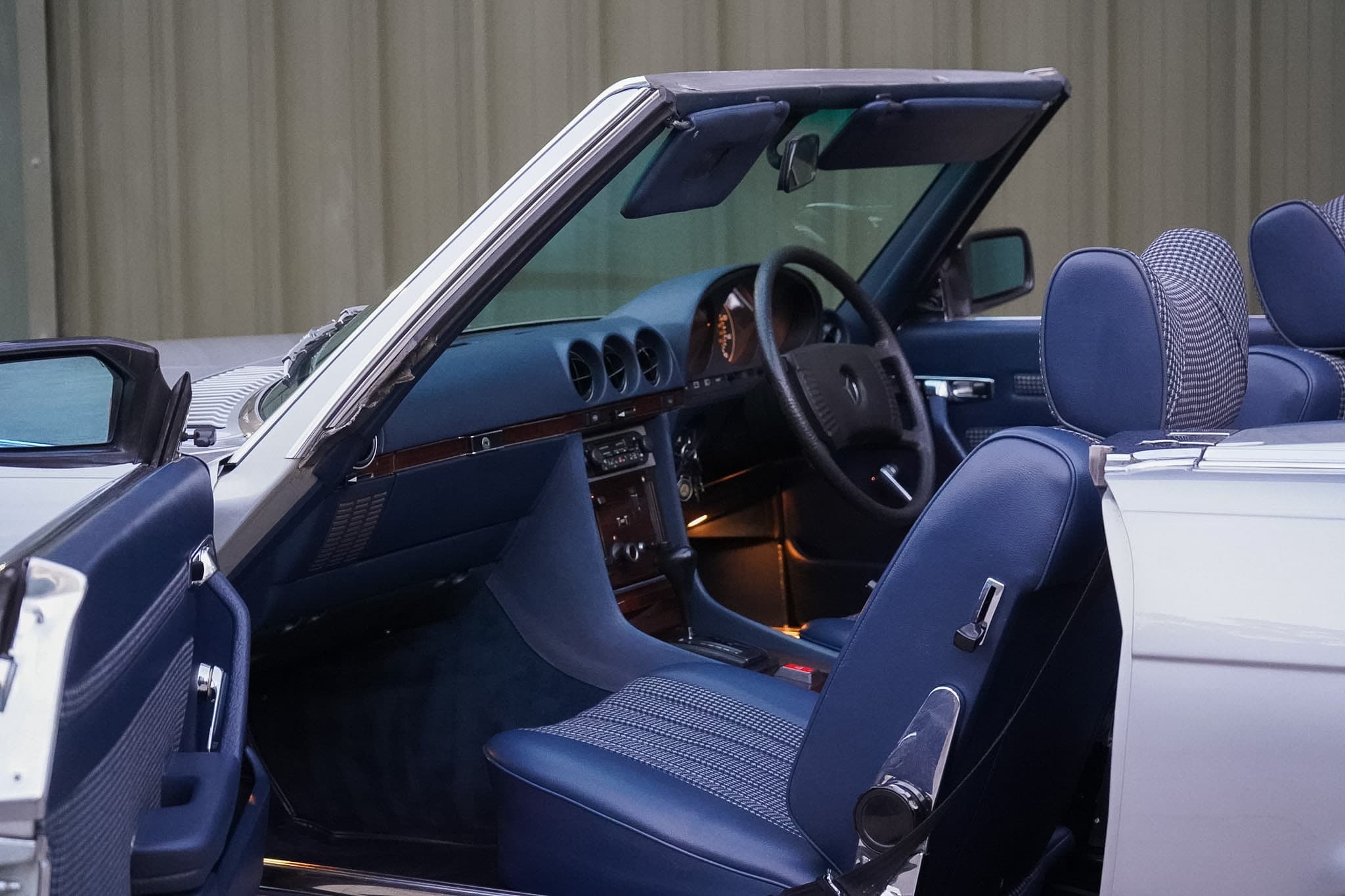
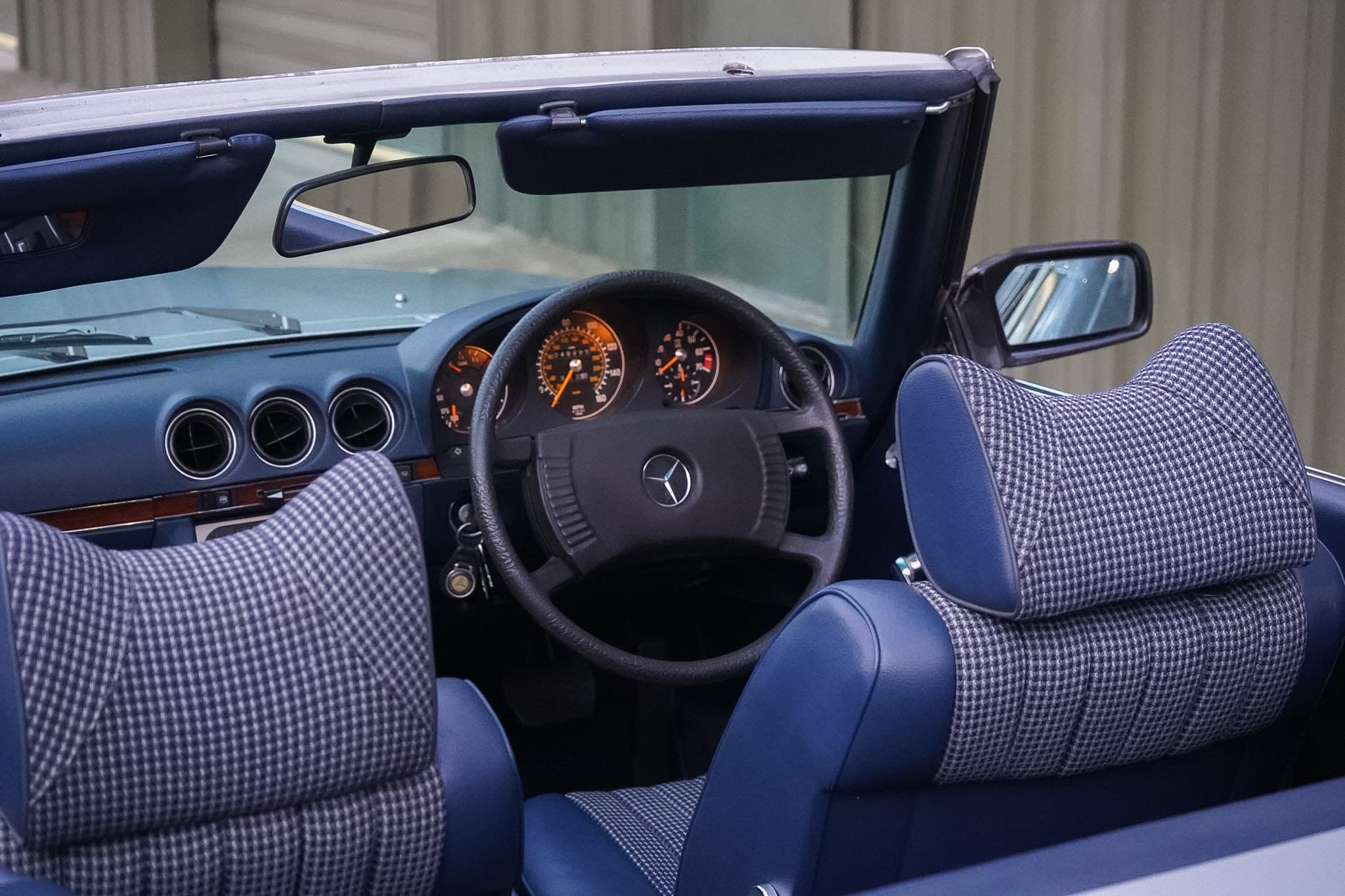
The advert describes a UK-delivered 1979 350 SL in Astral Silver with blue Shetland/check cloth, an original hardtop and 49,295 warranted miles. It says the car was supplied through Isaac Agnew Belfast, has documented ownership history from new and has recently received roughly £4,000 of mechanical and brake work.
The live advert also says the VIN and engine numbers have been matched and confirmed. That is useful evidence about this individual car, but it remains a seller representation until the underlying numbers and supporting factory or build documentation are inspected. It is stronger than a generic marketplace field; it is not, by itself, a factory certificate of originality.
Those are individual-car claims, not model-wide facts. They need to be assessed against the file that comes with the car. Equally, the advert's four-speed marketplace field should not be silently copied into a 1979 specification table when Mercedes-Benz's own chronology places the four-speed automatic change in March 1980.
That contrast is exactly why provenance work matters. A good history file can tell you far more about a particular classic than a platform's structured fields ever will.
When assessing a 350 SL, work from the hardest evidence outward:
For a broader paperwork framework, see our classic-car provenance guide and matching-numbers explainer.
The gearbox baseline is no longer an unresolved model-spec question: Mercedes-Benz's exact 350 SL archive entry explicitly documents the optional three-speed automatic, and the wider factory history places the move to four speeds at the March 1980 update. What remains vehicle-specific is whether LIJ6000 still carries that original-type transmission today; its public advert's four-speed field cannot answer that.
The unresolved model-level question is power. Mercedes-Benz's exact technical archive says 195 hp / 143 kW from February 1976, while dated Mercedes-Benz German sales literature was quoting 200 PS again by September 1977 and still did so in 1979. A period Mercedes-Benz UK specification sheet, engineering bulletin, factory data card or equivalent primary record is still needed to explain the difference and establish what should be claimed for a UK-delivered 1979 car.
Editorial information
Research and editorial from TMJC Garage.
Research and editorialTMJC Garage
Reviewed byMatt Johnston
Last reviewed14 September 2026
Published byThe Matt Johnston Collection
Model lineage
TMJC photography
TMJC assistance
Continue to the main TMJC website and speak directly with the collection team.
Sell, consign or source
Continue with TMJC for a discreet conversation, professional presentation and collector-focused support.
Enquire now