TMJC assistance
Want TMJC to help with this vehicle?
Sourcing, consignment and valuationContinue to the main TMJC website and speak directly with the collection team.
Manufacturer
Mercedes-Benz history from Benz and Daimler’s 1886 inventions through the 1926 merger, wartime forced labour, post-war engineering and today’s group structure.
Model directory
Choose a Mercedes-Benz model family to compare its generations, engines, body styles and collector context.
TMJC guide
Mercedes-Benz history from Benz and Daimler’s 1886 inventions through the 1926 merger, wartime forced labour, post-war engineering and today’s group structure.
Mercedes-Benz has 1886 roots and a 1926 formation date. Those dates answer different questions. Carl Benz and Gottlieb Daimler independently produced landmark automobiles in 1886; the businesses that grew from their work did not become the combined Daimler-Benz AG and Mercedes-Benz marque until 1926.
The Mercedes name sits between those points. It was being used for Daimler-Motoren-Gesellschaft cars from 1900, years before Mercedes and Benz were joined. The marque's history is therefore best understood as a sequence: the early work of Benz and Daimler, the emergence of Mercedes as a product name, the 1926 merger, the difficult Daimler-Benz history of the Nazi era, post-war reconstruction and a long series of engineering changes that followed.
If the question is when the Mercedes-Benz marque and combined company were formed, the answer is 1926. Mercedes-Benz's centenary history records the foundation of Daimler-Benz AG on 28 and 29 June 1926, bringing together Benz & Cie. and Daimler-Motoren-Gesellschaft (DMG). The combined Mercedes-Benz trademark followed in August.
If the question is how far the engineering lineage goes back, the answer is 1886. Carl Benz patented his automobile that year, while Gottlieb Daimler produced a four-wheeled motor carriage later in 1886. Mercedes-Benz treats those two developments as the beginning of the predecessor history that eventually converged in 1926.
Calling Mercedes-Benz simply an “1886 company” makes the later merger disappear; calling it simply a “1926 company” makes the origins of the two predecessor businesses needlessly obscure.
The Mercedes name was already established before there was a Mercedes-Benz badge.
Mercedes-Benz traces it to businessman and motor enthusiast Emil Jellinek, who was closely involved with DMG around the turn of the twentieth century. Jellinek had used “Mercedes” — the first name of his daughter Mercédès — in his motoring activities, and in 1900 the name became attached to a new Daimler engine and car programme.
DMG delivered the first Mercedes 35 PS in December 1900. Mercedes-Benz highlights its low centre of gravity, long wheelbase, lightweight high-performance engine and honeycomb radiator as a decisive move away from the tall, carriage-derived layouts common at the time. The company describes the 35 PS as the first modern motorcar; that is Mercedes-Benz's own historical characterisation. Its significance here is the documented change in vehicle layout.
DMG applied to protect Mercedes as a trademark in 1902. By then the name that would form half of Mercedes-Benz was already well established.
The two predecessor businesses came together in 1926 as Daimler-Benz AG. The new identity also joined two familiar emblems: DMG's three-pointed star and the Benz laurel wreath, with Mercedes and Benz around the combined mark.
The first joint Mercedes-Benz product programme was presented later in 1926. The merger was therefore more than a modern corporate footnote: it created the marque under which the two predecessor histories would subsequently be presented.
The years from 1933 to 1945 are an essential part of Daimler-Benz history.
Mercedes-Benz Group's own historical archive records that from 1937 Daimler-Benz increasingly produced armaments, including military trucks and DB 600/601 aircraft engines. As the war progressed, passenger-car manufacture — already restricted to military requirements — declined and had virtually stopped by the end of 1942. Trucks, military components, engine work and repairs became central parts of production.
The company also used forced labour. Mercedes-Benz Group records prisoners of war, civilians deported from occupied territories and concentration-camp detainees working at Daimler-Benz plants. Conditions varied by group, but its account describes prison-like camps for many eastern European workers and POWs, and concentration-camp detainees guarded by the SS under inhumane conditions.
The scale was substantial. The company's archive says that in 1944 almost half of Daimler-Benz's 63,610 workers were civilian forced labourers, prisoners of war or concentration-camp detainees. A later Mercedes-Benz Group retrospective independently describes almost half of more than 63,000 workers at the end of 1944 falling into those categories.
Mercedes-Benz Group also records the much later process of confronting that history. In the run-up to the automobile centenary in 1986, Daimler-Benz appointed an independent commission to examine the company's Nazi-era record. The company later paid reparations to former forced labourers and took part in the German industry foundation Remembrance, Responsibility and Future.
Those later actions are part of the history, but they do not make the wartime exploitation a footnote. The company's technical achievements sit alongside conduct it now acknowledges in its own historical material.
Daimler-Benz emerged from the war with heavily damaged production facilities and rebuilt its vehicle business in a very different political and economic setting. The decades that followed established many of the model families and engineering themes now associated with Mercedes-Benz: executive and luxury saloons, sports and touring cars, commercial vehicles and a growing emphasis on occupant safety.
The badge provides historical continuity, not a single mechanical formula across every era. A 1950s 300 SL, a 1970s R107, a 1980s G-Wagen and a current electric Mercedes can share a marque history while having almost nothing mechanically interchangeable.
Documented safety systems provide a clearer engineering thread than broad claims about “innovation” because they can be tied to dates and models.
Mercedes-Benz says it introduced systematic crash testing with dummies in 1959. The same period brought the W111 passenger-car safety concept with a comparatively rigid passenger cell and defined deformation zones at the front and rear.
The passenger compartment needed to remain protective while other parts of the structure were designed to absorb crash energy. That principle extended far beyond the W111 itself.
In 1978, the W116 S-Class became the first Mercedes-Benz series-production car to use the company's electronic four-wheel, multichannel anti-lock braking system (ABS).
ABS did not become a permanent marque-wide specification in 1978. It arrived in particular models and markets before spreading more widely. For a collector car, period-correct specification still depends on the exact series and date.
By 1981, Mercedes-Benz offered a driver airbag together with a front-passenger belt tensioner in the S-Class. As with ABS, this is best treated as a dated production milestone rather than a claim that every contemporary Mercedes immediately received the same equipment.
ESP entered Mercedes series production in 1995, extending the move from passive protection toward electronically managed vehicle dynamics. By then electronics were becoming part of the chassis and safety story rather than simply convenience equipment.
| Era | What matters |
|---|---|
| 1886 to 1900 | Benz and Daimler establish the two predecessor engineering lines; Mercedes does not yet exist as the later car name. |
| 1900 to 1926 | Mercedes becomes an important DMG passenger-car name; the 35 PS helps move car design away from carriage-derived layouts; Benz remains separate. |
| 1926 to 1933 | Daimler-Benz AG and Mercedes-Benz combine the predecessor businesses and marques under one identity. |
| 1933 to 1945 | Daimler-Benz becomes increasingly involved in armaments and military production and uses forced labour, POWs and concentration-camp detainees during the Nazi era. |
| Post-war decades | Reconstruction, export growth, luxury saloons, sports cars and increasingly formalised safety engineering reshape the marque internationally. |
| Late twentieth century | ABS, airbags, electronically managed chassis systems and increasingly complex powertrains make exact model-year evidence more important. |
| 2022 onward | The Mercedes-Benz brand continues while the parent company operates as Mercedes-Benz Group AG following the separation of Daimler Truck. |
“Mercedes-Benz specification” is not a meaningful single set of numbers. Specifications belong to a particular model, generation, derivative, market and date.
For collector-car readers, [SL](/cars/mercedes-benz/sl) is one of the clearest threads through the marque because the name spans very different approaches to performance, luxury and everyday usability.
The story reaches back to the 1952 W194 racing car, while the series-production road-car line begins with the 300 SL W198 in 1954. Later generations include the W113 “Pagoda”, the long-lived R107, the R129 and subsequent folding-hardtop generations before the current Mercedes-AMG-developed SL changed the formula again.
That lineage deserves its own model-level treatment. A 1970s R107 and a current AMG SL are related historically, not mechanically interchangeable. The same principle applies across the marque: establish the exact series before applying engine, gearbox, chassis or equipment claims.
The G-Class adds a different thread. The original W460 emerged from a utility/off-road programme in 1979, while later civilian G-Class generations progressively added comfort, performance and electronic systems without erasing the model's separate-chassis, off-road identity for most of its history.
Again, the badge alone is not enough. “G-Class” can cover different series codes, drivetrains, engines and intended uses. A model name provides the family; the series and derivative establish the car.
Modern corporate names create a separate source of confusion.
The Mercedes-Benz brand dates to 1926. That is distinct from the current name of the parent company. After Daimler Truck Holding AG began trading as an independent company on 10 December 2021, Daimler AG changed its corporate name to Mercedes-Benz Group AG on 1 February 2022.
That did not create or rename the Mercedes-Benz car marque in 2022. It renamed the parent company after the truck business had been separated. Mercedes-Benz Group describes Mercedes-Benz AG as the operating company for its high-end passenger cars and premium vans, while the Group also encompasses the Mercedes-AMG and Mercedes-Maybach passenger-car brands and financial-services activities.
“Daimler”, “Daimler-Benz”, “Mercedes-Benz AG” and “Mercedes-Benz Group AG” can refer to different corporate structures at different dates; Mercedes-Benz as a vehicle marque has its own continuous brand history within those structures.
Mercedes-Benz's current corporate profile places Mercedes-Benz AG at Mercedesstraße 120, Stuttgart, Germany, and the Group identifies Stuttgart as its base.
That present-day answer should not erase the geography of the earlier story. Benz is strongly associated with Mannheim, while Daimler and DMG are closely tied to Stuttgart and Cannstatt. The modern Stuttgart headquarters belongs to the corporate line that ultimately combined those predecessor histories.
Mercedes-Benz has used long-running model names, changing badge conventions and internal series codes across very different eras. A familiar badge can therefore look more precise than it really is.
For an older car, a sensible evidence order is:
Marketplace dropdowns and generic specification databases can be useful discovery tools, but they should sit below the physical car, manufacturer documentation and reliable provenance evidence.
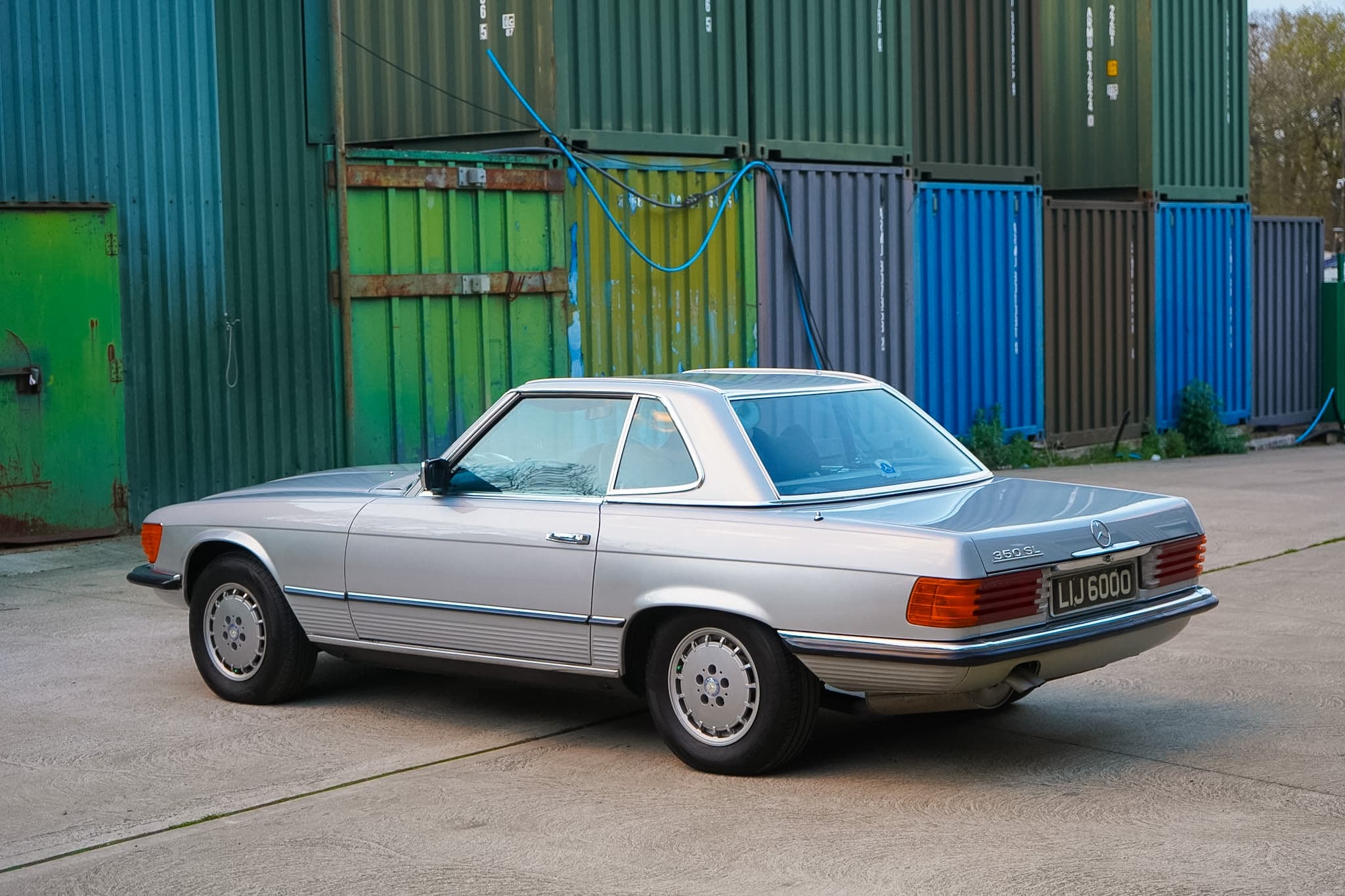
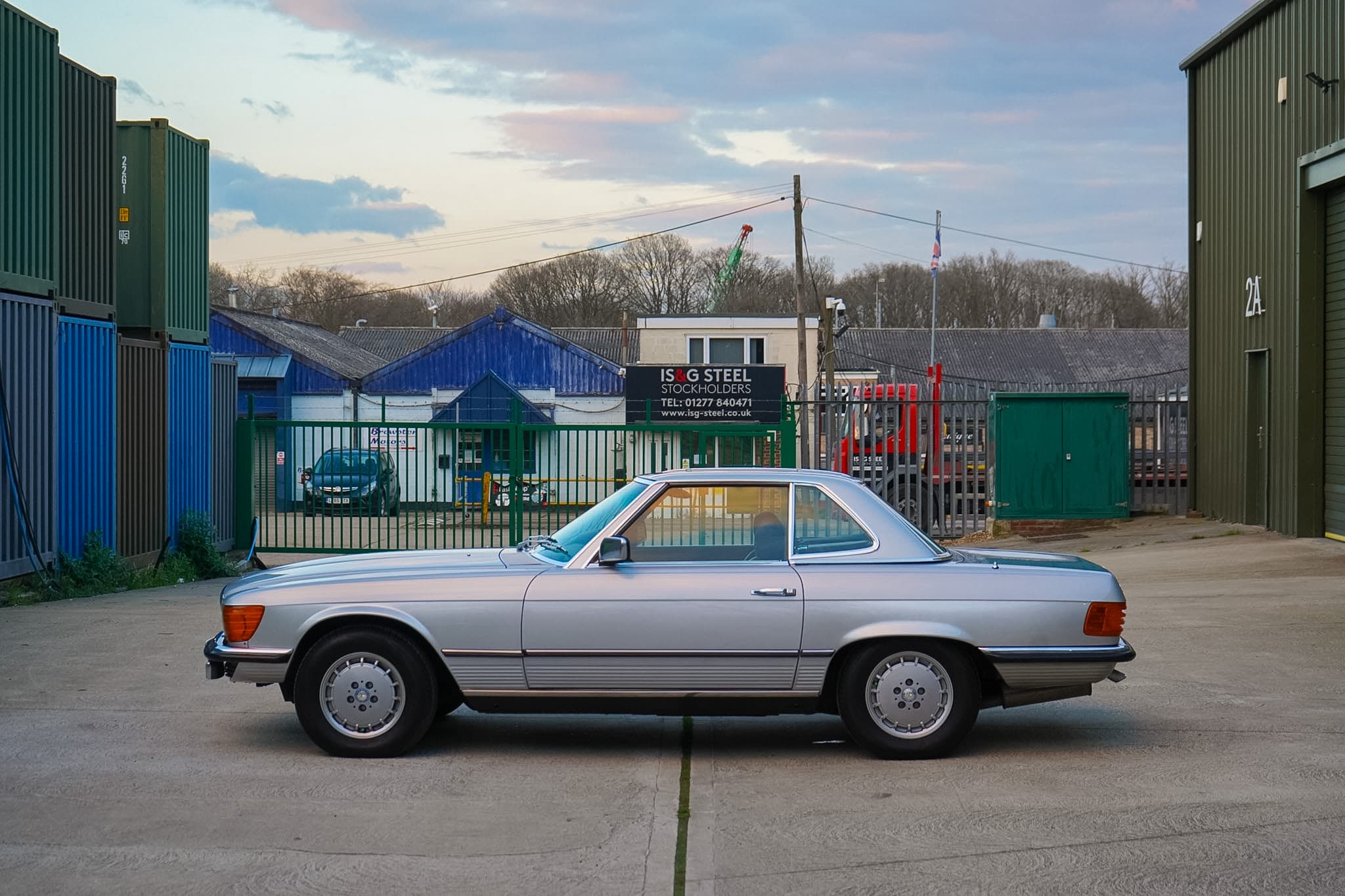
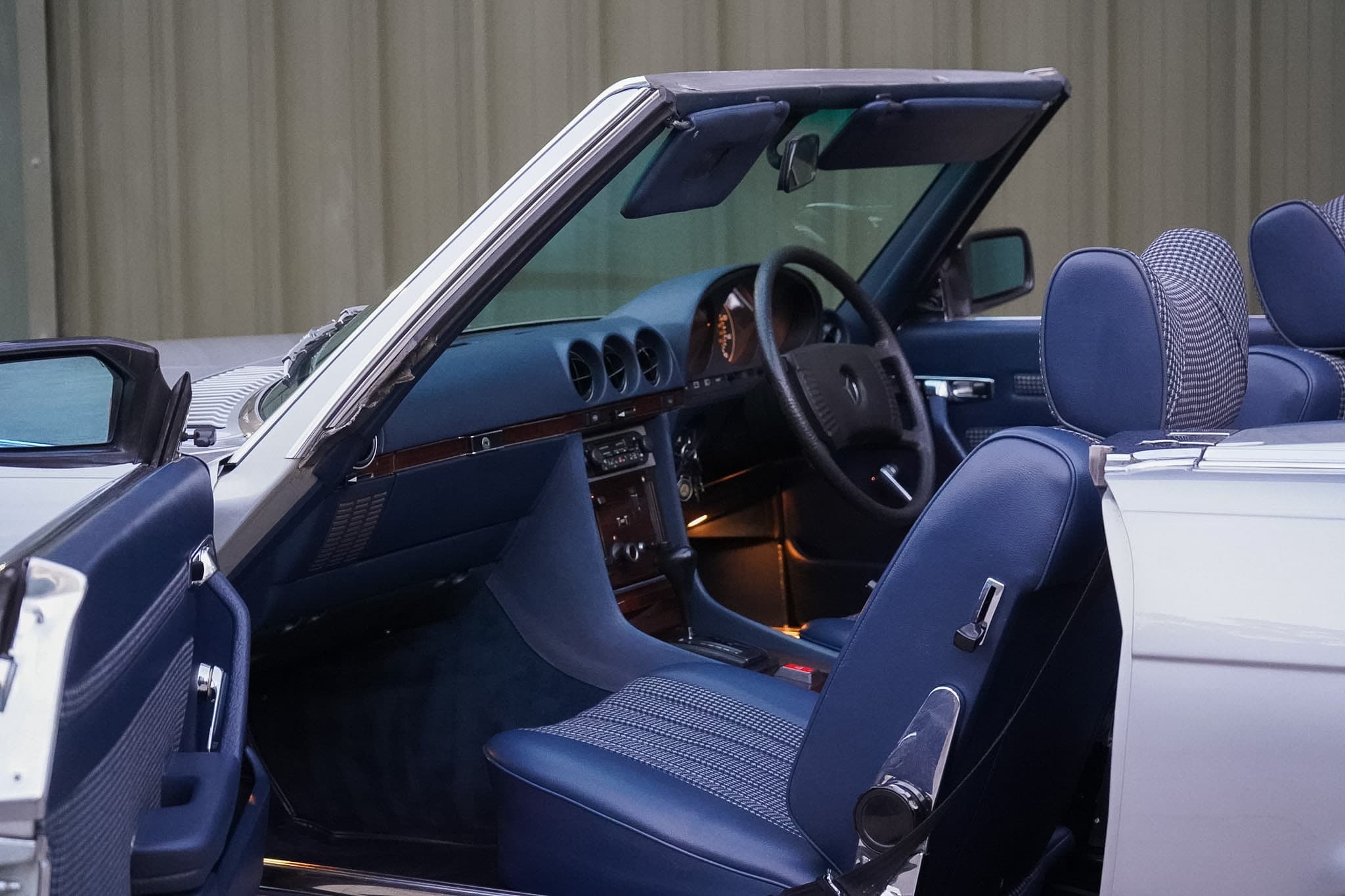
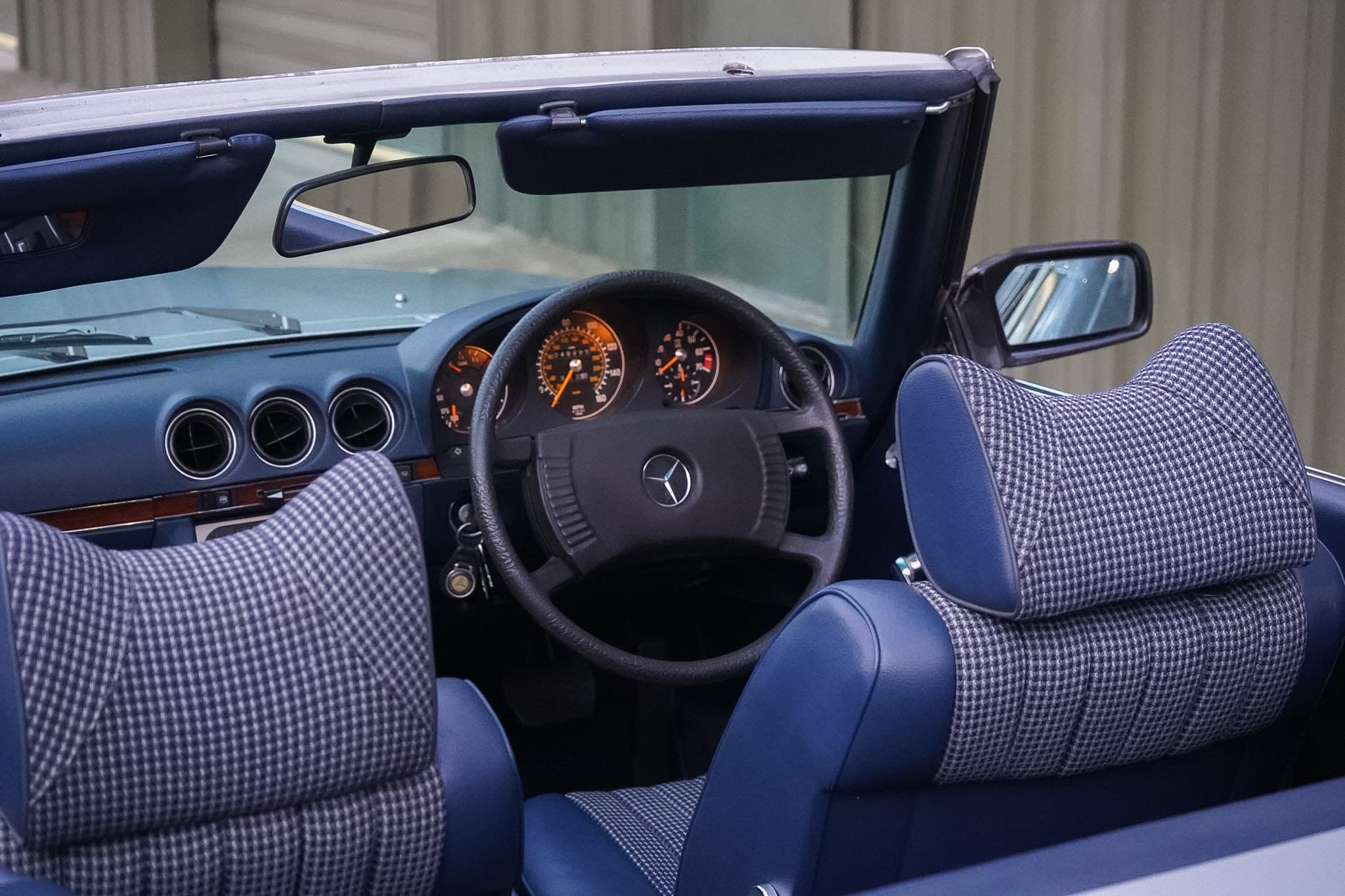
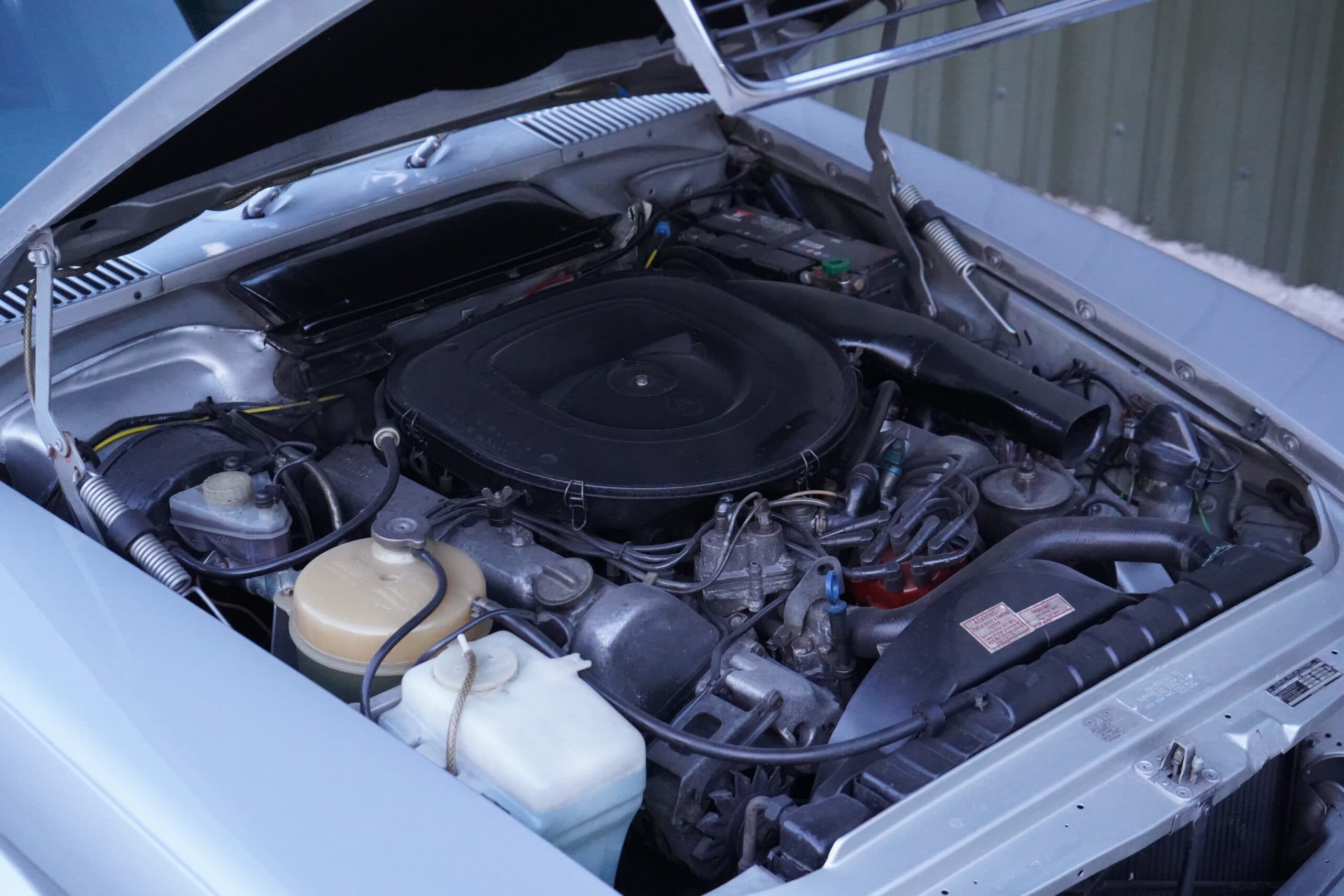
A surviving Car & Classic advert attributed to The Matt Johnston Collection records an individual 1979 Mercedes-Benz 350 SL R107. It is useful here only as a real collector-car example, not as evidence for Mercedes-Benz as a whole.
The car sits within one specific part of the marque's history: R107, 350 SL and a late-1970s European context. Its individual colour, trim, mileage, maintenance and marketplace metadata belong to that car.
A manufacturer history explains where Mercedes-Benz came from; exact R107 and 350 SL evidence is what establishes whether a claim about a particular 1979 car is period-correct.
The older the car, the less useful a generic specification page becomes. Mercedes-Benz often changed engines, injection systems, gearboxes, emissions equipment, trim and safety equipment within one long-running model series, sometimes differently by market.
For a serious purchase or originality check, look for evidence specific to the series, derivative, market and production date. Manufacturer archives, period brochures, data cards, workshop documentation and the physical car should outrank a modern advert template.
Condition also needs to be separated from historical specification. Rust, mechanical wear, previous restoration and replacement components can matter more to the quality of a surviving classic than an impressive factory option list. A correct badge does not prove correct mechanical identity, and correct mechanical identity does not prove good condition.
The evidence-first approach is particularly useful with Mercedes-Benz because the marque's history is so long and its familiar names have been reused across changing technology. The badge opens the research; it does not finish it.
Editorial information
Research and editorial from TMJC Garage.
Research and editorialTMJC Garage
Reviewed byMatt Johnston
Last reviewed18 September 2026
Published byThe Matt Johnston Collection
TMJC photography
TMJC assistance
Continue to the main TMJC website and speak directly with the collection team.
Sell, consign or source
Continue with TMJC for a discreet conversation, professional presentation and collector-focused support.
Enquire now