
TMJC assistance
Want TMJC to help with this vehicle?
Sourcing, consignment and valuationContinue to the main TMJC website and speak directly with the collection team.
Model
How the two-door Mercedes-AMG GT evolved from C190/R190 to C192, what the chassis codes mean and why the generations need different specs.
Generation directory
Choose a AMG GT generation to see its production years, body styles, engines, chassis changes and variants.
TMJC guide
How the two-door Mercedes-AMG GT evolved from C190/R190 to C192, what the chassis codes mean and why the generations need different specs.
The Mercedes-AMG GT has had two very different generations of two-door sports car. The original family uses C190 for the coupe and R190 for the Roadster. The second-generation coupe, introduced in 2023, is identified by Mercedes-AMG as C192.
Those codes are not trivia. They are the quickest way to avoid one of the most common AMG GT mistakes: applying a specification from the wrong body or generation.
The first-generation car was a strict two-seater built around a front-mid-mounted V8 and a rear-mounted seven-speed dual-clutch transaxle, driving the rear wheels. The C192 changed the recipe. Its V8 versions introduced fully variable all-wheel drive, a nine-speed MCT transmission and optional rear seats, while the later GT 43 combined a four-cylinder engine with rear-wheel drive.
So before asking how much power an AMG GT has, ask which AMG GT.
| Two-door AMG GT family | Factory series identity | Key distinction |
|---|---|---|
| First-generation coupe | C190 | Two-seat, rear-wheel-drive, rear-transaxle sports car |
| First-generation Roadster | R190 | Open first-generation branch; not correctly described as C190 |
| Second-generation coupe | C192 | New packaging; V8 AWD derivatives plus four-cylinder RWD GT 43 |
Mercedes-Benz's own service-parts material separates AMG GT — C190 from AMG GT Roadster — R190. Current Mercedes-AMG material identifies the GT 63 PRO 4MATIC+ as C192. That makes the cleanest model history a C190/R190 first generation followed by the C192 coupe generation.
The separately named AMG GT 4-Door Coupe is a different product line. It shares the GT badge, and Mercedes-AMG has continued to develop that name separately, but it should not be mixed into the two-door sports-car chassis chronology on this page.
It is common to see the whole first-generation AMG GT described online as “C190”. That is convenient shorthand, but it loses the factory body-series distinction.
For the fixed-roof car, Mercedes uses C190 as the series identity. For the Roadster, R190 is the corresponding identity. The badge on the boot then tells you the derivative — GT, GT S, GT C, GT R and so on — while the build/model year tells you which stage of the car's development applies.
That body-series distinction affects parts, service information and used-car research. A GT C Roadster and a GT C coupe may share major engine and chassis ideas, but they do not share the same body-series identity.
For the open branch, see the Mercedes-AMG GT Roadster R190 guide.
The original AMG GT was built around a layout that gave the car much of its character.
Mercedes-AMG placed the 4.0-litre twin-turbo V8 behind the front axle line and connected it through a torque tube to a seven-speed dual-clutch transmission mounted at the rear. The gearbox and rear differential therefore sit at the back of the car rather than being bolted directly behind the engine in the conventional way.
The family also used an aluminium-intensive spaceframe and aluminium double-wishbone suspension. In the Roadster material Mercedes-AMG describes the V8 with dry-sump lubrication, helping the engine sit low in the chassis.
The first generation is defined less by one horsepower number than by its architecture:
Individual derivatives then changed output, differential hardware, suspension, aero, brakes, wheels and electronic systems.
The early road range centred on GT and GT S. As the family expanded, Mercedes-AMG pushed the same basic sports-car architecture in several directions rather than simply adding more power.
The GT C occupied a middle ground in the range. It combined more output with wider rear bodywork and hardware associated with the more aggressive GT R, including rear-axle steering and an electronically controlled rear differential in the relevant factory specification.
The GT R moved further toward track use, while the Black Series became the extreme road-going expression of C190 with major engine, aerodynamic and chassis changes.
Mercedes-AMG's own Formula 1 Safety Car chronology illustrates that progression neatly: GT S represented the C190 family from 2015-2017, GT R from 2018-2021 and GT Black Series from 2022 before the C192 GT 63 PRO took over in 2026. Those are Safety Car service periods rather than road-production dates, but they explicitly identify the successive cars as C190 and C192.
A 2015 AMG GT should not automatically be given the specification of a 2020 car just because the badge is the same.
Mercedes-AMG's late-2018 update brought revised controls, displays and AMG DYNAMICS to the two-door family. In 2020, the entry AMG GT coupe and Roadster were upgraded again: Mercedes-AMG quoted 390 kW / 530 PS, and equipment such as AMG RIDE CONTROL adaptive damping, the electronic rear differential, performance brakes and RACE mode became part of that updated base specification.
A first-generation buying check should therefore begin with build date and derivative, not a generic table labelled “AMG GT specs”.
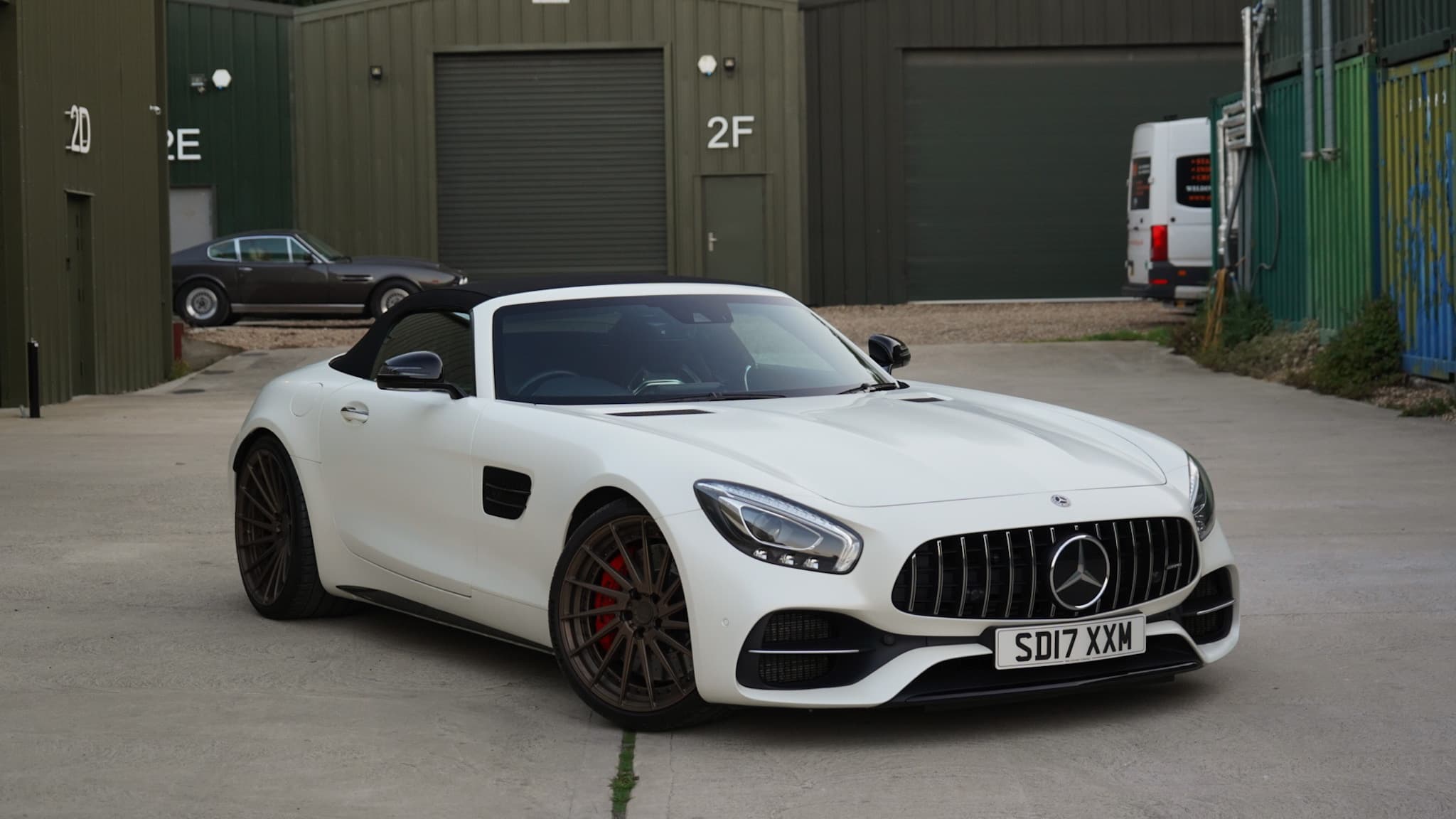
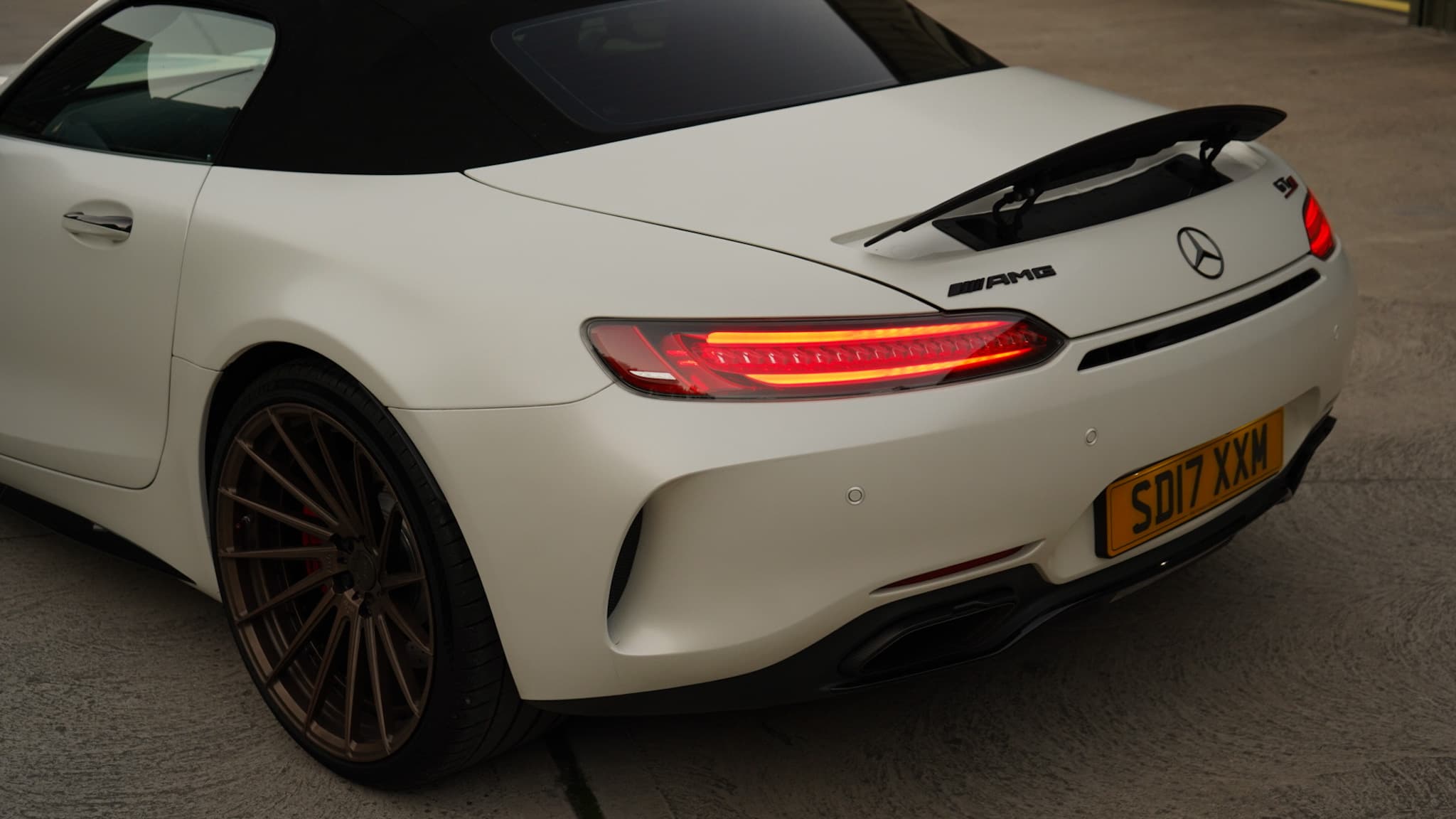
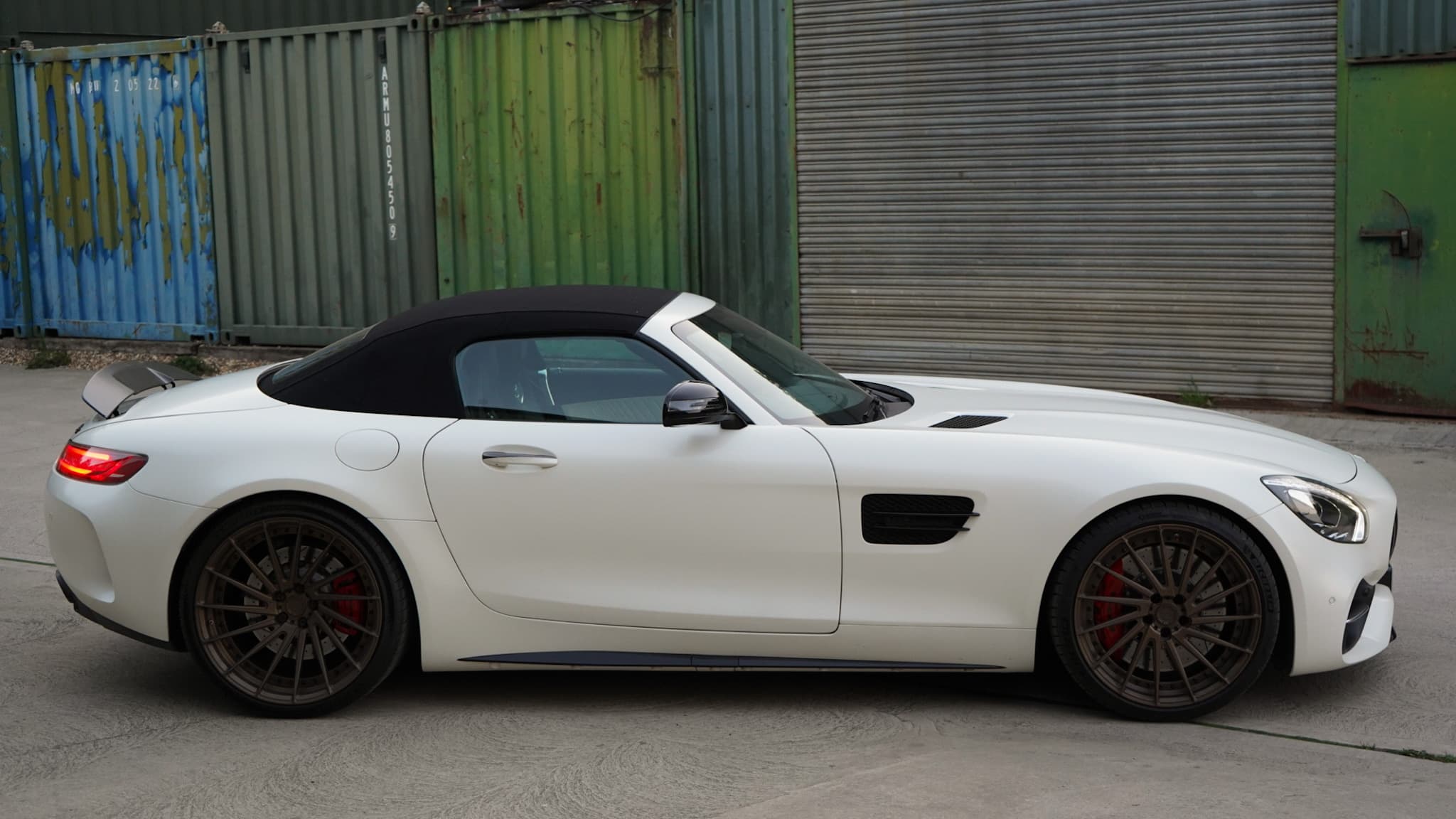
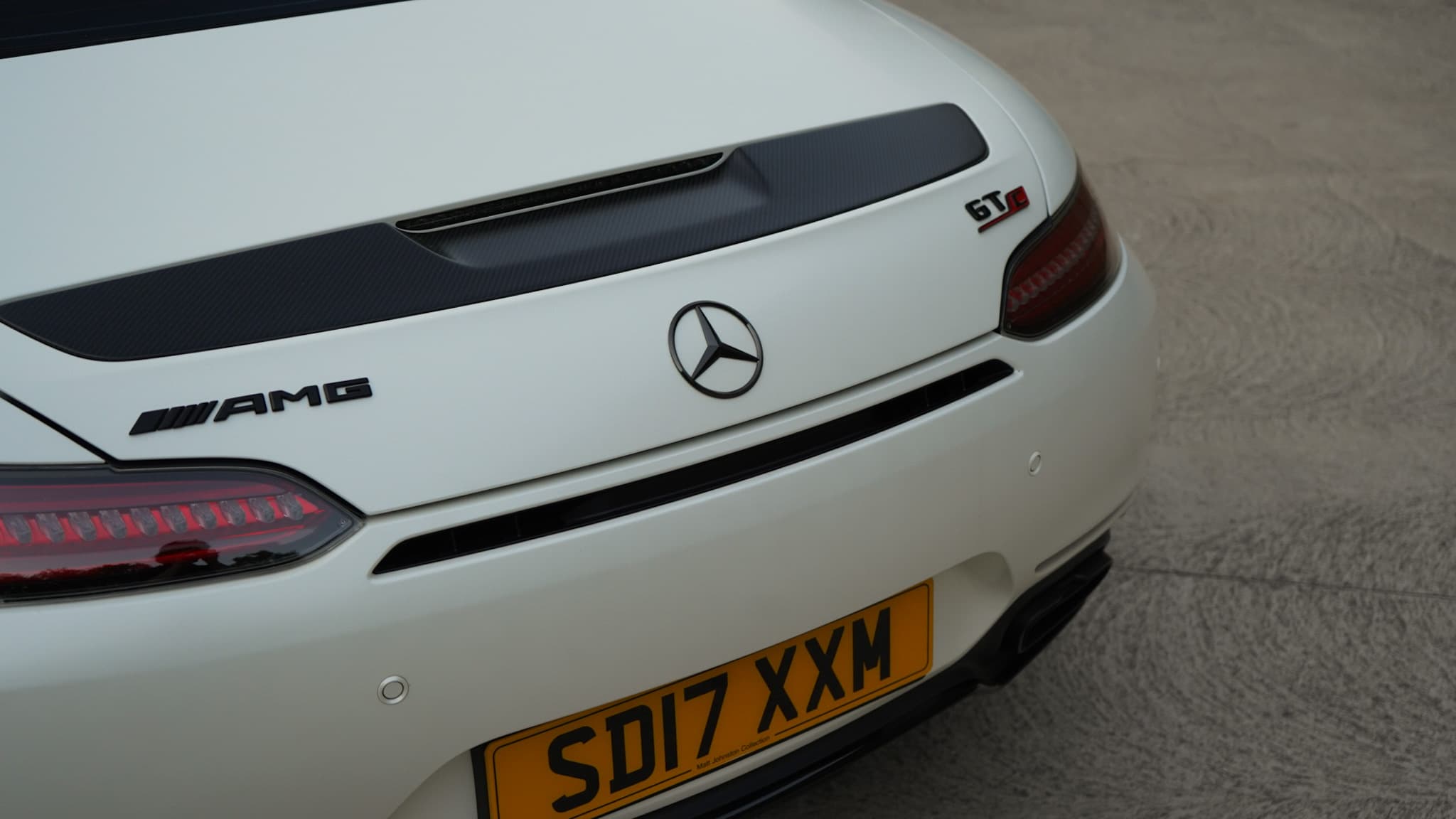
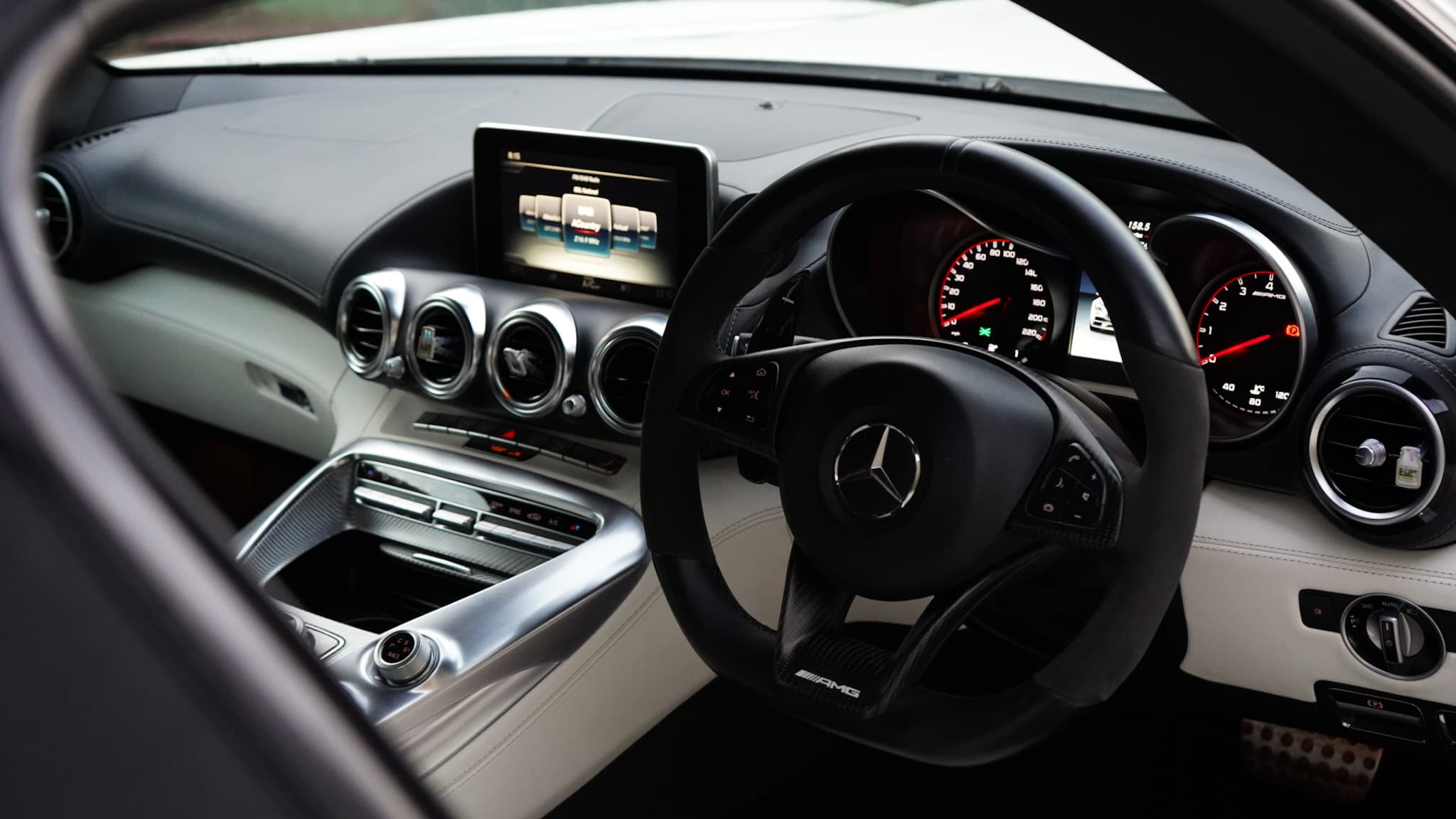
The GT C is especially relevant to TMJC because the collection has handled a 2017 Mercedes-AMG GT C Roadster.
The GT C shows how Mercedes-AMG differentiated the first generation through chassis hardware as well as engine output. The factory Roadster comparison gives the GT C rear-axle steering, an electronically controlled rear limited-slip differential, AMG RIDE CONTROL adaptive suspension and a wider rear wheel-and-tyre package.
The 2018 factory table quotes 410 kW / 557 PS and 680 Nm for the GT C Roadster. British references often express that as roughly 549 bhp. That is a unit conversion, not evidence of a separate UK engine tune.
For exact specification and buying checks, use the Mercedes-AMG GT C Roadster reference rather than treating those numbers as universal AMG GT figures.
The second-generation two-door AMG GT was unveiled in 2023. Mercedes-AMG itself describes it as the successor to the first-generation two-door GT and says the packaging concept changed compared with its predecessor.
The engineering confirms that this is a much larger conceptual reset than a facelift.
On the V8 GT 63 4MATIC+, Mercedes-AMG uses fully variable AMG Performance 4MATIC+ all-wheel drive, a nine-speed AMG Speedshift MCT transmission, active rear-axle steering, active roll stabilisation and active aerodynamics. The new body also allows optional 2+2 seating and provides a large tailgate and folding rear-seat backs.
Compare that with the original car's defining formula: two seats, rear-wheel drive and a rear seven-speed DCT transaxle.
The name stayed the same. The packaging and drivetrain philosophy did not.
It would still be too simple to say “C192 equals V8 plus all-wheel drive”.
In 2024 Mercedes-AMG added the GT 43. Instead of the V8/4MATIC+ arrangement, it uses a 2.0-litre turbocharged four-cylinder, rear-wheel drive and a nine-speed MCT. Mercedes-AMG quotes 310 kW / 421 PS and 500 Nm, with short-duration starter-generator boost available in certain conditions.
The GT 43 shows that the second generation is a broader technical family rather than one fixed drivetrain specification, even for collectors mainly interested in the V8 cars.
A single model-wide specification that simply says “V8”, “all-wheel drive” or “eight cylinders” would therefore be misleading.
The architecture changed, but Mercedes-AMG did not turn the car into an ordinary Mercedes coupe.
The C192 remains a dedicated AMG sports car with high-performance suspension, braking and aerodynamic systems. The GT 63 PRO develops the current V8 side of the range further, and Mercedes-AMG identifies that car as C192 in its 2026 Safety Car material.
The continuity is therefore in the role and model lineage rather than in one unchanging mechanical recipe.
The name can become confusing because Mercedes-AMG also sells products called AMG GT 4-Door Coupe.
Mercedes-AMG's own 2023 Pebble Beach material separates the first-generation two-door GT, the GT 4-Door Coupe and the SL when describing vehicles developed in-house by AMG. That factory distinction supports keeping the two lineages separate.
The two-door sports-car lineage is the C190 coupe, R190 Roadster and C192 coupe. Specifications for the four-door model should not be imported into that chronology merely because both contain “AMG GT” in the name.
The distinction is even more important now that Mercedes-AMG has introduced a new electric GT 4-Door Coupe on its AMG.EA architecture. Search results for “AMG GT” can therefore contain vehicles with completely different body layouts and powertrains.
TMJC's handled 2017 GT C Roadster sits squarely in the first-generation R190 branch.
Its individual history also demonstrates why a buyer should separate three different things:
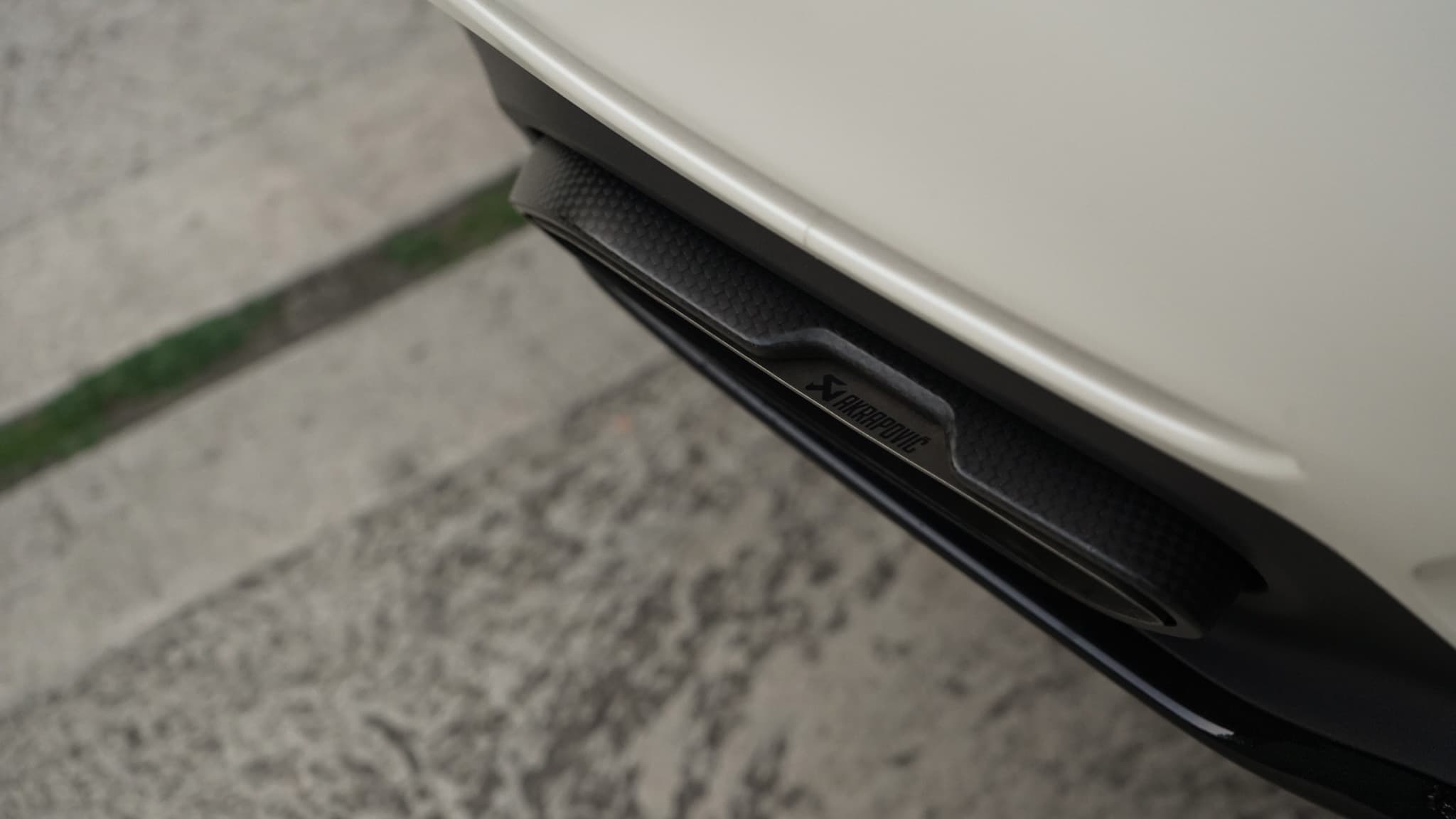
The archived car carried substantial later modifications, so its present-day component list is not a substitute for a factory GT C specification sheet. That separation between factory derivative specification and individual-car history is particularly important on tuned AMG GTs.
Before relying on a number from a listing or database, establish:
If those six things are clear, most apparent specification contradictions become much easier to resolve.
That depends on what the buyer values rather than which car is objectively “better”.
The first generation has the more distinctive original engineering formula: compact two-seat packaging, rear transaxle and rear-wheel drive. Within it, GT C, GT R and Black Series progressively add hardware and rarity that can matter to collectors.
The C192 offers greater everyday usability and traction in its V8 forms, and its range already spans very different characters from the rear-drive four-cylinder GT 43 to the GT 63 PRO.
For a collector, that makes generation identity more important, not less. “AMG GT” alone no longer tells you enough about the car.
Treat the AMG GT as a lineage, then narrow down.
Start with C190/R190 versus C192. Then identify coupe or Roadster, derivative and model year. Only after that should you compare power, torque, transmission, differential, suspension, brakes or performance figures.
That approach avoids the two most common errors: calling every first-generation car C190 and treating the second-generation car as if it were simply a more powerful version of the original.
Editorial information
Research and editorial from TMJC Garage.
Research and editorialTMJC Garage
Reviewed byMatt Johnston
Last reviewed26 October 2026
Published byThe Matt Johnston Collection
Model lineage
TMJC photography
TMJC assistance
Continue to the main TMJC website and speak directly with the collection team.
Sell, consign or source
Continue with TMJC for a discreet conversation, professional presentation and collector-focused support.
Enquire now