TMJC assistance
Want TMJC to help with this vehicle?
Sourcing, consignment and valuationContinue to the main TMJC website and speak directly with the collection team.
Generation
Mercedes-AMG GT Roadster R190 guide: chassis code, GT/GT S/GT C differences, facelift changes, GT R and used-car checks.
Variant directory
Choose an exact R190 derivative for engine, gearbox, performance, dimensions, equipment and buying-context detail.
TMJC guide
Mercedes-AMG GT Roadster R190 guide: chassis code, GT/GT S/GT C differences, facelift changes, GT R and used-car checks.
The Mercedes-AMG GT Roadster R190 is the open version of the first-generation AMG GT sports car. Mercedes-Benz's own model-series material separates AMG GT — C190 from AMG GT Roadster — R190, so calling every first-generation car a C190 is not technically precise.
Mercedes-AMG introduced the roadster family in 2016 with the GT Roadster and GT C Roadster. The range later gained the GT S Roadster and limited GT R Roadster, while the 2018 facelift and a further 2020 update changed equipment and performance. That evolution matters when identifying a car, ordering parts or judging whether its hardware is original.
Mercedes-Benz lists the AMG GT Roadster as R190 from 2016, while the fixed-roof AMG GT is listed separately as C190. The distinction is useful because the two cars share much of their underlying engineering but have different body structures, roof systems and some roadster-specific parts.
For a used car, the badge alone is not enough. A GT, GT S, GT C and GT R Roadster can all belong to the R190 family while having different suspension, differential, brake, wheel and rear-steering specifications.
The broader Mercedes-AMG GT model page covers the coupe and roadster family together. This page stays with the open R190 cars.
Mercedes-AMG unveiled the GT Roadster and GT C Roadster in September 2016. The GT C was the more serious chassis specification from the start, borrowing ideas from the GT R including active rear-axle steering and an electronically controlled rear differential.
In May 2018, the GT S Roadster joined the line-up between the base GT and GT C. Mercedes described three open two-seaters at that point: GT, GT S and GT C.
The family expanded again in March 2019 with the GT R Roadster, a limited derivative capped at 750 cars worldwide. It combined the GT R's 430 kW / 585 PS specification with the roadster body and the same lightweight three-layer fabric-roof concept used elsewhere in the open range.
There were important specification changes within this period, so a simple year range does not tell the whole story.
The best-supported production-end year for the open R190 is 2021. In April 2021, Motor1 reported Mercedes-AMG CEO Philipp Schiemer's confirmation that the incoming SL would replace the AMG GT Roadster. Mercedes-AMG then unveiled the new R232 SL on 28 October 2021, and the Sportlich-Leicht R190 model register records R190 production as ending in 2021.
That supports the year, but not a precise final-build date: no cited source gives a factory-confirmed final R190 day or month. It also should not be confused with the first-generation C190 coupe, whose later derivatives continued beyond the roadster.
The first-generation AMG GT Roadster was designed around a front-mid-engine, rear-transaxle layout. Mercedes-AMG placed the AMG SPEEDSHIFT DCT 7G dual-clutch transmission at the rear axle, connected to the engine through a torque tube. In its 2018 Roadster material, AMG quoted a 47:53 front-to-rear weight distribution for this architecture.
The roadster family used AMG's 3,982 cc V8 biturbo. The turbochargers sit inside the V of the engine, and dry-sump lubrication allows the engine to sit lower in the chassis.
The body structure also matters. Mercedes-AMG describes an aluminium-intensive spaceframe and exterior, with a magnesium front deck. The powered roof is a three-layer fabric hood over a magnesium, steel and aluminium structure, with an integrated aluminium cross-member for rollover protection.
That combination explains why R190 should be treated as more than a C190 coupe with the roof removed: the open car has its own body-series identity and roof structure while retaining the AMG GT's transaxle layout.
Mercedes-AMG's May 2018 launch material for the GT S Roadster provides a particularly useful comparison. These figures describe the 2018 range at that point in time; they should not be used as universal specifications for every R190 model year.
| 2018 Roadster | GT | GT S | GT C |
|---|---|---|---|
| Power | 350 kW / 476 PS | 384 kW / 522 PS | 410 kW / 557 PS |
| Torque | 630 Nm | 670 Nm | 680 Nm |
| DIN kerb weight | 1,595 kg | 1,625 kg | 1,660 kg |
| 0-100 km/h | 4.0 s | 3.8 s | 3.7 s |
| Top speed | 302 km/h | 308 km/h | 316 km/h |
| Rear differential | Mechanical LSD | Electronic LSD | Electronic LSD |
| Suspension | AMG sports suspension | AMG RIDE CONTROL | AMG RIDE CONTROL |
| Rear-axle steering | No | No as standard | Yes |
All three used the 3,982 cc V8 biturbo and seven-speed AMG SPEEDSHIFT DCT in Mercedes-AMG's comparison.
The table also shows why trim matters mechanically. GT S was not simply a higher-output GT: it added adaptive damping and the electronic rear differential. GT C went further with standard rear-axle steering and a wider rear wheel/tyre package.
At launch, the GT C Roadster was the most powerful open AMG GT and took several chassis ideas from the GT R. Mercedes-AMG specifically highlighted active rear-axle steering, the electronically controlled rear differential and AMG RIDE CONTROL.
Its rear bodywork was also wider than the base GT Roadster to accommodate a wider track and wheel package. In the 2018 comparison, GT C used 265/35 R19 front and 305/30 R20 rear tyres, against 255/35 R19 and 295/35 R19 on the base GT.
Those details belong to GT C, not to every R190. The exact AMG GT C Roadster page goes deeper into its specification and the differences between early and later cars.
The AMG GT R Roadster arrived in 2019 as the most focused open derivative. Mercedes-AMG limited it to 750 cars worldwide and quoted 430 kW / 585 PS, 700 Nm, 0-100 km/h in 3.6 seconds and a 317 km/h top speed.
It also shows why the R190 story does not stop at the GT/GT S/GT C trio. The family continued to evolve after the 2018 comparison, and higher-performance derivatives brought their own suspension, aero and wheel specifications.
The GT R Roadster is therefore best treated as a separate exact derivative when assessing originality or technical specification, even though it shares the R190 roadster identity.
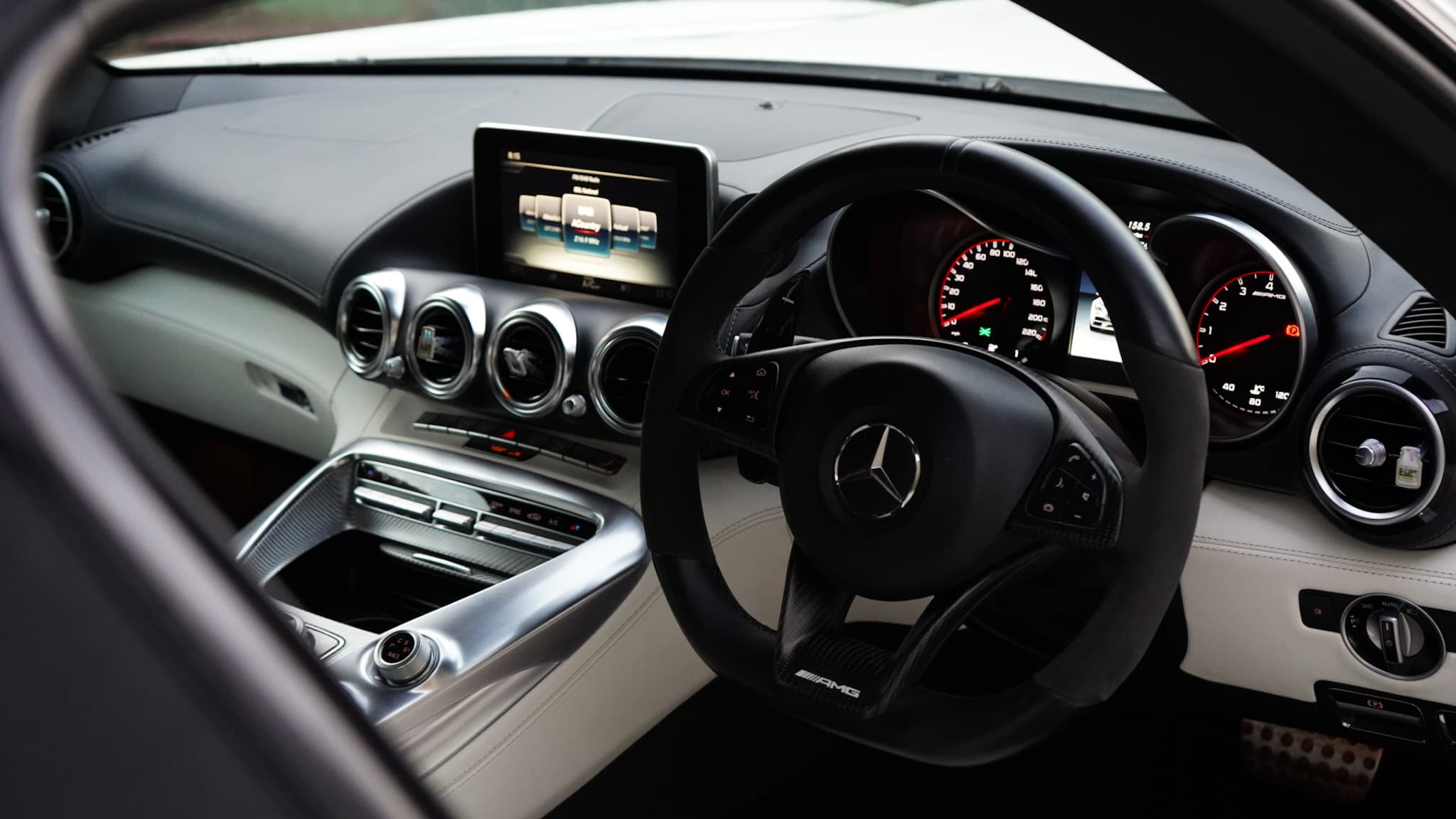
Mercedes-AMG announced a wider update to the two-door AMG GT Coupes and Roadsters in November 2018. Later cars gained AMG DYNAMICS, a new AMG Performance steering wheel, centre-console display buttons and a fully digital instrument cluster.
Those features are useful visual and equipment clues, but they should not be backdated onto a 2017 car. A pre-facelift GT C and a later GT C may share the same basic derivative name while differing in interior controls, displays and some technical settings.
This is one reason build date matters more than registration year alone when checking parts or originality.
In July 2020 Mercedes-AMG announced another significant change. The base AMG GT Roadster rose to 390 kW / 530 PS, and Mercedes made AMG RIDE CONTROL, the electronically controlled rear differential, composite brakes and Race mode standard. Active rear-axle steering also became available with the AMG Dynamic Plus package.
At the same time, Mercedes stated that the GT S Roadster was discontinued.
That creates an important trap for used-car research. A 2018 base GT Roadster and a late-2020 base GT Roadster do not have the same power or chassis-equipment specification, even though the badge and R190 identity are the same.
Start with the VIN, build date and exact derivative. Then compare the car against period manufacturer material for that build period.
Useful checks include:
The R190 range changed enough during production that a later-car feature is not proof that an earlier car has been upgraded correctly or originally.
A generation-level inspection should concentrate on the systems that distinguish the open AMG GT and then become derivative-specific.
Operate the fabric roof through a full cycle and inspect its fit, weather sealing, headlining and surrounding trim. Check the aluminium-intensive body carefully for accident repair and confirm that panel gaps and paint finish are consistent. The roof mechanism and open-car structure are R190-specific areas that a coupe-only inspection can miss.
The rear-mounted dual-clutch transaxle, differential, adaptive damping and rear-axle steering should be assessed according to the exact derivative. A base early GT should not be judged against GT C hardware, and a later base GT may legitimately have equipment that earlier cars did not.
A proper road test should confirm smooth engagement and shifting, stable braking and consistent steering/suspension behaviour. Any warning message should be diagnosed rather than dismissed as a generic AMG quirk.
The roadsters use large, derivative-specific brake and tyre packages. Confirm sizes against factory data, inspect remaining brake life and tyre age/condition, and check wheels for damage or poor repair. Mixing higher-trim wheel or brake parts onto another derivative can complicate both originality and replacement-part ordering.
On a modified AMG GT, the paperwork matters. Separate factory options from later engine software, exhaust, suspension, wheel and carbon changes. A useful history file should identify who carried out the work, when it was done and whether original parts remain with the car.
For a high-value purchase, combine the physical inspection with Mercedes VIN-based service/recall checks and an AMG-capable diagnostic scan.
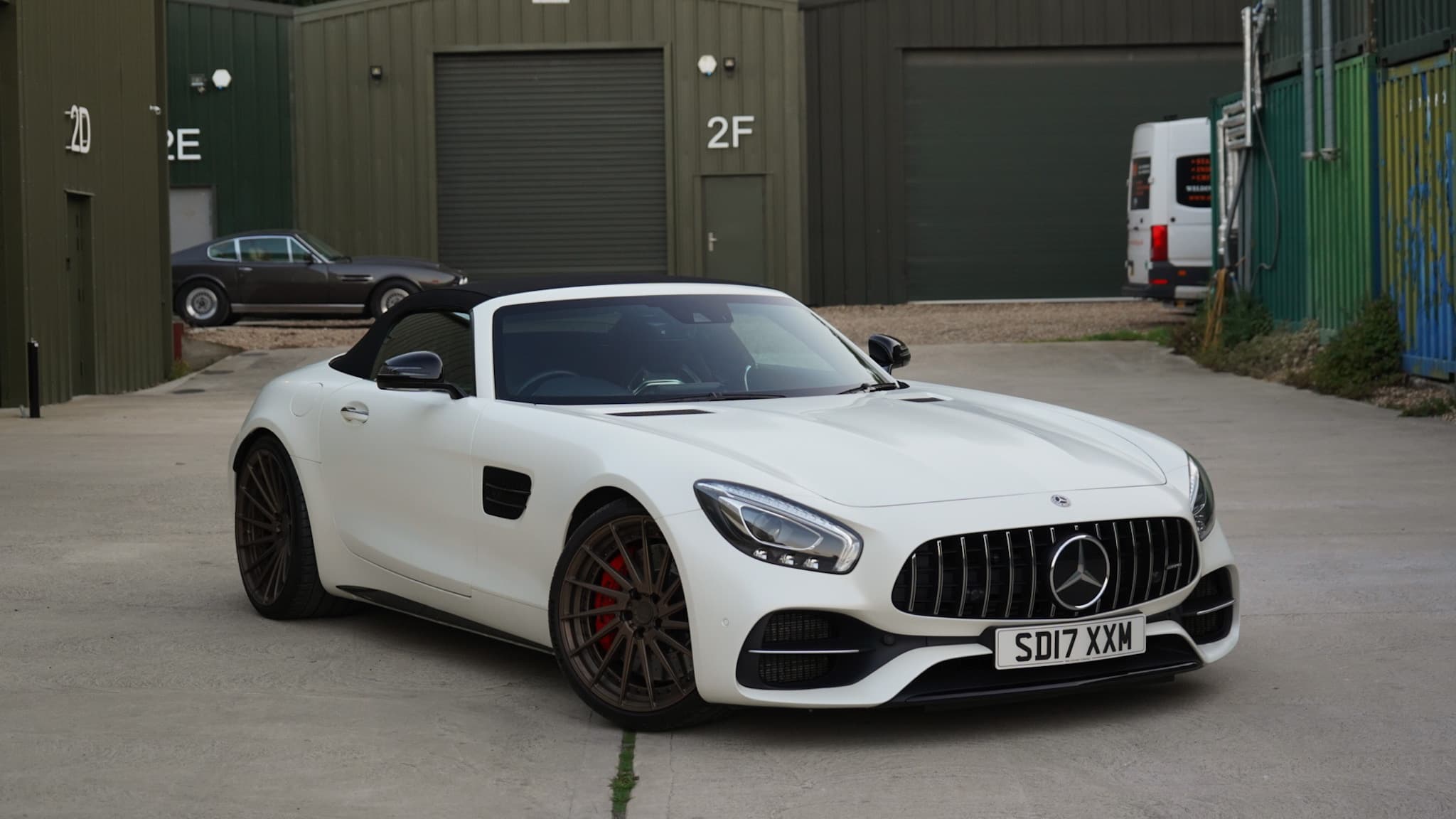
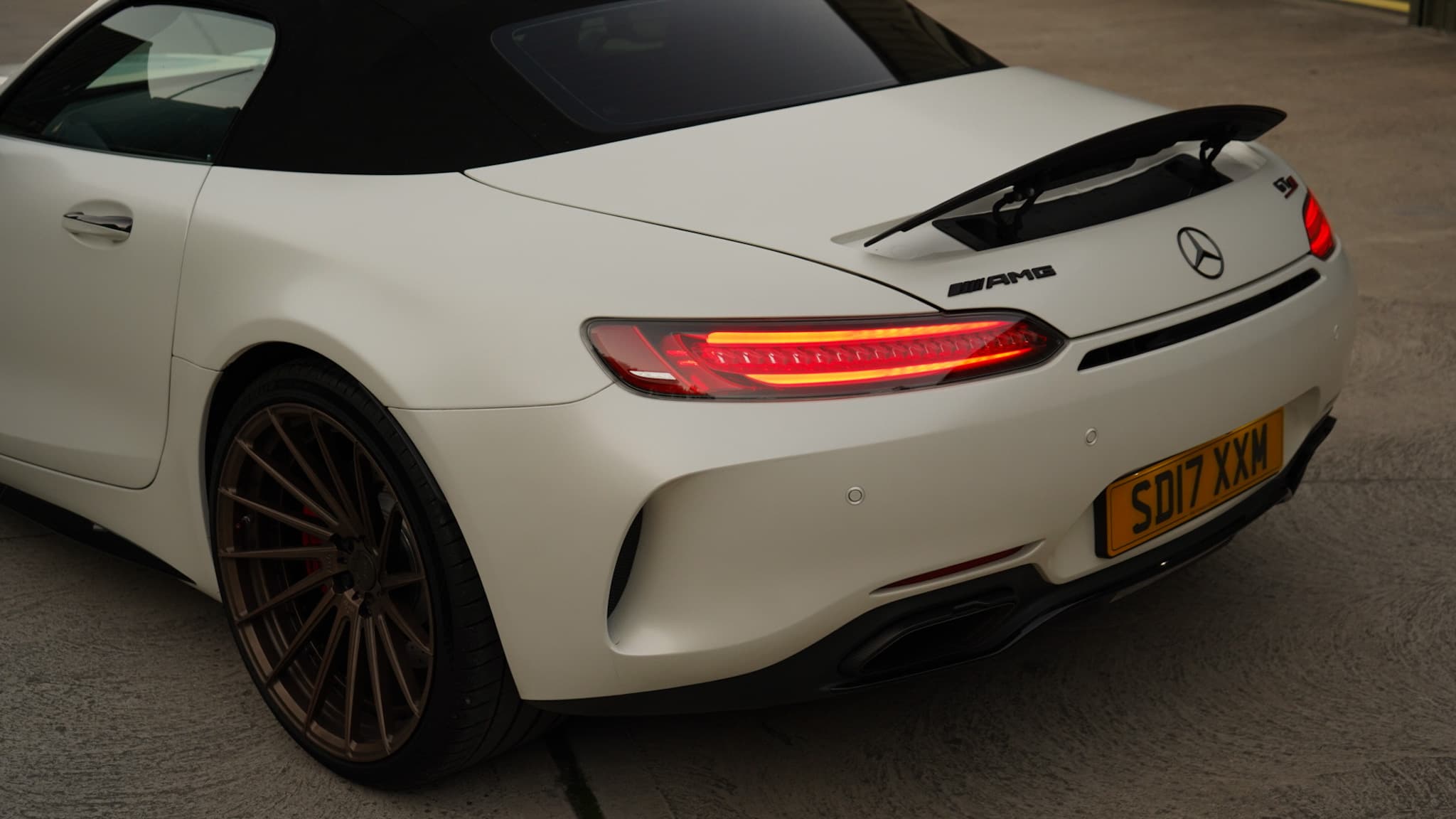
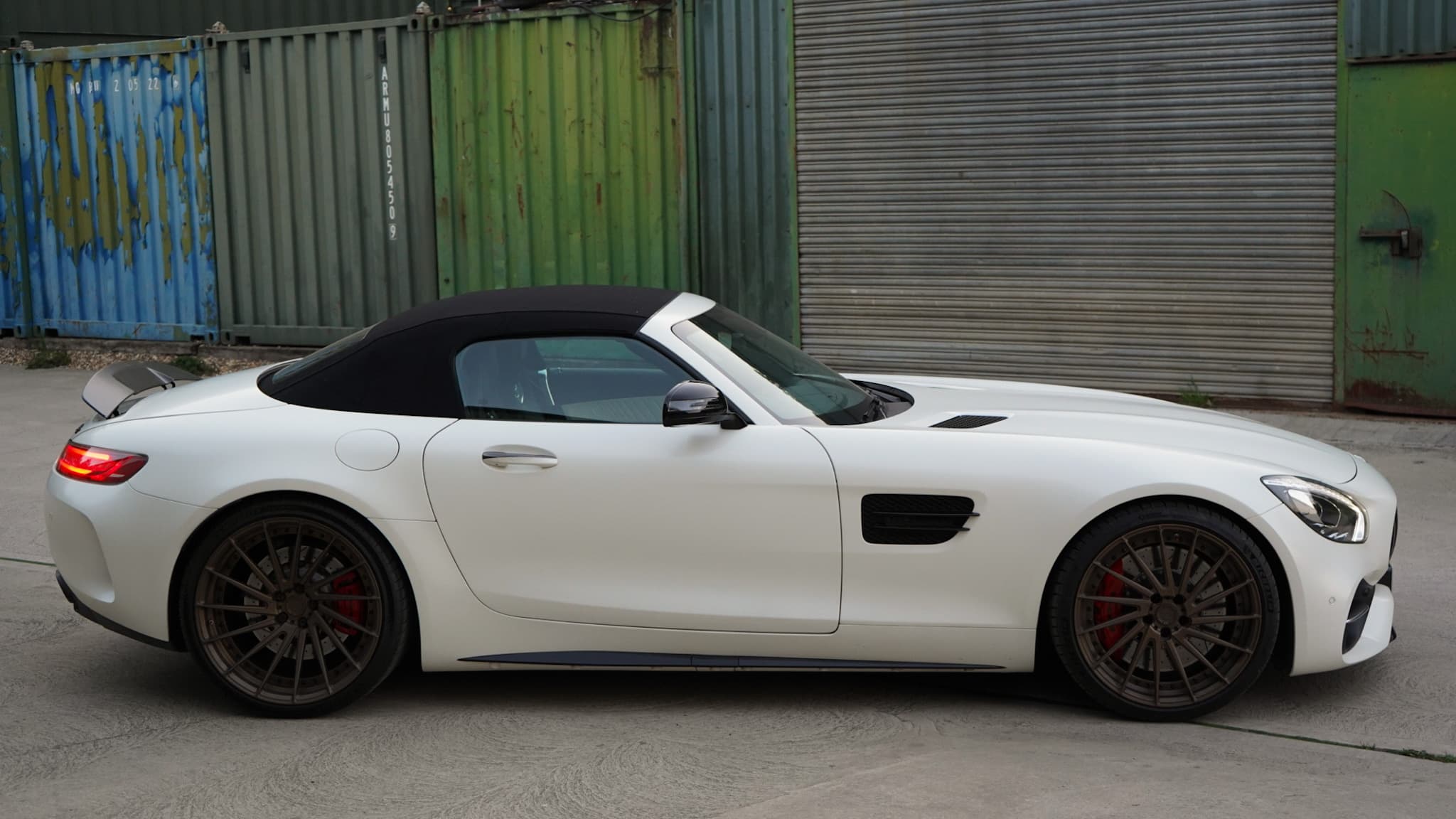
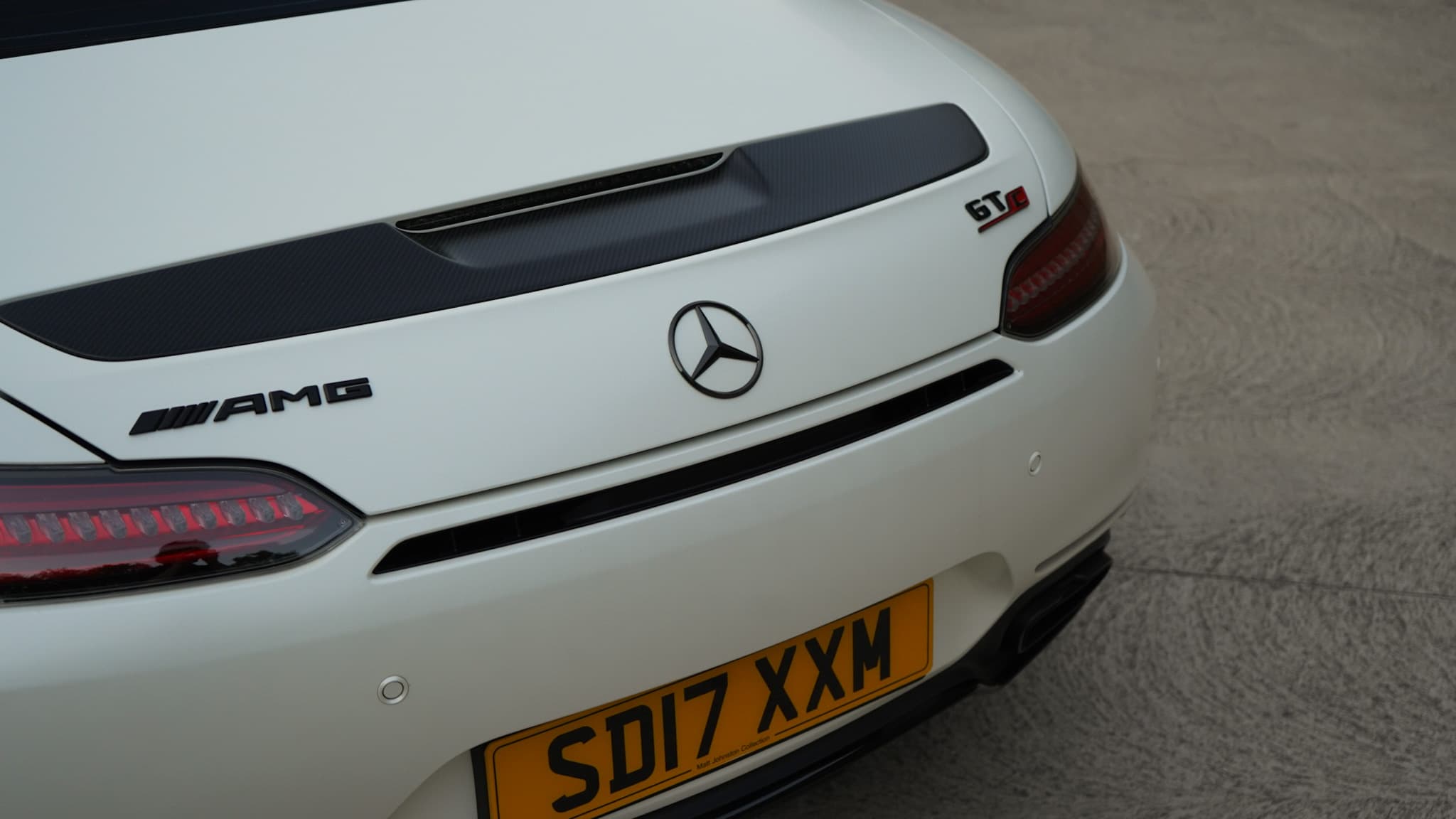
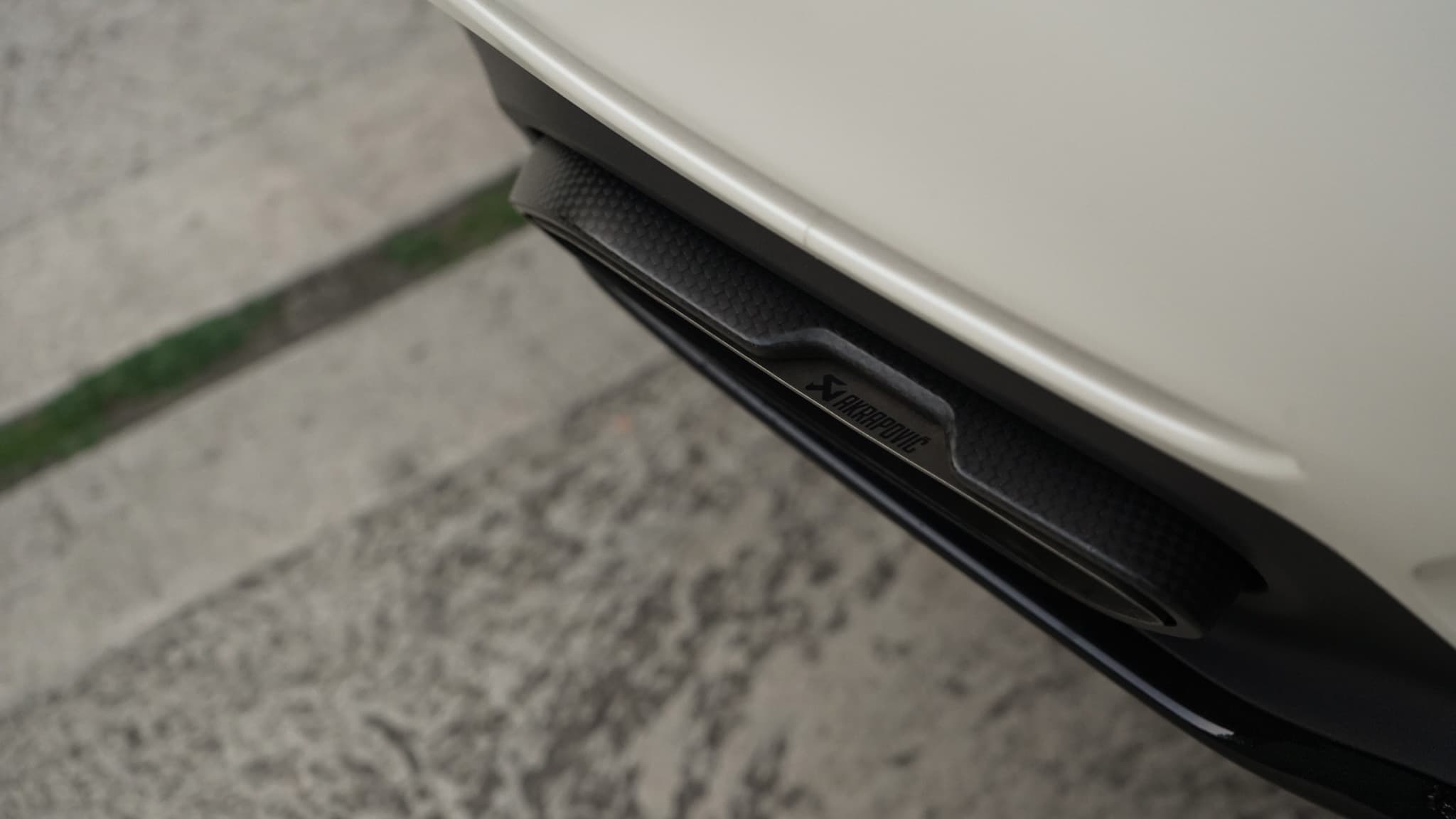
TMJC has previously handled a 2017 AMG GT C Roadster. The surviving archived advert is useful because it clearly separates factory equipment from substantial later changes including RENNtech engine work, an Akrapovic exhaust, KW suspension, ADV.1 wheels and additional carbon parts.
That car should not be used as a standard GT C specification sheet. Instead, it illustrates a more useful collector point: on a modified R190, originality is not binary. The job is to establish what Mercedes-AMG supplied, what was changed later, whether the work is documented and whether the current configuration suits the buyer's priorities.
The archived advert contains inconsistent mileage fields, so no exact mileage is repeated here.
C190 is Mercedes-Benz's model-series code for the first-generation AMG GT coupe. R190 is the corresponding Roadster series code used by Mercedes-Benz from 2016.
They share the same basic AMG GT concept and much of the powertrain architecture, but the roadster has its own body-series identity, roof system and derivative chronology. When buying parts, checking originality or researching a specific car, use R190 for the open car and then narrow the answer by derivative and build date.
Editorial information
Research and editorial from TMJC Garage.
Research and editorialTMJC Garage
Reviewed byMatt Johnston
Last reviewed15 September 2026
Published byThe Matt Johnston Collection
Model lineage
TMJC photography
TMJC assistance
Continue to the main TMJC website and speak directly with the collection team.
Sell, consign or source
Continue with TMJC for a discreet conversation, professional presentation and collector-focused support.
Enquire now