Generation
Mercedes-Benz SL R107
Mercedes-Benz SL R107 guide: 1971-1989 production, 1980 and 1985 updates, R107 vs C107, market-specific engines and key buying checks.
Variant directory
R107 variants
Choose an exact R107 derivative for engine, gearbox, performance, dimensions, equipment and buying-context detail.
TMJC Catalog guide
Mercedes-Benz SL R107: years, engines and buying guide
Mercedes-Benz SL R107 guide: 1971-1989 production, 1980 and 1985 updates, R107 vs C107, market-specific engines and key buying checks.
- Page
- Generation overview
- Reviewed
- 12 Sept 2026
- Specifications
- 0 verified
The Mercedes-Benz SL R107 is the roadster generation that replaced the W113 “Pagoda” in 1971 and remained in production until August 1989. Mercedes-Benz records 237,287 R107 roadsters built at Sindelfingen across the run, and the 350 SL made this the first SL generation launched with V8 power.
That long production life is the most important thing to understand before looking at a specification table. An early 350 SL, a post-1980 car and a post-1985 R107 can all belong to the same generation while differing materially in engine management, transmissions, trim and market specification.
R107 production years: 1971 to 1989
Mercedes-Benz says the R107 SL premiered in spring 1971. The launch 350 SL brought V8 power to the SL range. A 4.5-litre derivative followed for relevant markets, and the 280 SL joined in July 1974 with a six-cylinder engine. R107 production then continued through the 1980s until the R129 generation arrived in 1989.
For buyers, “R107” is therefore a useful generation identity, not a complete specification. The year, derivative and market still matter.
| Period | What changed |
|---|---|
| Spring 1971 | R107 SL launches with the 350 SL V8 |
| 1974 | 280 SL adds a six-cylinder option |
| 1975-76 | Relevant 107-series engines move from Bosch D-Jetronic to K-Jetronic |
| March 1980 | Major mechanical update; the 107 chronology moves from three-speed to four-speed automatic transmission |
| 1981 | C107 SLC coupé production ends while the R107 roadster continues |
| 1985 | R107 receives another facelift; Mercedes-Benz's archive identifies post-facelift cars from this period |
| 1989 | R107 production ends and the R129 succeeds it |
That timeline is more reliable than applying the specification of one well-documented survivor to every R107 built across eighteen years.
R107 or C107 SLC: what is the difference?
The R107 is the SL roadster. The related C107 SLC is a fixed-roof, four-seat coupé developed from the same programme.
Mercedes-Benz says its board approved series production of the new R107 SL in June 1968. The SLC was then developed around the SL and appeared six months after the roadster's 1971 world premiere. Mercedes-Benz says the cars were closely related up to the rear edge of the doors, but the SLC grows behind them: Mercedes-Benz gives the coupé a 2,820 mm wheelbase, 360 mm longer than the SL, together with a different roof and rear body.
That matters when identifying a car. An R107 with its removable steel hardtop fitted does not become an SLC. The SL remains a two-seat roadster with a separate soft top and optional/removable hardtop; the SLC is a different C107 body.
R107 engines changed across the production run
The broad sequence is straightforward, but the detail is date-sensitive.
The R107 launched with the 350 SL V8. A 4.5-litre derivative followed for relevant markets, and Mercedes-Benz added the six-cylinder 280 SL in July 1974. During the mid-1970s, emissions and engine-management development brought changes to the 107 family, including the move from Bosch D-Jetronic electronic injection to K-Jetronic mechanical injection on relevant engines.
The exact date belongs to the derivative. On the 350 SL, for example, Mercedes-Benz Markenclubs places its D-Jetronic-to-K-Jetronic change in February 1976. That is useful evidence for a 350 SL, but it would be poor practice to turn one derivative's February date into a universal R107 rule.
The same caution applies to power outputs. Depending on derivative, production date, catalyst/emissions specification and market, a single number can be accurate for one R107 and wrong for another. The generation page is most useful when it tells you which car to identify first, rather than offering one apparently precise figure for the whole family.
Why the March 1980 update matters
Mercedes-Benz's 107-series archive places a significant mechanical revision at the March 1980 Geneva Motor Show. One especially useful detail is the change from the earlier three-speed automatic to a four-speed automatic in the updated 107 chronology.
That gives buyers a strong date check. If a classified advert describes a pre-update automatic as four-speed, the correct response is not to assume either the advert or the car is necessarily wrong. Check the production date, the gearbox actually fitted and the car's history. A later conversion is possible; a marketplace field can also simply be inaccurate.
This is exactly the kind of distinction that becomes lost when “R107 automatic” is treated as one specification covering the whole generation.
What changed in 1985?
Mercedes-Benz thoroughly modernised the SL for the Frankfurt show in September 1985. The archive records minor exterior changes, revised front suspension and a new engine range: a 3.0-litre straight-six replaced the 2.8, a 4.2-litre V8 replaced the 3.8, and the revised 5.0 gained electronic ignition and KE-Jetronic control.
The new 560 SL was not a normal home-market derivative. Mercedes-Benz says it was reserved for the USA, Australia and Japan in detuned catalytic-converter form. That market boundary matters when assessing an imported 560 SL and prevents its specification being projected onto UK 500 SLs.
That makes September 1985 another useful dividing line when researching a car. It does not mean every market received the same equipment or options, so this page avoids inventing a complete late-R107 market matrix.
For a prospective purchase, a better question is: is the car's body, drivetrain and equipment consistent with its production date and intended market? That approach remains useful even if the car has crossed countries, been restored or changed hands many times.
The R107's safety engineering was part of its identity
The R107 was conceived as a more modern successor to the W113, not simply as a restyle. Mercedes-Benz highlights the roadster's crash behaviour as notably advanced for its period.
Mercedes-Benz's R107 roadster archive describes strengthened A-pillars, a body structure designed for controlled crumple behaviour, a fuel tank protected above the rear axle and a padded four-spoke steering wheel. Its separate C107 history places the related coupé tank ahead of the rear axle. Both sources support the safety-led layout, but the locations are kept distinct rather than treated as interchangeable wording.
For a modern buyer, the practical consequence is less romantic: structural corrosion and previous poor repairs matter. A body engineered carefully in period can only do its job if the important metal is still sound.
How to identify a particular R107
Start with the car itself, then move outward to the paperwork.
- Confirm the chassis/type identity and production date. “R107” narrows the generation; the exact derivative tells you which technical data should apply.
- Check the engine and fuel system actually fitted. Early and later cars can look similar while using different injection hardware.
- Check the transmission rather than trusting the advert. Gear count and shift pattern should agree with the period or be explained by the history.
- Read old invoices and registration history in sequence. They can show when an engine, gearbox, interior, roof or major bodywork changed.
- Compare originality claims with period evidence only after the identity is established. A generic online specification table is a weak substitute for model- and date-specific evidence.
This is also where a good provenance file becomes valuable. Our classic-car provenance checklist sets out a broader way to order that evidence, while the matching-numbers guide explains what matching claims can and cannot prove.
R107 rust: where to look first
Hagerty UK's R107 buying guide treats body condition as the expensive risk. Corrosion can be hidden beneath glossy paint, underseal or previous repairs, so a dry inspection on a lift is worth far more than a long list of recently replaced service parts.
Prioritise the windscreen surround and bulkhead, then the sills, floors, wheelarches, door bottoms, bonnet and boot. Look above the headlamps and behind the bumpers as well; the latter can corrode from the back where damage is easy to miss from a normal walk-round.
Panel gaps and paint finish still matter, but they are not a substitute for seeing the structure. Fresh underseal or a newly painted sill deserves evidence of what is underneath it.
Roofs, seals and water ingress
An R107 is normally encountered with a folding soft top and many cars also retain the removable hardtop. Treat the hardtop as something to inspect, not merely a valuable accessory to count.
Check the hardtop for corrosion, trim damage, seal condition and clean engagement with its catches. Operate the soft top fully and examine the fabric, frame and rear window. Damp carpets or staining around the cabin can point to tired hood/window seals or corrosion around the screen and bulkhead.
A car can present beautifully with the hardtop fitted while hiding a neglected soft top underneath, so inspect both configurations where possible.
Mechanical and road-test checks
The R107's reputation for durability should not turn into an assumption that age no longer matters.
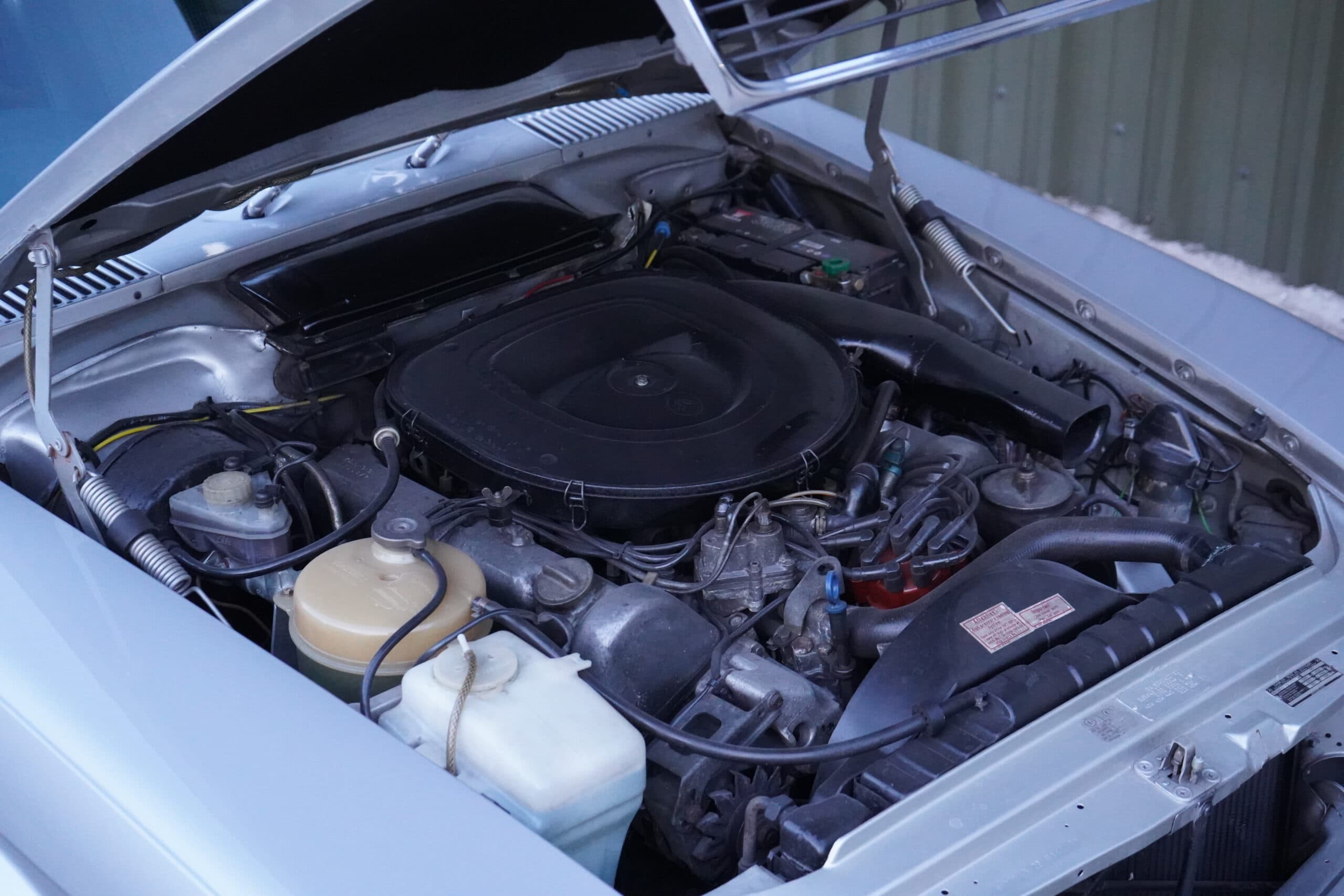
On V8 cars, Hagerty notes that valvetrain noise can appear; persistent noise deserves diagnosis rather than being dismissed as character. Inspect the radiator for damage and leaks, and watch the temperature properly on a road test. A cooling system that behaves in a short dealer-yard idle may not behave the same way after sustained use.
The steering should feel substantial but not vague. Excessive play can point to steering-box wear, while the steering damper and suspension bushes are normal age-related inspection points. Listen for clonks, feel for inconsistent assistance and check tyre wear for clues to geometry or worn components.
With an automatic, assess engagement and shifts both cold and hot. Then compare the physical transmission with the production period. A gearbox that differs from factory chronology is not automatically a reason to reject the car, but it is a reason to understand the work and paperwork behind it.
A TMJC-linked 1979 350 SL shows why verification matters
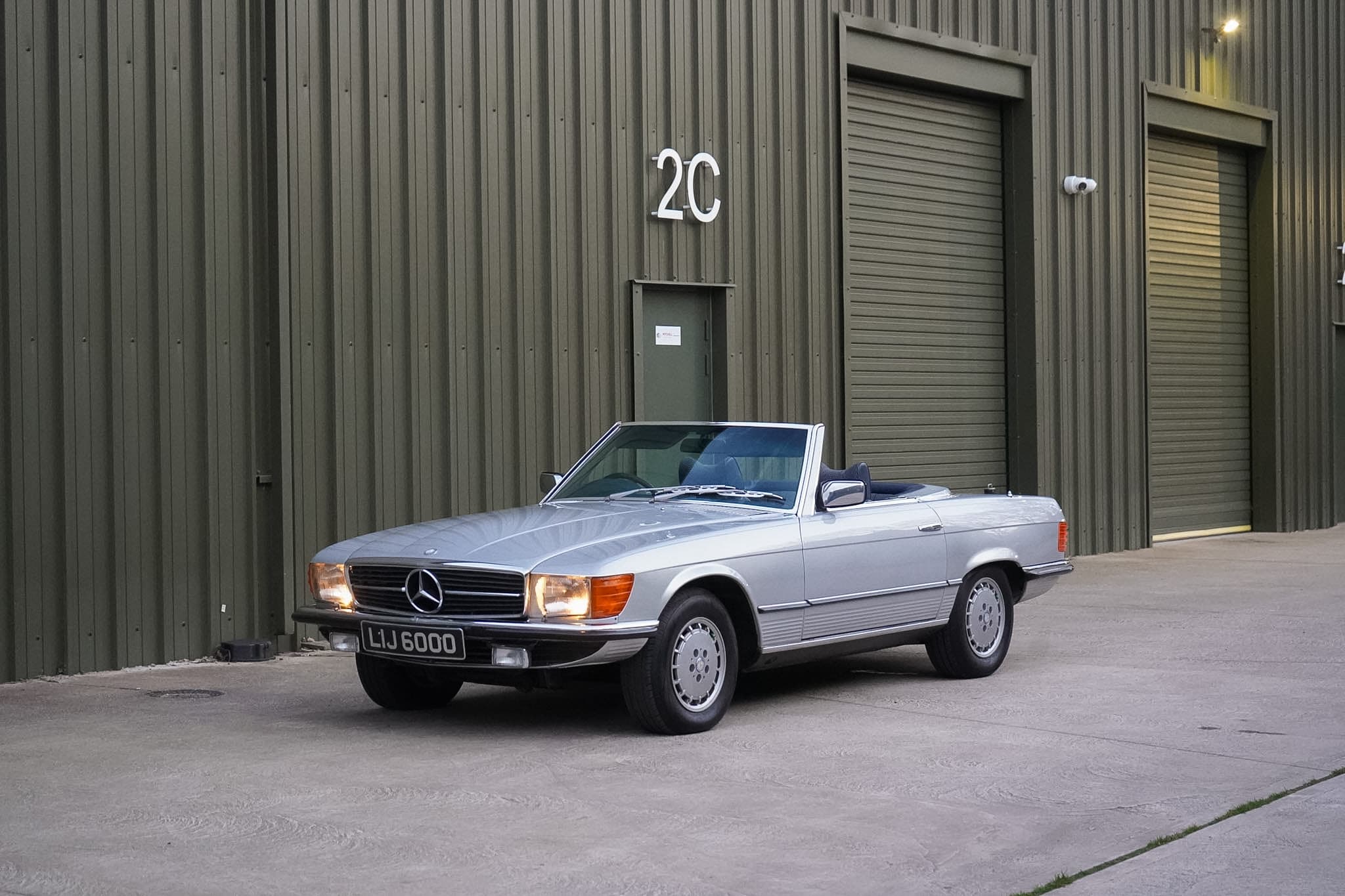
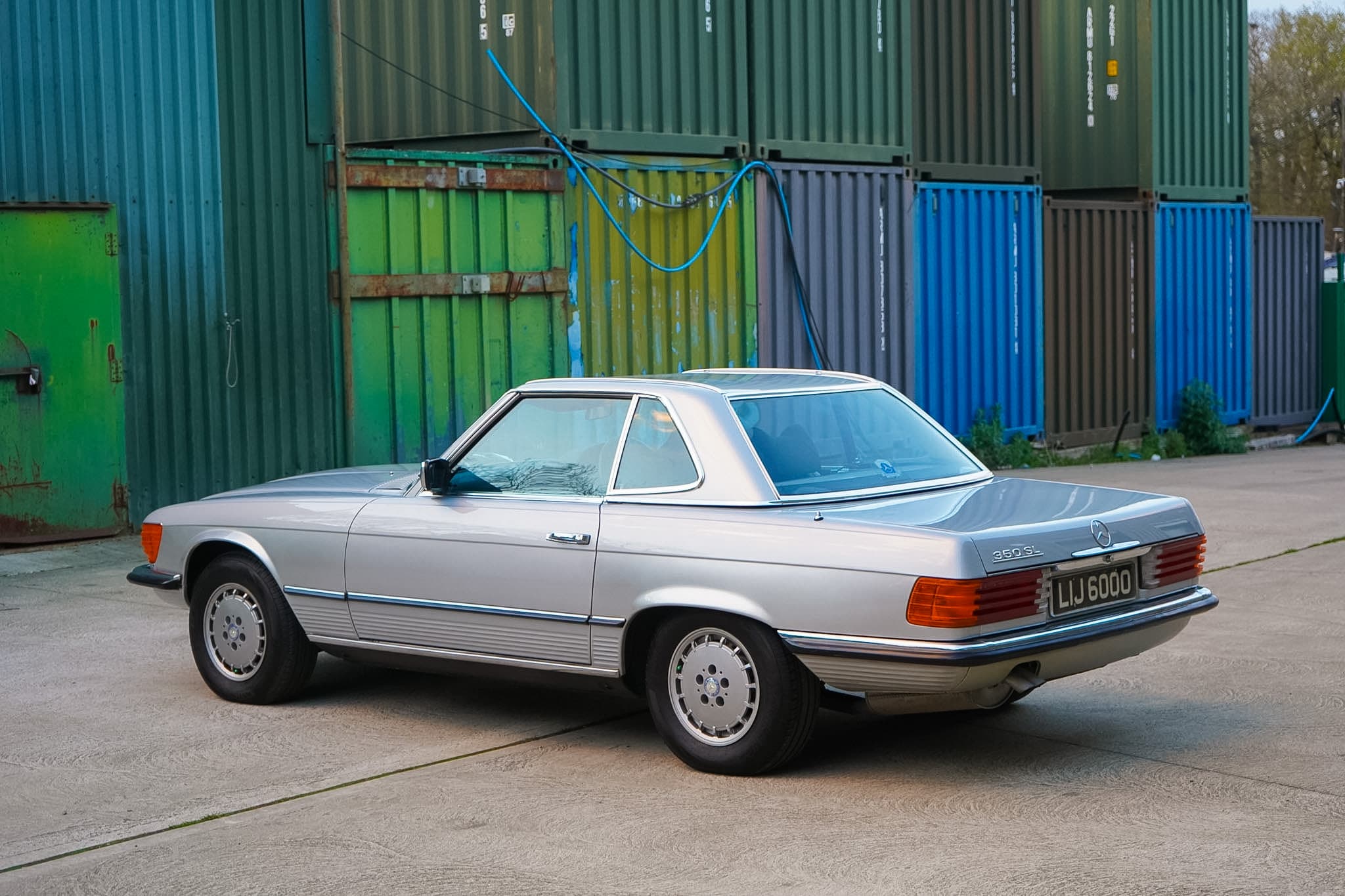
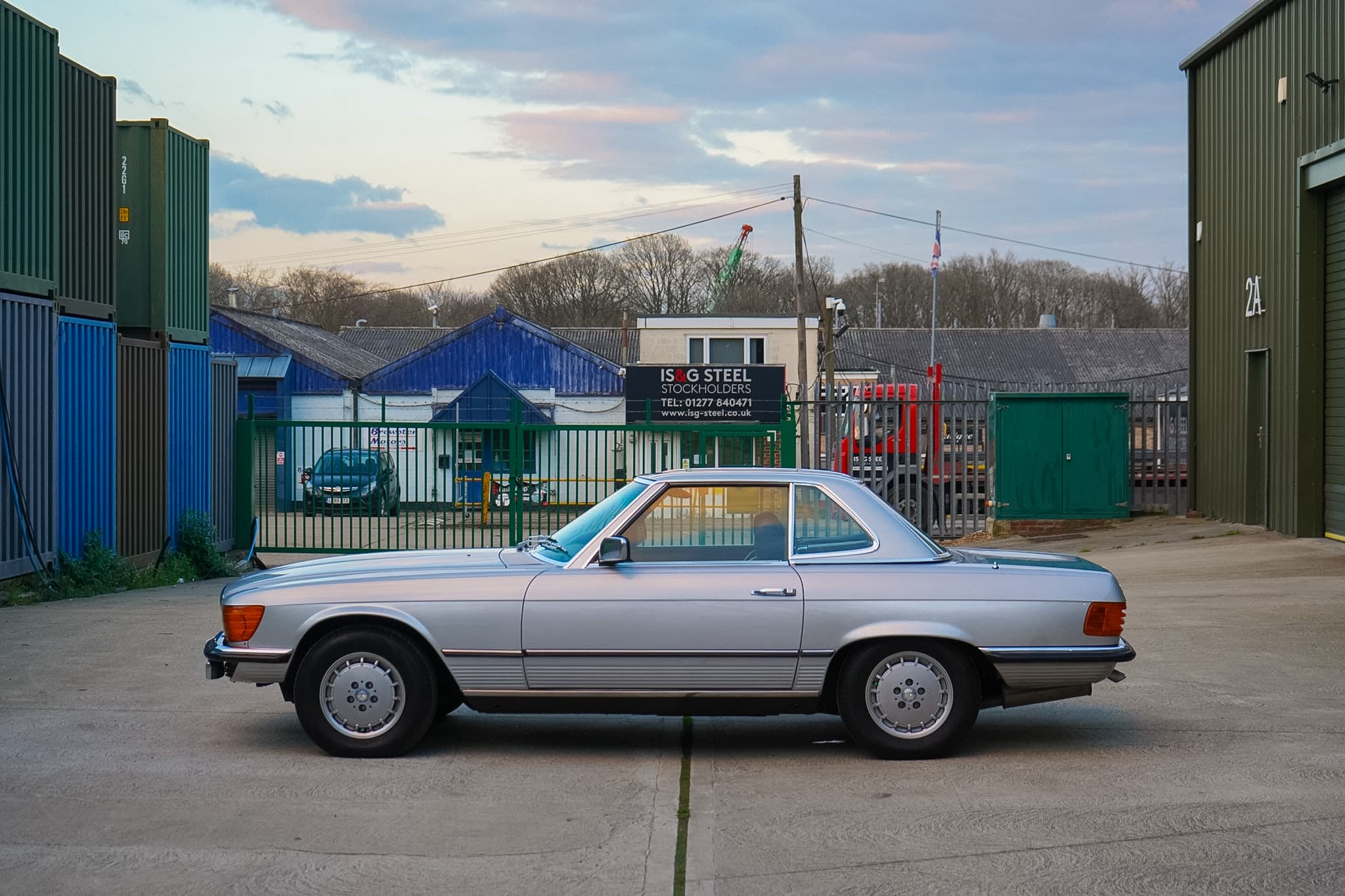
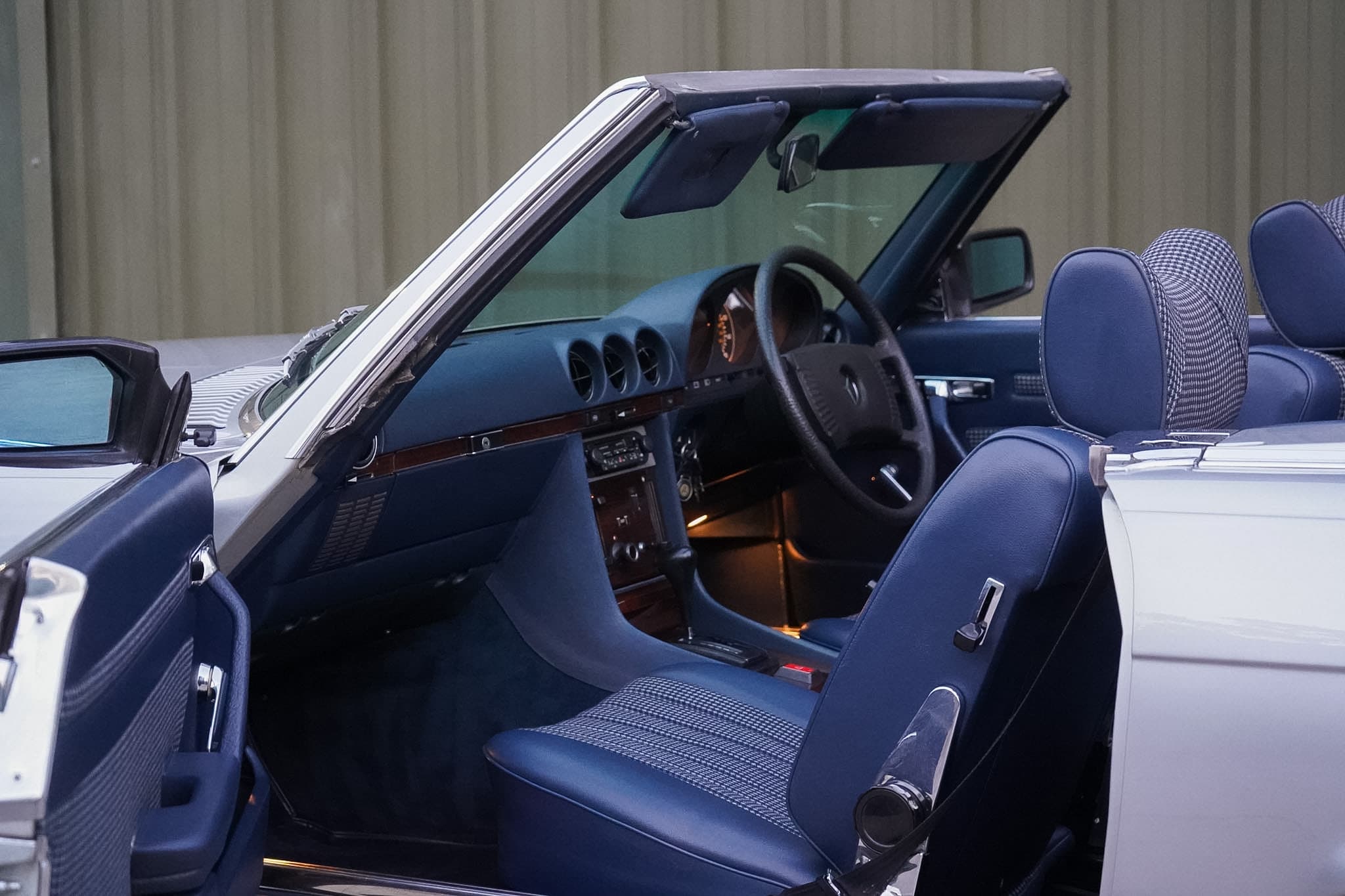
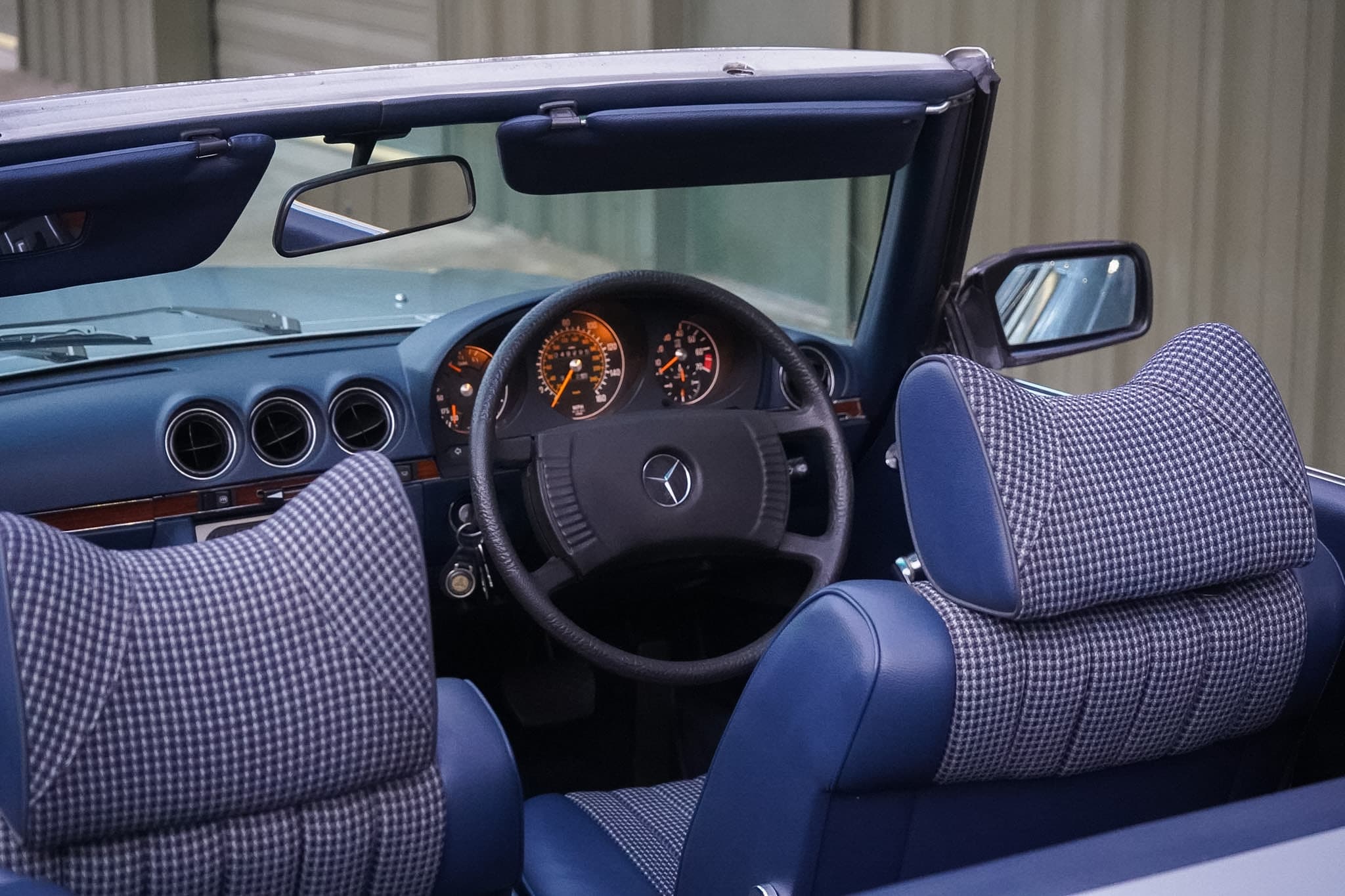
A current Car & Classic syndication attributed to The Matt Johnston Collection describes a 1979 350 SL R107, supplied in the UK and retaining its original hardtop. It is useful here as an individual-car example, not as generation-wide specification evidence.
The interesting detail is in the marketplace structure around the advert. It currently labels the car “Automatic, 4 speed”, while another locale has exposed 350 SD / W126 taxonomy even though the title and long description identify a 350 SL R107.
Mercedes-Benz's own chronology places the three-speed-to-four-speed automatic transition at the March 1980 update. That conflict does not prove the 1979 car has the wrong gearbox; a later conversion or information not visible online remains possible. What it proves is simpler: structured classified data is a discovery aid, not an authentication document.
The right order is chassis and production date, physical hardware, period/history evidence, then the marketplace fields — not the other way round.
Which R107 should you buy?
There is no single “best” R107 independent of what you value. Earlier cars appeal for their proximity to the original 1971 specification, six-cylinder cars have their own character, later cars benefit from years of development, and market-specific derivatives can make sense for very different reasons.
Condition and evidence should usually beat a superficially desirable badge on a compromised shell. An honest car with a coherent history, sound structure and well-understood mechanical specification is a better starting point than an apparently rare derivative whose identity or restoration story does not add up.
The useful comparison therefore starts with three questions:
- Is the exact derivative the one you actually want?
- Is the car structurally and mechanically sound enough to justify the purchase price?
- Does its history explain the way it presents today?
Answer those before worrying about whether a particular trim detail is the one enthusiasts most often discuss online.
Sources and further reading
- Mercedes-Benz Media — 70 years of sport, luxury and lifestyle: the Mercedes-Benz SL
- Mercedes-Benz Media — SLC history and relationship to the R107
- Mercedes-Benz Public Archive — 107 series SL Roadsters, 1971-1985
- Mercedes-Benz Public Archive — 107 series SL Roadsters, 1985-1989
- Hagerty UK — Mercedes-Benz SL R107 buying guide
- TMJC-linked 1979 Mercedes 350 SL R107 syndication — Car & Classic
Editorial information
The Matt Johnston Collection
Research and editorial from TMJC Garage.
Research and editorialTMJC Garage
Published byThe Matt Johnston Collection
Model lineage
Where this car sits
TMJC media
Explore the car in detail
Sell, consign or editorial
Thinking of selling or consigning a special car?
Continue with TMJC for a discreet conversation, professional presentation and collector-focused support.
Enquire now