Model
Mercedes-Benz SL
Mercedes-Benz SL history from the 1952 W194 racer to the current AMG SL, with generation boundaries, major engineering shifts and the disputed meaning of SL.
Generation directory
SL generations
Choose a SL generation to see its production years, body styles, engines, chassis changes and variants.
TMJC Catalog guide
Mercedes-Benz SL: history, generations and what the name means
Mercedes-Benz SL history from the 1952 W194 racer to the current AMG SL, with generation boundaries, major engineering shifts and the disputed meaning of SL.
- Page
- Model overview
- Reviewed
- 13 Sept 2026
- Specifications
- 0 verified
The Mercedes-Benz SL is a sports-car and grand-touring lineage whose story starts with the 300 SL racing car of 1952, while its series-production road-car story starts in 1954 with the 300 SL “Gullwing”. It has since moved through the Pagoda W113, the long-lived R107, the technology-heavy R129, two generations of folding-hardtop SLs and today's Mercedes-AMG-developed R232.
That distinction between lineage and production model matters. The 1952 W194 created the name and the legend on the race circuit, but it was not a customer production SL. Mercedes-Benz says the road-going 300 SL W198 followed in 1954, with the 190 SL forming a parallel, less extreme branch of the early family.
What does “SL” actually stand for?
This sounds like the easiest question on the page. It is not.
Mercedes-Benz's current heritage material says S = “Super” and L = “Leicht” — “Super-Light”. Its 2022 history of the model likewise describes the initials as Super-Leicht.
But Mercedes-Benz has also published the other familiar expansion. In a 2019 history of its post-war return to motorsport, the company describes the 1952 W194 and says the abbreviation stands for “Sport-Leicht” — “Sport-Light”.
Because both statements come from Mercedes-Benz, it is hard to justify pretending that only one wording has ever been official. The useful answer is therefore more precise: current Mercedes-Benz heritage material uses “Super-Leicht”, while an earlier Mercedes-Benz history article used “Sport-Leicht” for the W194.
That small contradiction is a good example of why period and primary evidence matter even with something as apparently settled as a model name.
The 1952 W194 started the story, but the production SL came later
Mercedes-Benz returned to international sports-car racing in 1952 with the 300 SL W194. The car's lightweight tubular frame forced the famous high sills and, in turn, the roof-hinged doors. In its only racing season it won four of five events entered by the works team, including Le Mans and the Carrera Panamericana.
The W194 remained a competition car. The production step came after US importer Maximilian E. Hoffman pushed Mercedes-Benz towards road-going sports cars for an American market he believed was ready for them.
At the New York show in February 1954 Mercedes-Benz presented two very different answers:
- the 300 SL W198, developed from the W194 concept and retaining the Gullwing idea; and
- the 190 SL W121, a smaller, more accessible open sports car with much more conventional underpinnings.
Mercedes-Benz built 1,400 300 SL coupés before the W198 Roadster took over in 1957. The important model-history point is not the production count, though. It is that the early “SL” story ran through two parallel production cars, not one neat chassis-code succession.
Mercedes-Benz SL generations at a glance
| SL lineage | Period supported by Mercedes-Benz material | What changed |
|---|---|---|
| 300 SL W194 | 1952 | Racing origin of the SL story; not a series-production customer car |
| 300 SL W198 | 1954-1963 | Production Gullwing coupé followed by the 300 SL Roadster |
| 190 SL W121 | 1955-1963 | More accessible open sports car sold alongside the W198 |
| W113 “Pagoda” | 1963-1971 | One new SL replaces both earlier roadsters; safety-body engineering becomes central |
| R107 | 1971-1989 | V8 power arrives and the SL settles into an unusually long-lived luxury-roadster generation |
| R129 | 1989-2001 | Automatic rollover protection, integral seats and a much more technology-led chassis era |
| R230 | 2001-2011 | Folding steel vario-roof combines roadster and closed coupé in one car |
| R231 | Presented in 2012 | Weight reduction and aluminium-intensive construction become major themes |
| R232 Mercedes-AMG SL | Introduced in 2021 | Fabric roof returns; 2+2 seating and all-wheel drive arrive for the first time in the SL lineage |
This is deliberately a model-family map rather than one giant specification table. Engine choices, transmission availability, dimensions and even the car's role changed too much across seven decades for a single “Mercedes SL specification” to be meaningful.
W113 “Pagoda”: when two early SL strands became one
Mercedes-Benz presented the 230 SL W113 at the Geneva Motor Show in March 1963. Its job was unusually broad: Mercedes says it replaced both the 190 SL and the 300 SL Roadster.
That helps explain why the W113 is such an important dividing line in the family history. It combined comfort and usability with engineering that was much more explicitly shaped around safety. Mercedes-Benz highlights its safety body with a rigid passenger cell and crumple zones, and its removable hardtop's concave profile created the “Pagoda” nickname that has outlived almost every period marketing description.
The 230 SL was followed by the 250 SL and then the 280 SL. Mercedes-Benz records 48,912 W113 cars across eight production years.
R107: the SL becomes a long-lived V8 grand tourer
The R107 arrived in spring 1971 and remained in production until 1989. Mercedes-Benz identifies the launch 350 SL as part of the first SL generation to use V8 power, with a six-cylinder 280 SL joining later.
Its eighteen-year life means “R107” never describes one fixed mechanical specification. Engines, fuel injection, automatic transmissions, emissions equipment and market offerings changed substantially during the run. A 1970s 350 SL and a late 500 SL belong to the same generation but should not be researched from the same row of an online spec table.
That detailed chronology belongs on the dedicated R107 reference rather than being repeated here. At model level, the important change is conceptual: the SL had become a mature luxury roadster that Mercedes could evolve for nearly two decades without abandoning the basic platform.
R129: safety and technology move to the foreground
The R129 premiered at Geneva in 1989. Mercedes-Benz used it to introduce technology that made the new SL feel several generations removed from the R107 even though the underlying brief — a fast, luxurious open two-seater — remained recognisable.
Its best-known safety feature is the automatically deploying rollover bar. Mercedes-Benz also highlights the car's load-bearing integral seats and, on suitably equipped versions, Adaptive Damping System (ADS).
The R129 range later expanded as far as a V12 SL and factory AMG derivatives. It also lived through Mercedes-Benz's early-1990s naming change, when forms such as “500 SL” became “SL 500”. For a used-car buyer, that is another reason not to use badge order alone as a dating tool.
R230: the folding hardtop changes what an SL roof can be
Mercedes-Benz unveiled the R230 SL 500 on 31 July 2001. Its defining piece of packaging was the electrically operated vario-roof, a folding steel roof that Mercedes says could change the car from coupé to roadster or back again in 16 seconds.
That was not merely a convenience feature. It shifted the SL away from the traditional fabric-roof-plus-removable-hardtop formula that had shaped much of the earlier lineage.
Mercedes-Benz says 169,433 R230 sports cars were built in Bremen between 2001 and 2011. The generation also became heavily associated with AMG: supercharged V8s, V12s and eventually the SL 65 AMG Black Series stretched the performance end of the range far beyond the launch SL 500.
R231: lighter structure, familiar luxury-roadster idea
Mercedes-Benz presented the R231 in January 2012. Its engineering story was strongly about reducing mass, including extensive aluminium use, while retaining the retractable-hardtop approach of the R230.
One particularly visible option was MAGIC SKY CONTROL, which could vary the transparency of the glass roof. The R231 therefore continued the idea that the roof itself was part of the SL's technical identity, rather than just something removed for sunny weather.
This page does not invent an exact R231 production-end date from the gap between launch announcements. The important model-family boundary supported here is that Mercedes-AMG introduced the succeeding R232 in 2021.
R232: Mercedes-AMG changes the formula again
The R232 Mercedes-AMG SL, introduced in 2021, reverses one of the defining choices of the two previous generations by returning to a fabric soft top.
It also changes the packaging and drivetrain formula. Mercedes-AMG describes a 2+2 cabin, and the R232 is the first SL generation to offer all-wheel drive. The car was developed independently by Mercedes-AMG at Affalterbach rather than simply taking the form of a conventional Mercedes-Benz roadster with AMG versions added later.
In that sense the newest SL is not a return to a single historical recipe. It is another rebalancing of the same long-running ingredients: performance, open-air driving, luxury and usable road-car technology.
SL, SLC, SLK and SLR are not interchangeable names
Mercedes-Benz has reused similar letters across very different cars, which can make old adverts and search results misleading.
The C107 SLC, for example, was a longer-wheelbase fixed-roof coupé related to the R107. An R107 SL wearing its removable hardtop does not become an SLC. The later SLK was a separate compact-roadster family. And the SLR McLaren was a separate high-performance project whose name and engineering lineage should not be treated as another normal SL generation.
When identifying a particular car, the chassis/model-series code is more useful than relying on two or three letters in an advert title.
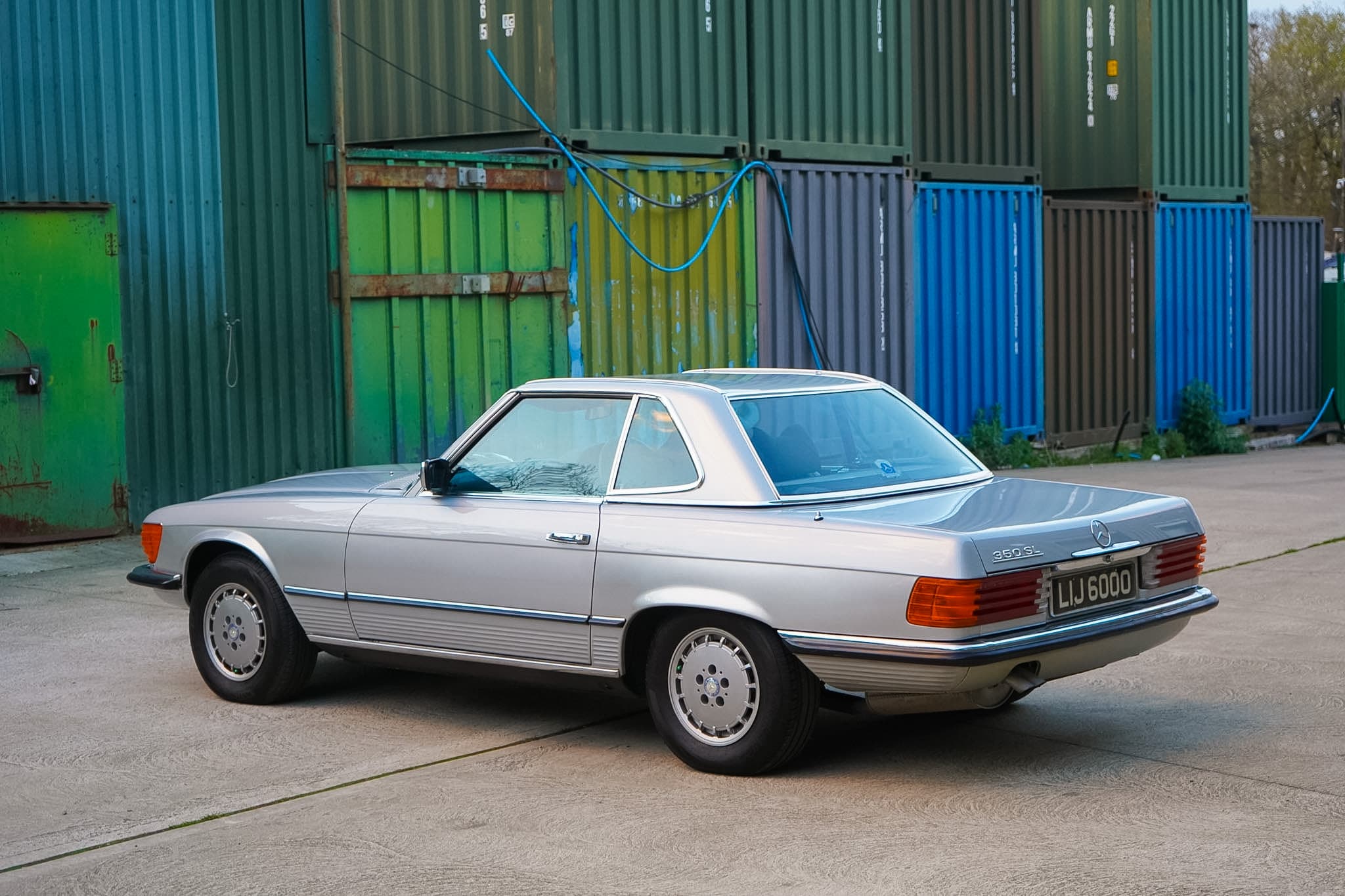
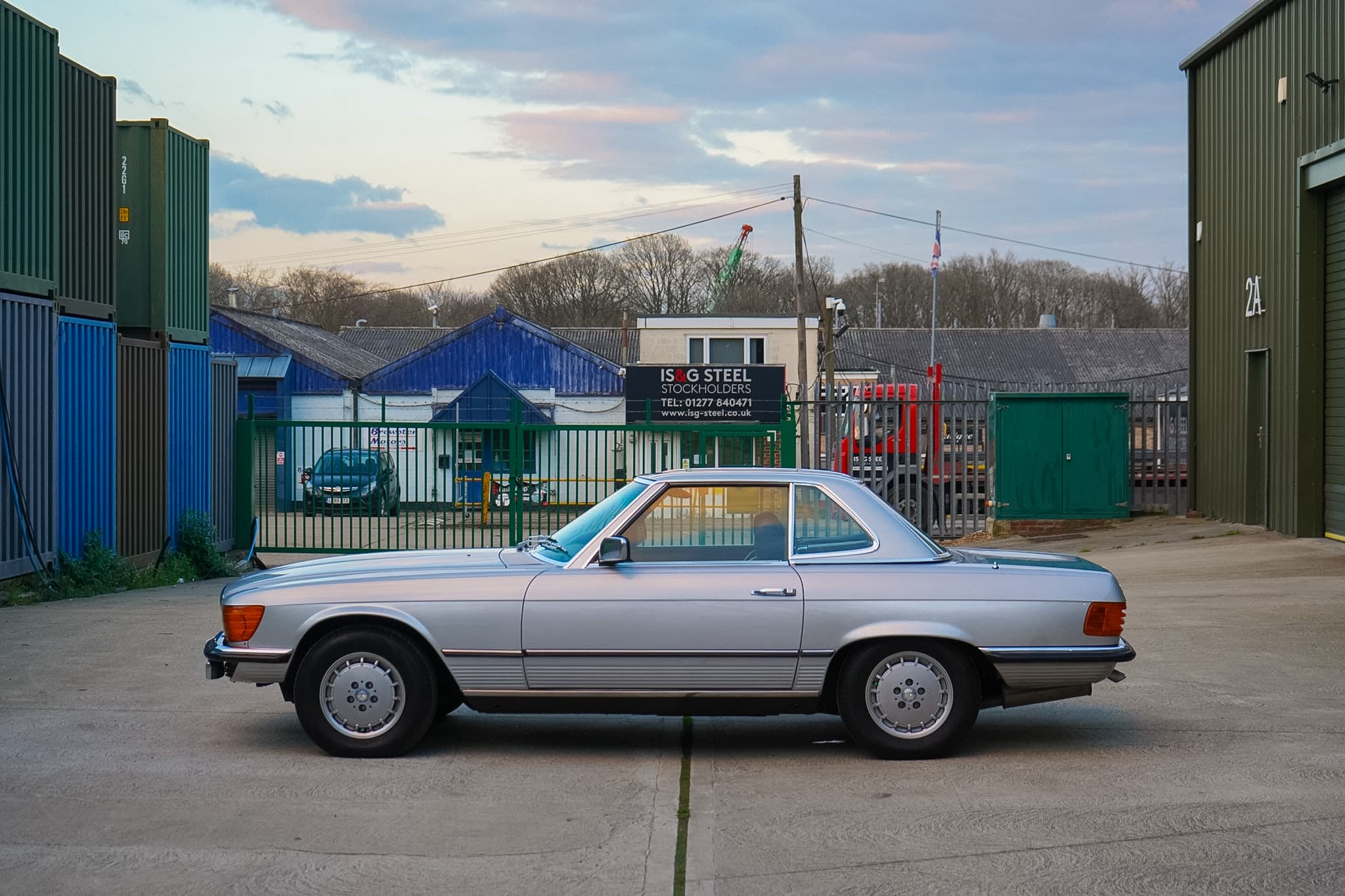
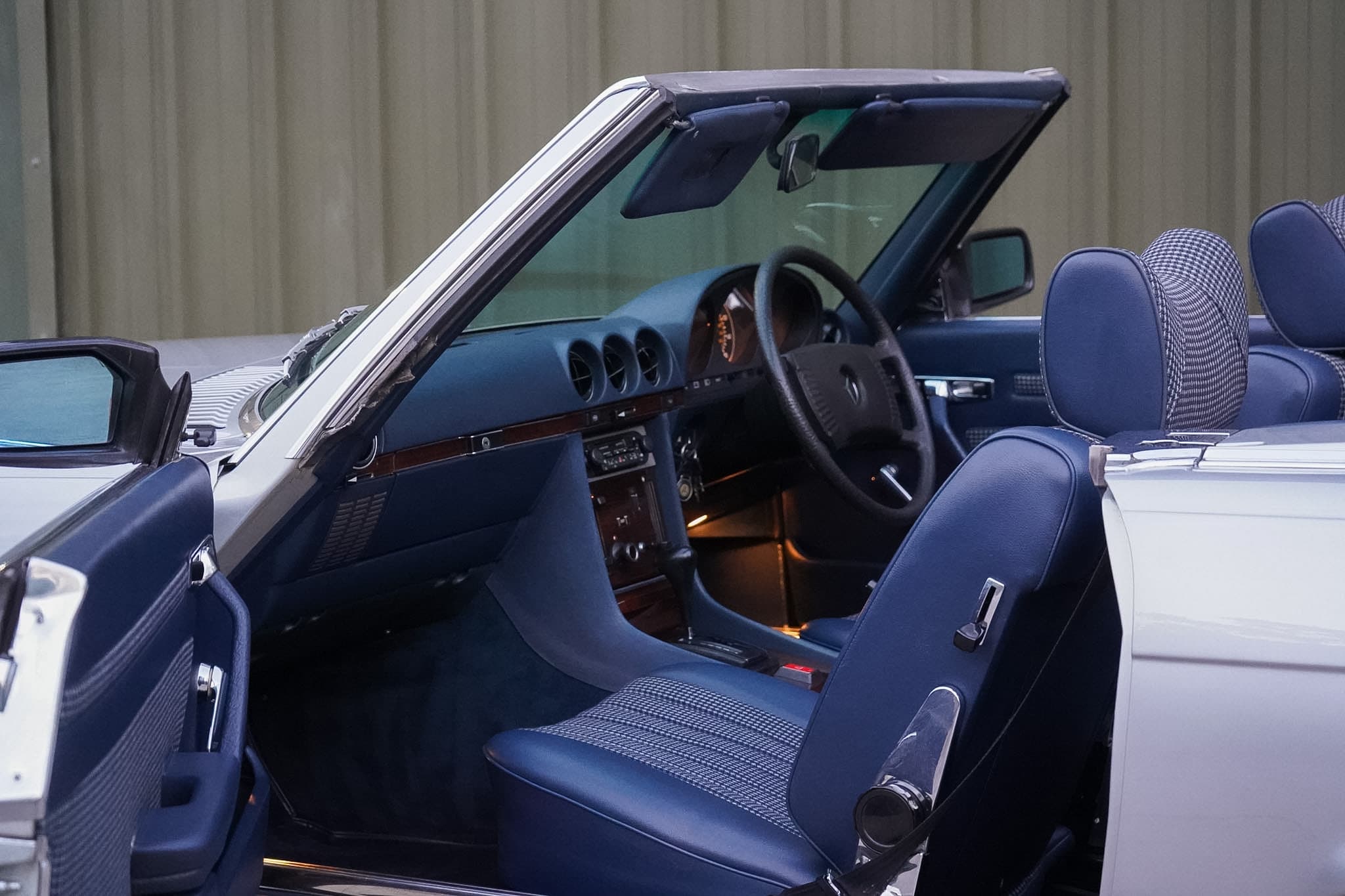
A TMJC-linked 1979 350 SL sits in one specific chapter of the story
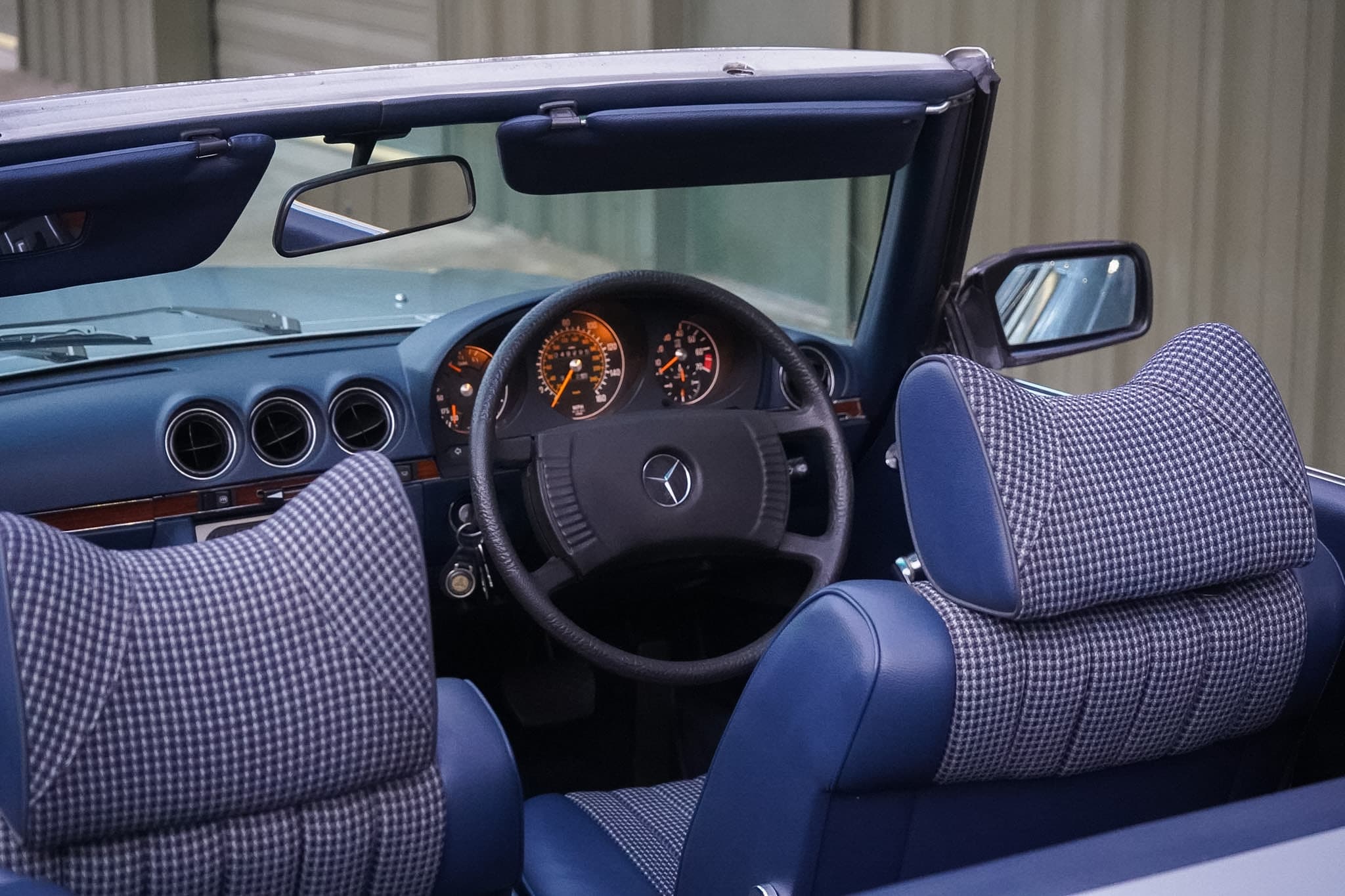
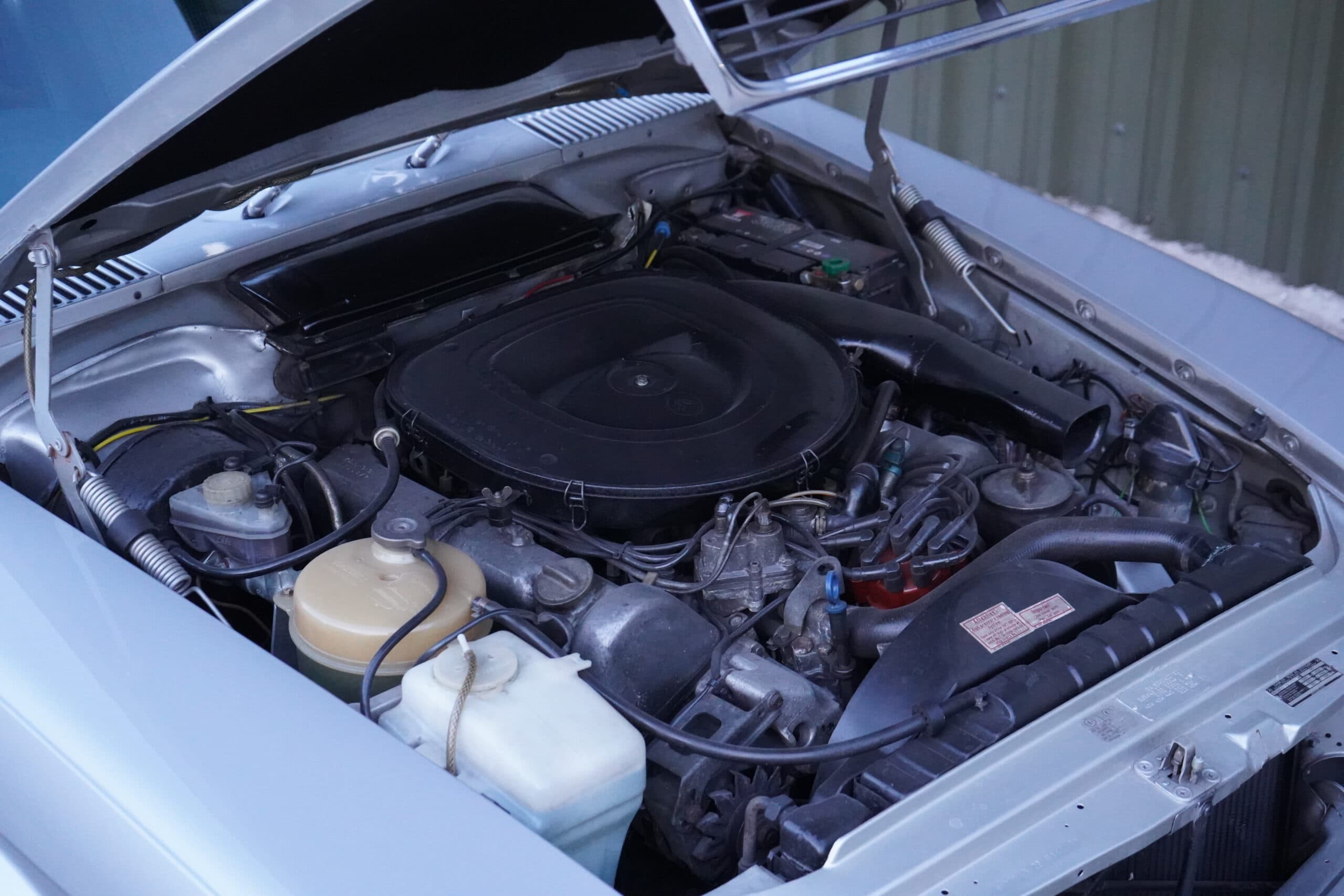
A surviving Car & Classic syndication attributed to The Matt Johnston Collection records a 1979 Mercedes-Benz 350 SL R107. It is useful as a real-world connection to the lineage, but it is not evidence for every SL made before or since.
A 1979 350 SL belongs to the long R107 chapter, before the major 1980 mechanical update and decades before the folding-hardtop or all-wheel-drive eras. Its value to a broader model history is precisely that specificity: “Mercedes-Benz SL” tells you the family; R107 350 SL, production date and market tell you which evidence should actually be used to authenticate the individual car.
That same evidence order matters across the lineage. Establish the generation and derivative first, then compare the car with period-correct technical material, build documentation and provenance rather than with a generic “SL specs” page.
Which SL generation matters most?
There is no useful universal answer because different SLs solve different problems.
The W198 is closest to the racing origin. The 190 SL is important because it shows that comfort and accessibility were present almost from the start. The W113 combines the two early road-car strands into one model and makes safety engineering part of the story. The R107 turns the SL into a long-lived V8-era grand tourer. The R129 is the technology and safety leap. The R230 and R231 make a retractable hardtop central to the experience. The R232 moves the car back toward a soft-top performance-roadster format while adding 2+2 practicality and all-wheel drive.
For a buyer, the productive question is therefore not “which SL is best?” but which generation's engineering, driving character and ownership demands match what you actually want from the car?
Sources and further reading
Editorial information
The Matt Johnston Collection
Research and editorial from TMJC Garage.
Research and editorialTMJC Garage
Published byThe Matt Johnston Collection
Model lineage
Where this car sits
TMJC media
Explore the car in detail
Sell, consign or editorial
Thinking of selling or consigning a special car?
Continue with TMJC for a discreet conversation, professional presentation and collector-focused support.
Enquire now