TMJC assistance
Want TMJC to help with this vehicle?
Sourcing, consignment and valuationContinue to the main TMJC website and speak directly with the collection team.
Variant
BMW E46 M3 Coupé guide to S54 specs, 343 PS/252 kW, manual vs SMG, rod-bearing history, production scope and buying checks.
TMJC Catalog guide
BMW E46 M3 Coupé guide to S54 specs, 343 PS/252 kW, manual vs SMG, rod-bearing history, production scope and buying checks.
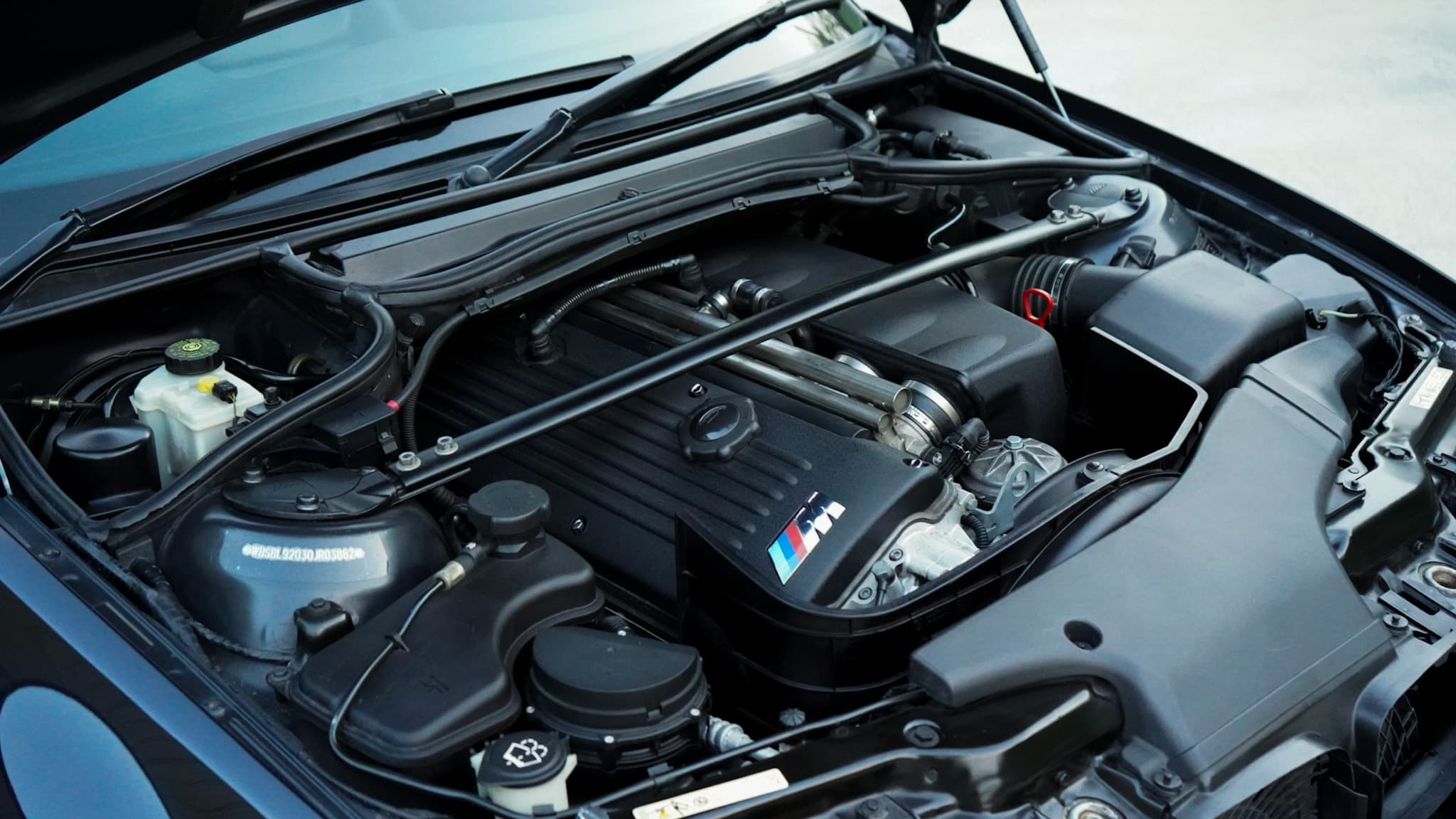
The BMW M3 Coupé (E46) was the fixed-roof core of the third-generation M3. BMW Group Classic records the exact Coupé from July 2000 to March 2006, with the 3,246 cc S54B32 inline-six, 252 kW at 7,900 rpm, a governed 250 km/h / 155 mph top speed and a choice, in the wider E46 M3 range, between a six-speed manual and six-speed SMG.
BMW Group Classic's German archive gives 343 PS (252 kW) at 7,900 rpm, while BMW's English-language material labels the same pairing 343 hp / 252 kW. For a UK reader, the safest technical wording is therefore 343 PS / 252 kW, which is roughly 338 bhp; 343 bhp is not a precise conversion. BMW M also gives 365 Nm and describes the S54's high-revving, Double-VANOS character.
That factory baseline is only the start of a good buying description. A real E46 M3 is now old enough that production date, running-in service, rod-bearing paperwork, rear-floor condition, VANOS history, gearbox type and the quality of previous repairs can matter as much as the headline power figure.
| Item | BMW M3 Coupé (E46) |
|---|---|
| BMW Group Classic production period | 07/2000–03/2006 |
| Engine | S54B32 inline-six |
| Displacement | 3,246 cc |
| Factory output | 343 PS / 252 kW at 7,900 rpm; BMW's English-language material labels the same pairing 343 hp / 252 kW |
| Maximum torque | 365 Nm |
| Top speed | 250 km/h / 155 mph |
| Transmissions | Six-speed manual or six-speed SMG |
| Driven layout | Front-engine, rear-drive M3 architecture |
| Differential | Variable M differential lock |
Those figures are for the E46 M3 family and exact Coupé archive material, not an ordinary E46 3 Series. They should also not be used to infer the specification of a CSL, Competition Package car or an individual modified example without checking its own build information.
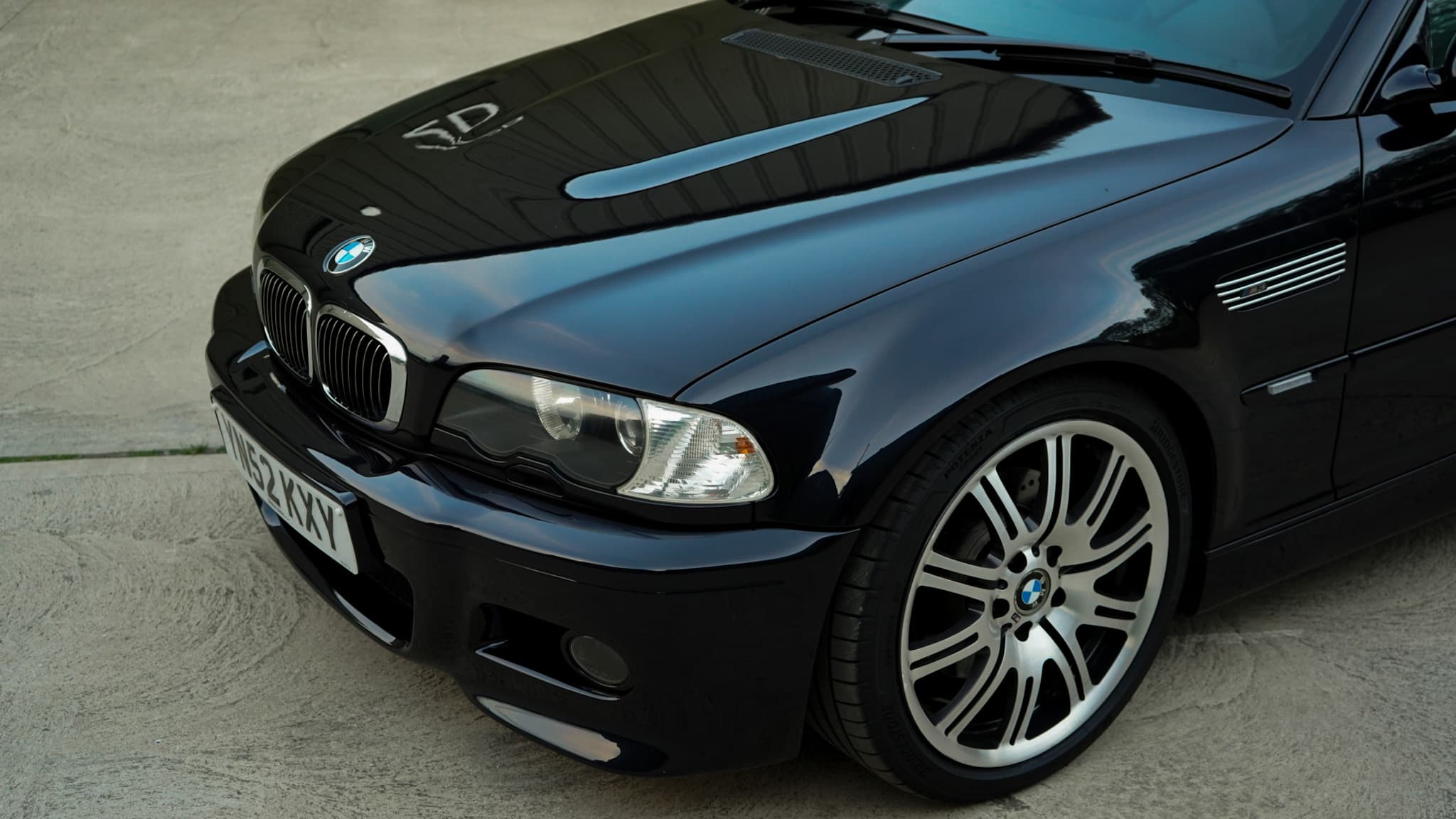
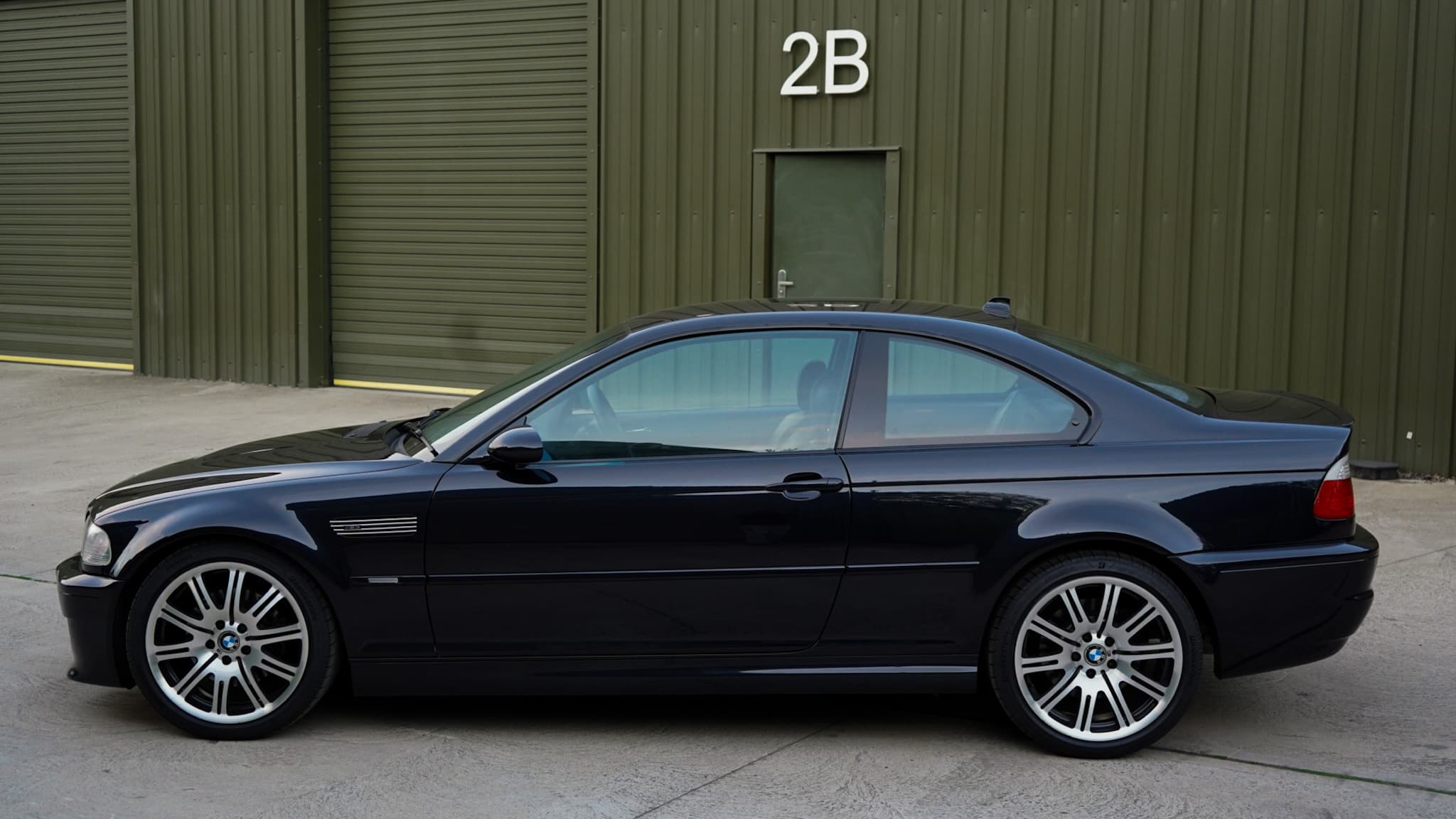
The E46 M3 shared the basic 3 Series generation identity but was not simply a 330Ci with a larger engine. BMW M gave the car widened front and rear arches, a different front apron, side gills, M-specific mirrors and the bonnet powerdome that accommodated the S54 intake system. The chassis, brakes, differential and engine were also M-specific.
BMW M describes the S54 as a high-revving development of the previous M3 six-cylinder idea rather than a low-revving torque engine. Its 343 PS / 252 kW peak came with 365 Nm, and the engine used Double-VANOS variable camshaft timing. BMW's English-language material displays the same output as 343 hp / 252 kW. The character of the car therefore depends heavily on correct maintenance and an engine that is healthy throughout the rev range, not merely on a strong low-speed test drive.
The variable M differential is another defining part of the package. BMW M says its locking effect could vary up to 100 percent depending on conditions. For a buyer, that makes differential behaviour, fluid history and any noise or binding worth assessing as part of the whole driveline rather than treating the rear axle as a generic E46 component.
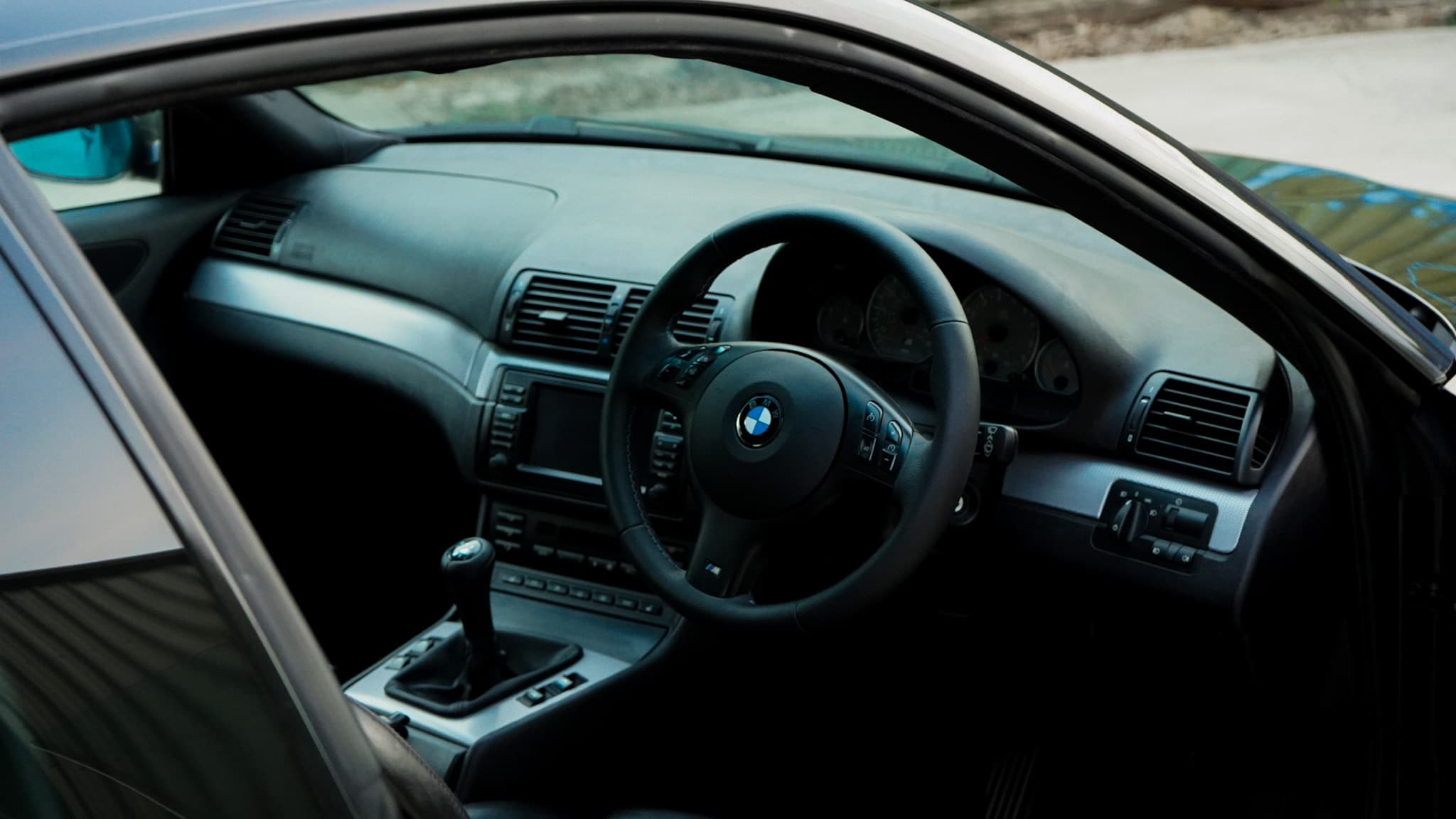
BMW offered the E46 M3 with a conventional six-speed manual and the six-speed SMG sequential manual system.
SMG is often described as an automatic in classified databases because it has no clutch pedal and can perform gear changes for the driver. Mechanically, however, it is an automated manual, not a conventional torque-converter automatic. BMW M itself describes it as an automated manual transmission operated through the steering-wheel paddles or the centre-console selector.
That distinction matters when buying. A manual car should be checked for clutch engagement, synchro behaviour, gear selection and evidence of sensible clutch/flywheel work. An SMG car adds hydraulic, electrical and actuator questions, and any hesitation or warning light deserves proper diagnosis rather than an assumption that the entire system needs replacing.
The transmission currently fitted should agree with the car's build information, so verify it from the VIN/build record rather than treating the visible selector or clutch pedal as a complete originality record.
BMW M records a 2003 facelift for the E46 M3, but it was restrained compared with the visual changes applied to some ordinary E46 body styles. One of the clearest factory changes was the move to LED rear-light graphics.
That makes pre-facelift and facelift useful descriptions, but they should not replace a production date. Lights and trim are easily changed over two decades, and some cars have later components retrofitted. A strong description therefore starts with VIN/build information and then checks whether the visible specification agrees with the date.
The same principle applies to wheels, interior trim, infotainment and option equipment. Factory-looking parts can be genuine period options, later OEM retrofits or aftermarket replacements. Build documentation is more persuasive than appearance alone.
BMW Group Classic's exact M3 Coupé (E46) page records 54,750 produced vehicles. That is useful Coupé-specific context, but it should not be confused with BMW M's broader production figure for the entire E46 M3 family, which is around 85,000 cars and includes other derivatives and special models.
Those numbers do not reconcile cleanly by simply subtracting Convertible production from the overall total, because different BMW pages can be scoped differently around derivatives and special editions. For that reason, Garage keeps the 54,750 figure in the editorial explanation rather than turning it into a broad structured production fact that could later be misread as an all-E46-M3 total.
Rarity claims below that level need better evidence. A colour, gearbox or option combination being scarce in current classifieds does not establish how many BMW built.
The E46 M3 has a well-known connecting-rod-bearing history, but the useful version of that story is more precise than all early cars had a recall.
BMW of North America Service Information SI B 11 04 04 covers E46 M3 Coupé and Convertible cars with the S54B32 produced from 12 February 2001 through 22 May 2003. The bulletin says the installed connecting-rod bearings did not meet BMW quality standards and could overheat and fail under sustained high engine speeds. The service action replaced the bearings and included updated engine-control programming.
That bulletin is North American service information. It is strong primary evidence for the technical problem and its stated production window in that market, but it does not by itself prove that an identical campaign applied to every UK car or that a particular British car had the work completed.
For a UK buyer, the sensible questions are therefore:
A seller saying rod bearings done is useful, but the invoice and scope of work are the evidence that matter.
Check the running-in service. A properly documented early service is a useful part of an M3 history file. On a car with decades of records, look for continuity rather than judging the entire history from one stamp.
Inspect the rear axle carrier panel and surrounding floor. E46 M3 specialists treat cracking around the rear axle carrier mounting area as an important inspection point. A car that has been reinforced or repaired is not automatically worse than an untouched car: the key questions are what was found, how extensive the repair was, who performed it and whether the work is documented. An underside glance alone may not show the full condition.
Assess VANOS and top-end behaviour properly. Rattles, poor running or fault codes deserve diagnosis by someone familiar with the S54. VANOS done is another phrase that should be backed by an invoice showing what was actually replaced or rebuilt.
Check the cooling system and fluids as age-related items. A high-performance engine that has covered modest annual mileage still ages. Hoses, seals, cooling-system components and fluids need time-based attention as well as mileage-based servicing.
Inspect suspension, bushes and geometry. Worn bushes, tired dampers, broken springs or poor geometry can make an otherwise healthy M3 feel vague. Modified suspension should come with a sensible explanation of parts, setup and intended use.
Look for corrosion and previous body repair. The E46 is modern enough that buyers sometimes assume rust is irrelevant. Arches, jacking/sill areas and repaired sections deserve close inspection, and panel gaps or paint depth can help identify previous work that should be understood rather than automatically condemned.
Verify originality against the build record. Wheels, lights, trim, stereos, steering wheels, exhausts and suspension are commonly changed. Decide whether originality matters for your use, then assess the individual car against its factory specification rather than against another M3 seen online.
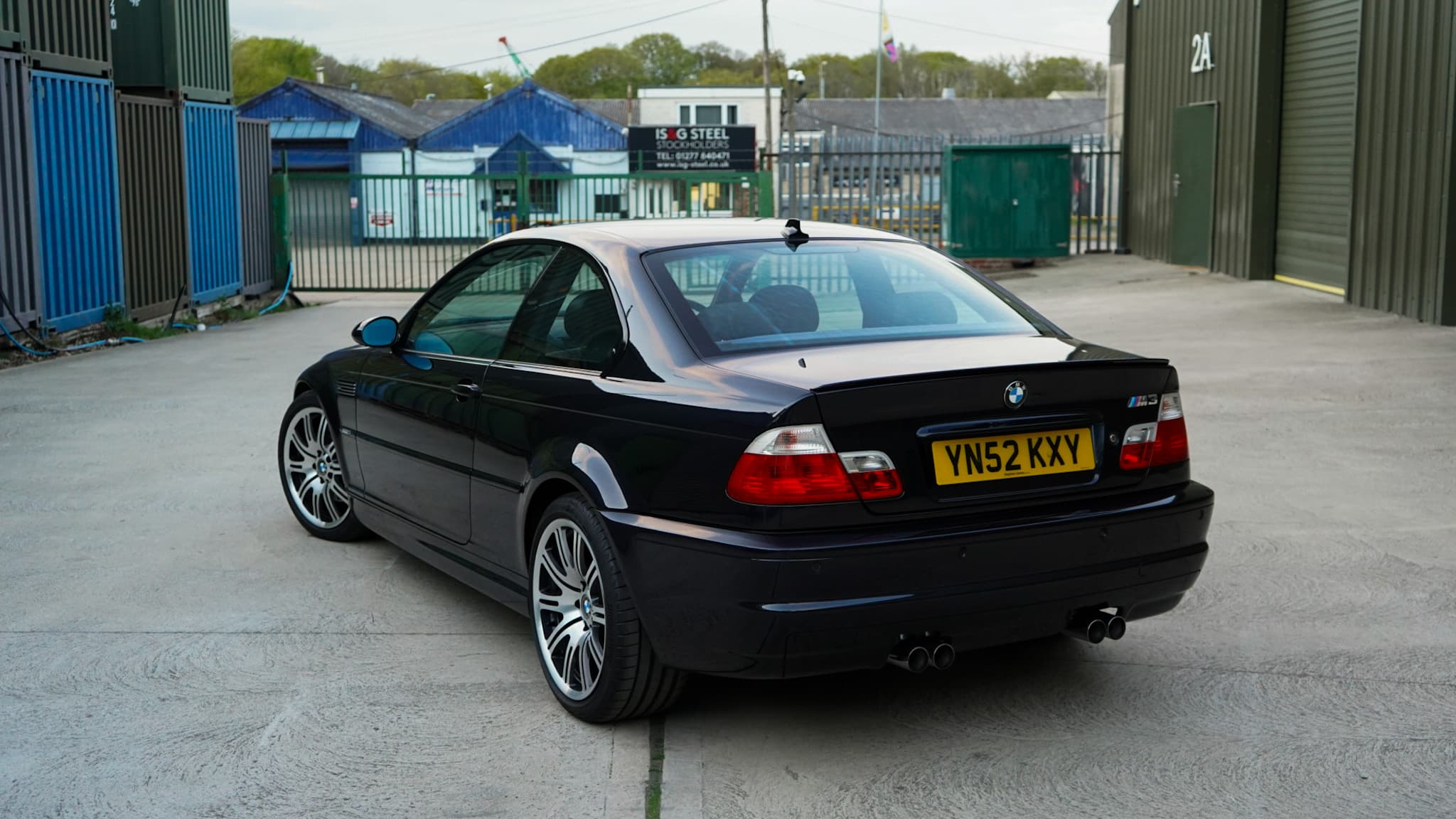
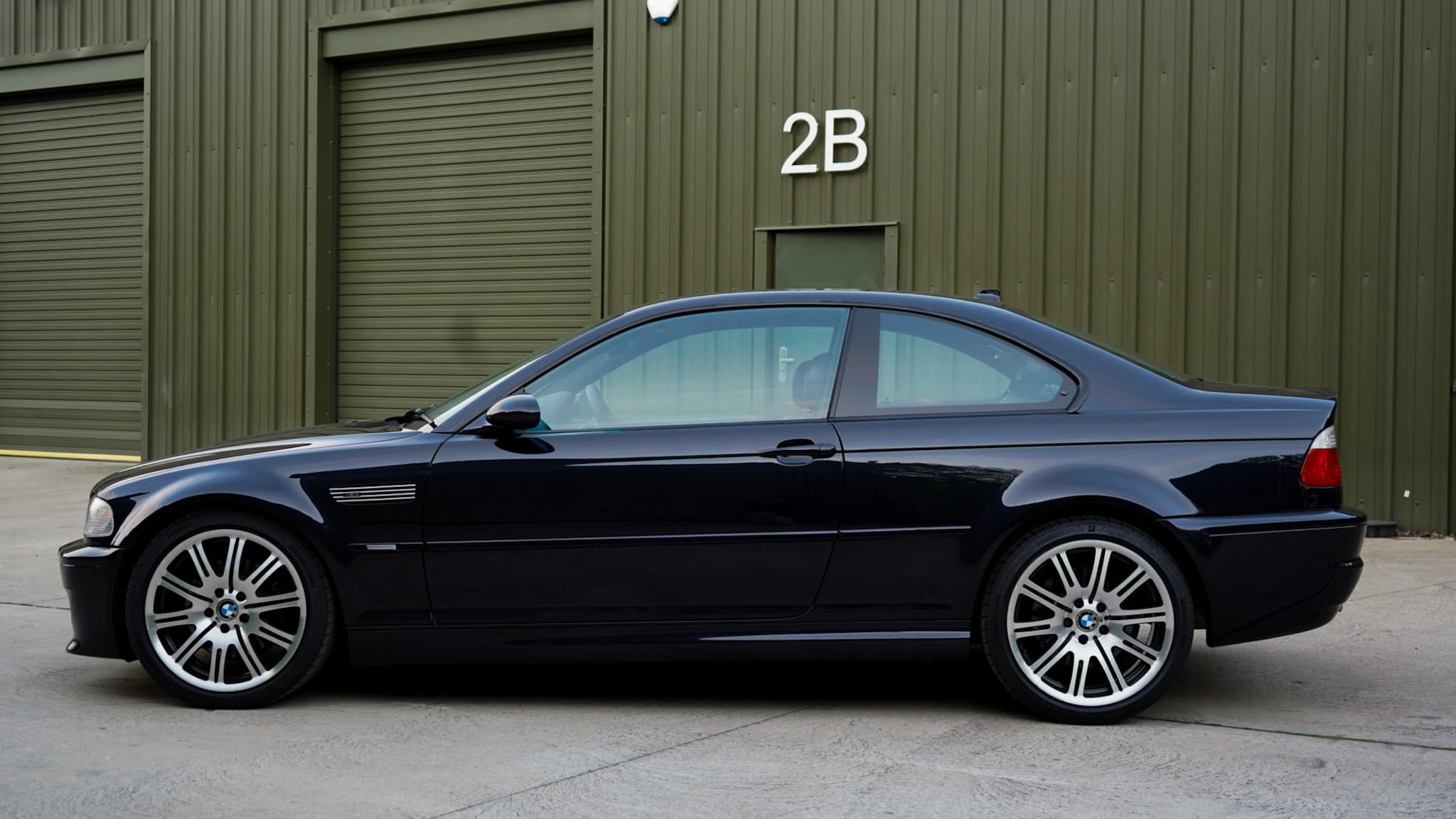
A surviving Car & Classic advert from the same West Hanningfield dealer location as The Matt Johnston Collection records a 2002 E46 M3, registration YN52KXY, with 78,049 miles, right-hand drive and a six-speed manual gearbox. A fresh first-party TMJC inventory page for the sold car was not recoverable, so the syndication is treated as historical dealer evidence rather than manufacturer specification.
The advert is valuable because its history illustrates exactly what a buyer should look for. The seller states that the car had its rod bearings replaced under an extended BMW warranty at 30,000 miles and a replacement clutch at 74,000 miles, with BMW supplying and fitting the clutch. It also lists an early running-in check at 184 miles and a long sequence of dated services.
Those are claims about YN52KXY only. They do not mean every 2002 M3 received the same work at the same mileage, and the advert does not prove that the rod-bearing job was the North American SI B 11 04 04 service action. The useful provenance question is whether the invoices and BMW history support the seller's account.
The same boundary applies to the car's Carbon Black paint, anthracite headlining, electric rear blind, heated/electric seats, Harman Kardon system, parking sensors and 19-inch BMW wheels. They make the individual example interesting; they are not a substitute for the factory option/build record when describing the model as a whole.
The E46 M3 Convertible shares the S54 powertrain family but is a different body derivative with its own production count, roof structure, weight and inspection questions. Convertible roof operation and water management belong on that page; the Coupé's fixed-roof identity and production record belong here.
The broader BMW E46 generation reference covers the complete 3 Series family, including the ordinary Saloon, Coupé, Touring, Convertible and Compact body ranges. That is the better place for questions such as mainstream E46 facelift timing or ordinary petrol/diesel engine changes.
Keeping those scopes separate prevents an M3-specific service issue or specification from being copied onto every E46 simply because they share the same chassis-generation code.
For an individual car, the strongest file is usually a combination of factory/build identity and continuous maintenance evidence rather than one headline invoice. Useful records include:
A well-documented sympathetic repair can be more reassuring than an apparently untouched car whose condition has never been properly inspected. Equally, a large invoice total is not proof of quality unless the work itself makes sense.
Editorial information
Research and editorial from TMJC Garage.
Research and editorialTMJC Garage
Published byThe Matt Johnston Collection
Model lineage
TMJC media
TMJC assistance
Continue to the main TMJC website and speak directly with the collection team.
Sell, consign or editorial
Continue with TMJC for a discreet conversation, professional presentation and collector-focused support.
Enquire now