Published guide
BMW E46 M3 SMG II vs manual: faults and conversion
BMW E46 M3 SMG II and six-speed manual compared using BMW technical evidence, with practical checks for faults, repairs and conversions.
Overview
BMW E46 M3 SMG II and six-speed manual compared using BMW technical evidence, with practical checks for faults, repairs and conversions.
The BMW E46 M3 SMG II is not a conventional automatic gearbox. BMW built it around the M3's six-speed manual transmission and added electrohydraulic hardware to operate the clutch and select gears. There is no clutch pedal, and the driver can either request shifts with the lever or steering-wheel paddles or let the Automated mode choose them.
A classified site may call an SMG car automatic, but that category tells you how the car is driven, not what type of gearbox is underneath. Fault diagnosis also depends on the distinction: SMG II is a hydraulic and electronic control system wrapped around a manual gearbox and dry clutch, so the SMG pump is only one possible part of the diagnosis.
SMG II vs manual: what is actually different?
BMW's own 2002 M3 material describes SMG II as four things working together: the same six-speed manual transmission used in the standard M3, an electrohydraulic mechanism that performs the gearshift and clutch operation, electronic controls, and the driver's lever/paddle interface.
BMW technical training is more specific. It identifies the basic gearbox as the Getrag-type S6S420G, then lists the extra SMG hardware around it: an SMG control unit, hydraulic unit and solenoids, gearbox actuator, special clutch slave cylinder with position sensing, hydraulic pressure and temperature sensing, shift lever and paddles, Drivelogic control and the instrument display. SMG also uses the SAC dry single-disc clutch used with the S54 manual gearbox.
The systems differ as follows:
| Conventional six-speed manual | SMG II |
|---|---|
| Driver operates the clutch pedal | Electrohydraulic system operates the clutch |
| Driver moves a conventional gear lever | Hydraulic actuator selects gears after an electronic request |
| Driver decides every gear change | Sequential mode gives the driver control; Automated mode can choose shifts |
| No dedicated SMG hydraulic system | Adds pump, accumulator, pressure sensing, solenoids, actuator and SMG control electronics |
Calling the two cars the same gearbox is therefore only partly helpful. The basic gearbox design is shared, but the complete operating system is meaningfully different.
Is SMG II an automatic?
Not in the conventional torque-converter sense.
BMW itself was unusually clear about this when SMG II arrived. Its 2002 M3 press material says Automated mode can resemble an automatic in the way it drives, but does not duplicate one, and says the mode was not intended to substitute for a conventional automatic transmission.
That is why both descriptions can appear around the same car. A classified database can legitimately place an SMG M3 in an automatic category because there is no clutch pedal and it can shift for the driver. A technical description should be more precise: SMG II is an automated manual transmission.
The distinction is not pedantry. An SMG car still has a dry clutch that engages and wears, and its shift quality depends on clutch control, hydraulic pressure, actuator position, software and adaptations rather than a torque converter smoothing the process.
What does Drivelogic actually change?
SMG II did not have one fixed shift character. BMW gave it five Automated programs and six Sequential programs.
In Sequential mode, the driver requests each change with the lever or paddles. BMW technical training describes S1 as the slowest, more relaxed setting with softer clutch engagement and S6 as the fastest setting with quick clutch engagement; S6 is available only when DSC is switched off. BMW quoted a minimum shift time of 80 milliseconds in S6 under its test conditions.
Automated mode also has five programs. Higher settings alter both the speed of the shift and the points at which the system chooses to change gear.
This is one reason a five-minute test drive can give a misleading impression. An unfamiliar car driven in a soft or aggressive Drivelogic setting may feel very different from the same car in another program. That does not mean every harsh or slow shift is normal, however. Warning lamps, refusal to engage a gear, repeated loss of hydraulic pressure, inconsistent behaviour or stored faults need diagnosis rather than being explained away as a characteristic.
Why does an E46 M3 SMG pump run when you open the door?
Because the system may be building hydraulic pressure in preparation for starting.
BMW's technical training specifies a normal hydraulic working range of 45 to 80 bar. If pressure falls below 45 bar, the control unit commands the electric hydraulic pump; at 80 bar it switches the pump off. The training material also says that opening the driver's door or unlocking the car can wake the SMG system and run the pump if stored accumulator pressure is below 45 bar.
So hearing the pump prime when the door opens is not, on its own, evidence that the pump is failing.
The system also includes a pressure accumulator that stores hydraulic pressure, a pressure sensor, non-return valve, relief valve and hydraulic-temperature sensor. Those parts are important because pump run time and frequency depend on whether the system can build, measure and retain pressure — not just on whether the electric pump motor turns.
Instead of asking only whether you can hear the pump, establish whether the system builds and holds pressure correctly, whether there are stored faults, and whether it behaves consistently hot and cold. That is a specialist diagnostic question rather than something to settle by timing noises in a car park.
Why the SMG pump was replaced is not a complete diagnosis
BMW's own diagnostic material separates several different fault families. They include the hydraulic pressure sensor, hydraulic pressure loss, the hydraulic pump and pump relay, shift-travel and selection-angle solenoids, clutch control, gearbox adaptation, clutch adaptation and failures to engage or retain a gear.
Similar driver symptoms can come from different parts of the system. A car that struggles to select a gear has not automatically proved that its pump has failed. Equally, a recently replaced pump does not prove that the accumulator, pressure sensor, actuator, clutch, wiring or adaptations are healthy.
When an advert says SMG pump done, ask for the invoice and look for the chain of evidence:
- What symptom or warning started the investigation?
- What fault codes or pressure behaviour were recorded?
- Which component was actually replaced or repaired?
- Were related leaks, sensors, relay, accumulator, actuator and clutch condition assessed where relevant?
- Were gearbox and clutch adaptations completed successfully after the work?
- Has the fault returned since?
Not every SMG invoice needs to contain every item above, but a named part means far more when it sits inside a documented diagnosis.
What should you check on an SMG II car before buying?
Start with the factory build specification. Confirm that the car was originally built with SMG rather than relying on the current selector or a classified site's transmission category.
Then test the system through more than one operating condition. It should engage forward and reverse cleanly, select gears consistently and operate without transmission warning lamps. Drive it long enough to see how it behaves once warm, and try sensible Drivelogic settings rather than judging the entire system from one mode.
Service history is more valuable when it says what was done. Look for clutch replacement, hydraulic work, actuator or sensor work, software/coding history and specialist diagnostic reports. A BMW-capable diagnostic scan is particularly useful because the system monitors hydraulic pressure, selector positions, clutch position and adaptation status rather than relying only on what the driver feels.
Avoid treating an aggressive S-mode shift as evidence of health by itself. The fastest Drivelogic programs were designed to make rapid, firm changes. A healthy system is better demonstrated by consistent operation, clean diagnosis and coherent history across the range of normal use.
The wider E46 M3 also has other known due-diligence areas that deserve their own evidence rather than being folded into every transmission conversation. For those separate checks, see the E46 M3 rod-bearing service action and the rear axle carrier panel, often called the subframe issue.
What should you check on a six-speed manual M3?
The conventional manual removes the SMG hydraulic and control system, but it does not remove the ordinary questions of a high-performance manual drivetrain.
Check clutch take-up, evidence for clutch and flywheel work, gear engagement and synchro behaviour, gearbox noise and the service history. A manual car that has been poorly driven or repaired is not automatically a safer purchase than a well-documented SMG car.
Originality also needs evidence. A clutch pedal and manual gear lever show what is fitted now; they do not prove the car left BMW that way. VIN/build information is the right starting point, especially because a later SMG-to-manual conversion can leave present configuration and factory configuration different.
The exact E46 M3 Coupé reference and E46 M3 Convertible reference keep the body-specific production and specification questions separate from this transmission Guide.
What does an SMG-to-manual conversion actually change?
A competent conversion is more involved than fitting a clutch pedal and gear knob.
BMW's technical documents explain why: the SMG car has hydraulic clutch actuation, hydraulic gear selection, dedicated control electronics and a different driver interface around the shared basic gearbox. UK BMW specialist Redish Motorsport describes its conversions as involving mechanical work alongside electrical and coding changes.
That does not make a conversion inherently good or bad. Factory identity and current configuration are separate questions.
If a car was built with SMG and later converted, a transparent description should say exactly that. Useful evidence includes:
- the original BMW build specification;
- the conversion invoice and the specialist who performed it;
- what mechanical parts were fitted or modified;
- what wiring and coding changes were made;
- whether original SMG parts were retained if reversibility matters; and
- post-conversion evidence that starting, reverse lights, cruise control and other affected functions operate correctly.
A high-quality conversion can make perfect sense for an owner who wants a conventional manual. It should not be used to rewrite the car's factory history.
Two TMJC-linked cars show the terminology problem
A surviving dealer advert for YN52KXY, a 2002 E46 M3 Coupé handled from West Hanningfield, records Manual, 6 speed. Its history also records a later BMW clutch replacement. It is an example of the conventional manual configuration, but those maintenance details belong to that car alone.
A separate surviving advert for LR53AYH, a 2003 E46 M3 Cabriolet, is more revealing. The structured classified header says Automatic, 6 speed, while the advert body explicitly says SMG Paddle-Shift Gearbox and notes that the car retained its original BMW bill of sale and manuals.
The two descriptions capture the terminology problem a buyer encounters in the real market. Automatic may be a marketplace category. SMG II describes the actual transmission system. The original bill of sale or BMW build record is the better evidence for how the individual car left the factory.
Neither advert should be used to generalise condition. The manual car's clutch history does not mean every manual needs the same work at the same mileage, and the Cabriolet advert's positive condition claims do not establish that all low-mileage SMG systems are trouble-free.
Manual or SMG II: which should you buy?
There is no evidence-based answer that one is universally better.
A conventional manual gives direct clutch and gear-lever control and removes the SMG-specific hydraulic and electronic actuation system. SMG II gives the E46 M3 a distinctive period technology: paddle shifts, automated operation and a very wide range of shift character through Drivelogic. A healthy example can be part of what makes an early-2000s M car interesting rather than merely an inferior substitute for a manual.
The better purchase is the car whose configuration you actually want, whose factory identity is clear, and whose condition and history withstand inspection. A well-documented manual, SMG car or conversion can all make sense; the important point is that the history and present configuration agree with the evidence.
Choose the transmission for the driving experience. Choose the individual car on evidence.
Sources and further reading
- BMW of North America — BMW M3 for 2002: New Sequential Manual Gearbox and Detail Refinements
- BMW of North America — E46 M Complete Vehicle technical training
- Redish Motorsport — E46 M3 SMG to Manual Conversion
- Car & Classic — TMJC-linked 2002 BMW E46 M3 YN52KXY
- Car & Classic — TMJC-linked 2003 BMW E46 M3 Cabriolet LR53AYH
Related car
Cars covered in this guide
Explore the cars this guide covers, with model information, history and related TMJC guidance.
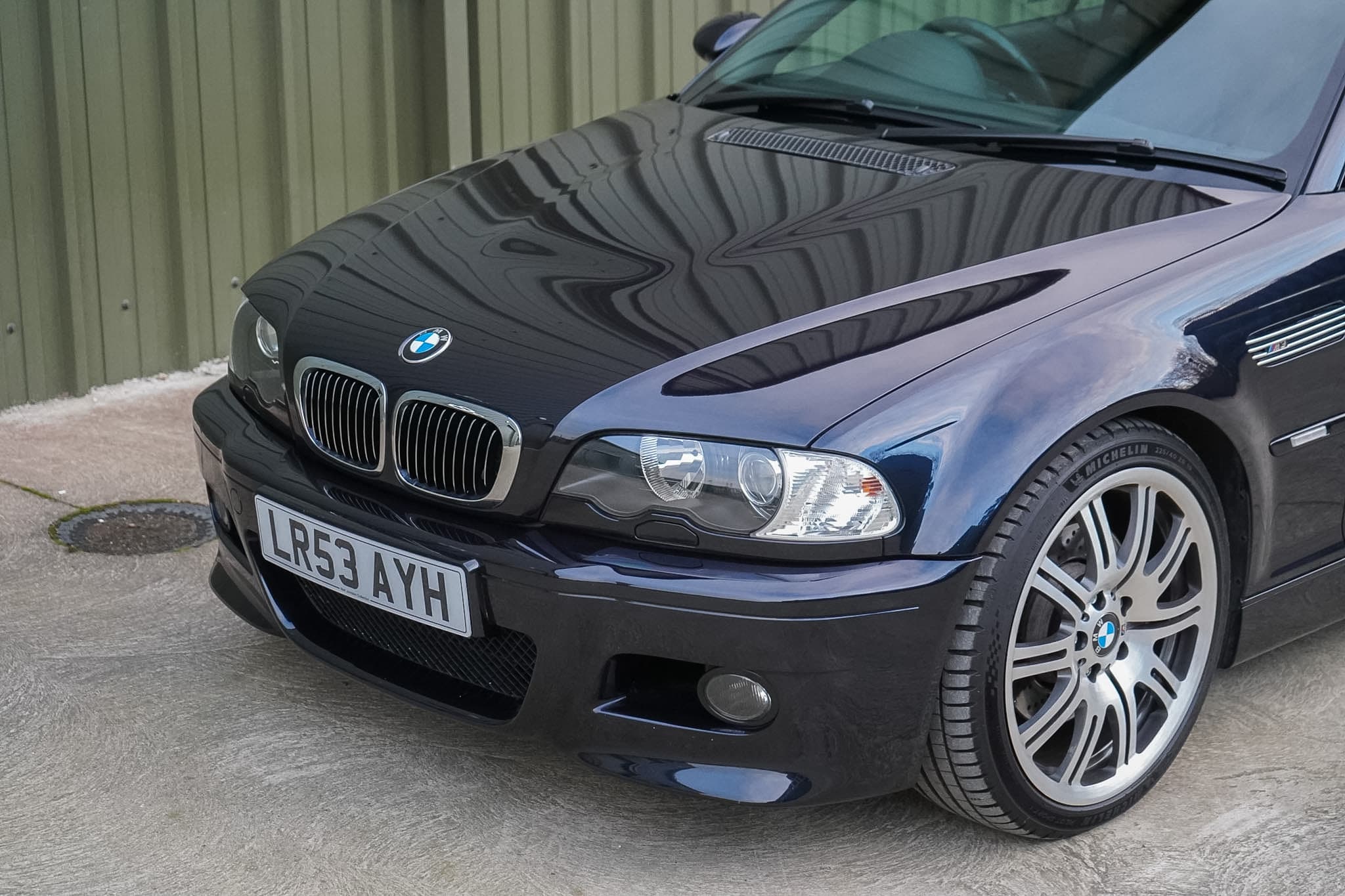 M3 Convertible
Comparison
M3 Convertible
OwnershipExplore model details, specifications, history and related guidance for BMW 3 Series E46 M3 Convertible.
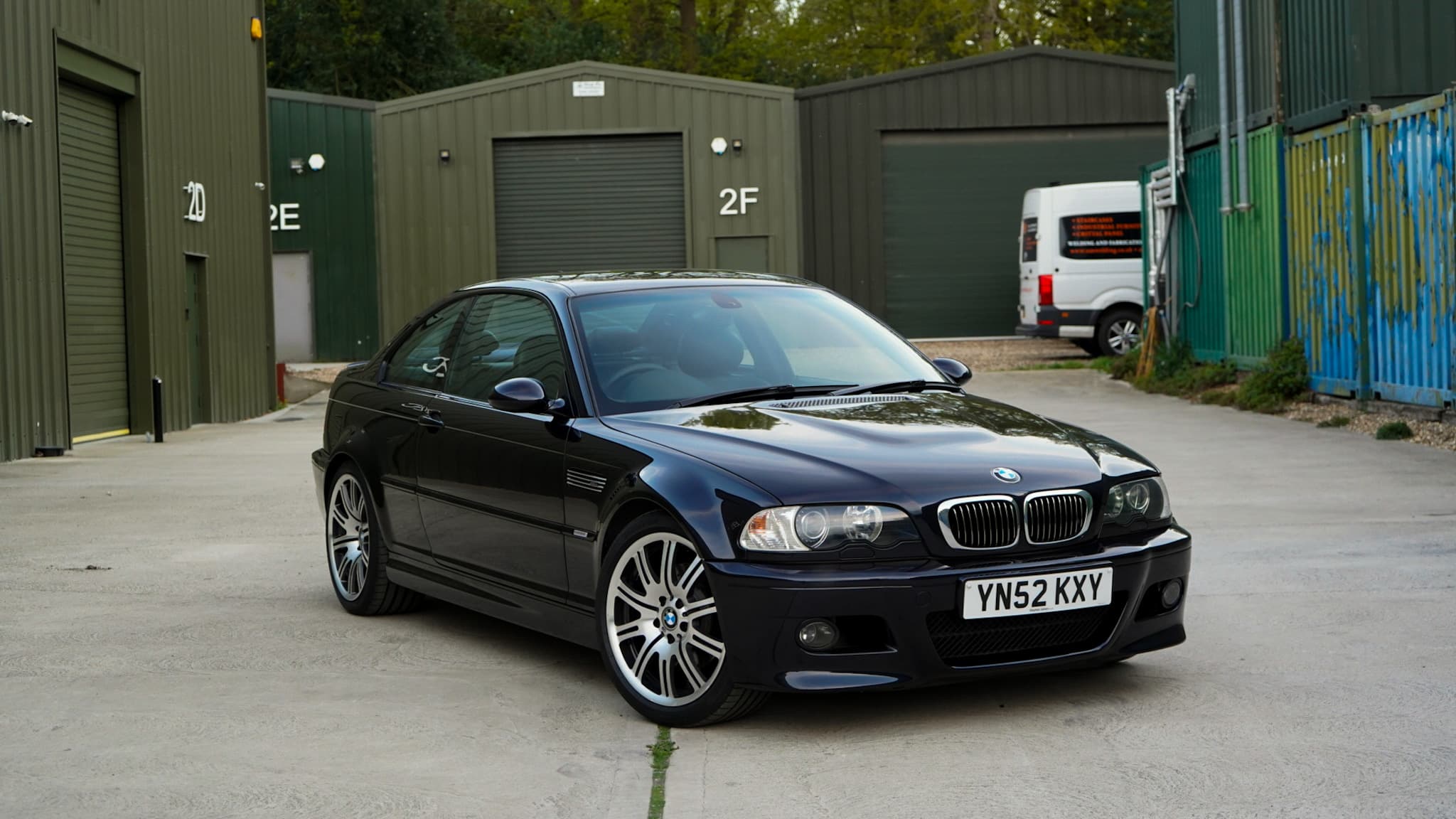 M3 Coupé
Comparison
M3 Coupé
OwnershipExplore model details, specifications, history and related guidance for BMW 3 Series E46 M3 Coupé.
Editorial information
The Matt Johnston Collection
Research and editorial from TMJC Garage.
Research and editorialTMJC Garage
Reviewed byMatt Johnston
Last reviewed26 October 2026
Published byThe Matt Johnston Collection