Published guide
BMW E46 M3 rod bearings: service-action dates and proof
What BMW actually said about E46 M3 rod bearings, which build dates its service actions covered, and what paperwork proves the work on a particular car.
Overview
What BMW actually said about E46 M3 rod bearings, which build dates its service actions covered, and what paperwork proves the work on a particular car.
The phrase “rod bearings done” appears constantly around the BMW E46 M3. It sounds reassuring, but on its own it leaves several important questions unanswered: which BMW action was involved, when was the car actually built, what parts were changed, and is there documentary evidence for the work?
BMW's own service history is more complicated than the familiar shorthand. There were two overlapping S54 bearing-related service-action stories, and BMW later stated that some cars which had already received the earlier oil-pump and bearing work were still included in the later connecting-rod-bearing action.
That makes the paperwork more important than the phrase.
The short answer
For BMW of North America, the main dates are:
| BMW action | Production window stated by BMW | What BMW said was wrong | Main remedy |
|---|---|---|---|
| Earlier oil-pump / bearing action | October 2001 to February 2002 | Lubrication-system contamination combined with unfavourable oil-pump tolerances | Oil pump and connecting-rod bearings replaced; DME updated |
| Later SI B 11 04 04 bearing action | 12 February 2001 to 22 May 2003 | Connecting-rod bearings did not meet BMW quality standards | Connecting-rod bearings replaced; DME updated |
The later window is broader. More importantly, BMW's later bulletin says that M3s from the October 2001-February 2002 group which had already received the earlier Campaign 356 were also affected by the later service action.
So an invoice showing one early BMW bearing job is valuable evidence, but it does not automatically tell you whether the later action was completed as well.
Was it a recall?
BMW's own North American Q&A called it a service action, not a recall.
That wording matters. “Recall” is often used loosely in adverts, forums and workshop conversations, but it can imply a formal safety-recall status that the BMW documents do not claim. The March 2003 BMW Q&A explicitly says the issue would be handled as a service action.
For a UK car, there is a second reason to be careful. The primary documents recovered for this research are BMW of North America material. They are strong evidence for BMW's technical diagnosis, the production windows and the work BMW prescribed in that market. They do not, by themselves, prove that an identical UK campaign applied to a particular British-market car.
A UK history file that says “recall done” is therefore a prompt to look for the underlying BMW or dealer record, not the end of the investigation.
Why there are two different date ranges
The first BMW story focused on a narrower group of S54-powered M3s.
In its March 2003 service-action Q&A, BMW identified M3 Coupé and Convertible cars produced from October 2001 through February 2002. BMW described the root cause as contamination of the engine lubrication system during assembly combined with unfavourable tolerances in the oil pump. The remedy included replacing the oil pump and, as a precaution, replacing the connecting-rod bearings, followed by updated engine-management software.
BMW subsequently documented an extended engine warranty in North America. The June 2003 service information says certain S54 M cars received VIN-specific coverage for lubricated internal mechanical engine components to six years or 100,000 miles. That warranty history is useful context when old paperwork or adverts mention an “extended BMW warranty”, but it is still North American documentation and should not be transplanted onto a UK car without evidence.
The later action addressed a different finding.
BMW SI B 11 04 04 covers E46 M3 Coupé and Convertible cars with the S54B32 built from 12 February 2001 through 22 May 2003. BMW says the connecting-rod bearings fitted to those cars were not manufactured to its quality standards and could overheat and fail prematurely when the engine was operated at sustained higher speeds.
The remedy was bearing replacement plus updated DME software.
The most important line in the later bulletin
The later BMW bulletin does not simply replace an old date range with a new one. It says cars produced from October 2001 through February 2002 which had already had the earlier connecting-rod-bearing/oil-pump Campaign 356 performed were also affected by the later service action.
That is the detail most easily lost when an E46 M3 history is reduced to “the bearings were recalled and done years ago”.
For a buyer, there are at least three different possibilities behind a sentence such as “rod bearings done”:
- the car received the earlier oil-pump/bearing action;
- the car received the later bearing action;
- the car received a later preventative or repair job unrelated to either factory service action.
All three can be legitimate pieces of history. They are not the same evidence.
Use build date, not registration year
A registration plate cannot settle service-action eligibility.
The later BMW window ends on 22 May 2003 production. A car registered in 2003 could have been built before or after that date. Likewise, a car first registered later can have an earlier production date.
BMW's own bulletin says the dealer system was to be used to determine whether a specific vehicle was affected. It also warns that the listed chassis-number ranges were informational rather than the only deciding factor.
That is why a VIN/build record is stronger evidence than a forum list of chassis numbers or a registration-year rule of thumb.
For the wider distinction between build date, model year and registration year, see the Garage build-date guide.
What paperwork actually proves
The most useful history is specific enough that another person can understand what was done without relying on memory.
1. Confirm the car's production date
Start with the VIN and a credible BMW build record. You are trying to establish where the car sits relative to the action windows, not just whether it has a 2002 or 2003 registration.
2. Look for an action or warranty reference
A BMW/dealer record identifying the service action is stronger than a generic service stamp. If the car had the earlier Campaign 356, look for evidence of what happened after BMW introduced the broader bearing action.
3. Read the actual invoice
A useful invoice should make the scope of work understandable: date, mileage, workshop, bearings, related fasteners or parts where applicable, and any accompanying BMW campaign/warranty reference.
A stamp saying “engine work” or an advert saying “big three done” does not tell you the same thing.
4. Keep later specialist work separate
A later specialist bearing replacement can be excellent provenance. Record it as exactly that. Do not relabel a modern preventative job as the original BMW service action simply because it concerns the same component.
5. Preserve the old parts evidence where it exists
Photographs, measurements and removed-part records can add useful context to a specialist job, particularly on a collector car. They still need to be tied to the correct vehicle and invoice.
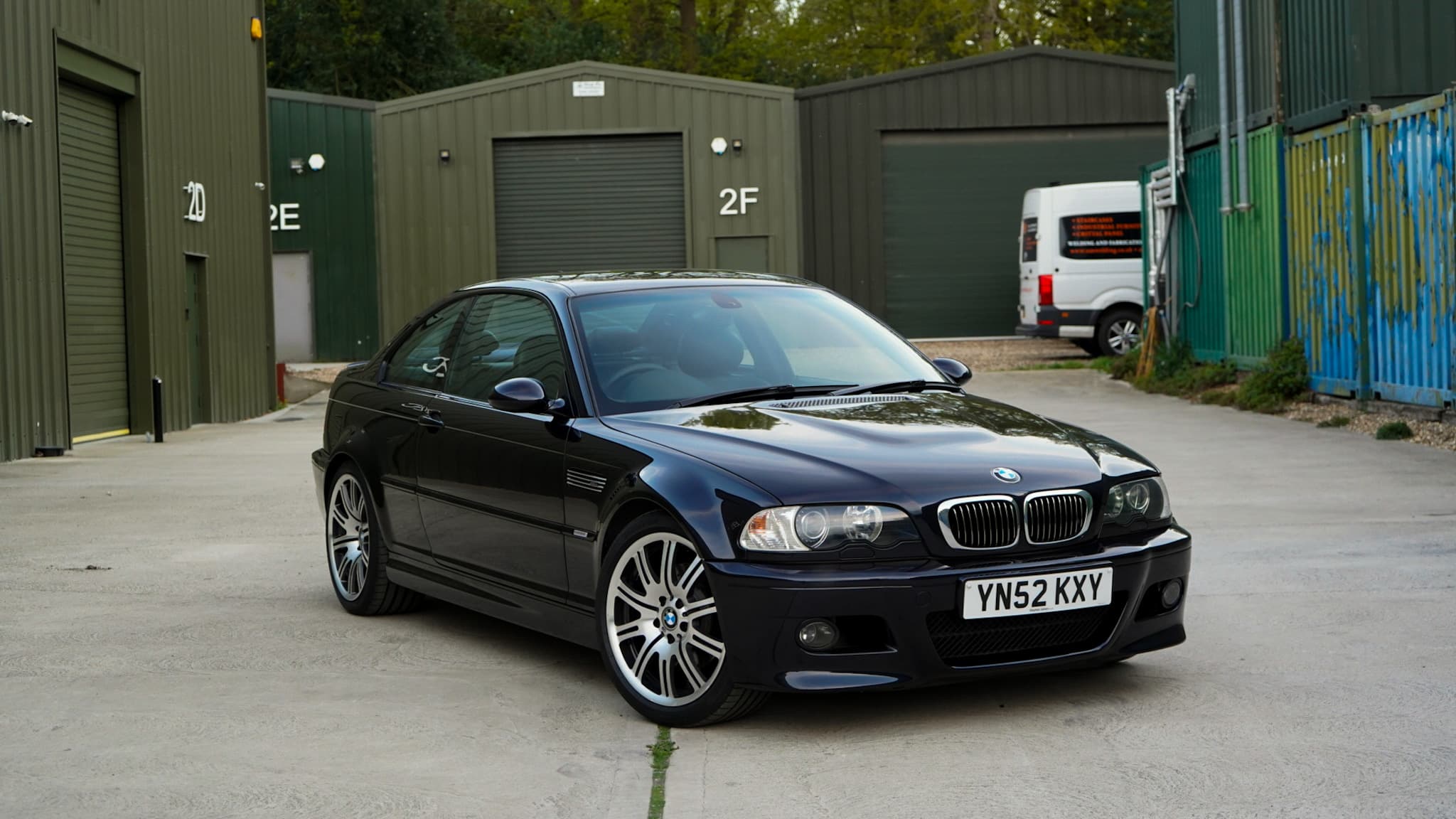
A useful TMJC example: YN52KXY
A surviving dealer advert connected with The Matt Johnston Collection records YN52KXY, a 2002 right-hand-drive six-speed-manual E46 M3 Coupé.
The seller states that its rod bearings were replaced under extended BMW warranty at 30,000 miles. The service chronology in the same advert separately lists a BMW Sewell Limited visit at 30,237 miles in September 2004.
That is useful provenance, but it also shows why careful wording matters. The advert does not identify the campaign number for the bearing work, and the service-list entry is not itself the bearing invoice. Without the underlying repair order, it would be an overreach to say that the September service was definitely SI B 11 04 04 or that a North American bulletin proves what happened to this UK car.
The strong statement is the one the evidence supports: the seller records BMW warranty-backed rod-bearing work at about 30,000 miles. The next level of verification would be the original BMW repair paperwork.
What if the car had the earlier oil-pump action?
Do not stop at “yes”.
BMW's later service information specifically re-included the earlier October 2001-February 2002 cars even where Campaign 356 had already been performed. If the history file contains an early oil-pump/bearing invoice, check whether there is later BMW documentation for the subsequent bearing action.
This is also why an old invoice date matters. Two apparently contradictory records can both be genuine if they relate to different actions.
What if the car was built after 22 May 2003?
BMW SI B 11 04 04 does not place a post-22-May-2003 build inside that service-action window.
That should not be stretched into a broader claim that a later S54 can never show rod-bearing wear. Factory campaign eligibility and decades-later mechanical condition are different questions.
Current BMW specialists still inspect and replace S54 connecting-rod bearings as an ownership service. That modern practice is useful context, but it does not justify inventing a universal mileage interval or telling every owner that BMW considered every E46 M3 defective.
For a later car, judge the actual engine history: servicing, use, previous work, specialist inspection and evidence tied to that car.
Does a clean oil analysis prove the bearings are fine?
Not from the BMW service-action evidence reviewed here.
BMW's bulletins define affected production windows and prescribed repairs; they do not provide a modern oil-analysis threshold that clears an old S54 for continued use. Oil analysis may be one piece of specialist assessment, but this Guide does not turn it into a pass/fail substitute for history or inspection.
Likewise, there is no defensible factory-backed mileage number in these documents at which every surviving E46 M3 should automatically receive another set of bearings.
Coupe and Convertible: the same service-action question
The BMW service documents cover both M3 Coupé and M3 Convertible with the S54B32 inside the stated production windows.
That is why this subject belongs in one technical Guide rather than two near-duplicate pages. For body-specific production figures, transmission context and broader buying checks, use the E46 M3 Coupé and E46 M3 Convertible references.
The separate E46 M3 rear axle carrier panel guide covers the structural issue commonly shortened to “subframe cracks”. It should not be used as evidence that the engine work has been done, and vice versa.
A buyer's rod-bearing evidence checklist
When an advert says “rod bearings done”, try to answer these questions before treating it as a solved item:
- What is the car's actual production date?
- Which market was it originally supplied to?
- Is there a BMW/dealer campaign or warranty reference?
- Was the early oil-pump/bearing Campaign 356 involved?
- If so, is there evidence of the later bearing service action as well?
- What date and mileage are on the bearing invoice?
- Does the invoice identify the workshop and the work performed?
- Was the engine ever replaced, and if so, what is the replacement engine's production history?
- Has there been later specialist rod-bearing work after the factory-era repair?
- Are seller claims supported by invoices rather than repeated from an earlier advert?
That checklist is more useful than asking only whether “the recall” was done.
What the factory documents do and do not tell us
They do establish that BMW identified specific S54 bearing-related problems, defined production windows and prescribed factory service actions.
They do establish that the 2004-era bearing action was broader than the earlier oil-pump/bearing action and re-included some cars that had already received the earlier work.
They do make production date and VIN-level campaign status central to verification.
They do not prove that every UK car received an identical North American programme.
They do not prove that a later car outside the service-action window can never suffer age- or wear-related bearing problems.
They do not provide a universal present-day preventative replacement interval for every E46 M3.
And they do not turn an undocumented seller sentence into a factory record.
Sources and further reading
- BMW of North America — Service Action on M3 S54 Engines, March 2003
- BMW SI B 11 04 04 — E46 M3 S54 connecting-rod-bearing Service Action
- BMW S54 Engine Extended Warranty — archived service information
- BMW Group Classic — BMW M3 Coupé (E46)
- BMW M — The BMW M3 E46
- The Matt Johnston Collection / Car & Classic — 2002 BMW E46 M3 YN52KXY
Related car
Cars covered in this guide
Explore the cars this guide covers, with model information, history and related TMJC guidance.
M3 CoupéMaintenance
M3 Coupé
OwnershipExplore model details, specifications, history and related guidance for BMW 3 Series E46 M3 Coupé.
 M3 Convertible
Maintenance
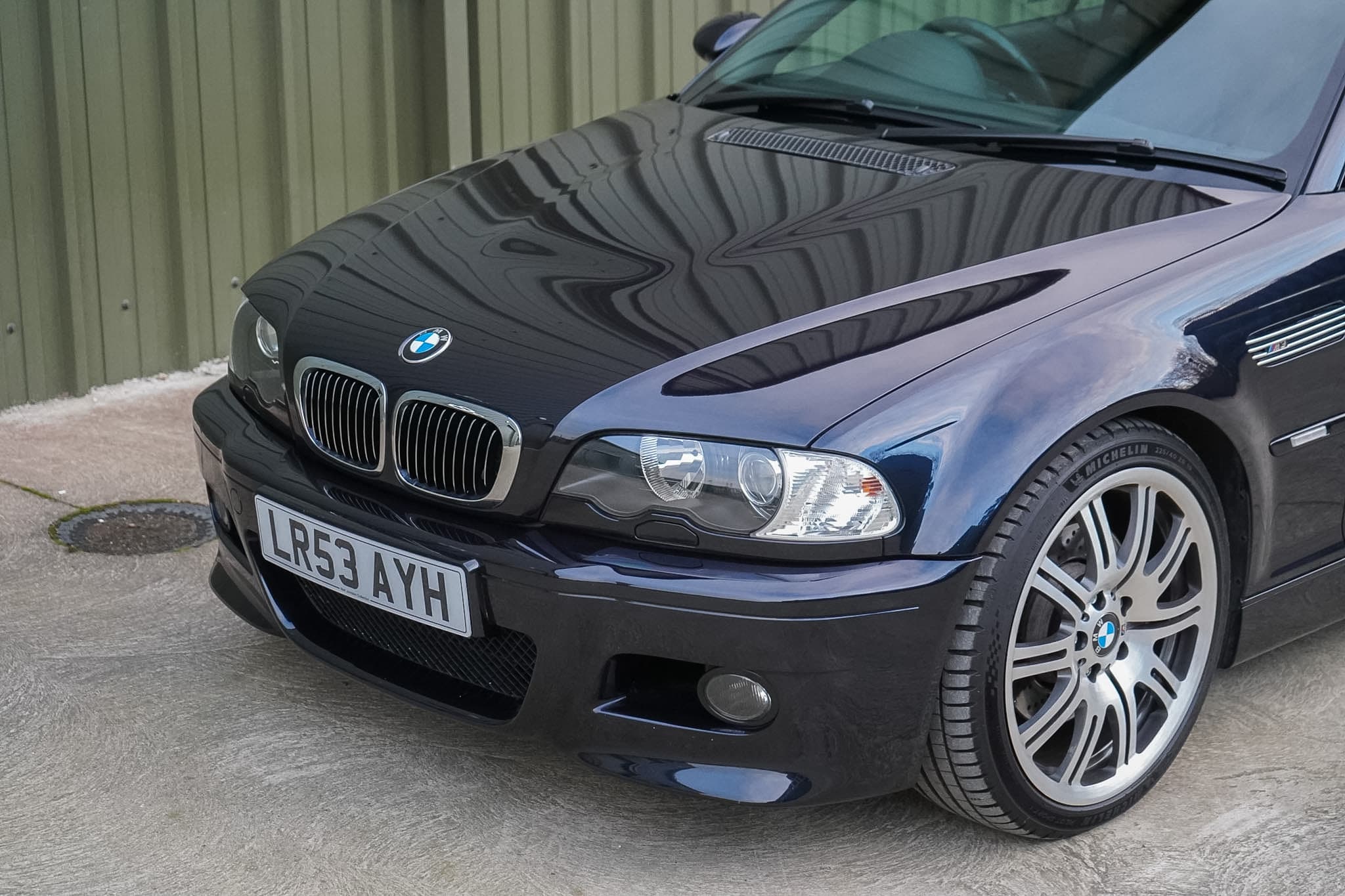
M3 Convertible
OwnershipExplore model details, specifications, history and related guidance for BMW 3 Series E46 M3 Convertible.
Editorial information
The Matt Johnston Collection
Research and editorial from TMJC Garage.
Research and editorialTMJC Garage
Reviewed byMatt Johnston
Last reviewed13 September 2026
Published byThe Matt Johnston Collection