TMJC assistance
Want TMJC to help with this vehicle?
Sourcing, consignment and valuationContinue to the main TMJC website and speak directly with the collection team.
Generation
Type 14 Karmann Ghia years, engine specs, chassis identification, German/Brazilian production context and structural buying checks.

TMJC guide
Type 14 Karmann Ghia years, engine specs, chassis identification, German/Brazilian production context and structural buying checks.
The Volkswagen Karmann Ghia Type 14 is the familiar Beetle-based Karmann Ghia: a rear-engined, air-cooled 2+2 that combined Volkswagen mechanical ideas with Karmann coachbuilding and Ghia styling. German Coupe production began in August 1955; the Cabriolet followed in 1957, and Volkswagen records the final Type 14 from Osnabruck on 31 July 1974.
That long lifespan is exactly why Karmann Ghia specification is a more complicated question than it first appears. A 1956 Coupe, a 1968 semi-automatic Cabriolet and a 1973 1600 share the same basic Type 14 identity, but not the same engine, brakes, suspension detail, lights, bumpers or dashboard. There was also a separate Brazilian production story, so the familiar German chronology should not automatically be applied to every Type 14 built anywhere in the world.
Type 14 is Volkswagen's factory designation for the original Karmann Ghia family. It is distinct from the sharper-edged Type 34, which arrived later on Volkswagen Type 3 engineering.
Volkswagen says work on the Type 14 began at Karmann in Osnabruck in 1953. Ghia was commissioned to create a Coupe around Volkswagen Beetle mechanical foundations, and production started in August 1955. The result was not simply a Beetle with different outer panels: Volkswagen says the wider body gave more front-seat space, the running boards disappeared and a front anti-roll bar was fitted from the outset to reduce roll and oversteer.
For the wider Karmann Ghia family story, including the Type 34, see the Karmann Ghia model guide.
Volkswagen's German archive profiles give the Coupe and Cabriolet the same basic layout and profile dimensions:
| Factory profile | Volkswagen figure |
|---|---|
| Engine layout | Rear-mounted, longitudinal, air-cooled flat-four |
| Driven wheels | Rear |
| Wheelbase | 2,400 mm |
| Length | 4,140 mm |
| Width | 1,634 mm |
| Height | 1,330 mm |
Those figures are useful reference points for the German Type 14 profiles. They should not be used to assume that every market, bumper version or locally built Brazilian car is dimensionally identical without checking the relevant period literature.
Volkswagen's own engine table is more useful than the rounded figures often repeated in classifieds. For the German Type 14 Coupe, it records:
| Version | Displacement | Power | Peak torque |
|---|---|---|---|
| 1200, early | 1,191 cc | 22 kW / 30 PS at 3,400 rpm | 76 Nm at 2,000 rpm |
| 1200, from 1960 | 1,191 cc | 25 kW / 34 PS at 3,600 rpm | 82 Nm at 2,000 rpm |
| 1300 | 1,285 cc | 29 kW / 40 PS at 4,000 rpm | 87 Nm at 2,000 rpm |
| 1500 | 1,493 cc | 32 kW / 44 PS at 4,000 rpm | 100 Nm at 2,000 rpm |
| 1600 | 1,584 cc | 37 kW / 50 PS at 4,000 rpm | 106 Nm at 2,800 rpm |
The broad progression is therefore 1200, 1300, 1500 and finally 1600, but the year and market still matter. Volkswagen's German history moves to the 1.3 in 1965, the 1.5 in 1966 and the 1.6-litre 50 PS engine in 1970.
There is also a useful source-quality warning hidden in Volkswagen's own archive. The current Coupe vehicle-data profile lists 1500 Coupe: 1966-1977, even though that same page says Type 14 Coupe production ended in 1974 and lists the 1600 as 1970-1974. Volkswagen's main Coupe chronology introduces the 1.6 in 1970, and the Cabriolet profile gives its 1500 period as 1966-1970. The 1977 entry is therefore best treated as an obvious archive typo rather than a surprising late 1500 derivative.
A practical way to understand the car is to follow the visible and mechanical changes rather than trying to force 19 years into one specification sheet.
| Year | Main Volkswagen-documented German change |
|---|---|
| 1955 | Coupe production begins in August |
| 1957 | Cabriolet joins the range |
| 1959 | Front air intakes and wheel arches revised; headlights moved higher |
| 1960 | 34 PS version of the 1.2-litre engine and fully synchronised gearbox |
| 1963 | Fresh-air heating introduced |
| 1965 | 1.3-litre 40 PS engine and revised Beetle 1300 front axle |
| 1966 | 1.5-litre 44 PS engine |
| 1967 | Dual-circuit brakes, front discs and semi-automatic/rear-axle developments |
| 1968 | Front, fuel-filler and rear-wheel-guidance changes |
| 1969 | Rectangular indicators and stronger bumpers; Cabriolet gains a glass rear window |
| 1970 | 1.6-litre 50 PS engine, enlarged rear lights and major dashboard/instrument changes |
| 1971 | Larger boxier bumpers; further late-car instrument/body detail changes |
| 1972 | Cabriolet source records wider tyres, automatic parking lock and rear-axle-ratio change |
| 1974 | German Type 14 production ends |
This chronology is far more useful when checking originality than a generic list of Karmann Ghia parts. A 1964 car should not be judged against 1970 rear-light or engine details, while a late 1600 should not be made to look earlier merely because early trim is more fashionable.
Lowlight is collector shorthand for the early Type 14 front end, not a separate Volkswagen model name.
The physical basis for the nickname is real. Volkswagen records a 1959 redesign that moved the headlights higher and changed the front air intakes and wheel arches. Hagerty describes the earlier cars as having headlights roughly 50 mm lower than the later arrangement.
That makes Lowlight a useful search and buying term, but the safer way to identify an early car is through the body itself and its chassis/build evidence. Nose panels, lights and trim can all be replaced during restoration, and an attractive early-style front end does not prove the shell began life that way.
On a Type 14, the most useful identity number is not a badge or a piece of trim. It is the number Volkswagen put into the chassis itself.
Volkswagen Classic Parts gives the same basic locations for its 1962 and 1971 Karmann Ghia Type 14 examples:
Those are three different pieces of evidence. The stamped tunnel number identifies the chassis. The type plate should corroborate it. The engine number identifies the engine currently fitted. On a car that has been restored, re-engined, converted or extensively modified, they should not be treated as interchangeable.
That distinction is especially useful on Karmann Ghias because engines, body panels, lamps, wheels and interior parts are comparatively easy to change. If the visible specification and the paperwork disagree, start with the stamped chassis number and work outward rather than deciding the car's identity from whichever detail looks most original.
For a German-built Volkswagen, Volkswagen Classic Parts currently offers an official manufacturer certificate researched from the chassis/VIN. Volkswagen says it can record the original model/order information, engine and transmission combination, paint, interior, production and delivery dates, delivery location and country of destination, plus factory-fitted optional equipment.
That makes it unusually useful for a restored Type 14. It can answer the historical question what did this chassis leave Volkswagen as? while the physical inspection answers what is fitted now?
Volkswagen also offers a useful engine-originality check. Since 2024, the factory-fitted engine number can be shown on the certificate when the owner supplies the code and number of the engine currently installed and Volkswagen confirms that it is the original unit. That is a stronger route than assuming an engine is original because its code or apparent age looks plausible.
There are two important limits. Volkswagen warns that archive records can contain gaps, and its current certificate/data-sheet service says it cannot create these documents for Brazilian- or African-built vehicles. That matters here because Brazilian Type 14 production has already been established separately. A German-car certificate workflow should not be silently extended to a Brazilian-built Ghia.
For a modified car, a factory certificate does not make later changes original. It does something more useful: it creates a defensible baseline against which the current engine, transmission, colour, interior and other changes can be compared.
This is one of the places where simple timelines become unreliable.
Volkswagen says the 1967 semi-automatic was paired with a semi-trailing-arm/double-joint rear axle. Its Coupe history then describes another important rear-wheel-guidance improvement around 1968. The Cabriolet page similarly ties the three-speed semi-automatic and double-joint rear axle together.
The sensible conclusion is not 1967 equals IRS on every Type 14. Transmission, market and exact build period matter. If rear-suspension originality is important on a particular car, identify the transmission and chassis first and check period documentation for that market rather than relying on a one-line internet cutoff.
The brake change is clearer at a high level: Volkswagen records dual-circuit braking and front disc brakes in the 1967 update. Again, a car that has been restored or modified may now wear later components, so current hardware and factory identity are separate questions.
The Type 14 Cabriolet was mechanically close to the Coupe, but Volkswagen is explicit that removing the roof required numerous body reinforcements, particularly through the floor area. Remarkably, Volkswagen says the extra structure increased kerb weight by only about 10 kg.
That detail matters to buyers because the Karmann Ghia's difficult part is often not its familiar Volkswagen engine. It is the hand-finished body structure.
Hagerty's buying guidance puts bodywork first and highlights hidden corrosion in the heater channels and sills, with the sills especially important on a Cabriolet. It also points buyers toward the front luggage compartment, battery-damaged areas, door bottoms, A-pillars, floors, wheel arches, boot panel and windscreen surround.
A shiny car with poor heater-channel or sill work can therefore be a much larger project than a mechanically tired but structurally honest one.
Volkswagen Classic's recent German material gives 362,601 Coupes and 80,881 Cabriolets and describes the Type 14's production ending in Osnabruck. An older Volkswagen archive entry instead gives 362,585 Coupes with the same 80,881 Cabriolet figure. That 16-car discrepancy was already enough reason not to present one exact total without a source label.
There is a more important complication: Brazil also built the Karmann-Ghia.
Volkswagenwerk AG's 1962 annual report goes beyond a later retrospective timeline. It says Volkswagen do Brasil, working with Karmann-Ghia do Brasil, began producing the Volkswagen 1200 Karmann-Ghia in 1962. Volkswagen do Brasil's current corporate history independently dates the Brazilian Karmann-Ghia launch to the same year.
The annual report also says Volkswagen do Brasil produced 53,752 vehicles in total during 1962. That is an all-model factory figure, not a Karmann-Ghia production count, and it should not be used as one. The Karmann Ghia Owners Club treats Brazilian Type 14 output separately from Osnabruck, but specialist Brazilian totals still disagree slightly.
So the common calculation 362,601 + 80,881 = global Type 14 production is too confident. Those German figures are valuable, but period Volkswagen evidence now directly proves a Brazilian production branch. A truly global Type 14 total needs a source that clearly defines and reconciles both production streams.
This also affects identification. A Brazilian-built Type 14 should not be judged blindly against every German model-year detail in the table above. Until stronger primary Brazilian brochures and production records are assembled, the safest approach is to identify its market/build origin first.
The Brazilian Type 14 needs its own chronology. Volkswagenwerk AG's 1962 annual report says Volkswagen do Brasil, working with Karmann-Ghia do Brasil, began producing the Volkswagen 1200 Karmann-Ghia in 1962. Later Brazilian changes did not simply follow the German table above year for year.
Brazilian specialist archives agree on the main sequence. Quatro Rodas records the 1500, rated at 52 cv, replacing the 1200 in 1967 and notes that Expedito Marazzi tested the new 1500 Coupe for the magazine that May. For the 1968 Brazilian update it records larger rear lights, revised wheels and a new wood-effect dashboard; Motor1 Brasil also places the move to 12-volt electrics in this period. The Brazilian Cabriolet arrived around the same time, but its exact production total remains disputed: Quatro Rodas records accounts of 169 and 177 cars and says neither Volkswagen nor Karmann published an official figure.
Both Quatro Rodas and Motor1 place the next major mechanical change in 1970, when the Brazilian Type 14 gained a 1600 quoted locally at 60 cv and front disc brakes. Motor1 dates the end of Brazilian Type 14 production to April 1972, two years before the final Osnabruck cars.
Those figures should stay attached to Brazil. Volkswagen Classic's German 1500 and 1600 figures use a different market chronology and quote 44 PS and 50 PS respectively; without a verified bridge between the period rating standards, the Brazilian cv figures should not be treated as direct like-for-like power comparisons. The practical lesson for identification is simpler: establish where a Type 14 was built before using engine size, rear lamps, dashboard, brakes or a German model-year table as proof of originality.
Start with the structure and identity, then move into year-correct detail.
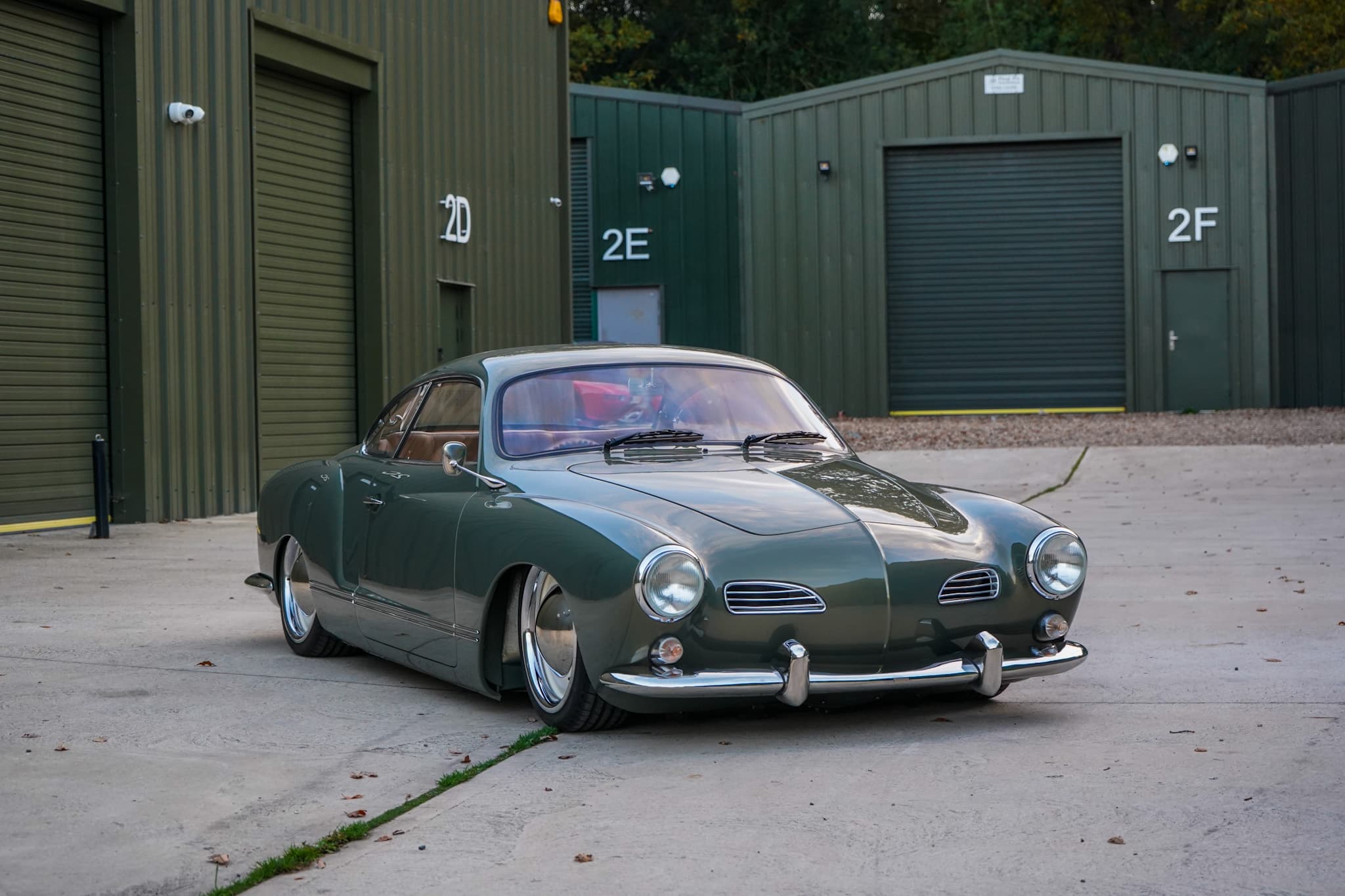
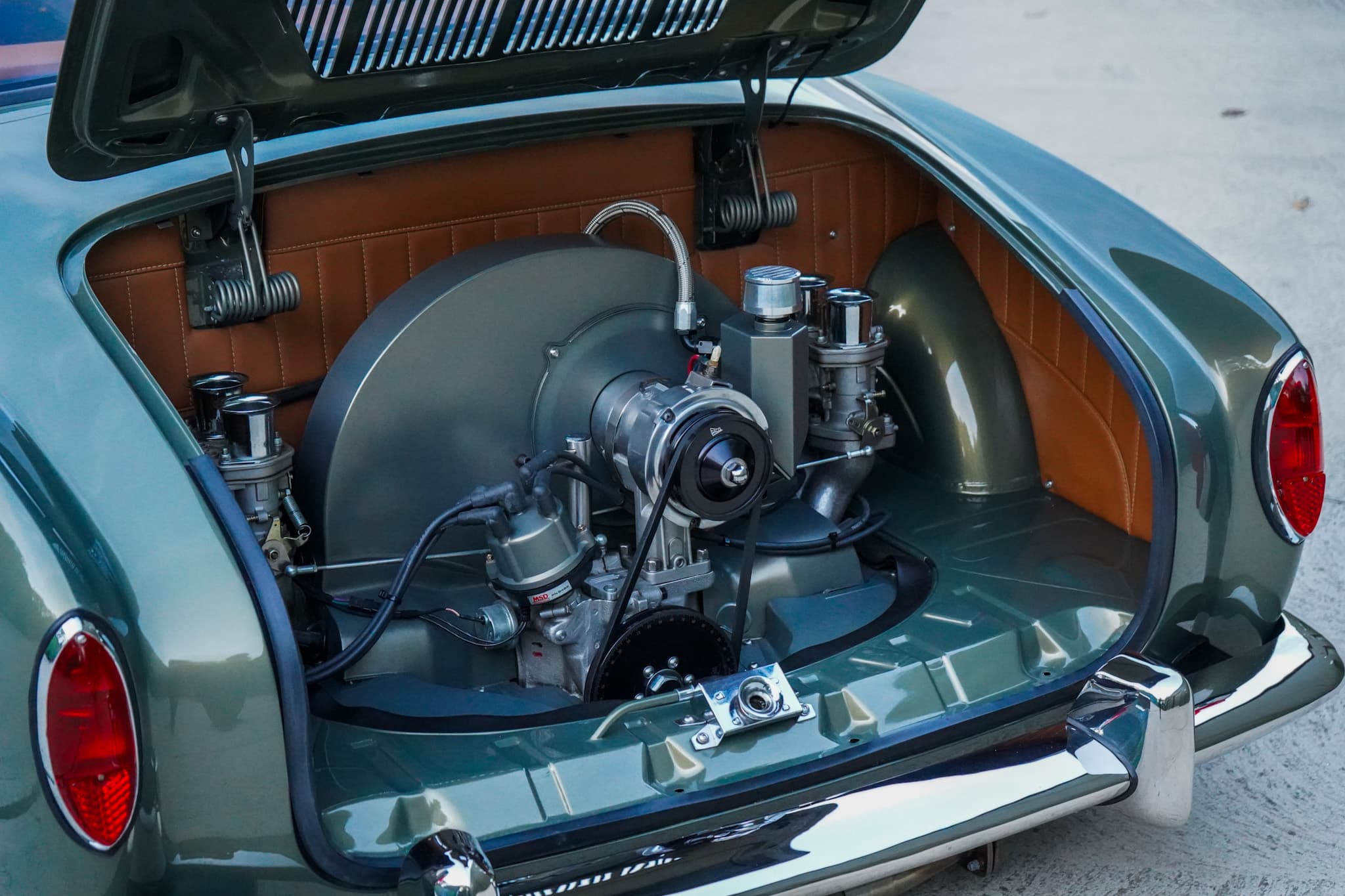
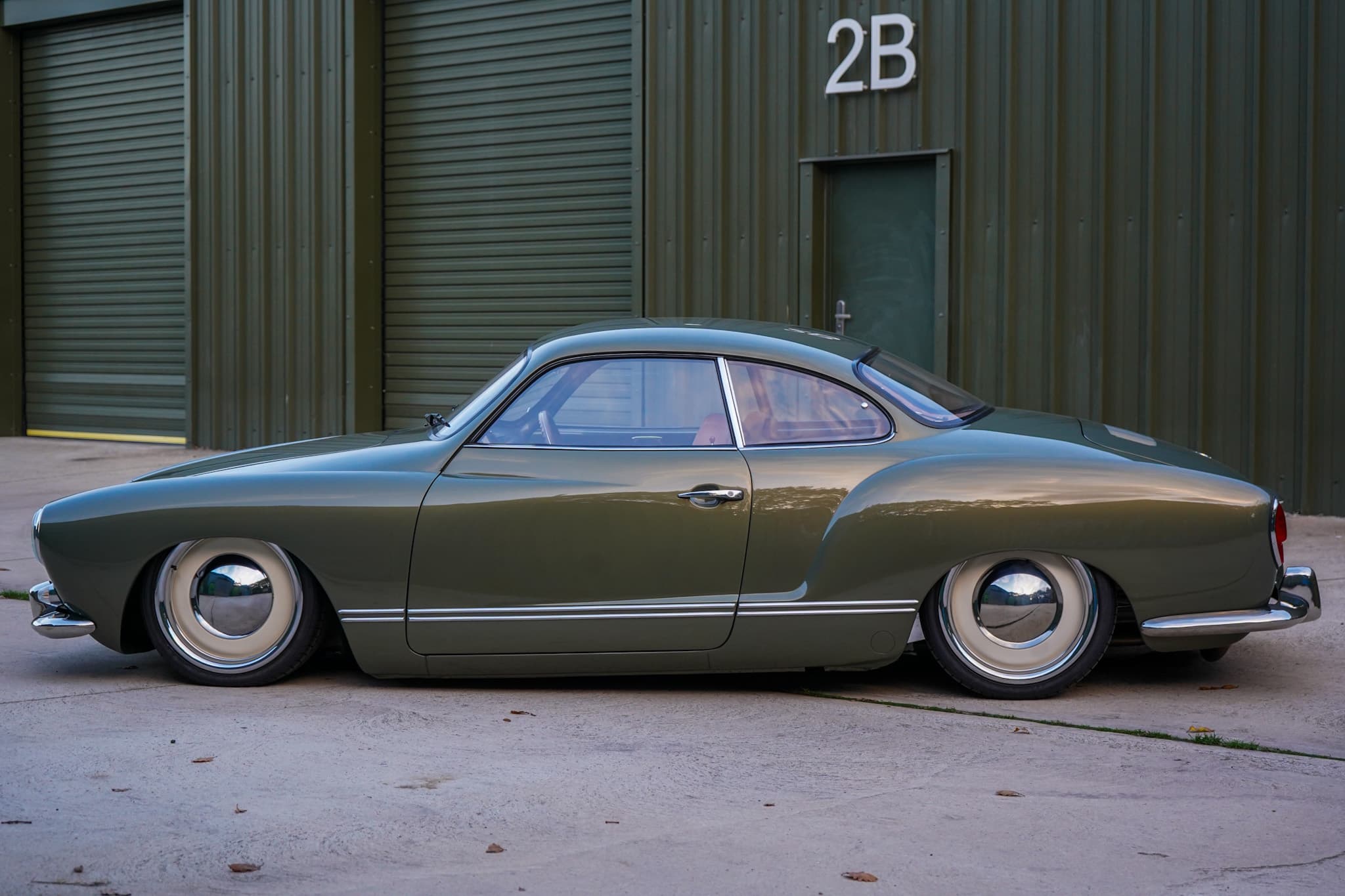
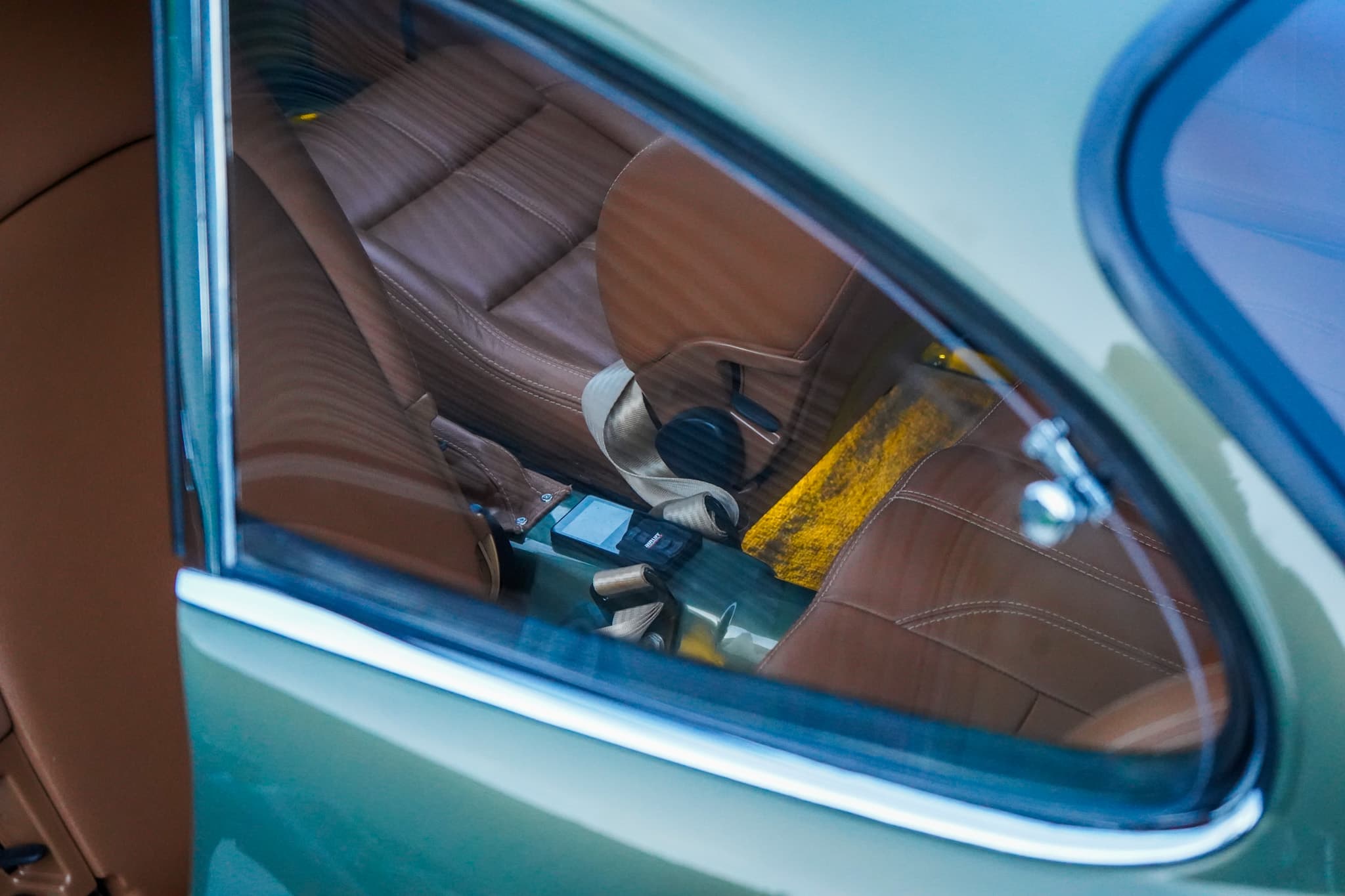
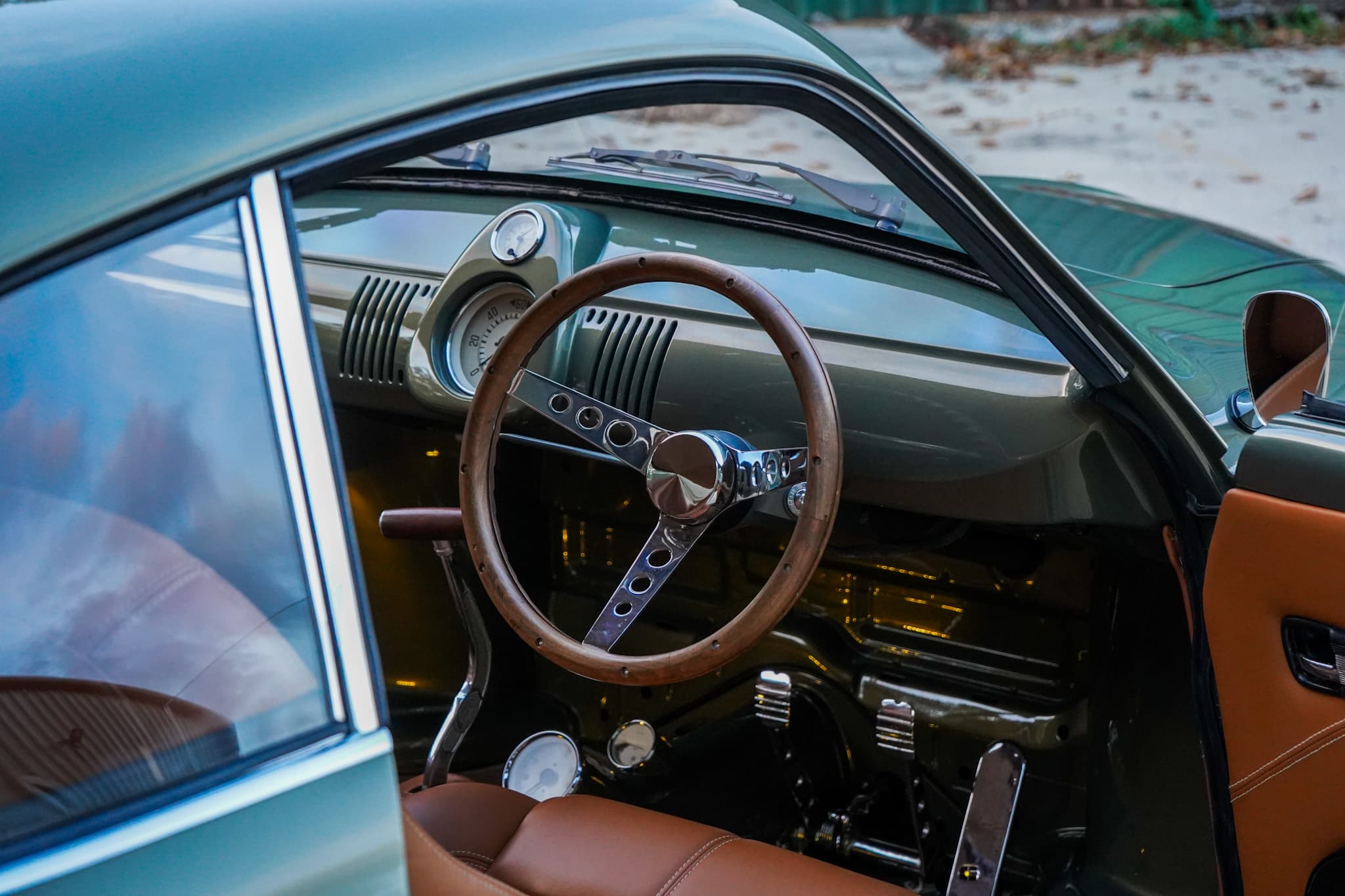
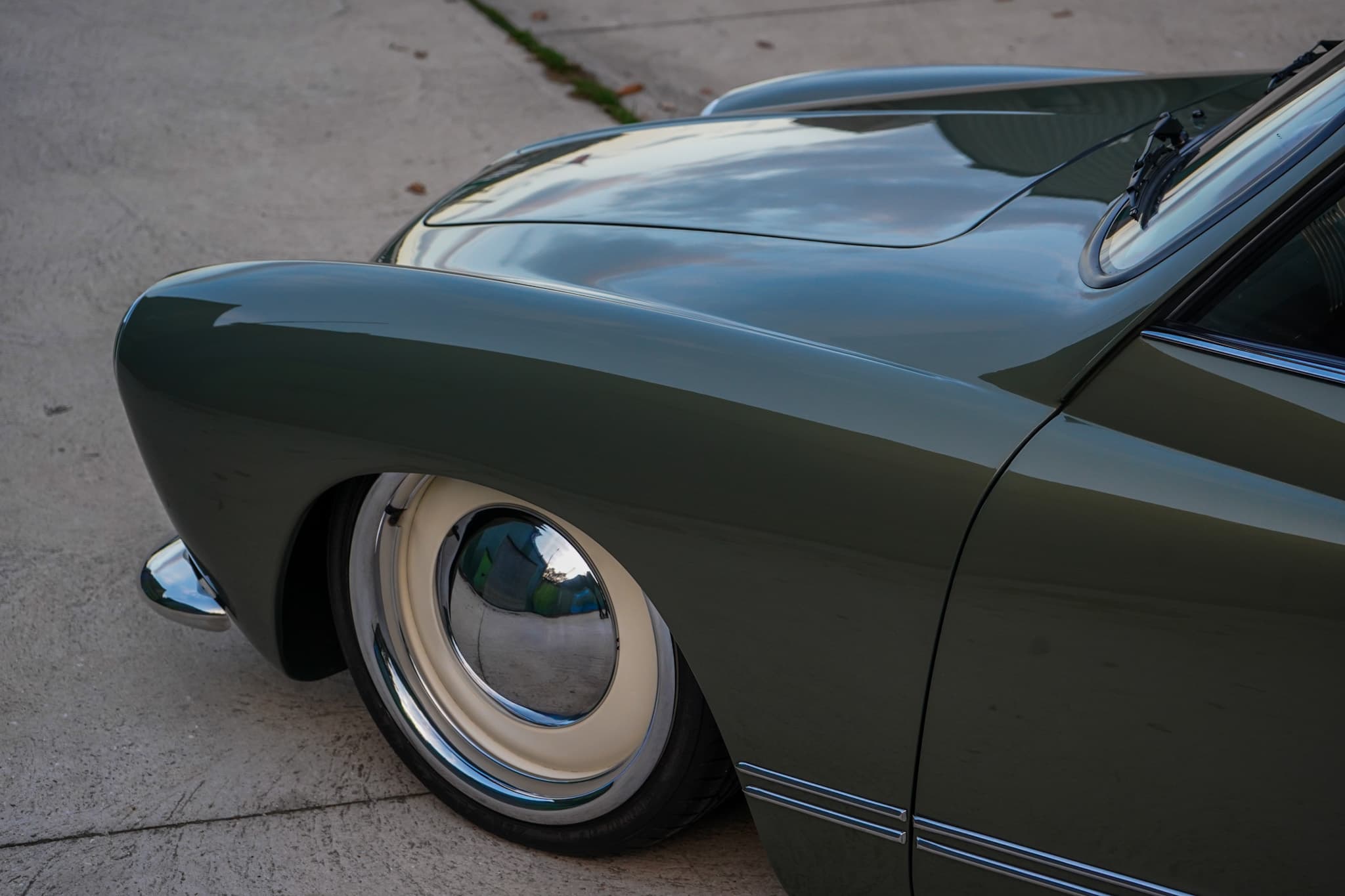
TMJC's own 1970 Volkswagen Karmann Ghia is a useful extreme example. The current listing records a 2.1-litre Type 1 flat-four, a 2-inch roof chop, air suspension, right-hand-drive conversion, five-stud disc brakes and earlier-style rear lights after an extensive custom restoration.
None of those features should be turned into 1970 factory Type 14 specification. They answer a different question: what has been done to this individual car?
That distinction is central to assessing modified classics. A car can remain a genuine 1970 Type 14 while its present mechanical and visual specification bears little resemblance to how it left the factory. TMJC's Karmann Ghia restomod guide goes deeper into the roof, RHD conversion, engine, suspension and paperwork checks that matter on a modified example.
For broader marque context, see the Volkswagen history and model guide.
Editorial information
Research and editorial from TMJC Garage.
Research and editorialTMJC Garage
Reviewed byMatt Johnston
Last reviewed12 September 2026
Published byThe Matt Johnston Collection
Model lineage
TMJC photography
TMJC Guides
TMJC assistance
Continue to the main TMJC website and speak directly with the collection team.
Sell, consign or source
Continue with TMJC for a discreet conversation, professional presentation and collector-focused support.
Enquire now