Model
Karmann Ghia
The Karmann Ghia name covers two distinct Volkswagen families. Here is how the Beetle-based Type 14 differs from the rarer Type 34.
Generation directory
Karmann Ghia generations
Choose a Karmann Ghia generation to see its production years, body styles, engines, chassis changes and variants.
TMJC Catalog guide
Volkswagen Karmann Ghia: Type 14, Type 34 and model history
The Karmann Ghia name covers two distinct Volkswagen families. Here is how the Beetle-based Type 14 differs from the rarer Type 34.
- Page
- Model overview
- Reviewed
- 9 Sept 2026
- Specifications
- 0 verified
The Volkswagen Karmann Ghia name covers more than one car. The familiar Type 14 used Volkswagen Beetle-derived engineering beneath a low, coachbuilt body; the rarer Type 34 arrived later on Volkswagen Type 3 underpinnings. Treating every Karmann Ghia as one specification misses one of the most useful identification points.
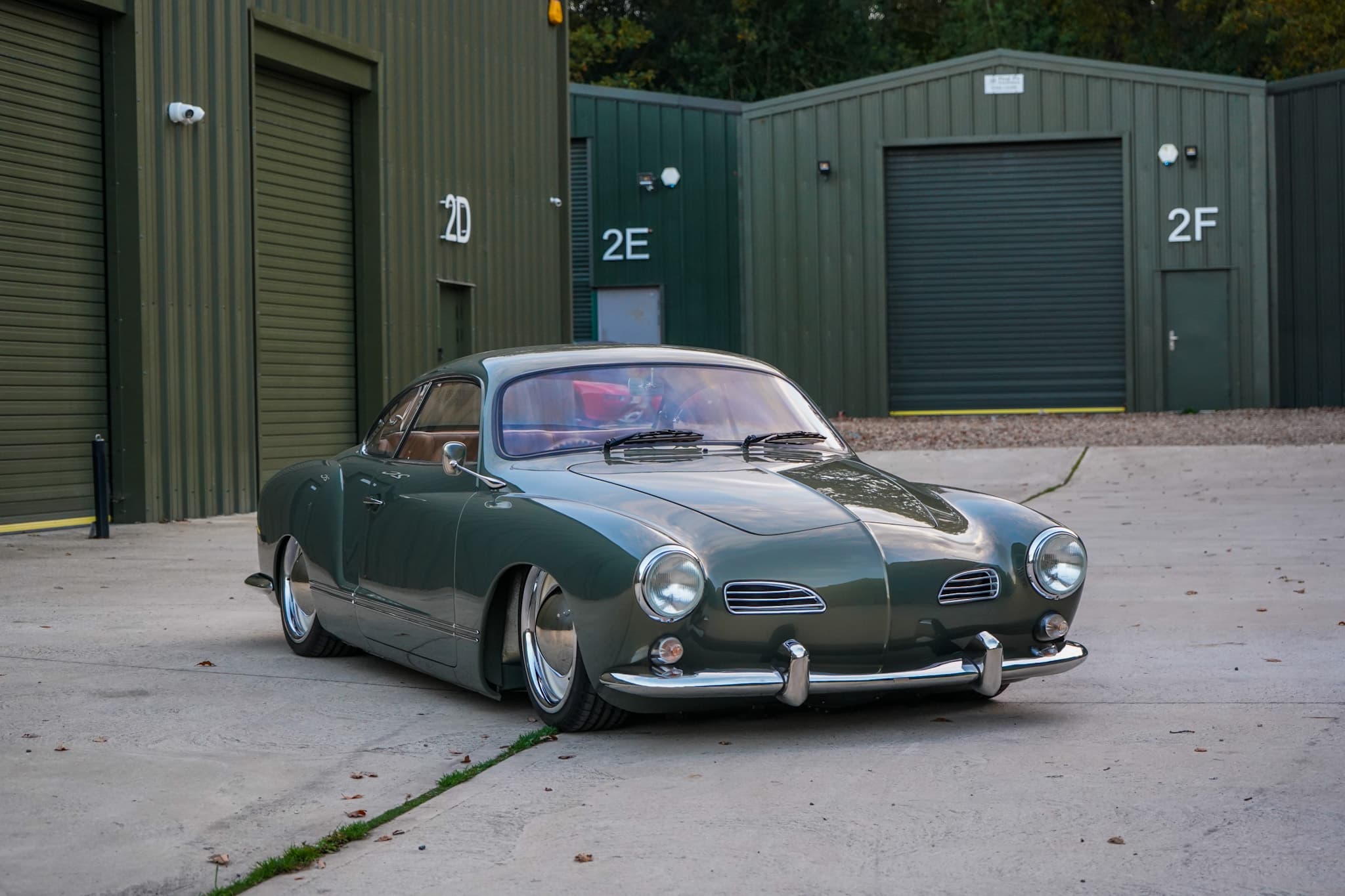
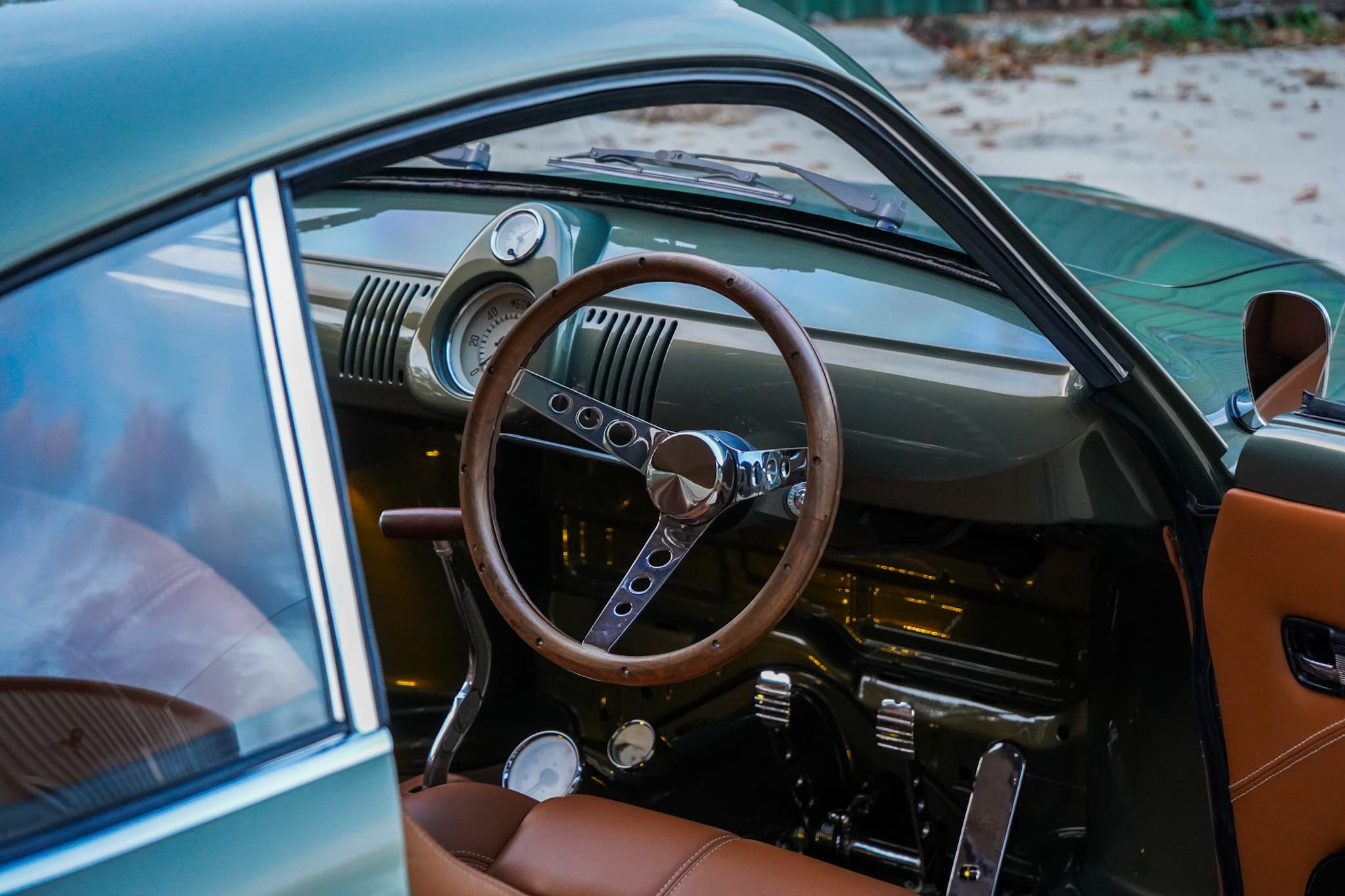
TMJC has handled a heavily modified 1970 Type 14, which is exactly why separating the factory model identity from later restomod specification matters.
What is a Volkswagen Karmann Ghia?
The Karmann Ghia was Volkswagen's way of combining familiar mass-produced mechanical architecture with much more specialised body design and construction.
Volkswagen's archive describes the Type 14 as Italian sports-car design over a slightly widened Beetle floorpan. Karmann in Osnabruck developed and built the body, while Carrozzeria Ghia in Turin supplied the design direction. The Type 14 coupe was presented in 1955 and a cabriolet followed in 1957.
The later Type 34 is a different branch. Volkswagen introduced it in 1961 with Type 3 mechanical underpinnings and a much more angular four-headlamp body. It ended in 1969, while Type 14 production continued into 1974. Volkswagen also records 16 Type 34 cabriolets, but the familiar production Type 34 is the coupe.
Type 14 vs Type 34
| Area | Type 14 | Type 34 |
|---|---|---|
| Introduced | 1955 | 1961 |
| Basic Volkswagen architecture | Beetle / Type 1-derived | Type 3-derived |
| Main body styles | Coupe and cabriolet | Coupe (plus 16 cabriolets recorded by Volkswagen) |
| Character | Smaller, rounded original Karmann Ghia | Larger, more angular “large Karmann” |
| End of production | 1974 | 1969 |
That distinction matters in adverts, parts searches and valuation. Karmann Ghia by itself is the model-family name; Type 14 or Type 34 tells you which mechanical and body family you are actually dealing with.
How the Type 14 came together
Volkswagen says preliminary work started at Karmann in spring 1953. Ghia was commissioned to design a coupe based on the Beetle, and the prototype convinced both Karmann and Volkswagen to proceed with a 2+2 production car.
Production began in August 1955. Volkswagen's 2020 Classic history says the Type 14 cabriolet followed in November 1957.
The engineering relationship with the Beetle is real, but it should not be oversimplified. The Type 14 was wider, omitted the Beetle's running boards and used model-specific bodywork. Volkswagen also fitted a front anti-roll bar from the start to reduce body roll and oversteer tendency.
The Type 14 changed substantially during its life
A Karmann Ghia from 1956 and one from 1972 are recognisably the same shape, but they are not the same specification.
Volkswagen's archive records a succession of changes: revised front details in 1959, engine increases through 1.2, 1.3, 1.5 and 1.6 litres, dual-circuit braking and front discs from the late 1960s, a major 1970 update, and much larger bumpers in the early 1970s.
That is why a useful originality check should be tied to build year and body style, not to a generic internet photograph of a Karmann Ghia.
The Type 34 is not a Type 14 facelift
Volkswagen presented the Type 34 at the Frankfurt show in 1961. Its technical basis came from the Type 3 family rather than the Beetle-derived Type 14 architecture.
The body is also easy to distinguish once you know what to look for: a larger, more angular shape, a four-headlamp front end and very different proportions. Volkswagen discontinued the Type 34 in 1969.
For a buyer, this means Type 14 and Type 34 parts, restoration decisions and market comparisons should not be mixed simply because both cars carry the Karmann Ghia name.
Volkswagen's own production figures need a source label
Volkswagen Classic's 2020 anniversary material states that 362,601 Type 14 coupes and 80,881 cabriolets were produced. However, an older Volkswagen Newsroom archive image gives 362,585 coupes while retaining the same cabriolet figure.
That 16-car discrepancy is small, but it is a useful reminder that a repeated classic-car production number is not automatically more certain because it comes from a manufacturer archive. The source and counting basis matter more than silently choosing whichever exact total is more common online.
For that reason, no single exact global Type 14 production total is presented here as settled fact.
What matters to collectors
The Karmann Ghia's Volkswagen mechanical roots are helpful. Engine, gearbox and chassis expertise is widespread compared with many low-volume coachbuilt classics.
The body is the more specialised part of the equation. Hagerty's UK buying guidance highlights hidden heater-channel and sill corrosion, front-luggage-compartment and battery-area rot, floors, pillars, wheelarches and windscreen surround. Correct trim can also be year-sensitive.
So a mechanically healthy car with weak body repairs can still be the difficult purchase. On the other hand, a sound, well-documented shell gives a buyer a much stronger base even if routine mechanical work remains to be done.
TMJC's 1970 Karmann Ghia
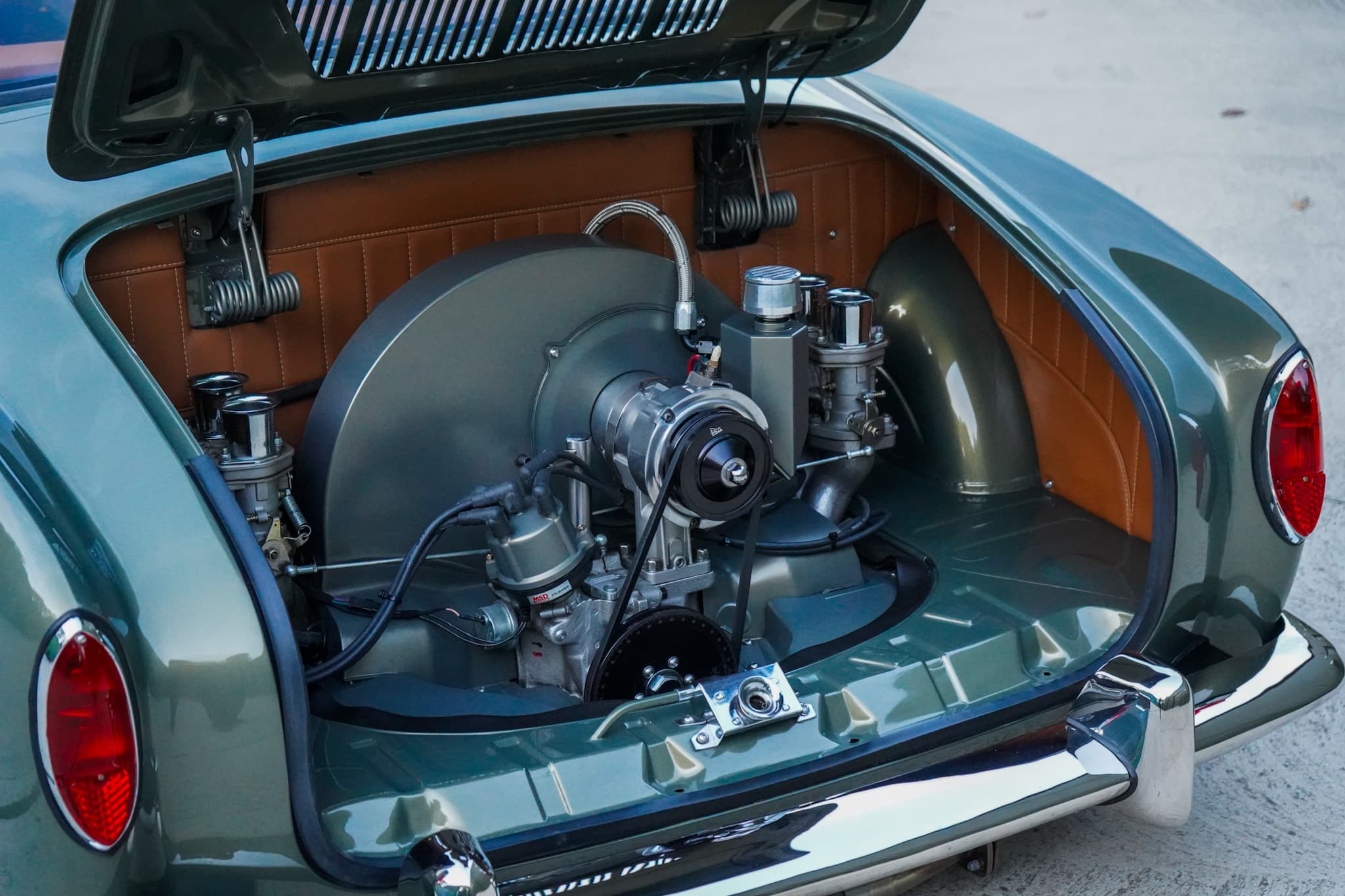
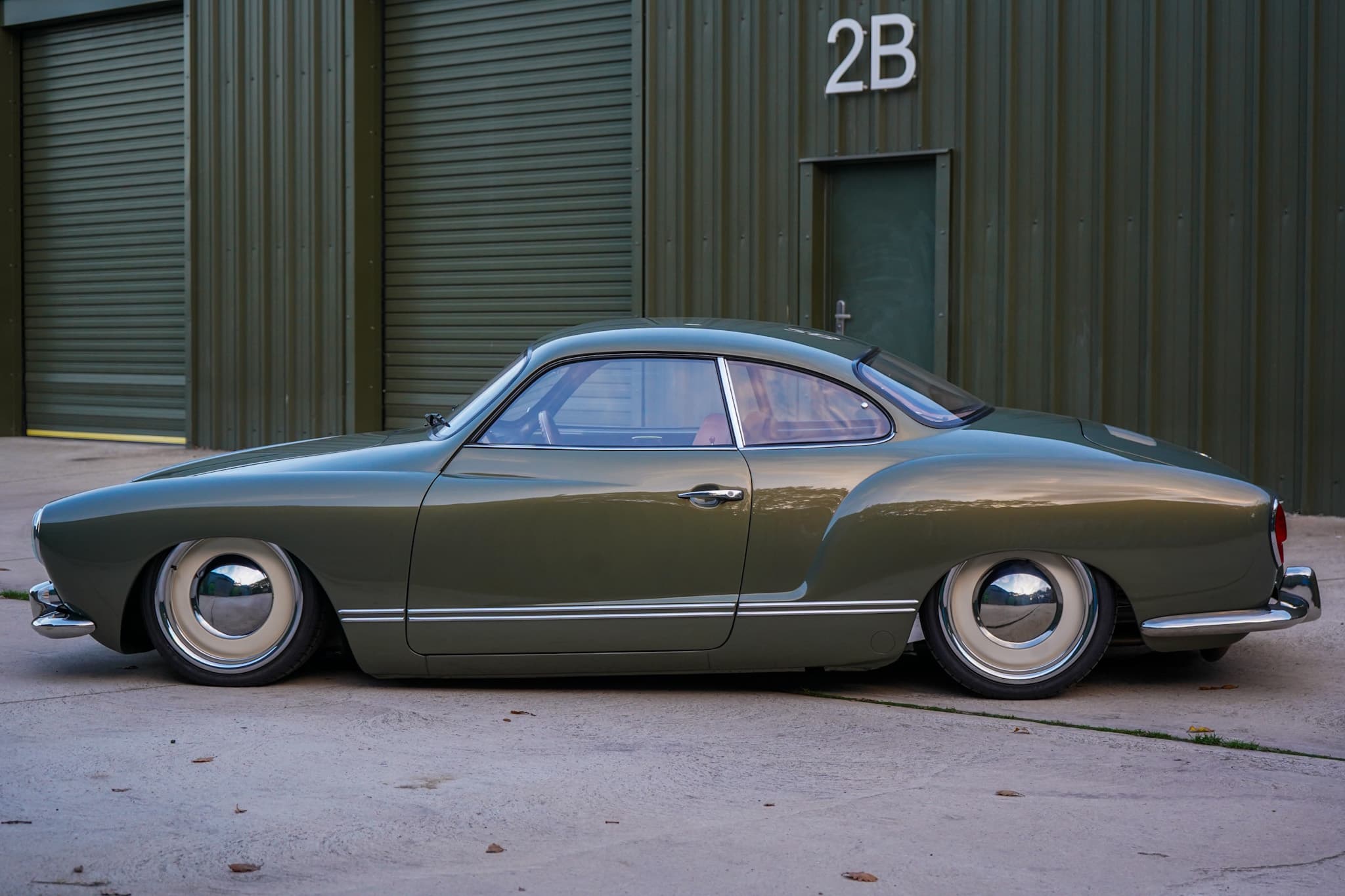
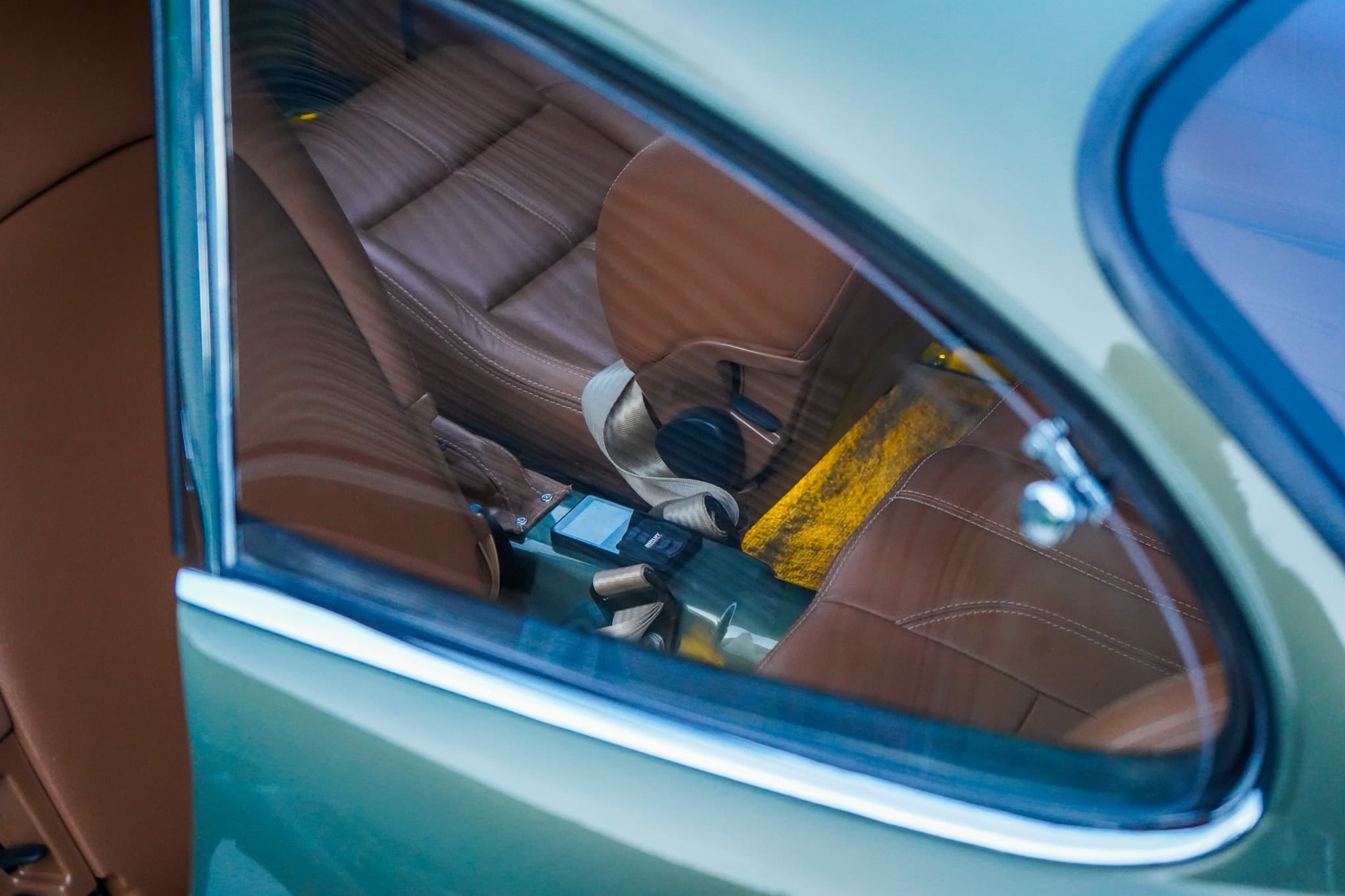
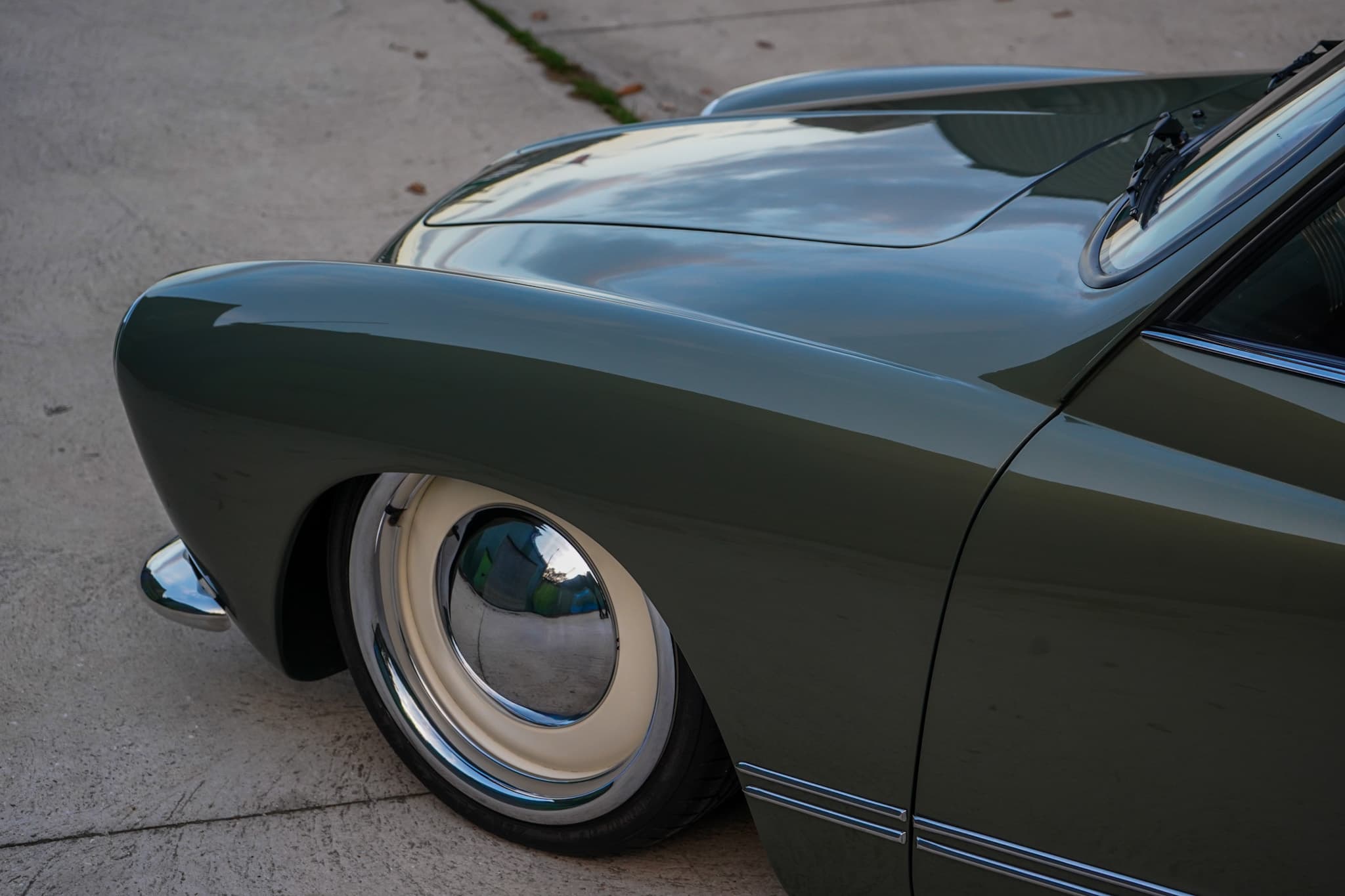
The Matt Johnston Collection has handled a 1970 Karmann Ghia Restomod with a 2.1-litre Type 1 flat-four, roof chop, air suspension and later right-hand-drive conversion.
Those are not factory Karmann Ghia specifications. They are useful precisely because they show why the underlying model identity still matters after extensive modification. The shell began life within the Type 14 family; the later engineering should then be judged as a separate build history.
TMJC's Karmann Ghia restomod inspection guide explains how to separate those two questions when inspecting a modified car.
For the wider marque context, see the Volkswagen reference.
Sources and further reading
Model lineage
Where this car sits
TMJC media
Explore the car in detail
Sell, consign or editorial
Thinking of selling or consigning a special car?
Continue with TMJC for a discreet conversation, professional presentation and collector-focused support.
Enquire now