TMJC assistance
Want TMJC to help with this vehicle?
Sourcing, consignment and valuationContinue to the main TMJC website and speak directly with the collection team.
Variant
How to identify the Series 4 Oscar India V8 Saloon from factory-era records, understand V540/V580 and the 1985-86 transition, and inspect one properly.
TMJC guide
How to identify the Series 4 Oscar India V8 Saloon from factory-era records, understand V540/V580 and the 1985-86 transition, and inspect one properly.
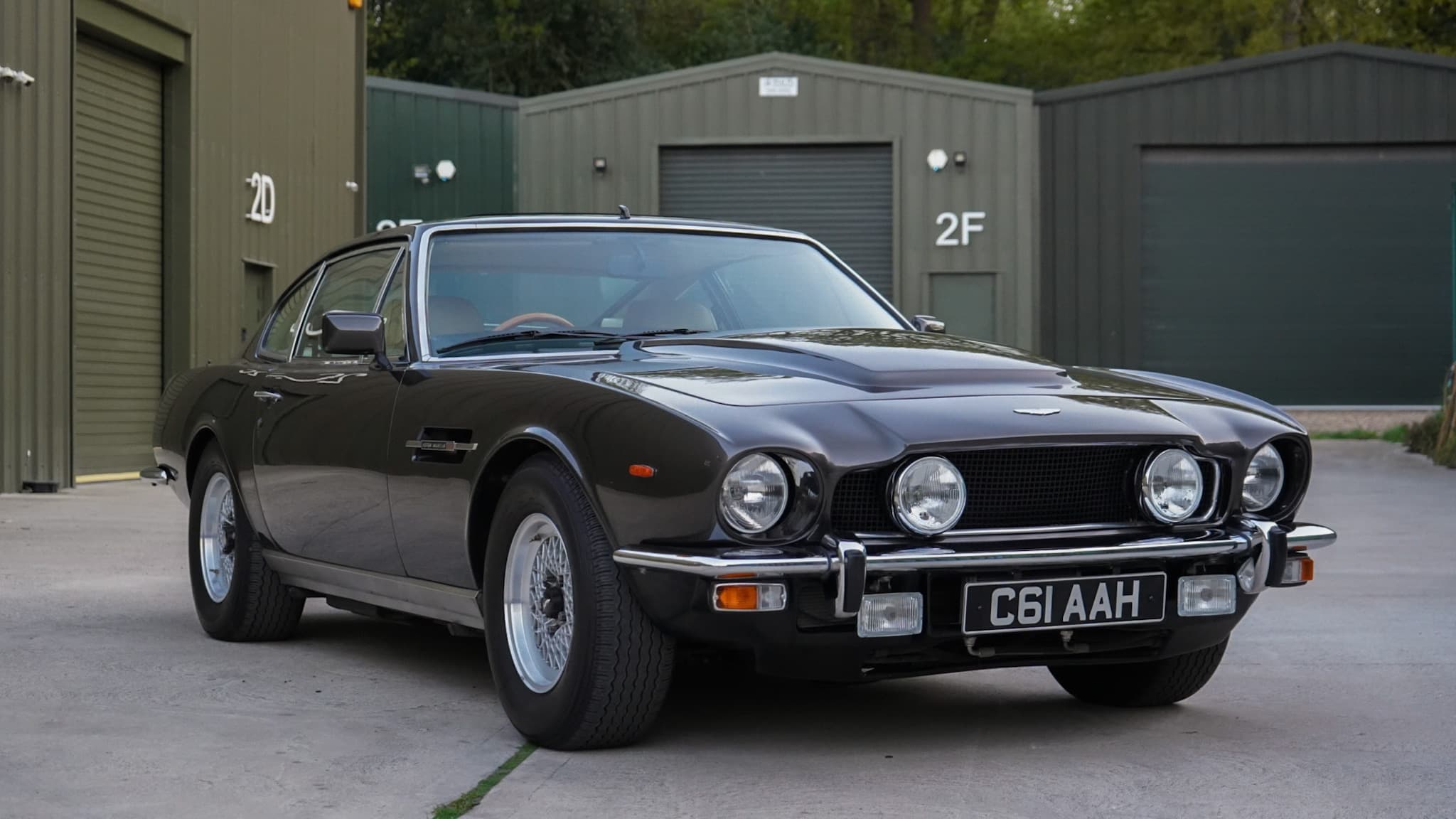
The Aston Martin V8 Saloon in Series 4, or “Oscar India”, form is the standard late-carburettor AMV8 evolution unveiled in October 1978. It is not another name for the V8 Vantage. It is best understood as a hand-built 2+2 grand tourer whose specification kept moving: V540 gave way to V580 engine detail, ignition hardware changed during the run, BBS wheels arrived in 1983, and fuel injection followed at the end of the carburettor era.
That running evolution is why an advert saying “Oscar India” is only the start of the identification job. Build records, chassis and engine identity matter more than one styling cue or registration year.
The strongest exact-series specialist reference describes the standard carburettor Oscar India saloon as follows:
| Item | Series 4 / Oscar India V8 Saloon |
|---|---|
| Body | 2-door 2+2 coupe/saloon; aluminium body panels over a steel platform structure |
| Engine | Front-mounted all-alloy 90-degree V8 |
| Capacity | 5,340 cc |
| Bore x stroke | 100 x 85 mm |
| Valve gear | Two valves per cylinder; twin overhead camshafts per bank |
| Fuel system | Four Weber 42 DCNF downdraught carburettors on carburettor-era cars |
| Engine series | V540 initially; V580 from 1980 |
| Gearboxes | Chrysler Torqueflite 3-speed automatic or ZF 5-speed manual |
| Wheels | GKN alloys initially; 8-inch BBS cross-spoke wheels from 1983 |
Aston Martin's current heritage page also lists 4,700 mm length, 1,830 mm width, 1,330 mm saloon height, 1,818 kg weight, ventilated discs front and rear, 146 mph and 6.6 seconds to 60 mph for the AMV8 saloon. Those figures provide context, but the same factory page gives one headline engine-output figure across a long model history with materially different specifications. It should not be treated as a period homologation sheet for every standard 1978-on Oscar India saloon.
The exact-model specialist source illustrates the performance problem too: it quotes 60 mph in as little as 6.6 seconds but notes that contemporary Autocar and Motor tests could not better 7.2 seconds. The relevant comparison depends on which engine phase, market and gearbox is being discussed.
Aston Martin describes Oscar India as an evolutionary landmark for the AMV8. The obvious changes were visual and interior-led:
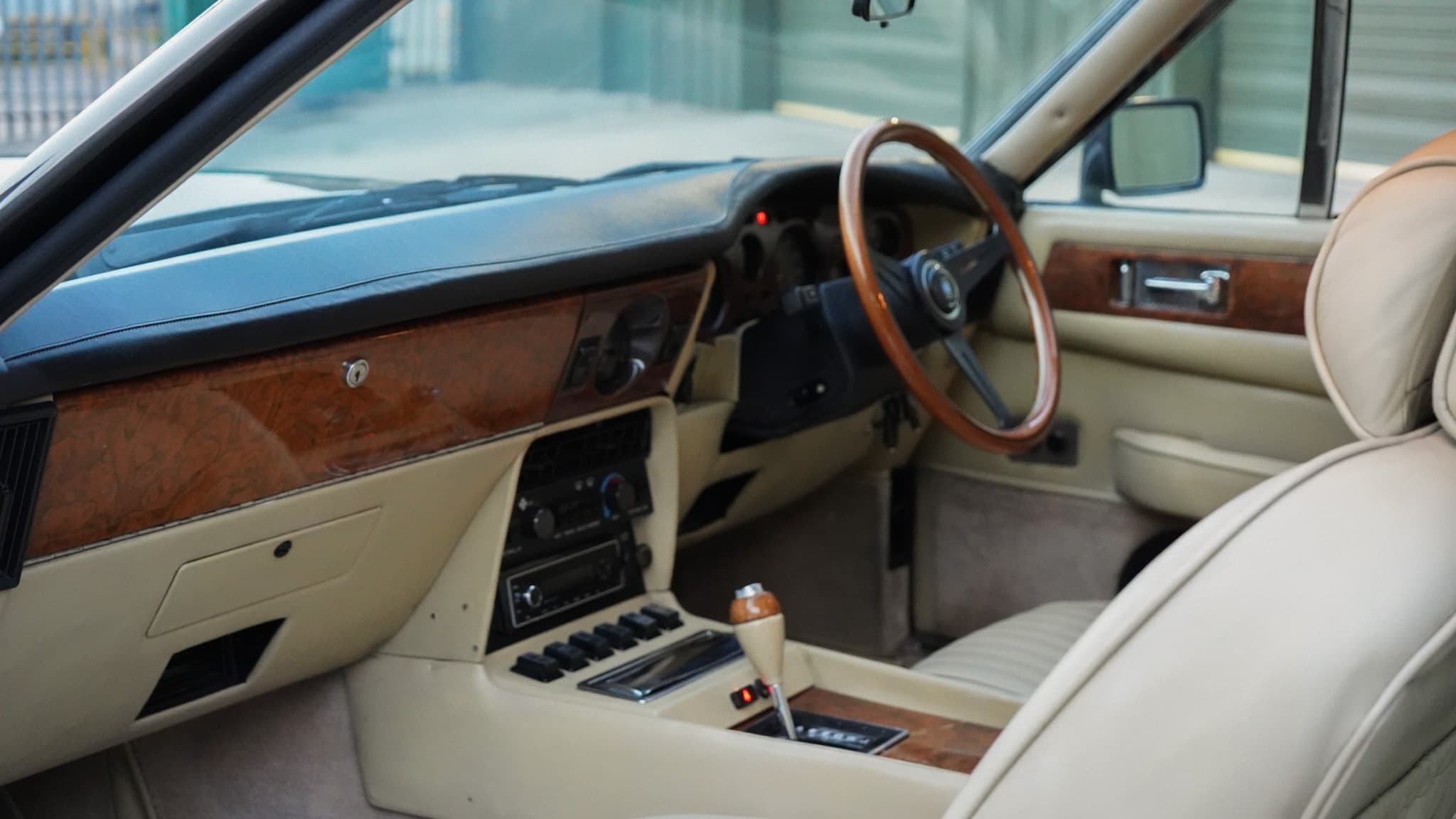
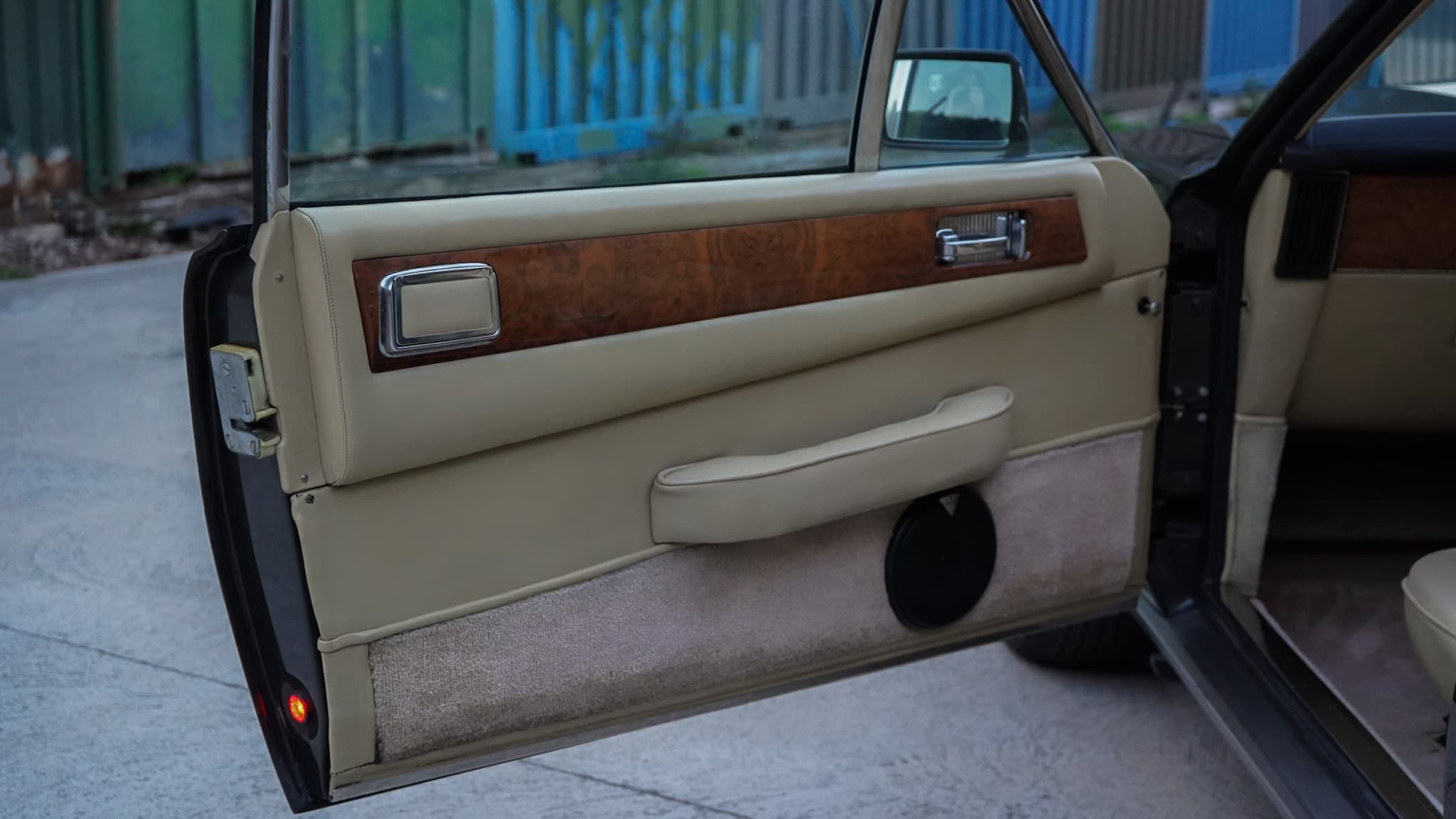
The detailed specialist record adds extensive Connolly leather, including the roof lining, walnut fascia and cappings, air conditioning and the familiar 2+2 seating arrangement. It was a more refined development of the standard V8 rather than the creation of a new high-performance derivative.
The origin of the Oscar India nickname is less settled than the familiar “October Introduction” expansion suggests. That reading fits the October 1978 unveiling, but Aston Martin Driver records a conflicting recollection from Mike Loasby, Aston Martin's director of engineering at the time. Citing his account in David Dowsey's Aston Martin: Power, Beauty and Soul, the magazine says Loasby remembered Oscar India as an internal cover name taken from the final two phonetic-alphabet letters of Alan Curtis's aircraft registration, G-BFOI, and that he rejected “October Introduction” as the origin.
Aston Martin's own current AMV8 history confirms the 1978 Oscar India update but does not explain the nickname. The safest wording is therefore to treat the name's origin as disputed, rather than turning either story into settled factory fact. Older Aston Martin Owners Club terminology calls this phase Series 4.
For the wider model history, see the Aston Martin V8 reference and the published Series 4 Oscar India overview.
This distinction prevents a lot of classified-advert confusion.
Aston Martin launched the V8 Vantage in February 1977, before the standard AMV8 received the Oscar India changes. Vantage used its own higher-performance engine and aerodynamic specification. As the wider V8 family evolved, Vantage cars also adopted period styling and engineering changes, so Oscar India can appear in descriptions of both standard saloons and Vantages.
The safe rule is simple: Oscar India describes an evolutionary phase; Vantage describes the performance derivative.
A seller calling a car Oscar India has not proved it is a Vantage. Chassis/build records, engine identity and original specification should settle that question.
An Aston Martin Heritage Trust archive record provides a strong period anchor. It preserves a warranty dated 20 April 1979 for chassis V8SOR 12129, describes it as Oscar India and lists the model as V8 Saloon.
The record ties the early Oscar India identity to period documentary evidence rather than relying on later dealer terminology. It also shows the value of checking an individual car's original warranty, build sheet or Heritage Trust record against the number on the car.
Aston Service Dorset gives broader specialist production context, grouping the carburettor Oscar India from October 1978 to January 1986 with a sequence from V8SOR 12032 to V8SOR 12499. That establishes chronology, not a universal VIN decoder. Later market coding and number formats need their own evidence, and an abbreviated chassis number copied from an advert should never outrank the actual plate and factory/archive documentation.
For a buyer, the hierarchy of evidence is therefore straightforward: start with the number physically on the car and its original or Heritage Trust paperwork, then use engine identity and period equipment to test whether the story is internally consistent.
The Aston Martin Heritage Trust offers a more direct way to test an individual car against factory evidence. Its Heritage Certificate is based on the car's build sheet, is available for all models and includes a copy of that build sheet. AMHT says the underlying factory vehicle details normally preserve the chassis and engine numbers; depending on the surviving record, they can also include details such as carburettor type, gearbox number, exterior and interior colours and optional extras.
For a late Series 4 car, that is much stronger evidence than trying to date the specification from registration year, BBS wheels or bonnet shape alone. The certificate does not make every component currently on the car original: it gives a factory-record baseline that can be compared with the chassis, engine, induction system, transmission, trim and restoration history in front of you.
AMHT also offers an Enhanced Heritage Certificate with a documented-evidence appendix for questions including general production numbers or previous owners, plus archive research reports that are particularly suited to pre-2000 cars. That is the most credible next route for investigating the unresolved 291/293/352 Oscar India production-count disagreement. The 291/293/352 totals therefore remain unresolved until a factory ledger, register or bespoke AMHT research report reconciles them.
Early Oscar India saloons use the V540 engine-series identity. In 1980 Aston Martin introduced the V580 revisions as part of the V8's continuing development.
The exact-model specialist record describes revised cylinder-head and valve details, cam profiles, ports and pistons. It also records different compression ratios by phase and market: the figures are not universal enough to reduce to one “Oscar India compression ratio”. Emissions-controlled export cars could differ substantially from home-market specification.
The same source records another date-sensitive detail that is easy to miss: Lucas OPUS Mk 2 electronic ignition on earlier cars and a Lucas 35DM8 Constant Energy system from 1982. On a survivor, ignition hardware can therefore be a chronology clue, but it is not an authentication test on its own. Components are service items and many cars have been updated over decades.
The engine-number prefix and market specification provide stronger evidence than assuming the Oscar India nickname defines one frozen engine specification.
Aston Martin's heritage material lists a Chrysler three-speed automatic and ZF five-speed manual. The exact-series specialist says the Torqueflite automatic was fitted to the great majority of non-Vantage V8s, while the ZF manual was far more expensive when new and correspondingly uncommon.
Neither gearbox proves Vantage or non-Vantage identity on its own.
On a car being inspected today, a ZF manual should be assessed for clutch condition, layshaft noise and synchro wear. The shift was never especially light, but persistent crunching when driven carefully deserves investigation. A Torqueflite automatic has a generally strong reputation, but age and service history still matter: shifts should be consistent and there should be no excuse for ignoring leaks, delayed engagement or poor fluid history.
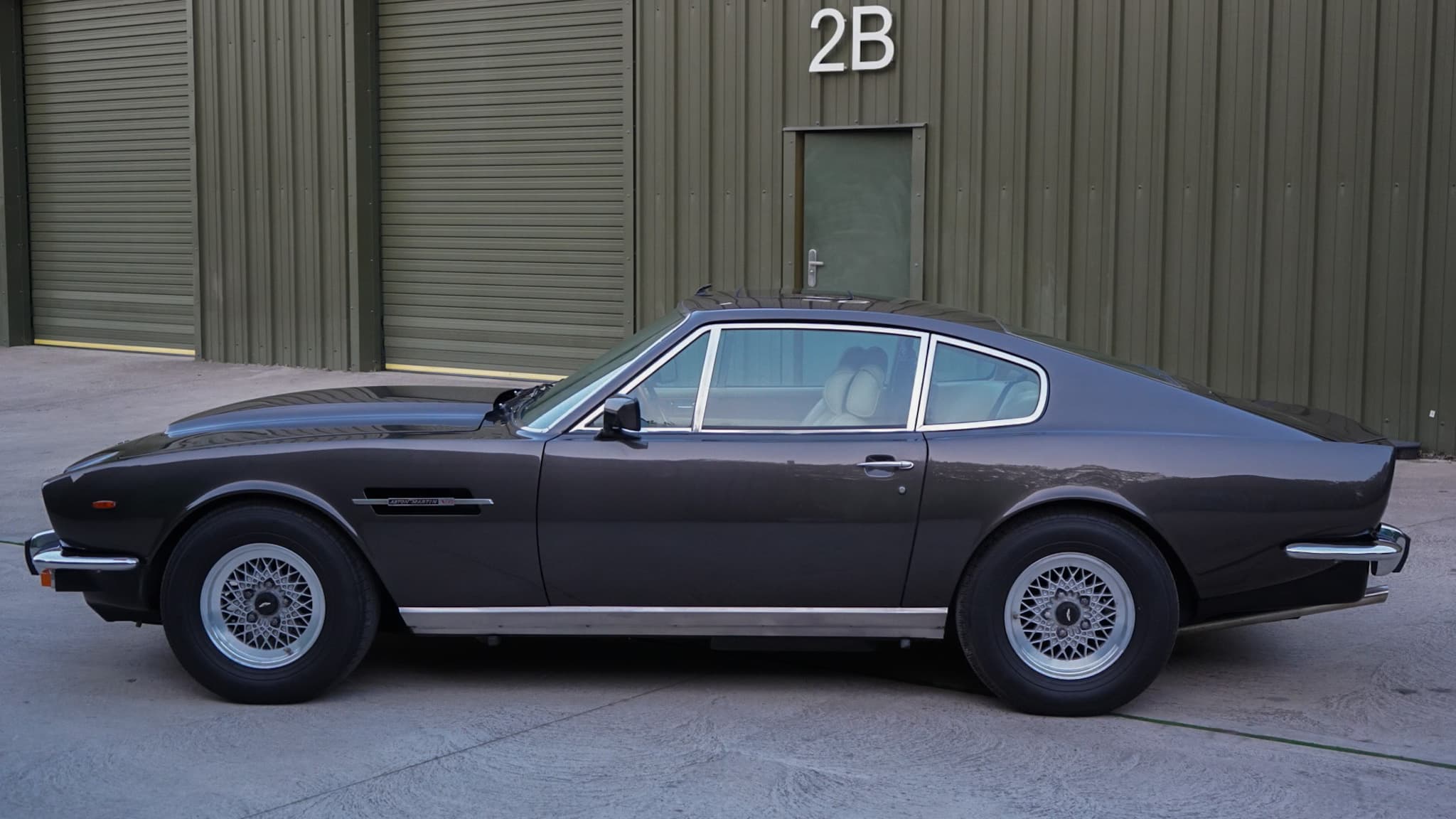
Aston Martin says BBS wheels replaced the earlier GKN alloys in 1983. The exact-model specialist identifies the later BBS cross-spoke wheels as 8 inches wide.
Wheel style is therefore a chronology clue, not an absolute identity test. Earlier cars naturally suit GKN alloys; later Series 4 cars should prompt a closer look at the BBS specification. Restorations, period upgrades and replacement wheels mean the current fitment still needs checking against the individual build record.
This is one of the areas where a neat one-line chronology is misleading, but the evidence now separates two different moments more clearly.
Aston Martin's own AMV8 history says Weber-Marelli fuel injection was adopted in 1985 on the later 585-engined cars. That remains the strongest evidence for the factory's technical-adoption year. The page does not, however, identify the first EFI production chassis, the first customer delivery or the exact completion date of the last carburettor saloon.
Specialist evidence narrows the customer-facing changeover. Nicholas Mee & Co says the V8 EFi was introduced in January 1986. Aston Engineering independently says the V8 EFI Saloon was first seen at the New York Motor Show on 25 January 1986 and describes production as running from 1986 to 1989. Aston Service Dorset's production sequence is consistent with that timing, grouping the carburettor Oscar India through January 1986 and the EFI cars from January 1986, beginning at chassis V8SCR 12500.
Taken together, the safest reading is 1985 for technical adoption and January 1986 for the EFi model's public/production introduction. That is more precise than treating the two dates as a simple contradiction, but it is still not factory-ledger proof of the exact final carburettor build date. A late-1985 or early-1986 car should therefore be identified from its build/chassis documentation, engine identity and the actual induction hardware rather than registration year alone.
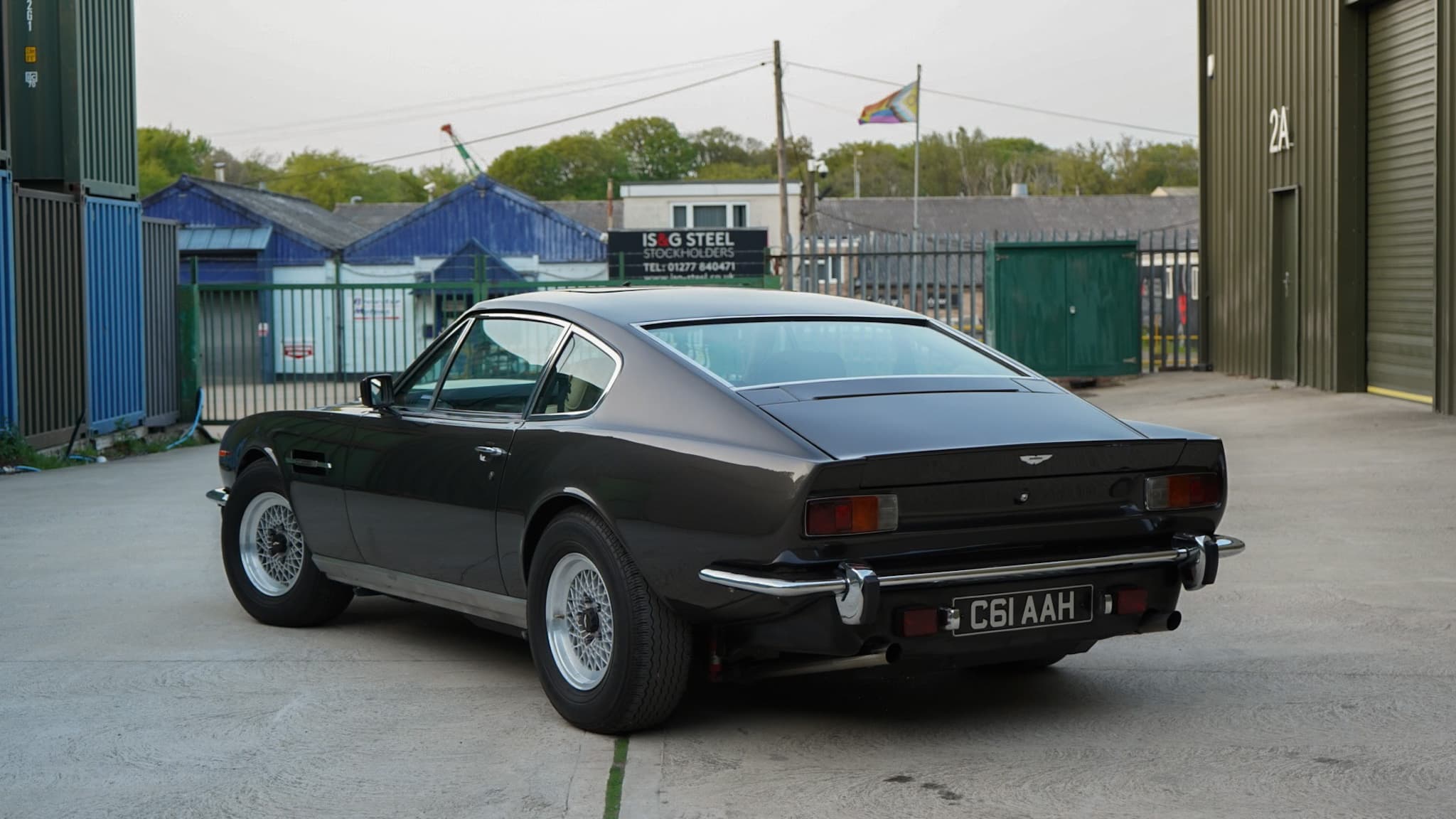
TMJC's own 1985 Aston Martin V8 Saloon Series 4 Oscar India is a late-period example. The current listing confirms a 5.34-litre V8, right-hand drive and automatic transmission, but it does not expose enough build data to make that individual car the production-changeover rule.
Aston Service Dorset's technical-publication index shows that proper model-family documentation exists. It lists the 43-26290 AMV8 Parts Catalogue, 95-43-123 Workshop Manual V8 Carburettor and 40-26322 Owners Handbook V8 580X & EFI, among other V8 publications.
That does not mean every claim on a used car can be answered from a generic handbook. It does mean a strong history file can contain much better evidence than a modern advert: original warranty/build material, the correct handbook, service records, engine/chassis documentation and invoices showing what was changed and why.
For an expensive, hand-built car that may have been restored more than once, documentary continuity is part of condition and originality.
These cars combine hand-crafted aluminium outer panels with a mild-steel structural platform. That construction is central to both their appeal and their restoration risk.
Aston Workshop's body specialists note that pre-DB7 Astons with mild-steel platforms eventually require corrosion attention. Autocar's V8 buying guidance points buyers towards the sills, floors, lower A- and B-posts, bulkhead, boot floor and inner door structures. Specialist restoration examples add outriggers, jacking points, inner wings and suspension-mounting areas to the list.
The aluminium skin creates a second issue. Corrosion can develop where aluminium and steel meet, and filler or cosmetic paint can hide much more expensive work underneath. A glossy exterior is not a substitute for inspection of the structure.
A proper pre-purchase inspection should therefore put the car on a lift and assess both the visible aluminium and the hidden steel, ideally with somebody who knows hand-built Newport Pagnell Astons.
The 5.34-litre V8 has a strong reputation when maintained correctly, but rebuilding one is expensive. Service history matters more than a low odometer reading in isolation.
On a carburettor Oscar India, the four Weber 42 DCNF carburettors need correct specialist setup. Poor idle or flat spots do not automatically condemn the engine, but they are a reason to assess carburettor condition, ignition, compression and general tune rather than accepting “they all do that”. Oil pressure, cooling-system condition, leaks and evidence of regular use should also form part of the inspection.
The 1982 ignition change is another reason to ask what has been replaced over the years. A later electronic-ignition conversion may be sensible, but it should be documented rather than presented as untouched factory specification.
Long storage deserves particular attention. A low-mileage car that has sat for years may need more recommissioning than a regularly exercised example with a larger number on the odometer.
Aston Martin's heritage specification lists ventilated discs front and rear on the saloon. The wider hand-built V8 family uses front independent suspension and a De Dion rear arrangement; age-related bushes, dampers, wheel bearings and suspension mounting areas should be checked carefully.
On the road, the car should feel like a substantial grand tourer rather than a loose old luxury car. Steering play, pulling under braking, driveline vibration, overheating or repeated knocks over bumps deserve investigation rather than being written off as period character.
Oscar India returned wood to the V8 cabin alongside extensive leather trim. Restoring that interior properly is costly. Check the condition and originality of the walnut, leather headlining, seats, carpets, instruments, switchgear, air-conditioning equipment and period audio installation.
Originality should still be judged intelligently. Many V8s have had sympathetic mechanical upgrades or major structural restorations. A documented, well-executed repair can be preferable to apparently untouched corrosion. What matters is that the car's current specification, factory specification and repair history are all understood.
Published totals still conflict.
AstonMartins.com gives 291 standard Oscar India saloons, and Aston Service Dorset also uses 291 for its carburettor Oscar India grouping. Other established sources have published 293 or 352. Aston Martin's current public AMV8 history does not state a production total.
Agreement on 291 from two sources does not explain why the other figures exist or whether their denominators differ. Until a factory ledger, Aston Martin Heritage Trust register or explicit marque record reconciles the totals, no one number should be presented as settled global production.
For a shorter explanation of the naming problem, see our Aston Martin V8 Oscar India identification guide.
Editorial information
Research and editorial from TMJC Garage.
Research and editorialTMJC Garage
Reviewed byMatt Johnston
Last reviewed26 October 2026
Published byThe Matt Johnston Collection
Model lineage
TMJC photography

TMJC Guides
TMJC assistance
Continue to the main TMJC website and speak directly with the collection team.
Sell, consign or source
Continue with TMJC for a discreet conversation, professional presentation and collector-focused support.
Enquire now