TMJC assistance
Want TMJC to help with this vehicle?
Sourcing, consignment and valuationContinue to the main TMJC website and speak directly with the collection team.
Model
The Aston Martin V8 evolved from DBS V8 in 1972 through carburettors, Vantage, Oscar India and fuel injection before the Virage handover.
Generation directory
Choose a V8 generation to see its production years, body styles, engines, chassis changes and variants.
TMJC guide
The Aston Martin V8 evolved from DBS V8 in 1972 through carburettors, Vantage, Oscar India and fuel injection before the Virage handover.
The classic Aston Martin V8, usually described by Aston Martin as the AMV8, ran through one of the longest and most changeable periods in the marque's history. Aston Martin's current model lineage places the AMV8 from 1972 to 1989.
There is no single “Aston Martin V8 specification” across that date range. The model began as a substantial evolution of the DBS V8, changed from fuel injection to carburettors, gained the separate V8 Vantage performance branch, added the Volante, went through the Oscar India body and interior update, returned to fuel injection near the end of the run and finally overlapped with the arrival of the Virage.
For a buyer or enthusiast, the first question is not simply “is it a V8?” but which V8, from which stage of the production life, and in which body and engine specification?
Aston Martin says the AMV8 emerged in 1972 after the sale of the company to Company Developments. Rather than starting with a completely unrelated car, the factory carried out a comprehensive facelift of the existing DBS V8.
The obvious visual changes included single headlamps and a revised front grille. Underneath, the car initially retained the Bosch mechanical fuel-injection system used on the DBS V8.
That makes the AMV8 best understood as the next major phase of Aston Martin's V8 grand tourer rather than a clean-sheet break. The shape, Newport Pagnell construction and 5.3-litre V8 lineage continued, while the details evolved repeatedly over the next 17 years.
The AMV8 name arrived in 1972, but its V8 engine family was already several years into development. Aston Martin credits Tadek Marek with the design and says the production V8 first appeared in the DBS V8, announced in September 1969 with 5,340 cc, four overhead camshafts and Bosch mechanical fuel injection. The factory says that engine became the basis of its powerplants for the following two decades.
Its development story goes back further. Aston Martin records two 5.0-litre versions of the V8 in Team Surtees Lola T70s at the 1967 Le Mans 24 Hours. The engines did not last, but the factory says the lessons from those failures led to major revisions before the production unit.
The 1972 AMV8 was not the first appearance of an entirely new engine. It inherited and then continued to develop the Marek V8 already used in DBS V8. It also explains why a single modern headline output figure should not be projected backwards across every DBS V8 and AMV8 phase.
A short chronology explains why specification tables for these cars so often disagree.
| Period | Factory-documented change | Why it matters |
|---|---|---|
| 1972 | DBS V8 evolves into AMV8 with single headlamps and revised grille | Start of the named AMV8 line |
| August 1973 | Four twin-choke Weber carburettors replace Bosch mechanical injection | Changes induction, bonnet shape and fuel-system specification |
| 1977 | Stage 1 engine changes on the standard AMV8 | Shows that even pre-Oscar-India cars were evolving |
| February 1977 | V8 Vantage announced | Creates a separate higher-performance branch |
| 1978 | Oscar India AMV8 and V8 Volante arrive | Major body/interior evolution and open-top derivative |
| Around 1978 | Engine-builder brass plate appears | Useful originality clue, but not an exact dating method |
| 1980 | 580-series engine changes | Further mechanical development |
| 1983 | BBS wheels replace GKN alloys | Useful date-sensitive originality clue |
| 1985 | Weber-Marelli fuel injection on later 585-engined cars | Final major AMV8 phase, with flatter bonnet treatment |
| 1988 | Virage debuts | Beginning of the successor generation while AMV8 remains in the lineage through 1989 |
A car from 1973 and one from 1985 can both be genuine Aston Martin V8s while differing in induction, bonnet treatment, wheels, engine specification and other details.
The first AMV8s retained Bosch mechanical fuel injection. Aston Martin records a major change in August 1973, when four twin-choke Weber carburettors replaced it.
That change affected more than fuelling. The carburettor air box required a larger bonnet bulge, and Aston Martin also redesigned the fuel tank to create more luggage space.
Visual clues need a date attached to them. A bonnet shape that is correct for one phase can be wrong for another, and a modern advert that simply says “5.3 V8” leaves out much of the identity information.
Aston Martin announced the V8 Vantage on 18 February 1977 as a distinct higher-performance derivative. The factory describes revised camshafts, larger inlet valves, different carburettor and manifold arrangements and aerodynamic changes.
Do not import the Vantage's headline performance figures into every V8. The standard car and the performance derivative are distinct.
A standard AMV8 and a V8 Vantage share the same broad family and went through some parallel evolutionary changes, but the names do not mean the same thing. A seller describing a car as “Oscar India” has not therefore proved that it is a Vantage.
The same caution applies in the other direction: a Vantage can belong to the Oscar India era because the high-performance derivative also evolved as the standard car changed.
For the terminology in more detail, see our Aston Martin V8 Oscar India guide.
Aston Martin calls the 1978 Oscar India AMV8 an evolutionary landmark. On the standard car it records three notable changes:
The same year also brought the V8 Volante, giving the long-running V8 family an open body style with a power-operated lined hood.
“Aston Martin V8” is therefore a family-level description. Saloon and Volante body details cannot be reduced to one universal set of dimensions or weight figures, just as the standard car and Vantage cannot share one universal output figure.
The Oscar India update did not freeze the car in 1978.
Aston Martin records further engine modifications in 1980 under the 580-series description. In 1983, BBS wheels replaced the earlier GKN alloys. Wheel style and engine identity only become meaningful when interpreted against build date.
Then, in 1985, Aston Martin adopted Weber-Marelli fuel injection on the later 585-engined cars. The factory notes that these cars were identifiable in part by a flatter bonnet line and calls them the final development of the model.
For cars registered around 1985 or 1986, registration date is useful context, but engine number, chassis/build record and surviving factory documentation are stronger evidence of what the car actually left Newport Pagnell as.
Both dates appear in credible sources, but they describe different points in the changeover. Aston Martin's own AMV8 history says Weber-Marelli fuel injection was adopted in 1985 and identifies the final cars as 585-engined. Aston Engineering, a marque specialist, says the V8 EFI saloon was first shown at the New York Motor Show on 25 January 1986 and describes production as running from 1986 to 1989.
The safest reading is not that one source must be wrong. Aston Martin's 1985 date is the manufacturer's model-evolution chronology; the specialist evidence gives the public introduction of the Series 5/EFI saloon in early 1986. Those are different milestones, and neither date is a safe shortcut for identifying an individual car.
For a late AMV8, check the engine number and prefix, actual fuel system, bonnet treatment and factory/build record. A 1985 registration alone does not prove a V/585 EFI specification, just as a later registration cannot prove that every fitted component remains original.
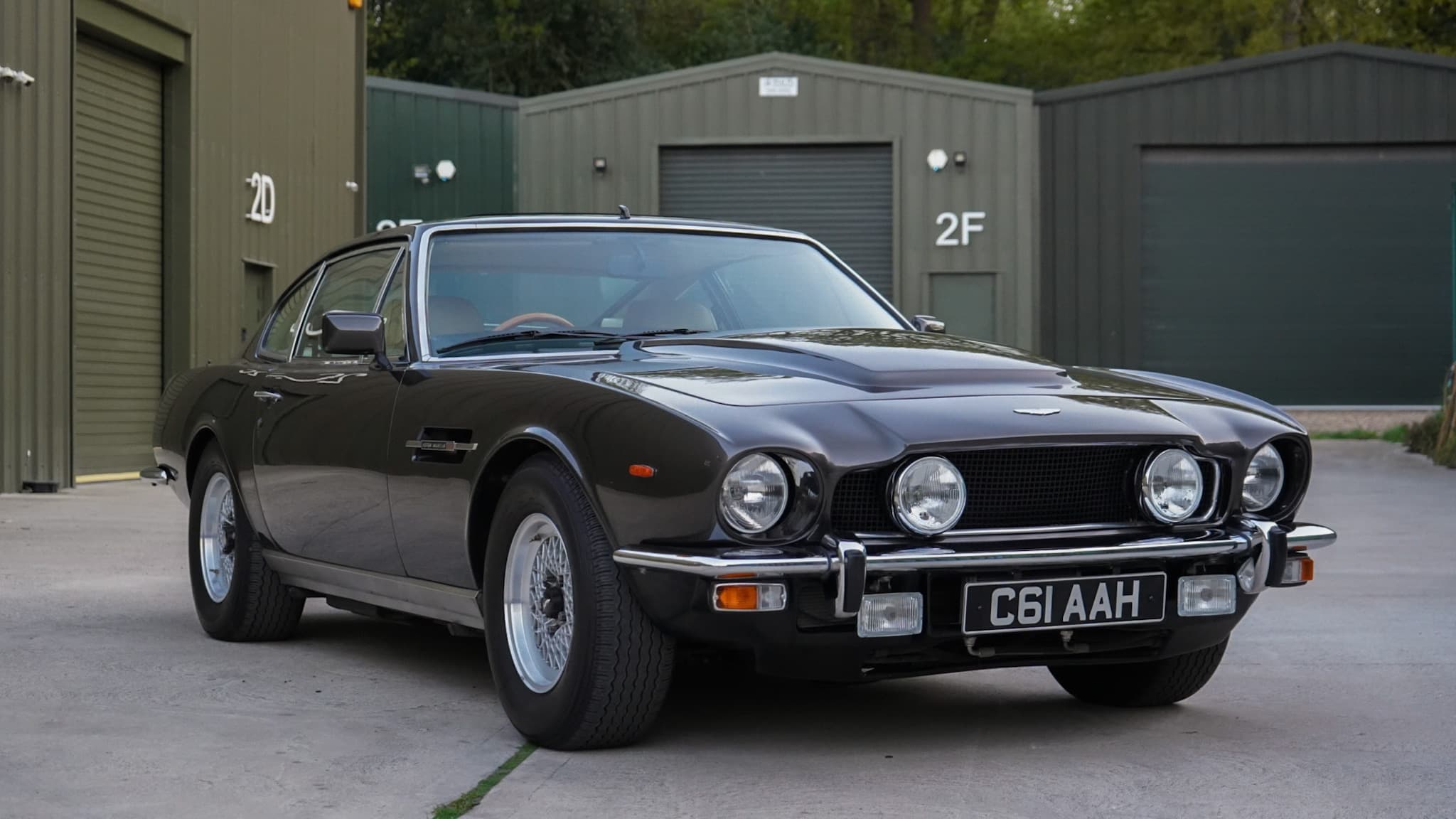
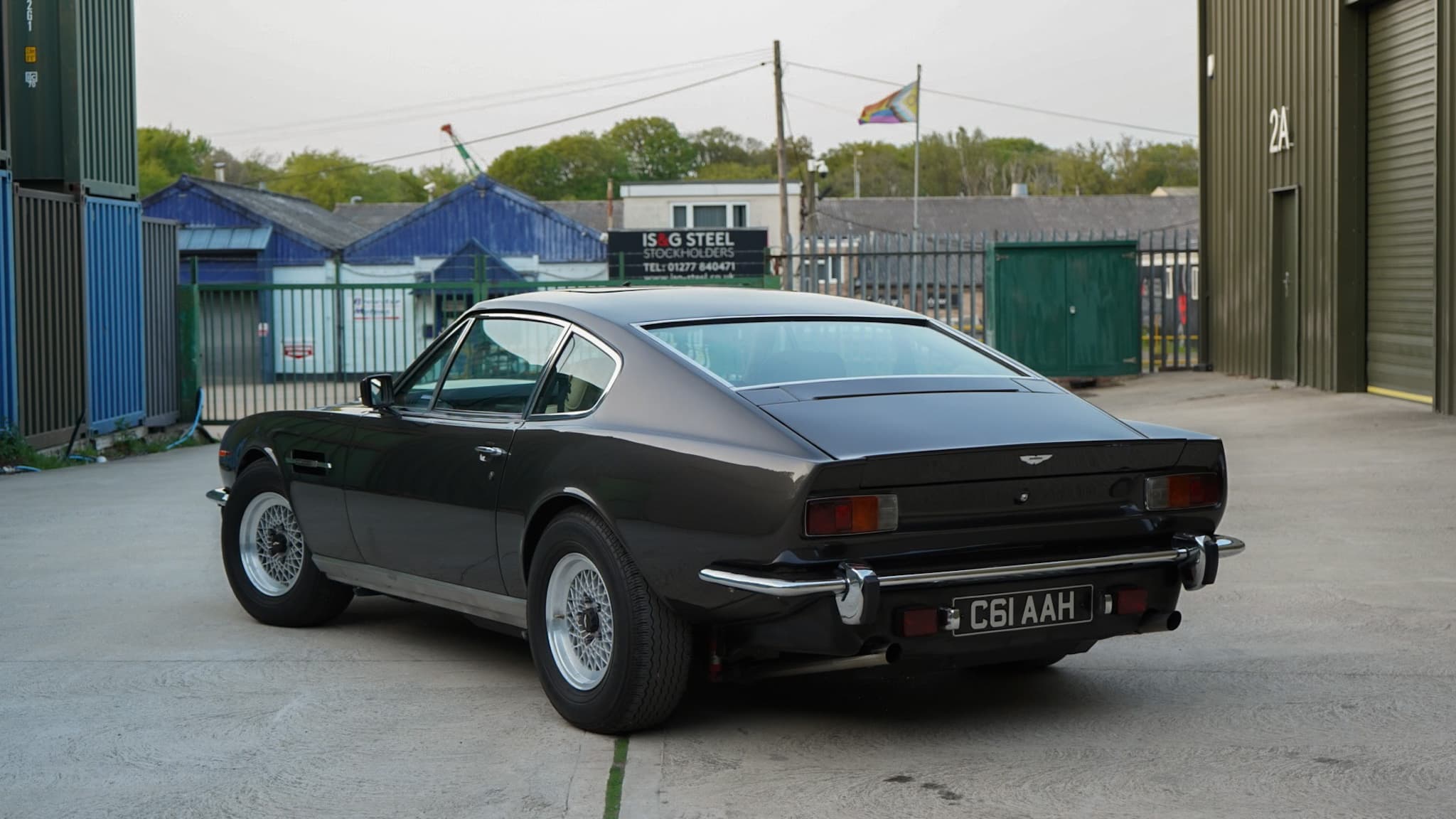
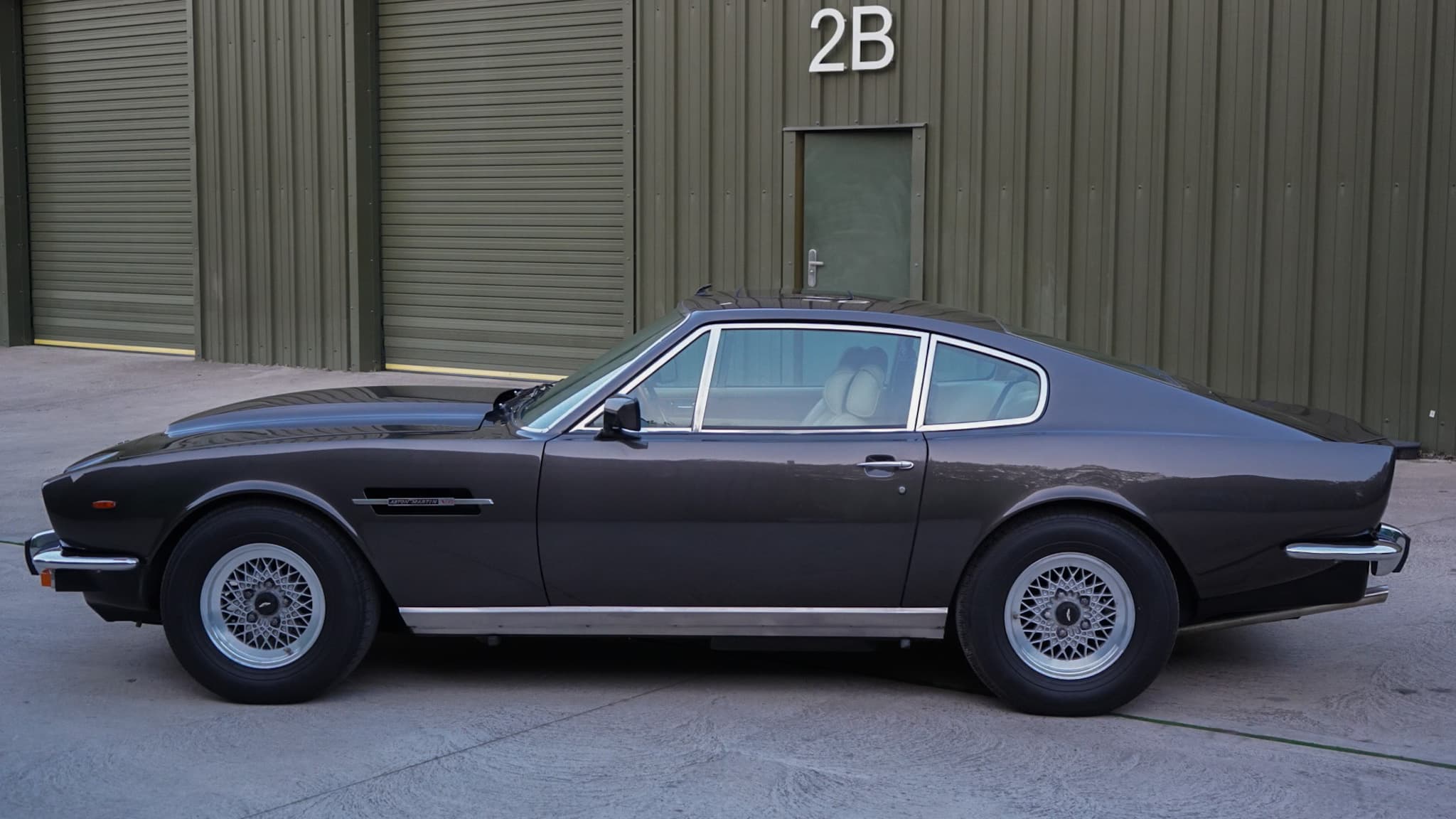
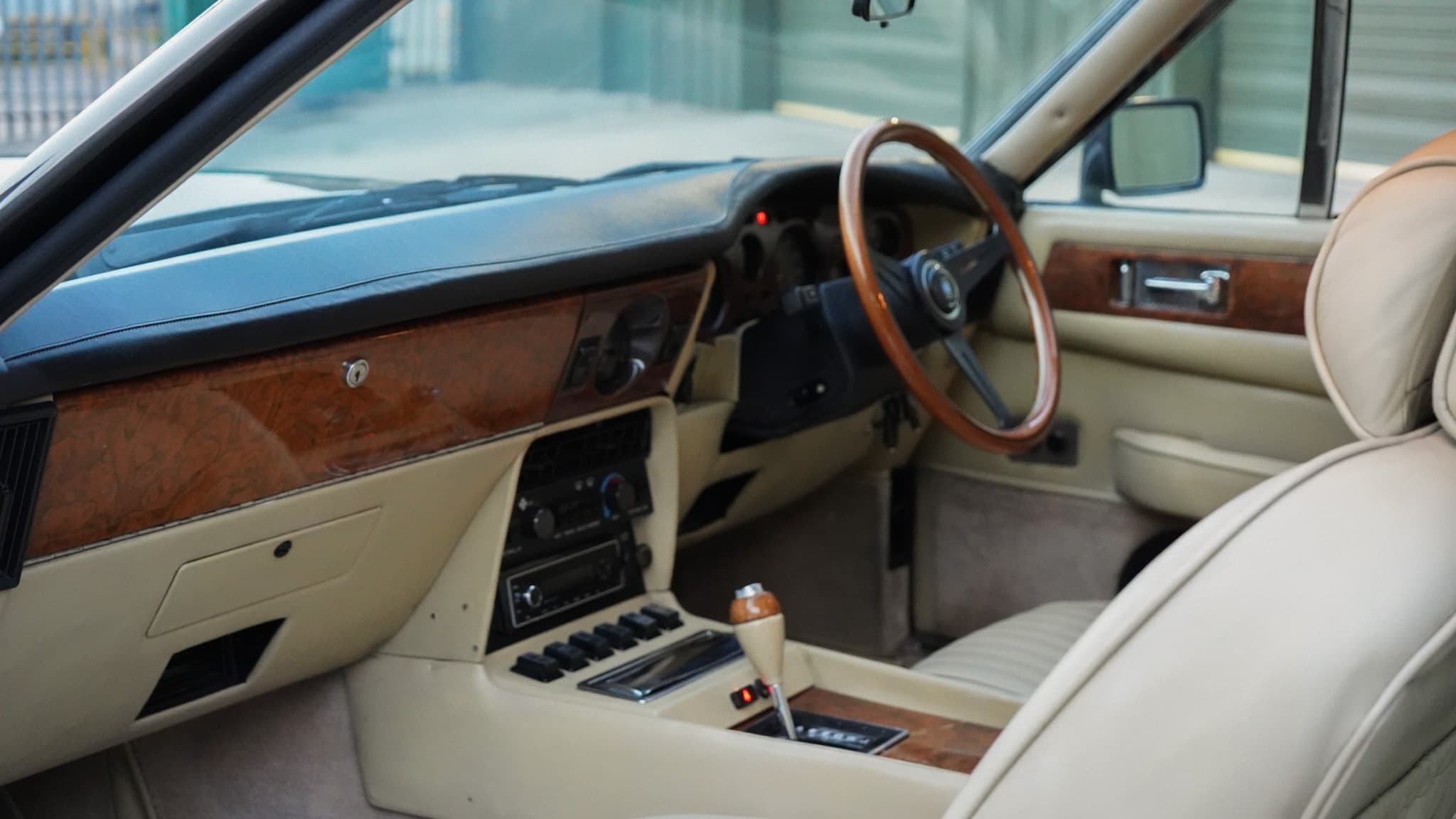
TMJC's own 1985 Series 4 Oscar India is a useful example of that boundary. Its first-party listing records the year, Series 4 identity, 5.34-litre V8, right-hand drive and automatic transmission, but it does not claim Weber-Marelli injection. The later EFI specification should therefore not be inferred from the registration year alone.
Aston Martin's current AMV8 heritage page lists 432 bhp at 6,000 rpm in its specification panel. Read on its own, that looks like a definitive figure for the model. It is not safe to use it that way.
The same factory page describes a car that changed repeatedly between 1972 and 1989: Bosch mechanical injection gave way to four twin-choke Weber carburettors in 1973, Stage 1 engine changes arrived in 1977, the 580-series followed in 1980 and Weber-Marelli injection appeared on the final 585-engined cars in 1985. Standard saloons, Volantes and the separate V8 Vantage branch did not all share one engine tune or one performance specification.
Aston Martin's own V8 Vantage history makes the distinction clearer. The factory says the 1977 Vantage received revised camshafts, air box, larger inlet valves and carburettors, inlet manifolds and different plugs, claiming 40% more power than the standard car. Its specification panel gives 380 bhp, a 170 mph top speed and 0-60 mph in 5.2 seconds. Those figures cannot simply be merged with the broad AMV8 panel and treated as one consistent specification set.
Specialist technical material adds another clue. AstonMartins.com describes the early Bosch-injected standard V8s as cars whose maximum output was not quoted at the time, with later estimates up to about 320 bhp. Its V8 Vantage Zagato specification gives 410 bhp in one form and 432 bhp only with 50 mm chokes, a big-bore airbox and exhausts.
| Reference | Figure | What it actually tells you |
|---|---|---|
| Aston Martin AMV8 heritage page | 432 bhp | A headline panel on a page covering the whole evolving AMV8 family; do not apply it automatically to every standard car. |
| Aston Martin V8 Vantage heritage page | 380 bhp | A factory reference figure for the separately developed Vantage performance branch. |
| AstonMartins.com early Bosch-injected V8 | up to about 320 bhp | A later specialist estimate for the 1972-73 standard fuel-injected phase, not a contemporary factory maximum-power claim. |
| AstonMartins.com V8 Vantage Zagato | 410 bhp; 432 bhp in the specified uprated form | Evidence that 432 bhp also belongs to a much more highly developed Vantage-family configuration. |
None of this proves that the 432 bhp figure on Aston Martin's AMV8 page is a typo, and it would be wrong to invent that explanation. It does show why even a manufacturer heritage page needs an applicability check when one specification box sits beneath nearly two decades of development.
For a particular car, start with the chassis/build record and engine number, then establish the engine series and tune, standard or Vantage identity, market/emissions specification and period. Only then is a horsepower figure meaningful. The same caution applies to torque, acceleration, top speed and kerb weight.
Aston Martin unveiled the V8 Virage at the 1988 Birmingham Motor Show. The factory describes it as quieter and more comfortable than the earlier V8s and as its first truly new Aston Martin in nearly 20 years.
Its engine was still developed from the established 5.3-litre V8, but new four-valve-per-cylinder cylinder heads were part of a substantially new package.
Aston Martin's model lineage lists the old AMV8 through 1989 and Virage from 1988, so the dates overlap. That is better read as a handover between generations than as a reason to force every surviving derivative into one precise replacement day.
For collectors, Virage marks a clear boundary: it closes the long chapter that began with the DBS V8/AMV8 shape and opens a new late-1980s Aston Martin generation.
Aston Martin says that from around 1978 each V8 engine carried a brass plate naming the engine builder. It is a particularly evocative reminder of how these low-volume engines were built, and on a surviving car it can be a useful originality and identification detail.
It should not be used as a precise dating shortcut. The factory itself says “around 1978”, not one exact chassis cut-off, and many cars have had engine work, replacement components or restoration since. A brass plate can support the story of an engine; it does not replace the chassis number, engine number, build record and documented history.
Start with hard identity evidence before using trim and styling clues.
This kind of verification matters because these cars have now lived through decades of repairs, restorations, engine work and changing fashions. A Vantage-style spoiler, later wheels or replacement engine may be obvious, or may be hidden inside an otherwise convincing car.
The AMV8 is a complex, low-volume grand tourer, so condition and history matter at least as much as a desirable label.
A pre-purchase inspection should look beyond whether an advert says Series 3, Series 4, Oscar India or Vantage. Check:
On a hand-built car, a thick history file is most useful when it proves specific work and identity rather than simply adding volume. Factory build information, period invoices and clearly documented engine/body work are more valuable than a modern description repeating a familiar model nickname.
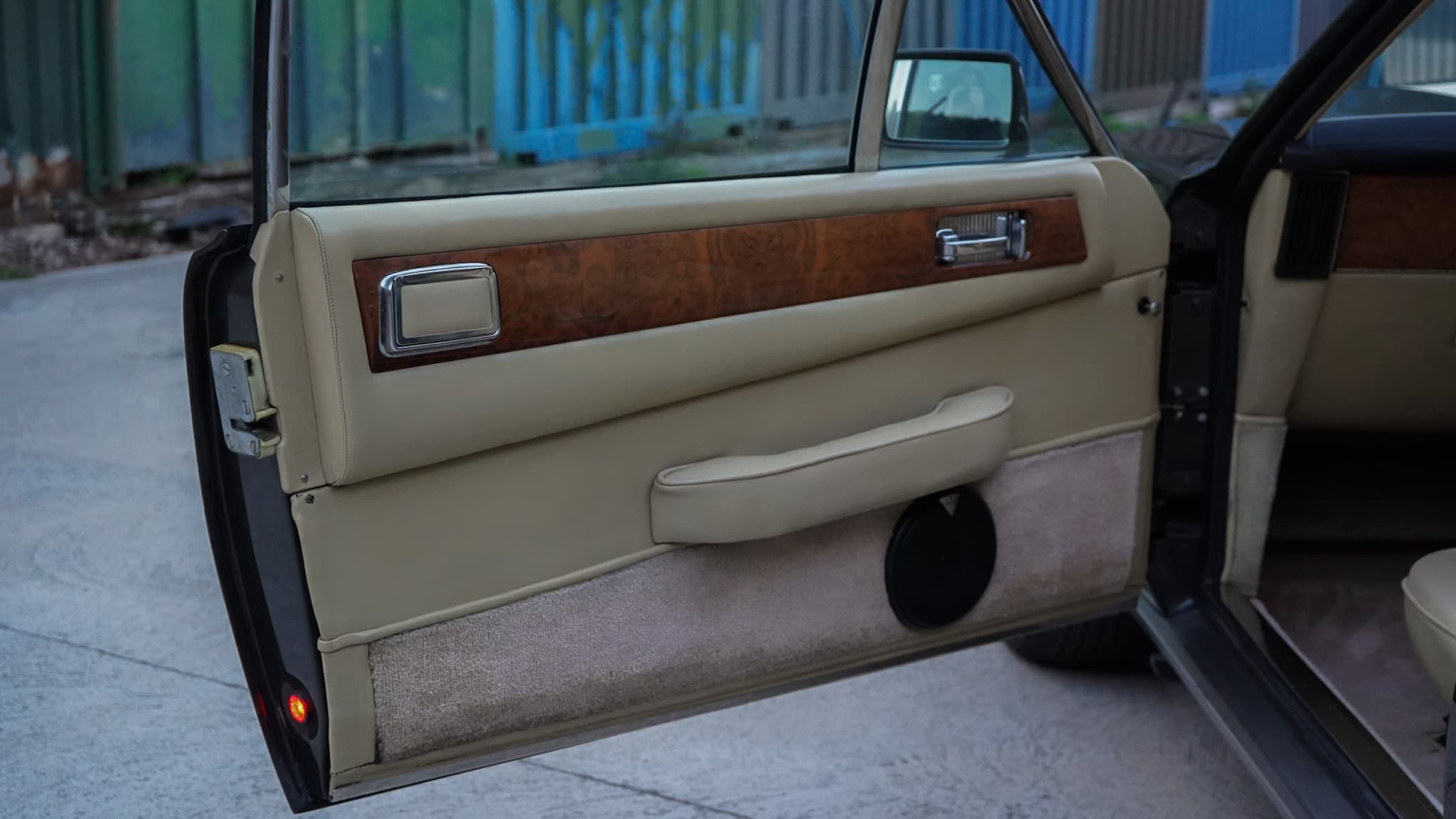
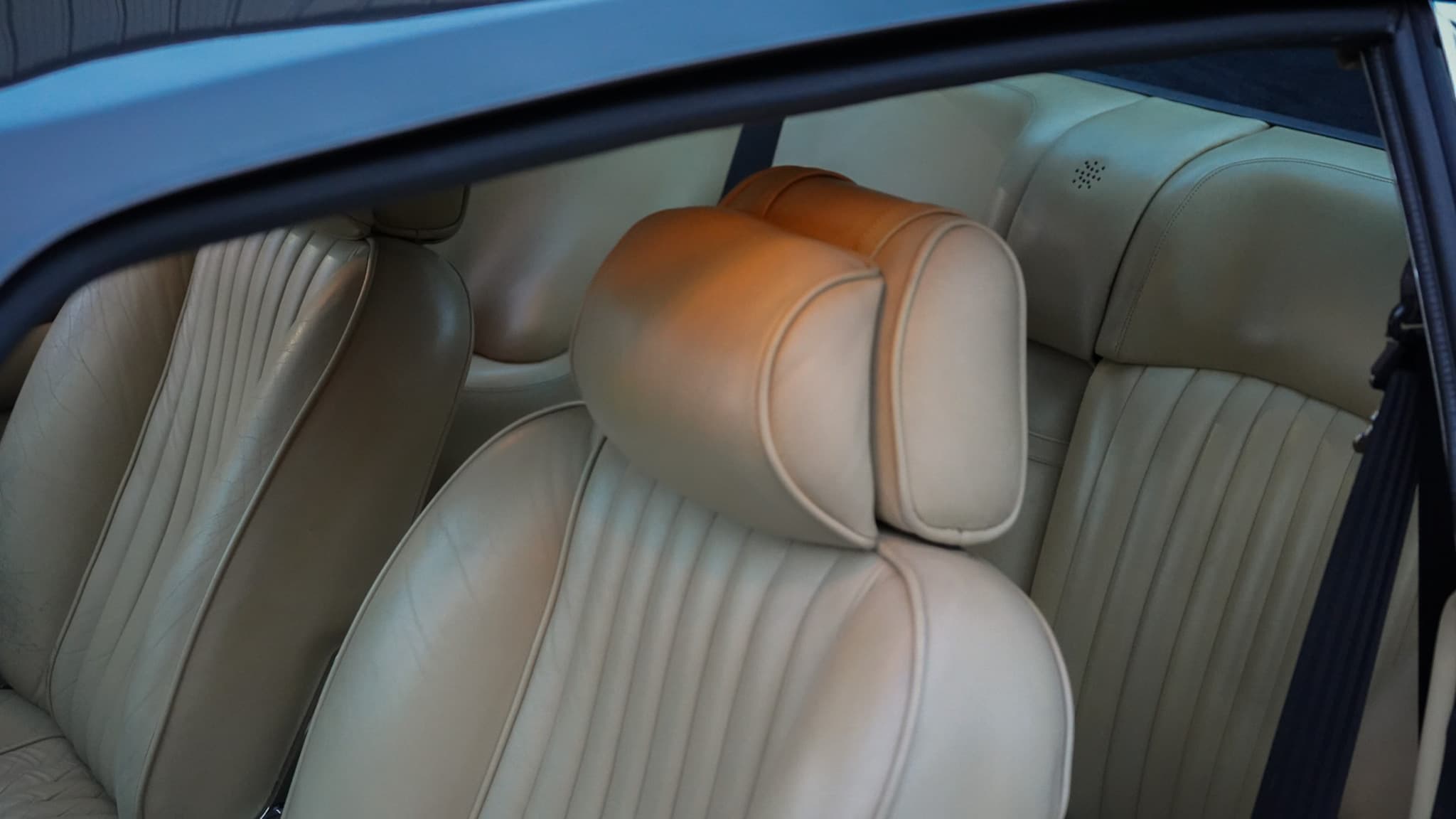
The Matt Johnston Collection has handled a 1985 Aston Martin V8 Saloon Series 4 Oscar India, recorded as a right-hand-drive automatic with the 5.34-litre V8.
That individual car sits late in the model's life, close to the period when Aston Martin was moving towards the final injected specification. It is also explicitly described as a V8 Saloon, not a Vantage, reinforcing the distinction between Oscar India-era specification and the separate performance derivative.
Those details should not be turned into universal model rules. The car's exact engine series, original wheel specification and factory options need its own build documentation. The broader lesson is simply that a 1985 V8 needs more precise identification than its registration year and badge alone provide.
The classic Aston Martin V8 was a 1972-1989 Newport Pagnell grand-touring family that evolved continuously from the DBS V8, spawning Volante and Vantage branches and passing through carburettor, Oscar India, V580, BBS-wheel and final fuel-injected phases before Virage took over the core role.
That long evolution is what makes the model interesting to collect—and why the best research is build-specific rather than based on one generic specification table.
Editorial information
Research and editorial from TMJC Garage.
Research and editorialTMJC Garage
Reviewed byMatt Johnston
Last reviewed18 September 2026
Published byThe Matt Johnston Collection
Model lineage
TMJC photography
TMJC Guides
TMJC assistance
Continue to the main TMJC website and speak directly with the collection team.
Sell, consign or source
Continue with TMJC for a discreet conversation, professional presentation and collector-focused support.
Enquire now