TMJC assistance
Want TMJC to help with this vehicle?
Sourcing, consignment and valuationContinue to the main TMJC website and speak directly with the collection team.
Generation
Aston Martin V8 Series 4 (Oscar India): 1978 changes, V540/V580 engines, BBS wheels, and how to identify the 1985-86 V585 fuel-injection transition.
Variant directory
Choose an exact Series 4 (Oscar India) derivative for engine, gearbox, performance, dimensions, equipment and buying-context detail.
TMJC guide
Aston Martin V8 Series 4 (Oscar India): 1978 changes, V540/V580 engines, BBS wheels, and how to identify the 1985-86 V585 fuel-injection transition.
The Aston Martin V8 Series 4, commonly known as Oscar India, is the major 1978-on development of the standard carburettor-fed V8 saloon. It sits inside the wider 1972-1989 Aston Martin V8 family, and it changed materially during its own production life.
Series 4 / Oscar India identifies an evolutionary phase of the standard V8; V8 Vantage identifies a separate high-performance derivative. The factory-documented Series 4 changes begin with the 1978 body and cabin update, followed by the V580 engine evolution in 1980, BBS wheels in 1983 and the transition towards Weber-Marelli fuel injection in 1985.
For the nickname, production-count dispute and the Series 4-versus-Vantage terminology in more detail, see our Aston Martin V8 Oscar India guide.
The standard saloon was hand-built and specification varied by engine series, emissions market and transmission, so a single universal performance figure would be misleading. The following is the strongest broad Series 4 baseline supported by the marque specialist record and Aston Martin's own model history.
| Area | Series 4 / Oscar India reference |
|---|---|
| Body | Two-door 2+2 V8 saloon/coupe |
| Construction | Steel platform chassis with hand-formed aluminium body panels |
| Engine | Front-mounted, all-alloy 90-degree V8 |
| Capacity | 5,340 cc |
| Bore x stroke | 100 x 85 mm |
| Valvetrain | Twin overhead camshafts per bank, two valves per cylinder |
| Engine series | V540 initially; V580 evolution from 1980 |
| Fuel system | Four Weber 42 DCNF downdraught carburettors on the carburettor Series 4 phase |
| Transmission | ZF five-speed manual or Chrysler/Torqueflite three-speed automatic |
| Wheels | GKN alloys initially; BBS cross-spokes from 1983 |
Compression ratio, output and performance should be tied to the exact engine series and market rather than copied from a single generic AMV8 specification table. Aston Martin's own heritage page spans several induction systems and stages of development, which is precisely why one headline output cannot safely describe every Series 4 car.
Aston Martin describes the 1978 Oscar India update as an evolutionary landmark in the AMV8's history. Three factory-documented changes help place a car in the chronology:
AstonMartins.com adds that the interior was comprehensively revised in the style of the recently introduced Volante, with walnut fascia and door cappings and extensive leather trim.
Those features are clues, not substitutes for identity evidence. Bonnet panels, spoilers, interiors and wheels can all be changed during restoration, so chassis number, engine number and factory build information remain more important than appearance alone.
The Series 4 retained Aston Martin's 5,340 cc all-alloy V8, but it was not mechanically static.
Specialist records identify the earlier Series 4 engine-series prefix as V540. Aston Martin then records a further set of engine modifications in 1980, known as the 580 series. AstonMartins.com describes the V580 programme as bringing changes to heads, valves, cam profiles, ports, pistons and compression ratio while helping rationalise components across Aston Martin Lagonda's contemporary V8 range.
That makes the engine number important when comparing two genuine Oscar India cars. The nickname alone does not establish whether a particular car is V540 or V580, and it does not justify applying one compression ratio or output figure across the entire run.
Aston Martin records a clear visual running change in 1983, when BBS wheels replaced the earlier GKN alloys.
Wheel style is date-sensitive originality evidence. GKN alloys are appropriate to earlier Series 4 cars, while BBS cross-spoke wheels are consistent with later production. A restored early car may have gained later wheels, so wheel style should support the build chronology rather than override it.
The same principle applies to other visible details: a convincing-looking component can still be a later replacement.
The V8 Volante arrived in 1978 as a separate convertible member of the AMV8 range, so a same-era Volante should not simply be assumed to be a roofless Series 4 saloon. Aston Martin's own history introduces the Volante separately in 1978, with a power-operated, fully lined hood.
The timing helps distinguish the Volante from the later Series 4 saloon. Specialist chronology places the Volante's unveiling in June 1978, several months before the Series 4/Oscar India saloon appeared in October. AstonMartins.com records that the Volante carried the closed-bonnet treatment and walnut veneers before those details moved to the saloon later that year.
Shared cues therefore need context. A V8 Volante and an Oscar India saloon can sit in the same wider V8 evolution and share V540/V580-era mechanical or trim changes, but body style and factory identity still need to be established separately. Classic & Sports Car also records later saloon-to-convertible conversions, another reason not to treat an open body by itself as proof of a factory Volante.
The V8 Vantage predates Oscar India. Aston Martin announced the Vantage on 18 February 1977 and describes specific performance changes including revised camshafts, air box, larger inlet valves, different carburettor and manifold arrangements and aerodynamic development.
When the standard V8 received the Oscar India body and trim evolution in 1978, the Vantage evolved in parallel. That is why an Oscar India-era Vantage can exist without making the words Oscar India and Vantage interchangeable.
For a standard Series 4 car, an advert or auction description using the Oscar India name has therefore not proved Vantage specification. Verify the chassis identity and build record before relying on later badges, spoilers or sales copy.
Aston Martin's own history says Weber-Marelli fuel injection was adopted in 1985 and identifies the resulting cars as 585-engined final developments with a flat bonnet line. That is strong factory evidence for when the engineering change entered the model story, but Aston Martin's current history does not give a finished-car chassis cutoff.
Aston Service Dorset supplies the more granular production sequence. Its AMV8 reference places the carburettor Oscar India saloon from October 1978 to January 1986, with chassis numbers V8SOR 12032 through V8SOR 12499. It then starts the EFI Oscar India sequence in January 1986 at `V8SCR 12500`, continuing later with V8VKR numbers.
Those two dates should not be flattened into a false contradiction. The factory history records fuel injection as a 1985 adoption; the specialist production sequence places the identifiable saloon-series break in January 1986. Without a factory build ledger that explicitly reconciles the two, this page keeps both scopes visible rather than declaring that one source is wrong.
For a late car, check the evidence in this order:
Do not reduce the changeover to “1985 means carburettors, 1986 means injection.” Identify a car near the boundary from its build evidence and hardware, with registration date treated as secondary context.
On a late Series 4 car, the paperwork can help corroborate whether the specification makes sense — but a handbook on its own is not proof of how the car left Newport Pagnell.
Current technical-publication listings make the carburettor/EFI distinction unusually visible. Aston Service Dorset lists separate workshop manuals for the V8 carburettor and V8 fuel-injection cars, and lists owner handbook 40-26322 for the V8 580X and EFI applications. Aston Store's current genuine OEM replacement-handbook catalogue also separates its AMV8 handbook offering from part 40-26322, which it lists for EFI, V8 Vantage and 580X applications.
In an old history file, handbook and manual references can help, but they need the right evidential weight. Replacement handbooks can still be bought today, so finding one in the glovebox does not prove it was supplied with that chassis when new. Equally, a missing or later replacement booklet does not make an otherwise well-documented car incorrect.
Aston Martin Works reinforces the mechanical distinction in a different way: its current heritage-servicing menu has separate service scopes for carburettor and EFI AMV8 Saloon/Volante/Lagonda cars. For a buyer, that means invoices and maintenance descriptions should be read against the car's actual induction system rather than treated as generic AMV8 paperwork.
The sensible evidence order is:
This does not settle the exact factory V580/V585 chassis transition by itself. It does, however, give a late-Series-4 buyer a more reliable way to judge whether the documentary trail is internally consistent.
The Series 4 remained a traditional front-engined, rear-wheel-drive Aston Martin grand tourer built around a steel platform chassis with aluminium outer bodywork. That mixed construction is important to ownership because cosmetic panel condition does not by itself reveal the state of the structure beneath.
The broad transmission choice comprised the ZF five-speed manual and Chrysler/Torqueflite three-speed automatic. Individual-car originality still needs documentary verification: after decades of maintenance and restoration, the gearbox fitted today may not necessarily be the unit recorded when the car was built.
Likewise, the standard saloon's specification must not be confused with the separate Vantage tune. Where power, torque, compression ratio or performance matters to a particular purchase, use build-specific factory or marque documentation rather than a generic internet specification.
A robust identification check should combine documentation with the date-sensitive physical clues:
A factory build record is stronger evidence than a modern advert title. The closer a car sits to a running-change boundary, the more important that becomes.
Originality is only one part of the purchase decision. Classic & Sports Car's specialist V8/Vantage buying guidance highlights the cost and complexity of neglected mechanical and structural work, while Aston Martin's hand-built construction makes a knowledgeable pre-purchase inspection especially valuable.
Important areas include:
A high-quality restored car does not have to be untouched to be desirable. The important question is whether its current specification is understood and represented accurately.
Published Series 4 / Oscar India saloon totals conflict. AstonMartins.com gives 291, Aston Workshop has published both 291 and 293, and Car Collector International gives 352. Aston Martin's current AMV8 heritage page does not publish a Series 4 total.
Without a factory ledger, Heritage Trust record or sufficiently explicit marque register reconciling what each figure counts, this page does not present a precise production total as settled fact. The Oscar India terminology guide covers that evidence conflict in more detail.
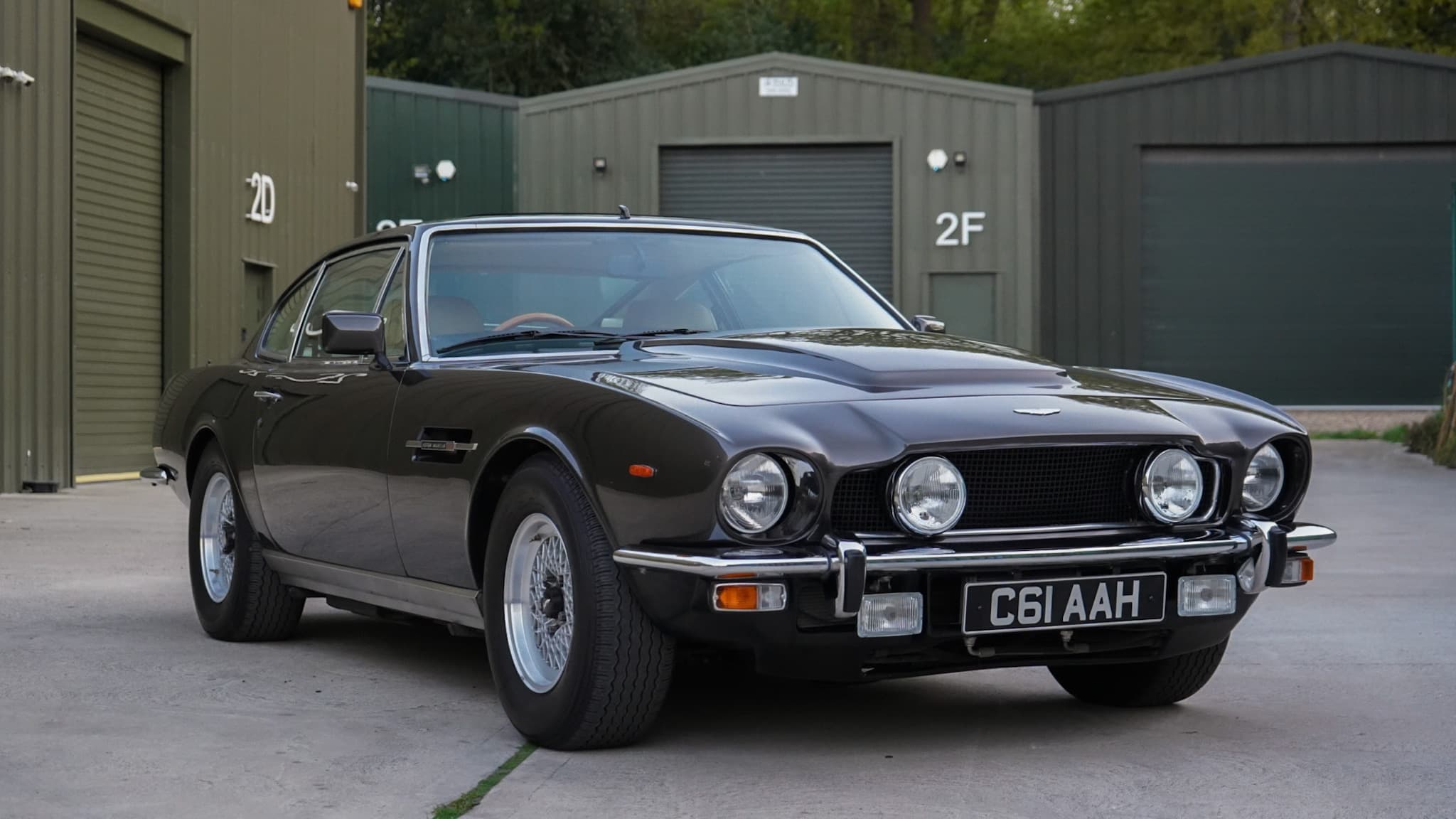
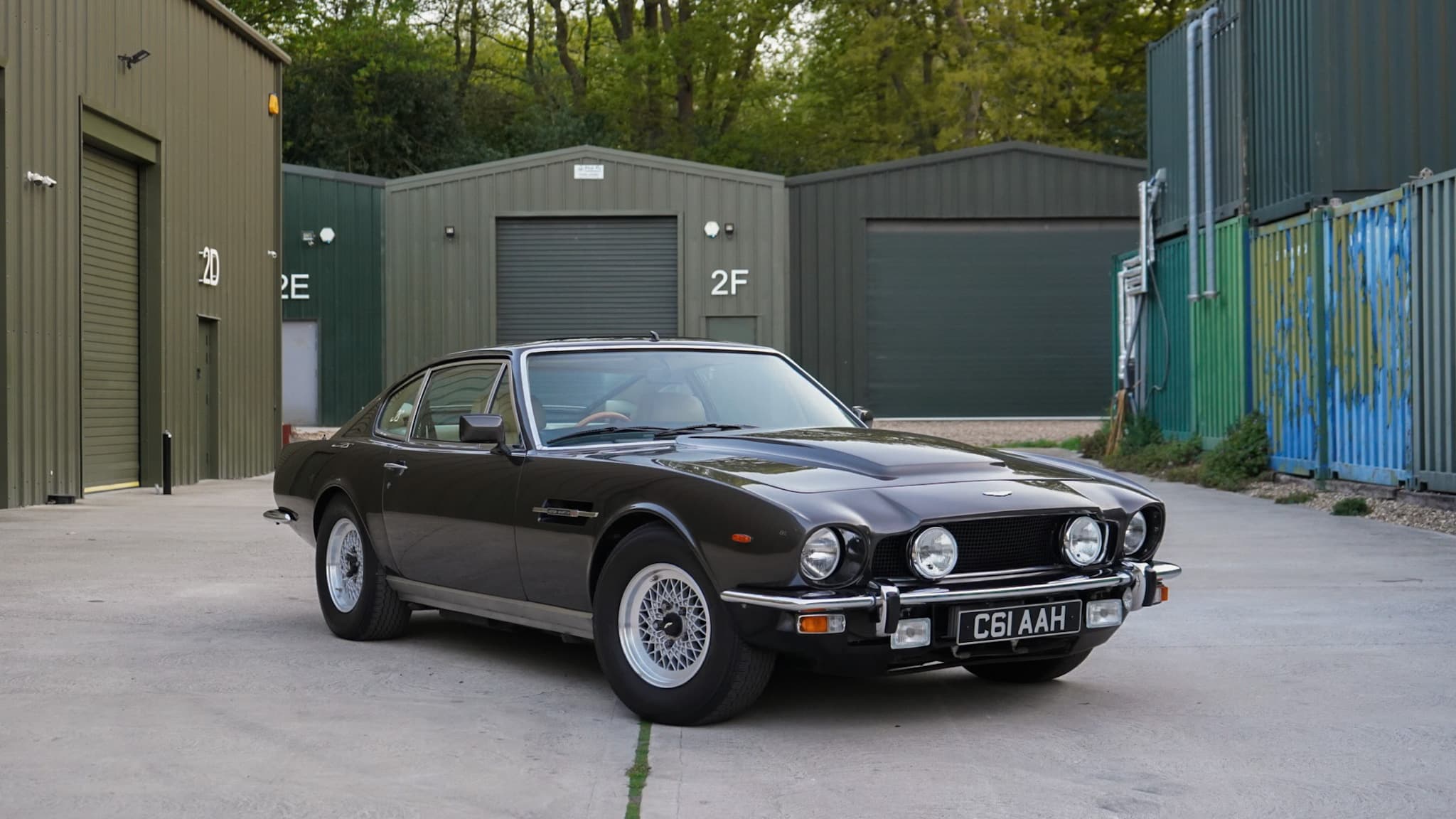
The Matt Johnston Collection has handled a 1985 Aston Martin V8 Saloon Series 4 Oscar India, recorded on the surviving first-party listing as right-hand drive, automatic and fitted with the 5.34-litre V8.
The car sits close to the transition into the final fuel-injected AMV8 phase. The listing does not establish its exact V540/V580/585 engine identity, original wheel specification or complete option list, so those details should come from the individual car's chassis/build documentation rather than being inferred from its registration year.
For the wider model family and its 1972-1989 development, see the Aston Martin V8 model history.
Editorial information
Research and editorial from TMJC Garage.
Research and editorialTMJC Garage
Reviewed byMatt Johnston
Last reviewed26 October 2026
Published byThe Matt Johnston Collection
Model lineage
TMJC Guides
TMJC assistance
Continue to the main TMJC website and speak directly with the collection team.
Sell, consign or source
Continue with TMJC for a discreet conversation, professional presentation and collector-focused support.
Enquire now