Published guide
Replacement engine V5C: DVLA, mileage and paperwork explained
What UK buyers and owners should check after an engine replacement: V5C details, engine numbers, DVLA evidence, mileage and provenance.
Overview
What UK buyers and owners should check after an engine replacement: V5C details, engine numbers, DVLA evidence, mileage and provenance.
Replacing an engine can be anything from a routine like-for-like repair to a major change in a classic car's specification. The phrase replacement engine can describe very different histories, so the evidence matters more than the label.
For a UK-registered car, there are two separate questions:
- Are the vehicle's current registration details correct?
- Can the history explain what engine is fitted, when it was installed and what has happened since?
Current DVLA guidance is clear that the V5C needs updating when the engine, cylinder capacity or fuel type changes. A change of engine number or capacity also needs supporting evidence. That is the registration side of the problem.
The collector-car side goes further. A correctly updated V5C does not prove that an engine is factory-original, does not establish its mileage and does not tell you whether the installation was done well. Those questions live in the invoices, engine number, vehicle history and the car itself.
What do you need to tell DVLA after an engine replacement?
GOV.UK lists the engine, cylinder capacity (cc) and fuel type among the vehicle details that must be updated on a V5C when they change. DVLA's current INF318 guidance also gives replacing the engine as an example of a change that can affect information shown on the V5C.
Even a mechanically straightforward engine swap can change the recorded details. A like-for-like engine may retain the same capacity and fuel type but have a different engine number. A different engine can also change the capacity, fuel type or both.
The current process is to update the relevant vehicle-detail section of the V5C and send the necessary evidence to DVLA. DVLA may confirm the change or tell the keeper that an inspection is needed. The process and evidence requirements can change, so anyone actually submitting an update should check the current GOV.UK pages rather than relying on an old forum post or a restoration invoice from years ago.
What evidence does DVLA accept for an engine-number or capacity change?
For a change of engine number or cylinder capacity, GOV.UK currently says to provide one of the following:
- a receipt for the replacement engine that includes its engine number and cylinder capacity;
- written evidence from the manufacturer;
- an inspection report provided for insurance purposes;
- written confirmation on headed paper from a garage, where the change happened before the present keeper bought the vehicle.
The same list also shows a buyer what strong replacement-engine provenance looks like.
A receipt that says only “engine supplied” is better than nothing. A record that identifies the engine number, capacity, date, vehicle mileage and the garage or manufacturer that carried out the work is stronger because it joins the replacement component to the car and to a point in its history.
If the fuel type has changed, GOV.UK asks for specific supporting evidence for that change as well.
Does a replacement engine reset a car's mileage?
An engine replacement does not reset the whole vehicle to zero miles.
There are at least three different figures to keep separate:
| Figure | What it describes |
|---|---|
| Vehicle mileage | The car's odometer/history as a complete vehicle |
| Mileage at engine replacement | The point in the vehicle's life when the engine was changed |
| Replacement-engine use | The miles covered by that engine since installation, if the chronology supports calculating it |
The distinction sounds obvious, but advertisements regularly blur it.
If an engine was fitted when a car had 58,112 miles and the car later shows 127,400 miles, you can say the replacement engine has covered roughly 69,000 vehicle miles since installation. That does not make the complete car a 69,000-mile vehicle. The body, chassis, suspension, steering, interior, electrical system and the rest of the car have their own histories.
On older classics, even the whole-vehicle mileage can be uncertain because of five-digit odometers, instrument changes or gaps in old records. The answer is better provenance, not more confident arithmetic.
A TMJC example: OV12EXO and component mileage
A TMJC dealer listing for Land Rover Defender 110 XS 2.2 TDCi OV12EXO shows the distinction clearly because the replacement work was substantial.
The advert records the Defender at 127,400 miles and says Land Rover replaced the engine, clutch, turbo, injectors and related components under warranty when the vehicle had 58,112 miles. It then describes the refreshed running gear as having roughly 69,000 miles of use.
That history does not make the Defender a 69,000-mile car. It means several expensive components were reportedly renewed at a known point in the vehicle's mileage history.
For a buyer, the next evidence to ask for would be the underlying Land Rover warranty job record. Ideally it would identify the replacement engine, its number, the date and vehicle mileage, and exactly which associated parts were changed. The seller's account is provenance; the original workshop record would make the chronology much stronger.
The same listing also records a later remap and uprated intercooler. Those are separate modifications and should not be used to infer what DVLA, an insurer or the factory recorded about the replacement engine without the relevant documents.
A different TMJC example: the 2.9-litre TVR 280i
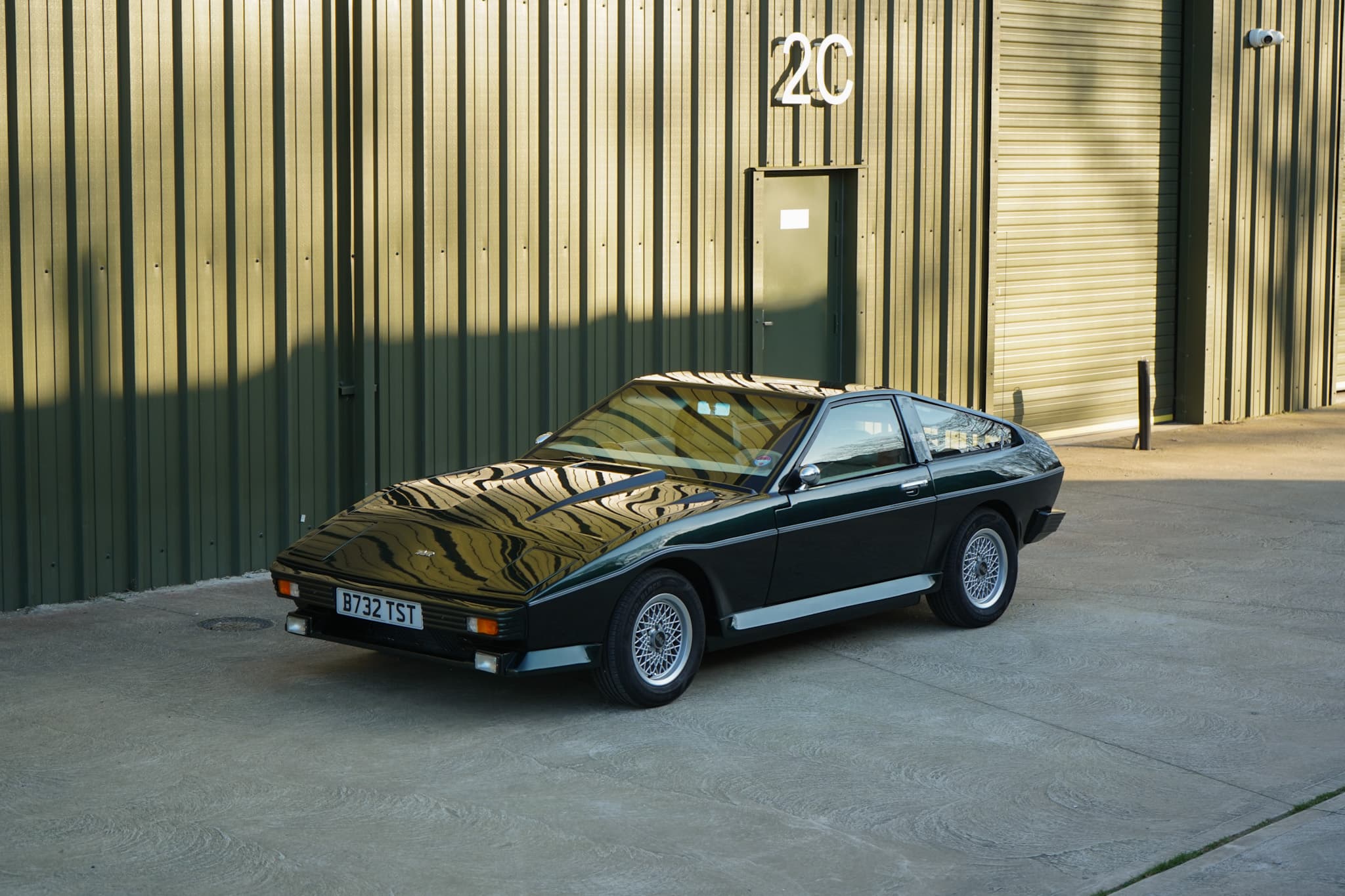
TMJC's current 1985 TVR 280i Coupe shows the other end of the spectrum.
The page records the model's original configuration as a 2.8-litre Ford Cologne V6 with a five-speed manual gearbox. It says this individual car received a later 2.9-litre Cologne V6 from a TVR 290S during its documented restoration, and the current vehicle page displays 2933 cc.
That is more than a hidden engine-number change. The installed engine is described as a different capacity and later specification.
For a buyer, the file should bring four things into agreement:
- the engine actually fitted to the car;
- its engine number and capacity;
- the restoration/installation paperwork;
- the current V5C details.
The replacement does not make the car stop being a 280i. Equally, the fact that the car remains a 280i does not make the 2.9-litre engine factory-original. Model identity, current specification and originality are related questions, not synonyms.
What does a correct V5C actually prove?
A coherent current V5C is important, but it should be read narrowly.
It is evidence of the vehicle details held by DVLA. If its engine/capacity/fuel information agrees with the car and the supporting history, that removes one obvious inconsistency.
It does not, on its own, prove:
- that the engine is the one installed when the car was built;
- when the replacement took place;
- how many miles the replacement engine had covered before installation, if it was used;
- how many miles it has covered since installation;
- that the installation is mechanically sound;
- that a claimed manufacturer or dealer replacement really happened;
- that the car is “matching numbers”.
On a collector car, a documented replacement engine can make the car non-original in one sense while also making its history easier to understand and verify.
For the wider paperwork framework, see our classic-car provenance checklist. For the narrower originality term, see matching numbers explained.
Like-for-like replacement versus a different engine
Start by identifying what sort of replacement actually happened.
Like-for-like engine
The replacement may be the same engine family, fuel type and capacity as the original but carry a different engine number. That can still create a V5C update/evidence question because DVLA's current evidence page expressly addresses changes to the engine number.
For collector purposes, “same type” also does not mean “original engine”. A documented correct-type replacement should be described as exactly that.
Different capacity or specification
If the replacement changes capacity — as with the TMJC 280i's described move from 2.8 to 2.9 litres — the discrepancy is easier to spot because the V5C capacity should make sense alongside the engine and invoices.
A change in fuel type is separately notifiable. Larger conversions can also raise emissions, approval, tax, insurance or structural questions outside the scope of this Guide.
The mistake is to jump straight from “different engine” to a reconstructed-car or Q-registration conclusion. DVLA treats chassis, structural modifications, kit conversions and reconstructed vehicles through their own current processes. If an engine replacement is part of a much larger rebuild, assess that wider work under the relevant guidance; do not infer it from the engine alone.
What should a buyer ask for?
A strong replacement-engine file should let you reconstruct the chronology without guesswork.
| Check | What you want to establish |
|---|---|
| Current V5C | Engine/capacity/fuel details are coherent with the car |
| Engine number | The number actually fitted can be read and tied to the paperwork where applicable |
| Engine receipt or warranty record | Source, engine number, capacity and replacement scope |
| Installation invoice | Who fitted it, when and why |
| Mileage at installation | The point in the vehicle's history when the replacement happened |
| Later service history | Continuity after the replacement |
| Manufacturer/dealer confirmation | Strong support where a factory/dealer replacement is claimed |
| Physical inspection | Installation quality, leaks, wiring, cooling, mounts and ancillary condition |
Not every old car will have every document. The point is not to fail any car with an incomplete file. It is to describe what is known at the level of confidence the evidence deserves.
What if the engine number or V5C does not match?
A mismatch is a question to investigate, not a complete history in itself.
Possible explanations include a legitimate engine replacement that was never reflected correctly in the paperwork, a transcription/data error, a replacement carried out before the present owner acquired the car, or a more complicated history that needs proper investigation.
Current GOV.UK guidance includes a route for a change that happened before the present keeper bought the vehicle: written confirmation on headed paper from a garage is one of the listed evidence options for an engine-number/capacity change.
Do not fill the documentary gap with a story. Check the number on the engine, compare the V5C, inspect the old invoices and ask the seller for the strongest source behind the replacement claim.
An unreadable or deliberately removed number deserves more scrutiny, but it still does not justify inventing why it is missing.
Replacement engine and originality
Collectors sometimes treat “original engine” and “good engine” as if they mean the same thing. They do not.
An original factory engine can be worn, undocumented or poorly rebuilt. A replacement can be the correct type, professionally installed and supported by an excellent history. A different-capacity upgrade can be mechanically desirable but clearly non-original.
Use precise language:
- factory-original engine — supported as the unit originally installed in the car;
- correct-type replacement — replacement unit of the appropriate type/specification;
- documented replacement — replacement supported by records;
- period replacement — replacement carried out during an earlier period in the car's life;
- upgraded/different-specification engine — current engine deliberately differs from factory specification.
Those descriptions tell a buyer much more than simply calling every replacement “non-matching”.
Does a replacement engine change the identity of the car?
For the normal engine-replacement question, start with the vehicle's existing VIN/chassis identity and the V5C detail-change process. Do not treat the engine number as though it is the VIN.
Current DVLA guidance has separate rules for chassis replacement, structural modification, kit conversion and reconstructed vehicles. Those categories can have identity and registration consequences, but they are different questions.
A car can therefore retain its underlying vehicle identity while having a documented replacement engine. The TVR example makes that distinction particularly clear: it can remain a 1985 280i while its current engine is a later 2.9-litre Cologne V6.
If a car has also had major chassis, bodyshell or reconstruction work, assess that evidence separately under the current DVLA guidance rather than assuming the engine swap answers the entire identity question.
A simple evidence order
When viewing a car with a replacement engine, work from the hardest evidence outward:
- Confirm the vehicle identity. VIN/chassis and current V5C should be coherent.
- Identify the engine actually fitted. Read the engine number where accessible and establish type/capacity.
- Find the replacement record. Receipt, manufacturer record, warranty job or garage confirmation.
- Pin the work to a date and vehicle mileage. This is what makes later component-mileage claims meaningful.
- Check the V5C details. Current engine/capacity/fuel information should make sense.
- Read forward through the service history. Look for continuity after installation.
- Inspect the work. Documentation cannot prove mechanical quality.
- Then read the advert language. It should summarise the evidence, not replace it.
That process works whether the replacement was an unremarkable warranty engine or a deliberate upgrade during a restoration.
Current UK sources
DVLA guidance changes, so check the current pages before submitting paperwork:
- GOV.UK — When you need to update your V5C
- GOV.UK — What evidence to give for a V5C change
- GOV.UK — How to update your V5C
- DVLA — INF318: repaired, restored and modified vehicles
The registration question is ultimately simple: make the recorded details match the vehicle and keep evidence strong enough to explain how they changed. The collector question is more interesting: make sure the paperwork tells the same story as the engine in front of you.
Related car
Cars covered in this guide
Explore the cars this guide covers, with model information, history and related TMJC guidance.
 280i
Provenance
280i
ResearchExplore model details, specifications, history and related guidance for TVR 280i.
Provenance
110 XS 2.2 TDCi
ResearchExplore model details, specifications, history and related guidance for Land Rover Defender L316 110 XS 2.2 TDCi.
Editorial information
The Matt Johnston Collection
Research and editorial from TMJC Garage.
Research and editorialTMJC Garage
Reviewed byMatt Johnston
Last reviewed20 September 2026
Published byThe Matt Johnston Collection