Published guide
TVR 280i 2.8 vs 2.9 Cologne V6: what an engine swap changes
What a 2.9 Cologne V6 conversion means for TVR 280i identity, originality, V5C records and buyer due diligence.
Overview
What a 2.9 Cologne V6 conversion means for TVR 280i identity, originality, V5C records and buyer due diligence.
A TVR 280i fitted with a later 2.9-litre Cologne V6 is still a TVR 280i if that is the car TVR originally built. The replacement engine changes its current mechanical specification; it does not transplant the identity of the later TVR S2/290S into the Wedge.
That distinction sounds obvious until you read an advert for a forty-year-old TVR. A seller may describe the engine, the model and the restoration in one sentence, leaving a buyer to work out what is factory specification and what changed later. The better approach is to keep three records separate: what TVR built, what is fitted now, and what the V5C records.
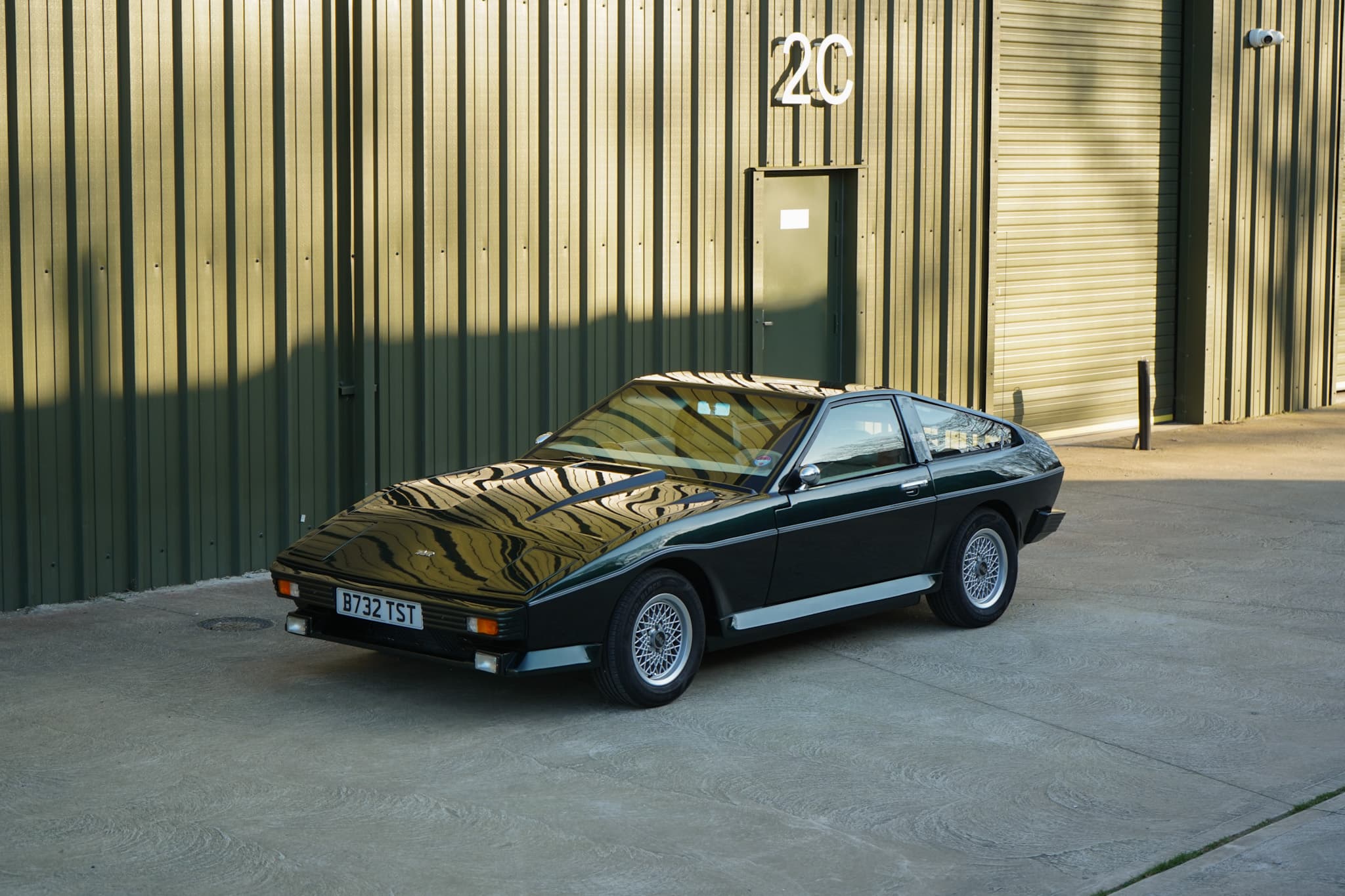
TMJC's own 1985 280i is a useful example. Its history separates the original 2.8-litre Ford Cologne V6 from a later 2.9-litre Cologne V6 fitted during the car's life. That makes the car no less useful as a 280i reference. It simply means originality and current specification need to be described accurately.
2.8 vs 2.9: the important distinction
The original Ford-V6 Wedge belongs to the 2.8-litre Cologne branch. TVR Car Club's Wedge history records the 280i at 2,792 cc, while TVR's own October 1984 UK price list identifies the factory range as 280i Convertible, 280i Fixed Head and 280i Plus Two Fixed Head.
TVR later used a 2,933 cc Cologne V6 in a different car family. The club's S-series history describes the early S1/280S with the 2,792 cc engine and the succeeding S2/290S with the re-engineered 2,933 cc unit.
That makes a 2.9 swap understandable in period and marque terms: it is not an alien engine family. But it is still a swap when fitted to a 280i.
| Question | 280i factory context | Later S2/290S context |
|---|---|---|
| Engine family | Ford Cologne V6 | Ford Cologne V6 |
| Capacity in specialist TVR history | 2,792 cc | 2,933 cc |
| Vehicle family | Tasmin/280i Wedge | S Series |
| Does fitting this engine change the car's original model? | No | A 2.9 engine alone does not make another chassis an S2/290S |
The table is deliberately narrow. It does not imply that every 2.9 Cologne engine has the same injection, ignition, ancillaries, output or installation details. If you need to know exactly what has been fitted to a particular car, the engine number and invoices matter more than the rounded 2.9 description.
Does a 2.9 conversion make a 280i a 290S?
No. 290S is a vehicle identity, not a transferable engine label.
TVR's S-series history is separate from the Wedge line. A genuine S2/290S has its own chassis, body, build history and factory documentation. Installing the same broad 2.9-litre Cologne engine family in an older 280i changes the engine specification of that 280i; it does not change the chassis into an S-series car.
The same logic works in reverse. An original-model badge or V5C description does not prove that the engine still fitted is factory original. Vehicle identity and component originality are related questions, not the same question.
For the wider Tasmin-to-280i naming history, see the TVR 280i reference.
Why this matters when buying a modified classic
An engine conversion is not automatically a negative. A correctly installed, properly maintained 2.9 may make a car attractive to an owner who wants to drive it. An untouched 2.8 may appeal more to a buyer prioritising factory specification. Neither preference removes the need for evidence.
The useful questions are more concrete:
- What engine did this chassis leave TVR with?
- What engine is physically fitted now?
- Is its engine number legible and documented?
- When was the conversion carried out, by whom and why?
- Are there invoices for the engine, installation and later servicing?
- Does the V5C record the current cylinder capacity and engine details correctly?
- Is there evidence of cooling, fuelling, exhaust, wiring or other supporting work where it was needed?
- Has the seller described the modification consistently in the advert, history file and registration paperwork?
Those questions are more useful than deciding in advance that original always means good or that upgraded always means better.
What should the V5C show after an engine change?
For a UK-registered car, this is not just a collector-history question. Current GOV.UK guidance says the V5C must be updated when the engine or cylinder capacity changes.
DVLA also asks for evidence when an engine number or cylinder capacity is changed. The current guidance lists examples including:
- a receipt for the replacement engine showing its engine number and cylinder capacity;
- written evidence from the manufacturer;
- an inspection report prepared for insurance purposes; or
- headed garage confirmation when the change happened before the current keeper bought the car.
That does not make a V5C a factory build certificate. It means the registered particulars should make sense for the car that exists now.
GOV.UK's used-car guidance separately tells buyers to inspect the V5C and make sure the VIN and engine number match the vehicle. On a modified classic, that is especially useful because it joins the documentary record to the physical car rather than relying on an advert's engine-size field.
If a seller says a 280i has a 2.9 but the paperwork still describes a different capacity or the engine number cannot be reconciled, treat that as a question to resolve before purchase rather than something to explain away afterwards.
A V5C is not proof of factory originality
There is an important limit to registration data. A correctly updated V5C can support the current engine's identity and capacity, but it does not prove which engine the car had when it left Blackpool.
Factory identity is better established from the chassis/VIN, period TVR documentation, surviving build or sales records and a continuous history file. The V5C then tells you whether the registered vehicle particulars have kept up with later changes.
A strong file for an engine-swapped 280i therefore has two layers:
- original-car evidence — enough to establish that the chassis is genuinely the 280i being described; and
- conversion evidence — enough to explain the replacement engine, its number/capacity, installation and subsequent maintenance.
Losing one layer should not be disguised by strengthening the other. A stack of engine invoices does not authenticate the chassis; a correct chassis number does not make an undocumented engine swap original.
What should you inspect on a 2.9-converted 280i?
This is not an engine-swap instruction. The objective on a viewing is to establish what was done and whether the result has been maintained coherently.
Start with a cold car if possible. Confirm that the engine number can be located and compared with the documents. Read the conversion invoice before assuming the scope from the phrase 2.9 conversion. Ask whether the engine was rebuilt before installation or fitted as a used unit, what induction and engine-management hardware is present, and whether the cooling, exhaust and fuel systems were altered.
Then inspect the car as a 280i, not merely as an engine donor. The glassfibre body can look presentable while the separate steel chassis underneath needs serious inspection. Suspension, brakes, steering, electrics and corrosion history still matter regardless of engine capacity.
The conversion should also make sense as a package. A later engine with unclear wiring, improvised plumbing, undocumented fuel-system changes or mismatched service parts creates future diagnostic work even if it runs well during a short viewing. Conversely, a clear parts trail and consistent specialist maintenance can make a modified car easier to understand than an allegedly original one with no history.
TMJC's 1985 280i: why the history file matters
TMJC's 1985 fixed-head car is a good case study because its story does not depend on pretending the car is untouched.
The governed TMJC record identifies the car as a 280i and distinguishes its original 2.8-litre Cologne V6 from the later 2.9-litre Cologne V6 it carries after restoration. That is exactly how a modified collector car should be described: original identity first, later mechanical specification second.
What the currently available public evidence does not safely establish is the exact donor vehicle for that later engine. A 2,933 cc TVR-used Cologne V6 is historically plausible, and TVR's S2/290S provides the obvious marque context, but plausible is not the same as documented. The engine number and conversion invoice should settle that question, not inference from capacity alone.
This is a more useful provenance lesson than trying to score the car as either original or modified. The quality of the documentation determines how confidently a later owner can understand what happened.
What if the V5C still says 2.8?
Do not assume there is a harmless explanation. Current DVLA guidance requires the registered details to be updated when engine or cylinder capacity changes, and it explains the evidence needed for an engine-number or cc amendment.
A mismatch may turn out to be straightforward to resolve, especially where an old invoice or garage confirmation survives. But it is still a mismatch. Before buying, ask the seller to explain it and check the current DVLA process rather than relying on historical forum advice, which may pre-date current registration policy.
The same applies if an advert says 2.9 but the physical engine number, V5C and invoices point in different directions. Resolve the evidence chain first.
Does the 2.9 make the car more valuable?
There is no defensible universal answer.
A collector seeking a factory-specification 280i may prefer the original 2.8 and place a premium on matching historical evidence. A buyer who intends to use the car may prefer a well-executed later engine with strong maintenance records. Condition, chassis integrity, installation quality, provenance and the reversibility or documentation of other modifications all affect the judgement.
The article's useful conclusion is therefore not a valuation rule. It is a description rule: call the car what TVR built, and describe the engine that is actually in it.
Buyer checklist
For a TVR 280i advertised with a 2.9-litre Cologne V6, verify:
- the VIN/chassis identity and period model evidence;
- the current engine number and cylinder capacity;
- the V5C details against the physical car;
- receipts or other evidence supporting the replacement engine and capacity change;
- the date and installer for the conversion;
- what engine, induction, ignition and ancillary specification is actually fitted;
- subsequent service history for the replacement engine;
- cooling, fuel, exhaust and electrical workmanship around the conversion;
- the steel chassis and normal 280i condition independently of the engine swap;
- whether seller claims about a 290S engine are documented or simply shorthand for a 2.9 Cologne V6.
That approach preserves both sides of the car's story: the 280i that TVR built and the modified classic that exists today.
Sources and further reading
Related car
Cars covered in this guide
Explore the cars this guide covers, with model information, history and related TMJC guidance.
280iProvenance
280i
ResearchExplore model details, specifications, history and related guidance for TVR 280i.
Editorial information
The Matt Johnston Collection
Research and editorial from TMJC Garage.
Research and editorialTMJC Garage
Reviewed byMatt Johnston
Last reviewed15 September 2026
Published byThe Matt Johnston Collection