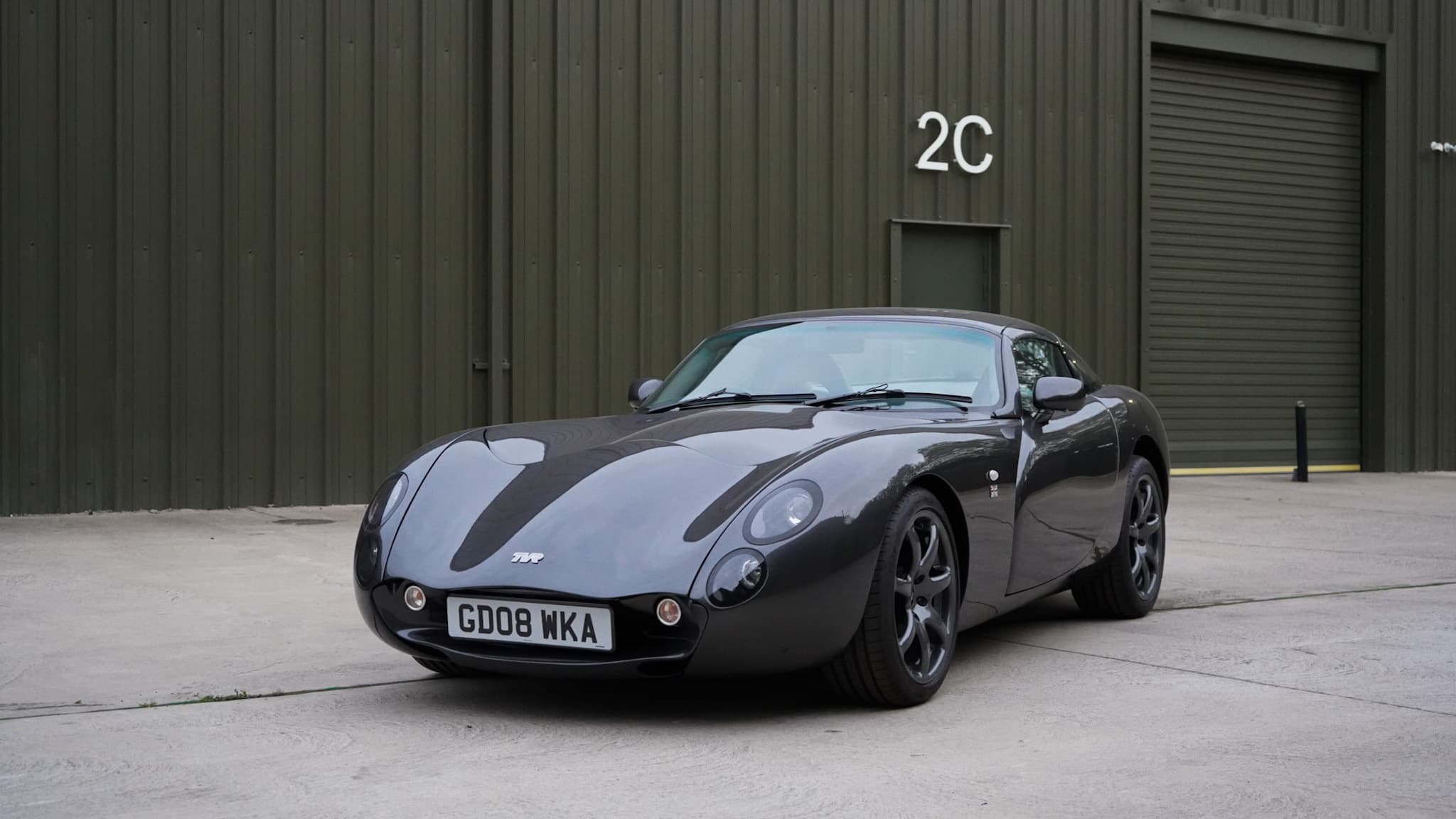
TMJC assistance
Want TMJC to help with this vehicle?
Sourcing, consignment and valuationContinue to the main TMJC website and speak directly with the collection team.
Model
The TVR Tuscan Speed Six from its 1998 show appearance to the 2004 Tuscan 2 and the end of Blackpool production, including why late Mk3 terminology needs care.
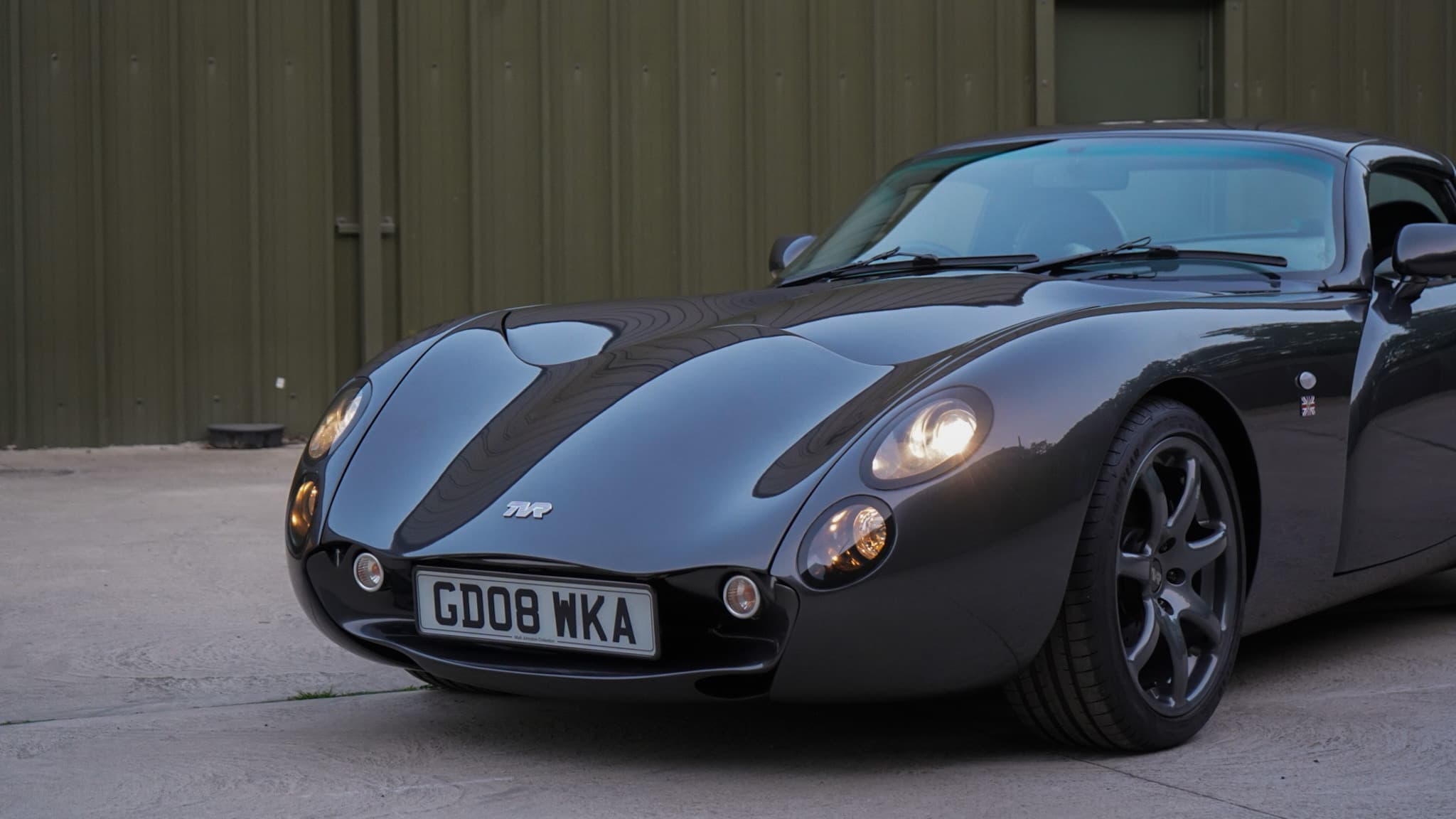
TMJC guide
The TVR Tuscan Speed Six from its 1998 show appearance to the 2004 Tuscan 2 and the end of Blackpool production, including why late Mk3 terminology needs care.
The TVR Tuscan Speed Six was the front-engined, rear-wheel-drive road car that became one of the defining TVRs of the final Blackpool era. Its near-final form was shown at the 1998 Motor Show, but the production chronology is more precise than the shorthand 1999 Tuscan often suggests: TVR's own 2004 press material says the Tuscan Speed Six went into production early in 2000, and the TVR Car Club says the first customer deliveries also began early that year.
In 2004, TVR substantially revised the car as the Tuscan 2, changing more than its lamps and bumpers. The factory listed aerodynamic, suspension, steering, dashboard and seat changes and added a full Convertible alongside the removable-roof Targa. The last production Tuscans followed in 2006 as Blackpool production came to an end.
That timeline matters because late Tuscans are frequently described as Mk2, Mk3, Tuscan 2 or wavy dash as though those labels all describe neat factory generations. They do not.
The road car had been seen before customers could buy one. The TVR Car Club records a near-final Tuscan at the 1998 UK Motor Show. A contemporary TVR press document prepared for the 2004 Birmingham show later looked back and said the Tuscan Speed Six originally went into production early in 2000.
The Club's model page has a header giving 1999-2006, while its own chronology says first customer cars arrived in early 2000. Those statements can coexist if 1999 is being used as an introduction or pre-production boundary, but they are not good grounds for pretending we know an exact 1999 series-production date.
For a collector, keep the distinction clear: show date, production date, customer delivery and registration date are not the same thing.
Speed Six refers to TVR's own straight-six engine family. Official TVR history describes it as emerging from the company's in-house engine programme under Peter Wheeler, after the Cerbera had introduced the AJP V8.
The Tuscan did not have one universal engine specification throughout its life. TVR and the Car Club record 3.6- and 4.0-litre cars plus Red Rose and S derivatives with different outputs. There is no single power figure that safely represents every Tuscan Speed Six.
What matters across the road-car concept is: a lightweight TVR chassis and body, front-mounted Speed Six, rear-wheel drive and a cabin/body design that was deliberately unlike the mass-market sports cars around it.
At the 2004 Birmingham Motor Show, TVR made the Tuscan 2 its headline debut. By then, the company said it had built more than 2,500 Tuscan Speed Sixes. That is a contemporary milestone, not a lifetime production total, and should not be quoted as one.
The factory's change list shows why facelift is only part of the story. Tuscan 2 received:
TVR's press material also says the suspension changes altered castor and camber behaviour and moved the steering-rack position to maintain bump-steer control. In other words, the 2004 work was not solely visual.
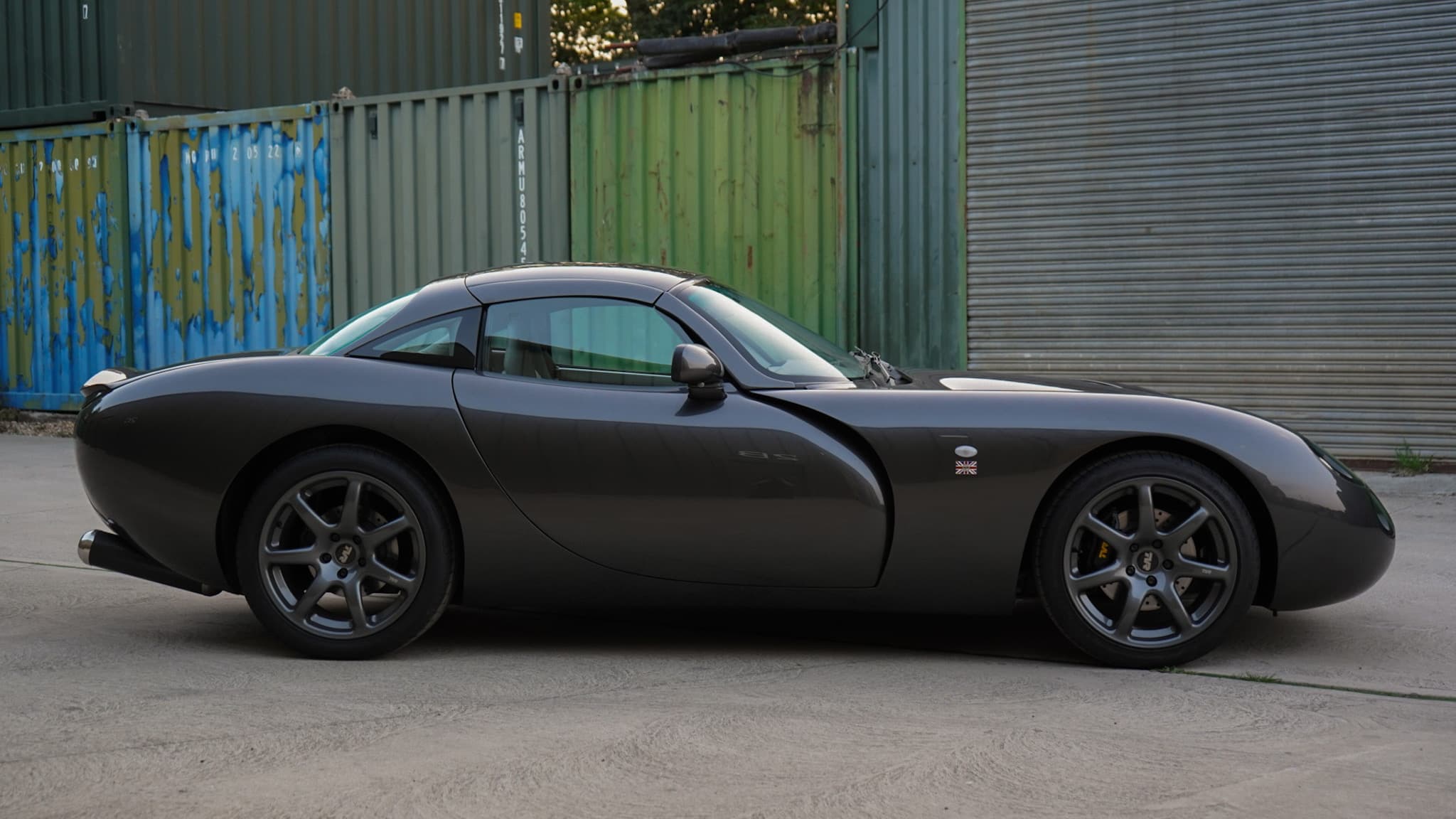
The original Tuscan's roof panel and rear screen could be removed, giving it an open-air character without making it a conventional soft-top. In 2004 TVR added the Tuscan 2 Convertible, with a different rear-roof arrangement and rollover structure.
The S was also more than a badge. TVR's 2004 material describes distinct suspension settings and a higher-output engine for that derivative. Across the wider range, capacities and outputs varied.
As with many low-volume British sports cars, establish the exact derivative before borrowing specifications from another Tuscan. A number that is correct for a Tuscan S is not automatically correct for a 3.6, Red Rose or Convertible.
A March 2005 price and specification sheet from HL Gorner, then an authorised TVR main dealer, is unusually valuable because it puts the two Targa derivatives side by side and calls them Tuscan Mark 2 and Tuscan S Mark 2.
| March 2005 UK sales sheet | Tuscan Mark 2 | Tuscan S Mark 2 |
|---|---|---|
| Engine | 3.6-litre, 3,605 cc | 4.0-litre, 3,996 cc |
| Claimed output | 350 bhp at 7,200 rpm; 290 lb ft at 5,500 rpm | 400 bhp at 7,000 rpm; 310 lb ft at 5,250 rpm |
| Wheels | 16-inch standard; 18-inch listed as an option | 18-inch standard |
| Equipment made standard on S | — | air conditioning, close-ratio gearbox, colour-coded boot carpet, gas-discharge main beam and DAB radio |
| Price including VAT | £39,850 | £49,995 |
The period S distinction tells you more than a power figure alone. TVR's 2004 launch material also describes stiffer S suspension settings and larger brakes, so an S was a broader chassis, engine and equipment package rather than a badge fitted to an otherwise identical car.
The table has a clear limit. The dealer sheet itself says TVR Engineering followed a policy of continuous development and reserved the right to change specification or price. Treat it as a March 2005 snapshot, not a universal build sheet for every Tuscan assembled afterwards.
The period paperwork is not perfectly consistent. TVR's 2004 Birmingham Motor Show press information says the revised Tuscan S produced 400 bhp at 7,000 rpm and 310 lb ft at 5,250 rpm. The March 2005 authorised-dealer sheet also says 400 bhp.
An archived TVR range brochure filed under 2005 then contradicts itself: the Tuscan text describes a 400 bhp 4.0-litre S, while the specification page immediately alongside it lists 390 bhp at 7,000 rpm with the same 310 lb ft torque figure.
That is a good reason not to use a single copied power number as proof of a car's identity. For a particular Tuscan S, establish its build period and derivative first, then reconcile the claim against its order/build records and engine documentation. The surviving period literature is strong evidence, but even factory-branded literature can contain conflicting numbers.
No. TVR’s Birmingham Motor Show press information gives a launch-period distinction that is easy to lose when looking at cars today. For the Tuscan 2 Targa and Convertible, TVR said 16-inch wheels remained standard, even though it noted that most customers chose the optional 18-inch wheels for their appearance and slightly sportier feel.
The Tuscan S was different. The same factory document says 18-inch wheels were standard on the S, alongside its stiffer suspension settings and larger brakes. Wheel size therefore needs to be read together with the derivative rather than used as a model-wide specification.
For originality checks, an 18-inch wheel on a Targa or Convertible is not automatically evidence of the S specification, and a wheel fitted today does not prove how the car left Blackpool. Treat the 2004 press pack as period launch specification, then reconcile the individual car against its build or order paperwork, chassis identity and date-sensitive equipment.
TVR's March 2005 Tuscan/Tuscan S owner's handbook says the car was designed for unleaded petrol. For normal everyday use it permits either 98 RON super unleaded or 95 RON premium unleaded; for track use it specifies 98 RON. The same handbook warns against allowing the fuel supply to run effectively empty because an irregular supply can cause misfires that may damage the catalytic converters.
There is also a modern fuel qualification. In Great Britain, standard 95-octane petrol became E10 in September 2021, while E5 remains available in the super 97+ octane grade at many filling stations. Department for Transport guidance says some cherished and early-2000s vehicles may not be approved for E10 and advises using E5 if compatibility cannot be established.
That means the handbook's permission to use 95 RON should be read as a period octane requirement, not as retrospective approval for today's E10 blend. The handbook predates the UK E10 rollout and does not establish ethanol compatibility. For an individual Tuscan, treat octane rating and ethanol content as separate questions; if specific E10 approval cannot be documented, the government's fallback is to use E5 rather than assuming that 95 RON alone settles it.
Period evidence says no. A contemporary Auto Express test of the revised Tuscan 2 in February 2005 explicitly records that it had neither traction control nor ABS. That distinction matters on surviving cars because electronic aids can have been added later.
TMJC's own late Tuscan 2 MK3 is a good example. Its individual specification lists an adjustable Racelogic traction-control system. That tells us what is fitted to that car; it does not turn traction control into a factory Tuscan feature. Unless build or installation evidence says otherwise, a system like that should be documented as equipment added to the individual car rather than copied into the model-wide specification.
The lack of ABS was also a deliberate part of TVR's period engineering philosophy. In an April 2004 interview, chairman Peter Wheeler argued against anti-lock brakes and other mainstream active-safety systems. That explains the historical decision; it should not be read as modern safety advice or as proof that a car without ABS is objectively safer.
For a buyer, the check is simple: establish the factory specification first, then identify any later electronic aids separately. Look for invoices and installation documentation, understand how the system has been integrated and avoid using the presence of an aftermarket controller as evidence of a particular factory derivative.
Yes. The Tuscan's visible body is glassfibre, but it sits on a separate tubular steel chassis. That means clean paint and corrosion-free body panels do not answer the structural rust question underneath.
PistonHeads' Tuscan-specific rolling-chassis guide says the chassis was powder-coated from new, but that coating can flake through age, wear and heat from the engine and exhaust. It identifies the outriggers - the tubes extending from the central backbone towards the body edges - as common corrosion areas, and warns that rust can remain hidden behind exhaust heat shielding even when a quick visual check looks acceptable.
That changes how a buyer should inspect the car. Put chassis condition on the same evidence list as the engine and provenance:
An outrigger replacement and a full chassis replacement are not the same job, and neither phrase proves the quality of the finished car by itself. TVR's current official ownership network still includes specialists offering outrigger fabrication and geometry work, so the question is not whether repair is possible but whether any work on the car in front of you is documented and well executed.
TMJC's own late Tuscan limits that inference. Its archive records just over 8,000 miles, controlled storage, frequent time-led servicing and a body strip/respray, but it does not claim a chassis restoration. That is exactly why low mileage or excellent cosmetics should not be used as a shortcut for chassis condition.
Not every Tuscan should be treated as though an engine rebuild is automatically due. Ask what engine work has actually been done, when, by whom and what maintenance followed it.
PistonHeads' Tuscan buying guide puts most of the Speed Six reliability concern around the earlier Mk1 engines and advises buyers to look for paperwork proving a rebuild or specialist remedial work. That is retrospective buying evidence, but it is not proof that every early engine failed or that every later engine is immune. Rebuilt is also too vague on its own: ask for the invoice, the mileage and date, the specialist involved and the scope of the work.
A rebuild does not replace routine care. Str8six includes valve-clearance checking and adjustment in its typical 12,000-mile Speed Six service, while TVR's own March 2005 handbook specifies servicing every 6,000 miles or 12 months after the scheduled early services. The existing maintenance record therefore matters after a rebuild just as much as before it.
When viewing a car, unexplained top-end noise, poor hot running or an unclear engine history deserves a marque-specialist inspection rather than a diagnosis based on reputation alone. Equally, a quiet low-mileage car should not be assumed healthy solely because it has never been rebuilt.
TMJC's late 2008-registered Tuscan provides a boundary example. Its archive describes frequent time-led servicing despite very low annual mileage, but it does not claim that the Speed Six has been rebuilt. That is the right way to read the evidence: documented maintenance history for the individual car, without inventing an engine failure or repair that is not in the record.
TVR's March 2005 Tuscan/Tuscan S owner's handbook is unusually specific about cold running. After the running-in period, it tells the driver not to rev the engine immediately after starting and to keep below 3,000 rpm until the oil temperature — not the water temperature — exceeds 40°C. The next thresholds are 4,000 rpm until 60°C and 7,000 rpm until 80°C. If oil temperature rises above 110°C, the handbook says to keep below 5,000 rpm until it returns to normal.
That is more specific than the vague advice to "warm a Speed Six properly", and it also gives a dated factory baseline where later owner advice can differ. It should still be read for what it is: guidance in the March 2005 handbook, not proof that every earlier Tuscan carried identical instructions or that crossing one threshold inevitably causes a particular failure.
The same handbook makes the maintenance side equally clear. TVR recommends checking the oil level daily, at operating temperature and immediately after stopping on level ground. Its service schedule runs through 1,000, 6,000, 12,000 miles and onward in 6,000-mile steps, then states every 6,000 miles or every 12 months, whichever comes first.
That last phrase is especially relevant to collector cars that cover little mileage. TMJC's own late Tuscan provides a real example: its archive describes servicing on a time-led basis despite very low annual mileage. The handbook does not tell us that a stamped interval alone proves good mechanical condition, but it does mean that "it hardly did any miles" is not, by itself, an explanation for a long gap in the service history.
Tuscan 2 is the safe factory-backed name for the major 2004 rework. The TVR Car Club also uses Mk II retrospectively on its model page.
Mk3 is more difficult. The term is widely used for some very late cars, particularly examples with the later wavy dashboard, but the evidence does not support treating Mk3 as a clean factory generation in the same way as a mass-production manufacturer's model code.
Mk3 is common late-car shorthand, but the evidence does not support treating it as a separate factory generation. Dash style is identification evidence; it is not enough on its own to establish a separate factory model generation.
Our TVR Tuscan Mk3 wavy-dash guide deals with that exact problem, including the evidence for the late-car terminology and what a buyer should verify.
The last production Tuscans are associated with 2006, and official TVR history records the company entering receivership late that December. Registration can happen later than manufacture, particularly around low-volume stock, demonstrators and cars completed during a disrupted end-of-production period.
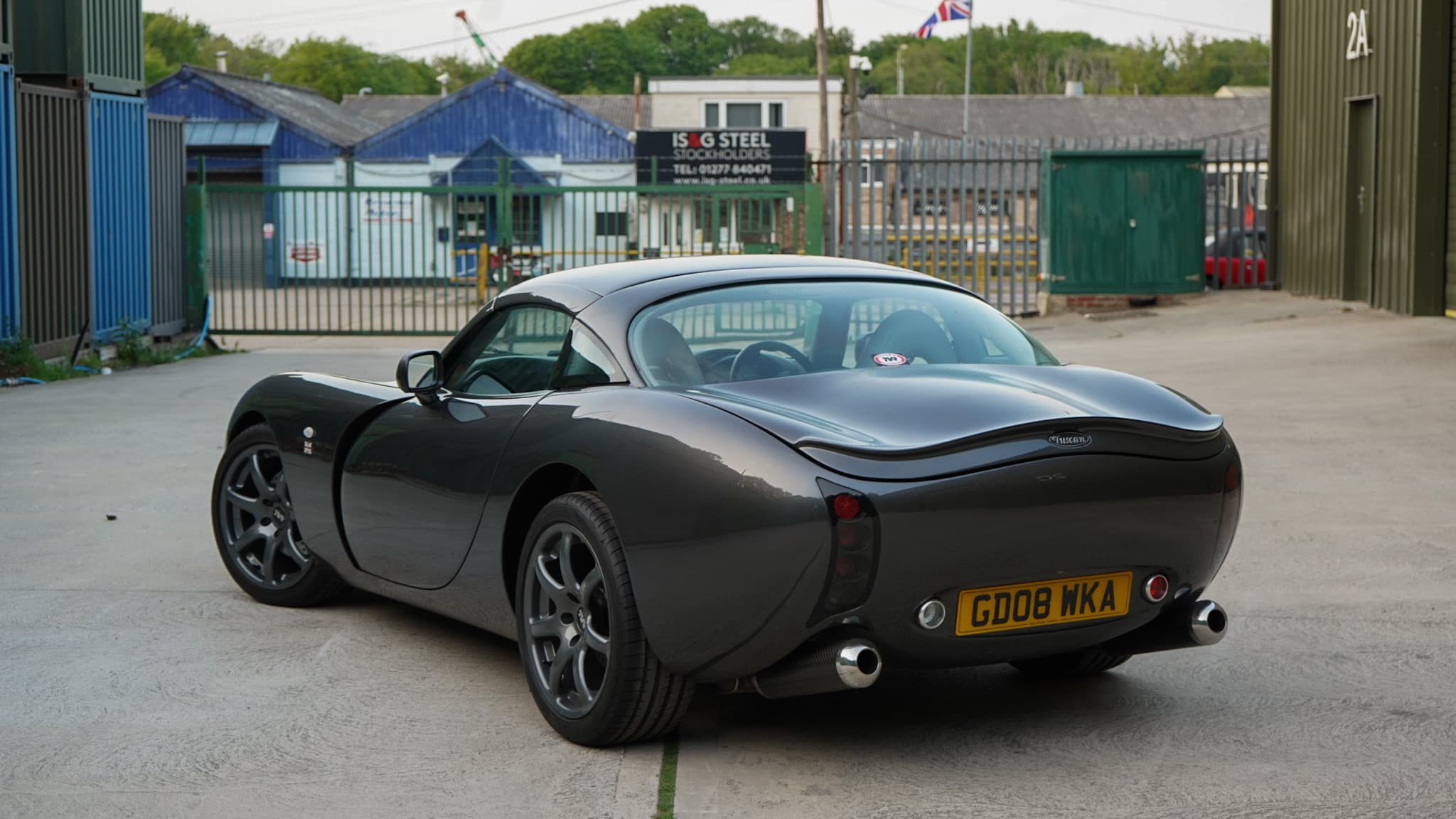
TMJC's own car makes the point neatly. Its commercial archive describes a 2008-registered Tuscan 2 MK3. That does not, by itself, prove that TVR manufactured the car in 2008 or that MK3 was a factory model-year designation.
A serious description of a late car should separate at least four pieces of evidence:
Where those tell slightly different stories, the discrepancy is something to investigate rather than smooth over.
Start with the identity documents and chassis information, then work outward to the hardware. Confirm the engine derivative, roof type, dashboard, body details and original order/build evidence where available. On a modified or restored example, establish which visible parts are factory and which were added later.
Late Tuscans especially reward that discipline because terms such as Mk3, wavy dash and even a late registration date can sound more precise than the underlying factory chronology really is.
For the general paperwork method, see our collector-car provenance guide. For the narrow late-Tuscan question, continue to the wavy-dash identification guide.
The Tuscan was not the first TVR to use the name. TVR had used Tuscan for V8 and V6 road cars in the 1960s and early 1970s, and later for its one-make race series. Official TVR history describes the Speed Six road car as the third resurrection of the name.
What makes the 2000-era car historically important is its combination of that old badge with TVR's new in-house engine ambition. It replaced the Griffith in the Wheeler-era road range and sat alongside the Tamora, T350 and later Sagaris as TVR pushed further away from bought-in Rover V8 power.
It captures much of late TVR: technically ambitious, low-volume, visually independent and now sufficiently old that terminology and documentation matter almost as much as the headline performance figures.
Explore the wider TVR marque history, or go directly to the late Tuscan wavy-dash guide.
Editorial information
Research and editorial from TMJC Garage.
Research and editorialTMJC Garage
Reviewed byMatt Johnston
Last reviewed26 October 2026
Published byThe Matt Johnston Collection
Model lineage
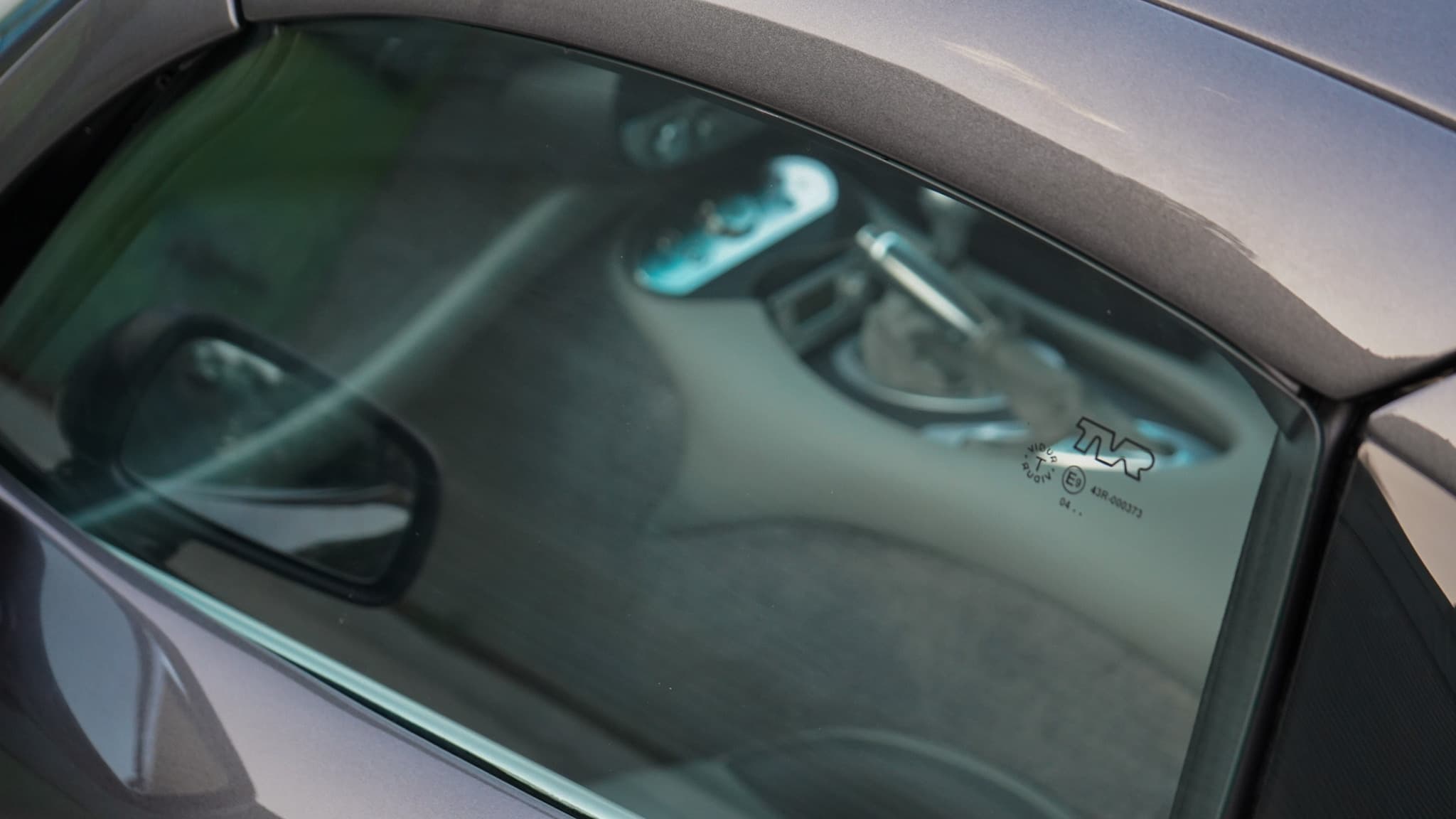
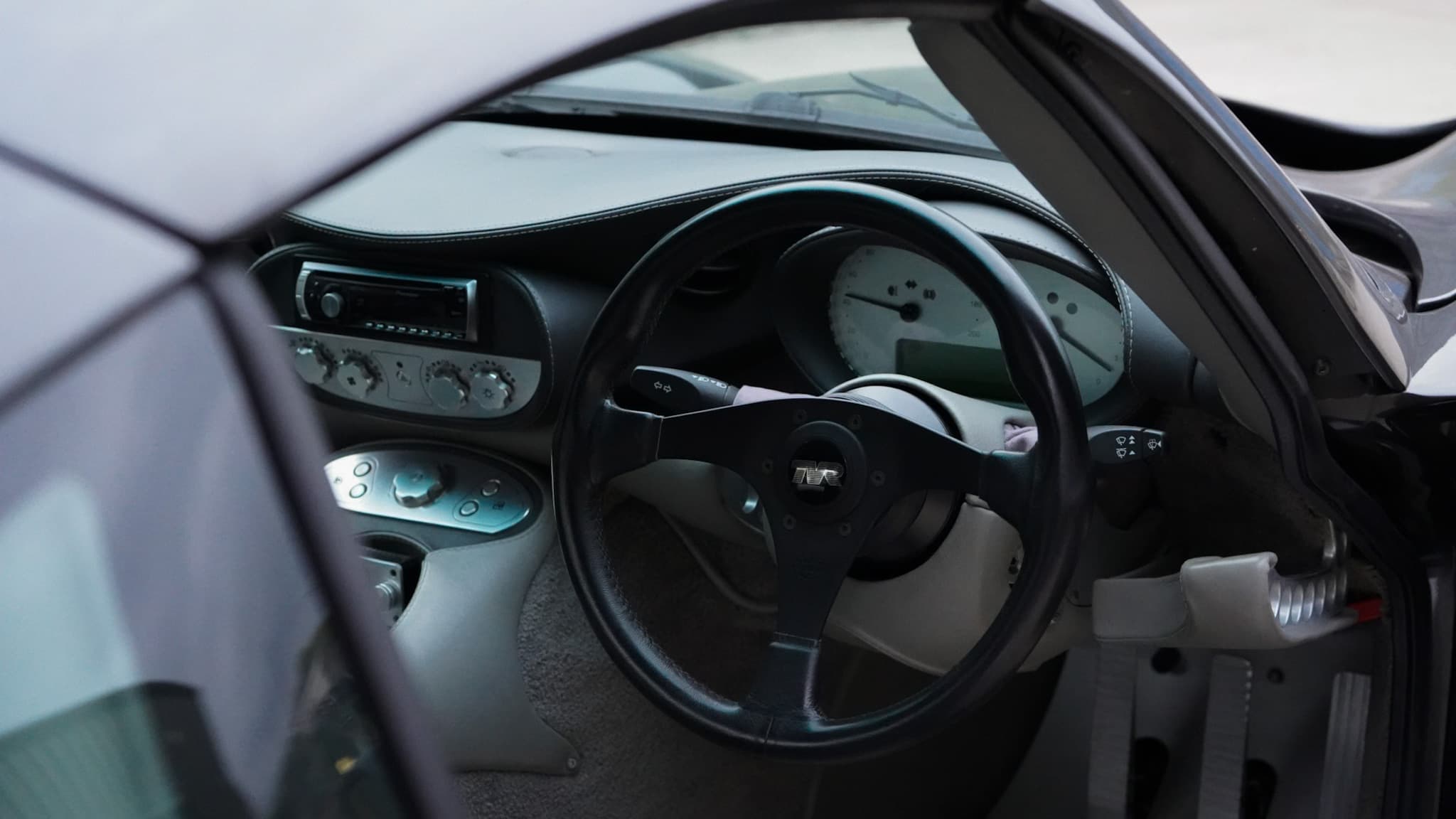
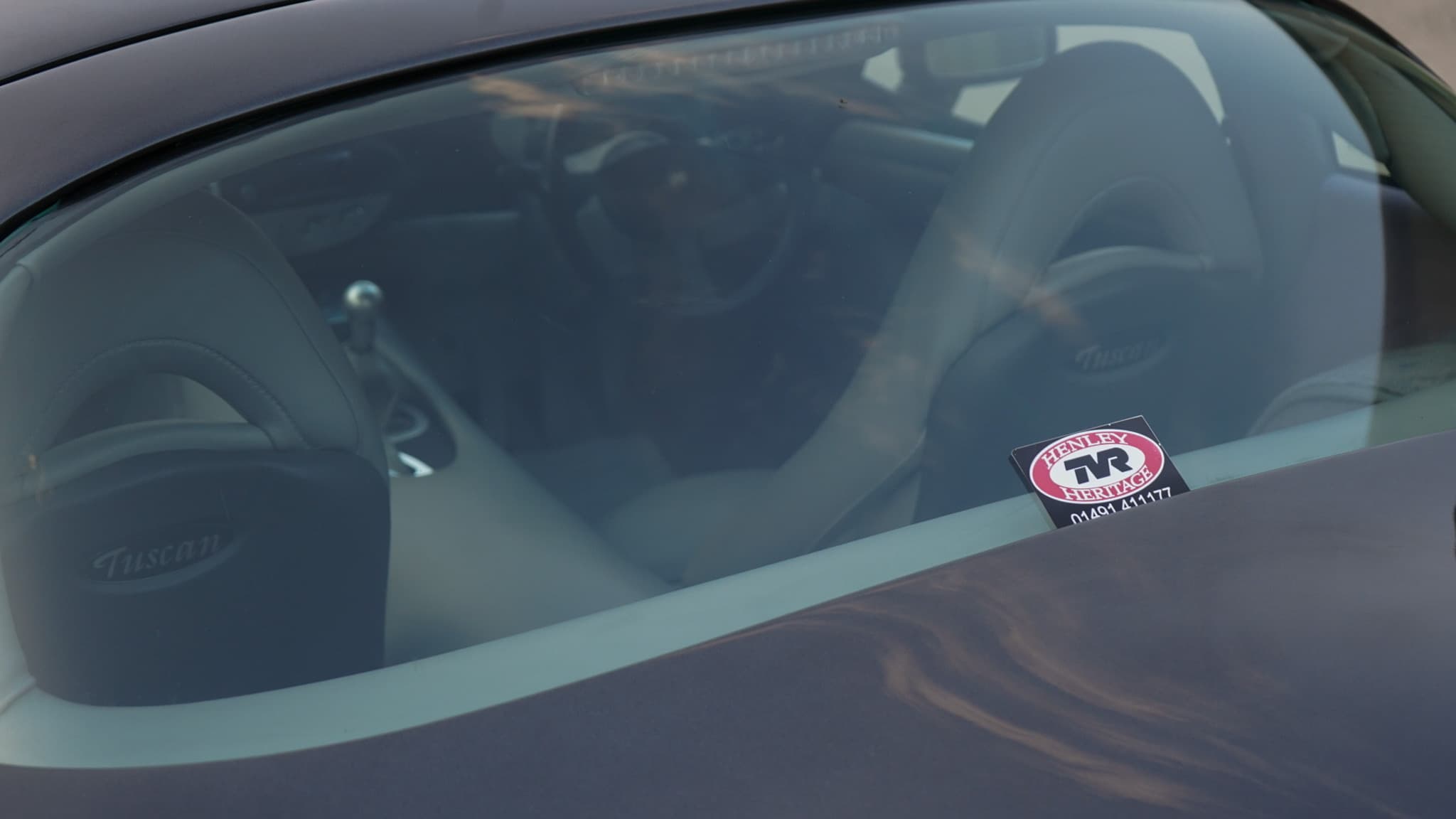
TMJC photography
TMJC Guides
TMJC assistance
Continue to the main TMJC website and speak directly with the collection team.
Sell, consign or source
Continue with TMJC for a discreet conversation, professional presentation and collector-focused support.
Enquire now