TMJC assistance
Want TMJC to help with this vehicle?
Sourcing, consignment and valuationContinue to the main TMJC website and speak directly with the collection team.
Model
Rover Mini guide to Cooper SPI vs MPI, factory automatics, Japanese-market cars, final 2000 production and identification.
TMJC Catalog guide
Rover Mini guide to Cooper SPI vs MPI, factory automatics, Japanese-market cars, final 2000 production and identification.
A 1993 Rover Mini is part of the original classic Mini, not the BMW-era MINI introduced for 2001. The Rover name tells you which corporate period the car belongs to; it does not mean the Mini was redesigned from scratch in the 1990s.
That distinction matters when identifying a real car. A 1993 Mini can be described by model, badge, engine and fuelling system, transmission, export market, special edition and one of several enthusiast Mk labels. Those descriptions overlap, and the model year alone does not settle all of them.
For a 1993 Cooper 1.3i, however, BMW Group Classic now gives a particularly useful factory-archive baseline: the injected 1,275 cc Cooper had already been in production since October 1991. At the same time, other Minis such as the Mayfair were still carburettor-fed in 1993. That is why the exact derivative matters more than a loose 1993 Mini specification.
The original Mini arrived in 1959 and survived decades of changes in ownership and company names. BMW Group's historical material records that the wider business became Rover Group in 1986, and by the early 1990s Rover Group was responsible for the classic Mini.
The wording is not just modern shorthand. MINI UK's own history calls the production convertible introduced in 1993 the Rover Mini Cabriolet. For a 1990s car, Rover is therefore a defensible manufacturer context even though the model itself is much older.
BMW bought Rover Group in 1994. In 2000 it sold Rover and Land Rover while retaining the Mini brand. The newly developed BMW-era MINI then followed for 2001.
For owners and buyers the practical split is simple:
| Car | Useful identity |
|---|---|
| 1990s car continuing the Issigonis-era design | Rover Mini / classic Mini |
| 2001-on BMW-era hatch and later descendants | MINI, then the relevant modern generation such as R50/R53/R56 |
The histories connect, but their parts, chassis identities and specifications should not be mixed.
BMW Group Classic separates two early-1990s Cooper phases that are often blurred together.
The Mini-Cooper 1.3 returned in July 1990 with a 1,275 cc engine. BMW's archive says the first run was a limited edition, with 1,000 cars for the UK and 650 for Japan. A lower-spec mainstream version followed in September 1990. BMW dates this Cooper 1.3 phase to July 1990-October 1991.
Then, in October 1991, the Mini-Cooper 1.3i arrived. BMW Group Archive says it used a 1,275 cc single-point fuel-injection engine and a three-way catalytic converter to meet new emissions requirements. That derivative continued until August 1996.
So for a 1993 Cooper, single-point injection is not merely a possible late update. It is part of BMW's documented Cooper 1.3i specification from well before 1993.
BMW Group Archive gives the following baseline for the 1991-96 Cooper 1.3i:
| Item | BMW Group Archive figure |
|---|---|
| Production period | October 1991-August 1996 |
| Engine capacity | 1,275 cc |
| Fuelling | Single-point fuel injection |
| Emissions equipment | Three-way catalyst |
| Output | 46 kW / 63 hp at 5,700 rpm |
| Engine layout | Four-cylinder in-line |
| Top speed | 148 km/h / 92 mph |
These are Cooper 1.3i figures, not specifications for every Rover Mini. They also do not, by themselves, prove the exact transmission, trim or export equipment fitted to an individual Japanese-market automatic.
The contemporary Mini Mayfair is a useful warning against applying Cooper data to the whole range.
BMW Group Classic dates the relevant Mayfair phase from May 1992 to August 1996. From May 1992 it used a 1,275 cc carburettor engine after the earlier 998 cc unit was discontinued. BMW says single-point injection did not reach the Mayfair until August 1994, nearly three years after it had been fitted to the Cooper.
That gives a clear 1993 comparison:
The badge and derivative therefore matter. 1993 Rover Mini, 1275 cc is not enough information to infer the fuelling system.
The late-1996 Rover Mini update is an important dividing line. BMW Group Archive separates the earlier Cooper 1.3i, built from October 1991 to August 1996 with single-point injection, from the late Mini/Cooper phase introduced in October 1996 with multi-point fuel injection (MPI).
For the late Mini 1.3i and Mini Cooper 1.3i, BMW says the radiator moved to the front of the engine and a higher final-drive ratio helped the car meet drive-by noise requirements. Safety changes included a driver's airbag, seat-belt pretensioners and side-impact protection beams. The cabin was also revised, with the late cars gaining a full-width wood fascia.
That makes SPI and MPI useful identification terms, but they must be tied to date and derivative:
A 1993 Cooper is therefore not an MPI car simply because later Cooper 1.3i models were. This is exactly why year, derivative and build evidence need to be read together.
BMW Group Archive records the late Cooper 1.3i production period as October 1996 to October 2000. In April 2000 the final Cooper range was announced as Cooper and Cooper Sport, and BMW identifies a red and silver Cooper Sport as the last classic Mini, produced on 4 October 2000.
That date closes the original 1959–2000 Mini production story. It should not be confused with the launch of the BMW-era MINI: production of the new-generation car began at Oxford in 2001.
The exact final date is useful at model level. The late Cooper's engine output, injection system and equipment are not universal Rover Mini specifications, so they remain tied to the late derivative rather than being applied to every 1990s Mini.
The injected Cooper was not only an engine change. BMW Group Classic records several useful identification details for the 1991-96 Cooper 1.3i.
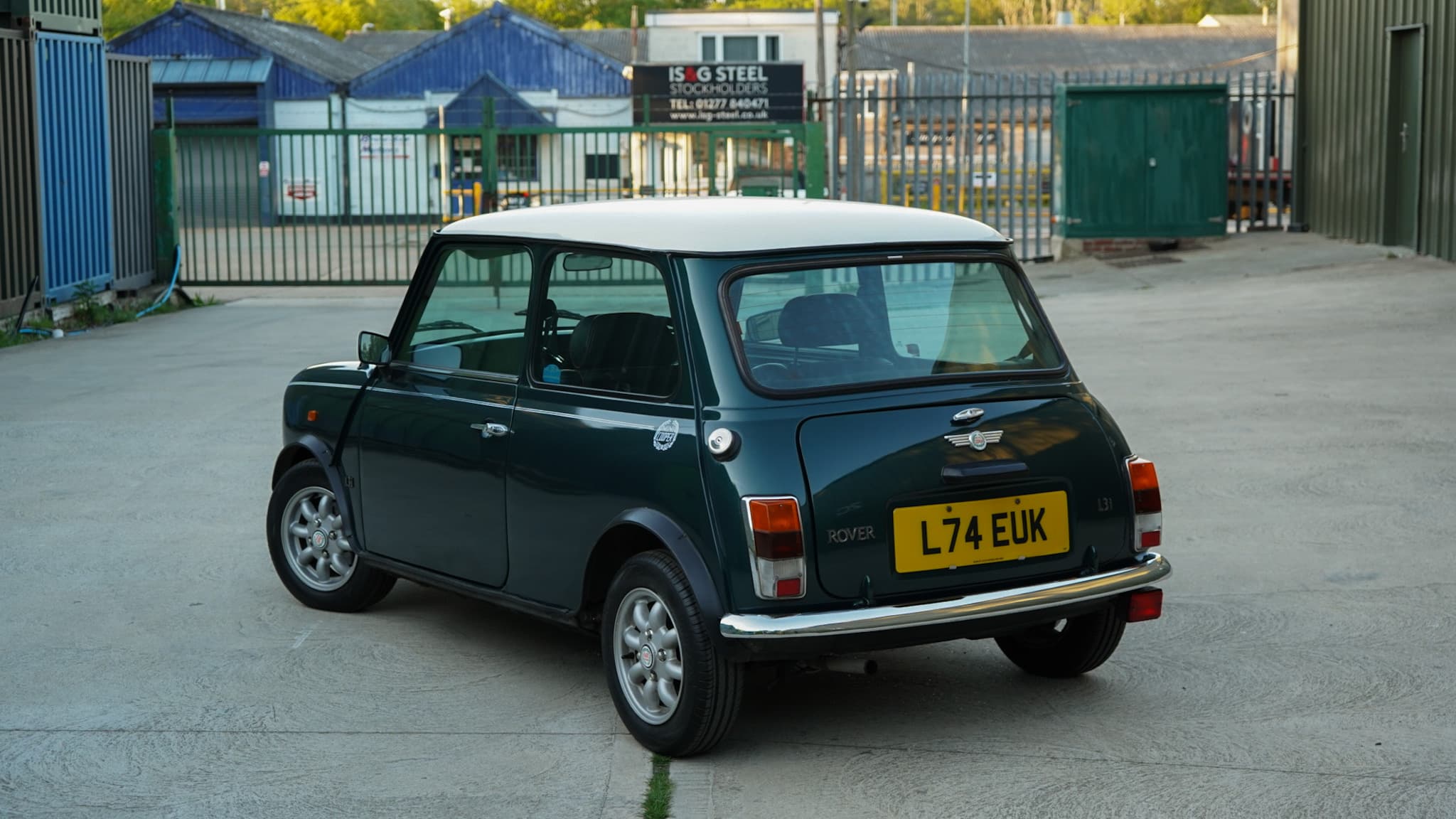
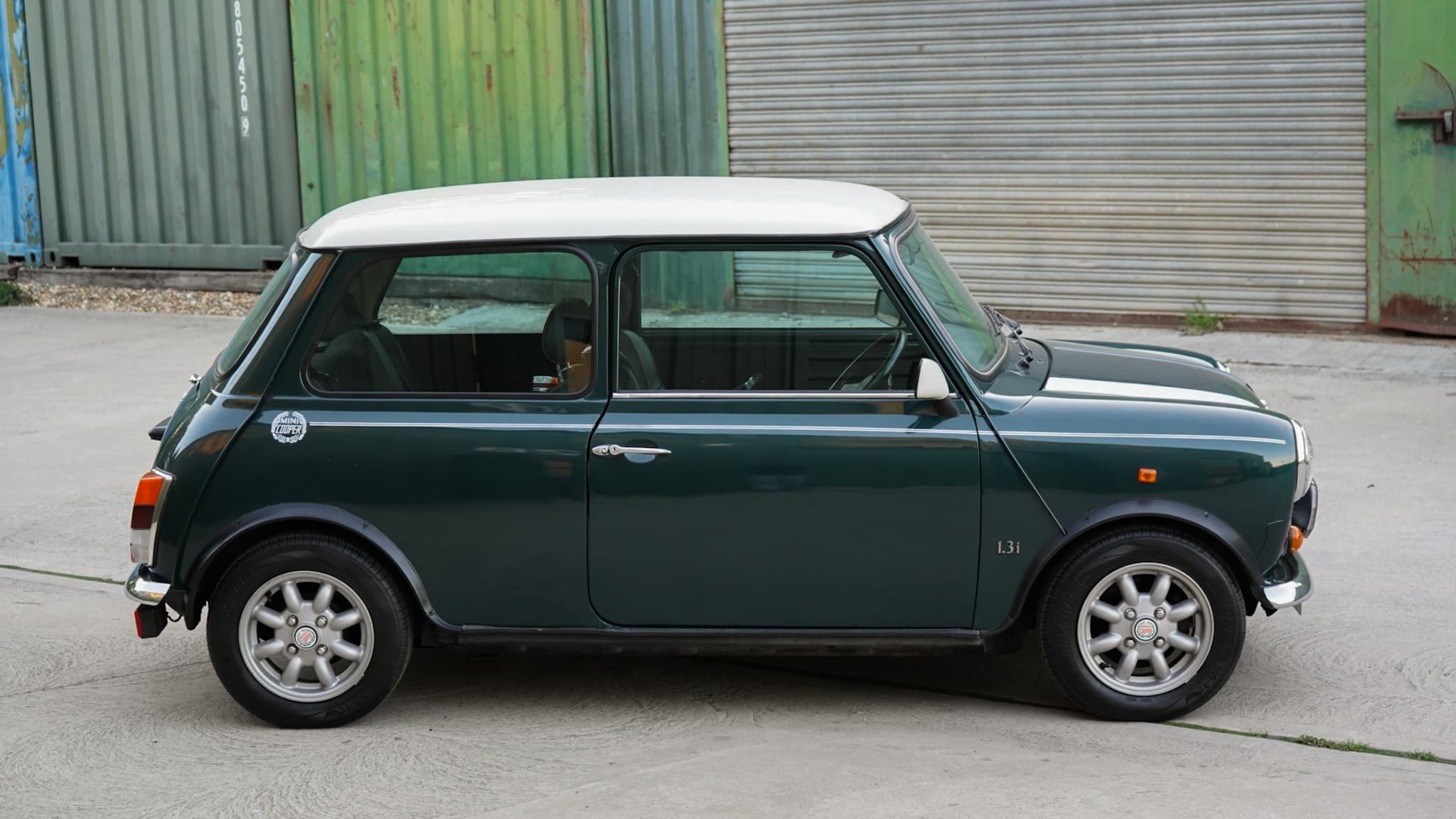
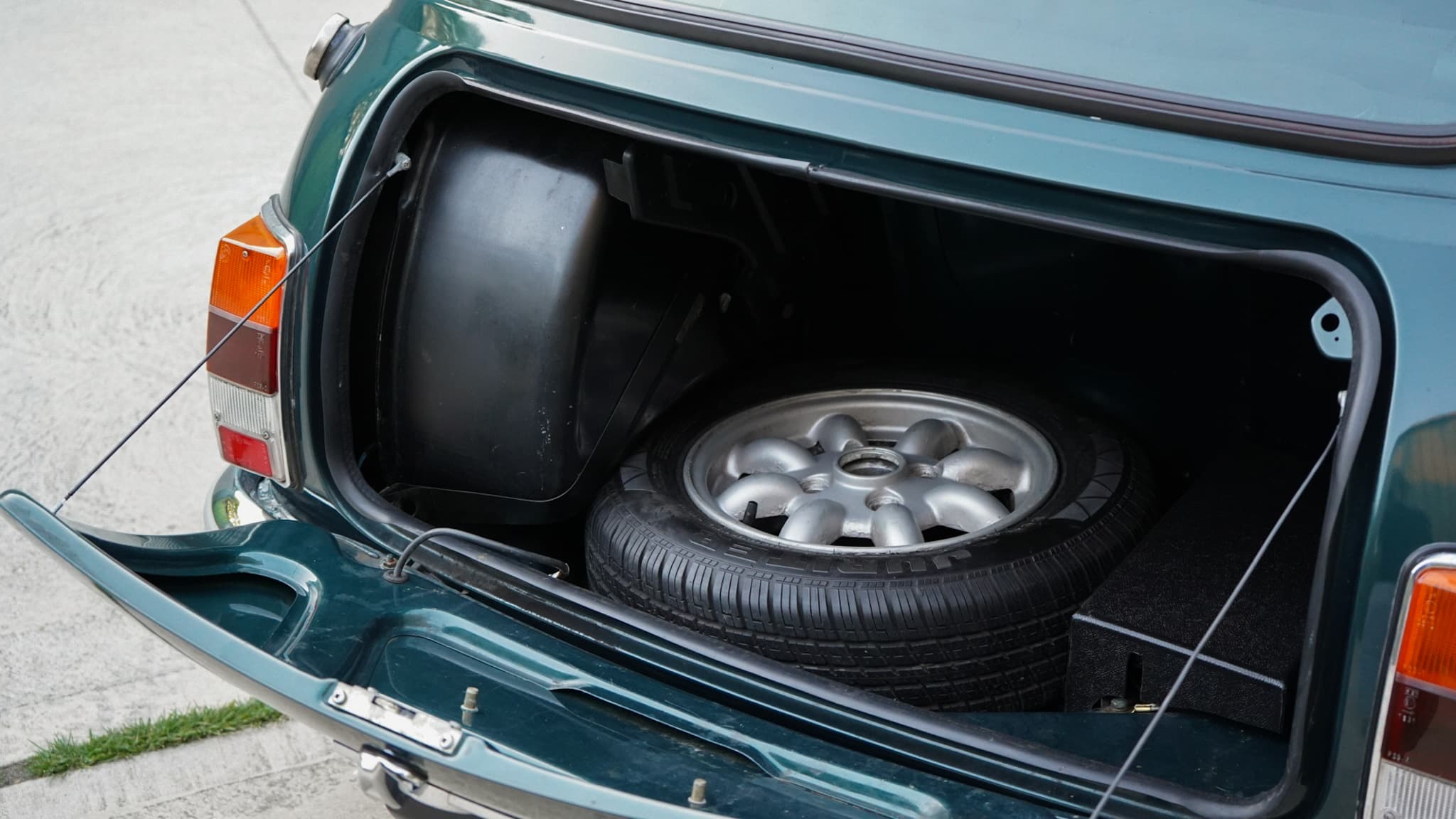
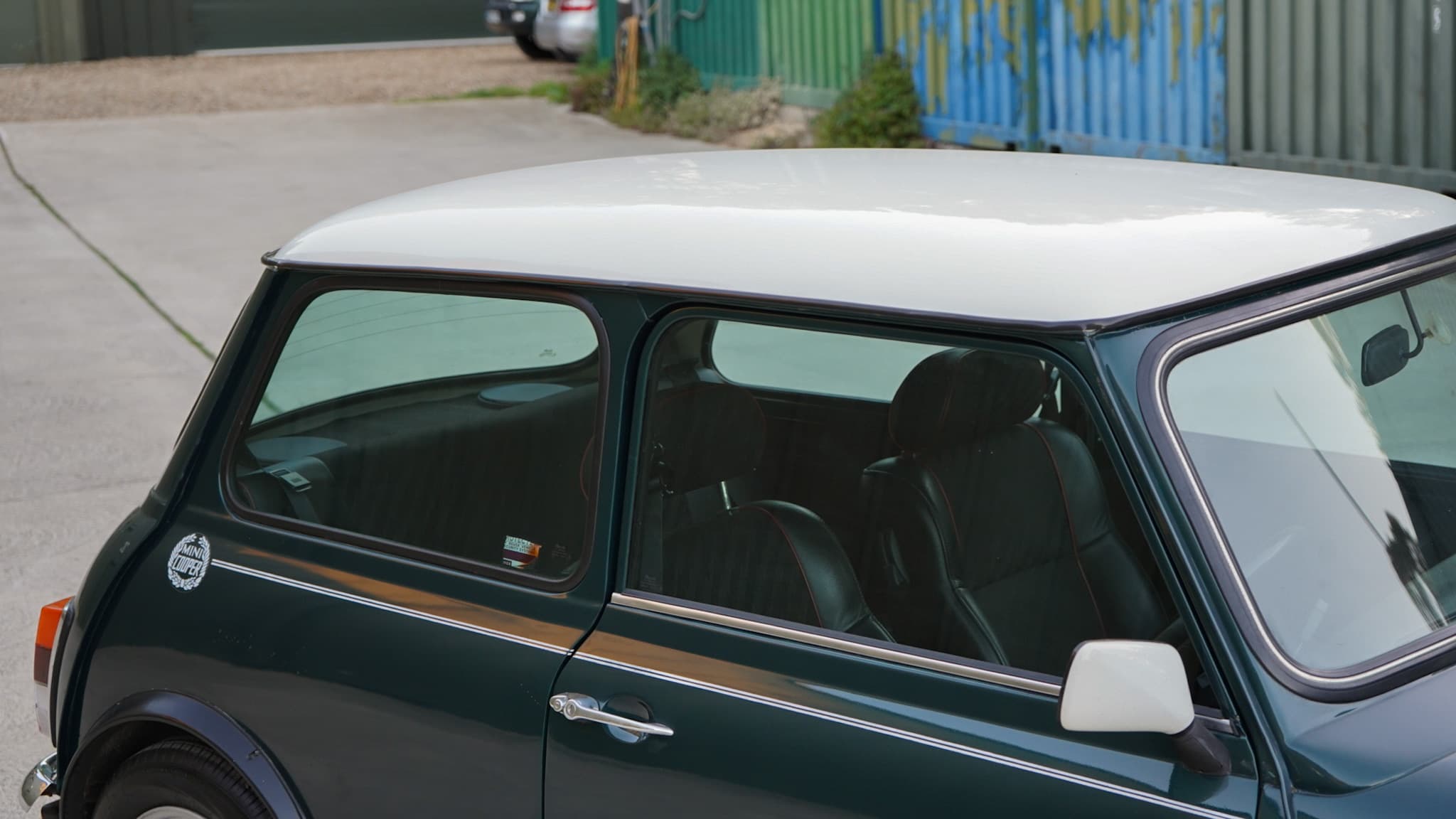
The engine-management equipment required the screen-washer bottle to move into the boot. The boot lid gained a second Cooper-style badge and a 1.3i badge, while the number-plate light was painted black. The bonnet stripes no longer carried the earlier John Cooper signature. Two driving lamps and door mirrors colour-coded to the roof completed the exterior description.
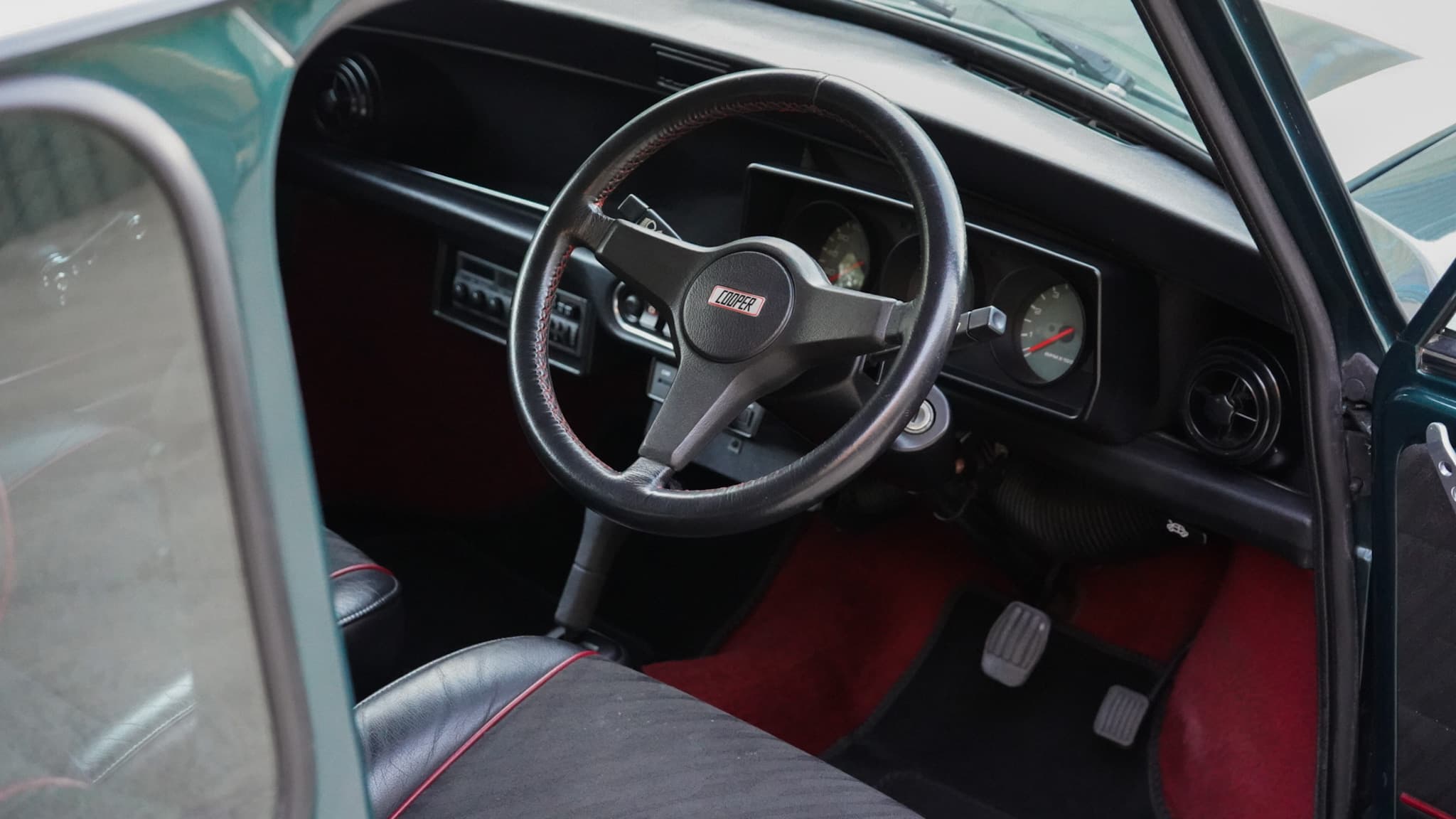
BMW's archive description also lists black half-leather and fabric seats with red piping and a red carpet for the general Cooper 1.3i specification.
These details are useful when assessing a car, but they are not a substitute for its build record. Export-market cars, options and later changes can complicate an apparently simple originality check.
Classic-Mini enthusiasts often divide the production run into Mark phases. Those labels can be helpful shorthand for clusters of changes, but references do not always draw the boundaries identically and Rover's 1990s running changes do not fall neatly into one universal label.
A 1993 car may need to be understood through several facts at once: Cooper or Mayfair, carburettor or injection, automatic or manual, UK or export-market specification, and any special-edition equipment.
For parts, authentication and buying decisions, start with the VIN/chassis number, exact derivative, fuelling system, transmission, market and build-period evidence. Use a Mark label only after those points are understood.
Yes. Factory automatic Minis continued into the Rover era. The difficult part is not proving that automatics existed; it is proving the exact specification of one particular market and derivative.
Somerford Mini's specialist application catalogue contains 1990-93 entries specifically labelled for Cooper 1.3i Japan and Mayfair Japan automatic RHD, alongside separate manual and other-market applications. That is useful corroboration that Japanese-market automatic cars were treated as distinct applications in the parts world.
It should not be used as a factory build sheet. A carpet, trim or parts application can show that a configuration existed without proving that a specific registration left the factory in that form.
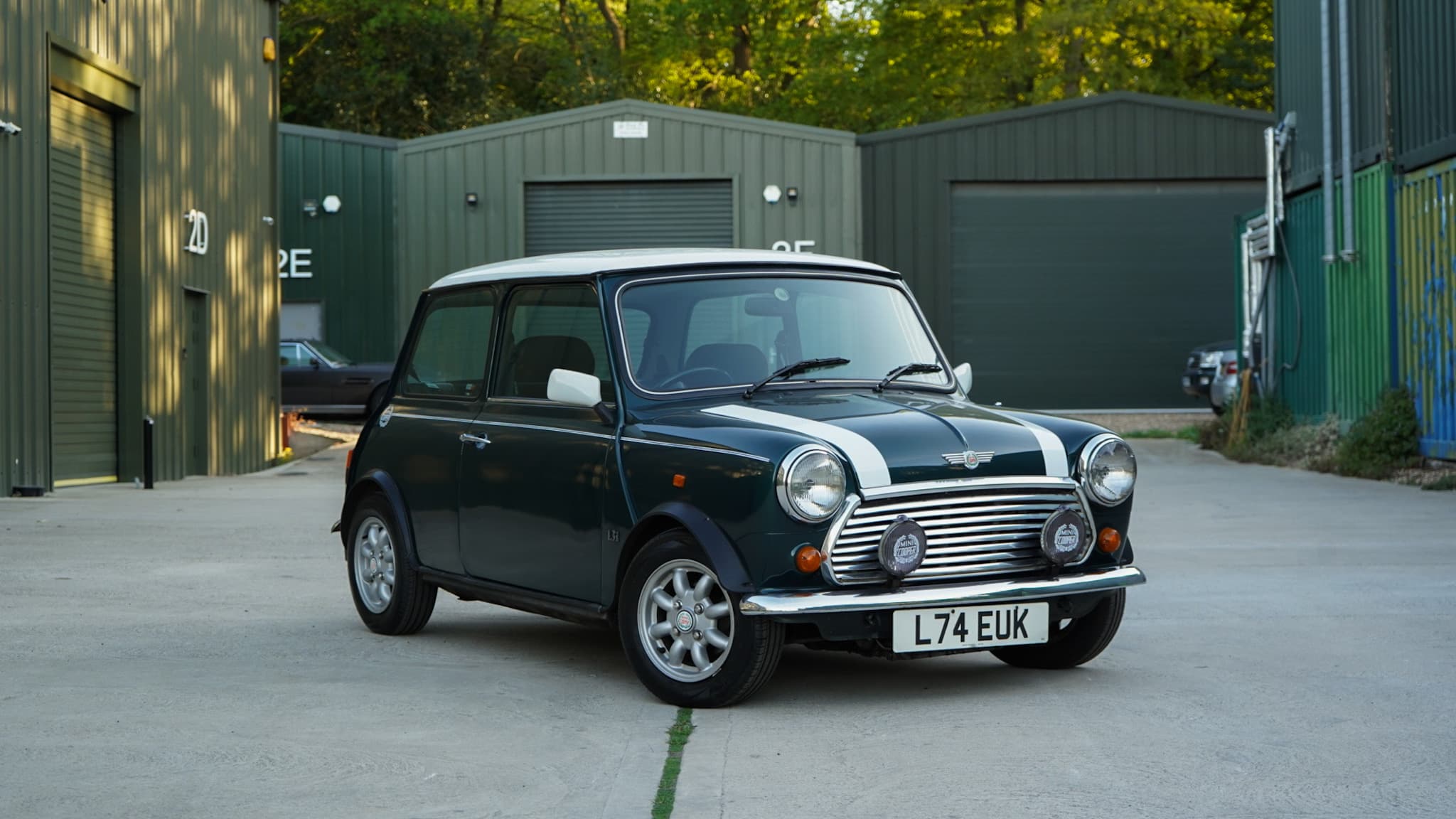
A surviving Car & Classic advert identifies The Matt Johnston Collection as the seller and links back to the TMJC website. It records L74EUK as a 1993 Rover Mini Cooper with a factory automatic transmission.
The advert describes this individual car as right-hand drive, a four-speed automatic and originally intended for the Japanese domestic market, although it was registered in Britain instead. It says the car initially served as a demonstrator for a Rover main dealer in Worcester.
The same advert describes black leather upholstery with red carpet. That is worth recording as evidence about L74EUK, but BMW Group Archive's general Cooper 1.3i description lists half-leather/fabric seats with red piping instead. The difference does not prove the advert is wrong or the interior has been changed. A Japanese-market automatic could have different trim or options, and the surviving seller material is not a factory order record.
That is precisely the kind of case where the vehicle's original order paperwork, VIN/build data and period market documentation matter more than a generic model description.
The advert also uses rarity and limited-production language without giving a manufacturer production record. No production total should be inferred from those seller claims.
Record the VIN/chassis number from the car and compare it with the V5C, original sales documents and service material. A registration date establishes when the car entered the road system; it does not automatically establish every build specification.
A Cooper and a Mayfair can share a year and 1,275 cc capacity while having different fuelling. Establish the actual model and period application before applying a specification table.
For a 1993 Cooper 1.3i, BMW's archive gives a clear single-point-injection baseline. For a 1993 Mayfair, the archive gives a carburettor baseline. Look at what is fitted and whether the paperwork supports it rather than assuming all 1993 cars were identical.
A car built for Japan can differ from a normal UK-market car despite both being right-hand drive. Air conditioning, trim, emissions equipment and detail parts can be market-specific.
An automatic gearbox is not evidence of a conversion by itself. Genuine factory automatics existed. On a car claimed to be a specific Japanese-market automatic, the strongest proof is period build/order evidence tied to the VIN.
Wheels, stripes, seats, carpets, dashboards and badges are all replaceable. Compare the current car with period evidence, but allow for documented export-market differences and factory options before declaring something wrong.
BMW Group Archive gives several details that can make a useful inspection checklist: the boot-mounted washer bottle, the 1.3i boot badge, black number-plate light, unsigned bonnet stripes and twin driving lamps.
Look for consistency rather than one magic identifier. A badge can be replaced in minutes; a coherent combination of body features, fuelling equipment, paperwork, trim and VIN-linked history is much more persuasive.
For L74EUK specifically, the unresolved question is the factory Japanese-market automatic specification. The public advert and specialist applications support the story, but a period Rover Japan order guide or the car's build record would be much stronger evidence for its exact original trim and transmission coding.
Do not assume that it can. The British Motor Museum's current Heritage Certificate page lists standard Mini production-record coverage as 1959-69 and 1977-81, while the listed Rover coverage ends in 1986.
A 1993 Rover Mini therefore falls outside the date ranges currently advertised for the standard factory-ledger certificate service. The archive may still be worth contacting about other material, and an individual car may have excellent surviving paperwork, but a seller should not promise a standard Heritage Certificate without checking first.
For a late Mini, the original bill of sale, service books, dealer invoices, VIN/build labels and market-specific Rover literature can be especially valuable.
The normal classic-Mini condition questions remain more important than a rare-sounding badge. Inspect the car structurally: sills, floors, subframes, scuttle, door areas, boot and previous body repairs all deserve attention.
On an automatic, add a proper assessment of gearbox behaviour, fluid condition and maintenance history. Do not assume low mileage means the transmission needs no investigation.
For a car presented as unusually original, verify the claim component by component. Paint, glass, trim, wheels, engine-bay equipment and documents can support a story, but none should be asked to prove more than it can.
Where the evidence supports it, 1993 Rover Mini Cooper 1.3i, RHD automatic, Japanese-market specification is a more useful description than a loose Mk VI Mini label. It tells a buyer what needs to be verified without pretending the enthusiast Mark name settles the car's identity.
The Cooper 1.3i part now has strong BMW Group Archive support for the period. The exact automatic/export specification still deserves VIN-linked evidence before it is treated as factory-proven for an individual car.
Editorial information
Research and editorial from TMJC Garage.
Research and editorialTMJC Garage
Published byThe Matt Johnston Collection
Model lineage
TMJC media
TMJC Guides
TMJC assistance
Continue to the main TMJC website and speak directly with the collection team.
Sell, consign or editorial
Continue with TMJC for a discreet conversation, professional presentation and collector-focused support.
Enquire now