Manufacturer
Rover
Rover history from its 1904 first car through P4, P6, SD1, Honda and BMW eras, the Rover Mini connection and the final Rover of 2005.
Model directory
Rover models
Choose a Rover model family to compare its generations, engines, body styles and collector context.
TMJC Catalog guide
Rover history: P4, P6, SD1, Honda, BMW and the Mini connection
Rover history from its 1904 first car through P4, P6, SD1, Honda and BMW eras, the Rover Mini connection and the final Rover of 2005.
- Page
- Manufacturer overview
- Reviewed
- 13 Sept 2026
- Specifications
- 0 verified
Rover was a British car marque long before Rover Group became a corporate name. Its industrial roots reach back to cycle manufacture in Coventry in 1878, the first Rover car appeared in 1904, and the Rover Group name did not arrive until 1986. Those dates describe different stages of the story, not competing answers to one simple founding question.
The cars changed just as substantially. Rover moved from dignified post-war saloons to advanced suspension and structure, experimented seriously with gas turbines, entered British Leyland, worked closely with Honda, passed through BMW ownership and ended Rover-badged production in 2005. The badge is therefore a lineage, not one engineering formula.
When did Rover begin?
The British Motor Museum traces the business to Starley & Sutton, a Coventry cycle maker operating from 1878. The Rover Company name followed later, but the important automotive milestone is 1904, when Edmund Lewis designed the single-cylinder Rover 8hp.
That first car was not merely a conventional carriage with an engine attached. Its central backbone chassis carried the engine and transmission on a stiff spine rather than using the more usual ladder frame. Rover's later reputation for conservative-looking cars can obscure how often its engineers pursued unusual solutions.
This is why a flat statement such as "Rover was founded in 1904" needs care. It works as shorthand for the first Rover car, but not for the older business or the later Rover Group. For collector research, name the event as well as the date.
The post-war Rover identity
Rover's most recognisable post-war identity formed around a sequence of saloons rather than one unchanging model.
The P4 appeared in 1949, initially as the six-cylinder Rover 75. Early cars had the central lamp that produced the Cyclops nickname. The British Motor Museum describes it as Rover's first new post-war car, while the National Motor Museum captures the broader reputation it established: solid, reliable and discreet rather than showy.
The larger P5 followed in 1958 and became closely associated with government and formal transport. Its saloon and lower-roofed Coupe forms gave Rover a more imposing flagship, and the later P5B brought the aluminium V8 into the marque's road-car identity.
Then the P6 Rover 2000 arrived in 1963 with a different brief. Its base-unit construction used bolt-on outer panels, while its suspension layout included a De Dion rear axle and an unusual front arrangement designed with future powertrains in mind. The official European Car of the Year record names the Rover 2000 as the first winner of the award, for 1964.
Those three families overlap in time and purpose. They should not be reduced to a single list of Rover-wide specifications. Their shared thread was an attempt to combine refinement with engineering that was more ambitious than the marque's restrained image suggested.
Rover's gas-turbine experiments
Rover's experimental work was not a styling exercise. The British Motor Museum says the programme grew from wartime work on Whittle jet engines. JET 1, built in 1950, exceeded 150 mph during speed tests at Jabbeke in 1952.
The later T3 was designed from the ground up around turbine power. Its test layout combined a rear-mounted turbine with four-wheel drive, inboard disc brakes and De Dion rear suspension. T4 then used a prototype P6 body and brought the turbine to the front.
None became a production Rover. Manufacturing cost and fuel consumption stood in the way. Their importance is different: they show a company willing to investigate propulsion, packaging and chassis ideas well beyond its showroom range.
Land Rover began inside Rover
The original Land Rover was developed by the Rover Company and launched in 1948. It quickly became a major product line, but its history should not be used to blur two present-day vehicle identities.
For this page, the useful point is that Rover's post-war story included both refined saloons and a practical four-wheel-drive product. Land Rover later became its own marque, with a separate model family and corporate history. The Land Rover history page follows that branch from the 1948 utility vehicle through Range Rover, Discovery and Defender.
A Land Rover production milestone is therefore not automatically a Rover saloon fact, and a modern Land Rover ownership statement is not a statement about the dormant Rover car badge.
From Leyland to the SD1
Rover was acquired by Leyland Motor Corporation in 1967. The following year Leyland merged with British Motor Holdings to form British Leyland Motor Corporation. Rover's badge survived, but future cars were now planned inside a much larger and frequently reorganised group.
The SD1 was the clearest product of that new context. It appeared in 1976 as a large five-door hatchback, designed by David Bache with engineering led by Spen King. At launch the familiar element was the 3.5-litre V8; six-cylinder and later four-cylinder derivatives broadened the range.
The official European Car of the Year record names the Rover 3500 as the 1977 winner. That gave Rover two wins from two very different executive cars: the technically radical P6 and the dramatic SD1.
The SD1 also exposes why model-level evidence matters. Its engines, trim, production sites and build quality changed across a long range. The British Motor Museum's final SD1 is a 1986 Vitesse, but that car's fuel-injected V8 and homologation details do not describe every SD1.
When Rover became Rover Group
British Leyland passed through nationalisation, reorganisation and several names. BMW Group's Plant Oxford history records 1986 as the point at which the wider organisation became Rover Group.
That did not mean Rover the car marque began in 1986. It meant an established badge had become the name of a corporate umbrella containing more than Rover cars. This is the central distinction in late-twentieth-century Rover history:
- Rover can mean the historic car marque.
- Rover Group was a wider business containing several marques and product lines.
- A car sold under Rover Group ownership did not necessarily originate as a Rover design.
British Aerospace bought the privatised group in 1988. By then the Rover badge was being used across a broader passenger-car range than the old P5/P6 executive-car image would suggest.
The Honda partnership
Honda collaboration played a large role in that change, but "Honda-based" is too blunt to explain every car.
BMW Group's history of Cowley describes the Rover 800 and Honda Legend as sharing inner bodywork, suspension and some drivetrains while retaining different exterior bodies and interiors. Cowley built both cars for a period. Honda production methods also helped bring just-in-time and continuous-improvement practice into the plant.
The 1984 Rover 200 shows why detail matters. Classic & Sports Car describes it as based on the second-generation Honda Ballade, with the 213 using a Honda 1.3-litre engine and the 216 a Rover 1.6. Later 200, 400 and 600 projects need the same model-by-model treatment. A buyer should identify the exact model, generation, engine and market rather than assume one partnership formula applies to every late Rover.
For collectors, this era is important because it broadened the badge. Rover moved from a mainly executive identity towards a near-full passenger-car range, while still trying to preserve a more refined position than the Austin models it was replacing.
BMW ownership and the Rover 75
BMW acquired Rover Group in 1994. BMW's own retrospective describes the Rover 75 as the first and only Rover wholly developed under BMW ownership.
The 75 was publicly revealed in 1998 and reached the market in 1999, so those dates should not be collapsed into one event. It deliberately drew on older Rover cues while using a new platform and a range of Rover and BMW-era powertrains. Initial production was at Cowley.
In 2000 BMW sold the Rover car business and Land Rover separately while retaining Mini and the Oxford plant. Rover 75 production moved to Longbridge under MG Rover. The range then expanded to include the Tourer, MG ZT derivatives, long-wheelbase cars and rear-wheel-drive V8 versions.
The British Motor Museum records that MG Rover entered administration in 2005 and production at Longbridge ceased. Its collection includes the last completed car to carry the Rover badge, a hand-finished Rover 75. That is the safest endpoint for Rover-badged car production; it should not be stretched into a claim that every legal right to the Rover name vanished on the same day.
Why there is a Rover Mini
The classic Mini began under BMC in 1959, not Rover. By the early 1990s, however, Rover Group was responsible for it, and BMW Group heritage material uses Rover-era naming explicitly. MINI UK's convertible history calls the production open model introduced in June 1993 the Rover Mini Cabriolet.
A 1990s Rover Mini is therefore a defensible period identity. It describes the company and badge context around the long-running classic Mini; it does not give Rover authorship of the original Issigonis design.
The boundary after 2000 is equally useful. Classic Mini production ended at Longbridge in October 2000. The all-new, BMW-owned car that followed in 2001 uses the modern MINI marque identity. The published MINI history explains the 1959, 1969 and 2001 milestones in that separate lineage.
A TMJC-associated Rover Mini
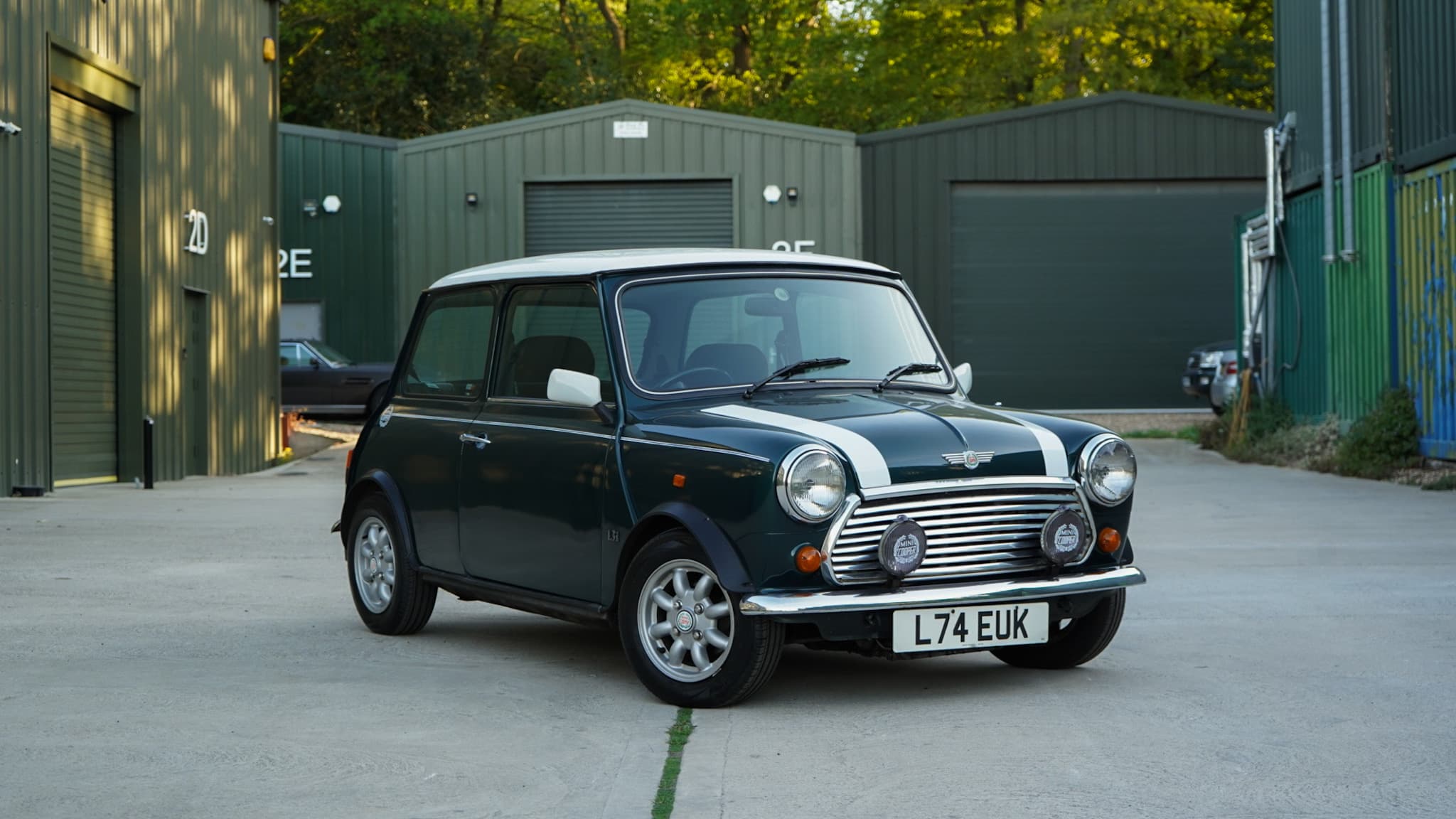
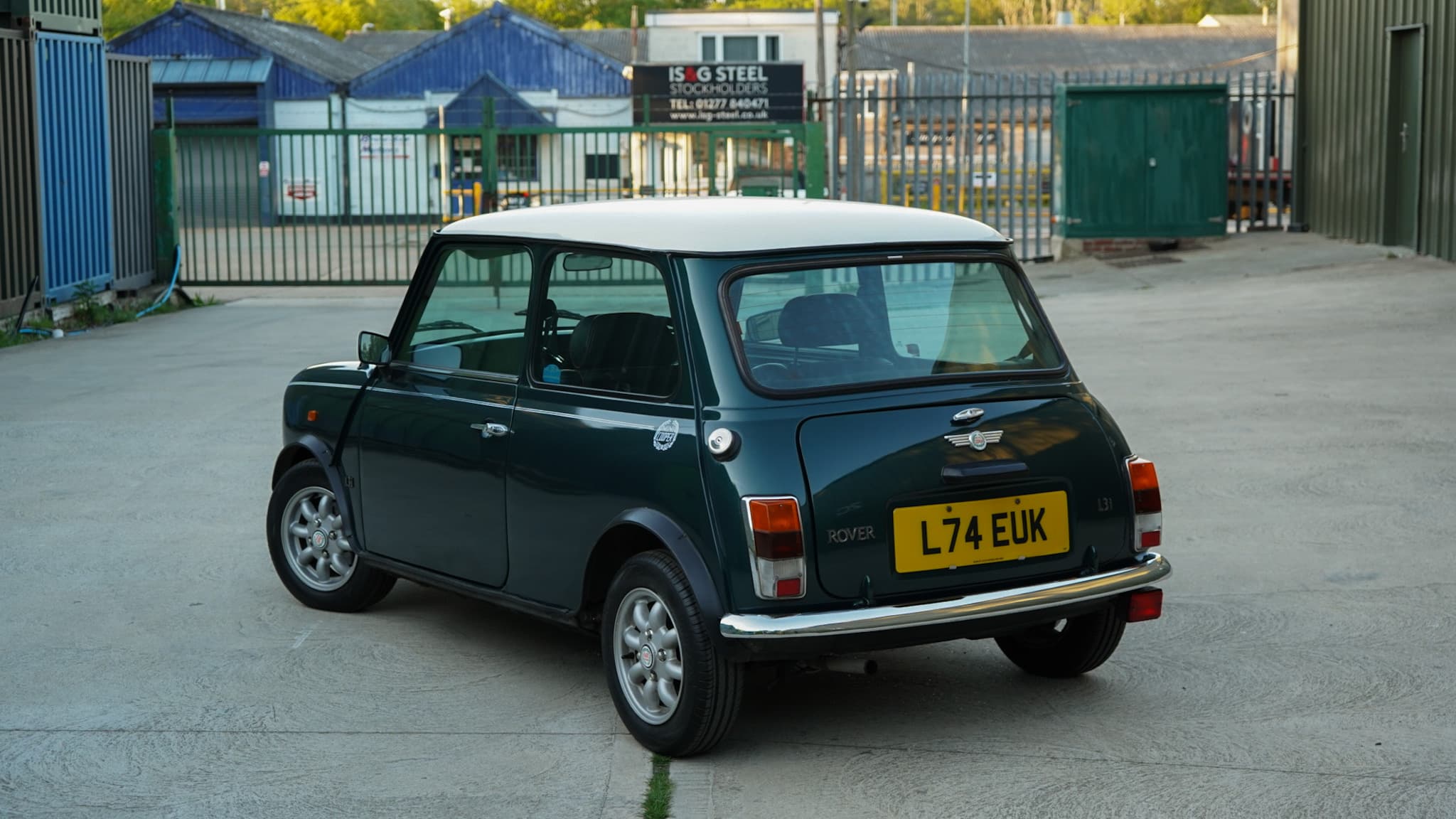
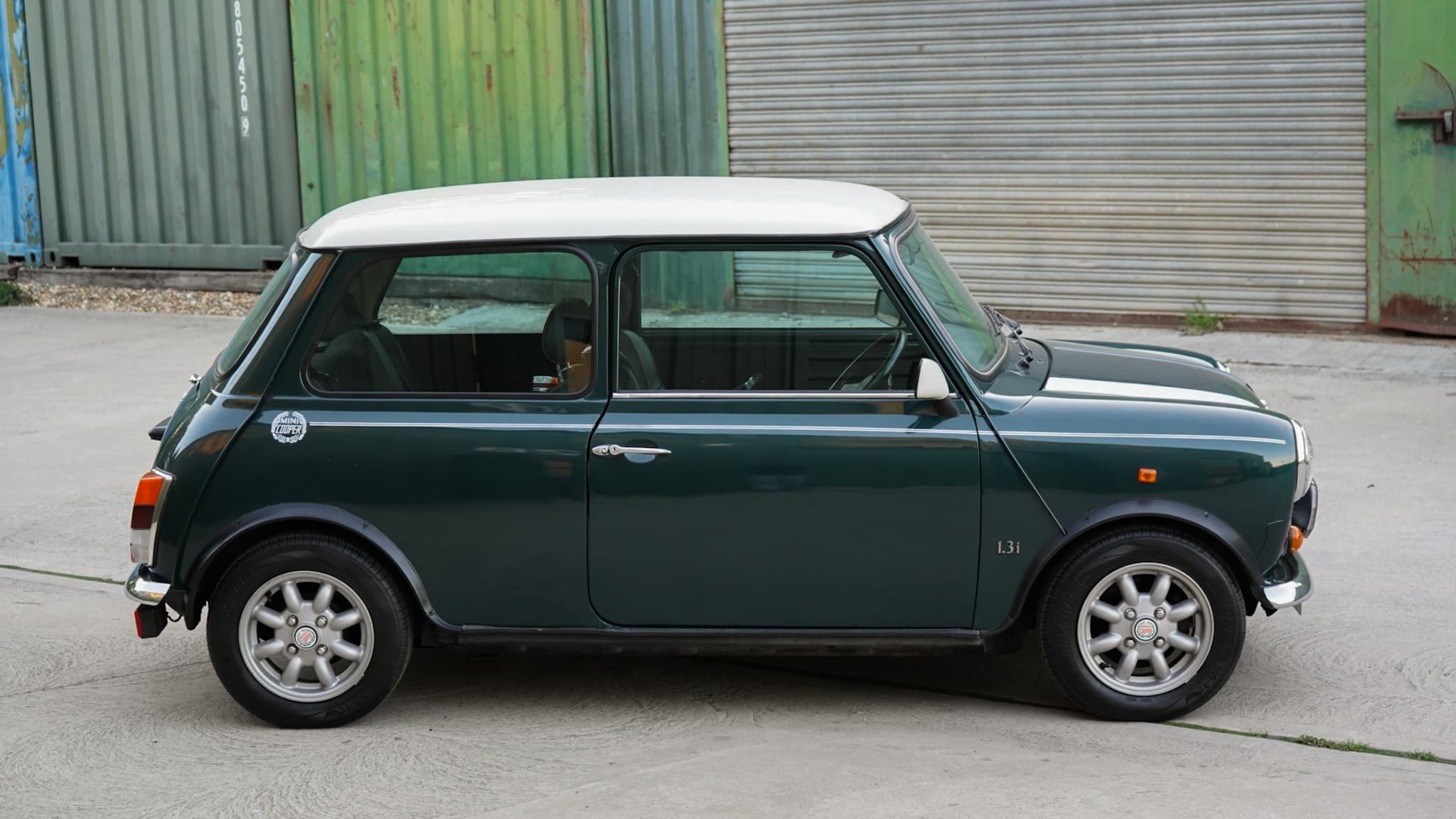
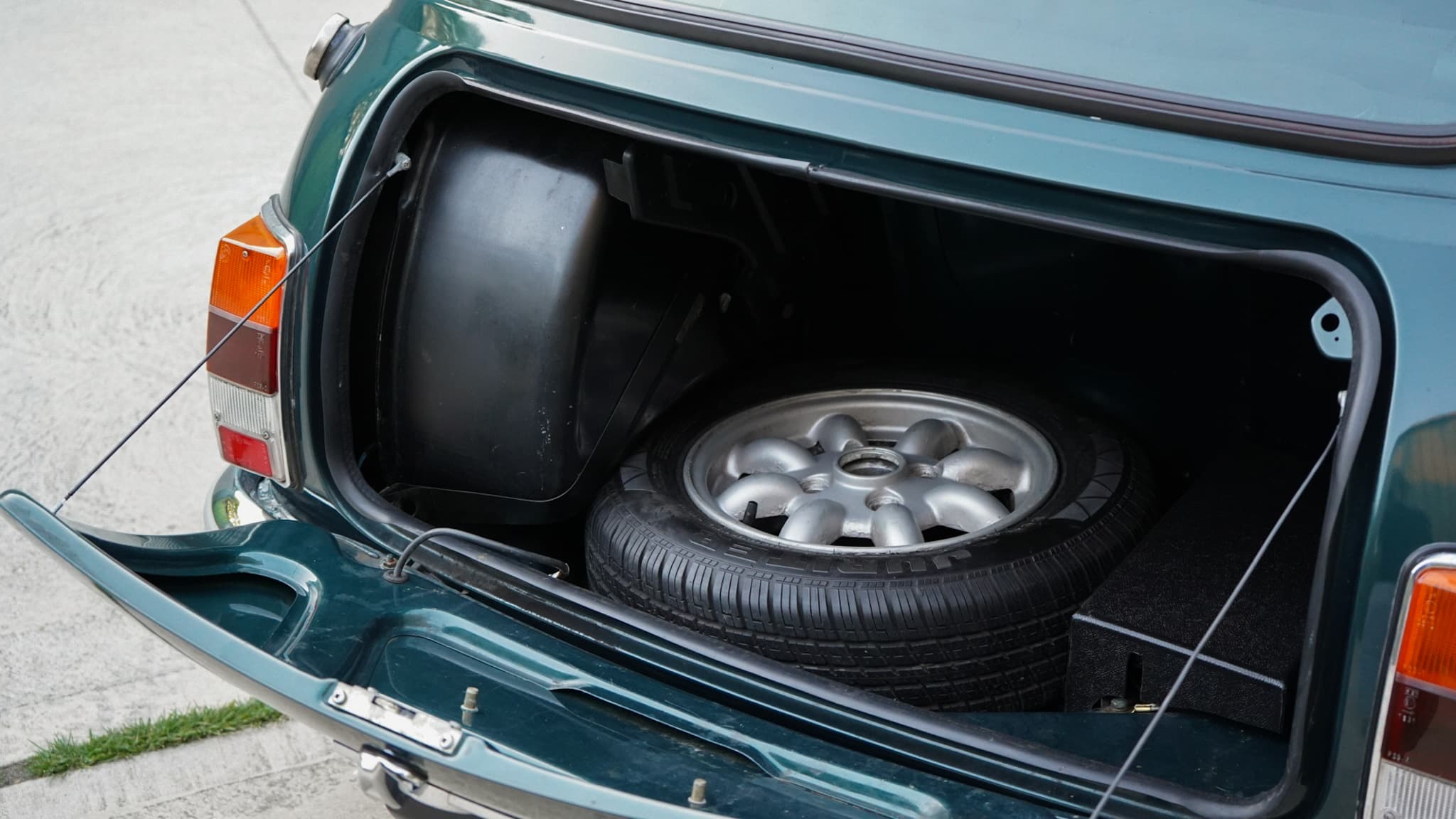
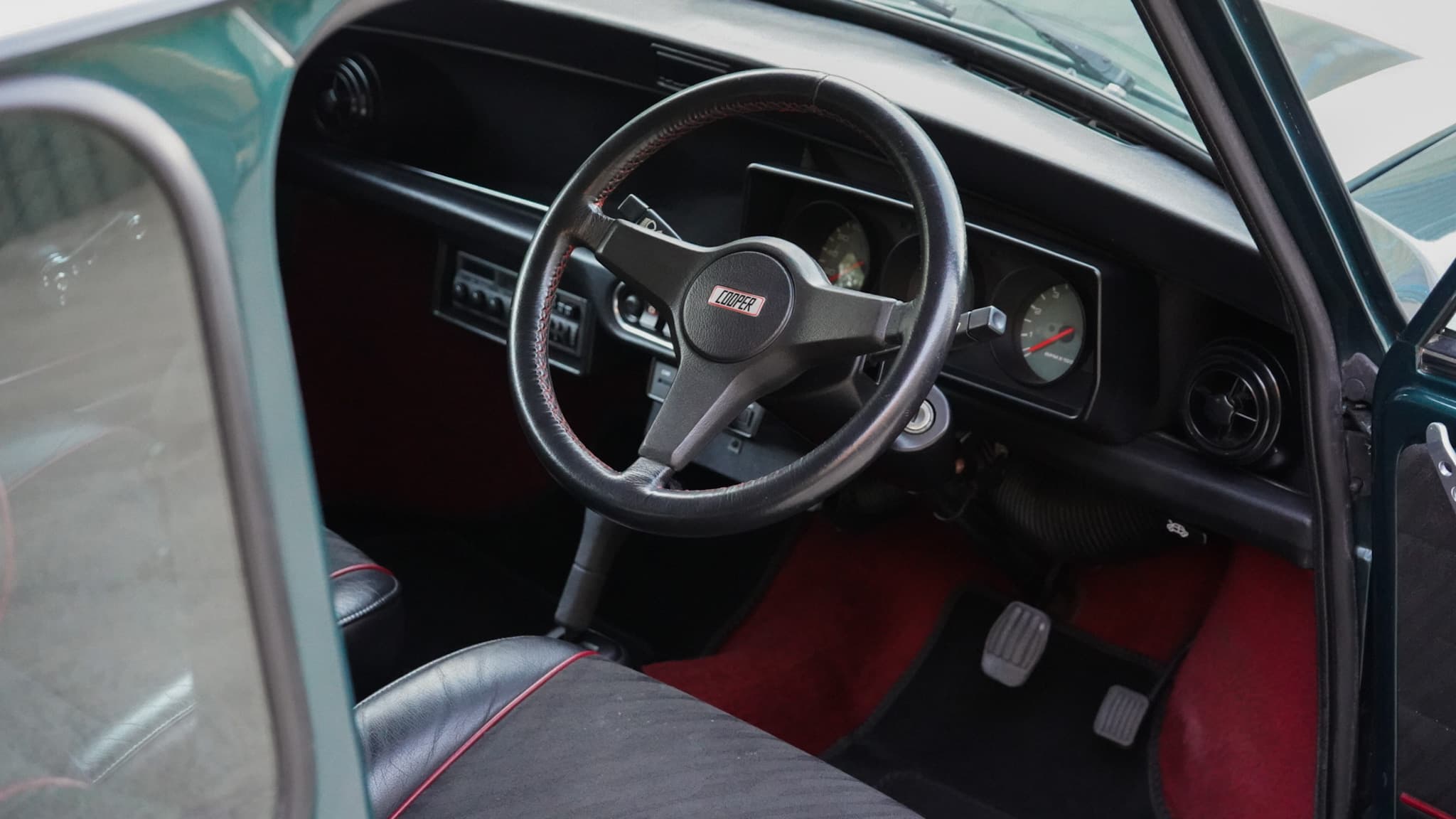
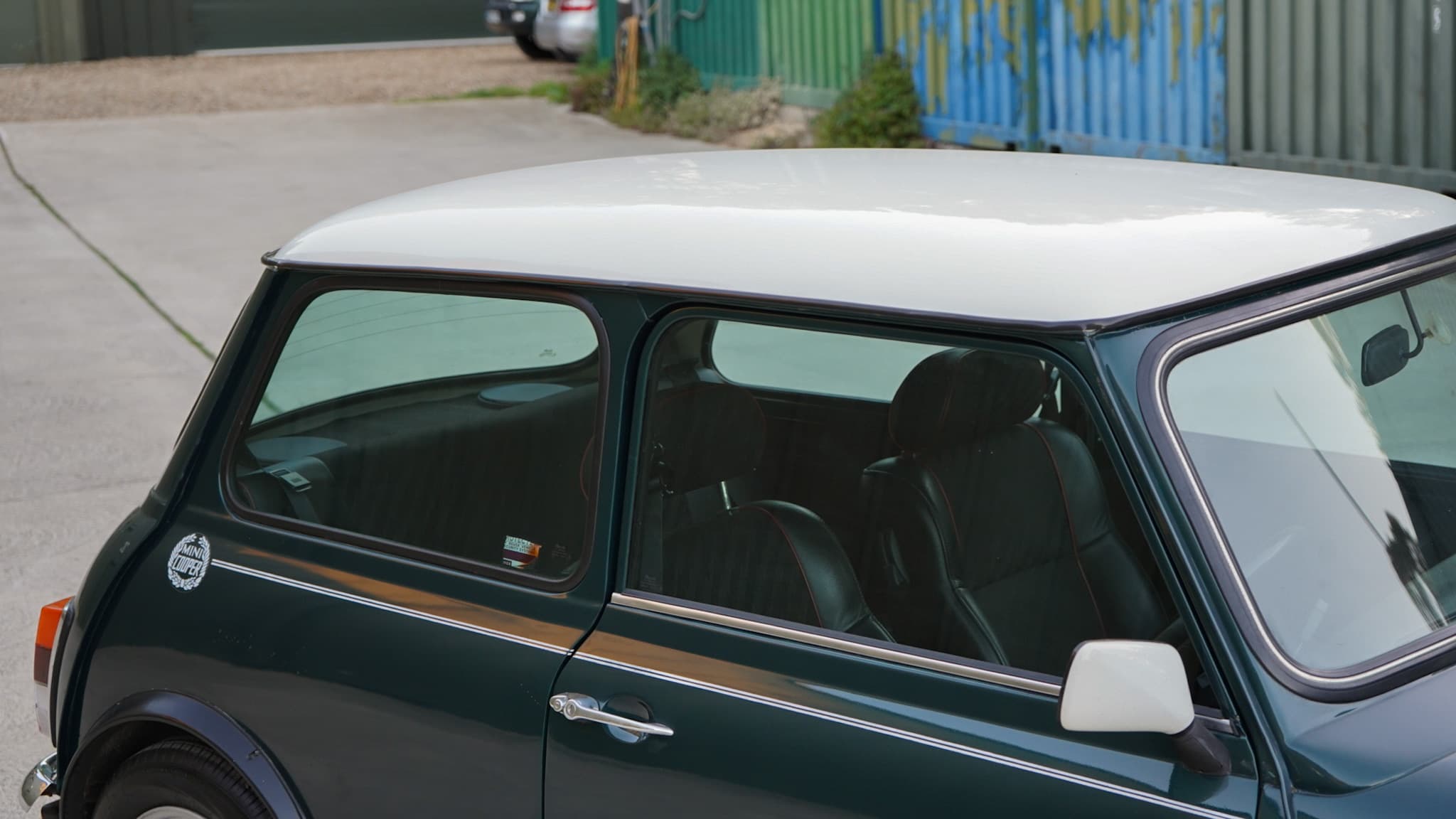
The immediate TMJC connection is L74EUK, a 1993 Rover Mini Cooper automatic advertised on Car & Classic with a direction to themattjohnstoncollection.com for additional photographs.
The advert describes an individual right-hand-drive, 1,300 cc automatic car and presents a Japanese-market history. Those details are provenance leads for L74EUK, not Rover-wide or even all-1993-Mini specifications. Registration year alone does not establish build date, original market equipment or the complete factory configuration.
That discipline is especially important with long-lived British cars. Badges, dealer descriptions and enthusiast Mk labels can be useful clues, but the strongest identity comes from the chassis/VIN, body and engine numbers, build records, period market literature and continuous documentation.
What to check on a Rover-era car
A broad Rover name can hide very different engineering and corporate origins. Start with the exact car.
- Confirm the model family, generation and body rather than relying on the badge alone.
- Establish build date, first-registration date and intended market separately.
- Record engine and gearbox identifiers before using a specification table.
- Check whether the model came from independent Rover, British Leyland, Honda collaboration, BMW ownership or MG Rover production.
- Separate factory equipment from dealer additions, later upgrades and restoration work.
- Treat an archive certificate's published coverage as a boundary, not a promise that every record survives.
The result is often more interesting than a simple label. A P4, P6, SD1, Rover 800, Rover 75 and Rover Mini can all be authentic Rovers while sharing remarkably little beneath the badge.
Sources and further reading
- British Motor Museum: Rover 8hp, 1904
- British Motor Museum: P4 75 Cyclops
- British Motor Museum: T3 gas-turbine programme
- British Motor Museum: T4 gas-turbine prototype
- National Motor Museum: Rover P4
- European Car of the Year: all winners
- BMW Group PressClub: a century of car-making in Oxford
- British Motor Museum: final Rover 75
- MINI UK: 25 years of the MINI Convertible
- Classic & Sports Car: 21 Rover saloons
Editorial information
The Matt Johnston Collection
Research and editorial from TMJC Garage.
Research and editorialTMJC Garage
Published byThe Matt Johnston Collection
TMJC media
Explore the car in detail
Sell, consign or editorial
Thinking of selling or consigning a special car?
Continue with TMJC for a discreet conversation, professional presentation and collector-focused support.
Enquire now